Best Life Jacket for Lake Kayak Fishing
One of the biggest anxieties for any kayak angler heading out onto an Ontario lake or river is the "what if." What if you capsize? What if you unexpectedly go overboard? What if you're alone and far from shore? These are valid concerns, and the difference between a minor inconvenience and a serious emergency often comes down to one crucial piece of gear: your life jacket, or Personal Flotation Device (PFD). This guide is all about helping you understand what makes a PFD specifically designed for kayak fishing so much better than a generic vest, and how to choose the absolute best one to keep you safe and comfortable on your Ontario paddling adventures.
Why a Dedicated PFD for Kayak Fishing is a Game-Changer
Let's be real, a standard bright orange PFD from a rental shop or a basic boating supply store will keep you afloat. That's its primary job, and it does it. But for us kayak anglers, "just floating" isn't enough. We need comfort for hours on end, easy access to gear, and the ability to move freely to paddle, cast, and land fish. A dedicated kayak fishing PFD isn't just a safety item; it's an integral part of your fishing system, designed to enhance your experience, not hinder it.
Beyond the Basic Boating PFD
Think about the traditional "horse collar" PFDs. They're bulky, they ride up when you sit, and they restrict your arm movement. For someone sitting low in a kayak, constantly paddling, casting, and reeling, this becomes an absolute nightmare. You're trying to enjoy a peaceful morning on Lake Simcoe, but your PFD is chafing your neck, riding up around your ears, and making every paddle stroke a struggle. It's enough to make you consider leaving it unbuckled, which, of course, completely defeats the purpose and puts you at significant risk. A PFD tailored for kayak fishing addresses these pain points head-on, offering a completely different level of functionality and comfort.
These specialized PFDs are engineered with the unique posture and movements of a kayak angler in mind. They understand that you need unrestricted shoulder and arm movement for powerful paddle strokes and accurate casts. They also recognize that you'll be seated for extended periods, meaning the back of the PFD needs to be designed to accommodate a high-back kayak seat without riding up into your chin. It's about proactive design, not just basic compliance.
Comfort and Mobility: Your Kayak Fishing Essentials
When you're out chasing smallmouth on Georgian Bay or patiently waiting for a walleye bite on Lake Erie, you're often spending many hours on the water. Discomfort from poorly fitting or designed gear can turn an enjoyable day into an ordeal. A good kayak fishing PFD feels like a second skin, allowing for a full range of motion. This means you can execute that perfect roll cast without the shoulder restriction, or lean over to net a trophy fish without the PFD bunching up and getting in your way.
The design often includes features like larger armholes, tapered fronts, and multiple adjustment points, all working together to conform to your body and movements. This ergonomic consideration is paramount. If your PFD is comfortable, you're more likely to wear it properly, and that's the real key to safety. If it's constantly annoying you, you might loosen a strap or take it off in a moment of frustration, and that's when accidents happen.
Safety First: Understanding Flotation and Fit
While comfort is crucial for consistent wear, the core function of any PFD is flotation and safety. All PFDs sold in Canada must meet specific Transport Canada regulations, ensuring they provide adequate buoyancy. However, "adequate" doesn't mean "optimal" for every scenario. Kayak fishing PFDs are typically classified as Type III (flotation aid), offering excellent mobility while still providing sufficient buoyancy to keep an conscious person afloat in calm water. The key here is "conscious" – these PFDs are not designed to turn an unconscious person face-up, which is why a proper fit is paramount to keep your head above water.
A PFD that fits properly is snug but not constricting. It shouldn't ride up when you lift your arms or get into your kayak. When you try it on, have someone pull up on the shoulder straps – if it slides up past your ears, it's too big. This snug fit is what prevents the PFD from slipping off or becoming ineffective if you do end up in the water. Remember, even the best PFD is useless if it's not worn correctly. For more details on safe boating, check out Ontario Boating Laws for Anglers.
Key Features to Look for in a Kayak Fishing PFD
When you start looking at the range of PFDs specifically marketed for kayak fishing, you'll notice a lot of thoughtful features that separate them from their more generic cousins. These aren't just bells and whistles; they're practical additions that make your time on the water more organized, more comfortable, and ultimately, more productive.
Pocket Power: Storage and Organization
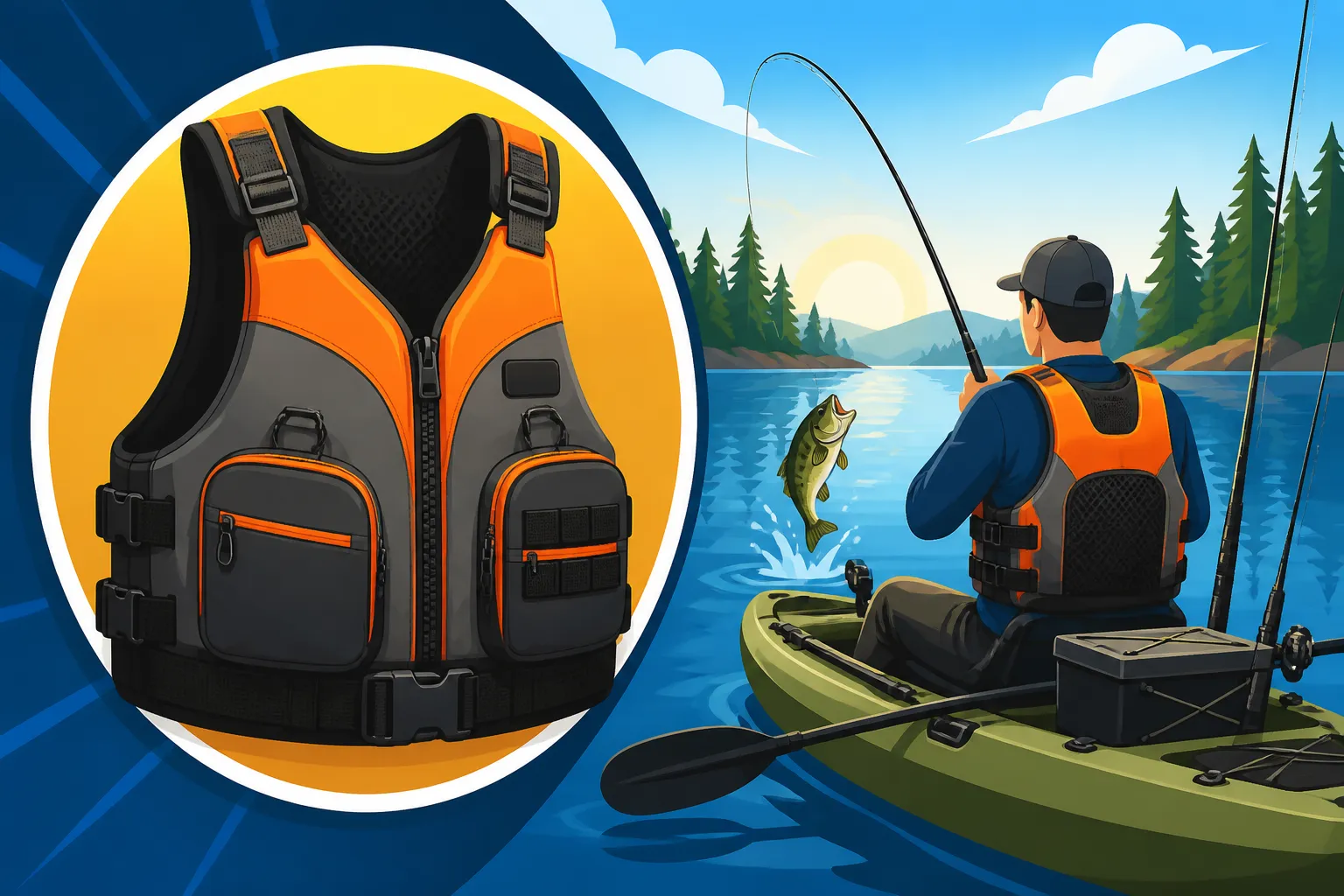
As kayak anglers, we're essentially minimalist guides on the water, carrying what we need, but needing it organized and accessible. This is where pockets come in. Good kayak fishing PFDs are loaded with pockets of various sizes and configurations. You'll find zippered pockets for keys, wallets, or your fishing license (always a good idea to have a copy securely stowed), often with drainage grommets. There might be larger bellowed pockets for small tackle boxes, soft plastics, or a pair of pliers. Some even include dedicated pockets for VHF radios or small action cameras.
The placement of these pockets is key. They're typically on the front or sides, designed to be reachable even when seated in your kayak. This keeps essential items close at hand, meaning you don't have to awkwardly reach behind your seat or rummage through a dry bag when you need a specific lure or tool. This thoughtful organization is a huge time-saver and reduces frustration, letting you focus on the fishing rather than fumbling for gear. Consider brands like Bass Pro Shops, which often carry a wide selection of PFDs with excellent pocket systems.
Ergonomics: High Backs and Adjustable Fits
One of the most defining features of a kayak fishing PFD is its high-back design. Unlike traditional PFDs that have flotation material across the entire back, these PFDs concentrate the flotation higher up, typically above the seat back of your kayak. This prevents the PFD from bunching up uncomfortably, pushing your body forward, or riding up around your neck. It’s a simple but incredibly effective design choice that dramatically improves comfort for long paddling sessions.
Beyond the high back, the level of adjustability is paramount. Look for multiple adjustment points: shoulder straps, side straps, and waist straps. These allow you to customize the fit precisely to your body, distributing the weight evenly and ensuring a snug yet comfortable feel. A PFD that offers this level of customization will move with you, not against you, whether you're paddling hard against a headwind or delicately presenting a fly on a trout stream.
Attachment Points and Gear Integration
Kayak anglers love their tools and gadgets, and a good PFD provides plenty of options for keeping them secure and accessible. You'll often find D-rings, loops, and even retractable tool tethers integrated into the design. These are perfect for attaching things like a line cutter, fishing pliers, a whistle (mandatory safety gear!), or even a small net. Keeping these tools secured to your PFD means they're always within reach and, more importantly, won't sink if you accidentally drop them.
Some PFDs even feature loops or patches specifically designed for attaching things like small knives, strobe lights, or external accessory pouches. This level of integration turns your PFD into a wearable tackle system, keeping your most frequently used items literally at your fingertips. It’s about minimizing clutter in the cockpit of your kayak and maximizing efficiency on the water.
Material Matters: Durability and Breathability
The materials used in a PFD dictate its durability, comfort, and how well it performs in various conditions. Most PFDs are made from sturdy nylon or polyester fabrics, which are resistant to tears and abrasions – important when you're rubbing against kayak edges or branches. For the inner flotation, closed-cell foam is most common, as it doesn't absorb water and provides consistent buoyancy.
Breathability is another crucial factor, especially during hot summer days on Ontario's lakes. Some PFDs incorporate mesh panels, particularly in the back or underarms, to allow for better airflow and prevent you from overheating. While a PFD will always add a layer, a breathable one can make a significant difference in your comfort levels, encouraging you to wear it consistently. Additionally, look for strong, corrosion-resistant zippers and buckles, as these components take a lot of abuse in a marine environment.
Types of PFDs Suited for Kayak Fishing
When you walk into a sporting goods store, or browse online through retailers like Amazon, you'll quickly realize there isn't just one "type" of life jacket. For kayak fishing, while most fall under the Type III category, there are some distinct variations in how they achieve their buoyancy and their overall design that are worth exploring. Each has its own set of advantages and disadvantages, depending on your fishing style, comfort preferences, and the specific conditions you'll face.
Traditional Vest-Style PFDs
These are the most common and arguably the most reliable type of PFD for kayak fishing. They feature foam panels sewn directly into the vest, providing inherent buoyancy. What makes a kayak fishing vest-style PFD stand out is the strategic placement and shaping of that foam. As mentioned, the high-back design is key, ensuring the back foam doesn't interfere with your kayak seat. The front foam panels are often segmented or sculpted to allow for better arm movement and less bulk across your chest, which is crucial for casting and paddling.
The advantages of traditional foam PFDs are numerous: they require no inflation to work, making them extremely dependable. You simply put it on, adjust it, and you're good to go. They often offer the most robust pocket systems and attachment points, as the vest itself provides ample space for these features. While they might feel a bit bulkier than inflatables, modern designs have made significant strides in reducing this perceived bulk while maximizing comfort and mobility. They're a fantastic choice for anglers who want reliable, hands-off buoyancy for every moment they're on the water, whether it's leisurely paddling on a calm river or tackling choppier conditions on a larger lake.
Inflatable PFDs: Pros and Cons for Kayak Anglers
Inflatable PFDs represent a different approach to flotation. These PFDs are much less bulky when not inflated, appearing as a slim belt pack or a compact vest. They contain a CO2 cartridge and an inflation mechanism, which can be either manual (pull a cord) or automatic (inflates when submerged in water). The main draw here is the incredible freedom of movement and reduced heat retention they offer before inflation. For anglers who truly dislike the feel of a traditional vest, an inflatable can seem like a dream come true.
However, there are significant drawbacks for kayak fishing. Firstly, they require activation to provide buoyancy. If you're knocked unconscious, a manual inflatable is useless. An automatic one provides a solution, but adds a layer of complexity and potential for accidental deployment (say, if you fall into the water getting into your kayak in the morning). Secondly, they can be puncture-prone – imagine fishing near sharp rocks or snags. Finally, they require regular maintenance, including checking the CO2 cartridge and inflation mechanism, and they might have a higher upfront cost, plus the recurring cost of replacement cartridges. For these reasons, while attractive for their low profile, many experienced kayak anglers opt for inherent foam PFDs for their constant, foolproof readiness in dynamic fishing environments.
Hybrid PFDs: The Best of Both Worlds?
Hybrid PFDs attempt to bridge the gap between traditional foam vests and inflatable models. These PFDs typically offer a reduced amount of inherent foam flotation, providing a baseline level of buoyancy without inflation. This means if you fall in, you'll still have some flotation, even if you can't activate the CO2 cartridge. Then, for additional buoyancy, you can manually activate the CO2 cartridge to inflate additional air chambers.
This design aims to give you the low-profile comfort of an inflatable with a critical safety net of inherent foam. They're a compromise, and whether they're the "best of both worlds" really depends on your priorities. You get more comfort than a full foam vest but less than a pure inflatable, and you still have the maintenance requirements of the CO2 cartridge system. For some kayak anglers, particularly those venturing into slightly riskier waters or who feel more comfortable with a backup, a hybrid might be an ideal solution, but they are less common in the dedicated kayak fishing market.
Sizing and Fit: Getting it Right for Your Body Type
Choosing the right PFD isn't just about picking a cool colour or the one with the most pockets. The fit is absolutely critical, both for your safety and your comfort. An ill-fitting PFD is not only uncomfortable, but it can also be dangerous, potentially riding up and hindering your ability to breathe or keeping you from getting into a stable position in the water. Taking a few moments to understand sizing and adjustability will pay dividends on every single outing.
Measuring for Success
Most PFD manufacturers base their sizing on chest circumference. This isn't your shirt size; you'll need to grab a tape measure. Wrap the tape measure around the widest part of your chest, typically just under your armpits, and measure at full breath. Don't suck in your stomach or puff out your chest excessively; aim for a natural measurement. Compare this number to the manufacturer's sizing chart.
It's tempting to think "bigger is better" for comfort, but with PFDs, that's simply not true. A PFD that's too large will ride up, allowing your body to slip through or making it difficult to keep your head above water. On the flip side, one that's too small will be uncomfortably tight, restrict your movement, and you probably won't wear it. Always consult the specific sizing chart for the PFD you're interested in, as sizes can vary slightly between brands. When shopping online, say through Amazon or Bass Pro Shops, this step is non-negotiable.
Trying Before You Buy (or Once it Arrives)
If you're able to, always try on a PFD before purchasing. If you're ordering online, be prepared to try it on immediately upon arrival. Put it on, buckle all the straps, and tighten them until the PFD feels snug but not restrictive. You should be able to breathe deeply and move your arms freely.
Once it's adjusted, perform the "ride-up test." Have a friend (or imagine someone) pull up firmly on the shoulder straps. If the PFD slides up past your ears and nose, it's too big or you haven't adjusted it properly. It should stay firmly in place, giving you confidence that it will perform its job if you end up in the water. Remember, you might be wearing different layers of clothing while fishing, so try to account for that – perhaps trying it on over a fleece or rain jacket if you often fish in colder weather.
Adjusting for Optimal Comfort and Safety
A good kayak fishing PFD will have multiple adjustment points: often two shoulder straps, two side straps, and a waist strap. Start by loosening all the straps, then put the PFD on. Zip it up if it has a zipper. Next, tighten the waist strap first, then the side straps, working your way up to the shoulder straps. The goal is to achieve a snug fit that distributes the pressure evenly around your torso.
You should be able to sit comfortably, paddle without restriction, and lean forward without the PFD digging into your chin. Pay particular attention to how the high back interacts with your kayak seat. There should be no bunching or riding up. Spend a few minutes moving around, simulating casting and paddling motions. This iterative adjustment process ensures not only safety but also the long-term comfort that encourages consistent wear.
Maintenance and Longevity: Keeping Your PFD Ready
Your life jacket is a piece of safety equipment, and like any critical gear, it needs a bit of tender loving care to ensure it's always ready when you need it most. Neglecting your PFD can compromise its integrity, reduce its lifespan, and most importantly, diminish its life-saving capabilities. A few simple habits can go a long way in keeping your investment in top shape.
Cleaning and Storage Tips
After a long day of fishing on the Bay of Quinte or exploring the back channels of the French River, your PFD is likely to be a bit damp, maybe a little slimy from fish, and definitely exposed to sweat and sunscreen. It's crucial to rinse it thoroughly with fresh water after each use, especially if you've been in saltwater or brackish environments (though most Ontario fishing is freshwater, it's a good habit). Use a mild soap if it's particularly dirty, gently scrub any grime, and then rinse again. Avoid harsh detergents or bleach, as these can degrade the fabric and flotation material over time.
Once rinsed, hang your PFD to air dry completely in a well-ventilated area, out of direct sunlight. Sunlight's UV rays are notorious for breaking down materials, so prolonged exposure can significantly shorten your PFD's lifespan. Once dry, store it in a cool, dry place, away from extreme temperatures and pests. Don't leave it crumpled in a hot car trunk, as this can degrade the foam and fabric and encourage mildew. Proper storage ensures your PFD is fresh, clean, and ready for your next adventure.
Inspecting for Wear and Tear
Before each fishing season, and periodically throughout, give your PFD a thorough inspection. Look for any signs of wear and tear that could compromise its function. Check the fabric for rips, tears, or excessive fading, which could indicate UV damage and weakening of the material. Pay close attention to the seams – are any threads loose or pulled? Seams are critical to holding the flotation material in place.
Inspect all zippers, buckles, and straps. Do the zippers move smoothly? Are the buckles free from cracks or damage? Do the straps hold their adjustment, or do they slip easily? If any of these components are damaged, the PFD might not secure properly or could fail under stress. For inflatable PFDs, this inspection also includes checking the CO2 cartridge and the indicator that shows if it's armed or deployed. This regular check-up is a vital step in ensuring your safety on the water.
When to Replace Your PFD
Even with the best care, PFDs don't last forever. The flotation foam eventually breaks down, becoming less buoyant and more rigid. Fabrics can become brittle, and hardware can fail. A general rule of thumb is that a PFD has a lifespan of about 5 to 10 years, depending on how often it's used and how well it's cared for. However, if you notice any significant damage during your inspections – a large tear, a broken buckle, or noticeable compression or hardening of the foam – it's time to replace it, regardless of its age.
Testing your PFD's buoyancy can be done in a controlled environment, like a shallow pool. Put it on, step into the water, and relax. If it doesn't keep your head comfortably above water, or if you find yourself sinking more than expected, it's a clear sign that its flotation has diminished. Don't gamble with your safety; a new PFD is a small price to pay for peace of mind and protection on the water.
| Feature | Traditional Foam PFD (Kayak Specific) | Inflatable PFD | Hybrid PFD |
|---|---|---|---|
| Buoyancy Type | Inherent (always buoyant) | On-demand (CO2 cartridge) | Combination of inherent foam and inflatable chamber |
| Comfort | Excellent, with high-back and ergonomic design | Superior "uninflated" comfort, very low profile | Good, less bulky than full foam, more than inflatable |
| Reliability | Extremely high (no activation needed) | High, but relies on proper activation/maintenance | Good, inherent foam provides backup |
| Pockets/Storage | Typically excellent, many dedicated attachment points | Minimal to none in uninflated state | Moderate, more than inflatable, less than full foam |
| Maintenance | Rinse and dry, inspect for wear | Regular CO2 cartridge checks, re-arming after use | Regular CO2 cartridge checks, re-arming after use |
| Best For | All-around kayak fishing, cold water, beginners | Anglers prioritizing minimal bulk, warmer conditions | Anglers wanting some inherent flotation with minimal bulk |
| Cost | Mid-range to High | Mid-range to High (plus cartridge replacements) | High (plus cartridge replacements) |
Top Considerations for Ontario's Kayak Fishing Conditions
Ontario offers a vast and incredibly diverse landscape for kayak fishing, from the quiet, pristine lakes of Algonquin Park to the mighty waters of the Great Lakes. Each environment presents its own set of challenges and considerations that should influence your PFD choice. Thinking about these specific conditions will help you select a PFD that not only keeps you safe but also enhances your overall fishing experience.
Cold Water Considerations
Anyone who fishes in Ontario knows that cold water is a reality for a significant portion of the year. Even in summer, deeper lakes can have surprisingly cold water just below the surface, and spring and fall bring genuinely frigid conditions. When you suddenly enter cold water, your body goes into shock, and your ability to control your breathing and movements can be severely compromised. In these scenarios, the type of PFD you choose becomes even more critical.
For cold water, an inherently buoyant foam PFD is often recommended over an inflatable. The instant buoyancy provided by foam means there's no delay in flotation, which is crucial when you're gasping for air and experiencing cold shock. Some foam PFDs are even designed with slightly thicker foam for increased thermal insulation, offering a tiny bit more protection against hypothermia. While a PFD won't keep you warm, it will keep you on the surface, making it easier for rescuers to spot you and for you to self-rescue. Pairing your PFD with appropriate cold-water immersion gear, like a drysuit or wetsuit, is the ultimate strategy for fishing Ontario's cooler seasons. You can learn more about year-round strategies in Best Time of Year to Fish in Ontario.
Sun Protection and Visibility
Ontario summers can be glorious, but the sun is no joke, especially when you're out on the water for hours with direct exposure. While a PFD isn't primarily sun protection, some designs incorporate features that are beneficial. Look for PFDs in lighter colors that reflect sunlight, and consider those made with materials that offer some UV resistance, helping them last longer. Many kayak fishing PFDs also have larger, comfortable armholes, which allow for a long-sleeved fishing shirt underneath, providing better personal sun protection.
Visibility is another key safety factor, particularly on busier waterways or during low light conditions (dawn, dusk, or foggy days). While a PFD in a bright, high-contrast color like orange, yellow, or lime green is always a good idea, some PFDs also include reflective piping or patches. These small details can make a huge difference in making you more visible to other boaters, which is a critical safety consideration whether you're on a busy stretch of the Rideau Canal or a vast expanse of Lake Huron. Always err on the side of higher visibility when possible.
Dealing with Current and Wind
Fishing Ontario's rivers or larger, wind-swept lakes like Lake Superior or Lake Ontario introduces the dynamic forces of current and wind. These conditions demand a PFD that offers maximum security and won't hinder your ability to paddle or maneuver. A PFD that fits snugly and doesn't ride up is paramount in these situations. If you're fighting current or wind, the last thing you want is your PFD shifting uncomfortably or impeding your stroke.
The high-back design also plays a role here, as it reduces drag and allows for a more efficient paddling posture. For river fishing, where there's a higher chance of hitting submerged obstacles or capsizing in fast water, the instant, reliable buoyancy of a foam PFD offers peace of mind. While inflatables might feel less restrictive, the constant security of a foam PFD can be a real advantage when navigating challenging currents or strong winds that can quickly turn a calm fishing trip into an unexpected immersion scenario. Strong winds also make Kayak Fishing Techniques for Ontario Lakes a must-read.
Disclaimer
This article is for general informational purposes only and does not constitute professional advice. Laws, prices and regulations vary by location and change over time. Consult a qualified professional for guidance on your specific situation.