Best strike indicator for nymph fishing
We've all been there: standing in a gorgeous Ontario river, casting perfectly weighted nymphs, feeling confident that our flies are drifting right through the fish's feeding lane, only to come up empty-handed. It's incredibly frustrating when you suspect there are fish down there, but you just can't detect those subtle takes. This guide is all about helping you read those invisible bites, diving deep into the world of strike indicators for nymph fishing so you can hook more trout, walleye, and even panfish in our beautiful provincial waters.
Understanding Why Strike Indicators Are Your Nymphing Superpower
Nymph fishing, whether you're chasing elusive brook trout in a small Crown land stream or targeting smallmouth bass in a larger river, is fundamentally a subsurface game. This means your flies are drifting beneath the surface, out of sight, and often right into the mouth of a hungry fish without much fanfare. Unlike the splashy, obvious takes on a dry fly, nymph strikes are incredibly subtle—sometimes just a slight pause, a tiny twitch, or a momentary acceleration of your line. Without a good strike indicator, you're essentially fishing blind, relying on guesswork or only reacting to the most aggressive, unmistakable grabs. And let's be honest, who wants to miss out on those precious few opportunities when the fish are actually biting?
The Challenge of Subtlety in Subsurface Bites
Imagine standing on the banks of the Credit River on a sunny afternoon. The water's flowing, maybe a slight breeze is rippling the surface. You cast your nymph rig upstream, watching your fly line drift. Below the surface, your weighted nymph is tumbling along, perfectly mimicking a natural insect. A trout sees it, opens its mouth, and gently sips it in. What happens on your line? Often, absolutely nothing dramatic. The line might just hesitate for a fraction of a second, or perhaps dip ever so slightly. If you're relying purely on watching your fly line where it enters the water, or feeling for a "thump," you're going to miss 90% of these subtle, almost imperceptible takes. This is where the frustration really sets in – you know the fish are there, but they're being too polite for your current setup.
Bridging the Visual Gap: Rod Tip to Fly
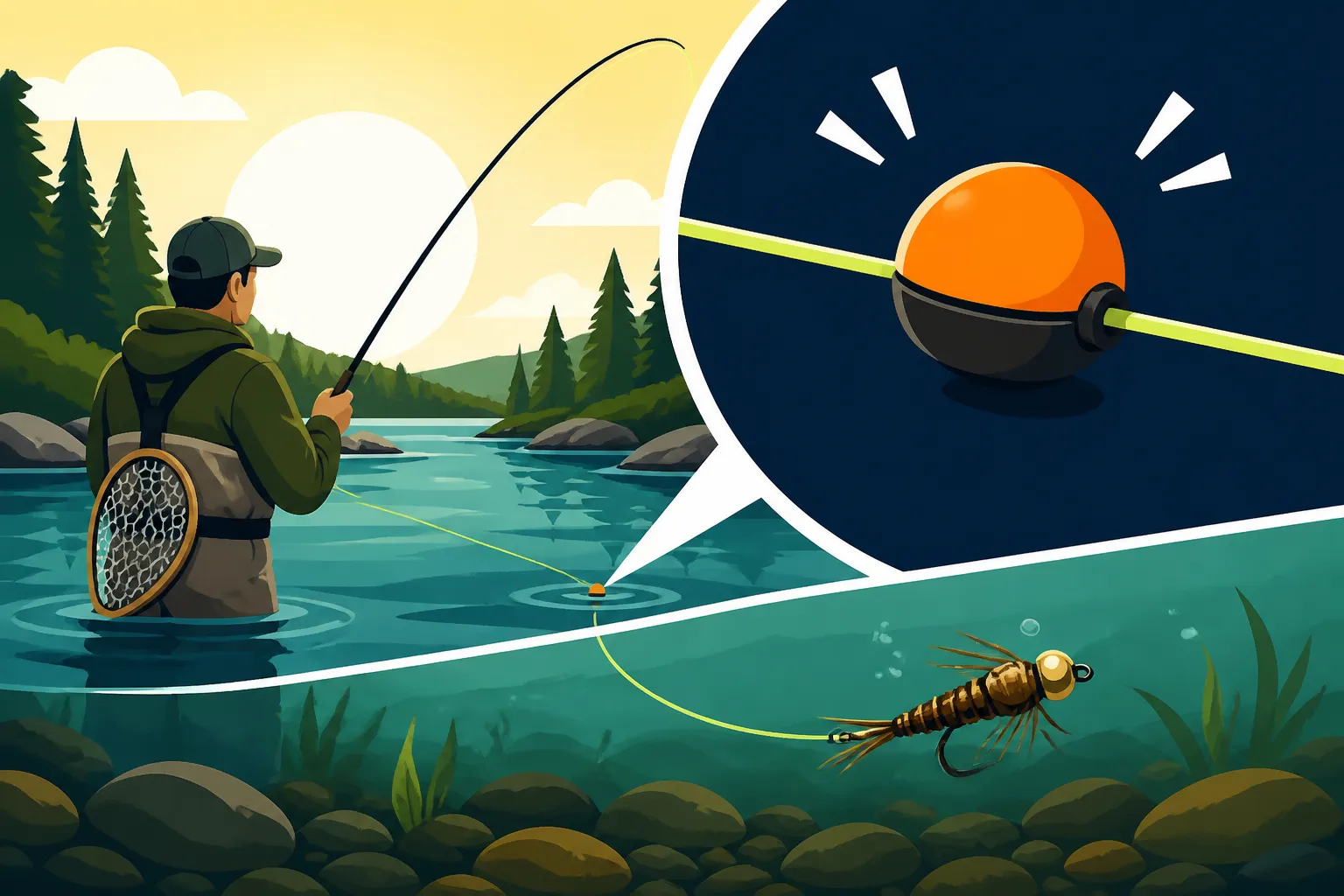
Think of a strike indicator as an extension of your eyes, bridging the gap between your rod tip and your subsurface fly. It's a highly visible buoy on your leader that mirrors the subtle movements happening underwater. When a fish eats your nymph, that slight pause, pull, or acceleration in the fly's drift is immediately translated into a visible movement of the indicator. It might dip, slide sideways, stop, or even suddenly dart upstream. These are your cues to set the hook! Without it, you're trying to feel something through several feet of line and a flexible rod tip, which is a much less efficient and reliable method. For us Canadian anglers, especially when dealing with cold hands or less-than-perfect light conditions, having that clear visual signal is an absolute game-changer.
Types of Strike Indicators and Their Best Uses in Ontario
Choosing the right strike indicator isn't a "one size fits all" situation, especially with the diverse waters we have across Ontario. What works perfectly on a small, clear brook trout stream might be utterly useless on a wide, choppy river like parts of the Grand or Niagara. Let's break down the most popular types and where they shine.
Foam Indicators: Buoyant and Visible Powerhouses
When most folks think of a strike indicator, they probably picture a brightly coloured foam bobber. These are incredibly popular for a reason: they offer fantastic buoyancy and are highly visible, even in turbulent water or at a distance. Brands like Thingamabobber have practically become synonymous with this style, and you'll find similar offerings at any well-stocked tackle shop or online store like Bass Pro Shops.
Foam indicators come in various sizes and colours, usually spherical or oval. They attach to your leader with a simple loop or a rubber O-ring system, making them relatively easy to adjust up and down the leader to change your fishing depth.
- Pros: Excellent buoyancy, highly visible in most conditions (including chop and glare), easy to adjust depth, durable. Great for supporting heavier nymphs or multiple nymphs.
- Cons: Can create a noticeable "plop" when casting, which might spook wary fish in shallow or clear water. Their bulk can affect delicate casting.
- Best for Ontario Scenario: These are your go-to for faster, deeper rivers where you're running heavier nymph rigs, or when fishing larger water bodies like the Nottawasaga River or parts of the French River where visibility is key and spooking isn't as much of a concern. They excel when you're targeting species that aren't overly shy, like active walleye on a jig-nymph combo or bigger rainbow trout in a fast run. If you're dealing with wind and chop, a foam indicator will stay visible when others might disappear. You can find a wide range of these indicators at Bass Pro Shops, making it easy to pick up a few different sizes and colours for various conditions.
Yarn and Wool Indicators: Subtle Sips and Delicate Drifts
For those ultra-spooky fish in crystal-clear waters, or when you need the most delicate presentation possible, yarn or wool indicators are often the preferred choice. These are made from natural or synthetic fibres that are light, absorb minimal water (especially when treated with floatant), and land very softly on the water.
They usually attach to your leader by cinching a small piece of yarn around the line, or by using a dedicated New Zealand-style indicator tool that allows you to loop the yarn through your leader without kinking it. The key here is to treat them with a good fly floatant to keep them riding high.
- Pros: Extremely subtle presentation, minimal splash, very lightweight, excellent for delicate drifts.
- Cons: Can become waterlogged if not properly treated with floatant, harder to see in choppy water or at a distance, more difficult to adjust depth quickly.
- Best for Ontario Scenario: Perfect for small, clear spring creeks in Southern Ontario or tucked-away brook trout lakes and streams on Crown land where fish are incredibly wary. When you're trying to fool a wise old brown trout in a glassy pool on the Grand River, the soft landing and subtle nature of a yarn indicator can make all the difference. They are also ideal when fishing very small, lightly weighted nymphs and you need to minimize any disruption to the water surface. Learning to pick up on these subtle takes is part of the art of Fly Fishing for Trout in Ontario. You can find various types of yarn indicators and floatants to keep them buoyant on online marketplaces like Amazon or specialty fly shops.
Slip Indicators: Precision Depth for Fussy Fish
Slip indicators offer a unique advantage: they can be slid up or down your leader, allowing for incredibly precise depth adjustment. This is particularly useful when you're trying to find the exact feeding depth in a pool or run where fish might be holding in a specific water column.
These indicators often consist of a small piece of surgical tubing or a tiny plastic bead that slides freely on your leader, with a knot tied above it to act as a stopper. The main challenge is finding a system that grips your leader well enough not to slip unintentionally, but also allows for easy adjustment when needed.
- Pros: Allows for exact and easy depth adjustment, often quite small and less intrusive than foam indicators.
- Cons: Can sometimes slip on the line if not secured properly, visibility can be an issue in rough water or low light, not as buoyant as foam.
- Best for Ontario Scenario: Excellent for stillwater nymphing (e.g., in some of our provincial park lakes or smaller ponds) or on slow-moving rivers where fish are suspended at a precise depth. If you're working a deep hole on a river like the Saugeen, being able to incrementally adjust your nymph's depth is invaluable. It’s also useful for teaching newer anglers about finding the feeding zone without having to re-tie their entire rig.
Paste or Putty Indicators: The Ultimate Stealth Mode
For the ultimate in stealth and versatility, paste or putty indicators are hard to beat. These are moldable, non-toxic materials that you can pinch onto your leader at any point. They come in various colours and buoyancy levels.
The beauty of these is their complete customization – you can use a tiny speck for a micro-nymph or a larger blob for more buoyancy. They create virtually no splash and can be easily removed or repositioned without damaging your leader.
- Pros: Extremely subtle, lands silently, fully customizable size and buoyancy, easy to apply and remove, no leader damage.
- Cons: Can sometimes slip on the line with aggressive casting, can leave a slight residue, not as durable or reusable as other types.
- Best for Ontario Scenario: Ideal for extremely finicky trout in ultra-clear, calm waters, like many of Ontario's Ontario Fly Fishing Only Special Regulation Waters or during periods of very low fishing pressure. If you're trying to fool educated fish that have seen every other trick in the book, the minimal disturbance of a putty indicator might be your secret weapon. They are also great for micro-nymphing situations where even a small piece of yarn feels too heavy.
Dry Fly as an Indicator: The "Hopper-Dropper" Technique
This isn't a dedicated strike indicator in the traditional sense, but rather a clever fishing technique that uses a buoyant dry fly to serve as your indicator. You tie a large, visible dry fly (like a hopper, stimulator, or even a Klinkhamer for the Dry Fly Fishing Ontario Rivers enthusiasts) to your leader, and then tie a length of tippet from the bend of that dry fly's hook down to your nymph. This is commonly known as a "hopper-dropper" or "dry-dropper" rig.
When a fish takes your nymph, the dry fly will dip, pause, or get pulled under, signaling the strike. As an added bonus, a fish might even decide to eat your dry fly!
- Pros: Highly effective, presents two flies at once, gives you a shot at both surface and subsurface takes, very natural presentation, no extra indicator clutter on the line.
- Cons: Not suitable for very deep nymphing (as the dry fly would drag), less buoyant than dedicated foam indicators, requires active fish that might also be looking up.
- Best for Ontario Scenario: Fantastic in rivers and streams when fish are active but not fully committing to either dries or nymphs, or when you're exploring new water and want to cover your bases. It's particularly deadly in late summer and early fall when terrestrials like grasshoppers are common, or during an active mayfly hatch where fish might be feeding just below the surface film. This method is incredibly versatile and allows you to experiment with different Fly Patterns for Ontario Trout Streams simultaneously.
Factors to Consider When Choosing an Indicator for Ontario Waters
Now that we've covered the main types, let's think about how to actually pick the right one for your next Ontario fishing adventure. It's not just about what looks good in the tackle box; it's about matching your gear to the conditions and the fish you're targeting.
Water Conditions and Depth: Clear, Choppy, Deep, or Shallow?
The environment you're fishing in plays a huge role in indicator selection. Imagine fishing a slow, clear stretch of the Beaver River compared to a roaring rapids on the Kaministiquia River.
- Fast, Deep Water: Here, visibility and buoyancy are paramount. You need an indicator that can support heavy nymphs and be seen in turbulent water. Large foam indicators (like a Thingamabobber) are often the champions in these conditions, as they won't get pulled under easily and stand out against a busy background.
- Slow, Clear Water: Subtlety is key. A loud "plop" from a large foam indicator can send fish scattering. Yarn, wool, or putty indicators are much better choices here, offering a quiet presentation that won't alert wary fish. If you need some depth control, a subtle slip indicator could also work.
- Shallow Water: Again, minimal disturbance is vital. Yarn, putty, or a dry-dropper rig where the dry fly is relatively close to the nymph will allow for a natural drift without scaring fish that are closer to the surface.
- Wind and Chop: Foam indicators, due to their size and buoyancy, generally perform best in windy conditions or on choppy lakes where a smaller, lighter indicator would be difficult to see or would get drowned out by wave action.
- Stained Water: Brightly coloured foam indicators (think neon orange or chartreuse) stand out best in stained or murky water, providing a clearer visual cue.
Fly Weight and Presentation: Heavier Nymphs vs. Delicate Ones
The weight of your nymph rig directly impacts the kind of indicator you need.
- Heavy Nymphs/Multiple Nymphs: If you're running a heavy stonefly pattern or a couple of tungsten-bead nymphs to get down quickly in a fast current, you'll need a buoyant foam indicator that can support that weight without being dragged under immediately. Your indicator needs to ride high enough to show subtle takes, not just disappear with the weight of your flies.
- Light Nymphs/Delicate Presentations: For tiny midges or small mayfly nymphs, a lightweight yarn, wool, or putty indicator is ideal. These won't overpower the drift of your delicate flies, allowing them to tumble naturally without restriction. This is crucial for fooling picky fish that are looking for a perfectly unhindered drift. When you're trying to match the hatch with specific Fly Patterns for Ontario Trout Streams, every detail matters.
Visibility and Personal Preference: What Can YOU See Best?
Let's be real: the "best" indicator is the one you can see reliably. Your eyesight, the light conditions, and the background environment all play a role.
- Colour Choice: While many anglers default to bright orange or chartreuse, sometimes a black or white indicator stands out better against a busy, colourful background (like autumn leaves reflecting on the water). Experiment! What works for one person on a particular day might not work for you.
- Light Conditions: On bright, sunny days, anything can be visible. But during overcast conditions, at dawn or dusk, or in deep shadows, high-contrast colours are crucial.
- Background: Consider the colours of the riverbank, trees, or sky. A white indicator might disappear against a bright sky but pop against a dark background. A green one might blend into the trees but stand out against a grey sky. Having a variety of colours on hand, easily purchased from online retailers like Amazon, allows you to adapt quickly.
- Floatants: For yarn or wool indicators, a good floatant is non-negotiable. It keeps them riding high and visible. Without it, they'll become waterlogged and disappear.
Ultimately, your own comfort and ability to detect strikes are paramount. Don't be afraid to try different types and colours to find what works best for your eyes in various Ontario fishing scenarios. Think about your overall Best Gear for Ontario Trout Fishing setup, and how the indicator fits into that.
Tips for Maximizing Your Strike Indicator's Effectiveness
A strike indicator is only as good as how you use it. It's not just a bobber you throw out there; it's a finely tuned tool for communication between you and your fly. Mastering its use requires practice and attention to detail.
Proper Placement and Depth Setting: The "One and a Half Times" Rule
One of the most common mistakes is setting your indicator too shallow or too deep. A general rule of thumb for nymphing in rivers is to place your indicator one to one and a half times the depth of the water you are fishing, upstream from your first nymph.
- Example: If you're fishing in three feet of water, your indicator should be set between 4.5 and 6 feet above your lead nymph. This ensures your nymphs have enough time to sink to the fish's feeding level and drift naturally before being influenced by the indicator or your fly line.
- Constant Adjustment: Rivers and lakes have varying depths. Don't set it and forget it! Adjust your indicator frequently as you move through different sections of water. This is where the ease of adjustment with foam or slip indicators really shines. If you're constantly snagging bottom, move it up slightly. If you're not getting hits in water you know holds fish, try moving it deeper.
Reading the Drift: More Than Just a Plunge
The most obvious strike is when your indicator suddenly plunges beneath the surface. But many takes are far more subtle. Learning to "read the drift" is critical for increasing your hook-up rate.
- Subtle Pauses: If your indicator is drifting along smoothly with the current and then suddenly hesitates or stops, it's often a fish. They might have gently picked up your nymph, or it could be momentarily snagged on the bottom. When in doubt, set the hook! It's better to hook a rock than miss a fish.
- Sideways Movement: An unnatural sideways dart or drag against the current can signal a fish has moved to intercept your fly.
- Speed Changes: If your indicator suddenly accelerates or slows down in a way that doesn't match the surrounding current, it's a red flag.
- Upstream Movement: Occasionally, a fish will pick up your nymph and move upstream. The indicator might appear to "pop" or move against the current.
Pay close attention to anything that looks unnatural about your indicator's movement. It's a skill that develops with time and experience, particularly when practicing Wading Techniques for Ontario Trout Streams.
Mending and Line Control: The Drag-Free Drift is Paramount
Even the best strike indicator can't help you if your flies aren't drifting naturally. A drag-free drift is the holy grail of nymphing. Your indicator helps you visualize this. If your indicator is dragging unnaturally faster or slower than the current, your flies are also dragging, and fish are highly unlikely to eat them.
- Mending: Learn to mend your fly line to correct for different current speeds. A well-executed mend upstream or downstream can prolong your drag-free drift. The indicator clearly shows you when your mend is effective and when your line is getting pulled by conflicting currents. This is a critical skill for navigating various sections of a river, as detailed in guides like How to Fish a Run and Pool Trout Stream.
- Slack Management: Too much slack in your line makes it hard to see subtle takes and impedes hook sets. Too little slack causes drag. Your indicator helps you gauge the right amount of line out, forming a gentle curve from your rod tip to the indicator, allowing for immediate visual cues. Choosing the right Best Fly Rods for Ontario Trout Streams and a good reel with a smooth drag will also help you manage line better.
Practice, Practice, Practice: Becoming a Strike Indicator Whisperer
Like any skill in fishing, becoming proficient at reading a strike indicator takes time on the water. Don't get discouraged if you miss a few bites initially. The more you watch your indicator, the more you'll start to recognize the subtle nuances that signal a fish.
Spend time in different types of water, experimenting with various indicator styles, colours, and depths. Observe how your indicator reacts to the current when there are no fish involved. Then, when a fish does take, you'll have a better understanding of what's different. Think of it as developing a sixth sense for what's happening beneath the surface. Using the right Best Tippet Size for Stocked Trout for delicate presentations will also enhance your sensitivity.
For nymph fishing, especially in Ontario's diverse and challenging waters, a strike indicator is truly an indispensable tool. It transforms guesswork into informed action, dramatically increasing your chances of hooking up. Don't be afraid to experiment with different types and techniques; your efforts will be rewarded with more fish and a deeper understanding of the underwater world. You can find a huge selection of all the indicator types mentioned, from foam to yarn and putty, available at reliable outdoor retailers like Bass Pro Shops and on online platforms such as Amazon, allowing you to stock up and find what works best for your specific fishing style.
Disclaimer
This article is for general informational purposes only and does not constitute professional advice. Laws, prices and regulations vary by location and change over time. Consult a qualified professional for guidance on your specific situation.