Best kayak cart for portaging around rapids
There's nothing quite like the freedom of paddling a kayak through Ontario's breathtaking waters, but let's be honest, those portages, especially around gnarly rapids or challenging terrain, can really put a damper on your adventure. Hauling a fully loaded fishing kayak by hand over roots, rocks, and mud isn't just exhausting; it risks damaging your gear and your back. This guide is here to save your sanity and your kayak, detailing exactly what to look for in the best kayak cart for portaging around rapids, ensuring your journey remains a joy, not a chore.
Why a Quality Kayak Cart is Essential for Ontario's Whitewater and Portages
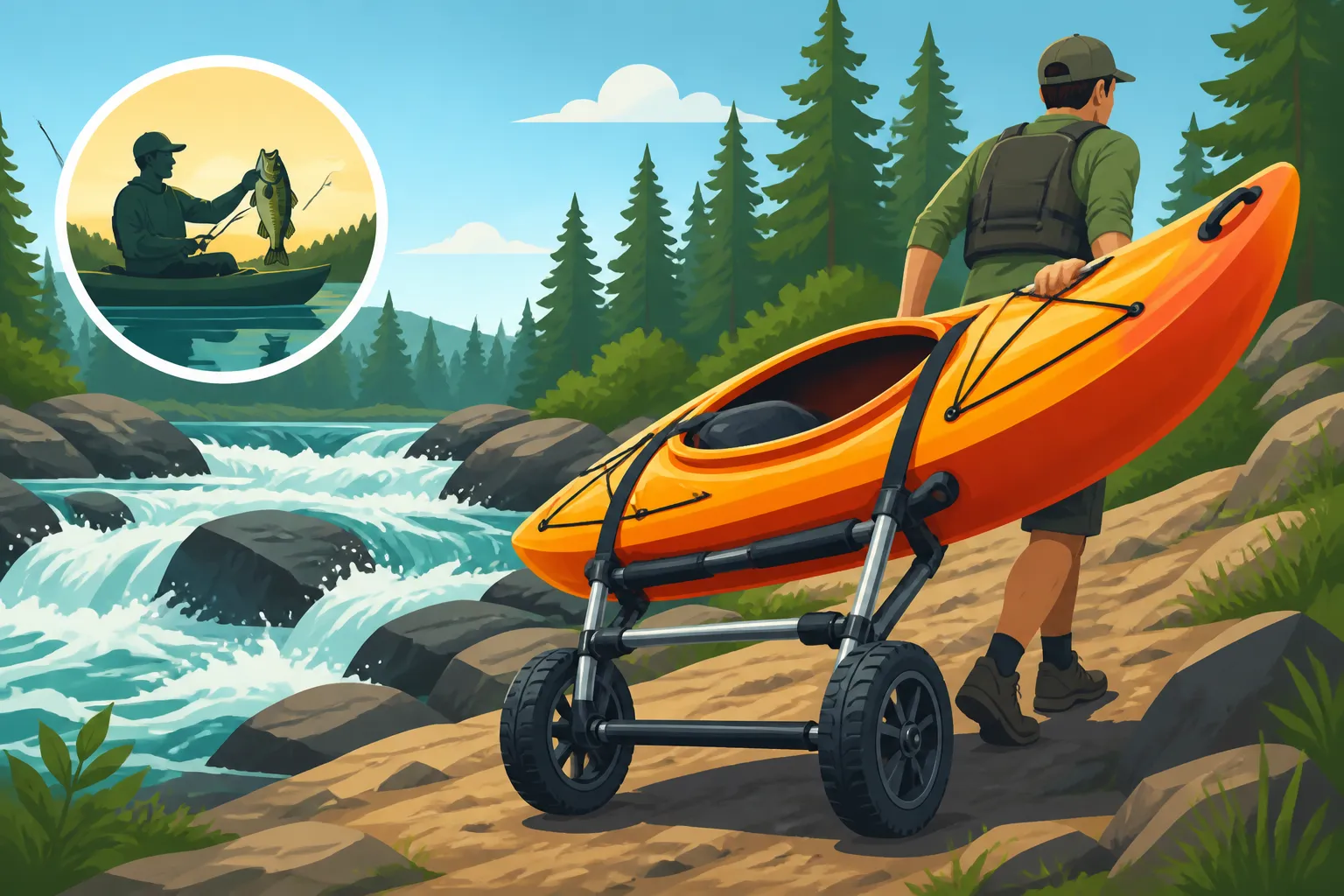
Anyone who’s spent time navigating Ontario’s incredible network of rivers, whether it's the winding French River or the mighty Ottawa, knows that rapids are an inevitable part of the journey. And with rapids often come portages – those sometimes-short, sometimes-grueling stretches of land where you have to carry your boat and all your gear around the unnavigable water. A kayak cart isn't just a luxury; it's a game-changer that transforms a dreaded struggle into a manageable stroll, letting you conserve energy for what really matters: fishing those pristine waters.
The Frustration of Manual Portaging
Let's paint a picture we've all lived: you've been paddling for hours, the sun is high, and your arms are already feeling it. Then, you hear the distant roar of rapids, signaling an upcoming portage. Your heart sinks a little, doesn't it? You know what's coming: wrestling your heavy kayak, packed with rods, tackle boxes, coolers, and camping gear, off the water and onto your shoulders. You slip on muddy banks, scrape your hull against sharp rocks, and feel every ounce of weight dig into your muscles. By the time you reach the other side, you're not just tired, you're utterly spent, perhaps even nursing a tweaked back or a bruised ego from a close call with a submerged root. This manual labour not only zaps your energy but also drastically increases the risk of damaging your expensive equipment – a scratched hull, a bent rudder, or even worse, a broken rod. It also eats up valuable fishing time, turning what should be a smooth transition into a lengthy, frustrating ordeal.
Understanding Ontario's Diverse Portaging Challenges
Ontario's wilderness is stunning, but it's rarely uniform or perfectly manicured. The portages you'll encounter can vary wildly. Some might be relatively smooth, well-worn paths, like those found in popular provincial parks. Others, especially on more remote rivers or lesser-traveled routes, are rugged, uneven, and unforgiving. Think about hauling your kayak over jagged rocks that look like they're trying to trip you at every turn, navigating through thick, tangled roots that snake across the trail, or slogging through soft, sandy stretches along a riverbank. Muddy sections after a rain shower can turn a simple path into an absolute quagmire. These are the real-world conditions an effective kayak cart needs to conquer, especially when you're trying to bypass a roaring set of rapids. A cart that excels on pavement might utterly fail on a typical Canadian Shield portage, leaving you stuck and frustrated.
Key Features to Look For in a Kayak Cart for Rapids and Rough Terrain
When you're shopping for a kayak cart, especially for the challenging portages Ontario throws your way, you can't just grab the cheapest option. You need something robust, reliable, and designed to handle abuse. Investing in the right cart upfront will save you headaches, backaches, and potential gear damage down the line. It's about finding that sweet spot where durability meets practical design.
Wheel Type and Durability
The wheels are arguably the most critical component of any kayak cart designed for tough terrain. You need wheels that can roll smoothly over obstacles, provide ample flotation on soft ground, and withstand impacts without breaking.
- Pneumatic (Air-Filled) Wheels: These are often the gold standard for versatility. Their ability to be inflated to different pressures makes them fantastic. High pressure works well on harder, smoother trails, offering less rolling resistance. Lower pressure, on the other hand, allows the tire to "float" over soft sand, mud, or loose gravel without digging in. They provide a natural shock absorption, which is a huge plus when traversing rocky paths, protecting both your kayak and the cart itself from jarring impacts. The downside, of course, is the risk of a flat tire, so always carry a small pump and a patch kit.
- Solid (Non-Pneumatic) Wheels: While they eliminate the risk of flats, not all solid wheels are created equal. Hard plastic wheels found on cheaper carts will struggle and potentially get stuck in soft terrain and offer no shock absorption. However, some higher-end solid wheels are made from durable, dense rubber or foam that mimics some of the flotation and give of pneumatic tires without the maintenance. These can be a great, worry-free option if you find a quality model.
- Wheel Size: Generally, larger diameter wheels are better for rough terrain. They roll over obstacles like rocks and roots more easily, requiring less effort from you. Look for wheels with a good, knobby tread pattern for improved grip on slippery or loose surfaces. For serious portaging, avoid anything with small, hard wheels that are clearly designed for paved surfaces or gentle beach access.
Frame Construction and Capacity
The cart's frame is its backbone. It needs to be strong enough to support your fully loaded kayak, including all your fishing gear, and resilient enough to withstand the bumps and scrapes of wilderness travel.
- Material:
- Aluminum: Lightweight and corrosion-resistant, aluminum frames are a popular choice. They're strong enough for most kayaks and don't rust when exposed to water, which is a huge bonus in a fishing context. Just ensure the welds are solid.
- Stainless Steel: Heavier than aluminum but exceptionally strong and highly corrosion-resistant. While less common due to weight, a well-built stainless steel cart is virtually indestructible.
- Marine-Grade Plastic/Composites: Some modern carts use high-strength plastic composites. These are very lightweight and completely impervious to rust, but you need to be sure they have sufficient weight capacity and structural rigidity for your particular kayak and gear load.
- Weight Rating: Always check the manufacturer's weight capacity. Your kayak alone might be 70-100 pounds, but once you add a tackle box, cooler, fishing rods, anchor, and safety gear, you could easily be pushing 150-200 pounds or more. Overloading a cart is a sure way to cause it to buckle or fail at the worst possible moment.
- Stability: A wide wheelbase provides better stability, especially on uneven ground. Look for designs that prevent your kayak from rocking excessively or tipping over, even when traversing side slopes. A well-designed kickstand is also crucial for stable loading and unloading on uneven banks.
Securing Your Kayak
A cart is only as good as its ability to keep your kayak firmly attached. You don't want your prized fishing vessel sliding off halfway through a portage.
- Strap Systems: High-quality carts will include robust straps with quick-release buckles. Look for straps that are wide and made of a durable, non-stretching material. Padded straps can also help protect your kayak's hull. The ideal setup allows you to cinch your kayak down tightly without damaging the hull.
- Cradles/Pads: The points where your kayak rests on the cart should be well-padded and designed to cradle the hull securely. Rubberized pads, foam blocks, or adjustable arms can prevent scuffs and provide grip, stopping the kayak from shifting or rotating, especially on angled terrain. Some carts have adjustable arms to perfectly fit different hull shapes, from flat-bottomed fishing kayaks to V-hulls.
- Preventing Slippage: Beyond straps and pads, consider the overall design. Does the cart have a low center of gravity? Are there features that intrinsically prevent the kayak from sliding forward or backward on slopes? A good cart minimizes the need for you to constantly adjust your kayak's position.
Types of Kayak Carts Best Suited for Ontario's Rapids
Just like there are different types of kayaks for different purposes, there are various kayak cart designs, each with its own strengths and weaknesses. Understanding these can help you pick the best one for those challenging Ontario portages.
"Scupper Hole" Carts: Pros and Cons
Scupper hole carts are designed for kayaks that have self-draining scupper holes in the hull. They consist of two vertical posts that insert directly into these holes, effectively turning the kayak into a sort of wheelbarrow.
Pros:
- Simple and Compact: They are typically very lightweight and easy to assemble or disassemble, often fitting neatly into a kayak hatch when not in use.
- Secure Fit (when compatible): If your kayak's scupper holes are properly spaced and sized for the cart, it offers a very secure attachment point, as the kayak essentially rests on the cart through these holes.
- Quick to Deploy: Loading and unloading can be very fast, which is a definite plus when you're moving between water and land frequently.
Cons:
- Limited Compatibility: This is the biggest drawback. Scupper hole carts only work with kayaks that have scupper holes, and even then, the diameter and spacing of the cart's posts need to match your kayak's holes precisely. It's a deal-breaker for kayaks without them, like many sit-inside models.
- Potential for Hull Stress: If your kayak isn't designed to support weight through its scupper holes (especially a heavily loaded one), or if the cart posts are too rigid or don't fit perfectly, you risk cracking or deforming the plastic around the scupper holes, particularly on thinner-hulled kayaks. This is a real concern when bouncing over rough terrain.
- Stability on Uneven Ground: The kayak often sits quite high on these carts, which can make them top-heavy and prone to tipping on side slopes or very uneven portage trails. The narrow contact points can also make them unstable.
For a serious fishing kayak that's often loaded down, and particularly for rougher portages, a scupper cart needs careful consideration. While convenient, the potential for hull damage and stability issues on truly rugged Ontario terrain means they might not always be the best bet for every angler, especially if you're carrying a substantial amount of gear.
"Belly" or "Frame" Carts: The All-Around Workhorse
These carts are often considered the most versatile and robust option for kayakers tackling diverse terrain. Instead of using scupper holes, they feature a frame that supports the kayak from underneath, distributing the weight more evenly across the hull.
Pros:
- Universal Compatibility: They work with virtually any kayak, whether it has scupper holes or not. This makes them a fantastic choice if you own multiple kayaks or frequently paddle with friends who have different boat styles.
- Superior Weight Distribution: By supporting the kayak's entire hull, belly carts minimize stress points, reducing the risk of damage to your boat, even when heavily loaded. This is crucial for larger fishing kayaks that carry a lot of gear.
- Enhanced Stability: The kayak typically sits lower and is cradled more securely within the cart's frame, leading to greater stability on uneven trails. The wider contact points and adjustable cradles keep the kayak from twisting or sliding.
- Greater Weight Capacity: Many frame-style carts are designed for heavier loads, making them ideal for fully rigged fishing kayaks complete with tackle, coolers, and even a trolling motor. You'll often find these constructed with strong aluminum or stainless steel, capable of handling significant weight.
Cons:
- Can Be Bulkier: While many are designed to be collapsible, they might not always fit neatly into a small kayak hatch, requiring them to be strapped to the deck or stowed in a larger storage area.
- Slightly Longer Setup: Depending on the design, securing your kayak to a frame cart with straps might take a minute or two longer than simply dropping it onto scupper posts. However, this extra minute is often well worth the added security and peace of mind.
For tackling Ontario's variable portages, from gravel paths to rocky slopes and muddy tracks around rapids, a well-designed belly or frame cart is often the most reliable and effective choice. Brands like Malone and C-Tug (available through retailers like Bass Pro Shops or Amazon) offer excellent frame-style options that frequently get high marks from anglers.
Inflatable/Heavy-Duty Wheel Carts
While technically a sub-category of belly or frame carts, specific carts designed with large, low-pressure inflatable wheels deserve special mention due to their exceptional performance in certain challenging conditions. These are sometimes referred to as "balloon tire" carts.
Pros:
- Unrivaled Flotation: These large, soft, low-pressure wheels excel on soft sand, deep mud, and loose gravel where other wheels would simply dig in. If your portages frequently involve sandy beaches or very boggy ground, these are a dream come true.
- Excellent Shock Absorption: The large air volume in the tires provides superb cushioning, absorbing impacts from rocks and roots, which protects both your kayak and the cart's frame from jarring forces.
- Easy Rolling: Despite their size, they often roll with surprising ease over minor obstacles once you get them moving, thanks to their large diameter.
Cons:
- Bulky: The large wheels, while effective, are undeniably bulky and can be difficult to store compactly in or on your kayak.
- Higher Cost: Carts featuring these specialized wheels often come with a higher price tag due to the advanced wheel technology and robust construction required.
- Puncture Risk: Like all pneumatic tires, they are susceptible to punctures, so carrying a repair kit is essential.
- Air Pressure Management: You'll need to monitor and adjust tire pressure based on the terrain – lower for soft ground, higher for firmer trails.
These heavy-duty wheel carts are excellent for specific conditions, particularly where flotation is paramount. If you frequently fish and portage in areas with extensive sandy shores, soft mudflats, or very rough, rocky ground, the investment might be well worth it. They are less common to see on every portage, but their performance in specific niches is hard to beat.
| Cart Type | Best For | Pros | Cons |
|---|---|---|---|
| Scupper Hole | Sit-on-top kayaks with matching holes | Compact, quick to deploy, secure fit (if compatible) | Limited compatibility, potential hull stress, can be top-heavy on uneven ground |
| Belly/Frame | All kayak types, heavy loads, varied terrain | Universal compatibility, superior weight distribution, enhanced stability | Can be bulkier, slightly longer setup time |
| Heavy-Duty Wheel | Soft sand, mud, loose gravel, very rough terrain | Unrivaled flotation, excellent shock absorption, easy rolling | Bulky, higher cost, puncture risk, requires air pressure management |
Tips for Choosing and Using Your Kayak Cart on Ontario's Rivers
Selecting the right kayak cart is just the first step; knowing how to properly use and maintain it will ensure it serves you faithfully for countless fishing adventures across Ontario. Don't underestimate the small details – they can make a big difference in how smoothly your portages go.
Matching the Cart to Your Kayak and Gear Load
This is a fundamental step that many anglers overlook, leading to frustration down the line. First, accurately measure your kayak. Note its length, width, and, critically, its hull shape. Is it a flat-bottom fishing kayak, a V-hull touring boat, or something in between? This will dictate how well certain carts cradle your boat. For example, a wide, flat-bottom fishing kayak might require a cart with adjustable or wider support bars than a narrow touring kayak.
Next, consider your total gear load. Don't just think about the kayak's weight. Add the weight of your tackle boxes, a loaded cooler (full of ice and fish!), multiple rods, an anchor, safety equipment like a Best Life Jacket for Lake Kayak Fishing, and any camping gear if you're on a multi-day trip. Get a realistic estimate of the total weight your cart needs to support. Always choose a cart with a weight capacity that significantly exceeds your estimated total load, giving you a safe buffer. You don't want to be right at the limit, especially when you're bouncing over rocks on a portage trail. If you regularly carry a Best Dry Bag for Kayak Fishing and other heavy items, that capacity is even more crucial.
Practicing Proper Loading and Securing Techniques
Even the best kayak cart won't perform optimally if your kayak isn't loaded and secured correctly. Before you hit the wilderness, take some time to practice in your backyard or a local park.
- Balance is Key: Position your kayak on the cart so that the weight is evenly distributed. You want to avoid the stern or bow dragging on the ground, but also prevent too much weight on one side, which can make the cart prone to tipping. For most kayaks, the sweet spot is slightly aft of the cockpit or main seating area. A slight tilt with the bow pointing just slightly upwards is often ideal for clearing small obstacles.
- Cinch It Down Tightly: Use the provided straps (or upgrade to better ones if needed) to firmly secure your kayak to the cart. It should be snug enough that the kayak doesn't shift, rock, or slide, even when you lift the cart by the handle or tilt it. However, don't over-tighten to the point where you visibly deform your hull, especially with plastic kayaks. Good padding helps here.
- Test the Load: Once secured, try pulling and pushing the loaded cart around on some uneven ground. Does anything slip? Does it feel stable? Are the wheels turning freely? This pre-trip check can save you a lot of hassle when you're on a real portage, perhaps trying to navigate around rapids on the French River Fishing Guide or the Ottawa River Fishing Spots. Make sure your paddles, spare rods, and other loose items are secured within the kayak or on the deck – nothing ruins a portage like a rod sliding out and snapping.
Maintenance and Storage for Longevity
Your kayak cart is an investment, and like all good gear, it deserves a little care to ensure it lasts for seasons of hard use.
- Rinse After Use: Especially after using it in saltwater (though less common in Ontario's freshwater systems, it still applies if you venture elsewhere) or muddy conditions, thoroughly rinse your cart with fresh water. This removes grit, salt, and corrosive mud that can wear down moving parts and fasteners.
- Check Fasteners and Moving Parts: Periodically inspect all bolts, pins, and buckles. Tighten anything that's come loose and lubricate any moving parts (like axle bearings on pneumatic wheels) with marine-grade grease or silicone spray.
- Tire Care (Pneumatic Wheels): If you have pneumatic tires, check the pressure before each outing. Store them at a moderate pressure, not completely deflated or over-inflated, to prevent tire damage. Replace worn tires or inner tubes as needed. Keep a portable pump and a basic patch kit handy in your gear, just in case.
- Proper Storage: When not in use, store your cart in a dry, shaded place. Prolonged exposure to UV light can degrade plastics and rubber. If it's collapsible, fold it down to save space. Some anglers store their carts on a garage wall using hooks, keeping it off the ground and out of the way. When it comes to finding replacement parts or new carts, checking out a specialty outdoor retailer like Bass Pro Shops or even a broad online marketplace like Amazon can offer a wide selection of accessories and components to keep your cart in top shape.
By following these guidelines, your kayak cart will be a reliable companion, transforming those daunting portages into manageable transitions, and letting you focus on the pure enjoyment of Ontario fishing.
Disclaimer
This article is for general informational purposes only and does not constitute professional advice. Laws, prices and regulations vary by location and change over time. Consult a qualified professional for guidance on your specific situation.