Best Jigs for Ontario Muskie
As passionate anglers, we often fall into routines, especially when it comes to chasing elusive creatures like the mighty muskie. Many folks grab their biggest bucktails or jerkbaits and head out, completely overlooking one of the most versatile and effective presentations: the jig. It's frustrating when you know muskies are around but they just won't commit to your usual offerings. This comprehensive guide is here to shed light on why jigs are not just a viable option, but often a game-changer for Ontario muskie, covering the best types, how to fish them, and the gear you need to succeed.
Why Jigs for Muskie? Dispelling the Myth
Let's face it, when you think "muskie lure," jigs usually aren't the first thing that springs to mind. There's a common misconception that muskie only hit massive, aggressively presented baits. While those certainly have their time and place, underestimating the power of a well-fished jig for these apex predators can mean missing out on some incredible bites, especially when conditions get tough or fish are pressured.
Beyond the Traditional Bucktail
For generations, the bucktail has reigned supreme in the muskie world. And for good reason – they catch fish! But to limit your arsenal to only the most traditional muskie baits is to tie one hand behind your back. Jigs offer a completely different profile, action, and presentation speed. They can mimic wounded baitfish more subtly, or create a distinct thumping vibration that fish haven't seen a hundred times that season. Think about those days when the water is clear, the sun is high, or the fishing pressure has been intense. A large jig, worked methodically, can often coax a strike when flashier, faster lures are ignored. It's about giving the muskie something new, something that looks vulnerable and easy to snatch up, without the aggressive chase.
The Element of Surprise
Muskie are intelligent, wary fish. They see a lot of lures over their long lives, and they learn quickly. This is where the jig truly shines – it presents an "element of surprise." Imagine a muskie hunkered down in a weed bed or nestled against a deep rock pile. A loud bucktail whizzing by might spook them or, at best, draw a follow without a strike. Now, picture a bulky, natural-looking jig slowly dropping into their strike zone, fluttering and pulsing like an easy meal. This unexpected, often subtle presentation can trigger a reaction strike from a fish that was otherwise dormant or highly pressured. In colder water, when a muskie's metabolism slows down, a jig allows you to keep a bait in their face for longer, increasing the odds they'll decide it's worth the energy to eat. Don't underestimate the power of a bait that doesn't scream "predator!" but rather "easy meal!"
Understanding Muskie Jig Types for Ontario Waters
When we talk about muskie jigs, we're not just talking about tiny walleye jigs scaled up. These are purpose-built, heavy-duty offerings designed to stand up to the biggest freshwater predators. Understanding the different types available will help you choose the right tool for the job, whether you're working deep structure or pitching into dense cover.
Heavy Hair Jigs and Marabou Jigs
These are perhaps the most traditional of the "big jigs" and absolutely deserve a place in your muskie tackle box. Hair jigs, often made with deer, bucktail, or even boar hair, offer incredible natural movement in the water. Marabou jigs, with their soft, flowing feathers, have an even more lifelike pulsation and "breathing" action, even on the slightest retrieve or pause. The key here is bulk and profile. You're often looking for jigs in the 1 oz to 3 oz range, sometimes even heavier, with a head shape designed to cut through the water effectively or fall with a tantalizing wobble.
These jigs excel in colder water temperatures, like early spring or late fall, when muskie are often less aggressive and feeding more deliberately. Their subtle, natural presentation can be irresistible. You can fish them with a slow, steady retrieve, a series of short pulls, or even by allowing them to sink and rise near structure. Popular colours mimic common baitfish in Ontario like perch, cisco, and suckers – think greens, browns, whites, and blacks. When looking for these, check out specialized online retailers or even your local Bass Pro Shops for a good selection of quality-tied muskie hair jigs.
Rubber Jigs (Swim Jigs and Flipping Jigs)
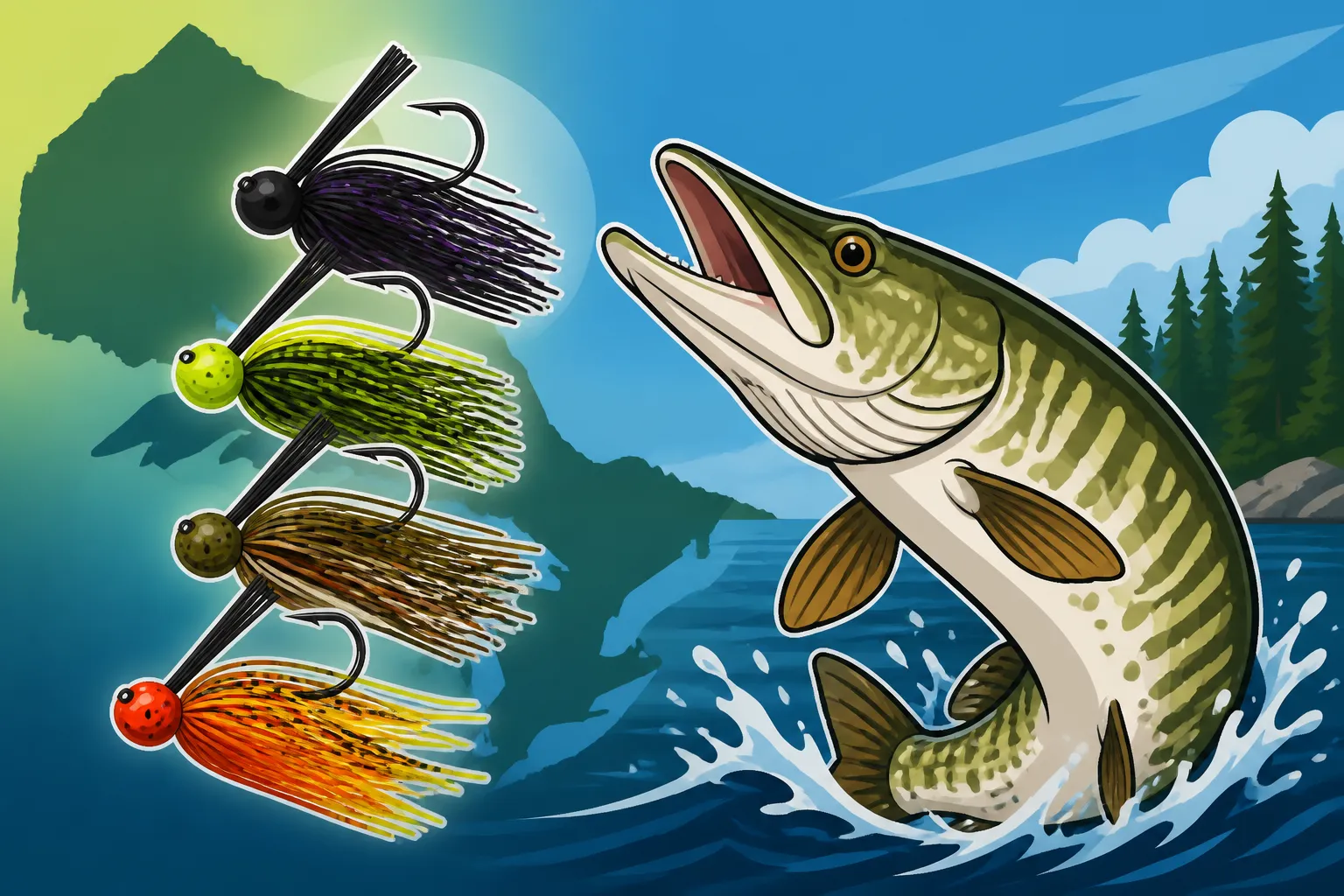
Rubber jigs are incredibly versatile and have gained significant traction in the bass world, and for good reason, their effectiveness crosses over beautifully to muskie. These jigs feature silicone skirts that flare and pulse, paired with a solid jig head. The main appeal of rubber jigs for muskie is their durability and their ability to be fished in heavy cover without snagging. They're often designed to be relatively weedless, especially when paired with a good trailer.
Swim jigs are excellent for covering water, often retrieved with a steady retrieve, perhaps with an occasional twitch to make the skirt pulse. Flipping jigs, with their more compact heads and often beefier weed guards, are perfect for pitching into dense weed pockets, submerged timber, or heavy brush. The silicone skirts come in an endless array of colours, allowing you to match the forage perfectly or use bright, contrasting colours to trigger a reaction. Don't forget the trailer! A paddle tail swimbait or a large grub threaded onto the hook behind the skirt can add extra bulk, action, and vibration, making the jig appear larger and more enticing. These can be particularly effective in warmer water when muskie are more active and holding tight to cover.
Jigging Plastics (Large Soft Baits)
This category really pushes the boundaries of traditional "jigging." Here, we're talking about pairing heavy-duty jig heads with massive soft plastic baits – think huge paddle tail swimbaits, creature baits, or oversized grubs. The jig head provides the weight and the hook, while the soft plastic body gives the lure its primary profile, action, and vibration. These are fantastic for vertical jigging deep water structure, rip-jigging across humps, or even casting and retrieving over deep flats.
The beauty of jigging plastics is the sheer variety of sizes, shapes, and textures available. You can find soft plastics up to 12-14 inches long that perfectly imitate a large cisco or whitefish. The soft plastic material provides a natural feel that muskie often hold onto longer, giving you a better chance to set the hook. This method is particularly effective when How to Catch Lake Trout in Ontario or Walleye Fishing in Ontario are also present, as muskie will often key on the same deep forage. Ensure your jig heads have extremely strong hooks, as muskies have a way of testing every piece of your tackle. Investing in quality components from reputable brands is key here, and you can often find great deals on these larger plastics and jig heads on Amazon or specialized tackle sites.
Essential Characteristics of a Great Muskie Jig
You can't just pick any old jig and expect it to hold up to a muskie. These fish are powerful, aggressive, and equipped with serious dental work. The difference between a jig that lands a trophy and one that ends in disappointment often comes down to the details of its construction. Understanding these characteristics is crucial for building a reliable muskie jig arsenal.
Weight and Profile Considerations
The weight of your muskie jig is paramount for a few reasons. First, it dictates casting distance. You're often throwing substantial baits, and a heavy jig head helps them fly true and reach those distant weed lines or deep-water humps. Second, weight determines how quickly your jig sinks and how it maintains depth. If you're trying to fish 20 feet of water, a lighter jig will take forever to get down and be easily pulled off target by current or boat drift. Muskie jigs typically range from 1 oz to 4 oz or even heavier, depending on the depth and conditions you're fishing.
The profile is equally important. Are you trying to "match the hatch" by imitating a common baitfish like a perch or cisco? Or are you looking for a bulkier, more aggressive profile to trigger a reaction strike? Think about the shape of the jig head – does it have a flat bottom for standing up on the retrieve, or a streamlined head for cutting through vegetation? The overall size, shape, and how it presents in the water will significantly impact its effectiveness. A good example might be a heavy bullet-head jig with a large paddle tail plastic for deep, fast retrieves, or a lighter, broad-head hair jig for a slower, more fluttering fall.
Hook Strength and Sharpness
This cannot be stressed enough: muskie jigs must have exceptionally strong and razor-sharp hooks. Muskie have incredibly bony mouths, and a weak hook will straighten out, or a dull one won't penetrate. Look for jigs featuring 4X strong or even 5X strong hooks. These are often made from high-carbon steel, designed to withstand immense pressure.
Before every trip, and even throughout the day, always check your hook points. A quick pass with a hook file or sharpener can make the difference between a missed fish and a landed trophy. If a hook feels even slightly dull, sharpen it immediately. When you're dealing with a fish that costs you hours, days, or even weeks of effort, scrimping on hook quality is a critical error. Many anglers will even replace the factory hooks on some cheaper jigs with premium, stronger ones to ensure maximum holding power. This is especially important for the larger soft plastic jig setups where the plastic might hide a weaker hook.
Durability and Components
Beyond the hook, the overall durability of the jig is crucial. Muskie are notorious for destroying tackle. Look for jigs with robust jig heads, often made of lead or tungsten, that can withstand repeated blows against rocks or timber. The eyes of the jig should be securely painted or moulded, not prone to chipping or flaking. If it's a rubber-skirted jig, ensure the skirt material is thick and well-secured, as muskie teeth can shred thinner skirts quickly.
For articulated jigs or those with additional components like split rings, make sure these are heavy-duty as well. Standard split rings simply won't cut it. You need strong, stainless steel rings that won't deform under the strain of a thrashing muskie. Investing in quality jigs from trusted brands will save you frustration and money in the long run. There's nothing worse than hooking into a true monster only to have a cheap component fail. Remember, you're targeting a fish that commands respect, and your tackle should reflect that.
Mastering Muskie Jigging Techniques in Ontario
Now that you understand why jigs are effective and what makes a good muskie jig, let's dive into the exciting part: how to actually fish them in Ontario's diverse waters. Different situations call for different presentations, and mastering these techniques will significantly increase your success rate.
Vertical Jigging for Deep Water Muskie
When muskie move deep – especially during the summer heat or late fall transition – vertical jigging becomes an incredibly potent technique. This is all about precision presentation to fish holding tight to structure like humps, submerged islands, rock reefs, or deep weed edges. Your boat positioning is key here; you want to hover directly over or slightly upwind of the structure you're targeting. Modern electronics, like a good fish finder, are invaluable for identifying these areas and even marking individual fish. Best Fish Finders for Ontario Lakes can make a huge difference in your success.
The technique itself involves dropping your heavy jig directly down to the desired depth, often to the bottom or just above marked fish. Then, it's about a rhythmic lift and fall. A "snap-jigging" retrieve involves a sharp, aggressive lift of the rod tip (think 2-4 feet) followed by allowing the jig to free-fall on a semi-slack line. Most strikes happen on the fall, so pay close attention to any "tick" or sudden weightlessness. Alternatively, a slower, more deliberate "lift-drop" can be effective in colder water or for less active fish. Experiment with pauses, sometimes letting the jig sit motionless for several seconds. This method is fantastic when How to Catch Lake Trout in Ontario or Walleye Fishing in Ontario are schooling up in similar areas, as muskie will often be found shadowing them.
Casting and Retrieving Jigs Through Cover
Not all muskie are in deep water. Many hold in shallower bays, along weed lines, in lily pads, or nestled amongst submerged timber. Casting and retrieving jigs in these areas requires a different approach. The goal is often to work the jig slowly and deliberately through the cover, making it look like a vulnerable baitfish trying to hide. For heavy cover, weedless rubber jigs or jigging plastics rigged with weedless hooks are essential to minimize snags.
When casting to a weed line, for instance, let your jig sink to the desired depth – perhaps just above or into the top of the weeds. Then, begin a slow, steady retrieve, occasionally twitching the rod tip to make the jig "kick" or pulse. When you feel the jig bump into cover, a slight pause or a gentle rip can often trigger a strike as the lure "frees" itself. Don't be afraid to experiment with retrieve speed and cadence. Sometimes a super slow crawl with long pauses is what it takes, while other times, a slightly faster, more erratic retrieve is better for active fish. This technique is particularly effective when targeting Muskellunge Habits in Georgian Bay which often relate to rocky points and weed transitions.
Rip-Jigging and Bottom Bouncing
For aggressive muskie or when you want to cover water quickly over deeper flats or subtle breaks, rip-jigging and bottom bouncing are fantastic tactics. Rip-jigging involves making a long cast with a heavy jig (often a jigging plastic or a robust hair jig) and then aggressively ripping the rod tip upward, followed by letting the jig fall back down on a semi-slack line. This creates a highly erratic, fleeing baitfish action that can trigger violent reaction strikes from muskie that aren't actively feeding but can't resist an easy target.
Bottom bouncing, as the name suggests, is about keeping your jig in contact with the lakebed. This is great for searching out fish on featureless flats or identifying subtle changes in bottom composition. Cast out, let your jig sink to the bottom, and then retrieve it with a series of short hops or drags, ensuring you feel the jig periodically tap the bottom. Both of these techniques are excellent search baits and can provoke strikes from muskie that might ignore more subtle presentations. Pay close attention to your line, as many strikes on the fall will manifest as a subtle "tick" or slackening of the line.
Pairing Your Jig with the Right Gear
Just like a chef needs the right knife, a muskie angler needs the right tackle to effectively present jigs and handle these powerful fish. Undergunning yourself is a recipe for frustration and lost fish. This isn't the time to pull out your medium-heavy bass rod.
Rods, Reels, and Line for Jigging
When it comes to muskie jigging, you need heavy-duty tackle that can handle heavy baits and even heavier fish. For rods, look for models designed specifically for muskie, often rated "Heavy" or "Extra Heavy" power, with a fast action tip. The heavy power provides the backbone to horse a big muskie out of cover and set a large hook, while the fast action tip allows for precise jig manipulation and sensitivity to detect subtle bites. A rod in the 8-foot to 9-foot range is ideal for making long casts and achieving good leverage over a big fish. Best Fishing Rods for Ontario Lakes will often have options suitable for muskie jigging.
Your reel should be a robust baitcasting model with a strong drag system and a good retrieve ratio, typically in the 6.X:1 or 7.X:1 range. This higher gear ratio helps you pick up slack line quickly, essential for snap-jigging or for taking up line when a muskie makes a run. Ensure the reel has a large line capacity, as muskie can make powerful, sustained runs. Brands like Shimano, Daiwa, or Abu Garcia offer reliable muskie-specific reels. For more options, check out Best Baitcasting Reels for Muskie Fishing.
Line choice is critical. Braided line is almost universally preferred for muskie jigging due to its zero stretch, incredible strength, and sensitivity. You want a heavy braid, typically 65-80 lb test, to handle the heavy baits and powerful fish. While braid is great, a strong fluorocarbon leader (80-120 lb test) is essential. The fluorocarbon provides abrasion resistance against muskie teeth and sharp cover, and its low visibility can be an advantage in clear water. Ensure your knots connecting the braid to the leader are strong and reliable. For more on line considerations, review Best Line Weight for Muskie Fishing.
| Jig Type | Ideal Conditions | Retrieve Speed | Typical Hook Type | Best Applications |
|---|---|---|---|---|
| Heavy Hair/Marabou | Cold water, neutral fish | Slow to Moderate | Single J-hook | Vertical jigging, slow roll, subtle presentation |
| Rubber Jigs | Weeds, wood, active fish | Moderate to Fast | Single heavy J-hook (weedless) | Flipping, pitching, swimming through cover |
| Jigging Plastics | Deep structure, rip-jigging | Moderate to Fast | Heavy single J-hook (often weighted head) | Vertical jigging, rip-jigging, deep casting |
Essential Accessories
Beyond the primary rod, reel, and line setup, a few crucial accessories are non-negotiable for muskie jigging. First and foremost, a high-quality, muskie-specific landing net is absolutely essential. These nets have large hoops, deep, knotless rubberized mesh (to protect the fish's slime coat), and strong, extendable handles. A good net allows you to quickly and safely control a thrashing muskie at boatside, minimizing stress on the fish and increasing the chances of a successful release. You can explore options on Best Landing Net for Muskie.
Secondly, a pair of long-nosed pliers and jaw spreaders are vital for safely removing hooks. Muskie have rows of sharp teeth, and reaching in with your bare hands is a bad idea. Long pliers give you the reach and leverage needed for quick hook removal, and jaw spreaders can help keep the fish's mouth open if needed. A bolt cutter or heavy-duty side cutters are also smart to have on hand for quickly cutting hooks if they're deeply embedded or multiple hooks are in awkward positions. Finally, a reliable pair of safety glasses is highly recommended to protect your eyes from flying hooks or thrashing fish. Always prioritize safety for both yourself and the fish.
Seasonal and Situational Jig Strategies
Muskie behaviour shifts dramatically throughout the year, influenced by water temperature, forage availability, and spawning cycles. Adapting your jigging strategy to these seasonal changes is key to consistent success in Ontario's diverse muskie fisheries.
Early Season and Cold Water Applications
As the ice retreats and water temperatures begin to slowly climb in early spring, muskie are often lethargic, holding in shallower, dark-bottomed bays or along sunny shorelines where the water warms quickest. During this cold water period, a slow, methodical jig presentation is often most effective. Think smaller profiles (relative to typical muskie baits, but still substantial jigs!) and natural colours that mimic baitfish waking up from winter.
A heavy hair jig or a marabou jig, worked with a slow lift-and-fall retrieve, or even simply dragged along the bottom, can be deadly. The subtle, pulsing action of hair and feathers is incredibly enticing to a cold-blooded muskie that isn't willing to chase down a fast-moving meal. Focus on areas with remaining cover, like dying weeds from last season or sparse new growth, and points adjacent to deeper water. Remember, at this time of year, muskie are recovering from winter and preparing to spawn (or have just finished), so they're often looking for an easy, high-protein meal. This is a great time to target them with precision.
Summer Structure and Weed Line Fishing
Summer brings warmer water and increased muskie activity. They often move to deeper weed edges, rock humps, main lake points, and transition areas where they can ambush baitfish. This is when you can often get away with faster retrieves and more aggressive jigging techniques. Rubber jigs, especially weedless swim jigs, are excellent for working through the dense vegetation that flourishes in summer.
Focus on working your jigs along the outside edges of weed beds, casting parallel to the breaks, or pitching into isolated pockets within the weeds. When fishing rock humps or deep points, vertical jigging or rip-jigging with heavy jigging plastics becomes incredibly effective. Look for areas where baitfish are schooling, as muskie will rarely be far behind. Experiment with retrieve speeds – sometimes a rapid, erratic retrieve will trigger a reaction strike, while other times, a steady swim with occasional pauses is more effective. The key is to cover water efficiently and put your jig in front of as many active fish as possible.
Fall Turnover and Post-Turnover Tactics
Autumn is prime time for big muskie, but it can also be challenging, especially during the "turnover" period when the water column mixes. Once the water settles and temperatures continue to drop, muskie often go on a major feeding binge, packing on weight for winter. During this time, they'll frequently follow baitfish into deeper water, relating to steep breaks, main lake humps, and deep points. This is where large jigs truly shine.
Big jigging plastics, heavy hair jigs, and stout rubber jigs are the order of the day. Slow, deep presentations are often the most productive. Vertical jigging over deep structure, systematically working every contour, can be incredibly effective. Consider using a heavier jig than usual to ensure it gets down quickly and stays in the strike zone in cold, windy conditions. Focus on areas with access to deep water and known baitfish concentrations. Best Techniques for Fall Muskie Fishing will emphasize this strategy. A slow, agonizing retrieve with long pauses, often coupled with a subtle twitch, can often be the trigger for a lethargic, cold-water muskie to finally commit. Don't be afraid to leave your jig in the strike zone for extended periods, enticing those massive, reluctant predators.
Disclaimer
This article is for general informational purposes only and does not constitute professional advice. Laws, prices and regulations vary by location and change over time. Consult a qualified professional for guidance on your specific situation.