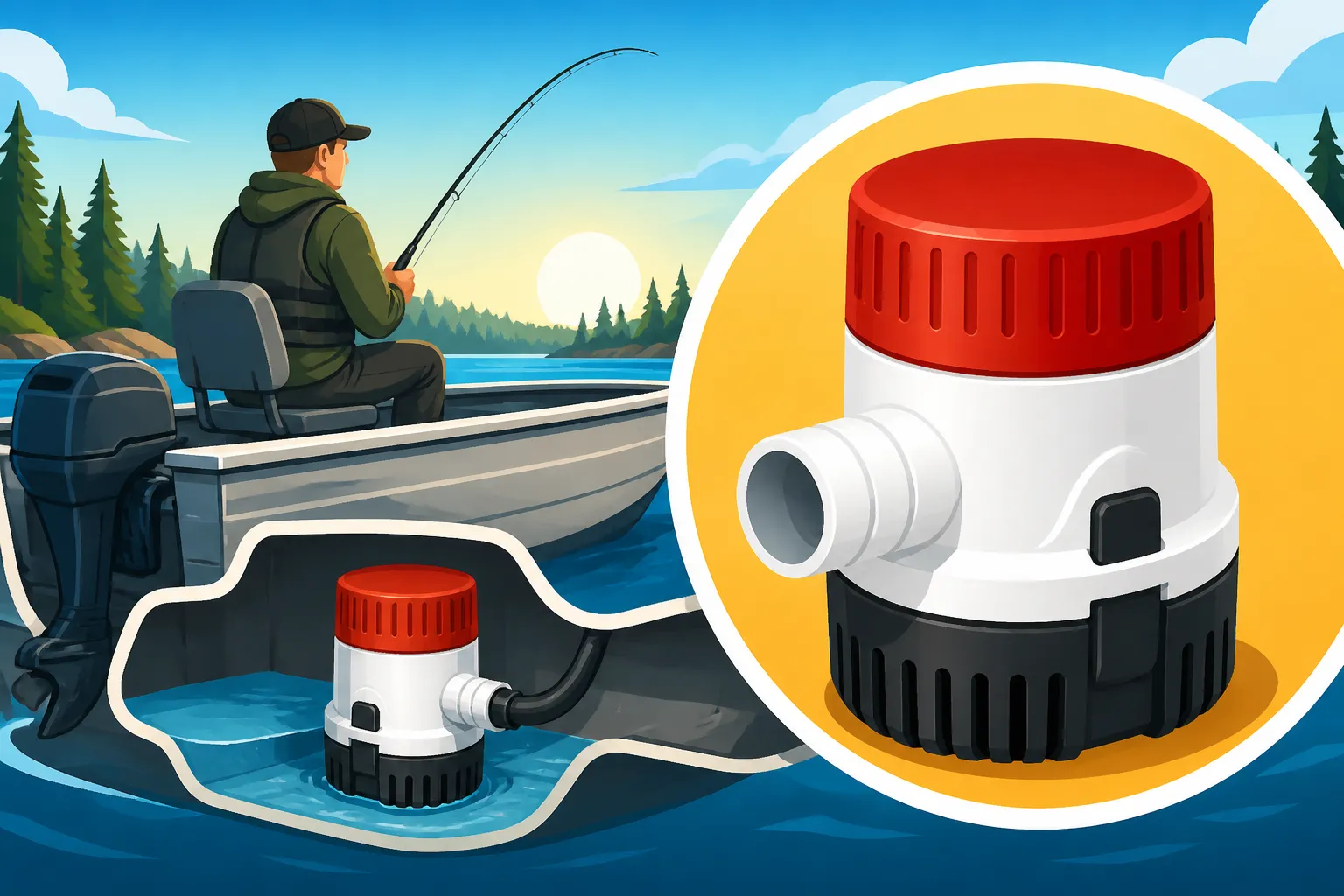
Best bilge pump for a small fishing boat
There's nothing quite like the peaceful feeling of being out on the water in your small fishing boat, whether you're chasing walleye on the Bay of Quinte or exploring a quiet back lake for bass. But that serenity can quickly turn to anxiety if you start taking on water – from a sudden downpour, a rogue wake, or even an unexpected leak. That sinking feeling (pun intended!) is something no angler wants to experience. This comprehensive guide is here to help you navigate the world of bilge pumps, ensuring you choose the best one for your small fishing boat, giving you the confidence and safety you deserve on Ontario's diverse waterways.
Why a Bilge Pump is Non-Negotiable for Small Fishing Boats in Ontario
Many small fishing boats, especially open-concept aluminum boats or jon boats, don't always come with a bilge pump as standard equipment. This can lead to a false sense of security, assuming that because your boat is small, it won't accumulate much water. However, any boat that's regularly on the water in Ontario, regardless of its size, can quickly find itself with a problematic amount of water in the bilge. Neglecting this essential piece of safety equipment is truly playing with fire, or rather, water.
The Unpredictable Nature of Ontario Waters
Ontario's weather can be as unpredictable as a muskie strike. A beautiful sunny morning can quickly give way to a sudden thunderstorm, dumping buckets of rain into your boat. Even on calm days, the wakes from larger pleasure craft or even other fishing boats can slosh over the transom, especially in popular areas like Lake Simcoe or the Trent-Severn Waterway. Without a way to efficiently remove this water, your boat can become swamped, affecting its stability and potentially leading to a dangerous situation. Think about those choppy afternoons on Lake Erie, where spray constantly comes over the bow – all that water ends up in the bilge. A reliable bilge pump is your first line of defense against these inevitable intrusions. It’s not just about preventing your boat from sinking; it’s about maintaining control and safety for you and anyone else on board. Ontario Boating Laws for Anglers often highlight the importance of safety gear, and while not always mandated for every tiny craft, a bilge pump is prudent.
Protecting Your Investment and Gear
Beyond the immediate safety concerns, water pooling in your bilge can wreak havoc on your boat and expensive fishing gear over time. Electronics, like your fish finder or trolling motor battery, are particularly vulnerable to moisture damage. If water consistently sits in the bilge, it can accelerate corrosion on wiring, fuse boxes, and even the hull itself, especially if you're operating in waters with some mineral content. Your tackle boxes, spare life jackets, and other equipment can become waterlogged, leading to rust, mould, and overall deterioration. Consider the value of your rods, reels, and specialized lures; replacing them due to water damage is an expense no one wants. A functioning bilge pump protects your hard-earned investment, keeping your boat and its contents in better condition for longer. It's a small cost upfront for significant long-term protection and peace of mind.
Understanding Bilge Pump Types and How They Work
When you start looking for a bilge pump, you'll primarily encounter two main types: submersible and diaphragm. Each has its own characteristics, and understanding them is key to choosing the right one for your small fishing boat.
Submersible Pumps: The Workhorses
Submersible pumps are by far the most common type found in small fishing boats, and for good reason. As their name suggests, they are designed to be fully submerged in the water in your bilge. These pumps typically consist of a compact motor sealed within a waterproof housing, with an impeller at the bottom that draws water in through a screen and pushes it out through a hose. They are incredibly efficient at moving large volumes of water quickly.
The key features to look for in submersible pumps are their flow rate, usually measured in Gallons Per Hour (GPH), and whether they are manual or automatic. A manual pump requires you to physically turn it on, either by a switch at your helm or a toggle on the pump itself. An automatic submersible pump, however, includes a float switch (or an internal sensor) that detects when water levels rise to a certain point and turns the pump on automatically. This is a huge advantage, especially if your boat is docked or moored and starts taking on water while you're not there. Most small fishing boats running on 12V DC power will use a submersible pump, often mounted directly in the lowest point of the hull. You can find a vast selection of these at marine retailers or even online through places like Bass Pro Shops or Amazon, allowing you to compare models and read reviews before committing.
Diaphragm Pumps: For Specific Needs
While less common as the primary "emergency" bilge pump in typical small fishing boats, diaphragm pumps have their place. Unlike submersible pumps, diaphragm pumps are self-priming, meaning they can be mounted above the water level and still draw water up into the pump. They work by using a flexible diaphragm that moves back and forth to create suction and pressure, drawing water in and pushing it out.
Diaphragm pumps are often used for drier bilges or for more specialized tasks, such as transferring water from one compartment to another, or as a backup "dry-out" pump to get the last bit of water out of a bilge after a submersible pump has done the heavy lifting. They are typically more robust against debris and can handle a bit more "gunk" without clogging, though they tend to have lower flow rates compared to similarly sized submersible pumps. For a small fishing boat primarily concerned with quickly ejecting significant water accumulation, a submersible pump is usually the go-to, but a diaphragm pump could be considered as a secondary system for maintaining an exceptionally dry bilge or for specific applications like bait well circulation if you're customizing your setup.
Key Factors When Choosing Your Bilge Pump
Choosing the right bilge pump isn't just about grabbing the first one you see. There are several critical factors to consider to ensure it's effective for your specific boat and fishing habits on Ontario's waterways.
Flow Rate (GPH) vs. Boat Size and Expected Water Inflow
The flow rate, measured in Gallons Per Hour (GPH), is arguably the most important specification for a bilge pump. This tells you how much water the pump can move in an hour under ideal conditions. You want a pump with sufficient capacity to keep up with, and ideally exceed, any water ingress your boat might reasonably encounter.
For small fishing boats, this generally means a pump in the range of 500 GPH to 1100 GPH. A smaller 12-14 foot jon boat or basic aluminum fishing boat, used primarily in calm lakes or rivers, might be perfectly fine with a 500 GPH or 750 GPH pump. However, if you have a larger 16-18 foot multi-species boat that ventures onto larger bodies of water like Georgian Bay, Lake Huron, or even larger sections of Lake of the Woods, where chop and spray are more common, an 800 GPH or 1100 GPH pump would offer significantly better protection. Consider how much rain your boat can accumulate in a heavy downpour, or how much water might splash over the bow while running across a choppy lake. Over-sizing slightly is generally a good idea for peace of mind.
| Boat Length (Approx.) | Boat Type (Example) | Recommended Minimum GPH | Considerations |
|---|---|---|---|
| 10-14 feet | Jon Boat, Small Aluminum | 500 GPH | Calm waters, light rain, minor splash |
| 14-16 feet | Aluminum V-Hull, Small Utility | 750 GPH | Moderate chop, heavier rain, some spray |
| 16-18 feet | Larger Aluminum, Fiberglass Multi-Species | 800-1100 GPH | Big lakes, choppier conditions, significant spray |
| Over 18 feet | Larger Fishing Boat | 1100+ GPH | Rough conditions, high capacity needed |
Manual, Automatic, or Both? The Float Switch Advantage
This is a crucial decision for your safety and convenience.
- Manual Pumps: These pumps only run when you flip a switch. They are simpler and often cheaper. However, they require you to be present and alert to turn them on. If you're away from your boat or asleep while camping, a heavy rainstorm could fill your bilge unnoticed. They are a bare minimum.
- Automatic Pumps (with Float Switch): This is highly recommended for any small fishing boat that might be left unattended, even for short periods. An external or internal float switch detects rising water levels and automatically activates the pump. Once the water is cleared, the switch deactivates the pump. This "set it and forget it" functionality is invaluable for preventing a boat from filling with rain or from a slow leak while docked. Most automatic pumps also come with a manual override switch, so you can test them or activate them whenever you wish, regardless of the water level. This gives you the best of both worlds.
For maximum peace of mind, especially if your boat is often on a trailer or tied up at a dock at a cottage on Lake Muskoka, an automatic pump is the way to go. It’s an investment in not just safety, but also convenience, allowing you to focus on Best Fishing Lakes in Ontario instead of constantly checking your bilge.
Power Source and Wiring Considerations
Almost all bilge pumps for small fishing boats run on a 12-volt DC electrical system, drawing power directly from your boat's battery. What's often overlooked, however, are the wiring and electrical connections.
- Proper Gauge Wire: You need to use the correct gauge wire for the length of the run from your battery to the pump. Too thin a wire can cause voltage drop, reducing pump efficiency or even leading to overheating. Marine-grade tinned copper wire is always recommended as it's more resistant to corrosion.
- Fusing: Every electrical accessory on your boat, including your bilge pump, needs to be properly fused. This protects the wiring and the pump itself from power surges or shorts. The pump manufacturer will specify the correct fuse size.
- Battery Drain: An automatic bilge pump, especially if it's frequently cycling due to persistent leaks or rain, can slowly drain your battery. Ensure your battery is in good condition and consider a battery isolator or a small solar charger if your boat is often left for extended periods without shore power. This is particularly relevant if you also run a trolling motor or a lot of electronics, which can already put a strain on your power system.
Durability and Material Quality for Ontario Conditions
Ontario's environment, with its temperature swings, UV exposure, and sometimes murky water, demands a durable bilge pump.
- Corrosion Resistance: Look for pumps with corrosion-resistant components, especially if you're fishing the Great Lakes where the water can have different mineral compositions. Stainless steel screws and marine-grade plastics are good indicators of quality.
- Impact Resistance: Your bilge pump sits at the bottom of your boat, often in an area that can experience bumps from loose gear or vibrations from the engine. A robust, impact-resistant housing will ensure its longevity.
- Sealing: The motor housing needs to be completely sealed to prevent water ingress, which would quickly lead to pump failure. High-quality pumps will boast superior sealing.
A pump that might be suitable for casual use in a calm, freshwater pond might not hold up to the rigours of a multi-day trip up the French River or the constant spray on Lake Ontario. Invest in a quality unit from a reputable brand, and you'll thank yourself later.
Installation, Maintenance, and Troubleshooting Tips
Even the best bilge pump is useless if it's not installed correctly or properly maintained. Taking a few extra steps during installation and regular checks can save you a huge headache on the water.
Proper Placement and Mounting
The effectiveness of your bilge pump largely depends on its placement. It needs to be at the absolute lowest point of your boat's bilge, where water naturally collects. If your boat has multiple compartments or a keel that prevents water from flowing to a single spot, you might even consider multiple smaller pumps.
When mounting:
- Securely Fasten: Use stainless steel screws or bolts to fasten the pump firmly to the hull or a sturdy bulkhead. You don't want it bouncing around when you hit a wave. Many pumps come with a removable base plate, making it easier to install the base first, then snap the pump in place.
- Hose Routing: Route the discharge hose uphill from the pump to the through-hull fitting (the outlet on the side of your boat). This ensures all water drains out and prevents back siphoning. Use marine-grade hose clamps on all connections to prevent leaks.
- Through-Hull Fitting: Ensure the through-hull fitting is above the waterline at all times, even when the boat is loaded or moving. A common mistake is placing it too low, which can allow water to enter the boat rather than exit.
- Wiring: Use crimp connectors with heat shrink tubing for all electrical connections to seal them from moisture. Proper strain relief on wires will prevent them from pulling loose from vibrations. When installing, remember to check the Ontario required boat safety equipment checklist for any other items that need attention at the same time.
Regular Checks and Cleaning
A bilge pump is one of those things you hope you never really need, but when you do, it has to work. Regular maintenance is key to ensuring its reliability.
- Test Regularly: Develop a habit of testing your bilge pump before each outing, or at least monthly if your boat is frequently used. A quick way to test an automatic pump is to pour a bucket of water into the bilge until the float switch activates. Watch it pump the water out, then ensure it shuts off. For a manual pump, just flip the switch and listen for it to run.
- Clean the Intake Screen: The pump's intake screen can get clogged with all sorts of bilge debris: leaves, fishing line, loose lures, or even dead bait. A clogged screen severely reduces the pump's efficiency. Periodically remove the pump (if it has a quick-release base) and clean the screen thoroughly.
- Inspect Wiring: Check all wiring and connections for corrosion or fraying. Loose or corroded wires are a common cause of pump failure.
- Check for Oil/Fuel: If you notice oil or fuel in your bilge, address the source immediately. While most bilge pumps can handle some contaminants, they are not designed to pump oil or fuel overboard, which is illegal and environmentally damaging. You'll need specialized bilge absorbents to clean these up safely.
Common Problems and Quick Fixes
Even with the best maintenance, pumps can sometimes act up. Knowing what to look for can help you troubleshoot quickly:
- Pump Runs, No Water (or little water):
- Clogged Intake: Most common issue. Clean the screen.
- Kinked or Blocked Hose: Inspect the discharge hose for kinks, clogs, or blockages.
- Air Lock: Sometimes air gets trapped. Briefly lift the pump and let it drop to dislodge air.
- Loose Connections: Check hose clamps at the pump and through-hull fitting.
- Pump Doesn't Run:
- No Power: Check the fuse. Is it blown? Check battery connections. Is the battery dead?
- Faulty Switch: If it's an automatic pump, test the manual override. If it works manually but not automatically, the float switch might be faulty or stuck.
- Corroded Wiring: Inspect all wire connections from the battery to the switch to the pump. Corrosion is an enemy of electrical flow.
- Pump Runs Constantly:
- Stuck Float Switch: The float switch might be jammed in the "on" position by debris or simply be faulty.
- Back Siphoning: Water might be flowing back into the bilge through the discharge hose. Ensure the through-hull fitting is high enough and consider adding a check valve (though these can sometimes clog).
Having a basic toolkit on board with pliers, a screwdriver, and spare fuses can be a lifesaver when these issues arise. You can grab many of these essential maintenance items from a marine supply section at a store like Bass Pro Shops, or even order smaller components online from Amazon. Knowing the Ontario Boat Registration and Licensing Rules and keeping up with maintenance shows you're a responsible boater.
Ultimately, a quality bilge pump is an essential piece of safety equipment for any small fishing boat in Ontario. It's not just about compliance; it's about safeguarding your vessel, your gear, and most importantly, your life on the water. Invest wisely, install correctly, and maintain regularly, and you'll have one less thing to worry about when you're out enjoying the fantastic fishing opportunities our province offers.
Disclaimer
This article is for general informational purposes only and does not constitute professional advice. Laws, prices and regulations vary by location and change over time. Consult a qualified professional for guidance on your specific situation.