Ontario Lake Trout Limit and Possession Rules
Trying to keep up with all the specific regulations for fishing in Ontario, especially for a prized species like lake trout, can feel like you need a law degree and a secret decoder ring. It’s not just about knowing where to fish, but how many you can keep, what size they need to be, and when you can even target them. This comprehensive guide is here to untangle the complexities of Ontario's lake trout limit and possession rules, helping you fish legally and responsibly.
Understanding Ontario's Fisheries Management Zones (FMZs) and Lake Trout
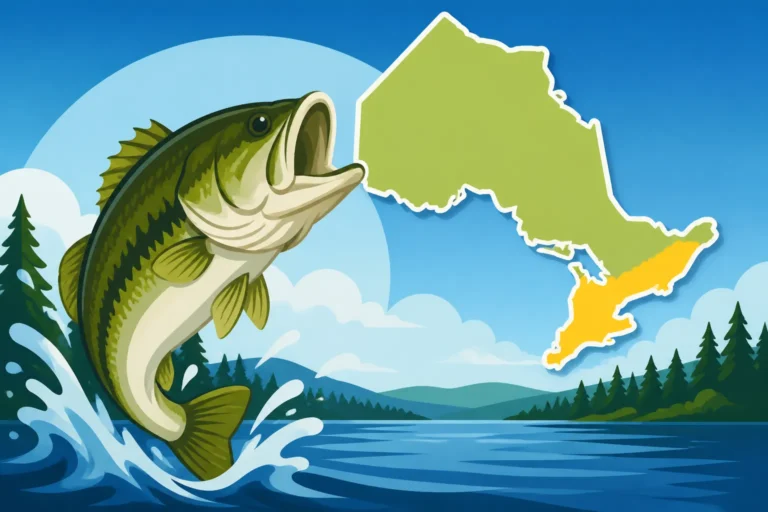
Ontario's vast network of lakes and rivers isn't managed as one single entity. Instead, the province is divided into 20 distinct Fisheries Management Zones, or FMZs, each with its own set of rules designed to protect and sustain local fish populations. This regional approach is absolutely vital when it comes to understanding lake trout regulations.
Why FMZs Matter for Lake Trout
Lake trout are a cold-water species, often found in deep, clear lakes, and their populations can vary dramatically from one region to another. What might be a healthy, abundant population in FMZ 2 (northwestern Ontario) could be a more sensitive, slower-growing stock in FMZ 15 (parts of central Ontario). This is precisely why the Ministry of Natural Resources and Forestry (MNRF) has implemented specific rules tailored to each FMZ. Ignoring these zonal differences is a sure-fire way to accidentally break the rules, as the general provincial guidelines simply don't cut it. You absolutely need to know which FMZ you're fishing in, as this dictates everything from season dates to catch and possession limits. For a deeper dive into how these zones are structured and why they're so important, you can explore our guide on Ontario Fisheries Management Zones, Explained.
These zones take into account various ecological factors, including water temperature, lake depth, food sources, and spawning habits specific to the lake trout in that area. For instance, a lake with a naturally reproducing, robust lake trout population might have more liberal limits compared to a lake where populations are struggling or are maintained primarily through stocking efforts. This nuanced approach helps ensure that while anglers can enjoy fishing, the species itself remains healthy for future generations. It’s a delicate balance that requires diligence from every angler.
Navigating the Ontario Fishing Regulations Summary
The official source for all these rules is the annual Ontario Fishing Regulations Summary. This isn't just a suggestion; it's a mandatory read for anyone planning to fish in the province. The summary is available online as a PDF, and you can often pick up a physical copy at tackle shops, bait stores, or ServiceOntario locations. It's organized by FMZ, making it relatively easy to find the specific regulations for the area you intend to fish.
Within the summary, you'll find dedicated sections for each FMZ, detailing the open seasons, catch and possession limits, and any size restrictions for various species, including lake trout. Don't just skim it for lake trout; pay attention to any special regulations for the specific body of water you'll be on, as some lakes or even parts of lakes might have unique rules that override the general FMZ guidelines. Think of it as your essential fishing Bible; you wouldn't head out on the water without checking the weather, and you certainly shouldn't go without reviewing the regulations. Understanding how to interpret this document is crucial, so consider checking out our article on Reading the Ontario Fishing Regulations Summary to truly master it.
It's common for anglers, especially those visiting a new area or new to the sport, to rely on hearsay or outdated information. However, the onus is always on the individual angler to know and follow the current regulations. Before every trip, take a few minutes to confirm the rules for your specific location and target species. Regulations can change from year to year, and even within a season, so staying updated is paramount.
Deciphering Lake Trout Daily Catch and Possession Limits
The terms "daily catch limit" and "possession limit" often cause confusion, but they are distinctly different and equally important when targeting lake trout. Misunderstanding either can lead to serious fines and penalties. It’s not just about how many fish you catch, but how many you can legally keep at any given time.
Sport vs. Conservation License Impact
In Ontario, you generally have two main options for a fishing license: a Sport Fishing License or a Conservation Fishing License. The type of license you hold directly impacts your daily catch and possession limits for almost all species, and lake trout are no exception. The Sport License typically allows for higher limits, while the Conservation License, as its name suggests, is geared towards a more restrictive approach to help conserve fish stocks, offering reduced limits.
For example, in a specific FMZ, a Sport Fishing License might allow you to keep two lake trout, while a Conservation Fishing License might only allow one. These differences are clearly outlined in the regulations summary for each FMZ. Choosing the right license for your fishing goals and conservation ethic is an important first step. If you're passionate about catch-and-release or only want to keep a couple of fish for a meal, a Conservation License might be all you need, often at a slightly lower cost. For a more detailed look at these options, our article on Ontario Sport vs Conservation Fishing License can provide further clarity.
It's crucial to understand that these limits are not cumulative throughout your trip. If your Conservation License allows for a possession limit of one lake trout, and you keep one on Monday, you cannot keep another one on Tuesday if you already have the first one at your camp. This distinction is where many anglers get tripped up, especially on multi-day trips where fish might be cleaned and stored.
Daily Catch Limits for Lake Trout
The daily catch limit refers to the maximum number of fish of a particular species that you can catch and retain in a single day. This isn't just about the fish you keep; it includes any fish you catch and then decide to release. For instance, if the daily catch limit for lake trout is two, and you catch one, keep it, then catch a second one and decide to keep that too, you've reached your daily limit. If you then catch a third lake trout, even if it's a giant, you must release it immediately and with as little harm as possible.
The key here is "catch and retain." If you catch and release all day, you can, theoretically, catch many fish, as long as you're not exceeding the possession limit by actually keeping them. However, for species like lake trout, which can be sensitive to handling, it's always best to be mindful of how many you're catching and releasing, especially if they're coming from deep water, where barotrauma can be an issue. Always minimize handling time and ensure fish are released quickly.
Let's consider a scenario: You're out on Lake Temagami (FMZ 11) with a Sport Fishing License, where the daily catch limit for lake trout is three. You catch a nice 20-inch lake trout and decide to keep it for dinner. Later, you catch a smaller 16-inch trout and release it carefully. Then, you hook into a magnificent 28-inch laker and keep it. You've now caught and retained two lake trout. If you then catch a third, you can keep it as long as it meets size requirements, reaching your daily limit of three. Any subsequent lake trout must be immediately released, regardless of its size or condition. This meticulous tracking is essential to stay compliant.
Understanding Possession Limits
The possession limit is perhaps the most misunderstood regulation. It refers to the maximum number of fish of a particular species that you are allowed to have in your possession at any time, regardless of when or where they were caught. This includes fish in your livewell, cooler, freezer at home, at your cottage, or even processed fillets. It's the total number of fish you can account for that are not alive and in the water.
If you're on a multi-day fishing trip in, say, FMZ 14, and the possession limit for lake trout on a Sport License is two, you can only have two lake trout (whole or filleted) in your possession. If you catch and keep two on Monday, you cannot catch and keep any more lake trout on Tuesday, Wednesday, or any subsequent day of your trip until you have consumed or otherwise disposed of the previously caught fish, bringing your possession total back below the limit. This applies whether the fish are fresh, frozen, cooked, or being transported.
A common mistake involves anglers fishing for several days, keeping their daily limit each day, and accumulating more than their possession limit by the end of the trip. The rule isn't "daily limit per day times number of days fished"; it's a total at any given moment. This means if you have a cooler full of lake trout fillets back at the lodge or cottage, they count towards your possession limit. So, if you're planning a week-long trip, you need to be mindful of how many fish you're retaining throughout that entire period. Many anglers use a dedicated fishing cooler, available on sites like Amazon, to keep their catch separate and easily accountable, which can help prevent accidental over-possession.
| License Type | Example FMZ 2 Lake Trout Daily Limit | Example FMZ 2 Lake Trout Possession Limit | Example FMZ 11 Lake Trout Daily Limit | Example FMZ 11 Lake Trout Possession Limit |
|---|---|---|---|---|
| Sport | 3 | 3 | 2 | 2 |
| Conservation | 1 | 1 | 1 | 1 |
Note: These are hypothetical examples. Always consult the current Ontario Fishing Regulations Summary for the specific FMZ you are fishing in.
Lake Trout Size Restrictions and Slot Limits
Beyond simply how many fish you can keep, Ontario also employs size restrictions and slot limits for lake trout. These regulations are designed to protect specific age classes of fish, ensuring that the population has a chance to reproduce and grow. It's not just about the numbers; it's about the health and structure of the entire fishery.
Minimum and Maximum Size Regulations
Many FMZs will have a minimum size limit for lake trout, meaning any fish caught below that length must be immediately released. This protects juvenile fish, allowing them to grow to maturity and contribute to the spawning population. Less commonly, some areas might also have a maximum size limit, which aims to protect large, mature breeding stock. These larger, older fish are often the most prolific spawners and are crucial for the long-term health of the fishery.
Measuring your fish accurately is paramount. The standard method for measuring fish in Ontario is from the tip of the nose to the tip of the tail, with the tail squeezed together. You can find convenient fish measuring boards or tape measures online, including options on Amazon, which can be invaluable tools for ensuring you’re compliant. It’s always a good idea to have one on your boat or in your tackle box. If there's any doubt about a fish's length, it's always best to err on the side of caution and release it.
These size limits are carefully determined by fisheries biologists, taking into account the growth rates and maturity ages of lake trout in specific regions. For instance, in colder, nutrient-poor northern lakes, lake trout might grow slower and mature later, warranting different size regulations than in more productive, southern waters. Observing these limits ensures that future generations of anglers will also have the opportunity to catch these magnificent fish.
The Role of Slot Limits in Lake Trout Management
Slot limits are a more sophisticated management tool often used for species like lake trout that have specific vulnerable age classes. A slot limit means you can only keep fish within a certain size range – for example, between 40 cm (15.7 inches) and 55 cm (21.7 inches). Fish smaller than the minimum or larger than the maximum in the slot must be released.
The primary purpose of a slot limit is to protect the most productive breeders in the population. By releasing the largest fish, these older, larger individuals can continue to spawn and pass on their strong genetics. By releasing the smallest fish, you ensure that future generations have a chance to reach reproductive age. This strategy helps create a more balanced age structure within the lake trout population, promoting sustainability.
Imagine you're fishing in an FMZ with a lake trout slot limit of 40-55 cm. You catch a 35 cm lake trout; you must release it because it's too small. You then catch a 45 cm lake trout; you can keep it (assuming you haven't exceeded your daily or possession limit) because it falls within the slot. Later, you catch a massive 60 cm trophy lake trout. Despite its impressive size, you must release it because it's too large, falling outside the protected slot. This requires quick thinking and careful measurement, and again, having a reliable measuring device is key.
Special Regulations and Lake-Specific Rules for Lake Trout
While FMZ-wide rules cover most situations, Ontario also has a system of special regulations for individual lakes or river sections. These are crucial, especially for lake trout, which can be found in diverse and sometimes sensitive habitats. It's not enough to know your FMZ; you must also check for specific water body rules.
Identifying Special Regulation Waters
Special regulation waters are bodies of water that have rules that differ from the general FMZ regulations. These might include:
- Different season dates: The lake trout season might open or close earlier or later.
- Unique catch and possession limits: Even stricter limits than the general FMZ rules.
- Modified size or slot limits: Different size ranges apply.
- Gear restrictions: Perhaps only artificial lures, or no live bait allowed.
- Catch-and-release only: In some highly sensitive areas, all lake trout must be released.
These specific rules are listed directly in the Ontario Fishing Regulations Summary, usually in a dedicated section towards the end of each FMZ's rules, or sometimes in an appendix. It's absolutely critical to cross-reference your chosen fishing spot with these lists. A quick search for the lake name in the online summary can often flag any special rules immediately. Our detailed post on Special Regulation Waters in Ontario provides more guidance on how to find and understand these exceptions.
For instance, you might be fishing in an FMZ where the general lake trout limit is two, but the specific lake you're targeting is known for its vulnerable population and has a "catch-and-release only" rule for lake trout. If you're not aware of this, you could quickly find yourself in trouble, even if you’re otherwise following the FMZ general rules. Always, always check the specific lake or river section you intend to fish. A good quality fishing app or a physical map often indicates these special zones, but the official regulations summary is the ultimate authority.
Aurora Trout and Rotational Lake Closures
One of the most unique and important special regulations in Ontario concerns the Aurora Trout. This rare and beautiful strain of brook trout, often mistaken for a lake trout by new anglers due to its deep-water habits, is found in a very limited number of lakes in the Temagami region (FMZ 11). To protect and enhance these incredibly rare fish, the MNRF employs a system of rotational lake closures.
These lakes are only open to fishing for Aurora Trout during specific, staggered years, and when open, they often have incredibly restrictive rules, such as catch-and-release only, artificial lures only, and sometimes even specific days of the week when fishing is permitted. Anglers must check the regulations summary annually to see which of these special lakes are open in a given year. If a lake is closed, fishing for any species in that lake is often prohibited, or at the very least, any Aurora Trout caught must be immediately released. This ensures that the delicate population has undisturbed periods to reproduce and recover. You can read more about these unique regulations in our article dedicated to Ontario Aurora Trout Rotational Lake Closures.
Fishing for Aurora Trout is a privilege, and the rules are designed to maintain their existence. Misidentification can also be an issue; ensure you know the differences between brook trout, lake trout, and especially Aurora Trout before targeting them. These conservation efforts highlight Ontario's commitment to protecting its unique and vulnerable fish species.
Responsible Angling Practices for Lake Trout
Beyond simply adhering to the letter of the law, responsible angling for lake trout involves a commitment to ethical practices that ensure the long-term health of the fishery. Lake trout are often slow-growing and can be sensitive, making thoughtful handling crucial, especially if you plan to release them.
Best Practices for Catch and Release
Even if you're keeping a couple of lake trout for dinner, you'll likely encounter other fish that need to be released due to size limits, slot limits, or simply because you've met your possession limit. Proper catch and release techniques are essential for the survival of these fish.
- Use appropriate gear: Use a rod and reel setup that can quickly bring in the fish, minimizing the fight time. Overly long fights can exhaust lake trout, reducing their chances of survival.
- Minimize air exposure: Keep the fish in the water as much as possible. If you must remove it for a quick photo, do so quickly, holding it horizontally and supporting its belly.
- Handle with care: Wet your hands before touching the fish to protect its protective slime coat. Avoid squeezing gills or eyes.
- Use a knotless, rubberized net: These nets minimize damage to fins and scales.
- Remove hooks quickly: Use de-hooking tools or long-nosed pliers to remove hooks efficiently. If the fish is deeply hooked, cut the line as close to the hook as possible rather than trying to rip the hook out. Barbless hooks can also make removal much easier.
- Revive the fish: If the fish seems stressed, hold it gently in the water, facing into the current, until it regains its strength and swims away on its own. For deep-water lake trout, consider using a descending device to help them return to depth safely, especially in deeper water when barotrauma is a concern.
These practices aren't just good manners; they significantly increase the survival rate of released fish, contributing directly to the health of the lake trout population. If you're passionate about How to Catch Lake Trout in Ontario, you should be equally passionate about releasing them safely.
Avoiding Common Lake Trout Regulation Mistakes
Many anglers who find themselves in trouble with fishing regulations don't set out to break the law; they simply make honest mistakes. Being aware of the most common pitfalls can help you avoid them:
- Not checking current regulations: Regulations can change annually. Always refer to the most recent Ontario Fishing Regulations Summary. Don’t rely on old printed copies or what someone told you last year.
- Misidentifying fish species: Sometimes, a novice angler might mistake a large brook trout for a small lake trout, or vice versa. Learn to accurately identify the species you are targeting. This is especially true for the rare Aurora Trout discussed earlier.
- Misunderstanding possession limits: As detailed earlier, this is the most common mistake. Your possession limit applies to all fish of that species that you possess, anywhere, not just your daily catch. If you’ve got two fillets in the fridge from yesterday, and the possession limit is two, you can’t keep any more today.
- Incorrectly measuring fish: Always measure from the tip of the nose to the tip of the tail, with the tail squeezed. If in doubt, release it.
- Not knowing your FMZ: Fishing in the wrong zone with the wrong rules is an easy way to get a ticket. Use a reliable map or GPS device to confirm your location. The Ontario Fish ON-Line interactive zone map is an excellent resource for this.
Taking the time to understand these rules and adopting responsible angling practices not only keeps you on the right side of the law but also plays a vital role in ensuring that Ontario's magnificent lake trout fisheries remain healthy and vibrant for everyone to enjoy. A bit of preparation goes a long way in enjoying your time on the water without the stress of potential infractions.
Disclaimer
The information provided in this guide is for general informational purposes only and is not a substitute for the official Ontario Fishing Regulations Summary. Regulations can change at any time. It is the responsibility of every angler to consult and adhere to the most current official regulations from the Ontario Ministry of Natural Resources and Forestry before engaging in any fishing activity.