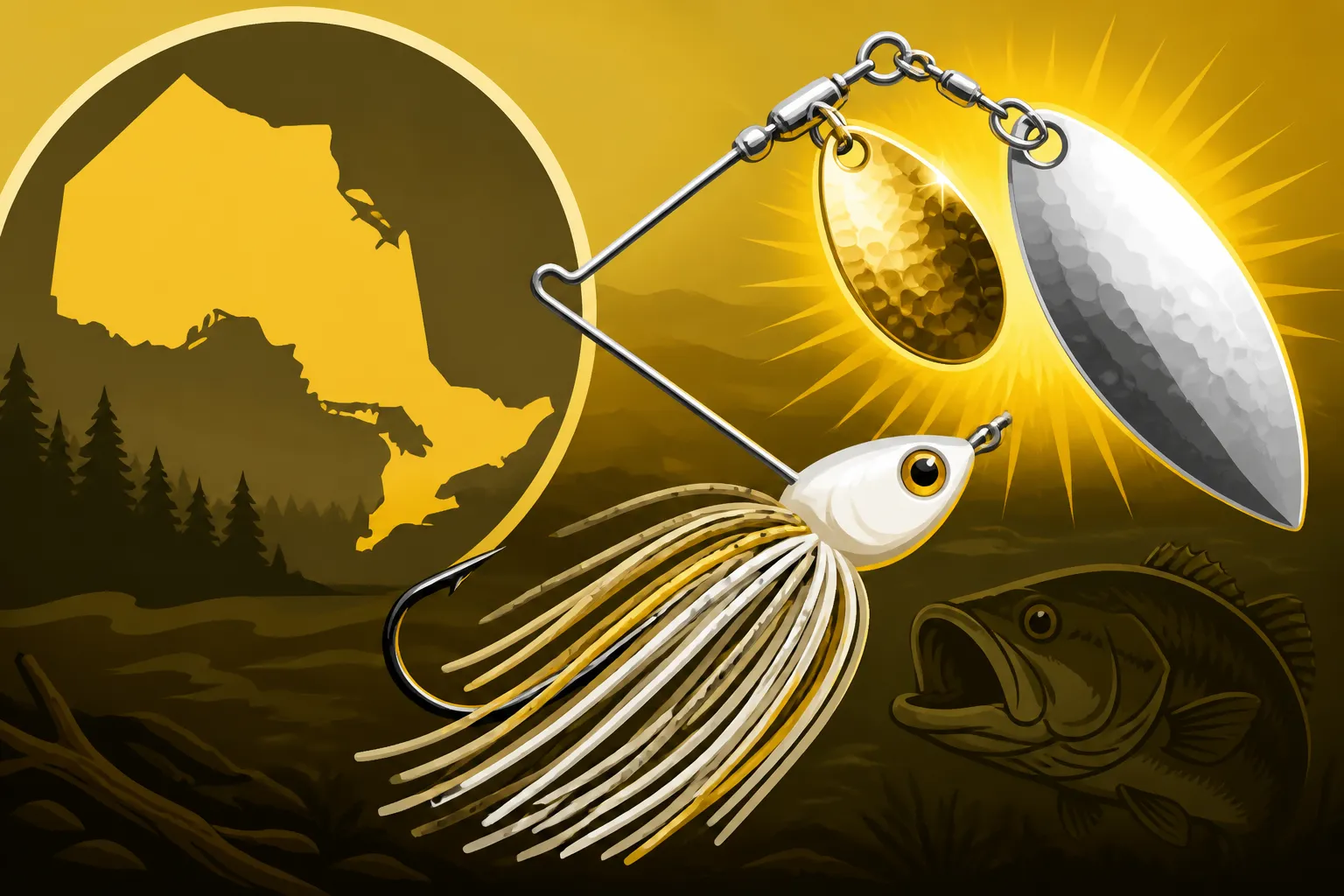
Best spinnerbait blade color for stained water
Oh, the age-old dilemma of picking the right lure for the conditions! It can be incredibly frustrating to roll up to your favourite Ontario fishing spot, eager to cast, only to find the water looking like a chocolate milkshake after a heavy rain, or a murky, tannin-stained tea from the northern bogs. You've got your spinnerbaits ready, but how do you choose a blade color that actually gets noticed when visibility is next to zero? This guide is here to cut through the murk and help you confidently select the best spinnerbait blade colors for those challenging stained water conditions across Ontario.
Understanding Stained Water Conditions in Ontario
Before we dive into specific colours, let's chat about what "stained water" actually means in the context of Ontario fishing. It’s not just dirty water; it's water where light penetration is significantly reduced, making it harder for fish to see your offerings. And believe me, Ontario has its fair share of stained waters, from the dark, rich waters of the Canadian Shield to the turbid river systems after a good downpour.
What is "Stained Water" Anyway?
When anglers talk about "stained water," they're generally referring to water that isn't gin-clear. But not all stained water is created equal, and understanding the type of stain can help you narrow down your blade colour choices.
Firstly, you have tannin-stained water. This is incredibly common, especially in Northern Ontario's Canadian Shield lakes and many boggy areas. These waters get their characteristic tea-like or root beer colour from decaying organic matter like leaves, pine needles, and peat. Think of places like Algonquin Park or many remote Crown land lakes – they often have this natural, dark tint. The visibility might still be decent up close, but light struggles to penetrate deeply.
Secondly, we encounter turbid or muddy water, usually a result of heavy rainfall, agricultural runoff, or high winds stirring up shallow bottoms. Rivers like the Grand or parts of the Bay of Quinte can become extremely murky after a big storm, carrying silt and sediment. Here, visibility can be severely limited, sometimes to just a few inches. This is a very different challenge than tannin-stained water.
Lastly, there are algal blooms. While less common in colder, deeper Ontario waters, shallower, nutrient-rich lakes, especially during warmer months, can develop green or brownish algal blooms that drastically reduce clarity. Lake Simcoe, for example, can sometimes experience these conditions in certain bays. Each type of stain presents a unique visual environment for the fish, and therefore, a unique challenge for us anglers.
Why Stained Water Changes Fish Behavior
It's easy to think fish just give up eating when the water gets murky, but that's far from the truth. Instead, their entire approach to finding food shifts. Fish, particularly predators like walleye, pike, and bass, rely heavily on their eyesight in clear water. They can track prey from a distance, assess the size and movement, and make a decisive strike.
In stained water, however, that visual advantage is severely hampered. Light doesn't travel far, so fish can't see as well. This forces them to rely more on their other senses, primarily their lateral line system. This incredible sensory organ runs along their sides and detects changes in water pressure and vibrations. Think of it as their built-in sonar.
What does this mean for us? It means our lures need to do more than just look good; they need to create a significant disturbance in the water. They need to displace water, generate thumps, and send out strong vibration signals that fish can pick up with their lateral line. It also means that when they do get close enough to see something, that "something" needs to stand out, even if it's just a silhouette. This shift in behavior directly impacts our choice of lure type and, crucially, our blade colours.
The Science of Spinnerbait Blade Colors in Stained Water
Choosing a spinnerbait isn't just about grabbing the prettiest one. There's a method to the madness, especially when dealing with water that makes your lure vanish before it's even a foot below the surface. Understanding how blades work in low visibility is key.
The Role of Flash and Vibration
Spinnerbaits are fantastic in stained water precisely because they excel at two critical things: flash and vibration. These are the sensory triggers that cut through the murk and get a fish's attention when their eyesight is compromised.
Flash is all about reflecting what little light is available. Even in dark water, some ambient light exists, and a shiny blade catches it, sending out glints that mimic a startled baitfish. Different blade finishes – silver, gold, copper – reflect light differently, offering various appeals. The shape of the blade also matters, as it dictates how quickly and widely the light is dispersed.
Vibration, however, is arguably the more critical factor in heavily stained water. This is where the lateral line comes into play. As a spinnerbait blade spins, it creates a turbulent wake and sends out pressure waves through the water. The larger the blade, and the rounder its shape, the more vibration it generally creates.
- Colorado blades, with their round, cupped shape, create the most thumping vibration and also rotate slower, providing a broader flash. They are superb in very dark water.
- Willowleaf blades are long and slender, offering less vibration but a tighter, flashier flicker. They're often used in clearer water or when fish are less aggressive.
- Indiana blades are a hybrid, offering a good balance of flash and vibration, a versatile choice for many conditions.
In stained conditions, you almost always want to lean towards blades that offer maximum vibration – typically Colorado blades, or a Colorado-Willowleaf tandem for both thump and flash.
Penetrating the Murk: Bright vs. Dark Colors
This is where many anglers get stumped. Do you go bright to stand out, or dark to create a silhouette? The answer, as often in fishing, is "it depends," but there are strong guidelines.
Bright colours like chartreuse, white, and sometimes even fluorescent orange or pink are excellent for "getting noticed" in moderately stained water where there's still some light penetration. They provide a strong visual contrast against the muted background. Think of a bright traffic cone against a grey road – it just pops. These colours leverage the remaining visible light to shout "here I am!" to any fish that gets within visual range. They can often be seen from further away in these conditions than a natural baitfish color.
Dark colours, on the other hand, such as black, purple, or dark blue, work by creating a distinct silhouette. In very dark, muddy water, or during extremely low light conditions (dawn, dusk, heavily overcast days), bright colours can sometimes just disappear into the general gloom. A dark lure, however, creates a solid, prominent shape against the lighter surface or sky above it. A fish looking up from below will see a clear, bold outline, making it an easy target to track and ambush. This is why a black jig, for instance, can be so effective at night or in super murky conditions. It’s about being seen as a distinct shape, not necessarily a vibrant colour.
The key is often contrast. What will stand out most against the background? Sometimes it's a bright flash; other times, it's a stark, dark profile.
Top Spinnerbait Blade Colors for Stained Ontario Waters
Alright, let's get down to brass tacks. Based on decades of experience on Ontario's diverse waters, these are the blade colours that consistently produce when the water isn't crystal clear.
Chartreuse and White: The Stained Water Staples
If you could only pick two spinnerbait blade colours for stained water in Ontario, chartreuse and white would be at the top of my list. They are truly the workhorses of murky conditions.
Chartreuse is an almost luminous yellow-green that just screams "look at me!" in low light. It's incredibly visible and has a way of reflecting UV light that makes it pop even further in water with limited clarity. I've had countless days where walleye and pike, seemingly dormant in dirty water, absolutely smash a chartreuse spinnerbait. It’s a great choice for tannin-stained lakes up north, or for river systems that have picked up a bit of colour after some rain. It’s assertive without being unnatural, mimicking some baitfish that might have a yellowish hue.
White is another absolute champion. It offers a very clean, bright flash that provides maximum contrast. In water that's slightly off-colour but not completely opaque, a white blade (especially a silver or nickel finished blade) can be devastating. It mimics many common baitfish like shiners and ciscoes, and its high visibility makes it easy for fish to zero in on. Combine a white blade with a white or pearl skirt, and you've got a classic combination that fish just can't resist. Many anglers swear by a white spinnerbait when fishing post-frontal conditions on lakes like Lake Nipissing, where fish can be a bit sluggish.
Often, you'll find spinnerbaits that combine these two colours, perhaps a white lead blade with a chartreuse trail blade, or a white skirt with a chartreuse painted blade. This blend offers the best of both worlds.
Gold and Copper: Natural Flash for Deeper Stains
While silver and nickel blades are fantastic, don't overlook the warm, subtle glow of gold and copper, especially when the stained water has a distinct brownish or reddish tint, like many tannin-rich lakes.
Gold blades have a unique ability to reflect light in a way that often appears more natural in "brown water." Think of it as mimicking the shimmering scales of a baitfish under lower light conditions. In waters that are naturally dark due to tannins, a gold blade can often outperform silver. It's not as stark or flashy as silver, but it provides a warm, inviting glint that can draw strikes. Many trophy walleye have fallen to gold-bladed spinnerbaits in the dark waters of Northern Ontario. If you're heading to a lake like Eagle Lake, where the water often has that rich, dark hue, make sure to pack some gold-bladed options.
Copper blades are another excellent choice, offering an even deeper, more subdued metallic flash than gold. They are particularly effective in very dark, tea-stained water where fish might be sensitive to overly bright flashes. Copper blades provide a natural, earthy reflection that can fool wary fish that have seen every other lure in the book. They can be especially good on overcast days when even the slightest metallic glimmer can make a difference. These are great for when you are fishing for Brook Trout in Ontario's Crown Land Lakes or Lake Trout Fishing in Ontario in those darker, deeper systems.
Both gold and copper blades pair exceptionally well with skirts that have some brown, orange, or even black mixed in, further enhancing that natural, low-light appeal.
Black and Purple: The Silhouette Advantage
When the water is truly murky – think heavy mud, extremely dark tannic stains, or even night fishing – it’s time to switch tactics from "flash" to "silhouette." This is where black and purple blades, often in conjunction with dark skirts, truly shine.
Black blades don't offer much in the way of flash, but that's precisely their strength. In water with extremely poor visibility, a black blade creates the sharpest, most defined silhouette possible. When a fish looks up from below, it doesn't see colour; it sees a dark shape blocking the little light from above. This strong, unambiguous profile makes it easy for them to track and intercept the lure, even if they can't make out any details. A black Colorado blade, churning through muddy water, sends out powerful vibrations and presents a clear "something to eat" outline. This approach is phenomenal in heavily turbid rivers after a rain or during low-light conditions on lakes.
Purple blades offer a similar silhouette advantage, but with a subtle twist. While still very dark, purple has a unique property in water; it can be one of the last colours to disappear from the visible spectrum at depth or in low light, often appearing as a dark, almost black hue. It provides a little extra "something" that black alone might not. A purple blade combined with a black or dark blue skirt is a proven killer for bass and walleye in dirty water. This combo is often overlooked by anglers, but it can be surprisingly effective, giving just enough difference to entice a bite when pure black isn't quite cutting it. Many seasoned anglers will reach for a black and purple combo from their Bass Pro Shops tackle box when the conditions are really tough.
Remember, with black and purple, the goal isn't brightness; it's contrast and a clear profile. The vibration of a large Colorado blade is paramount when employing these colours.
Matching Blade Colors to Specific Ontario Scenarios
Now that we understand the core principles, let's look at how to apply these blade color choices to real-world Ontario fishing scenarios. Each type of stained water has its nuances.
Tannin-Stained Lakes
Many of Ontario's most picturesque lakes, particularly those nestled within the Canadian Shield, are naturally tannin-stained. These waters, often dark brown or tea-coloured, are prevalent in regions like Muskoka, Algonquin Park, and throughout Northern Ontario. Think of a lake that looks like coffee but is surprisingly clear up close – that's often tannin.
For these conditions, my go-to choices are gold and copper blades. Their warm, natural flash seems to mimic the subtle shimmer of baitfish in these subdued light environments. They don't overpower the natural hues but provide enough glint to catch a fish's eye. Pairing these metallic blades with skirts that incorporate browns, oranges, or even some dark green can be incredibly effective. Chartreuse also performs well here, especially if there's an active bite, as its high visibility can make a statement without being overly aggressive. Many anglers find excellent success with these colours when pursuing Lake Trout Fishing in Ontario or casting for pike and walleye in these pristine yet dark waters.
When you're out on these lakes, consider starting with a gold Colorado blade, perhaps with a brown or black skirt. If that's not getting attention, try a chartreuse blade with a white or chartreuse skirt to see if a brighter contrast is needed. The key is to experiment.
Murky Runoff Rivers
Ontario's rivers can become incredibly turbid after a significant rainfall. Whether it's the Grand River swelling with agricultural runoff or a smaller creek blowing out after a thunderstorm, these conditions present the toughest visibility challenges. Here, the water isn't just stained; it's often thick with suspended sediment.
In these genuinely murky situations, vibration is king, followed closely by high-contrast colours. You'll want to lean heavily on large Colorado blades to create maximum thump, making it easy for fish to locate your lure using their lateral line. For blade colours, bright chartreuse and crisp white are your best friends. They offer the most stark contrast against the dark, muddy water, making them the most visible. Don't be afraid to use fluorescent skirts to amplify this effect.
If the water is exceptionally dark, verging on opaque, don't shy away from black blades. A black Colorado blade with a black or blue skirt can create a powerful silhouette that fish can track from short distances. When fishing How to Fish a River for Smallmouth Bass or even walleye in these conditions, focusing on current breaks, eddies, and structure where fish might be holding out of the main flow will increase your chances, as they'll often be waiting in ambush spots for anything that comes their way. The strong vibration and visual pop of these spinnerbaits will draw them out.
Algal Bloom Waters
While not as common across all of Ontario, some shallower, warmer bays in larger lakes can experience algal blooms, giving the water a greenish or brownish tint and reducing clarity. These conditions are tricky because the "stain" itself is alive and can change in density.
In these conditions, I find that a balance of contrast and natural tones can work. If the bloom is a light green or brown, chartreuse and white blades can still be very effective, cutting through the haze with their brightness. However, if the bloom is denser and darker, creating a more oppressive visual environment, then gold or even copper blades can offer a more subtle, natural flash that might be less intimidating to fish already navigating a visually challenging environment.
It’s also worth noting that in heavy algal blooms, fish can sometimes be pushed deeper or seek out slightly clearer pockets of water. Your spinnerbait needs to generate enough attention to draw them out of these areas. Experiment with tandem blades, perhaps a chartreuse front blade with a gold trail blade, to see what combination gets their attention.
Blade Combinations and Skirt Colors
You've got your blade colors down, but don't stop there! The beauty of spinnerbaits lies in their versatility, especially when it comes to mixing and matching components. Getting these details right can be the difference between a good day and a truly epic one.
Mixing Blade Colors for Maximum Effect
One of the most powerful tricks in a spinnerbait angler's arsenal is using tandem blade setups. This means having two blades of different sizes and/or colours. While single-blade spinnerbaits have their place, a tandem setup offers a more complex and enticing presentation, especially in stained water.
For instance, consider a combination of a bright chartreuse Colorado blade upfront and a smaller, shiny silver Willowleaf blade trailing. The Colorado blade provides that crucial thump and initial visual pop, while the Willowleaf offers a tight, flickering flash that can mimic a fleeing baitfish. This can be deadly in moderately stained conditions where you want both vibration and a pronounced visual presence.
Another excellent combination for dark or tannin-stained water is a gold Colorado blade followed by a copper Indiana blade. This provides two different warm, metallic flashes that can be incredibly appealing in low light, offering depth and complexity to the lure's profile. Experimentation is key! Sometimes, that subtle change in flash from two different metals is just enough to trigger a strike when fish are being finicky. These types of specialized spinnerbaits can often be found at dedicated fishing retailers like Bass Pro Shops, or you can build your own.
Coordinating Skirt Colors with Blades
The skirt on your spinnerbait is not just decorative; it's an integral part of the presentation that works in tandem with your blades. Matching or contrasting your skirt colour with your blade choice can significantly enhance your lure's effectiveness in stained water.
When you're running bright blades like chartreuse or white, it often makes sense to go with a matching or highly contrasting skirt. A chartreuse skirt with chartreuse blades amplifies that "look at me!" signal. A white or pearl skirt with white blades creates a super visible, clean profile that screams baitfish. However, sometimes a contrast works wonders too; imagine a bright white blade with a chartreuse and blue mix skirt – the blue can add a subtle depth that really catches the eye.
For gold and copper blades, skirts with natural tones like pumpkinseed, brown, green pumpkin, or even a subtle orange flash can be incredibly effective. These colours mimic crawfish or baitfish that might be present in the water, adding a natural element to the metallic flash. When the water is dark from tannins, a dark green or brown skirt with a gold blade can be a killer combination, providing both a natural profile and an attention-grabbing shimmer.
And for those dark blades (black or purple), the skirt is crucial for completing the silhouette. A black skirt with a black blade creates the ultimate dark profile. Adding a touch of blue or purple flash to a black skirt can provide just enough distinction to make the lure seem like something alive, without sacrificing the overall dark, visible outline. Many anglers will purchase plain black spinnerbaits and then customize them with different skirt colours available from online retailers like Amazon to fine-tune their presentation.
Remember, the goal in stained water is to make your lure as easy for the fish to detect as possible, whether through strong vibration, prominent flash, or a bold silhouette. Experimenting with different blade and skirt combinations is the fun part, and it's how you'll unlock those challenging bites!
Here's a quick reference table to help guide your choices:
| Water Condition Type | Visibility Level | Primary Blade Shape | Recommended Blade Colors | Recommended Skirt Colors | Notes |
|---|---|---|---|---|---|
| Tannin-Stained (Tea-colored) | Moderate to Low | Colorado, Indiana | Gold, Copper, Chartreuse | Brown, Green Pumpkin, Orange, Black | Warm metals mimic natural baitfish shimmer; chartreuse for strong visibility. Focus on vibration. |
| Turbid/Muddy (Post-rain) | Very Low | Colorado | Chartreuse, White, Black, Purple | Chartreuse, White, Black, Blue, Red | Max vibration & high contrast. Brights to "pop," darks for silhouette. |
| Algal Bloom (Greenish/Brownish) | Low to Moderate | Colorado, Indiana | Chartreuse, White, Gold, Copper | Green Pumpkin, Chartreuse, White, Brown | Contrast is key. Start bright, try natural metals if fish are shy. Can vary with bloom density. |
| Overcast/Low Light (Stained) | Low | Colorado, Indiana | Black, Purple, Gold, Chartreuse | Black, Blue, Purple, Chartreuse | Dark colors for silhouette; gold/chartreuse for subtle or strong flash. |
Choosing the best spinnerbait blade color for stained water isn't about guesswork; it's about understanding the environment and how fish react to it. By focusing on vibration, flash, and silhouette, and by experimenting with combinations of chartreuse, white, gold, copper, black, and purple, you'll be well on your way to catching more fish in challenging conditions across Ontario. Don't be afraid to try different blade types, sizes, and skirt colours too – sometimes the fish tell you what they want! Happy fishing!
Disclaimer
This article is for general informational purposes only and does not constitute professional advice. Laws, prices and regulations vary by location and change over time. Consult a qualified professional for guidance on your specific situation.