Ontario boat title vs registration difference
It's incredibly common to get tangled up in the terminology surrounding boat ownership, especially if you're comparing notes with friends south of the border or have experience with vehicle titles. The idea of a "boat title" can be a real head-scratcher here in Ontario. This guide is designed to cut through that confusion, clearly outlining the differences between what people might refer to as a boat title and the official Pleasure Craft License (PCL) or registration, ensuring you understand exactly what documents you need to keep your vessel legal and safe on our beautiful waters.
Understanding Boat Ownership Documentation in Ontario: Dispelling the "Title" Myth
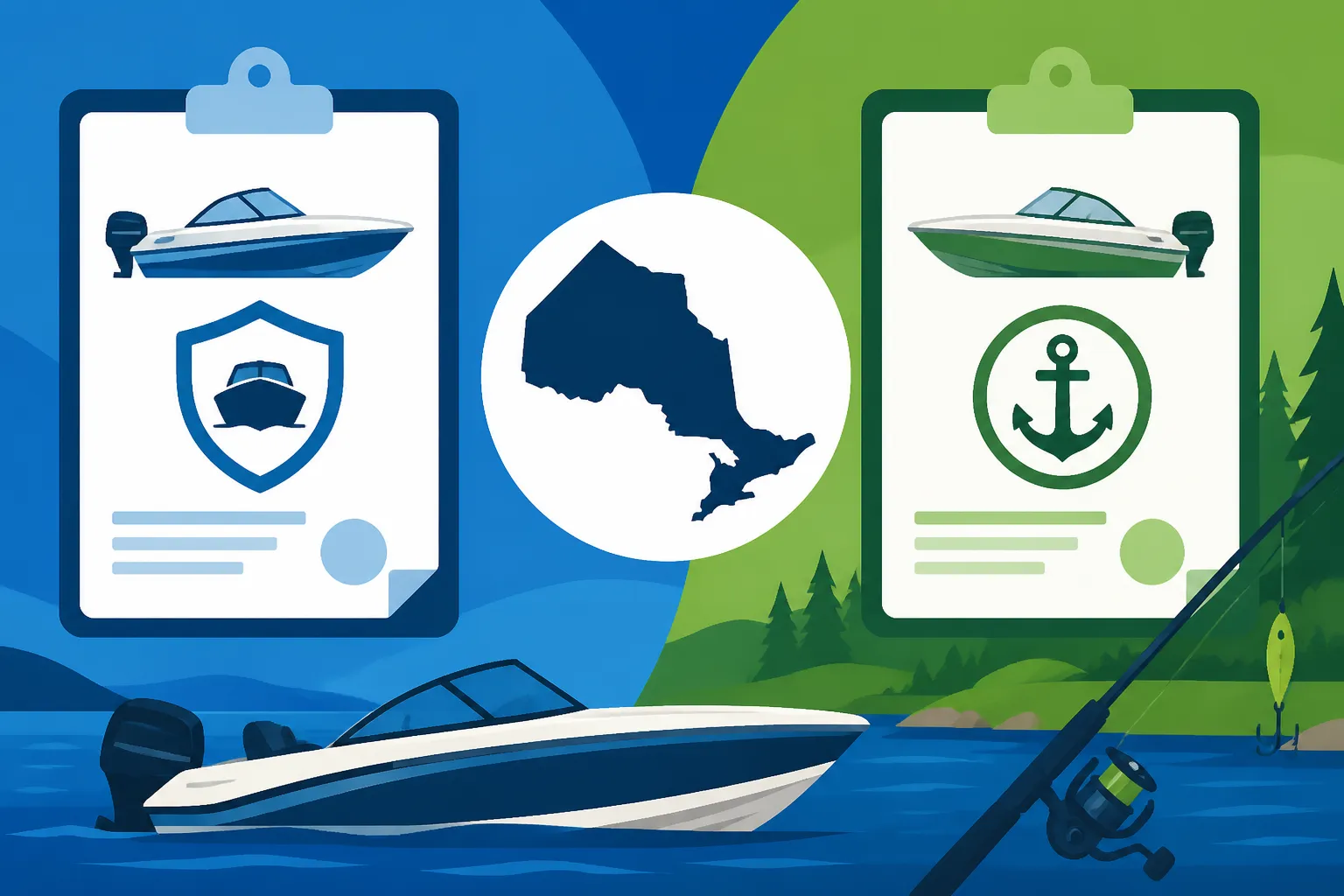
Let's address the elephant in the room right away: the concept of a "boat title" as a singular, government-issued document proving ownership, much like a car title, doesn't really exist in Ontario or, for that matter, anywhere in Canada for most pleasure craft. This is often a point of confusion for new boat owners or those familiar with the American system. When you buy a boat, whether it's a small fishing dinghy or a larger cruiser, your proof of ownership comes in a different form.
The Concept of a "Boat Title" vs. Bill of Sale
In Canada, for the vast majority of pleasure craft, your primary proof of ownership is not a "title" but rather a comprehensive Bill of Sale. Think of it as the ultimate receipt and legal agreement rolled into one. This crucial document legally establishes that the vessel has been transferred from one owner to another. It's a private transaction document, often created between the buyer and seller, or provided by a dealership if you're buying new or from a reputable used boat vendor.
A good Bill of Sale should be incredibly detailed to avoid any future disputes. It typically includes the full legal names and contact information of both the buyer and the seller, the date of the sale, and, most importantly, a thorough description of the boat itself. This description should cover the boat's make, model, year, and its Hull Identification Number (HIN). The HIN is particularly important; it's like the VIN for a car, a unique identifier that stays with the boat for its entire life. Details about the engine (make, model, serial number) and any included trailers should also be listed. Without this foundational document, proving ownership can become a significant headache, especially if you're trying to sell the boat later, insure it, or if it's ever stolen.
For example, imagine you've just found your dream used aluminum fishing boat on Kijiji, perfect for chasing walleye on Lake Nipissing. You meet the seller, shake hands, and exchange funds. The paper he hands you, detailing your purchase, is your Bill of Sale. This is your definitive proof that you now own that boat. It’s a vital piece of personal documentation, and it's essential to keep it in a safe place, not necessarily on the boat itself, but accessible for any official needs.
What an Official Boat Registration Provides
While the Bill of Sale confirms ownership, an official Pleasure Craft License (PCL), which is essentially boat registration, serves an entirely different, yet equally critical, purpose. Instead of proving who owns the boat, the PCL identifies the vessel itself for regulatory, safety, and enforcement reasons. This license is administered by Transport Canada, a federal entity, and it's free to obtain.
When you obtain a PCL, your boat is assigned a unique license number (e.g., ON1234567). This number must be prominently displayed on both sides of the bow of your vessel. This isn't just for aesthetics; it's a vital safety and identification feature. In an emergency, such as a breakdown on Lake Erie or if your boat goes adrift, that visible license number is what search and rescue teams use to identify your craft and, consequently, you. It allows authorities like the Coast Guard or marine police to quickly look up your vessel's information, including your contact details.
So, when a conservation officer pulls you over while you're enjoying a day of fishing, they're not asking for your "boat title." They're primarily interested in your Pleasure Craft License and your Ontario Fishing License Guide for 2026, ensuring you're operating legally on the water. The PCL is about the boat's legal right to operate and its traceability, while the Bill of Sale is purely about your property ownership.
The Ins and Outs of Registering Your Pleasure Craft in Ontario
Navigating the world of boat registration can feel a bit daunting at first, but it's a straightforward process once you understand the requirements. This isn't some provincial regulation; it's a federal mandate designed to keep everyone safer on the water.
When and Why You Need to Register Your Boat
The requirement for a Pleasure Craft License (PCL) applies to most motorized pleasure craft in Canada. Specifically, if your pleasure craft is equipped with a motor of 10 horsepower (7.5 kW) or more, you are legally required to obtain a PCL. There are a few exceptions, like commercially registered vessels or those registered with an official number under the Canada Shipping Act, 2001, but for the typical angler or recreational boater, the 10hp rule is the one to remember. Non-motorized boats, canoes, kayaks, and small boats with motors under 10hp are generally exempt from this specific licensing requirement, though provincial regulations still apply regarding safety equipment and operator competency.
Why is this important? Beyond simply avoiding fines – and believe me, getting caught without one can put a real damper on your day – the PCL plays a critical role in public safety. Imagine you're out enjoying the beautiful Georgian Bay Muskie Fishing grounds and something unexpected happens. Your engine dies, your radio goes out, and you drift far from shore. That clear, visible license number on your bow is what allows search and rescue to identify your vessel and pinpoint your location, potentially saving lives. It's not just a piece of paper; it's part of a nationwide safety network.
If you've recently purchased a boat, you do have a grace period. Transport Canada allows for a 90-day window to transfer an existing PCL into your name or to apply for a new one. During this time, as long as you carry the Bill of Sale (or other proof of ownership) onboard, you're considered compliant. This flexibility means you don't have to miss out on the opening weekend for walleye just because your paperwork isn't finalized, but don't let those 90 days slip by! It's a good time to review all Ontario Boating Laws for Anglers to ensure full compliance.
The Application Process and Required Documents
The good news is that obtaining a Pleasure Craft License is a completely free service provided by Transport Canada. You won't pay a dime for the license itself, though you might encounter minor costs for printing or displaying the number. The process has become much more accessible over the years, with online options making it far simpler than it used to be. You can apply either through the Pleasure Craft Electronic Licensing System online or, if you prefer, by mail. The online system is generally faster and more convenient.
When you're ready to apply, you'll need to gather a few essential documents to submit with your application form:
- Completed Application Form: This form asks for details about you and your boat.
- Proof of Ownership: This is where your Bill of Sale becomes paramount. It serves as definitive proof that you legally own the vessel. If you don't have a Bill of Sale (e.g., the boat was a gift, or you built it yourself), other forms of proof may be accepted, but the Bill of Sale is the most common and straightforward.
- Valid Government-Issued Identification: You'll need to provide a copy of a valid piece of ID, such as a driver's license or passport.
- A Photo of Your Pleasure Craft: This photo should show a clear side view of your boat. It helps Transport Canada identify the vessel and ensures the license number will be displayed correctly.
Accuracy is key here. Any discrepancies between your application details and your supporting documents can lead to delays. Take your time, ensure all information is correct, and that your photos are clear. After successfully applying, the license is valid for a generous 10 years! This means you won't be renewing it every season, but it's important to keep track of its expiration date. Knowing your Ontario boat registration renewal period will save you from a last-minute scramble.
For instance, after purchasing your boat, you might sit down at your computer, Bill of Sale in hand, and navigate to the Transport Canada website. You'd upload a clear picture of your boat and fill in your details. While you're at it, you might even browse Amazon for some new rod holders or a sonar unit, but the most pressing task is getting that PCL application submitted correctly.
Benefits and Responsibilities of Proper Boat Documentation
While the immediate thought might be to avoid penalties, proper boat documentation carries far more significant benefits, encompassing both legalities and practical safety measures. It’s about being a responsible boater and ensuring smooth sailing in all scenarios.
Legal Compliance and Enforcement
Operating a motorized pleasure craft over 10 horsepower without a valid Pleasure Craft License is a direct violation of federal law, and it comes with consequences. Fines for non-compliance can be substantial, making a great day out on the water turn sour very quickly. Marine police units, OPP, and conservation officers routinely patrol Ontario's waterways, particularly during peak seasons on popular lakes like Lake Simcoe or the Great Lakes. They are diligently checking for things like your PCL, proof of competency such as your Ontario Pleasure Craft Operator Card Requirement, and ensuring you have the necessary Ontario required boat safety equipment checklist onboard.
It’s easy to think, "Oh, they won't catch me," but enforcement is real. A minimum fine for not carrying your Pleasure Craft Operator Card, for example, can be a stark reminder of the importance of compliance, and similar penalties apply to lacking proper boat registration. It's simply not worth the risk. Imagine being pulled over and having to pay a fine, or even worse, having your trip cut short because your vessel isn't properly documented. Taking the time to get your PCL is a small effort for significant peace of mind.
Furthermore, compliance extends beyond just having the license. It also means properly displaying your license number. The numbers and letters must be in block characters, at least 7.5 centimetres (3 inches) high, and in a colour that contrasts with the background. They must be clearly visible and permanently affixed to both sides of the bow. This isn't just a suggestion; it's a requirement to ensure your vessel is easily identifiable at all times.
Facilitating Sales, Transfers, and Safety
Beyond avoiding fines, maintaining proper boat documentation streamlines future transactions and enhances overall safety. A boat with an up-to-date and correctly transferred PCL is far more attractive to a potential buyer. It signals that you are a responsible owner who has taken care of the necessary paperwork, which can significantly simplify the sales process. When you sell your boat, the PCL needs to be transferred to the new owner within 90 days. This continuity ensures the vessel remains properly identified throughout its operational life, regardless of who owns it. Trying to sell a boat that has never been registered or whose license is long expired can be a red flag for buyers and create unnecessary hurdles.
Consider this scenario: You’ve decided to upgrade to a larger vessel, perhaps one more suitable for deep-water trolling for lake trout. You want to sell your current boat quickly. Having all your documentation, including the original Bill of Sale and the current, properly maintained PCL, makes the transaction incredibly smooth. The buyer knows exactly what they're getting into, and the transfer of the PCL is a simple step. Without it, you might find yourself answering uncomfortable questions or even losing a sale.
From a safety perspective, the PCL isn't just for emergency identification. If your boat ever breaks free from its moorings during a storm, or is found adrift without anyone onboard, the unique license number allows authorities to quickly access your contact information and notify you. This can prevent unnecessary search efforts, reunite you with your vessel, and potentially clarify if an emergency has occurred. It's an invisible layer of protection that often goes unnoticed until it's critically needed. So, while you're busy planning your next fishing trip or reviewing Ontario Lake Trout Limit and Possession Rules, remember that proper documentation is just as essential as your fishing gear.
Here's a quick comparison of the key distinctions we've covered:
| Feature | "Boat Title" (Ontario Equivalent) | Pleasure Craft License (Registration) |
|---|---|---|
| Primary Purpose | Proof of legal ownership | Vessel identification for regulations & safety |
| Core Document | Bill of Sale, Proof of Purchase | Pleasure Craft License Document |
| Issued By | Private seller, dealership | Transport Canada |
| Cost | Part of boat purchase price | Free |
| When Needed | For ownership claims, resale, insurance | Motorized boats 10hp+, always on board |
| Displayed on Boat | No | Yes (License number on bow) |
| Transfer Required | Yes (new Bill of Sale for new owner) | Yes (within 90 days of ownership transfer) |
| Validity Period | Permanent (for proof of ownership) | 10 years (requires renewal) |
Disclaimer
Please remember that regulations and requirements can change. While I strive to provide the most current and accurate information, it's always best practice to consult the official Transport Canada website or relevant provincial bodies for the very latest updates on boating laws and licensing in Ontario.