Ontario largemouth bass daily limit
It can be incredibly frustrating to head out for a peaceful day on the water, only to be bogged down by confusion about how many fish you're actually allowed to keep. Nobody wants to accidentally break the rules, especially when it comes to something as simple as the daily limit for a popular species like largemouth bass. This guide is here to clear up all that head-scratching, giving you a comprehensive breakdown of Ontario's largemouth bass daily limits, so you can fish with confidence and peace of mind.
Deciphering Ontario's Largemouth Bass Daily Limits
Understanding the daily limits for largemouth bass in Ontario isn't as straightforward as a single number across the entire province. It's a nuanced system that largely depends on the type of fishing license you hold and, crucially, the specific Fishing Management Zone (FMZ) you're casting your line in. Ignoring these details could lead to unnecessary fines, and more importantly, it means you're not doing your part to conserve this fantastic fishery. So, let's break down the layers of these regulations.
Sport vs. Conservation License: What It Means for Bass
The first, and arguably most important, distinction to grasp when discussing daily limits is the difference between a Sport Fishing License and a Conservation Fishing License. This isn't just about the price tag; it's about your responsibility to the fishery and the number of fish you're legally allowed to retain.
With a Sport Fishing License, you're generally permitted a higher daily catch limit. For largemouth bass, this typically means a daily limit of six fish, often combined with smallmouth bass. This license is for those who enjoy taking home a meal or two, but it still comes with the expectation of responsible angling. You're entrusted with more, and with that comes a greater need to understand and respect the regulations. For a deeper dive into the specifics of what each license entails, you might find our guide on the Ontario Sport vs Conservation Fishing License incredibly helpful.
On the other hand, a Conservation Fishing License is designed for anglers who prioritize catch-and-release, or who only wish to keep a very modest amount of fish for consumption. For largemouth bass, the daily limit with a Conservation License is significantly lower, typically two fish, again, usually combined with smallmouth bass. This license is a fantastic option for those who want to minimize their impact on fish populations and ensure healthy fisheries for future generations. It's a great choice if you're primarily fishing for the experience and the thrill of the catch rather than filling a cooler. Understanding How Much Does an Ontario Fishing License Cost might also help you decide which license is right for your angling style.
It's vital to remember that these limits are daily limits, meaning the maximum number of fish you can catch and keep in a single day. There's also a possession limit, which is the total number of fish you're allowed to have on your person or in your immediate control (like in your cooler at the cottage) at any given time. Often, the possession limit mirrors the daily limit, but it's always best to consult the regulations summary for any specific exceptions.
Regional Differences: Navigating Fishing Management Zones
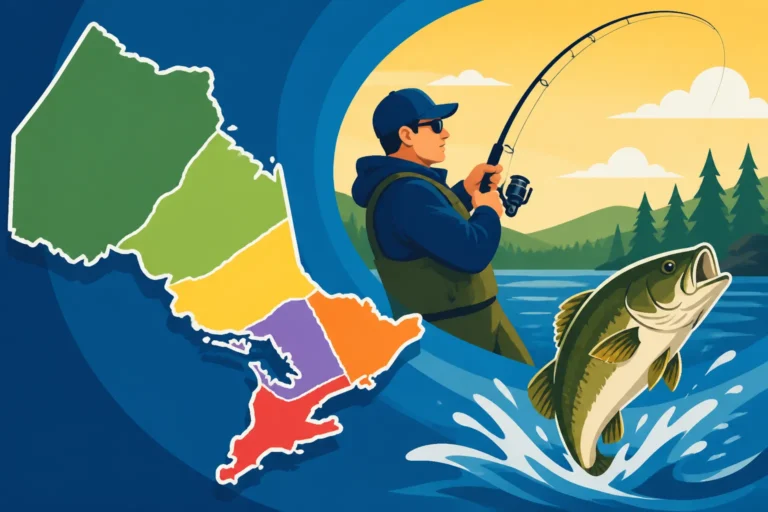
Ontario is a massive province, and its fisheries are incredibly diverse. What works for bass populations in the southern part of the province might not apply to the northern regions. This is precisely why Ontario is divided into 20 distinct Fishing Management Zones (FMZs), each with its own specific set of regulations, including season dates and daily limits for various species.
For largemouth bass, the general Sport and Conservation limits mentioned above are often a starting point, but individual FMZs can, and frequently do, have variations. For instance, an FMZ might have a reduced daily limit for bass, or even specific size restrictions that override the general provincial guidelines. This makes it absolutely critical to know which FMZ you're fishing in before you even consider casting a line. You can't just assume the rules from your home lake apply everywhere else. Getting familiar with Ontario Fisheries Management Zones, Explained is truly non-negotiable for any serious angler in the province.
The best way to figure out the exact regulations for your chosen fishing spot is to consult the official Ontario Fishing Regulations Summary. This document is your bible on the water. It details the specific rules for each FMZ, often broken down by species. Don't rely on word-of-mouth or old regulations; always check the most current summary. The Ministry of Natural Resources and Forestry (MNRF) also provides an excellent online tool, the Ontario Fish ON-Line Interactive Zone Map, Explained, which allows you to zoom in on specific lakes or rivers and see their exact regulations. This interactive map is a game-changer for planning your trips and ensuring you're compliant.
For example, if you're planning a trip to the Kawartha Lakes region, you'd need to identify which FMZ that area falls under (often FMZ 17) and then check the specific bass regulations for that zone. A lake like Lake Simcoe, known for its diverse fishery, falls under FMZ 16, and its rules might be different from those in, say, FMZ 4 in Northwestern Ontario. It's this level of detail that separates a truly prepared angler from one who might unknowingly run into trouble.
Beyond the Limit: Key Largemouth Bass Regulations You Can't Ignore
While the daily limit is a primary concern, it's far from the only regulation you need to be aware of when targeting largemouth bass in Ontario. There are other crucial rules concerning when you can fish for them and if there are any size restrictions that dictate which fish you can keep. Overlooking these can be just as problematic as exceeding your daily quota.
Understanding Open and Closed Seasons for Largemouth Bass
Imagine the excitement of finally seeing that first largemouth bass rise to your topwater lure, only to realize later that you were fishing outside the open season. It's a real bummer, and it's also illegal. Every fish species in Ontario has specific open and closed seasons, which are designed to protect them during critical periods like spawning. For largemouth bass, these seasons vary significantly by Fishing Management Zone.
Generally, the bass season in Southern Ontario (like FMZ 18 or 20) tends to open around the fourth Saturday in June and runs until mid-December. This allows the bass to complete their spawning cycle undisturbed and gives the young fry a chance to grow. However, if you're heading further north, say to FMZ 2 or 4, the season dates could be different, potentially opening later in the summer due to colder water temperatures and later spawning. This variability means you absolutely cannot rely on general knowledge; you must consult the regulations for your specific FMZ every single time. Our article on Ontario Bass Opener Dates by Zone can be a great starting point for checking these critical dates.
Fishing for largemouth bass during a closed season, even if you intend to release them, is often prohibited and can lead to significant penalties. The intent behind closed seasons is to prevent any disturbance to nesting bass, as male bass aggressively guard their nests, making them highly vulnerable to anglers. Even if released, handling them can stress the fish and expose their eggs to predators. So, respecting these season dates isn't just about legality; it's about being a responsible steward of the fishery.
Size Restrictions and Special Regulations for Bass
Beyond the daily limit and season dates, some FMZs might impose specific size restrictions or even slot limits for largemouth bass. While many zones across Ontario have a straightforward daily limit for largemouth/smallmouth combined with no specific size limits on largemouth themselves, it's not a universal rule.
A "size restriction" might mean that you can only keep bass above a certain minimum length, or perhaps below a maximum length. A "slot limit" is even more specific, requiring you to release fish that fall within a certain size range (e.g., you can keep fish under 12 inches or over 16 inches, but anything in between must be released). These limits are put in place to protect specific age classes of fish, often the prime breeding stock, ensuring they can reproduce and contribute to the population for years to come.
It's important to note that while largemouth bass often don't have as many complex size limits as some other species, you should always check. For instance, you might find a situation where a lake has a general bass limit, but also falls under Special Regulation Waters in Ontario where specific exceptions apply. These could be for a unique waterbody, a conservation effort, or simply to manage a specific fish population more closely. For example, while Lake Erie (FMZ 20) generally has no size limit on largemouth, it does have a slot limit for smallmouth bass. Since the daily limit for both species is often combined, you need to be aware of both.
Always carry a reliable measuring tape or stick, especially if you plan on keeping fish. It's a simple piece of equipment that can save you a lot of grief. You can easily find suitable measuring devices on platforms like Amazon, ensuring you're always prepared to verify your catch's length against the regulations.
Ensuring Compliance and Practicing Responsible Bass Fishing
Navigating fishing regulations can feel like a chore, but it's a non-negotiable part of being an angler. The good news is that with a little preparation and the right mindset, staying compliant and fishing responsibly is incredibly straightforward. It's all about being informed and making conscious choices that benefit the fish and the environment.
Tools and Resources for the Informed Angler
One of the most powerful tools in your tackle box isn't a fancy lure or a high-tech sonar, but rather the most current Ontario Fishing Regulations Summary. You can download a digital copy, pick up a physical copy wherever fishing licenses are sold, or check the MNRF website directly. Make it a habit to review the summary before each trip, especially if you're exploring a new FMZ or targeting a species you don't typically pursue. This document outlines not just daily limits, but also season dates, size restrictions, and general rules of engagement. Checking Reading the Ontario Fishing Regulations Summary is an essential step for every angler.
Beyond the regulations summary, having the right physical tools is crucial for compliance. A good, sturdy measuring tape or board is essential for any angler who plans to keep fish, especially if there are size limits in your chosen FMZ. Make sure it's accurate and easy to use, even with a wriggling fish in hand. You can find a wide variety of these tools, from simple retractable tapes to dedicated bump boards, on online marketplaces like Amazon, often with reviews from other anglers.
Another invaluable resource is the Ontario Fishing License Guide for 2026. This guide provides comprehensive information on all aspects of obtaining and understanding your license, which is the foundation of legal fishing in Ontario. Being informed about your license type and its associated limits is the first step towards responsible angling. Don't leave home without ensuring your license and Outdoors Card are valid and readily accessible, whether in physical or digital format.
The Art of Catch and Release: Protecting Our Bass Populations
For many anglers, especially those holding a Conservation License or simply enjoying the sport, catch and release is a fundamental practice. Even if you hold a Sport License and are within your daily limit, choosing to release fish, particularly larger breeding females, contributes significantly to the health and sustainability of the largemouth bass population.
Practicing proper catch and release techniques is paramount. This means minimizing the time the fish is out of the water, handling it gently with wet hands, supporting its body horizontally, and using appropriate tools for hook removal. Barbless hooks can make the release process quicker and less stressful for the fish. If a fish is deeply hooked, it's often better to cut the line as close to the hook as possible rather than trying to remove it, as this can cause more internal damage.
When you've already reached your daily limit for largemouth bass, it's important to transition fully to catch and release if you continue fishing. Some anglers switch to different lures or techniques that are less likely to injure fish, while others simply call it a day to avoid any accidental over-limit catches. Knowing the difference between Largemouth Bass vs Smallmouth Bass Identification is also helpful, as their limits are often combined. Embracing a mindset of conservation, whether through adhering strictly to limits or by practicing careful catch and release, ensures that Ontario's waters remain vibrant and full of fantastic largemouth bass for all of us to enjoy for years to come. Many resources, including specialized nets designed to be gentle on fish, can be found on Amazon to aid in safe catch and release practices.
Largemouth Bass Daily Limits by License Type (General Guidance)
This table provides a general overview of the largemouth bass daily and possession limits for Sport and Conservation Fishing Licenses in Ontario. It's crucial to remember that these are general guidelines, and specific Fishing Management Zones (FMZs) can have different rules, including season dates and size restrictions. Always consult the current Ontario Fishing Regulations Summary for the specific FMZ you plan to fish in.
| License Type | Largemouth/Smallmouth Bass Daily Limit (Combined) | Largemouth/Smallmouth Bass Possession Limit (Combined) | Common Season Start (Southern Ontario) | Common Season End (Southern Ontario) |
|---|---|---|---|---|
| Sport Fishing License | 6 fish | 6 fish | 4th Saturday in June | December 15 |
| Conservation Fishing License | 2 fish | 2 fish | 4th Saturday in June | December 15 |
Note: Always verify these details with the official Ontario Fishing Regulations Summary for your specific Fishing Management Zone, as exceptions and regional variations are common. For a broader understanding of all species limits, refer to the Ontario Bag and Possession Limits by Species guide.
Disclaimer
The information provided in this guide is intended for general informational purposes only and is subject to change. While every effort has been made to ensure accuracy, fishing regulations in Ontario are complex and can vary significantly by species, waterbody, and Fishing Management Zone. It is the sole responsibility of each angler to consult and comply with the most current official Ontario Fishing Regulations Summary published by the Ministry of Natural Resources and Forestry (MNRF) before engaging in any fishing activity. Failure to do so may result in penalties.