Ontario walleye daily limit
Navigating the ever-changing rules of fishing can feel like a labyrinth, especially when you're just trying to enjoy a peaceful day on the water and understand how many of those delicious walleye you're actually allowed to keep. Many anglers grapple with deciphering what constitutes a "daily limit" and how it differs from a "possession limit" for species like walleye, which are incredibly popular throughout Ontario. This comprehensive guide aims to demystify the Ontario walleye daily limit, providing you with clear, actionable insights to ensure you stay compliant and contribute to sustainable fishing practices.
Understanding Walleye Daily and Possession Limits in Ontario
When you're out chasing walleye in Ontario, it’s not enough to just know where the fish are biting. You also need a solid grasp of the regulations surrounding how many you can keep. These rules are put in place for a really good reason: to protect our precious fisheries and ensure that future generations can enjoy the same fantastic fishing experiences we do today. Let's break down the core concepts that often trip up even seasoned anglers.
What "Daily Limit" Really Means
The "daily limit" refers to the maximum number of fish of a particular species that you, as an individual angler, are allowed to catch and keep in a single day. This 24-hour period typically runs from midnight to midnight, though it's always best to check the specific wording in the regulations if you're ever unsure. It's important to understand that once a fish is "kept," it counts towards your daily limit, regardless of whether you eat it that evening, give it to a friend, or put it in the freezer.
For example, if the daily walleye limit in your fishing zone is four, you can keep up to four walleye in one day. If you catch and keep two in the morning and decide to go out again in the evening, you can only keep two more walleye, bringing your total for that 24-hour period to four. Even if you release the first two after a photo, they still count if they were initially kept. The key is that they were "retained." Once you hit that number, any additional walleye caught must be immediately and carefully released. This helps prevent over-harvesting and ensures that enough fish remain in the system to reproduce and sustain the population.
The Crucial Difference: Daily vs. Possession Limit
This is where many anglers get confused, and it's a critical distinction to grasp. While the daily limit dictates what you can keep in a single day, the "possession limit" refers to the maximum number of fish of a particular species that you are legally allowed to have in your possession at any given time, regardless of when or where they were caught. This includes fish in your livewell, cooler, at your campsite, in your vehicle, or even in your freezer at home. The possession limit is the grand total you can have on hand.
Think of it this way: your daily limit is like your allowance for a single shopping trip, while your possession limit is the total amount of a specific item you're allowed to have in your house at any time. For walleye, the possession limit is often, but not always, the same as the daily limit for a Sport fishing license, and often lower for a Conservation license. However, if you're on a multi-day trip, you cannot simply keep adding to your cooler each day beyond the possession limit. If the possession limit for walleye is four, and you kept four on Monday, you cannot keep any more walleye until you have consumed or otherwise legally disposed of those four fish to bring your total possession back under the limit. This rule is designed to prevent anglers from stockpiling fish over several days or trips, further protecting the overall fish population. Understanding these rules is fundamental to adhering to all Ontario Fishing Regulations Explained.
Conservation vs. Sport Licenses and Their Impact
Your choice of fishing license in Ontario directly impacts your walleye daily and possession limits. This is a crucial detail that many anglers overlook, leading to potential infractions. Ontario offers two main types of fishing licenses for residents and non-residents: the Sport Fishing License and the Conservation Fishing License.
The Sport Fishing License typically allows for the highest daily and possession limits for most species, including walleye. This license is for anglers who want to maximize their harvest opportunities, within the set regulations of course. It's often the default choice for those planning to keep a decent number of fish for consumption. For many walleye zones, a Sport license might allow you to keep four or six fish, depending on the specific Fisheries Management Zone (FMZ) you are fishing in.
On the other hand, the Conservation Fishing License is designed for anglers who are more focused on catch-and-release or who wish to keep a smaller number of fish, actively contributing to conservation efforts. This license comes with significantly reduced daily and possession limits – usually about half of what a Sport license allows. For walleye, a Conservation license might only permit two or three fish, again, depending on the specific zone. This reduced limit is a fantastic way for anglers to still enjoy keeping some fish for a meal while putting less pressure on the fishery. Before heading out, make sure you know the difference and understand the implications for your walleye limit, as detailed in the Ontario Sport vs Conservation Fishing License guide. If you're wondering How Much Does an Ontario Fishing License Cost, knowing which type you need is the first step.
Navigating Ontario's Fisheries Management Zones FMZs for Walleye Limits
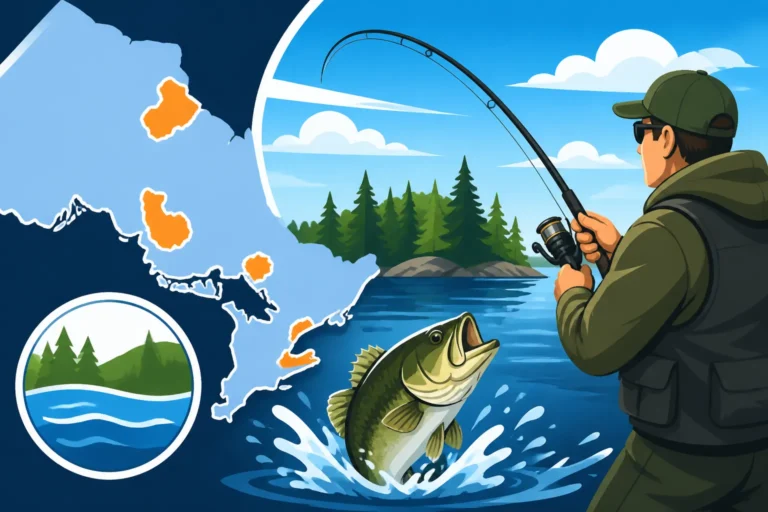
Ontario is a massive province with incredibly diverse aquatic ecosystems, and trying to apply a single set of fishing rules across the entire landscape would be impractical and ineffective. That's why the province is divided into Fisheries Management Zones (FMZs), each with its own specific set of regulations. For walleye anglers, understanding which FMZ you're in and what its particular rules are is absolutely paramount.
Why FMZs Matter for Walleye
Ontario is divided into 20 distinct Fisheries Management Zones, each identified by a number (e.g., FMZ 11, FMZ 18, FMZ 20). These zones are established based on ecological factors, fish populations, and angling pressure. Because fish populations, habitats, and environmental conditions vary so much from one region to another, a "one-size-fits-all" approach simply wouldn't work for managing fisheries. For instance, a walleye population in a small, heavily fished lake in Southern Ontario might need stricter limits than a robust, less-pressured population in a massive Northern Ontario lake.
Therefore, the daily and possession limits for walleye (and many other species) can differ significantly from one FMZ to the next. What's perfectly legal in FMZ 11 might be an over-limit in FMZ 20. This system allows for more localized and effective management strategies, helping to ensure the long-term health and sustainability of walleye populations across the province. Familiarizing yourself with the concept of Ontario Fisheries Management Zones, Explained is essential for any angler planning a trip.
Finding Your Walleye Limit by Zone
The key to knowing your specific walleye limit is to identify which Fisheries Management Zone you'll be fishing in and then consult the most up-to-date regulations for that zone. The official source for all this information is the Ontario Fishing Regulations Summary. This document is updated annually and is available in print at most license vendors, tackle shops, and ServiceOntario locations, or digitally online through the Ontario government website.
To find your walleye limit:
- Identify your FMZ: Before you even leave home, pinpoint your fishing location on a map and determine its corresponding FMZ. The Ontario Fish ON-Line Interactive Zone Map, Explained is an invaluable online tool for this. Simply enter the lake or river name, and it will show you the FMZ.
- Consult the Regulations Summary: Once you know your FMZ, navigate to the specific section for that zone in the Fishing Regulations Summary. You'll find tables listing various species, including walleye, along with their daily and possession limits for both Sport and Conservation licenses. For example, if you're fishing a popular walleye lake like Lake Nipissing, you'd look up FMZ 11, where Lake Nipissing is located, to find its specific walleye limits. Or, if you're targeting Walleye Fishing in Ontario on the Bay of Quinte, you'd check FMZ 20.
- Check for Exceptions: Always look closely for any "exceptions" or "special regulations" that might apply to the specific lake or river you intend to fish within that FMZ. These can sometimes override the general FMZ rules. We'll dive more into this next.
Special Regulations and Exceptions
Just when you think you've got the FMZ rules down, you might encounter special regulations that apply to particular bodies of water. These exceptions are often implemented for highly specific conservation needs or to manage unique angling pressures on certain lakes or rivers. For walleye, this could include:
- Slot Limits: Some lakes have "slot limits," which means you can only keep walleye within a specific size range. For instance, you might be allowed to keep two walleye under 18 inches, but no fish between 18 and 25 inches, and one over 25 inches. This helps protect breeding-size fish.
- Reduced Limits: A specific lake might have an even lower daily or possession limit for walleye than the general FMZ rule, often due to a fragile or recovering population.
- Catch-and-Release Only: In rare cases, some waters might be designated as catch-and-release only for walleye, meaning you cannot keep any fish.
- Season Dates: While walleye generally have specific opening and closing dates per FMZ, some specific waters might have extended or shortened seasons. For a deeper understanding, be sure to check the section on Ontario Fishing Season Dates by Zone.
It's absolutely vital to check the "Exceptions to the Zone Regulations" section in the Ontario Fishing Regulations Summary for the specific FMZ you are fishing. These special rules are legally binding and ignoring them, even accidentally, can lead to serious consequences. This is particularly true for waters designated as Special Regulation Waters in Ontario.
Practical Scenarios and Tips for Adhering to Walleye Limits
Adhering to fishing limits isn't just about knowing the rules; it's about practical application on the water. Even with the best intentions, it's easy to make mistakes if you're not well-prepared. Let's look at some real-world scenarios and tips to help you stay compliant and avoid any headaches.
Keeping Track on the Water
When the walleye are biting, it's easy to lose count, especially if you're having a great day or fishing with multiple people. However, accidental over-limits are still violations. Here are a few simple strategies to keep accurate tabs on your catch:
- Designated Stringer or Livewell: If you plan to keep fish, use a clearly marked stringer or livewell. As soon as you decide to retain a walleye, place it there. Visually seeing your kept fish helps you monitor your count. Once your limit is reached, put away your walleye gear or switch to targeting a different species (if you have the appropriate license and are within those limits).
- Physical Tally: For some, a simple method like tying a knot in a piece of cord for each kept fish, or using a small clicker counter, works well. It's low-tech but effective.
- Measure and Release: Always have a reliable measuring device with you. A good, sturdy measuring board or tape measure is indispensable. Many anglers even carry a small, portable scale, which can be easily ordered from Amazon, to quickly weigh potential trophy fish before release. If a walleye doesn't meet size requirements (if slot limits apply) or if you've already filled your limit, release it immediately and carefully.
Remember, the goal is to keep only what you're legally allowed and what you'll consume. Over-harvesting not only breaks the rules but also impacts the resource.
When Fishing with Others
Fishing with a group of friends or family is a fantastic way to enjoy the outdoors, but it can complicate limit management. It’s crucial to understand that limits are always individual, not per boat or per group.
- Individual Responsibility: Each licensed angler is responsible for their own daily and possession limits. You cannot pool your limits. For example, if you have a Sport license with a walleye limit of four, and your friend has a Conservation license with a limit of two, you cannot collectively keep six walleye if only two of you are fishing. You must each adhere to your own license's regulations.
- Separate Storage: To avoid confusion, it's often best for each angler to have their own stringer or a clearly divided section of a livewell or cooler for their kept fish. This prevents accidental mixing and makes it easy to verify individual compliance if a conservation officer checks your catch.
- Processing at Camp: If you’re at a fishing camp, make sure that any fish stored in a communal freezer are clearly labelled with the angler’s name, license number, and date of catch. This helps distinguish individual possession limits. This also relates to Ontario Bag and Possession Limits by Species, which outlines how individual accountability is maintained.
Tools and Resources to Help You Stay Compliant
Staying informed is your best defense against accidental violations. Thankfully, there are many tools available to help you navigate the regulations:
- Official Ontario Fishing Regulations Summary: This is your bible. Always have a current copy, either physical or digital, readily accessible when you're fishing. Even if you've read it a hundred times, a quick check can confirm that you're in the right zone and following the correct walleye limits. You can find out more about Reading the Ontario Fishing Regulations Summary to make sure you're getting the most out of it.
- Fish ON-Line App/Website: The Ontario government's Fish ON-Line tool is incredibly useful. It's an interactive map that allows you to click on any body of water and instantly see the specific regulations for that lake or river, including walleye limits, season dates, and any special exceptions. It's like having a digital conservation officer in your pocket.
- Measuring and Weighing Tools: As mentioned, a good measuring tape or board is non-negotiable, especially if you're dealing with slot limits. You can find durable, waterproof options easily on platforms like Amazon. Similarly, a small, accurate scale can be helpful for verifying sizes, particularly for catch-and-release records, or if you're hoping to submit a fish for Ontario Provincial Fish Records by Species. Don't forget a sturdy cooler, also readily available on Amazon, to keep your retained walleye fresh on the journey home!
Example Walleye Limits by Zone
To give you a clearer picture, here’s a simplified table illustrating potential walleye daily and possession limits for various FMZs. Please remember, these are illustrative examples only, and regulations can change annually. You MUST always consult the most current Ontario Fishing Regulations Summary for the precise rules for your specific fishing location and license type.
| Fisheries Management Zone (FMZ) | General Location (Example) | Sport License (Daily/Possession) | Conservation License (Daily/Possession) | Potential Special Regulations (Example) |
|---|---|---|---|---|
| FMZ 11 | Lake Nipissing, French River | 4 | 2 | Slot limit on specific lakes, e.g., only 1 over 60 cm |
| FMZ 18 | Lake of the Woods, Rainy Lake | 4 | 2 | Catch-and-release only for specific periods, or size restrictions |
| FMZ 20 | Lake Erie, Bay of Quinte | 6 | 2 | Specific seasons for different basins, or reduced limits in certain bays |
| FMZ 15 | Lake Superior Tributaries | 2 | 1 | Often closed or reduced for spawning fish in spring |
This table highlights how much variety there can be. A walleye angler travelling from Lake Nipissing to Lake Erie needs to be aware of dramatically different limits. Always verify the rules for the specific body of water you intend to fish!
Consequences of Exceeding Walleye Limits
It might seem like a small oversight to be one fish over the limit, but conservation officers take these infractions very seriously. Exceeding walleye limits isn't just a minor mistake; it's a violation of provincial law with tangible consequences that can put a damper on your fishing trip and future angling opportunities.
Fines and Penalties
The penalties for fishing violations in Ontario, including exceeding your walleye daily or possession limit, can be significant. These aren't just polite warnings. You could face:
- Substantial Fines: The exact amount can vary depending on the severity of the offense, the number of fish over the limit, and whether it's a repeat offense. Fines can range from hundreds to thousands of dollars.
- Seizure of Gear: Conservation officers have the authority to seize your fishing gear (rods, reels, tackle, coolers, even your boat or vehicle in extreme cases) used in the commission of the offense. This means you could literally lose your prized fishing setup.
- Loss of Fishing Privileges: In addition to fines, you could have your fishing license suspended for a period, or even be permanently banned from fishing in Ontario waters. This means no more trips to the Best Fishing Lakes in Ontario or anywhere else for that matter.
- Court Appearances: For more serious offenses, you may be required to appear in court, which adds legal fees, stress, and time away from your regular life.
The enforcement of these regulations is strict because they are crucial for protecting Ontario's natural resources. It's simply not worth the risk. For a more detailed breakdown of potential repercussions, you can refer to the guide on Fishing Without a License in Ontario: Penalties, as many of the same principles apply to over-limits.
The Importance of Conservation
Beyond the legal ramifications, understanding and respecting walleye limits is fundamentally about conservation. These limits aren't arbitrary bureaucratic hurdles; they are science-based decisions made to ensure the long-term health and sustainability of walleye populations.
- Protecting Spawning Stock: Limits help protect adult walleye, especially those of breeding age, ensuring that enough fish survive to reproduce and replenish the population each year.
- Maintaining Ecosystem Balance: Healthy fish populations are a cornerstone of healthy aquatic ecosystems. Over-harvesting of a key predator like walleye can have ripple effects throughout the food web.
- Ensuring Future Opportunities: When anglers adhere to limits, they are actively participating in the responsible management of a shared resource. This means that your children and grandchildren will also have the opportunity to experience the thrill of catching walleye in Ontario.
- Ethical Angling: Responsible angling extends beyond just following the rules; it's about an ethical approach to the environment. Practicing catch-and-release when appropriate, minimizing stress on fish, and respecting limits are all part of being a good steward of our natural resources.
By taking the time to understand and follow the Ontario walleye daily limit and all other regulations, you're not just avoiding a fine; you're playing a vital role in preserving Ontario's incredible fishing heritage for generations to come.
Disclaimer
The information provided in this guide is for general informational purposes only and is not a substitute for the official Ontario Fishing Regulations Summary. Fishing regulations are subject to change, and it is the responsibility of every angler to consult the most current official summary published by the Ontario Ministry of Natural Resources and Forestry (MNRF) before heading out to fish. Always verify specific regulations for your chosen Fisheries Management Zone (FMZ) and body of water.