Invasive Fish Species in Ontario Waters
It's incredibly frustrating to head out to your favorite fishing spot, full of anticipation, only to find the ecosystem you know and love has changed. Maybe you're catching fewer of your target species, or seeing strange fish you don't recognize. This can often be attributed to invasive fish species, a silent but devastating threat to Ontario's precious waters. This guide dives deep into what these invaders are, how they get here, the damage they cause, and most importantly, what every angler can do to protect our lakes and rivers for generations to come.
Understanding Invasive Species: More Than Just "New Fish"
When we talk about invasive species, it's easy to picture something alien or exotic. But the reality is a bit more nuanced, and the impact they have can be far more profound than just a change in what you're pulling from the water. It’s about the very fabric of our aquatic environments.
Defining Invasive vs. Non-Native
Let's clear up some common confusion right away. Not every species that isn't originally from Ontario is automatically an "invasive species." The term "non-native" simply means a species that has been introduced to an area outside its historical range, whether intentionally or accidentally. Think of rainbow trout, for instance. They're non-native to many Ontario waters, but because they generally integrate without causing widespread ecological collapse, they're not typically classified as invasive in the same way.
An invasive species, however, is a non-native species whose introduction (or spread) causes, or is likely to cause, economic or environmental harm, or harm to human health. The key difference is that "harm." Invasive species are often incredibly adaptable, reproduce rapidly, have few natural predators in their new environment, and can outcompete native species for food and habitat. They disrupt the delicate balance nature has spent millennia perfecting, turning productive fisheries into biological deserts for local species.
The Ecological Balance at Risk
Ontario's lakes, rivers, and streams are complex ecosystems, each a finely tuned machine where every species plays a crucial role. Native fish, insects, plants, and microorganisms have evolved together, creating intricate food webs and interdependencies. When an invasive species arrives, it's like throwing a wrench into this delicate machinery. They can consume native baitfish, destroy spawning grounds, introduce diseases, or drastically alter water quality.
Imagine a lake where walleye once thrived, feasting on native minnows. If an invasive species, say the round goby, moves in, they might eat the same minnows, outcompete the walleye for food, and even devour walleye eggs directly from their nests. Suddenly, your beloved walleye population dwindles, and the ecosystem shifts. This isn't just an abstract scientific concept; it's a real and tangible threat to the fishing experiences we cherish and the health of the natural world around us.
The Most Notorious Invasive Fish in Ontario
Ontario has unfortunately seen its fair share of unwelcome aquatic guests. Some have been here for decades, silently changing our waters, while others pose more recent and urgent threats. Understanding who these invaders are is the first step in recognizing the signs and helping to prevent their further spread.
Round Goby: The Bottom Feeder Menace
The Round Goby is arguably one of the most talked-about and visible invasive fish in Ontario, particularly in the Great Lakes and connecting waterways. These small, aggressive bottom-dwellers, identifiable by their prominent dorsal fin and a single, fused pelvic fin that resembles a suction cup, arrived via ballast water from transoceanic ships. They've rapidly colonized vast areas, especially Lake Erie and Lake Simcoe, and have unfortunately continued to spread. Round Goby: Ontario's Invasive Great Lakes Fish details their journey and impact.
Their impact is multifaceted and severe. Gobies are voracious eaters, preying on the eggs and fry of native species like smallmouth bass, walleye, and even lake trout. They outcompete native bottom-dwelling fish like sculpins for food and prime habitat. While some predator fish, particularly smallmouth bass, have learned to eat gobies, providing a temporary boom in their size, this often comes at the cost of native baitfish populations, which are pushed to the brink. Anglers often find them on their hooks when targeting other species, a frustratingly common occurrence that signals their pervasive presence.
Zebra and Quagga Mussels: A Foundation of Trouble
While not fish themselves, zebra and quagga mussels are critical to understanding the invasive fish problem. These tiny molluscs are perhaps the most widespread and ecologically damaging aquatic invasive species in Ontario. They arrived in the Great Lakes in the late 1980s and early 1990s, also via ballast water, and have since spread throughout much of the province.
These mussels filter enormous amounts of water, drastically increasing water clarity. While this might sound good, it has devastating consequences. By removing phytoplankton – the base of the aquatic food web – they starve native plankton-feeding fish and insects. The increased light penetration allows invasive aquatic plants to thrive in deeper waters, altering habitat. Furthermore, they accumulate toxins, which are then passed up the food chain to the fish that eat them, potentially impacting human health if consumed. The clear waters might seem inviting, but below the surface, the native food web is in crisis, indirectly affecting the health and populations of our cherished fish species.
Asian Carps: The Looming Threat
The term "Asian Carps" refers to a group of four species: Bighead Carp, Silver Carp, Grass Carp, and Black Carp. These large, fast-growing fish are not yet established in the Great Lakes but represent perhaps the most significant potential threat. Originating from Asia, they were imported into the southern United States for aquaculture and wastewater management, from where they have steadily spread northward.
Their impact would be catastrophic. Bighead and Silver Carp are filter feeders that consume massive quantities of plankton, directly competing with baitfish and the larval stages of sportfish like walleye and yellow perch. Silver Carp are also known for their startling habit of jumping high out of the water when disturbed by boat motors, posing a significant physical hazard to boaters. Grass Carp consume vast amounts of aquatic vegetation, destroying critical habitat for fish and waterfowl. Black Carp primarily eat mussels and snails, including native endangered species. Ontario's fisheries, if these species establish, could be irrevocably altered.
Alewife: A Historical Invader with Lasting Impact
The Alewife, a small, silvery member of the herring family, is another non-native species that has had a profound, albeit older, impact on the Great Lakes. They entered the lakes through shipping canals in the early 20th century. Like the Round Goby, they exhibit rapid reproduction and can dominate prey fish communities.
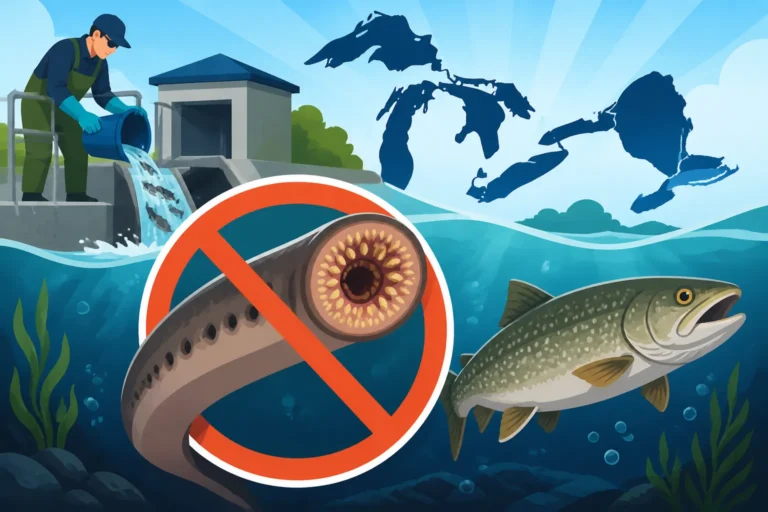
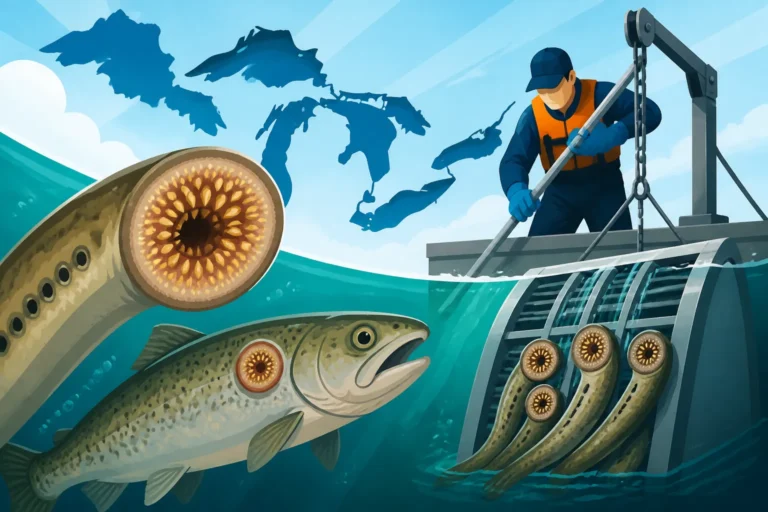
Alewife compete directly with native plankton-feeding fish and the fry of many sportfish. They also have a unique problem: they contain an enzyme called thiaminase, which breaks down thiamine (Vitamin B1). When predator fish like salmon and lake trout consume large quantities of Alewife, they can develop thiamine deficiency, leading to reproductive failure and early mortality of their offspring. This has necessitated extensive stocking programs for salmonids in the Great Lakes, turning what would naturally be self-sustaining populations into dependent ones. Efforts like Sea Lamprey Control in the Great Lakes are vital to protect these populations, but the Alewife's presence adds another layer of complexity.
How Invasive Species Arrive and Spread
It's easy to point fingers, but the truth is, most invasive species arrive and spread through accidental means, often facilitated by human activities. Understanding these pathways is crucial for preventing future introductions and containing existing ones.
Ballast Water Woes
The most significant pathway for the introduction of aquatic invasive species into the Great Lakes has been ballast water from large cargo ships. Ships take on ballast water in one port to stabilize themselves, and then discharge it in another. If the water contains organisms from the original port, they can be released into a new environment. This is how many of the most damaging invaders, including zebra and quagga mussels and the round goby, made their way to Ontario.
While regulations and treatment technologies for ballast water have improved significantly, the sheer volume of shipping traffic means the risk remains. It's a stark reminder of our interconnected world and the global reach of potential ecological threats. Even with stringent rules, a single lapse can have devastating, long-term consequences for an entire ecosystem.
Live Bait and Accidental Releases
For anglers, the use and disposal of live bait is a critical pathway for invasive species spread. Many baitfish species sold in tackle shops are sourced from various locations, and sometimes, non-native or invasive species can inadvertently get mixed in with native bait. If an angler then dumps their leftover bait bucket into a new body of water at the end of the day, they could be introducing a new invader. Even species that are native to one lake might be non-native and potentially invasive in another, different water system.
This isn't just about fish, either. Other organisms like rusty crayfish, another aggressive invader, can be inadvertently transported in bait buckets. It's why the mantra "Never Release Live Bait" is so important. What seems like a harmless act can set off a cascade of ecological problems. Always dispose of leftover bait in the trash, far from any water source, or keep it in an isolated container away from any waterway, to prevent this type of accidental spread.
Recreational Boating and Equipment
Recreational boats, trailers, and fishing gear are incredibly efficient vectors for spreading invasive species, especially microscopic larvae, plant fragments, and even small fish. When a boat is moved from one lake to another without being properly cleaned, drained, and dried, it can easily transport these "hitchhikers." This is particularly true for invasive mussels, whose larvae are invisible to the naked eye, and invasive aquatic plants like Eurasian watermilfoil, which can regenerate from tiny fragments.
Every crevice, every bilge pump, every fishing line, and every piece of wetted gear can harbour an invader. This is why the "Clean, Drain, Dry" protocol is so crucial. From your fishing rods and tackle boxes to your kayaks and canoes, everything that touches the water has the potential to move species. You can find dedicated boat cleaning supplies, brushes, and even some portable vacuums on Amazon that make the 'Clean, Drain, Dry' process much easier. It's a responsibility every boater and angler shares, and compliance with Ontario Boating Laws for Anglers is part of this collective effort.
The Devastating Impact of Invasive Fish
The arrival of an invasive fish species isn't just an interesting biological phenomenon; it initiates a chain reaction of negative consequences that can permanently alter aquatic ecosystems and cripple recreational fisheries. The effects ripple through the entire food web, impacting everything from microscopic organisms to apex predators.
Competition for Food and Habitat
One of the most immediate and profound impacts of invasive fish is their competition with native species for vital resources: food and habitat. Invasive species often have a competitive edge; they might reproduce faster, tolerate a wider range of environmental conditions, or simply be more aggressive in their pursuit of sustenance. For example, a species like the Round Goby might establish dense populations on rocky bottoms, pushing out native species like darters and sculpins from their preferred spawning and feeding grounds.
This competition isn't just about direct confrontation. Invasive species can consume the same prey items that native fish rely on, leading to food scarcity. If a native sportfish, like a smallmouth bass, finds its diet of native crayfish and minnows significantly reduced by an influx of rusty crayfish and gobies, its growth rates can slow, its health can decline, and its reproductive success can diminish. This directly impacts the angler's experience, as healthy, robust populations become harder to find.
Disease Transmission
Invasive species often carry parasites and diseases that native species have no natural immunity to. When these invaders enter a new ecosystem, they can act as vectors, introducing pathogens that devastate unsuspecting native populations. It's a biological blindside, as native fish can succumb to illnesses that the invasive species carries harmlessly within its own population.
Consider the example of Viral Hemorrhagic Septicemia (VHS). While not solely spread by invasive fish, invasive species can certainly contribute to its spread and impact. This virus can cause internal bleeding and organ damage in a wide range of fish species, leading to mass die-offs. When an invasive species acts as a carrier or reservoir for such diseases, it poses a severe threat to the health and sustainability of our native fisheries, turning once vibrant populations into susceptible targets.
Habitat Alteration
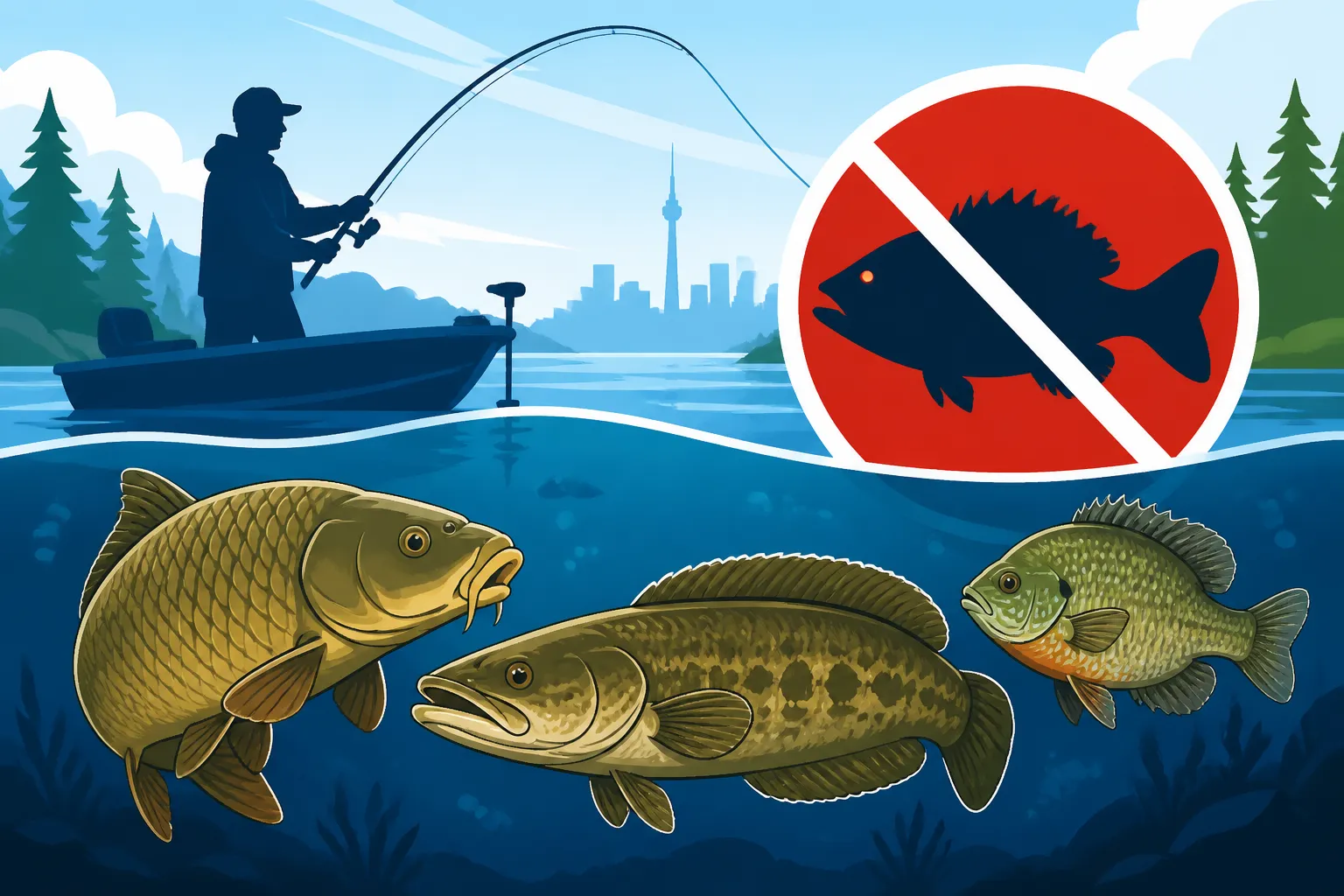
Beyond direct competition and disease, some invasive species can physically alter the aquatic habitat itself, making it unsuitable for native species. This can manifest in several ways, from changes in water quality to the physical destruction of spawning areas. For instance, common carp, though an older introduction, are a classic example. Their bottom-feeding habits involve rooting through sediments to find food, which can stir up the bottom, increase water turbidity, and release nutrients.
This increase in turbidity reduces light penetration, negatively impacting submerged aquatic vegetation that serves as crucial habitat for many fish species and food for others. The released nutrients can also contribute to algal blooms, further degrading water quality and reducing dissolved oxygen levels, especially in warmer months. Such habitat alterations create a domino effect, leading to the decline of native plant communities, invertebrate populations, and ultimately, the fish that depend on them. These changes often require complex management strategies across Ontario Fisheries Management Zones, Explained to mitigate.
What Anglers Can Do to Prevent the Spread
As anglers, we spend countless hours on the water, and with that privilege comes a significant responsibility. We are often the first line of defense against invasive species. Our actions, however small, can make a huge difference in protecting Ontario’s aquatic ecosystems.
Clean, Drain, Dry Your Gear
This is the golden rule, the absolute cornerstone of invasive species prevention for any boater or angler. Every single time you leave a body of water, whether you're moving to another lake or just heading home, you need to perform the Clean, Drain, Dry protocol.
- Clean: Inspect your boat, trailer, waders, boots, fishing gear (including nets and ropes), and anything else that touched the water. Remove all visible mud, plants, fish, and other organisms. A stiff brush, a good scrub, and even a portable power washer can be incredibly effective. Pay close attention to anchor ropes, fishing lines, and propellors. If you're using a landing net, especially a rubberized, knotless one you might find on Amazon, ensure it's free of debris. Best Landing Net for Muskie discussions often touch on net hygiene.
- Drain: Pull the plug on your boat's bilge, livewell, and bait bucket. Drain all water from the motor, and any other water-holding compartments. Make sure your boat is tilted to allow for complete draining. This step is crucial for eliminating microscopic larvae and other aquatic hitchhikers.
- Dry: Allow all equipment to thoroughly dry for at least 48 hours (and ideally five days or more) before entering another body of water. Sunlight and air exposure are highly effective at killing most aquatic invaders. If you can't completely dry your gear, especially in humid conditions, consider hot water rinsing (above 50°C/122°F for a few minutes) or high-pressure washing. Things like a good boat cover, or even specialized mats to help dry out wet gear, are readily available on Amazon and can play a role in preventing hitchhikers.
| Item Type | Action | Why It Matters |
|---|---|---|
| Boat & Trailer | Remove all plants/mud; drain bilge, livewell, motor; wash hull; dry completely. | Prevents transport of mussels, plants, larvae, fish eggs. |
| Fishing Gear | Inspect rods, reels, lures, nets, lines; remove debris; wash thoroughly; dry completely. | Lures can carry plant fragments; nets can hold fish eggs/small organisms. |
| Waders & Boots | Remove mud/plants from soles and fabric; wash inside/out; dry completely. | Footwear is a common vector for plant seeds, small invertebrates, and pathogens. |
| Livewells/Bait | Drain all water; never dump bait into a new water body; dispose of bait in trash. | Prevents transfer of baitfish, aquatic insects, or their eggs. |
| Anchors & Ropes | Inspect and clean thoroughly; ensure no debris is stuck in crevices or lines. | Mussels and plant fragments frequently cling to these items. |
Don't Release Live Bait
This point cannot be stressed enough. It might seem harmless to dump leftover minnows or worms into the water after a day of fishing, but it's one of the easiest ways to introduce invasive species. The bait you purchased might contain non-native species inadvertently mixed in, or even species native to one waterbody but invasive to another.
Always plan to use all your bait, or dispose of it responsibly. That means putting it in the trash, not back into the lake or river. This simple act of prevention can save countless headaches down the line. It's also important to be mindful of where your bait comes from. Some tackle shops now source local, certified disease-free bait, which is always a better option. Remember, even species native to one region can become invasive when introduced to a new Ontario Fisheries Management Zones, Explained.
Proper Disposal of Aquarium Pets
While perhaps less direct for anglers on the water, the improper release of aquarium pets is a significant pathway for aquatic invasive species. Many popular aquarium fish, like goldfish or various carp species (different from the Asian Carps, but still highly invasive), can survive and thrive in Ontario's climate once released into local ponds, rivers, or storm drains. They grow larger than expected, quickly outcompete native species for food, and can introduce diseases.
If you have an unwanted aquarium fish, never release it into the wild. Options include returning it to a pet store, donating it to another hobbyist, or as a last resort, humane euthanasia. Educating friends and family about this issue is also crucial. What seems like a kind gesture to "free" a pet can become an ecological disaster for our waterways. Look for field guides or books on Ontario's aquatic ecosystems, often available on Amazon, to help you identify both native and non-native species, broadening your awareness.
Reporting and Managing Invasive Species
Despite our best efforts, new invasive species can still appear, or existing ones can spread. When this happens, early detection and rapid response are critical. As anglers, we are often the first to notice changes in the aquatic environment, making us vital partners in the fight against invaders.
Recognizing the Signs
Being able to recognize an invasive species is the first step in reporting it. This means familiarizing yourself with the common invaders in Ontario, such as the Round Goby, but also keeping an eye out for anything unusual. What does an unusual plant look like? Does that fish have strange markings or fins? Are there mussels growing on everything where they weren't before?
Pay attention to:
- Unusual Fish: Any fish you don't recognize, especially if it seems to be in large numbers. Note distinct features like fin shape, mouth position, and coloration.
- Aquatic Plants: Dense mats of unfamiliar vegetation, especially if they're choking out native plants or making fishing difficult.
- Molluscs/Invertebrates: Shells attached to rocks, docks, or boat hulls, particularly if they are small and striped (like zebra mussels) or have a different shape (like quagga mussels). Also, keep an eye out for rusty crayfish, identifiable by two rusty spots on their carapace.
- Changes in Water Quality: While not always due to invasives, sudden changes in clarity, excessive algae, or unusual odours can sometimes be indicators of ecosystem stress, potentially linked to invaders.
Carrying a basic field guide, or having a reliable app on your phone, can be incredibly helpful for on-the-spot identification. When you're out there enjoying the waters, you're not just fishing; you're also an important pair of eyes for our environment.
Who to Contact and What Information to Provide
If you suspect you've found an invasive species, the most important thing is to report it promptly and accurately. Do not try to move it, capture it to take home, or release it elsewhere.
Here's how to report:
- Take a Photo: If possible, take clear photos from several angles. If it's a fish, try to get a shot of its whole body, especially any unique fins or markings. If it's a plant, get shots of the leaves, stem, and any flowers.
- Note the Location: Pinpoint the exact location (GPS coordinates are best, but detailed descriptions like "east side of XYZ Lake, near the public boat launch" are also very helpful).
- Note the Date: When did you see it?
- Estimate Quantity: How many did you see? Was it one, a few, or a large infestation?
- Contact: Report your sighting to the Invading Species Awareness Program hotline. They are the experts who can guide you on the next steps and ensure the information gets to the right people for verification and potential action. You can also utilize resources like the How to use the Fish ON-Line interactive zone map to verify locations or find specific zone regulations that might apply to your sighting.
The information you provide is critical for rapid response efforts, which are exponentially more effective the sooner they are initiated. You are a valuable resource in protecting our waters.
Community Involvement and Conservation Efforts
Protecting Ontario's waters from invasive species is a collective effort. It goes beyond individual actions like cleaning your boat; it extends to community involvement and supporting broader conservation initiatives. Many local fishing clubs, conservation authorities, and provincial parks actively engage in efforts to monitor, manage, and educate the public about invasive species.
Consider joining local clean-up initiatives, volunteering for monitoring programs, or simply spreading the word to fellow anglers and outdoor enthusiasts. The more people who are aware and vigilant, the stronger our defense against these threats. Supporting organizations involved in aquatic research and management also plays a crucial role. These groups often work on prevention strategies, early detection systems, and even methods for controlling established invasive populations. For instance, Ontario Lake Erie fishing regulations and similar specific rules for other bodies of water are constantly being updated to reflect challenges, including those posed by invasives. By working together, we can ensure that the joy of fishing in Ontario's beautiful waters remains for generations to come. Even understanding basic regulations like Fishing Without a License in Ontario: Penalties underscores the importance of a responsible approach to all aspects of angling.
Disclaimer
This article is for general informational purposes only and does not constitute professional advice. Laws, prices and regulations vary by location and change over time. Consult a qualified professional for guidance on your specific situation.