Where to find lake sturgeon in Ontario
It’s easy to feel a bit overwhelmed when you hear whispers of "trophy fish" in Ontario, especially when the species in question is as ancient and majestic as the lake sturgeon. Many anglers dream of encountering one of these living dinosaurs, but the reality is, they’re not found just anywhere, and finding them requires both knowledge and patience. If you've been wondering where to begin your quest to find these incredible fish in Ontario, you've come to the right place. This guide will help demystify the habitats of lake sturgeon and equip you with the knowledge to respectfully pursue them.
Understanding Lake Sturgeon in Ontario Waters
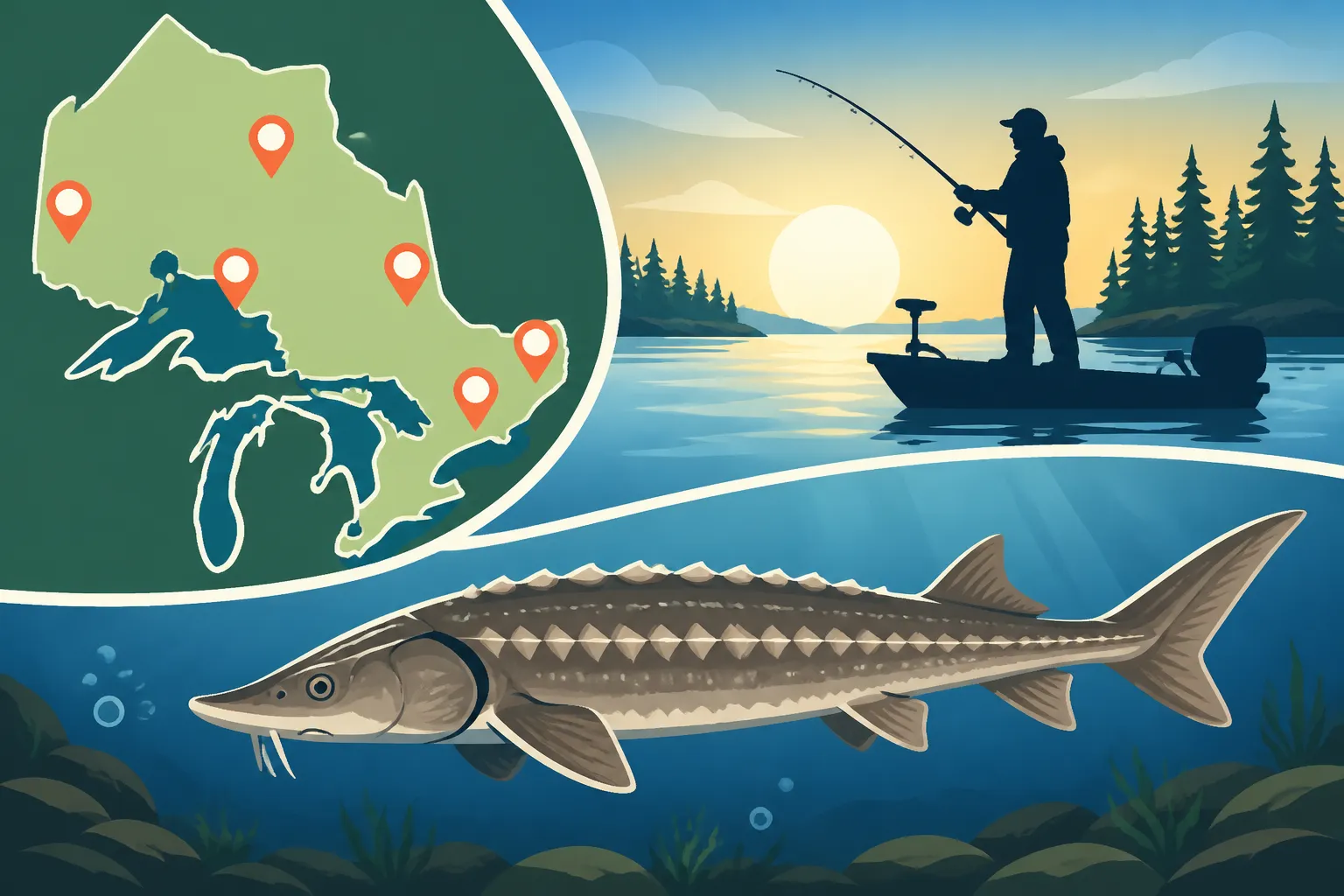
Lake sturgeon are truly a marvel, often called living fossils because their lineage dates back millions of years. These ancient fish are the largest and longest-lived freshwater fish species in Ontario, capable of growing over two metres (7 feet) in length and living for more than 100 years. Imagine catching a fish that was alive before your grandparents were born! Unfortunately, due to overfishing and habitat degradation in the past, their populations faced significant declines. Today, they are a protected species, and fishing for them is a strictly catch-and-release endeavour.
Why Lake Sturgeon are Special
Beyond their impressive size and longevity, lake sturgeon play a vital role in Ontario's aquatic ecosystems. They are bottom-feeders, cruising deep waters, sifting through sediment for insects, crayfish, and other small organisms. Their presence often indicates a healthy, undisturbed aquatic environment. Unlike many fish that broadcast their eggs widely, sturgeon spawn in specific areas, typically swift-flowing rivers or rocky shoals, making their reproductive success vulnerable to habitat changes. Their slow growth and late maturity mean that every adult fish is incredibly valuable to the recovery of the species, emphasizing why conservation efforts and responsible angling are paramount.
The Impact of Past Decline and Current Recovery Efforts
Historically, lake sturgeon were incredibly abundant, so much so that they were considered a nuisance by early settlers because they would tear fishing nets set for other species. They were then heavily exploited for their meat and roe (caviar), and their populations plummeted. Dams and pollution further devastated their critical spawning and feeding grounds. Thanks to dedicated conservation efforts by the Ontario Ministry of Natural Resources and Forestry, local conservation authorities, and angler groups, many populations are slowly recovering. These efforts include habitat restoration, stocking programs in certain areas, and, most critically, strict fishing regulations that mandate catch and release. Anglers who encounter these fish are encouraged to handle them with extreme care and report their catches, contributing valuable data to ongoing research.
Prime Lake Sturgeon Habitats Across Ontario
Finding lake sturgeon in Ontario is less about stumbling upon them and more about targeting specific, often vast, bodies of water that provide the deep, cool, oxygenated conditions they need, along with access to clean spawning rivers. They are primarily found in large rivers and interconnected lake systems.
Great Lakes Tributaries and Connected River Systems
Some of Ontario's most significant sturgeon populations are found in the major rivers that flow into or out of the Great Lakes. These mighty waterways offer the scale and diversity of habitat necessary for these long-lived fish.
St. Lawrence River System
The St. Lawrence River, particularly the upper sections and its associated tributaries, is a stronghold for lake sturgeon. This massive waterway provides extensive deep water, strong currents, and a rich food base. Anglers often focus on areas with significant current breaks, deep channels, and structural features. The river's vastness means that pinpointing sturgeon requires patience and often a good understanding of bathymetry, which is where a quality fish finder, easily found on Amazon, can be a huge asset. The connecting waters of Lake Ontario also play a role, with sturgeon moving between the lake and river systems.
Ottawa River
The Ottawa River, forming a significant portion of the border between Ontario and Quebec, is another prime location. This river boasts a healthy population of lake sturgeon, particularly in its deeper pools and sections below rapids or dams, which can concentrate fish. Access points along the river, especially near towns like Pembroke, Renfrew, and Ottawa itself, can offer opportunities, but remember, the sturgeon are often in the deepest parts. Local guides who specialize in the Ottawa River can be invaluable for locating these elusive fish.
French River
Flowing from Lake Nipissing into Georgian Bay, the French River Fishing Guide is renowned for its scenic beauty and diverse fishery, including a respectable population of lake sturgeon. The French River offers a mix of deep pools, rapids, and slower-moving sections, providing varied habitats. Sturgeon here often relate to the deep channels and rock structures. Fishing the French River requires navigating sometimes challenging waters, so familiarity with the area or a local guide is highly recommended. These systems offer unique challenges but also immense rewards for the dedicated sturgeon angler.
Northern Ontario Lakes and Rivers
Beyond the Great Lakes basin, Northern Ontario's vast wilderness contains numerous remote lakes and river systems that are home to healthy, often unpressured, sturgeon populations. These areas typically require more effort to access but can offer incredible angling experiences.
Lake of the Woods and Rainy Lake
These enormous border lakes, shared with Manitoba and Minnesota, are legendary for their fishing, and that includes lake sturgeon. Lake of the Woods Fishing Guide and Rainy Lake Fishing Guide reveal that these lakes have significant populations, especially in their deepest basins and in the large rivers that flow into and out of them. The sheer size of these lakes means sturgeon can be spread out, but targeting deep river sections, pinch points, and large bay mouths can be productive. The wilderness setting adds to the allure, making any sturgeon encounter here an unforgettable adventure.
Lake Nipigon and its Outflow Rivers
Lake Nipigon, one of Ontario's largest and deepest lakes, is a cold-water haven with a storied history of lake sturgeon. While access can be more challenging due to its remote location north of Lake Superior, the lake and its outflow rivers offer some of the most pristine sturgeon habitat remaining. The Nipigon River, in particular, is known for its impressive fish. Anglers exploring these waters will find a truly wild experience, surrounded by untouched Boreal forest.
Other Remote Northern Systems
Numerous other rivers and large lakes across Northern Ontario, such as parts of the Albany River, Severn River, and Attawapiskat River systems, also support lake sturgeon. These are typically fly-in or canoe-access destinations, catering to adventurous anglers seeking true wilderness experiences. If you're planning such a trip, thorough research into specific regulations for remote zones is critical, and you'll likely want to stock up on durable, essential gear from places like Amazon before heading out.
Regulations and Conservation for Lake Sturgeon Fishing
Fishing for lake sturgeon in Ontario isn't like fishing for common species; it comes with a heightened level of responsibility due to their protected status. The regulations are in place to ensure these magnificent fish continue their slow recovery.
Strict Catch and Release Only
It cannot be stressed enough: all lake sturgeon caught in Ontario must be immediately released back into the water where they were caught. This is not just a suggestion; it's a mandatory regulation. Storing, retaining, or attempting to keep a sturgeon is illegal and carries significant penalties. This rule is fundamental to conservation efforts. When you catch a sturgeon, handle it with extreme care to minimize stress. Keep the fish in the water as much as possible, use wet hands, and support its full body weight. Avoid touching its eyes or gills, and get it back into the water quickly after a photo. For more detailed guidance, see Ontario Sturgeon Catch and Release Rules.
Reporting Your Catch
Reporting your sturgeon catch, even though it's catch-and-release, is a crucial part of ongoing conservation. The Ontario Ministry of Natural Resources and Forestry (MNRF) collects data on sturgeon encounters, which helps monitor population health, distribution, and success of recovery efforts. Many regions have specific reporting hotlines or online forms. Sometimes, sturgeon are tagged for research purposes, and reporting the tag number is incredibly valuable. This helps biologists track individual fish, their movements, and growth rates. Make sure you know the reporting procedures for the specific zone you're fishing in.
Understanding License Requirements and Outdoors Cards
Before you even cast a line for sturgeon or any other fish in Ontario, you need the proper fishing license and an Ontario Outdoors Card. Even if you're only targeting sturgeon for catch-and-release, these are non-negotiable. The Ontario Outdoors Card, Explained is a prerequisite for most fishing licenses in the province, acting as your personal identification for outdoor activities. You’ll also need to purchase an appropriate fishing license, typically a Sport Fishing License, which allows for broader fishing opportunities, even if you intend to only catch and release sturgeon. Always ensure you understand Ontario Fishing Regulations Explained for your specific Fisheries Management Zone (FMZ) to avoid any legal issues.
Key Regulations Summary for Lake Sturgeon
To help you keep track, here's a brief summary of the crucial points related to lake sturgeon fishing in Ontario:
| Regulation Aspect | Details |
|---|---|
| Possession Limit | ZERO. Lake sturgeon are a protected species. It is illegal to retain a sturgeon. |
| Fishing Season | Generally open year-round, but always check the current Ontario Fishing Regulations Summary for the specific FMZ you are fishing. Some areas may have closures. |
| Catch & Release | Mandatory for all lake sturgeon. All fish must be immediately and carefully released. |
| Reporting Catches | Highly encouraged. Report sightings or catches (especially tagged fish) to the MNRF to aid conservation efforts. Details can usually be found in the fishing regulations summary or on the MNRF website. |
| License Required | A valid Ontario fishing license (e.g., Sport Fishing License) and Outdoors Card are required. |
| Handling | Minimize time out of water. Use wet hands. Support the entire body. Avoid touching gills or eyes. Use a large, knotless net or cradle. |
Tips for Locating and Catching Lake Sturgeon (Catch and Release)
Successfully targeting lake sturgeon, even for catch-and-release, requires specific gear and tactics. These aren't your average panfish; they demand respect and a specialized approach.
Heavy-Duty Tackle is Non-Negotiable
Forget your ultralight setup for trout; you'll need heavy-duty gear to stand a chance against a powerful, century-old sturgeon. Think catfish or muskie-grade equipment.
Rods and Reels
You'll need a stout, heavy-action rod, typically 7 to 9 feet long, capable of handling heavy weights and immense pulling power. Pair this with a robust baitcasting or large spinning reel designed for big game, capable of holding hundreds of yards of strong line. Many anglers find durable options for Best Fishing Rods for Ontario Lakes or heavy-duty surfcasting setups on Amazon that work well for sturgeon. The drag system on your reel must be smooth and powerful enough to wear out a fish that can easily weigh over 100 pounds.
Line and Terminal Tackle
Braided line in the 50-80 lb test range is a popular choice for its strength and minimal stretch, allowing for better bite detection in deep water. You'll want to use heavy monofilament or fluorocarbon leaders (60-100 lb test) to resist abrasion from the sturgeon's rough scutes and rocky bottoms. For hooks, use large, strong circle hooks (sizes 7/0 to 10/0) to ensure a solid hookset in the corner of the fish's mouth, minimizing harm and making release easier. Make sure your swivels, snaps, and sinkers are also heavy-duty. Checking a dedicated Best Tackle Box Setup for Ontario Anglers might give you ideas for organizing this heavier gear.
Baits and Rigs for Bottom Feeding
Lake sturgeon are bottom feeders, so your presentation needs to be on the bottom, where they are searching for food.
Popular Baits
The most common and effective baits for lake sturgeon are natural offerings that mimic their diet. Large globs of worms (nightcrawlers), cut bait (chunks of oily fish like shad or sucker), or even shrimp can be highly effective. Some anglers also use cured roe (fish eggs) or other strong-smelling baits. The key is to present a sizable, enticing offering that sits directly on the bottom.
Bottom Rigs
A classic bottom rig for sturgeon is a simple Carolina rig or a three-way swivel rig. You'll typically use a heavy weight (often 4-8 ounces, sometimes more in strong currents) to keep your bait anchored. The leader should be 18-36 inches long, separating your bait from the heavy sinker. This allows the bait to waft naturally in the current while staying in the strike zone. Ensure all knots are strong and securely tied – a trophy sturgeon will test every weak link in your setup.
Locating Sturgeon with Sonar and Reading Structure
Sturgeon are often found in specific types of structure, and electronics can be your best friend in identifying these locations.
Deep Holes and Channels
These fish love deep water. On large rivers and lakes, look for the deepest holes, main river channels, and sudden drops-offs using your sonar. Sturgeon often congregate in these areas, especially during warmer months when they seek cooler temperatures. A quality fish finder, like those readily available on Amazon, with good down-imaging or side-imaging capabilities can help you mark individual fish or schools of bait in these deep zones.
Current Breaks and Depressions
While sturgeon prefer current, they often position themselves just out of the strongest flow, in eddies or behind large structures, where food might accumulate, and they can conserve energy. Look for depressions in the riverbed, the downstream side of islands, or deep scour holes below rapids. These are prime ambush points where they can feed without fighting constant heavy current. Learning to interpret your sonar for these subtle bottom changes will greatly increase your success.
Ethical Handling and Release Practices
Remember, catch and release is mandatory. Your actions directly impact the survival of these magnificent creatures.
Minimize Fight Time and Time Out of Water
Fight the fish hard and bring it in as quickly as possible to minimize exhaustion. When you get it to the boat or shore, keep it in the water if at all possible. If you must bring it out for a quick photo, do so gently, supporting its entire body. Never hold a sturgeon vertically by its head or tail. A large, knotless rubber landing net or a sturdy cradle from a fishing supply store can be invaluable for safe handling.
Reviving the Fish
If the sturgeon appears lethargic, hold it gently upright in the water, facing into the current, until it regains its strength and can swim away under its own power. Sometimes this means holding it for several minutes. Watch for strong tail movements and a firm grip on your hands as a sign it's ready. By practicing careful release, you ensure these ancient fish continue to thrive in Ontario’s waters for generations to come.
Disclaimer
This article is for general informational purposes only and does not constitute professional advice. Laws, prices and regulations vary by location and change over time. Consult a qualified professional for guidance on your specific situation.