Best rivers for trophy smallmouth bass in Ontario
There’s a unique thrill that comes with chasing smallmouth bass in rivers – a different kind of challenge and, let's be honest, often a different caliber of fish than you find in many lakes. If you've spent frustrating hours on expansive lake waters, wondering where those elusive big bronze backs are hiding, you're not alone. This guide is dedicated to helping you unlock the secrets of Ontario's rivers and pinpoint the absolute best spots to tangle with trophy smallmouth bass, offering insights into their river habits and the techniques that bring success.
The Lure of River Smallmouth: Why Rivers Produce Giants
River smallmouth bass are, in my humble opinion, some of the most acrobatic and hard-fighting freshwater fish out there. They're built like miniature gladiators, sculpted by constant current, and their aggressive nature makes for truly memorable battles. But why do rivers, specifically, seem to hold such impressive specimens? It boils down to a few key factors that create the perfect storm for growth and survival.
Unique Riverine Habitat for Smallmouth
Rivers offer a dynamic and rich environment that caters perfectly to the smallmouth bass's predatory instincts and need for structured cover. Unlike the often uniform bottom of many lakes, rivers are constantly being shaped by flowing water, creating a diverse underwater landscape. You'll find a mosaic of habitat types: deep, slow-moving pools that act as resting and ambush points, fast-moving rapids that oxygenate the water and concentrate baitfish, and vast stretches of current-swept rock gardens. These rocks, boulders, and submerged timber provide countless nooks and crannies for crayfish, hellgrammites, and various baitfish to hide, forming a readily available buffet for hungry bass. The constant current also means these fish have to work harder, building muscle and streamlining their bodies, making them incredibly powerful fighters. It’s a natural selection process at play, favouring the fittest and most efficient predators, which often leads to larger, healthier fish.
The diverse current patterns also dictate where smallmouth will position themselves. They are masters of energy conservation, always looking for a seam or eddy where they can sit out of the main flow, expending minimal energy while still being perfectly poised to dart out and ambush prey swept past them. Think of a large boulder in the middle of a river – the smallmouth might be right behind it, or in the calmer water off to its side, waiting patiently. This intimate relationship with current and structure is what makes river smallmouth fishing so rewarding and, at times, so challenging to master. Understanding these micro-habitats is the first step to consistently finding the biggest bass.
Challenges and Rewards of River Fishing
Let's be real, river fishing isn't always a walk in the park. Navigating currents, especially if you're wading or using a smaller boat, can be tricky. Casting needs to be precise, often into tight pockets or around submerged obstacles. You'll lose lures, get snagged, and sometimes feel like you're fighting the river more than the fish. But, oh, the rewards! The sheer satisfaction of deciphering a river's flow, identifying a prime ambush point, making that perfect cast, and feeling a powerful strike from a truly monstrous smallmouth is unparalleled. These fish hit like freight trains and fight with an incredible intensity, using the current to their advantage to peel line and make exhilarating runs.
A river smallmouth, even a modest one, often fights with more vigour and acrobatics than a comparable lake fish. They jump higher, pull harder, and just generally put on a more impressive show. You might find yourself knee-deep in water, battling a fish that's pulling you downstream, or navigating your kayak through a strong eddy while trying to keep a thrashing bronze back on the line. These aren't just fish; they're an experience. And when you finally net that big, dark, broad-shouldered river giant, you’ll understand why so many anglers brave the currents and challenges – it’s a truly earned trophy, a testament to both your skill and the river's wild spirit. It truly changes your perspective on what smallmouth bass are capable of.
Top Ontario Rivers for Trophy Smallmouth Bass
Ontario is blessed with an incredible network of rivers, many of which hold fantastic smallmouth populations. However, for those truly exceptional, trophy-sized specimens, some rivers stand out from the rest due to their size, structure, and abundant food sources. These are the waterways where you have a legitimate shot at landing a true giant.
The Grand River
The Grand River, stretching from its headwaters near Dundalk all the way to Lake Erie, is a legendary smallmouth fishery and arguably one of the best rivers for trophy smallmouth bass in Ontario. What makes the Grand so special is its incredible diversity along its length. In its upper and middle sections, particularly downstream from towns like Elora, Fergus, and Paris, it transforms into a beautiful mix of swift runs, rocky rapids, and deeper, slower pools. This varied structure creates perfect ambush points for big smallmouth. The riverbed is often littered with limestone boulders, gravel flats, and undercut banks, all prime real estate for crayfish, which are a major food source for these bass.
Anglers often find success by wading the shallower, rockier stretches, casting crankbaits, tubes, or spinnerbaits into current seams and behind structure. For deeper pools and less accessible stretches, drift boats or kayaks are fantastic tools. Imagine floating silently, casting towards submerged logs and rock ledges, knowing that a massive smallmouth could explode on your lure at any moment. The sections around Paris and Brantford are particularly renowned for their large smallmouth, offering consistent action and the real possibility of a five-pounder or even larger. You can even find specialized tackle for these conditions on platforms like Amazon. If you’re looking for a river that consistently produces big, healthy smallmouth and offers diverse fishing opportunities, the Grand River should be at the top of your list.
The French River
Connecting the vast expanse of Lake Nipissing to the rocky labyrinth of Georgian Bay, the French River is a wild and untamed beauty, and an absolute powerhouse for trophy smallmouth. This historic waterway isn't just a river; it's a mosaic of channels, rapids, calm bays, and island-studded granite shorelines. The smallmouth here thrive in the abundant rocky structure, which provides endless hiding spots and prime ambush points. They feed heavily on crayfish and the various baitfish that inhabit the system, growing to impressive sizes.
Fishing the French River is typically a boat-based affair, given its size and the need to cover water. Anglers can explore countless bays, current breaks, and the edges of vast rocky shoals. Look for areas where the main channel current meets calmer water, creating eddies and current seams. The sheer amount of undeveloped wilderness around the French River also adds to the experience; you're often fishing in pristine conditions, surrounded by towering pines and granite cliffs, with bald eagles soaring overhead. The challenge here is less about navigating strong individual rapids and more about understanding the vast system and how smallmouth relate to its intricate structure. A Pleasure Craft Operator Card Requirement is essential if you plan to navigate this river by motorized boat. It’s an adventure, and the reward is often a truly massive, bronze-backed French River smallmouth, as powerful as the wild river itself.
The Ottawa River
The mighty Ottawa River, forming a significant portion of the border between Ontario and Quebec, is another colossal system that holds some truly exceptional smallmouth bass. Given its immense size and flow, it presents a different set of challenges and opportunities. This river is characterized by broad stretches of water, numerous islands, deep navigation channels, and expansive flats punctuated by rocky shoals and submerged timber. The smallmouth here are accustomed to a vast, nutrient-rich environment, and they grow accordingly.
Targeting trophy smallmouth on the Ottawa often involves fishing from a larger, well-equipped boat. Focus your efforts around major current breaks, the edges of island chains, prominent rocky points, and areas with significant depth changes. These big smallmouth will often key in on larger baitfish species, so don't be afraid to throw bigger lures than you might on smaller rivers. The sheer scale of the Ottawa means you could spend a lifetime exploring its waters. Areas near rapids, where the water is highly oxygenated and baitfish congregate, can be particularly productive. The thrill of hooking a five or six-pound smallmouth in the powerful current of the Ottawa is an experience that will test your gear and your angling skills to their limits. This river truly embodies the term "big water, big fish."
Other Notable Rivers for Big Bass
While the Grand, French, and Ottawa rivers are certainly front-runners, Ontario boasts other fantastic rivers that can yield trophy smallmouth bass, especially if you're willing to explore.
The Credit River, particularly its lower sections as it approaches Lake Ontario, can hold surprising numbers of large smallmouth, often migrating up from the lake. These fish are powerful and can be found in deeper pools and around bridge pilings. While often known for its trout, don't overlook its smallmouth potential.
The Moira River, flowing into the Bay of Quinte near Belleville, also has good smallmouth populations, especially in its lower reaches. Look for areas with rock bottom and current flow, where these bass ambush prey. It's a less-pressured option that can still deliver impressive catches.
And let's not forget sections of the St. Lawrence River, particularly those close to the Thousand Islands Fishing Guide region. While technically a river, its expansive nature often feels like a series of lakes, but the current flows and abundant rocky structure near islands and shoals make it a world-class smallmouth fishery. The smallmouth here are renowned for their massive size and aggressive takes, and it's a destination many anglers dream of. These stretches often require larger boats and a good understanding of navigation, but the rewards can be truly staggering.
| River Name | Primary Characteristics | Ideal Fishing Approach | Key Smallmouth Features |
|---|---|---|---|
| Grand River | Diverse: rapids, pools, rock gardens, limestone bed | Wading, drift boating, kayak fishing | Strong current fighters, abundant crayfish |
| French River | Wild, granite shorelines, island chains, bays, rapids | Boat-based (motorized), exploring vast system | Aggressive, relate to deep rock structure, wilderness |
| Ottawa River | Massive, deep channels, island complexes, strong flow | Large boat-based, targeting current breaks, rocky shoals | Large water, large baitfish, powerful fighters |
| Credit River | Smaller, some rapids/pools, near Lake Ontario | Wading, shore fishing, kayak (lower sections) | Often lake-run fish, relate to structure, accessible |
| Moira River | Varied flow, rock bottom, flows into Bay of Quinte | Wading, small boat, shore fishing | Less pressured, good structure, diverse habitat |
| St. Lawrence River | Expansive, islands, current, deep water, rocky shoals | Large boat-based, navigating vast system, structure fishing | World-class size, abundant food, intricate habitat |
Essential Strategies for River Trophy Smallmouth
Catching trophy smallmouth in rivers isn't just about showing up; it's about understanding their habits, presenting your lures effectively, and having the right gear to handle these powerful fish. Let's dive into some strategies that can make all the difference.
Reading the River: Understanding Smallmouth Hangouts
The single most important skill for river smallmouth fishing is learning to "read the water." Smallmouth bass are highly sensitive to current and instinctively seek out areas where they can ambush prey without expending too much energy. This means you need to look for current breaks. Think about anything that slows or deflects the flow: large boulders, submerged logs, rock ledges, bridge pilings, or even subtle changes in bottom contour. The calmer water directly behind these structures, or the seams where fast water meets slow water, are prime smallmouth real estate. These are their "dinner plates" and resting spots.
Additionally, pay close attention to depth changes. A deep pool at the end of a rapid, a trench alongside a rocky bank, or a sharp drop-off can hold big fish, especially during periods of bright sun or when they're seeking cooler water. Overhanging trees, undercut banks, and eddies (circular currents) are also key areas. Don't just cast blindly; observe the river's flow, imagine how a crayfish or baitfish might move through it, and then consider where a savvy predator would position itself for an easy meal. This constant process of observation and mental mapping will drastically improve your success rate. A good pair of polarized sunglasses, available on Amazon, can help immensely in spotting these subtle underwater clues.
Lure and Presentation Choices for River Giants
River smallmouth can be aggressive, but they can also be picky. Your lure choice and how you present it are critical. For active fish, especially in moving water, hard baits like crankbaits and jerkbaits are excellent. Deeper diving crankbaits in natural crayfish or baitfish patterns can be bounced off the bottom or retrieved through current seams. Jerkbaits, worked with a twitch-twitch-pause retrieve, can mimic a wounded baitfish, often triggering explosive strikes. Consider the water clarity: natural colours for clear water, and brighter, more opaque colours for stained or darker conditions.
When fish are less active, or holding tight to structure, soft plastics shine. Tube jigs, in greens, browns, and black, are classic river smallmouth baits. Rig them on a sturdy jig head and drag, hop, or swim them along the bottom, mimicking a crayfish. Creature baits, finesse worms, and Ned rigs also work exceptionally well, especially when paired with light fluorocarbon leaders. Don't forget spinnerbaits for covering water and triggering reaction strikes, particularly in slightly stained water or around woody cover. The key is to match the hatch (what they're feeding on) and present your lure naturally, often letting the current help carry it into the strike zone. You might be surprised at how many types of lures you can find on Amazon, perfect for various river conditions. For more specific recommendations, check out articles like Best Crankbaits for Ontario Walleye – many of those lures work equally well for aggressive smallmouth.
Gear Up for Battle: Rods, Reels, and Line
Fighting a trophy smallmouth in a river is no joke. The fish are strong, and the current adds an extra dimension of challenge, so your gear needs to be up to the task. Forget flimsy ultralight setups; you'll want a medium-heavy spinning or casting rod, typically 6'6" to 7'6" in length, with a fast action to detect subtle bites and set the hook quickly. A good quality spinning reel or baitcasting reel with a smooth drag and a decent retrieve speed is crucial.
For line, a braided mainline (20-30 lb test) is often preferred for its strength and sensitivity, paired with a fluorocarbon leader (10-15 lb test). The fluoro leader provides invisibility in clear water and offers abrasion resistance against rocks and logs. Make sure your hooks are sharp and strong – river smallmouth have tough mouths, and you don't want to lose a fish to a bent hook. If you’re wading, investing in quality wading boots with good grip is non-negotiable for safety and stability on slippery riverbeds. A Best Wading Staff for Fast Current can also be invaluable. Remember, these fish don't give up easily, and neither should your gear.
Conservation and Respecting These Fisheries
As anglers, we have a responsibility to protect the incredible resource that is Ontario's river smallmouth fishery. Catching trophy fish is thrilling, but ensuring these populations thrive for future generations requires thoughtful practices and a deep respect for the regulations.
Catch and Release Best Practices
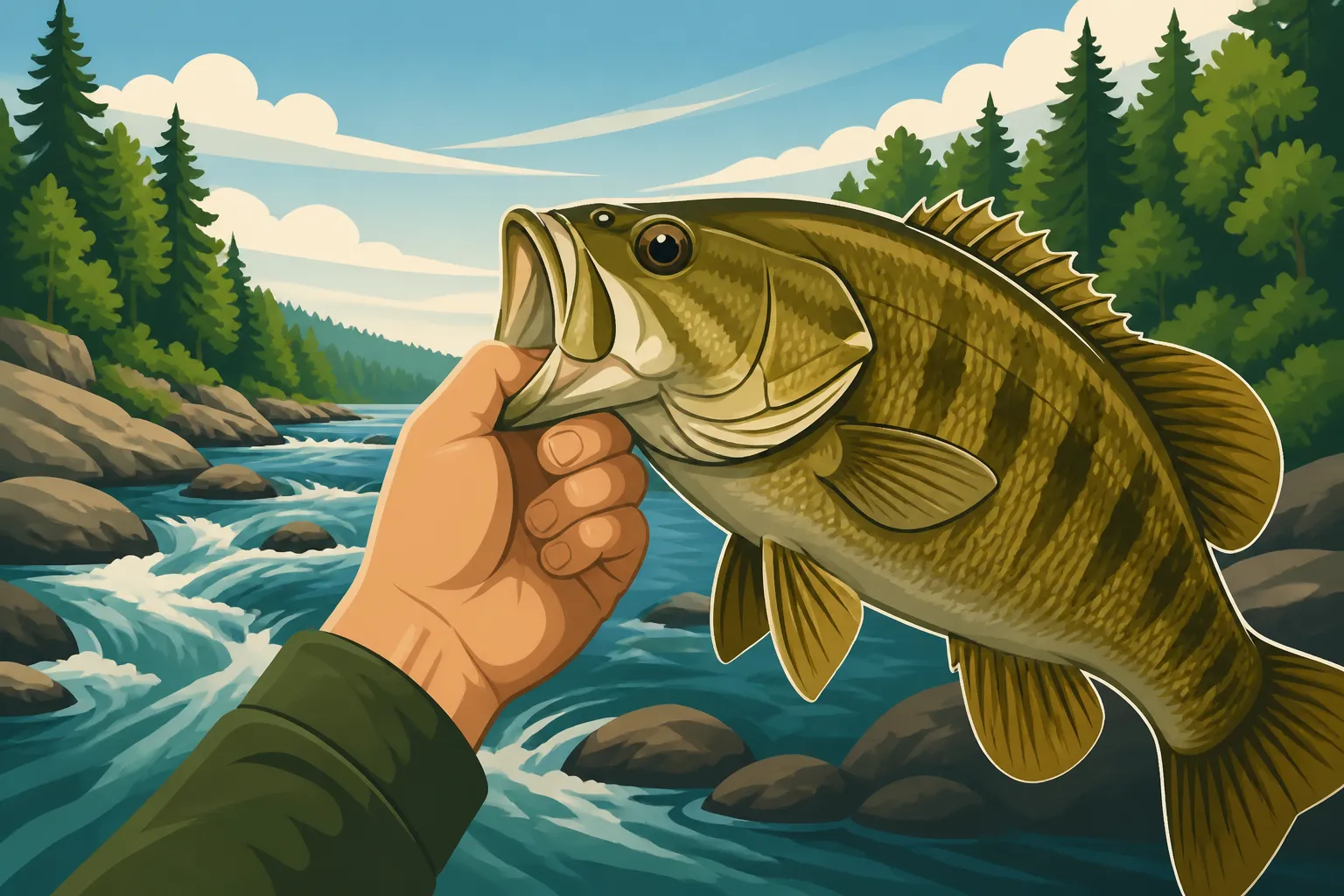
When you're targeting trophy smallmouth, catch and release becomes paramount. These larger fish are often the prime spawners, contributing significantly to the health and genetic strength of the population. Minimizing stress and ensuring a quick, healthy release is vital. Always wet your hands before handling a fish to protect its slime coat, which is its primary defence against disease. Use pliers or a dehooking tool to remove hooks quickly and carefully, especially if the fish has swallowed the lure. Avoid handling the fish by its jaw horizontally, as this can damage its delicate jaw structure; instead, support its weight vertically or horizontally with two hands.
If you plan to take a photo, do it quickly and keep the fish in the water as much as possible. A good quality landing net, with rubberized or knotless mesh, can help protect the fish during landing. Never hold a fish by its gills. When releasing, hold the fish gently upright in the water, facing the current, until it regains its strength and swims away on its own. Seeing a powerful smallmouth swim off vigorously is far more rewarding than any short-term ego boost from keeping it.
Understanding Regulations and Seasons
Ontario's fishing regulations are designed to protect fish populations and ensure sustainable angling for everyone. It is absolutely critical that you familiarize yourself with the current Ontario Fishing Regulations Explained, specifically for the zones you plan to fish. Smallmouth bass season dates can vary by Ontario Fisheries Management Zones, Explained, and there are often specific slot limits or daily catch limits in place. For instance, some areas may have a "no kill" slot limit where fish within a certain size range must be immediately released, protecting prime breeding stock.
Always check the current Reading the Ontario Fishing Regulations Summary before you head out. These regulations are updated periodically, so relying on old information can lead to fines and harm the fishery. Understanding your Ontario Sport vs Conservation Fishing License type is also important, as conservation licenses often have lower catch limits, further promoting sustainable practices. By following these rules diligently, we all play a part in preserving Ontario's incredible smallmouth bass fishing for years to come.
Disclaimer
This article is for general informational purposes only and does not constitute professional advice. Laws, prices and regulations vary by location and change over time. Consult a qualified professional for guidance on your specific situation.