Life span of a lake trout in Ontario
One of the most profound curiosities many anglers have, especially those of us who spend countless hours chasing the magnificent lake trout in Ontario's vast waters, is just how long these ancient-looking fish actually live. It's not just about catching them; it's about understanding the life cycle of a species that can feel almost immortal as you battle one from the depths. This guide is here to unravel the mysteries behind the Life span of a lake trout in Ontario, exploring the factors that contribute to their incredible longevity and how our actions can play a role in their future.
Understanding Lake Trout Longevity Factors in Ontario
Lake trout, often called "lakers" by those who pursue them, are truly a marvel of adaptation, especially here in Ontario. Their ability to thrive in cold, deep, oxygen-rich waters has allowed them to carve out a unique niche. But their lifespan isn't just a fixed number; it's a dynamic equation influenced by a variety of environmental and human factors. It's fascinating to peel back the layers and understand what makes these fish tick for so long.
Environmental Conditions and Habitat Quality
The core of a lake trout's longevity lies deeply rooted in its environment. Think about it: a healthy, stable habitat is like a comfortable, well-stocked home for us. For lake trout, this means pristine, cold water with ample oxygen, especially in the deeper layers. Ontario is blessed with countless lakes that fit this description, from the Great Lakes to the remote shield lakes of the North. Lakes with stable temperatures and good water quality allow lake trout to grow steadily without undue stress, contributing significantly to their long lives.
When habitat quality declines, perhaps due to pollution, rising water temperatures (even slight ones), or sedimentation, the lake trout are directly impacted. They are incredibly sensitive to changes in their environment, especially water temperature. If the deep, cold water they prefer becomes too warm or loses oxygen, it forces them into less ideal conditions, which can stress their systems, reduce their feeding efficiency, and ultimately shorten their lifespan. This is why conservation efforts focused on maintaining water quality are so vital, not just for the fish, but for the entire ecosystem.
Consider the immense pressure some of our more accessible lakes face, like parts of Georgian Bay or even some of the deeper Kawartha Lakes. As human activity increases, so does the potential for habitat degradation. Runoff from development, altered shorelines, and increased boat traffic can all contribute to changes that, over time, erode the quality of a laker's home. These subtle shifts can shave years off a fish's potential lifespan, making it harder for them to reach those truly impressive sizes and ages we all dream about.
Food Availability and Growth Rates
Just like any living creature, lake trout need a consistent and nutritious food supply to grow strong and live long. Their diet can vary depending on the lake and the available forage, but typically includes smaller baitfish like cisco (lake herring), smelt, whitefish, and sculpins. In lakes with abundant and diverse prey, lake trout have the luxury of feeding well, storing energy, and growing at a healthy pace. Slower, consistent growth over many years is a hallmark of long-lived fish, and lake trout exemplify this.
Conversely, in lakes where prey fish populations are sparse or disrupted, lakers might struggle to find enough food. This can lead to slower growth, reduced body condition, and increased susceptibility to disease, all of which chip away at their potential lifespan. It's a delicate balance, and any imbalance in the food web—perhaps due to the introduction of invasive species or overfishing of their primary food sources—can have a ripple effect throughout the entire lake trout population.
For instance, on a massive body of water like Lake Superior, the abundance of cisco and other cold-water baitfish provides a phenomenal nutritional base for lake trout, allowing them to grow large and live to impressive ages. But in smaller, less productive lakes, a laker might mature at a smaller size and live a comparatively shorter life simply because the buffet isn't as grand. This natural variation is part of what makes Lake Trout Fishing in Ontario so diverse, but it also highlights how intrinsically linked their lives are to the health of the entire aquatic food chain.
Predation and Fishing Pressure
While lake trout are apex predators in many of their environments, especially as adults, they are not immune to predation, particularly when they are young. Larger fish, predatory birds, and even some mammals can prey on juvenile lake trout. However, for adult lake trout, humans are by far the most significant predator. The fishing pressure applied to a lake trout population is a massive factor in determining how many fish reach their full lifespan potential.
When anglers keep too many large, older fish, it directly removes the most reproductively successful individuals from the population. These older, larger females are often the most prolific spawners, contributing significantly to the next generation. Over-harvesting them can lead to a decline in recruitment and, over time, a population skewed towards younger, smaller fish, effectively shortening the average lifespan of the entire stock. This is why knowing Ontario Lake Trout Limit and Possession Rules is so important.
The concept of catch and release, especially for larger, older lake trout, has become a cornerstone of conservation efforts. Releasing a magnificent laker, particularly one that has taken decades to grow to trophy size, allows it to continue its life cycle and contribute to the health of the fishery. Even with the best intentions, however, catch and release isn't without risk. Proper handling techniques are paramount to ensure the fish's survival post-release, which we'll delve into later. The cumulative effect of responsible angling can truly make a difference in how many lake trout live out their full, impressive lifespan.
Typical Age and Size Ranges of Ontario Lake Trout
When we talk about the lifespan of lake trout in Ontario, we're really talking about a spectrum, not a single number. These fish are renowned for their longevity, often outliving many other freshwater species by decades. It's part of what makes them such a revered catch and a testament to their resilience in the challenging cold-water environments they inhabit.
Average Lifespan and Maximum Age
In many healthy Ontario lake trout populations, it's not uncommon to find fish living for 20 to 30 years. That's right, imagine catching a fish that has been swimming in our waters since you were a child, or even longer! These aren't just isolated incidents; it's a common characteristic of the species in prime habitats. The slow, steady growth rates in cold water contribute to this incredible longevity, as their metabolism is generally slower than warm-water species.
What about the really old ones? Well, Ontario has a reputation for producing some truly ancient lake trout. In some remote, undisturbed lakes, or in the vast, deep expanses of the Great Lakes, individual lake trout have been documented living for 40, 50, and even over 60 years! These are the real old-timers, the grand matriarchs and patriarchs of the deep. They've seen decades of seasons come and go, surviving countless challenges. Catching one of these fish is not just an angling feat; it's like shaking hands with history. These maximum ages often correspond to The largest lake trout ever caught in Ontario, showcasing that impressive size usually comes with impressive age.
Growth Stages and Milestones
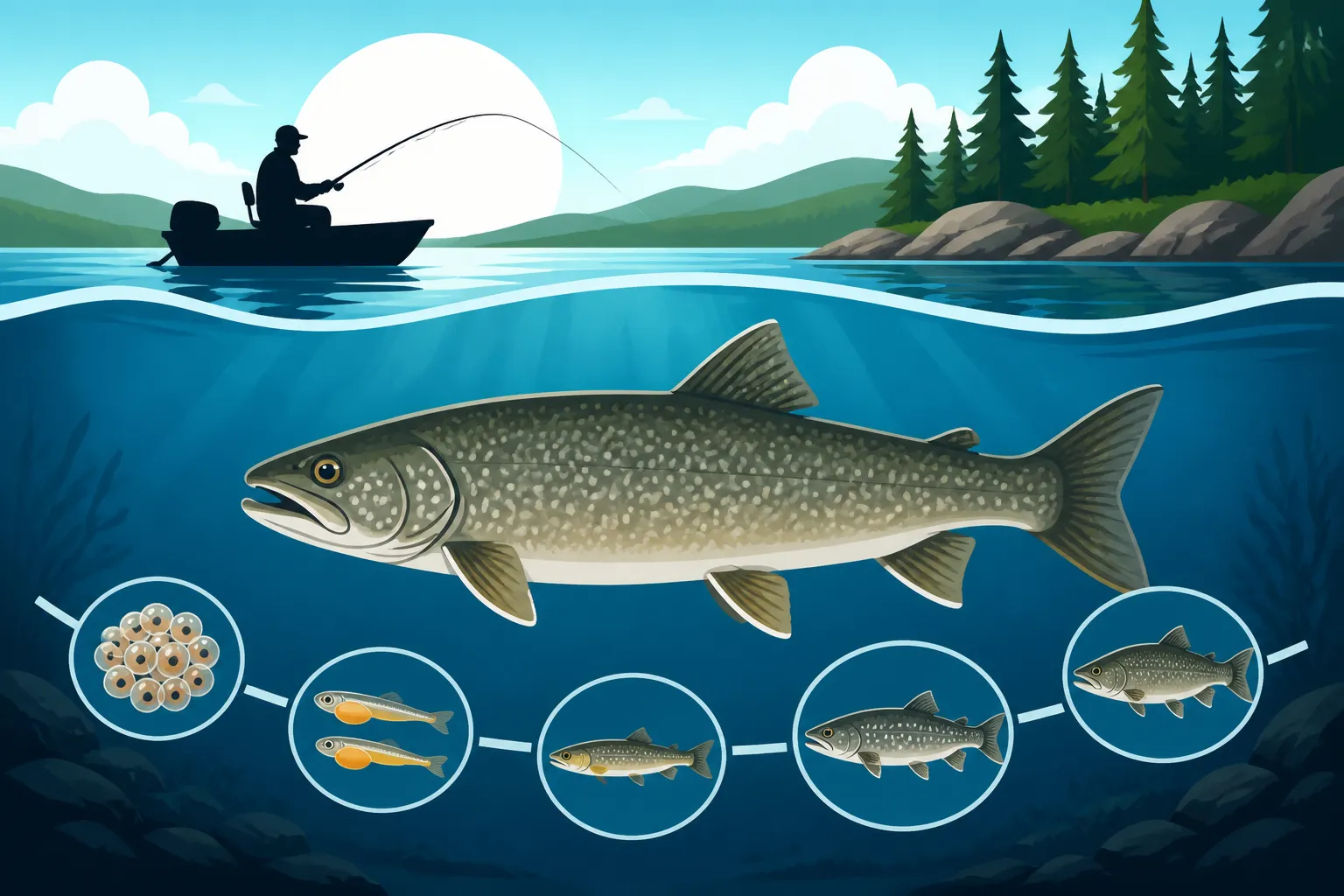
Lake trout have a fascinating growth journey, starting from tiny fry and progressing through various life stages over many years. They generally grow quite slowly compared to other species. For instance, a lake trout might only reach 10-12 inches in its first few years, while a bass of the same age would be significantly larger. This slow growth is a key factor in their longevity, as rapid growth often means a shorter overall lifespan in many fish species.
| Age (Years) | Typical Length (Inches) | Typical Weight (Pounds) | Key Milestones |
|---|---|---|---|
| 1-3 | 6-12 | 0.25-1 | Fry/Juvenile, rapid initial growth |
| 4-7 | 15-22 | 1-4 | Sub-adult, reach sexual maturity |
| 8-15 | 24-30 | 5-12 | Adult, consistent growth, active spawners |
| 16-25 | 30-36 | 12-25 | Mature adult, trophy potential, dominant spawners |
| 25+ | 36+ | 25+ | Old growth, often large and very deep-bodied |
Note: These are typical ranges and can vary greatly by individual lake, food availability, and genetics. Some fish grow faster or slower.
Sexual maturity is a significant milestone, typically occurring between 4 and 7 years of age. At this point, they begin to participate in the annual spawning rituals, which usually happen in the fall over rocky shoals. Lake Trout Spawning Season in Ontario is a critical time for their reproduction. From this point on, their growth continues, albeit often slowing down further, as much of their energy is then directed towards reproduction. The oldest and largest fish are often females, who continue to grow and produce an increasing number of eggs as they age, making them incredibly valuable to the fishery. Their incredible journey from tiny egg to ancient behemoth is a true testament to the wildness of Ontario's waters.
How Anglers Can Impact Lake Trout Longevity
It’s easy to feel like our individual actions don't make much of a difference when we're out on the vastness of an Ontario lake. But when it comes to long-lived species like lake trout, every single interaction, especially with those larger, older fish, can have a cumulative impact on their population and future. We, as anglers, hold a significant responsibility in ensuring these magnificent fish continue to grace our waters for generations to come.
Catch and Release Best Practices
One of the most powerful tools we have to positively influence lake trout longevity is practicing responsible catch and release, especially for those trophy-sized fish. Imagine fighting a laker for 15 minutes from 100 feet down – that fish is already under immense stress. How you handle it at the boat or on the ice can literally be the difference between it swimming away strong or dying days later. It’s not just about letting it go; it’s about letting it go right.
When you're bringing a lake trout to the boat, try to minimize the fight time as much as possible, using appropriate Best Fishing Rods for Ontario Lakes and Best Line Weight for Muskie Fishing (often similar strong lines for big lakers) to get them in quickly. Once alongside, avoid bringing the fish into the boat if you can. If you must, use a large, knotless, rubber-coated landing net to support its entire body. Never hold a large laker vertically by the jaw or gills, as this can severely damage its internal organs and spine. Keep the fish in the water as much as possible while removing the hook. Long-nosed pliers or a hook remover, available on platforms like Amazon, are invaluable for quickly extracting hooks, especially if they’re deep.
If you want a photo, be quick, keep the fish low over the water, and support its belly with both hands. Don't let it flop around on the boat floor or ice. When releasing, gently hold the fish upright in the water, facing into any current, until it regains its strength and swims away on its own. Often, giving it a little "massage" by moving it slowly back and forth can help water flow over its gills. Understanding How to Catch Lake Trout in Ontario also means understanding how to release them properly. This gentle approach greatly increases their chances of survival and allows them to continue contributing to the fishery for many more years.
Understanding Regulations and Conservation Efforts
Beyond individual actions, being a knowledgeable and compliant angler is crucial. Ontario has a robust framework of fishing regulations designed to protect our fisheries, and these are particularly important for slow-growing, long-lived species like lake trout. These rules, which cover aspects like bag limits, size restrictions, and season dates, are based on scientific data and are intended to ensure sustainable populations. For example, some zones might have special slot limits designed to protect larger, spawning-size fish, allowing them to remain in the population and reproduce.
Staying informed about the specific regulations for the waters you're fishing is non-negotiable. The Ontario Fishing Regulations Summary, available online and at many tackle shops, is your bible. It outlines everything from general rules to specific zone-by-zone regulations, including special rules for certain bodies of water. Always check the current regulations before heading out, as they can change. Your Outdoors Card, which you need for your fishing license, is a testament to your participation in this regulated system. If you're looking to purchase a copy of the regulations or even specific gear for deeper water fishing, many great options can be found on Amazon.
Conservation goes beyond just following the rules; it's about advocating for healthy habitats and supporting initiatives that protect our waters. Whether it's participating in local clean-up efforts, joining conservation groups, or simply reporting suspected poaching, every bit helps. Remember, these magnificent lake trout don't just appear; they are a product of healthy ecosystems and responsible management, and their incredible longevity depends on all of us playing our part.
Variations in Lake Trout Lifespan Across Ontario Waters
Ontario is an enormous province, home to an incredible diversity of lakes, from the smallest ponds to the deepest Great Lakes. This vastness means that not all lake trout live the same life, and their longevity can vary significantly depending on where they call home. Understanding these regional differences can give us a deeper appreciation for the adaptability of this species and the unique challenges and opportunities each environment presents.
Northern vs. Southern Ontario Lakes
Generally speaking, lake trout in Northern Ontario waters tend to live longer and often grow larger than their southern counterparts. Why is this? A significant factor is fishing pressure. Many Northern Ontario lakes, especially those in more remote areas or accessible only by fly-in, experience far less angling pressure. With fewer hooks in the water, a higher percentage of fish can live to their maximum potential lifespan without being harvested.
Furthermore, Northern Ontario often boasts more pristine, undisturbed habitats. These lakes typically have excellent water quality, abundant deep, cold water, and fewer human-induced stressors like pollution or habitat alteration. The food webs in these systems are often more stable, providing consistent nutrition for lakers throughout their lives. This combination of reduced pressure and superior habitat creates ideal conditions for lake trout to grow slowly, steadily, and for many decades. If you're looking for Where the biggest lake trout live in Ontario, often the answer points north.
In contrast, Southern Ontario lakes, while still producing fantastic lake trout fishing, often face greater challenges. They are generally more accessible, leading to higher fishing pressure. Many are also surrounded by more developed areas, which can introduce habitat degradation issues, as discussed earlier. While regulations are in place to mitigate these impacts, the sheer volume of anglers and human activity can put a strain on populations. As a result, the average lifespan of a lake trout in a heavily fished southern lake might be somewhat shorter than in a remote northern lake, even if both are considered healthy fisheries. It's a trade-off that highlights the importance of balanced management and angler education.
Deep vs. Shallow Water Environments
Lake trout are classic cold-water fish, and their preference for deep, oxygen-rich environments is a fundamental aspect of their biology that directly influences their lifespan. Lakes with extensive deep-water zones provide a stable, cool refuge for lakers year-round. These depths act as a thermal sanctuary, protecting them from fluctuating surface temperatures and ensuring they can always find their preferred What water temperature lake trout prefer. This consistent, low-stress environment is conducive to long, healthy lives.
In lakes that lack significant deep-water habitat, lake trout might struggle more, especially during warmer months. While they are resilient, prolonged exposure to water temperatures outside their optimal range can cause physiological stress, suppress their immune systems, and reduce their feeding efficiency. Even if they survive, these stressors can contribute to a shorter overall lifespan. Such lakes might have populations that mature quicker but don't reach the same ages or sizes as their deep-water cousins.
Consider a massive lake like Lake Superior, with depths plunging hundreds of feet. These vast, cold expanses are a perfect fortress for lake trout, allowing them to roam and grow for many decades. Then think about a smaller, shallower lake that might still support a laker population, but one where the fish might be squeezed into smaller, less ideal pockets of cold water during a hot summer. The fish in the shallower lake might reach maturity faster, but their overall lifespan potential could be curtailed due to these environmental constraints. It's a subtle but significant factor in the fascinating story of the lake trout's enduring life in Ontario.
Disclaimer
This article is for general informational purposes only and does not constitute professional advice. Laws, prices and regulations vary by location and change over time. Consult a qualified professional for guidance on your specific situation.