Best Wading Staff for Fast Current
There's nothing quite like the thrill of wading into a pristine Ontario river, feeling the cool current against your legs, and casting your line into untouched pockets. But let's be honest, that exhilarating feeling can quickly turn to anxiety when you hit a patch of slippery rocks or encounter a swift, unexpected current. Many of us have felt that heart-stopping moment when a seemingly stable rock suddenly shifts, or the riverbed drops away, leaving us scrambling for balance. This guide is all about helping you conquer those challenging waters with confidence, focusing on finding and using the best wading staff to keep you safe and upright in Ontario's famously fast and often unpredictable currents.
Why a Wading Staff is Your Best Friend in Fast Ontario Currents
When you're out on the water, whether it's the roaring Grand River during spring runoff or a rocky stretch of the Credit River, your footing is everything. One wrong step can lead to a dunking, a lost rod, or worse, a serious injury. A good wading staff isn't just an accessory; it's a vital piece of safety equipment that provides an extra point of contact, essentially giving you a third leg for unparalleled stability.
The Hidden Dangers of Ontario's Rivers and Streams
Ontario's diverse waterways offer incredible fishing opportunities, but they also come with their own unique challenges. Rivers like the Saugeen, the French, or even smaller, seemingly gentle streams can harbor surprisingly strong currents, especially after heavy rains or during spring thaw. The bottoms can be a treacherous mix of smooth, moss-covered rocks, loose gravel, deep silt pockets, and sudden drop-offs. Imagine wading through a section of the Nottawasaga River, feeling confident, when suddenly your foot slides on an algal-covered boulder, or you step into a hidden hole. Without that extra support, it’s a recipe for disaster.
These aren't just minor inconveniences; they can be genuinely dangerous. A fall in fast water can be disorienting and make it incredibly difficult to regain your footing, especially if you're wearing waders that can fill with water, making you heavy and cumbersome. Losing your balance can mean getting swept downstream, potentially into deeper, faster water or against submerged obstacles. For anyone who spends time fly fishing for trout in Ontario or even just exploring new spots, understanding these risks is the first step towards mitigating them. It's not about being overly cautious; it's about being prepared and respecting the power of the water.
How a Wading Staff Enhances Your Safety and Confidence
Having a reliable wading staff in your hand fundamentally changes your wading experience. It provides a constant probe, allowing you to feel out the riverbed ahead of you, identifying slippery spots, sudden drops, or unstable rocks before you commit your weight. Think of it as your early warning system for everything beneath the surface. This proactive approach significantly reduces the chances of losing your footing.
Beyond simply preventing falls, a wading staff instills a profound sense of confidence. Instead of gingerly shuffling your feet, constantly worried about what lies beneath, you can move with more assurance. This confidence isn't just psychological; it translates to more efficient wading, allowing you to reach prime fishing lies that you might otherwise avoid. It also frees your mind to focus on the fishing itself – reading the water, spotting fish, and making precise casts – rather than being solely preoccupied with staying upright. Whether you're navigating the swift currents of the Grand River, known for its smallmouth bass, or wading a smaller, less-frequented brook for speckled trout, that extra point of contact makes all the difference. It's a game-changer for anyone serious about safely exploring Ontario's diverse aquatic environments.
Key Features to Look for in a Wading Staff for Fast Water
Not all wading staffs are created equal, especially when you're dealing with the powerful pull of a river current. When the water is moving quickly, you need a staff that's built for serious stability and reliability. Focusing on specific features will help you choose one that acts as a true extension of your body, providing unwavering support.
Material and Durability: Standing Up to Rocky Bottoms
The material of your wading staff is paramount, as it needs to withstand constant abuse from rocks, gravel, and submerged debris. The best staffs for fast currents are typically made from aircraft-grade aluminum or carbon fiber. Aluminum staffs are generally more robust and can take a beating, often feeling very solid in hand. They might be a bit heavier, but that added heft can sometimes be an advantage, helping you drive the tip firmly into the riverbed against the current. Carbon fiber, on the other hand, is incredibly lightweight and stiff. This makes it a pleasure to carry and reduces fatigue during long wading sessions. However, while very strong, carbon fiber can be more prone to catastrophic failure (i.e., snapping) if bent or struck sharply in just the wrong way, compared to aluminum which might bend but often not break completely.
The tip of the staff is equally critical. Look for a durable, often carbide or hardened steel tip, sometimes paired with a rubber foot for quieter wading or use on delicate stream beds. A sharp, aggressive tip will dig into slippery rocks and gravel, providing maximum grip. Some staffs even feature a larger, bell-shaped rubber ferrule that can be swapped out, offering a wider footprint for softer bottom conditions, though for fast current, a pointed, digging tip is usually preferred. Many quality staffs, which you can often find at reputable retailers like Bass Pro Shops or by browsing a wide selection on Amazon, will clearly specify these durable materials and tip constructions.
Length and Adjustability: Tailoring it to Your Stature and the Water
The ideal length of a wading staff is crucial for effective use. A general rule of thumb is that when standing upright, the top of the staff should reach somewhere between your armpit and your chin. This allows for a comfortable grip and sufficient length to probe the water ahead without stooping too much. For fast currents, a slightly longer staff can be advantageous, giving you more reach and leverage.
Adjustability is another key feature. Many staffs are telescopic or feature folding sections with quick-release locking mechanisms. Telescopic staffs allow you to precisely adjust the length to suit your height and the depth of the water you're wading. If you're tackling deeper sections of the river, you'll appreciate the ability to extend your staff for extra reach and security. Conversely, for shallower stretches, you can shorten it to avoid it getting in the way. Folding staffs, while offering excellent portability, might have fewer incremental adjustment points. Regardless of the mechanism, ensure the locking system is secure and easy to operate even with wet hands or gloves. You don't want your staff to suddenly collapse under pressure when you need it most in a swift current.
Grip and Straps: Maintaining Control in Challenging Conditions
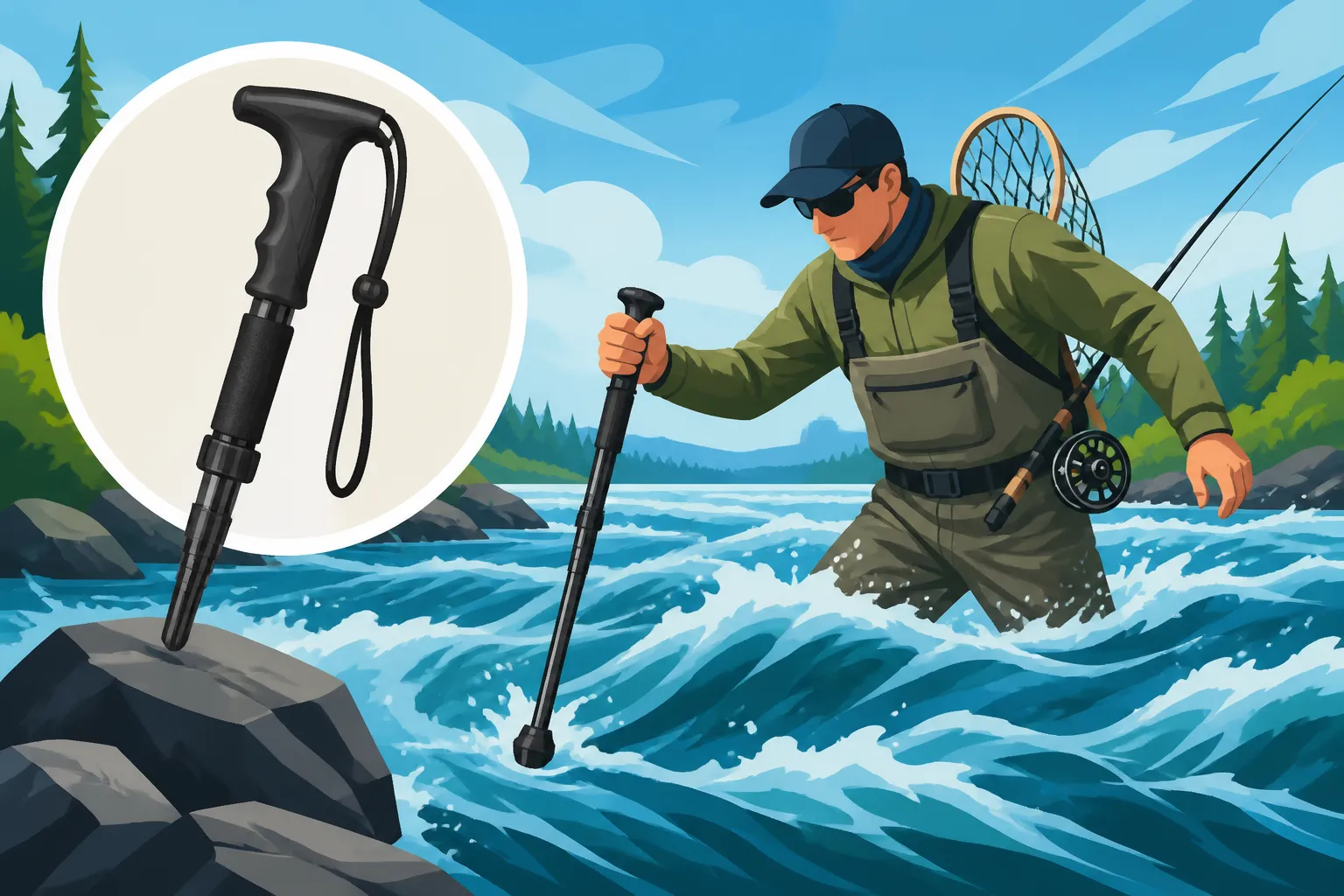
A comfortable and secure grip is vital for maintaining control of your wading staff, especially when the current is pushing hard against you. Look for an ergonomic handle, often made of cork, foam, or a non-slip rubberized material, that fits well in your hand. Some grips are angled to provide a more natural wrist position, reducing strain during extended use. The texture should offer good purchase even when wet.
Equally important is a robust wrist lanyard or strap. This seemingly small detail can prevent you from losing your staff if you stumble or if a strong current tries to rip it from your grasp. The strap should be adjustable to fit snugly around your wrist without being restrictive. Some anglers prefer a longer lanyard that attaches to a D-ring on their vest or waders, allowing the staff to dangle freely if they need both hands for a fish or to re-tie a fly. This quick-release or tethered system ensures your staff is always within reach but won't float away. When you're standing in a powerful current, you'll truly appreciate a staff that feels like an extension of your arm, securely fastened to you.
Portability and Deployment: Quick Access When You Need It Most
When you're out on the river, the last thing you want is a cumbersome piece of gear that's difficult to manage. For a wading staff destined for fast currents, easy portability and rapid deployment are non-negotiable. Many modern staffs are designed to fold down into a compact size, often collapsing into three or four sections that can be tucked away into a sheath or strapped to your wading belt or fishing vest. This compact form factor means it's out of the way when you don't need it, such as when you're hiking to a new spot or fishing from the bank.
However, portability shouldn't come at the expense of quick access. When you encounter an unexpected drop-off or a sudden surge in current, you need your staff ready in a flash. Look for designs that feature an internal elastic cord, similar to tent poles, which allows the sections to snap together almost automatically with a flick of the wrist. Some even have a spring-loaded button for one-handed deployment. A good sheath should protect the staff while allowing for smooth, snag-free extraction. Many anglers choose staffs that come with a neoprene or Cordura sheath with a belt loop or a clip for easy attachment to a wading belt or backpack. The quicker you can deploy your staff, the faster you can establish stability when faced with challenging wading conditions, ultimately keeping you safer.
Types of Wading Staffs and Their Suitability for Fast Currents
Just like there are different types of fishing rods for various species and techniques, there are different wading staff designs, each with its own pros and cons. Understanding these distinctions will help you pick the best companion for navigating Ontario's swift waters.
Folding and Collapsible Staffs: The Angler's Choice for Convenience
Folding and collapsible wading staffs are arguably the most popular choice among anglers, and for good reason. Their primary advantage lies in their exceptional portability. These staffs are typically segmented, often into three or four sections, connected by an internal elastic shock cord. When collapsed, they fold down into a very compact package, usually fitting neatly into a sheath that can be clipped to a wading belt, attached to a backpack, or even tucked into a large vest pocket. This makes them incredibly convenient for covering ground between fishing spots, whether you're hiking along the banks of the Beaver River or crossing open fields to access a remote stretch of stream.
For fast currents, the key is rapid and reliable deployment. The best folding staffs spring into action almost instantly when you pull them from their sheath, allowing you to quickly establish a stable base before committing to a precarious wade. While generally robust, it's crucial to check the locking mechanisms that secure the extended sections. Some use a simple friction fit, while others have more secure button-lock or twist-lock systems. In strong currents, a staff that feels solid and won't wobble or accidentally collapse under pressure is non-negotiable. The lightweight nature of many folding carbon fiber models is also a huge plus, reducing fatigue during a long day on the water. Many anglers find excellent folding options at stores like Bass Pro Shops, or benefit from the wide range of brands and user reviews available on platforms like Amazon.
Fixed-Length Staffs: Maximum Stability, Less Portability
Fixed-length wading staffs are the traditionalists' choice, often favored by those who prioritize absolute stability above all else. As the name suggests, these staffs do not collapse or fold; they are a single, solid piece of material, usually wood, aluminum, or a heavy-duty composite. This unsegmented design inherently makes them incredibly strong and rigid. There are no joints or locking mechanisms to potentially fail, meaning they offer unwavering support even in the most powerful currents. When you lean into a fixed-length staff, you can trust that it will hold firm.
The trade-off for this superior stability is, of course, portability. Carrying a four or five-foot-long rigid pole can be cumbersome, especially if you're hiking to your fishing spot. They generally don't come with a sheath and are often just carried in hand. This makes them less practical for anglers who frequently move between spots or prefer to fish with minimal gear. However, for those who primarily fish one difficult, fast-flowing stretch of river, or for guides who need absolute reliability, a fixed-length staff can be an excellent choice. They are often heavier, which can also be an advantage in very swift water, allowing you to really plant the tip into the riverbed. While less common in general fishing stores, specialty fly shops might carry custom or heavy-duty fixed staffs.
Hybrid Designs and Specialized Tips
Beyond the basic folding or fixed designs, you'll also encounter hybrid wading staffs and those with specialized features that cater to specific needs. Some hybrid staffs might be telescopic but only collapse into two larger sections, offering a compromise between rigidity and some level of portability. Others might integrate features like camera mounts for capturing those memorable moments on the water, or even subtle compasses built into the handle.
Specialized tips are also worth considering. While a carbide tip is great for digging into slippery rocks, some staffs offer a wider, basket-style tip that excels on softer, muddy bottoms or when navigating through heavy aquatic vegetation. Some even have interchangeable tips, allowing you to adapt your staff to the specific riverbed conditions you'll encounter. For instance, if you regularly fish both rocky trout streams like the Nottawasaga and silty walleye rivers, having the option to swap tips can be incredibly useful. Think about where and how you typically fish when evaluating these options. Sometimes, these niche features can make a significant difference in comfort and effectiveness, especially for dedicated anglers spending a lot of time in challenging Ontario waters.
| Feature | Folding/Collapsible Staff | Fixed-Length Staff |
|---|---|---|
| Primary Benefit | Portability, easy storage | Maximum strength and rigidity |
| Stability in Fast Current | Very good, but relies on secure locking mechanisms | Excellent, unwavering support due to solid construction |
| Deployment Speed | Rapid, often shock-corded for quick assembly | Always ready, no assembly needed |
| Portability | High, folds into compact size, often with a sheath | Low, cumbersome to carry when not in use |
| Materials | Aluminum, carbon fiber (lightweight) | Wood, heavy-duty aluminum, composites (often heavier) |
| Durability | Good, but joints can be wear points; carbon fiber can snap under specific stress | Excellent, less prone to component failure |
| Adjustability | Often adjustable length (telescopic) or fixed section lengths when deployed | Fixed length, no adjustability |
| Typical Use | Anglers who hike, travel, or need occasional support in varied conditions | Anglers needing constant, absolute support in specific, very swift water |
How to Properly Use a Wading Staff for Optimal Stability
Having the best wading staff is only half the battle; knowing how to use it effectively is the other. A wading staff isn't just a walking stick; it's a critical tool for safely navigating treacherous currents. Proper technique can be the difference between a secure wade and an unexpected swim.
The Tripod Method: Your Foundation in Moving Water
The "tripod method" is the fundamental technique for using a wading staff in moving water, and it's something every angler should master. Imagine yourself as a camera on a tripod – you need three stable points of contact with the riverbed at all times. When you wade, these three points are your two feet and your wading staff. The idea is to always maintain this three-point contact before shifting your weight.
Here’s how it works: As you prepare to take a step, probe the area ahead with your wading staff to find a stable spot. Once you've identified a secure foothold for your staff, firmly plant it there. This creates your third point of contact. Then, and only then, lift one foot and move it forward to a new, stable position. Before lifting your second foot, ensure both your staff and your first foot are firmly planted. Now, you have two points of contact (staff and first foot). You can then move your second foot, and repeat the process. This slow, deliberate, and always-three-points-of-contact approach drastically reduces your chances of slipping or losing balance, especially when traversing fast-flowing sections of rivers like the Madawaska or the Severn. It forces you to be mindful of every step, allowing you to react to shifting gravel or unexpected drop-offs without losing your overall stability.
Reading the Current and Anticipating Obstacles
A wading staff is an excellent tool for probing the riverbed, but it's even more effective when combined with the ability to "read" the water. Understanding how currents behave and anticipating where obstacles might lie beneath the surface is crucial for safe wading. Look for visual cues: faster water often appears smoother or more "glassy," while slower water might have small ripples or eddies. Riffles and rapids usually indicate shallower, rockier bottoms, while deeper, slower pools often signify softer, siltier sections.
When you're faced with a strong current, learn to lean into it slightly, using the pressure to help brace yourself. Always try to wade across currents by angling slightly upstream. This allows the current to push against your downstream leg, making you more stable, rather than pushing you over. Use your staff to check the depth and firmness of the bottom before you step. If your staff sinks easily or encounters nothing but loose gravel, rethink your path. Look for larger, stable rocks or areas with a more consistent bottom. Keep an eye out for submerged logs, large boulders, or sudden changes in water color, which can indicate deeper channels. By actively reading the current and using your staff as a primary sensing tool, you can anticipate potential hazards and choose the safest route, even in challenging conditions on rivers like the French River, known for its strong flows. This proactive approach is key to remaining safe and confident on the water.
Crossing Strategies and Recovery Techniques
Crossing a river, especially one with a strong current, requires a deliberate strategy and a bit of practice. Never rush a crossing. The "tripod method" is your base, but consider the angle of your crossing. It's often safer to cross slightly upstream, facing into the current. This way, the current pushes against your legs, helping to stabilize you, rather than hitting your back and pushing you downstream. Keep your body low, bending slightly at the knees, which lowers your center of gravity and makes you less susceptible to the current's force. Use your staff on the upstream side to brace against the flow.
What if, despite your best efforts, you do lose your footing? Panic is your worst enemy. If you stumble but don't completely fall, use your staff to quickly re-establish your third point of contact and brace yourself. Dig the tip firmly into the riverbed and use it to push yourself back upright. If you do go down, the most important thing is to not fight the current. Instead, roll onto your back, pointing your feet downstream. This allows you to fend off any submerged obstacles with your feet and keeps your head above water. Hold onto your staff if you can, but don't risk injury trying to recover it if it gets swept away. Focus on floating to a safer, shallower spot where you can regain your footing. Practice these mental and physical responses in calmer water first, so they become second nature when you truly need them. A well-placed Best Rain Gear for Ontario Anglers can certainly make a fall less miserable, but prevention is always the goal.
Maintenance and Care for Your Wading Staff
Just like any other piece of essential fishing gear, your wading staff needs a little love and attention to ensure it performs reliably trip after trip. Neglecting basic maintenance can lead to premature wear, stiff joints, or even failure when you need it most. A little care goes a long way in preserving your investment and, more importantly, your safety on the water.
Post-Fishing Cleaning and Inspection
After a fulfilling day of wading, especially in murky or silty rivers, your wading staff will likely be covered in grime, mud, and potentially corrosive minerals. Take a few minutes to give it a thorough rinse with fresh water. If your staff has folding sections or telescopic parts, extend them fully (if applicable) and clean between the joints. This prevents grit and fine sand from accumulating, which can cause sticking, wear down internal elastic cords, or prevent proper locking. Pay special attention to the tip – make sure it's free of embedded debris.
While cleaning, it’s a perfect time for a quick inspection. Check all locking mechanisms to ensure they operate smoothly and securely. If it's a folding staff, check the elastic shock cord; if it feels loose or sluggish, it might need to be replaced eventually (though this is often a long-term issue). Look for any cracks, bends, or signs of stress, particularly around the joints or near the tip. A minor bend in an aluminum staff might be repairable, but a crack in a carbon fiber shaft could signal a catastrophic failure waiting to happen. Also, inspect the wrist strap and its attachment point for fraying or damage. Addressing these small issues early can prevent major problems down the line, ensuring your staff is always ready for your next adventure.
Storage Tips to Prevent Damage
Proper storage is just as important as post-use cleaning. Once your wading staff is clean and completely dry, it's time to put it away until your next outing. Avoid storing it in a damp or humid environment, as this can encourage corrosion on metal parts or degradation of rubber components. If your staff comes with a sheath, make sure the sheath itself is also clean and dry before storing the staff inside.
For folding staffs, it's generally best to store them in their collapsed state. This reduces tension on the internal shock cord and keeps them compact. For fixed-length staffs, store them upright in a corner or hanging to prevent warping or accidental damage. Keep your staff away from direct sunlight or extreme temperatures, such as inside a hot car trunk for extended periods, as this can weaken materials or affect glues used in construction. By taking these simple storage precautions, you're not only extending the lifespan of your wading staff but also ensuring that when you grab your Best Fly Rods for Ontario Trout Streams and head out, your staff will be in perfect working order, ready to provide the stability you need on the water.
Beyond the Basics: Advanced Wading Staff Considerations
Once you've mastered the fundamentals of choosing and using a wading staff, you might start thinking about some of the less obvious advantages and specialized applications. A wading staff is a versatile tool, and with a bit of foresight, it can serve purposes beyond just keeping you upright.
Integrated Features: From Camera Mounts to Self-Defense
Modern wading staffs, especially those designed with the tech-savvy angler in mind, can come with a surprising array of integrated features. One popular addition is a camera mount, often a standard 1/4-20 thread at the top of the handle, allowing you to attach a GoPro or a small camera for hands-free filming or photography. Imagine wading to a picturesque spot on the Grand River and being able to quickly set up your camera for a perfect shot without fumbling or risking a fall. Some staffs even have integrated measuring tapes, allowing you to quickly verify the length of your catch before releasing it, which is invaluable for adhering to strict Ontario fishing regulations.
While not their primary purpose, in remote areas, a sturdy wading staff can also serve as a rudimentary self-defense tool against aggressive wildlife, should the extremely rare need arise. It can also be used to push through thick brush or clear spiderwebs from your path when bushwhacking to an unfrequented stream. Think of your staff as a multi-tool that aids in navigation, safety, and even capturing memories, making it an even more indispensable companion on any angling adventure. These added features, while secondary to its primary safety function, can certainly enhance your overall experience.
When a Wading Staff Might Not Be Enough
While a wading staff is an invaluable safety tool, it's important to recognize its limitations. There are certain conditions where even the best wading staff might not provide adequate safety, and it's prudent to simply avoid wading or seek alternative methods. If the current is exceptionally strong – perhaps after a torrential downpour – and the water is above your knees, even with a staff, the risk of being swept off your feet dramatically increases. Similarly, if the water is extremely turbid and you cannot see the bottom at all, and you don't know the riverbed, it's often safer to stay on the bank.
Deep, fast currents combined with a treacherous, unstable bottom (like large, shifting boulders or very deep silt) can also make wading unsafe. In these situations, attempting to wade, even with a staff, could lead to a dangerous situation. This is where a Best Kayaks for Ontario Fishing or boat might be a safer and more effective option. Always err on the side of caution. No fish is worth risking your safety. Trust your instincts; if a section of river feels too dangerous to wade, it probably is. A wading staff provides confidence, but it shouldn't be a substitute for common sense and respecting the power of Ontario's wild waters.
Disclaimer
This article is for general informational purposes only and does not constitute professional advice. Laws, prices and regulations vary by location and change over time. Consult a qualified professional for guidance on your specific situation.