Best glide bait for trophy muskie
Chasing trophy muskie in Ontario is a passion, but it's also a serious commitment. Many anglers spend countless hours on the water, throwing every lure imaginable, only to feel the frustration of not connecting with that one truly enormous fish. When you're targeting those absolute giants, you need more than just any big bait – you need something that truly triggers them. This guide is all about finding and utilizing the best glide baits to finally put that monster muskie in your net.
Understanding the Allure of Glide Baits for Trophy Muskie
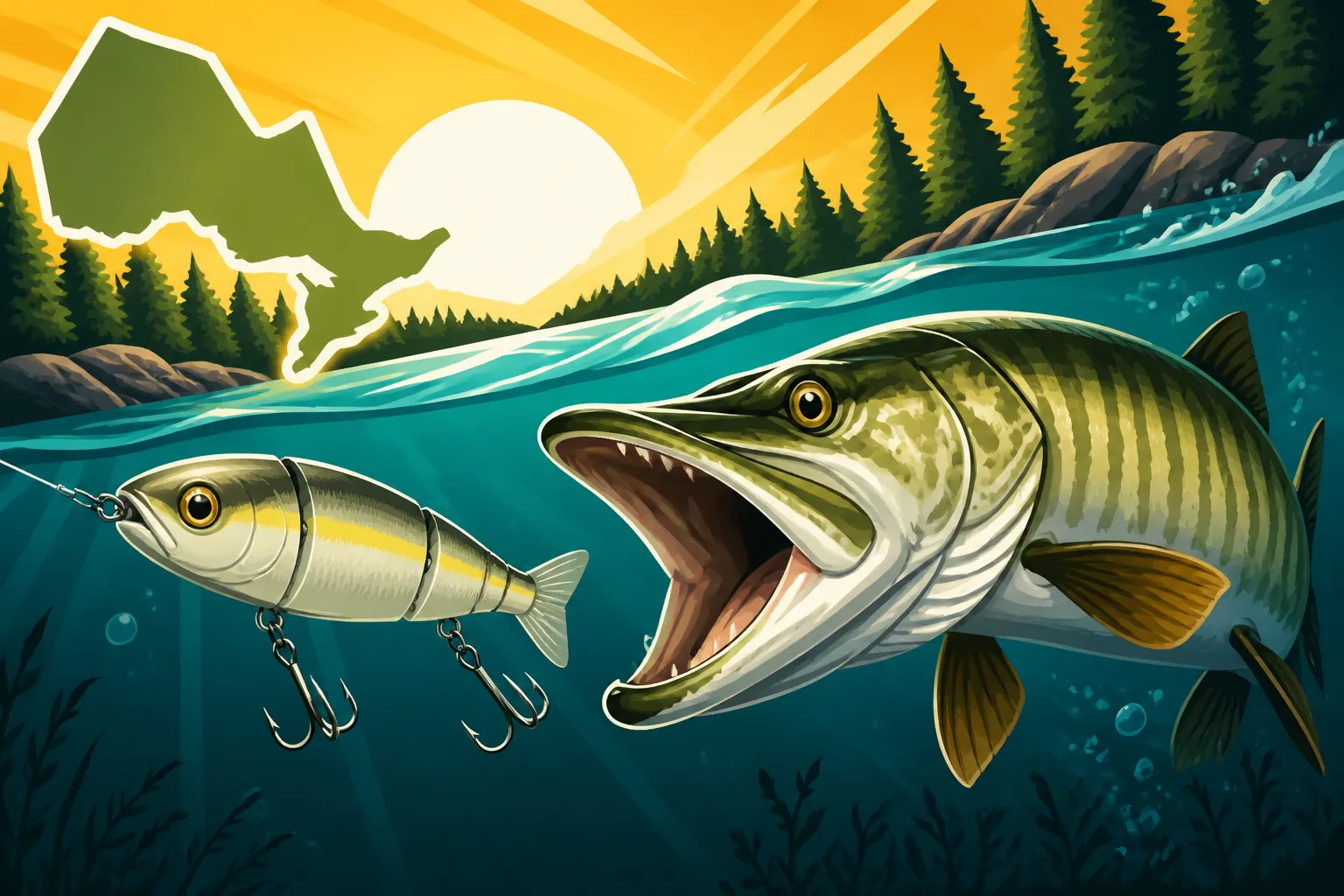
Glide baits have revolutionized muskie fishing, especially for those dedicated to catching the biggest fish in the lake. Unlike traditional crankbaits that wobble and dive, or bucktails that spin, glide baits offer a completely different presentation. They are designed to "glide" or "walk" through the water with a subtle, erratic, side-to-side motion when retrieved with a twitch-and-pause cadence. This unique action often mimics a wounded baitfish, making it irresistible to large, predatory muskie that might ignore more common presentations.
Muskie, especially the trophy-sized ones, are often highly intelligent and selective. They've seen countless lures over their long lives. A glide bait, with its slow, sinuous movement and ability to cover water effectively while remaining in the strike zone for longer, can be the key to triggering a bite from an otherwise disinterested fish. It’s not just about the action, but the perceived vulnerability and ease of capture that a glide bait conveys. Think about a big muskie lurking near a weed line or a rocky point on Georgian Bay; a slow-moving, injured-looking baitfish is much easier to ambush than something frantically darting away. This is where the glide bait truly shines, providing that critical natural presentation.
Key Characteristics of an Effective Trophy Muskie Glide Bait
When you're shelling out good money and dedicating precious fishing time to chasing the muskie of a lifetime, you can't afford to compromise on your gear. The "best" glide bait isn't just one specific brand or model; it's a combination of features that make it excel in various situations and appeal to those truly massive fish. Focusing on these characteristics will help you build a formidable arsenal.
Size and Weight for Big Fish Appeal
For trophy muskie, "big" isn't just a suggestion; it's often a necessity. While smaller glide baits certainly catch muskie, the true giants often key in on larger forage. Look for glide baits in the 8-inch to 12-inch range, and sometimes even larger. These larger profiles imitate mature suckers, ciscoes, or whitefish, which are common prey for adult muskie in many Ontario lakes. The weight is also crucial, impacting castability and depth control. Heavier baits (typically 4 oz to 8 oz, or even more for some models) allow for longer casts, particularly when using heavy muskie tackle, and help the bait maintain depth in windy conditions or when fishing over deeper structure. A lighter bait might get pushed around too much by current or waves, losing its enticing action.
Beyond the initial size, consider the bulk. Some glide baits are long and slender, while others are shorter and fatter. Both have their place. A bulkier bait often creates a larger displacement of water, sending out stronger vibrations that a big muskie can detect from further away. When a monster muskie is holding tight to cover, that extra thumping can be the difference between a look and a strike. It's a delicate balance; you want enough size to represent a substantial meal, but not so much that it's cumbersome to retrieve all day long.
Action and Cadence for Triggering Strikes
The action of a glide bait is its soul. A good trophy muskie glide bait should exhibit a wide, S-shaped glide on the pause and a responsive, erratic dart when twitched. You want a bait that can be worked slowly, almost lazily, with long glides, but also one that can be sped up for a more aggressive, fleeing action. The magic often happens during the pause – a quality glide bait will slowly sink or suspend with an enticing shimmy, allowing the muskie to get a good look and commit. This 'hang time' is critical for reluctant biters.
The retrieve cadence is entirely up to you and how the fish are reacting. Some days, long, sweeping pulls followed by extended pauses are what they want. Other times, shorter, sharper twitches that make the bait dart quickly from side to side will trigger a strike. The best glide baits are versatile, allowing you to experiment with different cadences to find what works on a particular day. Think about fishing a clear, shallow bay on Lake of the Woods. A slow, methodical glide might be perfect, letting the muskie track it from a distance before striking. In contrast, fishing a current seam on the French River might require a more aggressive darting action to mimic a disoriented baitfish caught in the flow.
Construction and Hardware for Durability
A trophy muskie isn't just a big fish; it's a powerful one, with a mouth full of razor-sharp teeth. Your glide bait needs to be built like a tank. Look for baits made from durable materials like solid plastic, dense wood, or resin, designed to withstand repeated abuse. Jointed models should have robust connections that won't fail after a few fish. The hardware is equally, if not more, important. Cheap split rings and hooks will bend or break, leading to heartbreaking losses. Invest in glide baits that come equipped with heavy-duty, corrosion-resistant stainless steel split rings and strong, sharp treble hooks. Many serious muskie anglers will immediately replace stock hooks and rings with even stronger aftermarket versions from trusted brands like VMC or Owner, just to be safe.
Consider the longevity of the bait's finish too. Muskie teeth are brutal, and a poor paint job can quickly chip away, leaving you with a beat-up, less effective lure. Some glide baits feature a clear coat or a through-wire construction that adds to their durability. When you're spending good money on a premium glide bait, you expect it to last more than one trophy encounter. This is especially true when you're fishing remote northern Ontario lakes, where replacing a broken lure isn't as simple as running to the nearest tackle shop. A sturdy, reliable bait is an absolute must when you're targeting that Ontario record muskellunge weight and length.
Top Glide Bait Considerations for Ontario Muskie
Ontario's diverse muskie waters, from the vastness of Lake St. Clair to the rocky expanses of Georgian Bay, and the tannin-stained rivers of the north, present varied challenges. Anglers need a range of options in their tackle boxes, and specific glide bait styles tend to excel in different scenarios. You might find a fantastic selection of these larger glide baits at a reputable tackle shop like Bass Pro Shops, or even online through retailers like Amazon for convenience.
The Big Profile Powerhouses
These are your workhorse glide baits, designed to throw a lot of water and get noticed by the biggest muskie. Brands like Musky Mania's Jake, Livingston Lures Titan, or even some of the larger S-Waver models, fit this category. They typically have a wider body profile and a pronounced S-glide action. Their substantial size and weight make them ideal for covering large flats, trolling open water, or working over deep weed edges. When you're searching for that truly exceptional fish in expansive waters like Lake Huron's Georgian Bay or Lake Nipissing, these baits are your first line of attack. They appeal to the muskie's predatory instinct to seek out a large, easy meal.
Finesse Gliders for Tricky Conditions
Sometimes, especially after a cold front or when fish are pressured, a more subtle approach is needed. This is where "finesse" glide baits come into play. These are often slightly smaller (though still substantial for muskie), perhaps with a more slender profile or a tighter, more subtle glide. Baits like the Phantom Lures softail series or the Hell Hound are great examples. They excel in clearer water, around sparse cover, or when muskie are following but not committing to larger, more aggressive presentations. Their nuanced action can coax a bite from a wary fish that has seen everything else. Think about fishing a calm, clear day on a smaller Kawartha Lake; a finesse glide bait might be exactly what those finicky muskie are looking for.
Custom and Niche Glide Baits
For the truly obsessed trophy muskie angler, the world of custom and limited-production glide baits is a treasure trove. These are often handcrafted, tuned to perfection, and can have unique actions or finishes not found in mass-produced lures. While they often come with a premium price tag, their effectiveness can be undeniable. Many feature intricate paint jobs that mimic specific local forage, or unique weighting systems for a custom sink rate. Exploring these options can give you a distinct advantage, especially on heavily pressured waters where muskie have become accustomed to common lures. This is where networking with other dedicated muskie anglers or visiting specialized tackle shows can pay off, as these baits aren't always readily available through mainstream retailers.
Mastering the Art of Glide Bait Presentation
Simply casting out a top-tier glide bait isn't enough to guarantee success; it's how you work it that makes all the difference. Trophy muskie are discerning predators, and your presentation needs to be impeccable to trigger their strike reflex.
The "Twitch, Twitch, Pause" Cadence
This is the bread and butter of glide bait fishing. After casting, let your bait sink to your desired depth (or retrieve immediately if you're targeting shallow water). Then, with your rod tip pointed slightly down or to the side, give two sharp, yet controlled, twitches of the rod tip. Don't reel during the twitches; let the rod impart the action. After the twitches, immediately drop your rod tip back towards the bait, giving slack line, and then pause. The length of the pause is crucial and should be varied until you find what the fish prefer. This is when the bait does its mesmerizing side-to-side glide and slow sink.
During the pause, be hyper-vigilant. Most strikes will occur during this vulnerable moment as the muskie tracks the "wounded" baitfish. Feel for any unusual weight or movement on your line. Sometimes it's a subtle "tick," other times it's a solid thump that nearly rips the rod out of your hands. Experiment with the aggressiveness of your twitches and the duration of your pauses. On some days, short, sharp twitches with short pauses work best. On others, long, sweeping pulls followed by extended pauses (even 5-10 seconds) are what gets the big fish to commit. This technique is particularly effective when working along structural elements like submerged humps or rocky shorelines.
Incorporating the Figure-Eight
The figure-eight is non-negotiable when muskie fishing with any lure, and especially with a glide bait. Many muskie will follow your bait right to the boat, often appearing like a submarine in your wake, only to turn away at the last second. The figure-eight is your chance to trigger a last-second strike. As your lure approaches the boat, instead of simply reeling it in, smoothly sweep your rod tip down into the water and begin tracing a wide "figure-eight" pattern with your rod. Keep the bait moving in this pattern, varying the size and speed of your loops. Watch the muskie's reaction; if it charges, continue the figure-eight, perhaps even speeding it up slightly to mimic an escaping baitfish, until it strikes.
The figure-eight extends your strike zone significantly and can often be the deciding factor between a glorious catch and a heartbreaking "follow." Many trophy muskie have been caught mere feet from the boat, and without a diligent figure-eight, those opportunities would have been lost. Always assume a muskie is following, even if you can't see it. It only takes one time to realize the importance of this technique, and you won't ever skip it again. It's a fundamental part of How to Catch Muskie in Ontario.
Reading the Water and Adjusting Your Approach
Muskie fishing is a game of observation and adaptation. Pay attention to water clarity, temperature, and any visible baitfish activity. In clear water, a more natural color pattern and a subtle glide might be more effective. In stained or turbid water, brighter colors or baits with more pronounced vibration can help muskie locate your lure. If the water is cold, slow down your retrieve and extend your pauses. If it's warm and the fish are active, you can speed things up.
The presence of structure is also paramount. Cast your glide bait to target specific points, weed edges, rock reefs, or fallen trees. These are prime ambush points for muskie. Don't be afraid to cast into tight cover, as long as your tackle is stout enough to haul a big fish out. The ability to work a glide bait precisely around cover is one of its biggest advantages over other lure types. Using your electronics to locate submerged structure or baitfish schools can significantly improve your odds. Best Lures for Muskie Fishing in Ontario are often those that can be presented effectively in these precise locations.
| Glide Bait Characteristic | Ideal for Trophy Muskie | When It Matters Most |
|---|---|---|
| Length | 8-12 inches (or larger) | Imitating large forage, drawing attention |
| Weight | 4-8 oz+ | Long casts, depth control, windy days |
| Action | Wide S-glide, erratic dart | Triggering strikes, mimicking wounded prey |
| Buoyancy | Slow sink or suspend | Critical 'hang time' during pauses |
| Hardware | Heavy-duty split rings & hooks | Landing big fish, preventing failures |
| Durability | Solid construction, chip-resistant | Withstanding muskie teeth, longevity |
| Colour | Natural patterns (clearer water), bright (stained water) | Matching forage, visibility |
Complementary Gear for Glide Bait Success
Throwing massive glide baits for trophy muskie isn't something you do with light gear. You need a setup that can handle the heavy lures, the brutal strikes, and the powerful fights these fish put up. Investing in the right equipment is just as important as choosing the best glide bait itself.
Rods and Reels Built for Battle
A heavy-action muskie rod, typically 8 to 9.5 feet long, is essential. This length provides the leverage needed to cast heavy baits a long distance and to execute powerful figure-eights. Look for rods with a strong backbone but a tip sensitive enough to feel the glide bait's action and any subtle takes. Paired with this, you'll need a robust baitcasting reel designed for muskie. These reels have strong gears, a reliable drag system, and a high line capacity for heavy braided line. Gear ratios vary, but many anglers prefer a moderate to high gear ratio (around 6.X:1) for quick line pickup during figure-eights or when a muskie makes a powerful run towards the boat.
Using a quality reel like a Shimano Tranx or a Daiwa Lexa allows you to maintain control during the retrieve and when a fish is on. The smooth drag system is critical to prevent line breaks on heavy runs, especially when you’re hooked into a large muskie that's making its last desperate dash for freedom. Trying to skimp on your rod and reel will only lead to fatigue, frustration, and lost fish – and believe me, when you finally get that trophy muskie to hit, you want every advantage you can get. This kind of setup is key for any serious Muskellunge Fishing in Ontario.
Line, Leaders, and Landing Equipment
Your mainline should be heavy-duty braided line, typically 80 to 100-pound test. Braid has no stretch, providing excellent sensitivity for feeling the bait's action and detecting subtle strikes. Its strength is paramount for hauling big fish out of cover and for resisting abrasion. Directly connected to your braid, you'll need a stout leader. For muskie, this is usually a heavy fluorocarbon or wire leader, around 100 to 150-pound test, and at least 12-18 inches long. This leader is your primary defence against those sharp teeth. Never, ever fish for muskie without a bite-proof leader – it's an invitation to disappointment.
Finally, a large, muskie-specific landing net is non-negotiable. These nets have extra-long handles, large hoops, and rubber-coated mesh to protect the fish. Trying to land a thrashing, toothy muskie with a regular bass net is dangerous for both you and the fish. Having a good net, along with long-nose pliers and heavy-duty bolt cutters (for cutting hooks if deeply embedded), is crucial for a safe and successful catch-and-release, minimizing harm to the fish. Remember, big muskie are a precious resource, and proper handling ensures they live to fight another day. Always be prepared with a good Net for landing a big muskie from a boat.
Conclusion: The Pursuit of the Trophy
The hunt for a trophy muskie is truly one of Ontario's most captivating angling experiences. It's a journey filled with long days, countless casts, and often, a fair share of follows and missed opportunities. But when that massive fish finally commits to a well-presented glide bait, the exhilaration is unlike anything else. Understanding what makes a glide bait effective – its size, action, and robust construction – and then mastering its presentation, are the cornerstones of success.
Don't be afraid to experiment with different brands and styles. Pay attention to the conditions on the water, whether you're on the expansive waters of Lake of the Woods or a more intimate northern lake, and adjust your approach accordingly. Invest in the right heavy-duty gear to support your glide bait habit, and always prioritize proper fish handling for these magnificent creatures. With dedication, the right tools, and a bit of luck, that dream of a trophy muskie can absolutely become a reality. Get out there, twitch that glide bait, and hold on tight!
Disclaimer
This article is for general informational purposes only and does not constitute professional advice. Laws, prices and regulations vary by location and change over time. Consult a qualified professional for guidance on your specific situation.