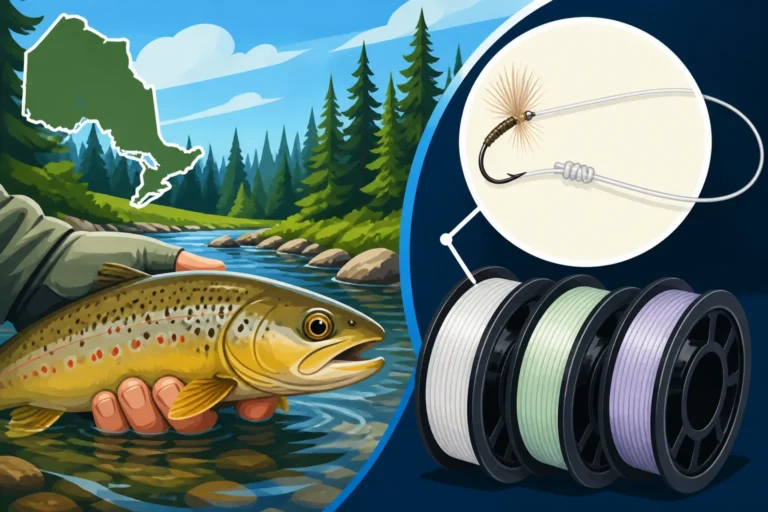
Best fluorocarbon leader length for spooky trout
There's nothing quite as frustrating as spotting a beautiful, eager trout in an Ontario stream, making a perfect cast, only to watch it dart away in a flash of silver, spooked by the slightest hint of your presence. This common angler's lament often boils down to one critical, yet frequently overlooked, element in your setup: the length of your fluorocarbon leader. This guide is here to walk you through exactly why leader length makes all the difference when targeting those notoriously wary trout and how to choose the ideal setup to increase your chances of a successful day on the water.
The Elusive Nature of Ontario Trout and Why They Spook Easily
Ontario's trout – whether we're talking about native brook trout in pristine northern streams, robust brown trout in southern rivers, or hard-fighting rainbows in stocked waters – share a common trait: they are incredibly wary. Their survival depends on their ability to detect threats, and unfortunately for us anglers, anything that looks unnatural can send them fleeing for cover.
The Trout's Keen Senses: Eyesight and Lateral Line
Trout possess remarkably keen senses, honed over millennia to survive in challenging aquatic environments. Their eyesight is perhaps their most important tool when it comes to detecting predators and prey. They have a wide field of vision, particularly upwards, which means anything breaking the surface tension or moving overhead can be immediately spotted. This includes your fly line, leader, and even your own silhouette if you're not careful. The water itself acts like a magnifying glass in some ways, making even subtle anomalies more pronounced to their discerning eyes.
Beyond their vision, trout also rely heavily on their lateral line system. This sensory organ runs along both sides of their body and detects vibrations and pressure changes in the water. A heavy fly line slapping the water, or even a leader that creates too much drag and disturbance, can be perceived as a threat through this highly sensitive system. Imagine standing in a quiet room, and suddenly a large object swooshes past you, creating a noticeable draft – that's akin to what a trout might feel if your line or leader isn't presented with care. Especially in clear, calm waters, minimizing this disturbance is paramount.
Pressure and Habitat: What Makes Trout Wary
The level of fishing pressure an Ontario stream or lake receives significantly impacts how spooky its trout population will be. A remote, rarely fished brook trout pond on Crown land might hold less wary fish that are more forgiving of an imperfect cast. However, a popular stretch of the Grand River or the Credit River, which sees anglers day in and day out, will typically house trout that have become incredibly adept at avoiding anything that doesn't look completely natural. These fish have learned to associate unnatural lines, presentations, or sudden movements with danger, and they will react instantly.
Furthermore, the characteristics of the trout's habitat play a huge role. In small, shallow streams with little cover, trout are inherently more skittish because they have fewer places to hide. Any sudden shadow or movement above the water sends them darting under logs or into undercut banks. Conversely, in a larger river with deeper pockets, complex currents, and abundant structure like boulders or submerged trees, trout might feel a bit more secure and be slightly less reactive to minor disturbances, simply because they have more escape routes and visual obstructions. Understanding these factors helps you appreciate why blending your tackle with the environment, starting with your leader, is not just a preference, but a necessity.
Why Fluorocarbon is Your Go-To for Stealth, and How It Works
For years, monofilament leaders were the standard, and while they served a purpose, they simply can't compare to the stealth advantages offered by fluorocarbon, especially when you're dealing with spooky trout. Many anglers, myself included, have switched almost entirely to fluorocarbon for leader and tippet material when targeting discerning fish.
The Optical Advantage: Blending with the Water
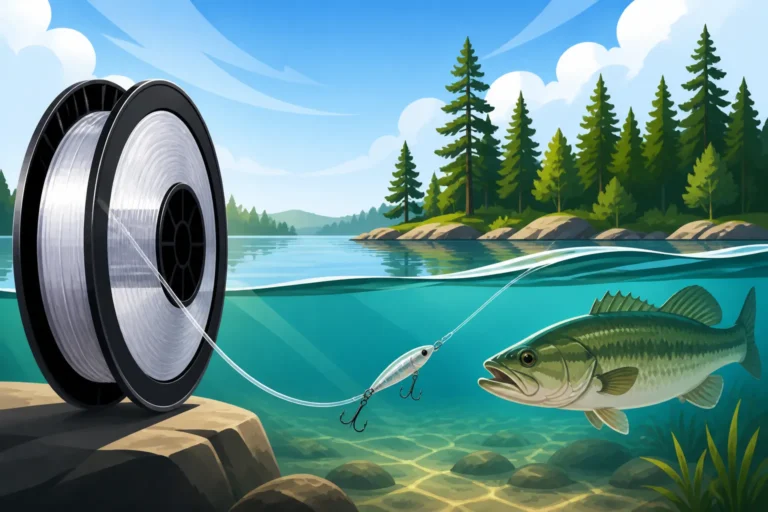
The primary reason fluorocarbon has become the gold standard for wary fish is its unique optical properties. Unlike monofilament, which is highly reflective and has a refractive index that's quite different from water, fluorocarbon's refractive index is incredibly close to that of water. In simple terms, this means it bends light almost identically to water, making it nearly invisible once submerged. Imagine trying to see a pane of perfectly clean glass underwater – it's tough, right? That's the effect fluorocarbon creates. This "invisibility" factor dramatically reduces the chance of a trout detecting your line, allowing your fly to drift more naturally and presenting a much less suspicious offering.
This optical advantage is particularly crucial in the gin-clear waters that often characterize prime Ontario trout habitats. When you're fishing a spring creek with barely a ripple, or a glassy calm pool on a warm summer day, the difference between a visible monofilament leader and an invisible fluorocarbon one can be the difference between a hook-up and an empty net. Many anglers will purchase their fluorocarbon spools from trusted retailers like Bass Pro Shops or through online platforms like Amazon, ensuring they have high-quality, consistent material.
The Subtlety of Sink Rate and Suppleness
Beyond its near invisibility, fluorocarbon offers other benefits that contribute to fooling spooky trout. It's denser than monofilament, which means it sinks faster. While this might seem like a minor detail, it's actually quite significant for presentations. A leader that sinks quickly helps your fly get down to the feeding zone faster, especially with nymphs or streamers, and maintains a straighter connection to your fly. This reduces drag and allows your fly to drift more naturally at the fish's depth, mimicking real insect behaviour far better than a floating or slowly sinking monofilament leader.
Furthermore, while fluorocarbon is generally stiffer than monofilament of the same breaking strain, modern manufacturing techniques have produced increasingly supple fluorocarbon lines that offer excellent knot strength without compromising flexibility. This suppleness is essential for creating delicate presentations and allowing your fly to move freely in the current. A stiff leader can cause your fly to "skate" unnaturally or drag, immediately raising a red flag for a cautious trout. The right balance of sink rate and suppleness ensures your fly behaves precisely as a natural food item would, a key factor in enticing those finicky eaters.
Navigating Leader Length: Matching Conditions for Optimal Stealth
Choosing the right fluorocarbon leader length isn't a one-size-fits-all situation. It's a dynamic decision based on a multitude of factors, from water clarity and depth to the size of the stream and the mood of the fish. Getting this balance right is crucial for success with spooky trout.
Long and Lean: When to Maximize Leader Length
When facing the most challenging conditions – think crystal-clear water, bright sunlight, low flows, and highly pressured fish – a longer fluorocarbon leader is almost always your best bet. My general rule of thumb for these situations is to start with a leader that's at least 9 to 12 feet long, often extending it further with additional tippet, sometimes reaching 15 to 18 feet in total. This extended length creates a greater buffer between your visible fly line and your fly, giving the trout more space to inspect your offering without seeing anything unnatural connected to it.
Consider a scenario on a gin-clear, slow-moving section of the Beaver River. You spot a beautiful brown trout holding in a shallow riffle. If you cast a standard 7.5-foot leader, the thicker, more visible butt section of your fly line might land too close, or the shadow of the line itself could fall over the fish. With a 12-foot fluorocarbon leader, you can land your fly line further upstream or to the side, allowing the fly to drift independently for a significant distance before the trout ever sees the more obvious part of your line. This long, gradual taper also helps to dissipate casting energy, resulting in a softer, more delicate presentation that won't splash down heavily and send fish bolting. This is where patience and meticulous casting really pay off, and an effective leader helps tie it all together. You can learn more about specific techniques in Fly Fishing for Trout in Ontario.
Shorter and Stronger: Scenarios for a More Compact Leader
While long leaders are often ideal, there are specific situations in Ontario where a shorter, more compact fluorocarbon leader is more advantageous. These typically involve faster, turbulent water, or when you're fishing larger, heavier flies that require more power to turn over. In these instances, a leader in the 6 to 9-foot range is generally more effective.
Imagine fishing a high-gradient stream like sections of the Saugeen River after a good rain, where the water is slightly off-colour and tumbling rapidly over rocks. Trout here might be less focused on line visibility and more on the fly itself, as they have less time to inspect it in the chaotic current. A long, delicate leader would be difficult to control, prone to tangling, and wouldn't transfer enough energy to turn over a weighted nymph or a larger streamer effectively. Here, a shorter, more robust leader provides the necessary strength and control to punch through the wind and water, ensuring your fly lands where you want it and gets to the fish quickly. Similarly, if you're using big, bulky muskie flies (though not for trout!), you'd opt for a very short, heavy leader for turnover power. The key is to match the leader's characteristics to the conditions and the fly you're presenting.
The Art of the Perfect Taper
Beyond just the overall length, the taper of your leader is incredibly important for delicate presentations. A well-designed leader isn't a single strand of fluorocarbon; it gradually reduces in diameter from the thicker butt section that connects to your fly line, down to the fine tippet where your fly is tied. This taper allows for a smooth transfer of casting energy, helping your fly turn over gracefully without coiling or collapsing.
When fishing for spooky trout, a longer, more gradual taper is generally preferred as it contributes to that soft landing and extended drift. Many commercial leaders come pre-tapered for fly fishing, and you can further customize them by adding specific lengths of fluorocarbon tippet material, like those you might find at Bass Pro Shops or through online vendors. For extremely wary fish, I often tie my own leaders using different diameters of fluorocarbon, starting with a thicker section (say, 25-30lb test) at the butt and progressively adding shorter sections of lighter material (e.g., 20lb, 15lb, 10lb) before the final tippet section. This meticulous approach ensures the leader functions as an extension of your fly line, delivering the fly accurately and subtly. It’s a bit more work, but the results, especially with educated trout, are undeniable.
Here's a quick reference table for fluorocarbon leader lengths:
| Condition | Water Clarity | Water Flow / Speed | Leader Length Recommendation | Notes |
|---|---|---|---|---|
| Gin-Clear, Low-Flow Streams | Very Clear | Slow to Moderate | 12-18 feet (incl. tippet) | Maximize stealth; minimal splash; allows longer drag-free drifts. |
| Moderate Streams / Rivers (Normal Flow) | Clear to Med. | Moderate | 9-12 feet | A versatile choice for most typical trout fishing scenarios. |
| Fast, Turbulent Rivers | Med. to Stained | Fast | 6-9 feet | Better control, faster sink rate for flies, less prone to tangles in chaotic currents. |
| Small Brooks / Pocket Water | Clear | Varied | 7.5-9 feet | Shorter casts, quick repositioning; stealth is still key but extreme length can be cumbersome. |
| Fishing Heavy Nymphs / Streamers | Any | Any | 7.5-9 feet (stronger butt) | Provides power to turn over heavy flies effectively; may use heavier tippet. |
| Topwater / Dry Fly Fishing (Wary Fish) | Clear | Slow to Moderate | 10-15 feet | Longer length keeps fly line further from fish, ensuring delicate presentation and natural drift. |
Beyond Leader Length: Complementary Tactics for Fooling Wary Trout
While choosing the optimal fluorocarbon leader length is paramount, it's just one piece of the puzzle when you're trying to fool spooky trout. The most successful anglers understand that stealth is a multi-faceted approach, encompassing everything from your tippet material to your casting technique and even your physical presence on the water.
Fine-Tuning Your Tippet and Fly Size
The very end of your leader, the tippet, is arguably the most critical connection to your fly. For spooky trout, this section needs to be as fine and unobtrusive as possible, while still maintaining enough strength to handle the fish you're targeting. Going too heavy on your tippet is a common mistake that can easily turn off a cautious trout, even if the rest of your leader is perfectly disguised. For most Ontario trout fishing, especially with dry flies or small nymphs, I often use 5X, 6X, or even 7X fluorocarbon tippet. The general rule is: smaller fly, finer tippet.
Not only does a finer tippet reduce visibility, but it also allows your fly to move more naturally. A stiff, heavy tippet can restrict the movement of a delicate dry fly, making it sit unnaturally on the surface film, or inhibit the subtle undulations of a nymph. Consider a tiny BWO (Blue-Winged Olive) imitation; it needs to drift freely. A fine tippet, paired with a small, perfectly matched fly, makes all the difference. You can always check out Best Tippet Size for Stocked Trout for more specific guidance. Remember, trout are experts at spotting discrepancies, and a natural presentation is key.
Master Your Cast and Approach
Even the best leader in the world won't save a sloppy cast or a clumsy approach. How your fly lands on the water and how you move around the stream are just as critical as your leader length. For spooky trout, aim for soft, delicate presentations. Avoid "pancaking" your fly line onto the water with a heavy splash; instead, strive for an upstream mend or an S-curve cast that allows your leader and fly to touch down gently, minimizing disturbance. Often, a longer leader naturally helps facilitate these softer landings by increasing the distance your fly travels before the heavier fly line hits the surface.
Your physical approach to the water matters immensely. Always move slowly and deliberately. When wading, shuffle your feet to avoid sending vibrations through the water, and try to keep a low profile. If you're bank fishing, stay well back from the edge and use available cover like trees or bushes to break up your silhouette. Shadows are another huge factor – avoid casting your own shadow over the water where fish are holding. Trout are hard-wired to perceive overhead shadows as a threat from predators like ospreys or eagles. Taking extra time to observe the water, plan your approach, and execute a stealthy cast will pay dividends, particularly when chasing those elusive wild trout in Ontario's Crown land lakes. These skills are fundamental to successful Wading Techniques for Ontario Trout Streams.
Reading the Water and Understanding Currents
Finally, no amount of perfect leader rigging will compensate for a lack of understanding of the water itself. Learning to "read the water" – identifying likely holding lies, current seams, eddies, and feeding lanes – is fundamental to effective trout fishing. Spooky trout will often hold in specific spots that offer them both food and protection, and your presentation needs to respect these dynamics.
Consider a large eddy behind a boulder in a moderately sized river. Trout might be holding on the current seam, waiting for food to drift by. Your job is to cast your fly upstream of that seam, allowing it to enter the feeding lane with a completely natural, drag-free drift. This means understanding how the different currents interact and how they will affect your fly line, leader, and fly. A longer leader can help achieve that drag-free drift by allowing more line to "belly" in differing currents without pulling on the fly itself. Conversely, in complex, swirling currents, a shorter leader might give you more direct control. Knowing when to mend your line, when to feed slack, and when to let the current do the work for you are skills that, combined with the right fluorocarbon leader length, will exponentially increase your chances of fooling even the most educated Ontario trout.
Disclaimer
This article is for general informational purposes only and does not constitute professional advice. Laws, prices and regulations vary by location and change over time. Consult a qualified professional for guidance on your specific situation.