Best Landing Net for Trout
There’s nothing quite like the thrill of a hard-fighting trout on the end of your line in Ontario’s pristine waters. But that incredible moment can quickly turn into a tangle of frustration, a lost fish, or even a damaged trophy if you don't have the right tool to bring it to hand safely. This guide is all about helping you navigate the sometimes overwhelming world of landing nets, ensuring your next trout encounter is a smooth, successful, and fish-friendly experience.
Why a Good Landing Net Matters for Trout (and for you!)
When you’ve spent hours stalking a wary brook trout in a quiet stream, or battled a feisty rainbow in a swift river current, the last thing you want is to lose it right at the net. A good landing net isn’t just a piece of equipment; it’s an integral part of responsible angling and crucial for securing your catch. For many anglers, the net is an afterthought, but it truly shouldn't be, especially when targeting delicate species like trout.
Fish Health and Conservation
One of the most compelling reasons to invest in a quality trout net is for the health and conservation of the fish itself. Trout, especially wild ones, have delicate scales and a protective slime layer that can be easily damaged by coarse net materials or rough handling. When this slime layer is removed, fish become highly susceptible to disease and infection, even if they appear to swim away fine. A well-designed net minimizes this trauma, increasing the survival rate of released fish.
Rubberized or knotless nylon mesh nets are absolute game-changers in this regard. Unlike traditional knotted nylon, which can strip away a fish's protective coating and cause fin damage, soft, rubberized materials cradle the fish gently. Hooks also rarely get tangled in rubber nets, which means less time struggling to free your lure and less stress on the fish. For those of us who prioritize catch and release, especially in sensitive areas or for protected species, using the right net is a fundamental ethical responsibility. Consider waters designated as Catch and Release Only Waters, where the impact of your gear on fish survival is paramount.
Angler Success and Confidence
Let’s be honest, losing a fish at the net stings. You fought hard, played it perfectly, and then, in the final moment, it slips away. A properly sized and constructed net gives you a significant advantage, turning those heart-pounding moments into triumphant ones. Instead of fumbling with a fish that's still thrashing, a good net allows you to swiftly and securely scoop your catch, bringing it under control quickly. This confidence boost helps you focus on the fight, knowing you have the right tool to seal the deal.
Imagine you're fishing a tributary off Lake Ontario for an aggressive steelhead. That fish is powerful, and one wrong move at the boat could mean a lost hook or a broken leader. A sturdy, long-handled net with a generous hoop lets you extend to meet the fish, scoop it up in one fluid motion, and bring it aboard safely. It reduces the thrashing and acrobatic jumps that often lead to snapped lines or thrown hooks, ensuring you get that photo opportunity and the chance for a healthy release.
Safety for You and Your Gear
Beyond protecting the fish and securing your catch, a good landing net also offers a layer of safety for you and your expensive gear. A hooked, flopping trout, especially one with a mouthful of treble hooks from a lure or a sharp fly, can be a hazard. A flailing fish can embed hooks in your hands, arms, or even worse, your face. It can also damage your rod, reel, or the fragile fly patterns you’ve carefully tied.
By quickly and securely bringing the fish into a net, you minimize its ability to thrash, allowing you to safely remove the hook with pliers or forceps. This is particularly important when fly fishing for aggressive trout where flies might be swallowed deep. It's a small investment that prevents potential injury and saves you from replacing costly equipment. It’s peace of mind, allowing you to focus on the joy of the catch rather than the anxiety of landing it.
Key Features to Look for in a Trout Net
Choosing the right landing net for trout can feel a bit like Goldilocks searching for the perfect bowl of porridge – you want one that’s just right. The features of a net really dictate its effectiveness and suitability for different types of fishing and different species of trout. Don't just grab the first one you see; take a moment to consider these crucial aspects.
Net Material: Rubber vs. Nylon Mesh
The material of the net basket is arguably the most important feature, especially for trout.
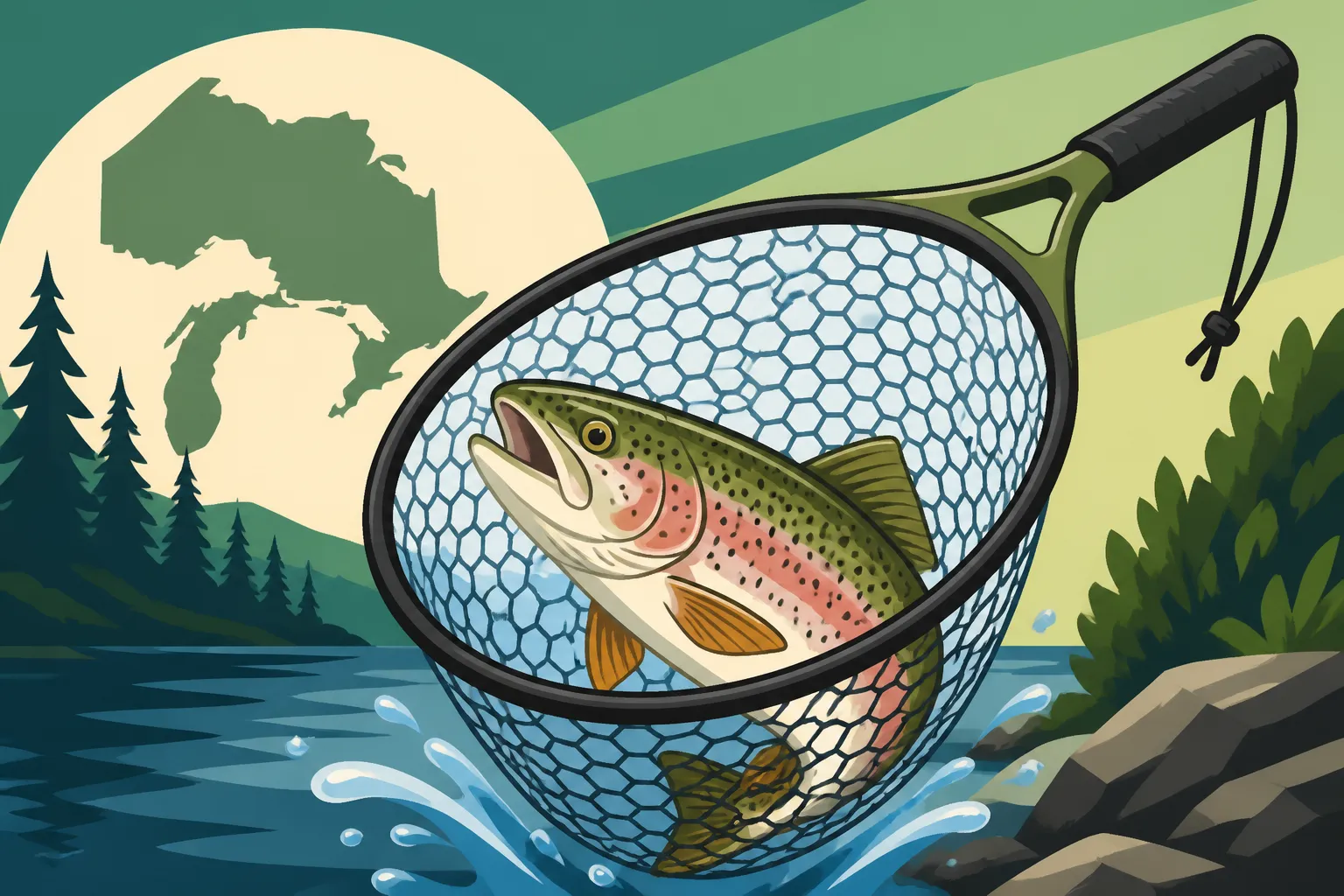
- Rubber (or "Rubberized") Nets: These are the gold standard for catch and release trout fishing. The soft, pliable rubber minimizes damage to a fish's protective slime coat and scales, which is critical for their survival after release. Hooks rarely snag in rubber, making hook removal incredibly easy and quick, which further reduces stress on the fish. They don't absorb water or fish odors, making them easier to clean and less prone to mildew. The downside? They can be a bit heavier and bulkier than nylon nets, and often come with a slightly higher price tag. However, for serious trout anglers who care about fish health, the benefits far outweigh these minor drawbacks.
- Knotless Nylon Mesh Nets: These are a step up from traditional knotted nylon nets. While not as fish-friendly as full rubber, knotless nylon still reduces scale damage compared to knotted versions. They are typically lighter and more compact, making them easier to carry on long hikes or when wading. They dry faster than rubber nets but can still get snagged by hooks more often than rubber. If a full rubber net is out of your budget or you prioritize extreme lightweight portability, a fine knotless nylon mesh is a decent compromise. Just be extra gentle when handling fish.
Handle Type and Length
The handle determines how you interact with the net and the fish.
- Fixed Handles: Most traditional trout nets for wading or smaller boats feature a fixed handle. These can be short (for vest attachment or hip carry) or medium length. Wooden handles offer a classic aesthetic and can feel warm in the hand, while aluminum or composite handles are often lighter and more durable. The key is to choose a length that allows you to comfortably reach the fish without overextending, while also being manageable for transport. For stream wading, a short handle that can be attached to a magnetic release on your back or a lanyard is often preferred.
- Telescopic Handles: These are incredibly versatile, allowing you to extend the net's reach when needed and collapse it for storage or portability. Telescopic handles are fantastic for boat fishing, kayak fishing, or bank fishing where you might encounter different landing scenarios or need to reach out over obstacles. They typically feature sturdy locking mechanisms to keep the handle at the desired length. The trade-off can be a slight increase in weight and potential for mechanical issues with the locking system over time if not well-maintained. When selecting a telescopic net, make sure the extension mechanism is robust and easy to operate with wet hands. Best Landing Net for Muskie often feature very long telescopic handles, showcasing the need for reach with larger species.
Hoop Size and Shape
The hoop is the frame that holds the net basket, and its size and shape dictate how easily you can scoop a fish.
- Hoop Size: For trout, you generally want a hoop that is large enough to comfortably accommodate the fish you expect to catch. Trying to squeeze a feisty 20-inch rainbow into a net designed for 10-inch brook trout is a recipe for disaster. A larger hoop provides more margin for error when scooping and allows the fish to remain submerged and calm while you unhook it.
- Hoop Shape: Oval or tear-drop shapes are common for trout nets. The wider opening at the front (for tear-drop) or a generally wider oval makes it easier to guide the fish in. Some nets feature a slightly flattened bottom to the hoop, which can help keep the fish submerged if you're holding the net in the water. Consider the largest fish you realistically expect to catch in the waters you frequent. If you’re targeting trophy Lake Trout Fishing in Ontario, you’ll need a significantly larger hoop than if you’re chasing small brook trout in a remote stream.
Different Types of Trout Landing Nets
Just like there are different types of anglers and fishing environments in Ontario, there are various styles of landing nets, each designed with specific purposes in mind. Understanding these distinctions will help you pinpoint the best fit for your personal angling adventures, whether you’re casting flies in a rocky river or trolling for lunkers on a vast lake.
Classic Wood Frame Nets
There's something undeniably charming and traditional about a classic wood frame landing net. Often crafted from beautiful hardwoods like ash, cherry, or walnut, these nets are a favourite among fly anglers and those who appreciate the aesthetic appeal and handcrafted feel. They typically feature a fixed handle and a compact hoop, making them ideal for wading small to medium-sized trout streams. The weight and balance of a good wooden net feel natural in the hand, and many come with integrated elastic lanyards or magnetic releases for easy attachment to a fishing vest or wader belt.
While the beauty is a big draw, wooden nets also offer practical benefits. The frames are often buoyant, meaning if you drop it in the water, it won't sink immediately. They are typically paired with a soft, clear rubber or knotless nylon mesh bag, which is gentle on fish. However, they can be a bit heavier than their aluminum counterparts and require a bit more care to prevent the wood from drying out or cracking over time, especially in Ontario's varied climate. For the angler who values tradition and spends most of their time Fly Fishing for Trout in Ontario in wading situations, a classic wood net is a fantastic choice that becomes an extension of their craft.
Modern Aluminum/Composite Nets
Moving into the realm of practicality and durability, modern nets constructed from aluminum or composite materials are a popular choice for a wide range of trout fishing scenarios. These nets are typically lighter than wood and much more resistant to the elements, shrugging off bumps, scrapes, and prolonged exposure to water without much fuss. Many aluminum nets feature telescopic handles, offering incredible versatility in reach. This makes them excellent for anglers who might fish from shore, a small boat, or even a kayak, where varying distances to the fish are common.
Composite nets, often made from fiberglass or carbon fiber blends, take the lightweight and durability aspects even further, though they can be more expensive. These materials offer strength without bulk, a critical factor for anglers who cover a lot of ground or need a net that won't weigh them down during long days on the water. The drawback to some aluminum nets can be a slightly "clinical" feel compared to wood, and they might scratch or dent with heavy use. However, for sheer functionality, robustness, and adaptability across multiple fishing situations, these modern nets are hard to beat.
Boat and Bank Nets
When your trout fishing takes you out of the small stream and onto larger rivers or lakes, a dedicated boat or bank net becomes indispensable. These nets are characterized by their significantly longer handles and often larger, deeper hoops compared to wading nets. The extended reach of a boat net is crucial for landing fish when you're perched high in a boat, especially if you're fishing alone and need to net a fish without leaving the helm. The deeper bag prevents powerful fish from jumping out once netted, a common frustration with shallower nets.
Bank nets, while similar in handle length, might have a slightly different hoop shape or a more robust construction to withstand being dragged up rocky shorelines. The ability to extend a net out from the bank over reeds, submerged logs, or steep drop-offs can be the difference between landing a fish and watching it swim away. These larger nets are often built with heavy-duty aluminum or fiberglass handles and robust rubber or knotless nylon bags to handle not just large trout, but also other species that might take your offering. While they aren't meant for portability during long hikes, they are essential tools for dedicated boat or shore anglers.
Here’s a quick comparison of these different net types to help you visualize the best fit for your adventures:
| Net Type | Frame Material | Handle Type | Hoop Size (Avg.) | Net Material | Ideal Use Case | Pros | Cons |
|---|---|---|---|---|---|---|---|
| Classic Wood Frame | Wood | Fixed (short/medium) | Small-Medium | Rubber/Nylon | Wading small/medium streams, fly fishing | Traditional, buoyant, aesthetic, fish-friendly | Heavier, requires care, less durable |
| Modern Aluminum | Aluminum | Fixed/Telescopic | Small-Large | Rubber/Nylon | Versatile, wading, boat, bank, kayak | Lightweight, durable, rust-resistant, versatile | Can feel "clinical," may dent |
| Boat/Bank | Aluminum/Comp. | Fixed/Telescopic | Medium-Large | Rubber/Nylon | Larger rivers, lakes, shore fishing, kayak fishing | Long reach, large capacity, very durable | Bulky, less portable for hiking |
Sizing Your Trout Net for Ontario Waters
Picking the right size net is a delicate balance. Too small, and you risk losing that fish of a lifetime; too large, and it becomes a cumbersome burden that hinders your fishing experience. The "perfect" size really boils down to the type of trout you're after and the specific Ontario waters you'll be fishing. It's not a one-size-fits-all situation, and understanding these nuances will prevent frustration on the water.
Matching Net Size to Target Species
Ontario is home to a fantastic variety of trout, and their sizes can vary wildly. A net perfect for a creek full of tiny brook trout will be laughably inadequate for a huge lake trout.
- Brook Trout & Small Stream Fish: If your passion lies in chasing wild brook trout in those intimate, brushy Best Fly Fishing Rivers in Ontario or hidden Crown land lakes, you’re likely targeting fish in the 8-14 inch range, with an occasional feisty 16-incher. A small, compact wading net with a hoop around 10-12 inches wide and a shallow-to-medium depth rubber bag is ideal. It's light, doesn't snag on brush, and is easy to manage with one hand while you're focused on presentation. Trying to net a small brookie in a gigantic boat net is like trying to catch a mouse with a butterfly net – overkill and awkward.
- Rainbow Trout & Brown Trout (Rivers/Smaller Lakes): For river-dwelling rainbows and browns, which often range from 14-24 inches, you'll need a step up. Think a net with a hoop around 14-18 inches wide and a deeper bag, perhaps 12-18 inches deep. This size provides enough room to scoop a longer, more powerful fish without tangling its fins or tail. A slightly longer fixed handle or a compact telescopic handle can be beneficial here, especially if you're navigating varied terrain while Wading Techniques for Ontario Trout Streams.
- Lake Trout, Steelhead & Large Salmonids (Great Lakes/Deep Lakes): Now we're talking about serious fish! For monster lake trout, powerful steelhead, or even big Chinook salmon that might occasionally be encountered while targeting trout, your net needs to be substantial. A hoop of 20-30 inches or more is not uncommon, and the net bag needs to be deep – 24-36 inches – to fully envelop these larger, heavier fish. Telescopic handles are almost a must for these scenarios, especially when fishing from a boat. Losing a 15-pound lake trout at the boat because your net was too small is a memory you don't want to make. Think about the potential for large fish, such as those found while Lake Erie salmon fishing or in the deeper parts of Lake Superior.
Net Size for Different Fishing Environments
Where you fish is just as important as what you fish for. The environment dictates how you'll carry and deploy your net.
- Wading Rivers and Streams: As mentioned, portability is key here. You want a net that you can easily carry, either attached to your back, vest, or wader belt, without it impeding your casting or movement. Shorter, fixed handles are common. The net should be just big enough for your target species, as a larger net can get caught on brush or be awkward in tight spaces. You want to focus on the fish, not wrestling with your gear.
- Boat Fishing (Small to Large Boats): In a boat, especially larger ones, portability takes a back seat to reach and capacity. A longer, telescopic handle is a huge advantage, allowing you to net fish from various positions in the boat without needing to constantly move around. The hoop can also be larger and deeper, as you're not carrying it on your back. For smaller boats like canoes or jon boats, a medium-sized telescopic net offers a good compromise between reach and manageability. You have more room to work, so maximize your advantage with a net that can handle the biggest fish your water body produces.
- Kayak Fishing: Kayak fishing combines elements of both wading and boat fishing. Space is at a premium, so a net needs to be relatively compact when stowed, yet offer good reach and capacity when extended. Many kayak anglers opt for medium-length telescopic nets that can be secured with a leash to prevent loss. A net that floats is a huge bonus here, as dropping it overboard is a real possibility. Look for options with a relatively flat bottom on the net bag to help cradle the fish on your lap or in the kayak while you unhook it.
- Bank Fishing: When fishing from shore, especially on larger lakes or rivers with steep banks or dense shoreline vegetation, reach is paramount. A long, telescopic net is almost a necessity. It allows you to scoop fish that might be just out of reach due to depth, submerged obstacles, or the angle of the bank. Make sure the handle is sturdy, as you might be putting a fair amount of leverage on it with a heavy fish far from shore.
Balancing Portability with Capacity
This is often the core dilemma for trout anglers. Do you carry a small, light net that's a joy to hike with but might be undersized for that unexpected monster? Or do you lug a larger net that offers peace of mind but feels like a burden on the trail? The answer often lies in assessing your typical fishing day.
If 90% of your fishing involves small streams with modest trout, then a compact wading net makes sense. You can always bring a larger, collapsible net for those rare occasions you venture to bigger waters. If you frequently fish varied environments or target different species, a good quality medium-sized telescopic net with a rubber bag offers the best compromise. It provides decent reach and capacity for most trout, while still being manageable enough for moderate portability. Don't let the fear of a "too small" net make you over-net; choose one that realistically fits the majority of your fishing style, and supplement it when truly necessary. For example, if you're often targeting large fish where Ontario Bag and Possession Limits by Species are generous, having a larger net that can accommodate these specimens is a wise move.
Maintenance and Care for Your Trout Net
A landing net is an investment, both for your fishing success and for the well-being of the fish. Like any piece of quality gear, it performs best and lasts longest with proper care. Neglecting your net can lead to foul odors, deterioration, and even the spread of aquatic diseases. A little bit of attention after each trip goes a long way.
Cleaning and Drying
This might seem obvious, but it's often overlooked. After every fishing trip, especially if you've netted fish, your net should be thoroughly cleaned. Fish slime, scales, and any organic matter can accumulate, leading to unpleasant smells and providing a breeding ground for bacteria.
- Rinse Thoroughly: The first step is a good rinse with fresh water. Use a hose or a bucket to flush out any debris. Pay close attention to the net bag itself, gently rubbing away any stubborn slime.
- Mild Soap (Optional): If the net is particularly slimy or smelly, a very mild, unscented soap can be used, but always ensure it’s thoroughly rinsed afterwards. You don't want soap residues contacting future fish.
- Disinfect (If Necessary): If you've fished in areas known for specific aquatic diseases or invasive species, or if you plan to move between different watersheds (for example, from Lake Simcoe to a remote Crown land lake), a light disinfection might be prudent. A very diluted bleach solution (1 part bleach to 10 parts water) or a specialized aquatic disinfectant can be used, followed by a thorough rinse and air dry. This helps prevent the inadvertent spread of pathogens and invasive species.
- Air Dry Completely: This is critical. Never store a wet net. Hang it in a well-ventilated area, out of direct harsh sunlight, until it is completely dry. This prevents mildew, rot, and persistent odors. If you have a rubber net, wipe it down to remove excess water before hanging.
Storage and Transport
How you store and transport your net can significantly impact its lifespan and readiness for action.
- Storage: Once dry, store your net in a cool, dry place. Avoid leaving it in direct sunlight for extended periods, as UV rays can degrade nylon and rubber over time, and can warp wooden frames. If you have a telescopic net, store it in its collapsed position to reduce stress on the locking mechanisms. For wooden nets, occasionally treating the wood with a marine-grade wood sealant or oil can help maintain its finish and prevent drying out.
- Transport: When transporting your net, protect it from unnecessary damage. If it's a small wading net, securing it to your vest or pack with a magnetic release or carabiner is usually sufficient. For larger boat or bank nets, consider a designated spot in your boat or vehicle where it won't get bent, stepped on, or tangled with other gear. Some larger nets even come with their own carrying bags, which are excellent for protection. A broken net due to poor transport is a frustrating and avoidable incident.
Repairs and Replacements
Even with the best care, nets can take a beating. Knowing when to repair and when to replace can save you hassle and ensure your net is always ready.
- Minor Tears: Small tears in rubber or nylon mesh can sometimes be repaired with specialized adhesives or repair kits. For rubber nets, a good quality rubber cement or marine adhesive might work for small punctures. For nylon, a needle and strong fishing line can mend minor rips, though be mindful of rough edges that could harm fish. Always ensure any repair is smooth and won't snag future catches.
- Frame Damage: Bent aluminum frames or cracked wooden hoops are more problematic. While some aluminum frames can be gently bent back into shape, a severely damaged frame often compromises the net's structural integrity. A cracked wooden hoop usually means it's time for a replacement, as its strength will be severely compromised.
- When to Replace: If the net bag is riddled with multiple tears, if the frame is severely bent or broken, or if the telescopic mechanism no longer locks securely, it’s probably time to invest in a new net. A failing net at a critical moment can mean a lost fish and a ruined experience. Furthermore, an old, fraying net might actually do more harm than good to a fish you intend to release. Sometimes, it’s simply worth upgrading to a newer, more fish-friendly material like a full rubber net if you’ve been using an older nylon model.
Where to Find Your Perfect Trout Net
Finding the right trout net is more than just a purchase; it's an investment in your angling experience and the welfare of the fish you pursue. Luckily, whether you prefer the tactile experience of shopping in person or the vast selection available online, Ontario anglers have plenty of options.
Local Tackle Shops
There's something uniquely satisfying about walking into a local tackle shop. These places are often treasure troves of local knowledge, and the staff are usually passionate anglers themselves. When it comes to landing nets, a physical store allows you to:
- Feel the Net: You can handle different models, assess their weight, balance, and the quality of the handle and hoop. This tactile experience is invaluable, especially for something you'll be using frequently.
- Inspect Net Material: You can physically examine the mesh type – is it truly knotless? Is the rubber soft and pliable? You can see firsthand how easily hooks might snag (or not snag).
- Get Expert Advice: The staff at local shops can often provide tailored recommendations based on the specific waters you fish in Ontario, current fishing conditions, and local preferences. They might even share insights on what works best for the particular trout species in your area.
- Support Local Businesses: By shopping locally, you're investing back into your community and supporting the businesses that often sponsor local derbies, conservation efforts, and provide vital resources for anglers.
Before you buy, spend some time feeling the different handle lengths and hoop sizes. Try mimicking the motion of netting a fish. This hands-on approach is often the best way to ensure the net feels right in your hands.
Online Retailers
For sheer variety and often competitive pricing, online retailers are hard to beat. Websites like Bass Pro Shops and Amazon offer an extensive range of landing nets, from entry-level options to high-end specialist gear. This can be particularly beneficial if you're looking for a very specific type of net that might not be stocked by every local shop.
- Vast Selection: Online stores typically carry a much broader inventory than brick-and-mortar locations. You can compare dozens of models, brands, and features side-by-side, which is great for finding niche products or specific material combinations. You can easily find options that fit various needs, whether you're looking for a simple hand net or something more robust for Lake Nipissing Fishing Guide adventures.
- Customer Reviews: A huge advantage of online shopping is access to countless customer reviews. These reviews can offer real-world insights into the durability, fish-friendliness, and overall performance of a net from fellow anglers. Pay attention to comments regarding hook snags, handle sturdiness, and how the net performs with larger fish.
- Convenience: Shopping from the comfort of your home, any time of day, is incredibly convenient. You can take your time browsing without feeling rushed, and the product is delivered directly to your door.
- Brand Mentions: Reputable retailers like Bass Pro Shops frequently offer a wide array of options for various fishing styles, and you can often find great deals there. Similarly, Amazon provides a platform for countless brands and private sellers, making it easy to compare features and prices on different trout net models before making a decision.
When shopping online, be sure to read product descriptions carefully, paying close attention to dimensions (hoop size, handle length, net depth) and material specifications. Always double-check return policies in case the net isn't quite what you expected upon arrival.
DIY and Custom Options
For the truly dedicated angler or those with specific needs, building or customizing a landing net can be a rewarding project. While not for everyone, it offers a level of personalization that off-the-shelf options simply can't match.
- Personalized Aesthetics: You can choose specific types of wood, finishes, and even engrave your net, making it a unique piece of gear that reflects your personal style.
- Tailored Functionality: If you have an unusual fishing style or a very specific type of water you fish, you might design a net with a unique handle length, hoop shape, or even a custom net bag depth that perfectly suits your needs. This is especially true for anglers who have very specific requirements for Best Gear for Ontario Trout Fishing.
- Cost Savings (Potentially): While the initial investment in tools and materials can be high, if you're already handy, you might save money on a high-quality, custom net compared to a boutique factory-made one. You can also source specific components, like high-quality rubber net bags, and attach them to a homemade frame.
Whether you're crafting your own masterpiece or simply replacing the net bag on an old favorite, the DIY route allows for creativity and a deeper connection to your gear. It’s a project that brings out the craftsman in an angler.
Disclaimer
This article is for general informational purposes only and does not constitute professional advice. Laws, prices and regulations vary by location and change over time. Consult a qualified professional for guidance on your specific situation.