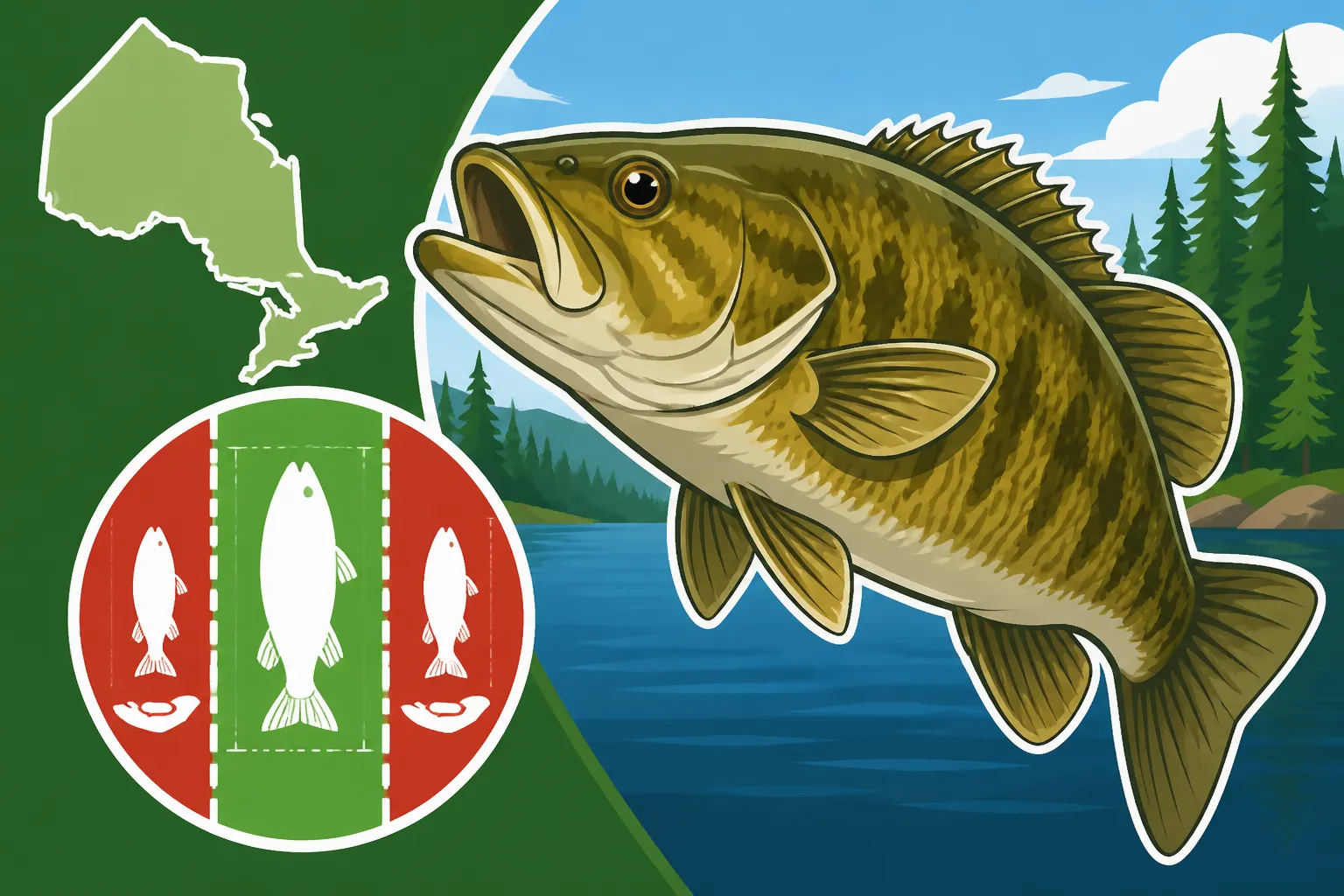
Ontario Smallmouth Bass Slot Limits
It can be incredibly frustrating to head out to your favorite fishing spot, reel in a beautiful smallmouth bass, and then stand there, scratching your head, trying to remember if it's a keeper or if it needs to go back in the water. Ontario's fishing regulations, especially when it comes to slot limits, can feel like a complex puzzle. This guide aims to clear up the confusion surrounding Ontario's smallmouth bass slot limits, helping you understand the rules, why they exist, and how to stay compliant so you can enjoy your time on the water without worry.
Understanding the Philosophy Behind Slot Limits
Let's be honest, few things are as satisfying as landing a feisty smallmouth bass. But beyond the thrill of the catch, there's a delicate balance at play in our lakes and rivers. Slot limits aren't just arbitrary rules designed to make your life harder; they're a carefully considered fisheries management tool. The core idea is to protect specific size ranges of fish, often the medium-sized, reproductively active individuals, to ensure a healthy and self-sustaining population for years to come.
The Rationale for Size-Based Regulations
Imagine a lake where everyone keeps the biggest fish they catch. Over time, the gene pool for large, fast-growing fish would dwindle, potentially leading to smaller average sizes and fewer trophy fish. Conversely, if only the smallest fish are kept, the population might become overcrowded with stunted individuals, impacting the overall health of the ecosystem. Slot limits try to find that sweet spot. By protecting the 'middle-of-the-road' fish, they allow those fish to grow, reproduce, and pass on their strong genes. This helps maintain a robust age structure and can even increase the chances of you catching those truly enormous bass we all dream about. It's a long-term investment in our fisheries, ensuring that future generations can experience the same incredible fishing opportunities we do today.
How Slot Limits Differ from Bag Limits and Size Restrictions
When you're flipping through the Reading the Ontario Fishing Regulations Summary, you'll encounter a few different types of limits. It’s easy to get them mixed up, but each serves a distinct purpose. A bag limit, often called a daily limit, simply tells you the maximum number of fish of a particular species you can keep in one day. For example, you might have a bag limit of six smallmouth bass. A size restriction is straightforward: it dictates a minimum or maximum length for fish you can keep. "Minimum 12 inches" means anything shorter must go back. "Maximum 18 inches" means anything longer must be released.
A slot limit, however, is a bit more nuanced. It typically specifies a size range, or "slot," within which you can keep fish. Any fish smaller than the minimum size for the slot, or larger than the maximum size for the slot, must be immediately released. For instance, a slot limit might be "no smallmouth bass between 12 and 16 inches may be kept." This means you could keep bass under 12 inches or over 16 inches, but not those in the middle. Alternatively, and more commonly for smallmouth bass, it might be "all smallmouth bass between 12 and 16 inches must be released," meaning you can keep fish under 12 inches and over 16 inches (up to your bag limit). The most common slot limit you'll see for smallmouth bass in Ontario is actually the opposite: allowing you to keep fish within a certain size range, while requiring the release of fish outside that range. For example, "Not more than 2 smallmouth bass, no fish greater than 14 inches (35 cm)." This allows you to keep bass under 14 inches but requires the release of any larger fish. It really depends on the specific goals for that particular fishery. This difference is crucial, and misunderstanding it can lead to penalties.
The Role of Ontario Fisheries Management Zones
Ontario is a vast province, and its lakes and rivers are incredibly diverse. What works for managing fish populations in the warmer, shallower lakes of Southern Ontario might not be appropriate for the deep, cold waters of the Canadian Shield further north. That's why the province is divided into 20 distinct Ontario Fisheries Management Zones, Explained, or FMZs. Each FMZ has its own set of regulations tailored to the specific ecological conditions and fish populations within that zone.
These zones are not just lines on a map; they represent carefully studied regions where biologists assess fish stocks, habitat health, and angler pressure. The smallmouth bass slot limits you encounter will almost certainly be zone-specific. What's legal on Lake Simcoe in FMZ 16 might be completely different from regulations on Lake of the Woods in FMZ 5. This regional approach allows for more effective conservation and ensures that management strategies are as precise as possible, rather than a blanket rule that could harm some fisheries while doing little for others. Always know which FMZ you're fishing in before you even cast a line!
How Ontario's Smallmouth Bass Slot Limits Work in Practice
Alright, let's get into the nitty-gritty of how these slot limits actually function on the water. This is where it can get a little tricky, as the rules aren't always uniform across the province. The most common type of slot limit for smallmouth bass in Ontario is a "protected slot," meaning you must release fish that fall within a specified length range. However, some zones might have a "reverse slot," where you can only keep fish within a specific range. It's vital to know the difference for your chosen fishing location.
General Regulations and Exceptions
While it's impossible to list every single smallmouth bass slot limit for every water body here (that's what the official regulations summary is for!), we can talk about the general framework. Most smallmouth bass regulations in Ontario, aside from the general provincial bag limit, will either have a minimum size limit or a protected slot limit. For instance, in many FMZs, anglers with a Sport Fishing License might be allowed to keep a certain number of bass, but no fish between, say, 12 and 16 inches (30-40 cm) may be kept. This means any bass you catch that measures within that 12-16 inch range must be immediately released. You could, however, keep a couple of bass under 12 inches or over 16 inches, provided you don't exceed your daily bag limit.
It's also important to remember the distinction between a Sport Fishing License and a Conservation Fishing License. A Ontario Sport vs Conservation Fishing License dictates different bag limits, and sometimes even different slot limits or size restrictions. Conservation licenses typically have lower bag limits, offering an even more cautious approach to fish harvesting. Beyond the general FMZ rules, some specific lakes or rivers, known as "Special Regulation Waters," might have unique smallmouth bass limits that override the general zone regulations. These exceptions are usually highlighted in the regulations summary and are often in place to protect particularly vulnerable or valuable fish populations.
Interpreting the Fishing Regulations Summary
This is perhaps the most crucial skill for any angler in Ontario. The official "Ontario Fishing Regulations Summary" is your bible on the water. You can find it online through the provincial government website, pick up a physical copy at many bait shops, or even download it as a PDF for your phone or tablet. It's designed to be navigated by Fishing Management Zone.
When you open the summary, first locate the correct FMZ for where you'll be fishing. Then, scroll down or flip to the section specifically for smallmouth bass. You’ll see a table or text detailing the season dates (e.g., Ontario Bass Opener Dates by Zone), the general bag limits for Sport and Conservation licenses, and any specific size or slot limits. For smallmouth bass, you might see entries like: "FMZ XX: Smallmouth Bass – Open Season: Third Saturday in June to December 15. Sport fishing limit: 4; Conservation fishing limit: 2. Not more than 1 smallmouth bass greater than 14 inches (35 cm) may be kept." This example indicates a reverse slot where you can keep fish up to 14 inches, but only one of them. Another common one: "No person shall possess a Smallmouth Bass that is between 30 cm (11.8 in.) and 40 cm (15.7 in.) in length." This is your protected slot. Take your time, read carefully, and if there's any doubt, err on the side of caution and release the fish. It's always better to be safe than sorry.
Catch and Release Requirements for Oversized or Undersized Fish
When a smallmouth bass falls outside the legal harvest slot, or if you've already reached your bag limit, it's not enough to just unhook it and toss it back. Proper catch and release techniques are paramount to the fish's survival. These regulations are designed to protect the fish, and that protection extends to how you handle them.
If a fish is too large or too small, or within a protected slot, it needs to be released immediately back into the water where it was caught, with as little harm as possible. This means:
- Minimize handling: Don't play the fish to exhaustion. Bring it in quickly.
- Wet hands: Always wet your hands before touching the fish to protect its slime coat, which is vital for its immune system.
- Support the fish: Never hold a bass by just its jaw if it's a larger fish, as this can dislocate its jaw or damage its spine. Support its belly.
- Remove hooks carefully: Use needle-nose pliers or a dehooking tool. If the hook is deeply swallowed, cut the line as close to the hook as possible. Don't try to rip it out.
- Revive if necessary: If the fish seems sluggish, hold it gently in the water, facing into the current (if any), until it swims away under its own power.
Using a proper landing net, especially one with rubberized mesh, can also help minimize stress on the fish. You can find excellent, fish-friendly nets on Amazon, designed to protect their delicate fins and slime coat. Remember, the goal of a slot limit isn't just to dictate what you can keep, but to ensure the survival of those fish that must be released.
The Impact of Slot Limits on Smallmouth Bass Fisheries
Slot limits are not just about lines on a ruler; they're about shaping the future of our smallmouth bass fisheries. The science behind them aims to foster healthier, more robust populations, ultimately leading to better fishing experiences for everyone. However, like any management tool, they come with both significant benefits and some challenges that anglers often discuss.
Promoting Larger Fish and Healthy Populations
The primary goal of many smallmouth bass slot limits in Ontario is to protect the breeding stock. By requiring the release of medium-sized bass, often those in their prime reproductive years, fisheries managers ensure that these valuable fish have the opportunity to spawn multiple times. This leads to more eggs, more fry, and a stronger influx of young fish into the system. As these protected fish grow past the upper end of the slot, they become larger, more numerous, and potentially contribute to the "trophy" class that many anglers seek.
This strategy can result in a shift in the population's age structure, leading to a greater abundance of both smaller, younger fish and larger, older fish. Anglers might find themselves catching more small bass and more truly big bass, with fewer fish in that mid-range. This also helps genetic diversity, as the genes for robust growth and successful reproduction are passed on more effectively. Essentially, slot limits are a long-term investment that pays dividends in terms of overall fish health and the likelihood of encountering larger, more challenging fish.
Challenges and Criticisms from Anglers
While the conservation benefits are clear, slot limits aren't always universally loved by anglers. One common frustration is the perception that they make fishing more complicated. Many anglers simply want to know if they can keep a fish or not without having to remember specific size ranges that vary by lake or zone. The need for precise measurement and careful handling for released fish adds extra steps, which some find inconvenient.
Another criticism arises when a slot limit effectively restricts harvest, especially for anglers who enjoy keeping a few fish for a meal. If all the bass an angler catches fall within the protected slot, they might go home empty-handed, even if they've had a great day of catching. This can be particularly frustrating on highly productive lakes where many fish might hover around the slot limit size. Anglers may also argue that in certain lakes, natural predation or habitat limitations already keep bass populations in check, and strict slot limits might be overkill. It’s a constant balancing act between conservation goals and angler satisfaction, and open dialogue between anglers and fisheries managers is vital.
Case Studies: Success Stories and Lessons Learned
Ontario has seen numerous instances where the implementation of smallmouth bass slot limits has demonstrably improved fisheries. For example, on some lakes in Eastern Ontario, after slot limits were introduced, anglers reported an increase in the average size of smallmouth bass caught, and the frequency of catching trophy-sized fish went up. These success stories often take time – it's not an overnight change – but over several years, the benefits become clear. The protected "breeder" fish grow larger, producing more offspring, and the overall health of the population improves.
However, there have also been situations where slot limits didn't have the desired effect, or required adjustments. In some cases, if the slot was too wide or too narrow, it might not have adequately protected the target size class, or it might have led to an overabundance of very small or very large fish. These situations provide valuable lessons for fisheries managers, leading to adaptive management strategies where regulations are reviewed and tweaked based on ongoing research and angler feedback. The dynamic nature of fish populations means that management is never a "set it and forget it" process; it requires continuous monitoring and a willingness to adjust based on real-world results. These lessons underscore why it's so important for anglers to understand and comply with the regulations, as their actions directly contribute to the success (or failure) of these management efforts.
Navigating the Regulations: Practical Tips for Anglers
Understanding the why and what of slot limits is one thing, but knowing how to apply them practically on the water is where the rubber meets the road. Being prepared with the right tools and techniques will not only keep you compliant but also ensure the health of the fish you release.
Essential Gear for Measuring and Handling Fish
To accurately comply with smallmouth bass slot limits, a reliable measuring device is non-negotiable. Forget the old "thumb to elbow" method; precision is key. A foldable, rigid measuring board is ideal, as it allows you to lay the fish flat, ensuring an accurate nose-to-tail measurement. Many fishing supply companies like Rapala and Berkley offer excellent measuring boards, some of which are even boat-mountable. You can easily find a variety of options on Amazon that are designed for different fish sizes and boat setups.
Beyond measurement, proper fish handling gear is crucial for catch and release. As mentioned earlier, a quality landing net with rubberized, knotless mesh is a game-changer. It supports the fish's entire body, protecting its fins, scales, and crucial slime coat much better than traditional knotted nylon nets. Long-nosed pliers or a dehooking tool are also vital for quickly and safely removing hooks, especially if they're deeply set. Finally, keep a pair of fish-handling gloves handy – not for grip, but to protect your hands from spines and to help minimize the removal of the fish's protective slime.
Understanding Different Measurement Methods
Measuring a fish might seem simple, but there are specific rules in Ontario to ensure consistency. When the regulations specify a length, they almost always mean the total length of the fish. This is measured from the tip of the fish's nose (or snout, with the mouth closed) to the very end of the tail fin when it's squeezed together, also known as the "pinched tail" measurement.
Here’s how to do it correctly:
- Place the fish gently on the measuring board or against a ruler. Make sure the fish is lying flat and straight.
- Ensure the nose is against the zero mark or the stopper on the board. Close the fish's mouth if it's open.
- Gently pinch the tail lobes together to get the maximum possible length.
- Read the measurement at the farthest point of the tail.
Avoid measuring along the curve of the fish's body; it must be a straight-line measurement. If a fish is flopping around, it's safer to leave it in the net, in the water, and try to measure it there, or quickly lay it on a wet surface. Remember, if you’re unsure, always assume the fish is within the protected slot or too small/large, and release it. When you're measuring for Ontario Bag and Possession Limits by Species, accuracy helps you avoid legal trouble.
Best Practices for Catch and Release with Slot Limits
Since many of your smallmouth bass catches will likely fall within a protected slot or exceed your limit, mastering catch and release is fundamental. It's not just about compliance; it's about being a responsible angler and ensuring those fish survive to fight another day.
- Speed is your friend: The less time a fish spends out of water, the better its chances of survival. Have your camera ready if you want a quick photo, but prioritize getting the fish back into the water.
- Use appropriate tackle: When targeting smallmouth bass in waters with slot limits, consider using tackle that allows for quick retrieves and minimizes harm. Barbless hooks, or hooks with barbs crimped down, make removal much easier and quicker.
- Avoid holding by the gills or eyes: These are extremely sensitive and vital organs. Even a brief, improper hold can cause irreversible damage.
- Keep it cool: In warmer water conditions, bass are more stressed. Handle them even more carefully and quickly. If the water is excessively warm, consider shortening your fishing session to minimize stress on the fish.
- Observe before release: Once you release the fish, watch it for a moment. Does it swim away strongly? If it's disoriented, gently hold it upright, facing it into the current if possible, and move it back and forth slightly to push water over its gills until it regains its strength and swims off on its own. This small effort makes a huge difference in fish survival rates.
Common Mistakes and How to Avoid Them
Even experienced anglers can sometimes stumble when it comes to fishing regulations, especially with the nuances of slot limits. Making a mistake isn't just about potentially getting a fine; it can negatively impact the very fish populations we cherish. Understanding common pitfalls can help you avoid them.
Misinterpreting Zone-Specific Rules
One of the most frequent mistakes is assuming that the smallmouth bass regulations you know for one lake apply everywhere. Ontario's vast network of lakes and rivers falls under different Ontario Fisheries Management Zones, Explained, each with its own unique set of rules. For example, the slot limit for smallmouth bass on Lake Huron (part of FMZ 10) might be entirely different from the one on a small inland lake in Algonquin Park (FMZ 15).
To avoid this, always, always consult the current Reading the Ontario Fishing Regulations Summary for the specific FMZ and even the specific waterbody you plan to fish before you head out. Don't rely on old memories or hearsay from a buddy. Regulations can change year to year, so make it a habit to check annually. Many anglers print out the relevant pages for their chosen zone and keep them in their tackle box or boat, or save the digital version to their phone. Remember, ignorance of the law is not an excuse.
Improper Fish Measurement Techniques
We talked about proper measurement, but it's such a critical point it bears repeating as a common mistake. Anglers often make errors that could inadvertently lead to a violation. These include:
- Measuring to the fork of the tail: Regulations typically specify total length, which means the pinched tail measurement. The fork of the tail can be significantly shorter, making an illegal fish seem legal.
- Not closing the mouth: An open mouth can add crucial centimeters to the measurement, potentially pushing a fish into a protected slot or over a maximum size limit.
- Measuring on an uneven surface: A fish flopping on the bottom of a boat or on a bumpy cooler can lead to inaccurate readings. Always use a flat, wet surface or a dedicated measuring board.
- Rushing the measurement: In the excitement of the moment, or to minimize the fish's time out of water, anglers might rush, leading to an imprecise measurement. Take a quick, but careful, measurement.
A dedicated measuring board, widely available, including from online retailers like Amazon, is a small investment that pays huge dividends in accuracy and compliance. Practice measuring fish, even those you release, to get comfortable with the technique.
Consequences of Non-Compliance
The penalties for not adhering to Ontario's fishing regulations, including smallmouth bass slot limits, can be significant. It's not just a slap on the wrist; fisheries violations are serious and can result in:
- Significant Fines: You could be facing hundreds or even thousands of dollars in fines, depending on the severity of the offense and the number of fish involved. The Ontario Fishing License Guide for 2026 details general rules, but penalties for specific violations are often higher.
- Seizure of Equipment: Your fishing gear, boat, and even your vehicle could be seized by enforcement officers.
- Loss of Fishing Privileges: You might lose your right to fish in Ontario for a specified period, or even permanently in extreme cases.
- Criminal Charges: For very serious or repeat offenses, you could even face criminal charges.
Beyond the legal ramifications, there's the ethical consideration. Each fish illegally kept (or improperly released) represents a loss to the overall fishery. It undermines the conservation efforts put in place to ensure healthy populations for everyone. Responsible angling means understanding and respecting these rules, not just to avoid penalties, but to contribute to the sustainability of our precious natural resources.
Future of Smallmouth Bass Management in Ontario
Fisheries management is a dynamic science, always evolving as new data emerges and environmental conditions change. Smallmouth bass populations are incredibly resilient but also susceptible to pressures from habitat loss, climate change, and fishing pressure. The future of smallmouth bass slot limits in Ontario will continue to be shaped by ongoing research, environmental shifts, and feedback from the angling community.
Ongoing Research and Monitoring Efforts
The Ontario Ministry of Natural Resources and Forestry (MNRF) is constantly conducting research and monitoring efforts across the province. This includes population surveys, creel surveys (talking to anglers at boat launches), habitat assessments, and genetic studies. For smallmouth bass, scientists are often looking at:
- Growth rates: Are fish growing faster or slower than expected?
- Reproductive success: Are protected size classes spawning effectively?
- Age structure: Is there a healthy mix of young, mature, and older fish?
- Angler harvest rates: How many fish are actually being kept and released?
- Impact of environmental factors: How do things like water temperature, invasive species, and habitat changes affect bass?
This data is crucial for determining if current slot limits are effective or if adjustments are needed. For example, if monitoring reveals that a particular slot limit is leading to an overabundance of small, stunted fish, the regulation might be changed to allow for more harvest of smaller fish. Conversely, if trophy fish numbers are declining, the slot might be widened or increased to protect more larger individuals. The goal is always to find that optimal balance.
Angler Engagement and Feedback
You, the angler, play a vital role in the ongoing management of smallmouth bass fisheries. Your observations on the water, your catches, and your adherence to regulations provide invaluable data. The MNRF often solicits feedback from the public regarding proposed regulation changes. This could be through online surveys, public meetings, or direct communication with regional fisheries offices.
Participating in these discussions is your opportunity to have a say in how our fisheries are managed. If you observe trends, whether it's an abundance of fish in a certain size range or a lack thereof, reporting these observations to the MNRF can contribute to a more comprehensive understanding of the fishery. Organizations like the Ontario Federation of Anglers and Hunters (OFAH) also act as important liaisons between the angling community and the government, advocating for sound fisheries management. Sharing your insights, as long as they are constructive and backed by observation, is part of being a responsible steward of our natural resources.
Potential Adjustments and Adaptive Management
Fisheries management in Ontario operates on an "adaptive management" framework. This means that regulations, including smallmouth bass slot limits, are not set in stone forever. They are reviewed periodically and can be adjusted based on new scientific information, changing environmental conditions, or evolving social values.
For instance, as climate change influences water temperatures, the smallmouth bass opener dates might shift in some zones, or slot limits might be fine-tuned to protect fish during periods of increased stress. Similarly, new research on fish behavior or genetics could lead to different approaches. The introduction or spread of invasive species could also necessitate changes to protect native bass populations. This adaptive approach ensures that management remains flexible and responsive to the real-world challenges facing our smallmouth bass populations, always aiming for the long-term health and sustainability of these incredible fisheries for all to enjoy.
Disclaimer
The information provided in this guide is for general informational purposes only and is not a substitute for the official Ontario Fishing Regulations Summary. Regulations can change, and it is the angler's responsibility to consult the most current official summary for the specific Fishing Management Zone and water body they intend to fish. Always adhere to the most up-to-date provincial regulations.