Best inline spinner for stream trout
Navigating the myriad of fishing lures out there can be a real headache, especially when you’re specifically trying to entice those notoriously wary stream trout in Ontario. It's frustrating to cast all day with no luck, wondering if you’re using the wrong gear for the conditions. This guide is going to strip away the confusion and help you pinpoint the best inline spinners that consistently trick stream trout, giving you a clear path to more successful and enjoyable days on the water.
Understanding Stream Trout and Their Unique World
Stream trout are a special breed, quite different from their lake-dwelling cousins. They live in a dynamic environment, constantly facing currents, fluctuating water levels, and a diverse menu of food. To consistently catch them, we need to understand their world, their habits, and what makes them tick.
What Makes Stream Trout Unique?
Unlike the often larger, more open expanses of lakes, streams provide a more confined, structured habitat. This means stream trout—whether it's brook trout, brown trout, or even wild rainbows—develop different instincts and feeding patterns. They are masters of using current to their advantage, conserving energy by holding in slower water behind rocks, logs, or undercut banks, waiting for food to be delivered to them. This ambush predation is key to understanding how to present a lure effectively. They're also incredibly sensitive to vibrations and visual cues in the water, which means the right spinner can be irresistible, while the wrong one might spook them before they even consider striking.
Their diet primarily consists of aquatic insects, terrestrial insects that fall into the water, and small baitfish or fry. This varied menu informs our choice of spinner. A spinner that mimics a darting minnow can be deadly, but sometimes, a more subtle, insect-like presentation is what they're looking for, especially in clear, low-water conditions where they have more time to inspect a lure. Understanding these nuances is the first step toward becoming a more effective stream angler.
The Importance of Matching the Forage (or Conditions)
You've probably heard the phrase "matching the hatch" in fly fishing circles, and a similar principle applies to spin fishing for trout. While you're not trying to perfectly imitate a specific mayfly, you are trying to present something that looks natural or, at the very least, enticing and non-threatening. This means considering the prevalent food sources in the stream. Are there lots of minnows? Then a silver or gold spinner mimicking a baitfish might be perfect. Is the water a bit murky after a rain? A brighter, more vibrant spinner that offers a strong visual presence could be the ticket.
The conditions of the stream play a huge role too. On bright, sunny days with crystal-clear water, trout can be incredibly wary. A smaller, more natural-colored spinner with less flash might be necessary. Conversely, on overcast days or in slightly stained water, a spinner with more flash and vibration can help the trout locate your lure. The size of the stream also dictates your choice. A tiny brook trout stream calls for tiny, ultralight spinners, while a larger river might allow for slightly bigger presentations. It's about thinking like a trout: what would they see, hear, and feel in their environment today? This adaptability is crucial for success. For more on how seasons affect your approach, check out Ontario Fishing Seasons by Zone and Month.
Key Characteristics of a Great Inline Spinner for Stream Trout
Not all inline spinners are created equal, especially when you're targeting wily stream trout. There are specific design elements that make some spinners far more effective than others in moving water and for these particular fish.
Size and Weight Considerations
When it comes to stream trout, generally speaking, smaller is almost always better. You're rarely going to be throwing massive baits for brookies or browns in a typical Ontario stream. Think tiny, often in the 1/16 oz to 1/8 oz range, sometimes even smaller if you can find them. A smaller profile is less intimidating to these often-wary fish and more closely mimics the smaller baitfish and large insects they feed on. An oversized lure might just send them scurrying for cover.
However, "smaller" doesn't mean "weightless." The weight of your spinner is critical for casting accuracy and controlling its depth in the current. Too light, and it won't cast well against the wind or reach the desired depth in a swift current. Too heavy, and it'll sink too fast, snagging the bottom or simply passing over the trout too quickly. The goal is a spinner that's heavy enough to cast precisely to that pocket behind a boulder but light enough to drift naturally through a current seam without dragging. It’s a delicate balance that often requires experimentation. For an ultralight setup, which is often ideal for these smaller spinners, you might want to consider Best Fishing Rods for Ontario Lakes which often includes good ultralight options.
Blade Shape and Action
The blade is the heart of any inline spinner, responsible for its flash, vibration, and overall action. Different blade shapes create distinct effects, and choosing the right one can make a significant difference.
- Colorado Blades: These are wide and round, offering maximum vibration and lift at slower retrieve speeds. The strong thump they produce is excellent for stained or murky water where visibility is low, or for attracting trout from a distance in deeper pools. Their wider profile also means they spin slower, giving the trout more time to react.
- Indiana Blades: A hybrid between Colorado and Willowleaf, Indiana blades offer a good balance of flash and vibration. They're a versatile choice, spinning more consistently than Colorado blades but still generating a fair amount of thump. They work well in a variety of conditions, making them a solid "all-around" option.
- Willowleaf Blades: Long and narrow, willowleaf blades produce less vibration but offer maximum flash, spinning quickly and tightly. They are fantastic for clear water where fish are more visually oriented, or when you need to fish a faster current without too much drag. Their slim profile also allows for a quicker descent, which can be beneficial in deeper runs.
Consider the current speed and water clarity when picking your blade. Faster currents might benefit from Willowleaf or Indiana blades to prevent excessive lift, while slower, deeper pools might call for the strong pulse of a Colorado.
Color Patterns and Finishes
Color is another critical factor that can be highly subjective, but there are some general guidelines for stream trout.
- Natural Colors: In clear water, especially on bright days, natural metallic finishes like silver, gold, or copper are often killer. They mimic baitfish scales and reflect ambient light, appearing very realistic. Duller finishes like matte black, brown, or olive can also be effective when trout are particularly spooky or keying in on darker insects.
- Bright and Flashy: In stained or murky water, or on overcast days, brighter colors like chartreuse, orange, or hot pink can provide the necessary contrast to grab a trout's attention. Combinations with fluorescent paint can really stand out. Even in clear water, sometimes a flash of unexpected color can trigger an aggressive reaction strike.
- UV and Glow: Some modern spinners incorporate UV-active paints or glow-in-the-dark elements. While perhaps more common in low-light lake fishing or ice fishing, a subtle UV component can certainly enhance visibility in deeper pools or during dawn/dusk periods in streams. You can find a good variety of these at places like Bass Pro Shops.
It's always a good idea to have a range of colors in your tackle box. Start with natural metallics in clear water, and don't be afraid to experiment with brighter colors if the fish aren't responding.
Hook Design and Dressing
The business end of the spinner is just as important as the blade. Most inline spinners come with treble hooks, but many anglers targeting stream trout prefer to swap them out for single, barbless hooks.
- Single vs. Treble: Single hooks penetrate more easily and are less damaging to fish, which is a big plus for catch-and-release efforts. Trebles offer more hook-up points but can be a nightmare to remove from a feisty trout's mouth, especially if it swallows the lure. For many conservation-minded anglers, single barbless hooks are the go-to.
- Barbless Options: Barbless hooks minimize tissue damage and make unhooking a fish quick and easy, greatly increasing its survival chances. You can buy pre-made barbless hooks or simply crimp down the barb on a standard hook. This is particularly important for species like brook trout, which are often fragile. Learn more about local regulations and ethical practices in Ontario Fishing Regulations Explained.
- Hook Dressing: Adding a bit of dressing to the hook can make a spinner even more enticing. Bucktail, hackle feathers, or small plastic grubs (like a Gulp! Alive minnow tail) can add extra bulk, lifelike movement, and scent to your presentation. A little splash of red or chartreuse can sometimes be the final trigger for a hesitant trout.
Top Inline Spinner Brands and Models for Ontario Streams
When it comes to inline spinners, some brands have stood the test of time, earning their reputation for quality and effectiveness. Having a few trusted options in your tackle box is always a smart move.
Classic and Reliable Choices
These are the workhorses, the spinners that have caught countless trout for generations, and they continue to be highly effective today.
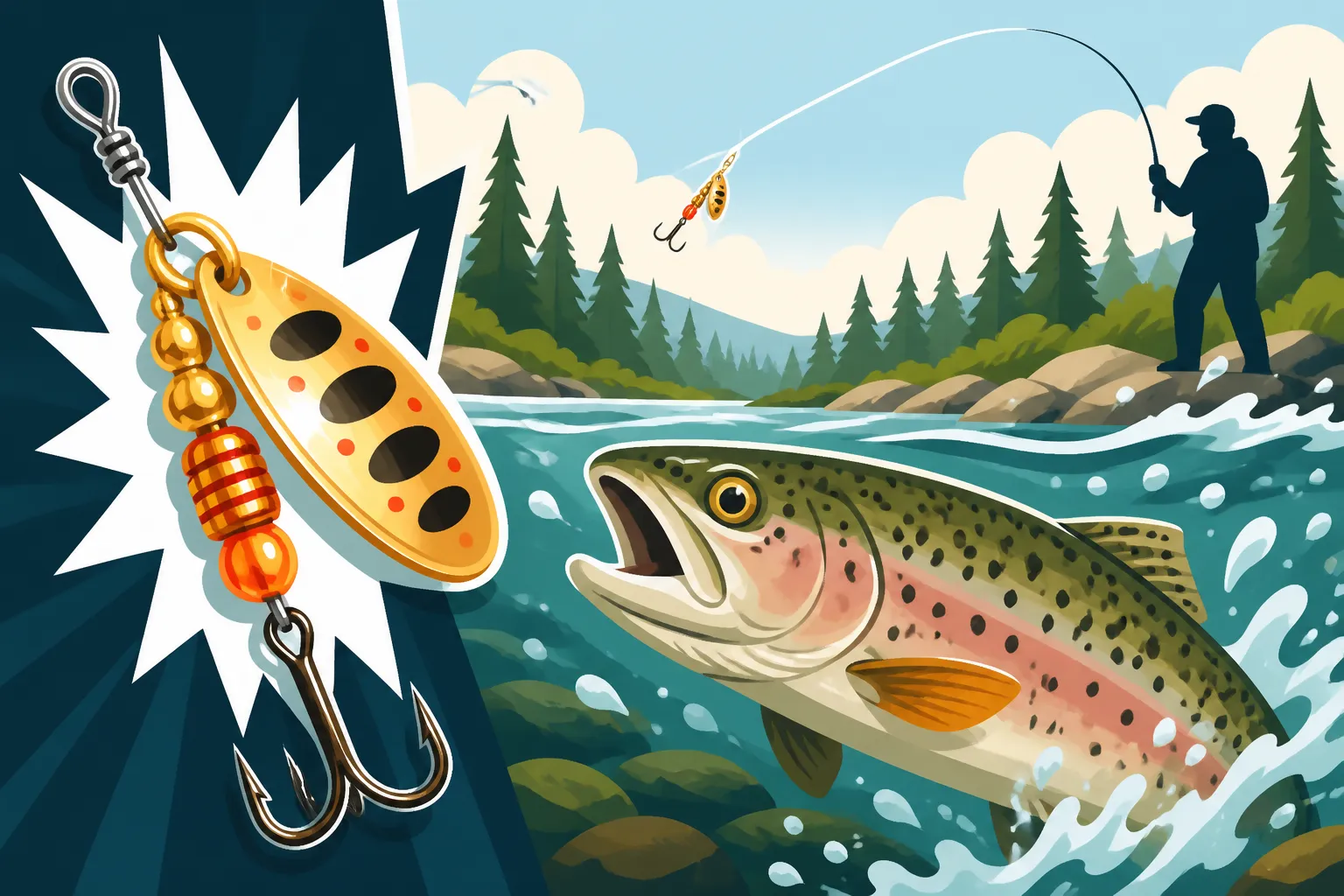
- Mepps Aglia: The Mepps Aglia is, without a doubt, one of the most iconic inline spinners ever created. Its simple, classic design features a French-style oval blade that starts spinning immediately and produces a wide, enticing wobble. The Aglia comes in a huge range of sizes and colors, from tiny 00s perfect for small brookies to larger sizes for bigger fish in wider rivers. Silver, gold, and black fury (black blade with fluorescent dots) are perennial favorites. The dressed versions with bucktail or hackle add even more appeal. You can rarely go wrong with a classic Mepps Aglia for any Ontario trout stream.
- Panther Martin: Instantly recognizable by its unique convex/concave blade, the Panther Martin spinner offers a distinct, high-frequency vibration and flash. The blade spins directly on the shaft, eliminating the need for a swivel and allowing for a super-fast spin, even at slow retrieve speeds. These are incredibly effective in clear water where fish are visually hunting. Gold, silver, and yellow with red dots are consistently popular colors. Their heavy brass bodies also make for excellent casting distance and help them sink quickly to fish deeper runs.
- Blue Fox Vibrax: The Blue Fox Vibrax is another top-tier choice, known for its patented two-part body that creates a low-frequency sonic vibration. This "rattling" action is a huge draw for trout, especially in stained water or when they need an extra nudge to strike. The bell-shaped blade starts spinning easily and the solid brass core provides good casting weight. Silver, gold, copper, and fluorescent colors are all highly effective. Their durability also makes them a favorite among anglers who fish rocky streams.
You can often find a fantastic selection of these tried-and-true spinners at your local outdoor retailer, like Bass Pro Shops, where you can compare sizes and colours in person. If you prefer the convenience of online shopping, Amazon also carries a wide array of these reputable brands, often with various size and color options not always available locally.
Specialized and Finesse Spinners
While the classics are great, sometimes conditions call for something a little different, a more specialized or finesse approach.
- Rooster Tail: The Worden's Rooster Tail is a hybrid that combines a traditional spinner blade with a vibrant marabou hackle tail. The pulsating action of the marabou in the water, combined with the flash of the blade, can be absolutely deadly, especially for trout that are wary of plain metal. The marabou mimics flowing insect larvae or baitfish fins, providing a lifelike presentation. They come in many sizes and colors, with black, white, and yellow being strong performers for stream trout.
- Smaller, Undressed Spinners: Sometimes, less is more. Very small, simple brass or nickel spinners without any dressing can be highly effective in extremely clear, low-pressure streams where trout are easily spooked. Brands like C.P. Swing or even generic hardware store spinners can surprise you with their effectiveness in these situations. The lack of bulk and subtle flash can be exactly what a picky trout wants. These are great for when you need a truly subtle presentation in challenging conditions.
Having a mix of these classic and specialized options ensures you're prepared for whatever the stream throws your way. Remember, the trout's preference can change day by day, or even hour by hour!
Techniques for Fishing Inline Spinners in Ontario Streams
Knowing which spinner to tie on is only half the battle; knowing how to present it effectively is the other, equally important piece of the puzzle. Fishing inline spinners in streams requires a different approach than in lakes, primarily because of the current.
Reading the Water and Targeting Lies
One of the most crucial skills for stream trout fishing is learning to "read the water." This means identifying the prime spots where trout will hold, conserving energy, and waiting for food.
- Current Seams: Look for areas where fast water meets slow water. Trout will often sit in the slower current, just on the edge, darting into the faster flow to grab a morsel. Casting your spinner to land just upstream of these seams and letting it drift into the slower water can be incredibly productive.
- Eddies and Backwater: These are pockets of calm water where the current swirls or reverses. Trout love these areas because they offer a break from the main current and often accumulate food. A well-placed cast into an eddy, allowing your spinner to tumble naturally, can often elicit a strike.
- Undercut Banks and Overhanging Cover: These provide excellent shade, protection from predators, and a natural ambush point. Fish your spinner tight to these areas, letting it tick along the bank.
- Rocks, Logs, and Boulders: Any structure that breaks the current creates a natural holding spot for trout. Cast upstream of the obstruction and let your spinner drift down past it, allowing it to swing into the calmer water behind the structure.
- Riffles and Pools: Riffles (shallow, fast-moving water) connect deeper pools. While trout usually aren't holding directly in the fastest water, they will feed at the edges of riffles and often reside in the deeper pools below them. Fish the head and tail of pools thoroughly. For specific techniques in various water types, consider reading Wading Techniques for Ontario Trout Streams.
Presentation and Retrieval Strategies
Once you've identified a prime lie, your presentation is key. Aim for accuracy, trying to land your spinner just upstream of where you expect a trout to be.
- Upstream Casts: This is often the most effective method. Cast your spinner slightly upstream and across the current, then retrieve it just fast enough to get the blade spinning, allowing it to drift naturally downstream faster than the current. This mimics a wounded baitfish or insect washing downstream.
- Downstream Casts: Less common, but can be effective in certain situations, especially when trying to reach an undercut bank you can't approach from upstream. Cast downstream and across, then reel just fast enough to make the blade spin, allowing the current to push the spinner into the target area.
- Across Current Casts: For wider sections of a stream, casting directly across or slightly upstream and letting the spinner swing downstream in an arc can cover a lot of water and entice fish holding in various current seams.
- Vary Your Retrieve: Don't just reel steadily. Add small twitches, pauses, or changes in speed. Sometimes a subtle surge or hesitation is all it takes to trigger a strike from a cautious trout. Let the current do some of the work, but maintain enough tension to feel the blade spinning and detect strikes.
- Maintain Contact: Always try to feel your spinner working. If you can't feel the blade spinning, you're either reeling too slow, or there's something interfering with the action. Good line management is key to feeling those subtle takes.
Essential Gear Pairings
To get the most out of your inline spinners, especially the smaller ones, you need to pair them with appropriate tackle.
- Ultralight Rods: A light or ultralight spinning rod, typically 5 to 6.5 feet in length, with a fast or moderate-fast action, is ideal. This type of rod will allow you to cast those tiny spinners a good distance, feel subtle bites, and absorb the shock of a hard-fighting trout on light line.
- Small Spinning Reels: Match your rod with a small spinning reel, something in the 1000 to 2000 size range. This keeps the setup balanced and lightweight, perfect for hours of casting.
- Light Line: Spool your reel with 2-6 pound test monofilament or fluorocarbon line. Monofilament offers a bit of stretch and floats, which can be good for topwater presentations. Fluorocarbon is nearly invisible underwater, has less stretch, and sinks, making it excellent for deeper presentations or wary fish. Some anglers even use light braided line with a fluorocarbon leader for maximum sensitivity and casting distance. Remember to check out Best Fishing Rods for Ontario Lakes for specific recommendations on ultralight combos.
Common Mistakes and Troubleshooting
Even with the best spinners and techniques, stream fishing for trout can present its own set of challenges. Knowing how to anticipate and address common issues can save you a lot of frustration.
Avoiding Line Twist
Inline spinners are notorious for causing line twist, which can lead to tangles, frustrating knots, and reduced casting distance. This happens because the entire spinner rotates around the line when retrieved.
- Quality Swivels are Your Friend: The easiest and most effective way to combat line twist is to use a high-quality barrel swivel or, even better, a ball-bearing swivel. Tie your main line to one end of the swivel and a short leader (12-24 inches) of monofilament or fluorocarbon to the other end, then tie your spinner to the leader. The swivel allows the spinner to rotate freely without twisting your main line.
- Check Your Line Regularly: Periodically check your line for kinks and twists. If it starts to look like a coiled telephone cord, it's time to cut off the affected section or let out a lot of line in open water and troll it behind a boat (if you have one) to let the twists unwind.
- Don't Over-Retrieve: If you're reeling too fast and the spinner is fluttering rather than spinning smoothly, it's more prone to twisting your line. Maintain a retrieve speed that keeps the blade just barely spinning.
Dealing with Snags
Streams are full of natural obstacles like rocks, logs, branches, and submerged vegetation – all prime snagging territory for a spinner. Losing lures is just part of the game, but you can minimize it.
- Fish Upstream: As mentioned, casting upstream and retrieving slightly faster than the current can help keep your spinner above snags. You have more control over its depth this way.
- "High Stick" It: When fishing around structure, hold your rod tip high to keep your line out of the water as much as possible, lifting your spinner over potential snags.
- Quick Reactions: When you feel your spinner tick a rock or brush, quickly lift your rod tip and accelerate your retrieve to pull it free. Sometimes a sharp slack-line pop can dislodge it.
- Consider Single Hooks: As discussed earlier, swapping to a single, barbless hook can reduce snags, as there's only one point to get caught, and it's often easier to free.
- Fish Light: Sometimes, using the lightest possible line you can get away with for the situation will actually save you lures. If you snag, a lighter line will break at the knot, letting you retain most of your line, rather than losing yards of it or even your whole setup.
When to Switch It Up
Stubborn trout are a reality. If you’ve been fishing your favorite inline spinner for a while with no success, don't be afraid to change tactics.
- Change Size or Color: If your current spinner isn't working, try a smaller or larger size. Switch from silver to gold, or from natural to a brighter chartreuse or orange. Sometimes a subtle shift is all it takes to trigger a strike.
- Vary Your Retrieve: Experiment with different speeds, pauses, and twitches. A faster retrieve might be necessary to get a reaction strike, or a slower one might entice a lazy trout.
- Try a Different Lure Type: If spinners aren't producing, consider switching to small crankbaits that mimic minnows, or even soft plastics on a jig head. For the dedicated fly angler, there's always the option to switch to Fly Fishing for Trout in Ontario and explore different fly patterns.
- Move On: If a spot isn't producing, sometimes the best strategy is simply to move to a new section of the stream. Trout are often concentrated in specific areas, and covering more water can lead to more fish.
| Blade Shape | Action & Vibration | Best Water Conditions | Retrieval Speed | Pros | Cons |
|---|---|---|---|---|---|
| Colorado | Slow, wide rotation; heavy vibration | Stained/Murky, Deep Pools, Slow Current | Slow | Max vibration, great for low visibility | Can create significant drag in fast current |
| Indiana | Medium rotation; good balance of flash and vibration | Versatile; varied conditions | Medium | Good all-rounder, consistent spin | Not specialized for extreme conditions |
| Willowleaf | Fast, tight rotation; maximum flash, less vibration | Clear Water, Fast Current, Shallow Riffles | Fast | Maximum flash, minimal drag, sinks quickly | Less vibration, less effective in murky water |
Catching stream trout on inline spinners in Ontario is a truly rewarding experience. It takes a blend of understanding the fish, choosing the right gear, and finessing your presentation. By considering the size and weight of your spinner, the action of its blade, the color patterns, and how you present it in the unique environment of a stream, you'll be well on your way to more bent rods and memorable days. Don't be afraid to experiment, pay attention to the details, and remember that sometimes the simplest adjustments can make all the difference. Get out there, explore those beautiful Ontario streams, and enjoy the chase!
Disclaimer
This article is for general informational purposes only and does not constitute professional advice. Laws, prices and regulations vary by location and change over time. Consult a qualified professional for guidance on your specific situation.