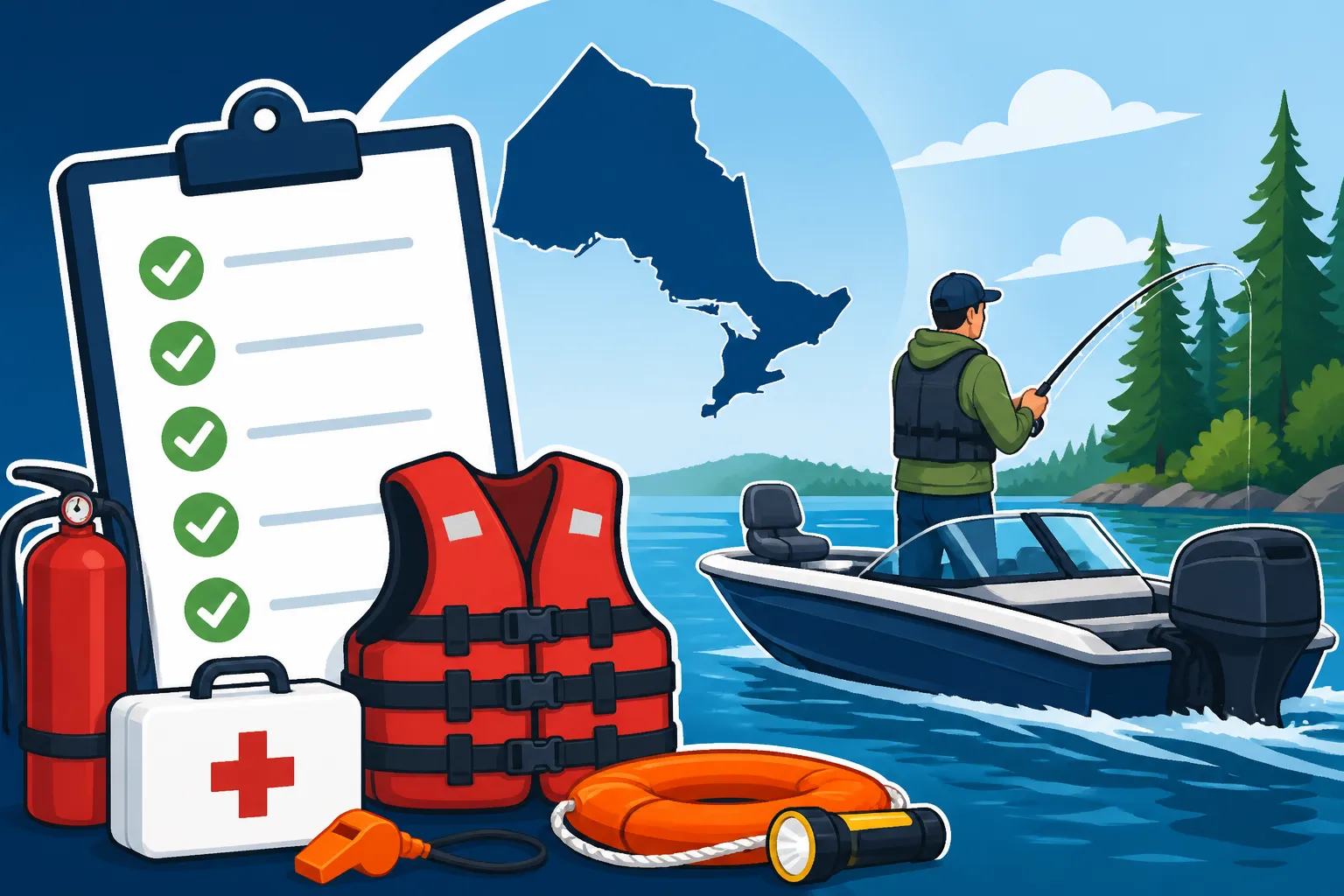
Ontario required boat safety equipment checklist
Heading out onto Ontario's beautiful waters, whether for a quiet day of fishing or a lively afternoon with family, should be a joyous and stress-free experience. But let's be real, the thought of ensuring you have all the right safety equipment can feel like navigating a legal minefield. It's easy to get overwhelmed by the seemingly endless list of regulations, leaving you wondering if you've missed something crucial. This guide is here to untangle that knot, providing a clear, comprehensive checklist of the mandatory boat safety equipment required for operating a vessel in Ontario, so you can focus on making memories on the water, not worrying about a dockside inspection.
Understanding the Essentials: What Every Ontario Boater Needs
No matter the size or type of your vessel, certain safety items are non-negotiable. These are the foundational pieces of equipment designed to keep you and your passengers safe in unexpected situations. It’s not just about avoiding a fine; it’s about preparedness and, ultimately, saving lives. The rules might seem a bit much at times, but they’re there for a reason.
Personal Flotation Devices PFDs and Lifejackets
This is probably the most critical item on any boat, and honestly, it’s one where people often cut corners. Transport Canada has very specific Life Jacket Requirements for Ontario Boaters, and ignoring them can have dire consequences. Every person on board your vessel, regardless of age, must have an appropriately sized, approved PFD or lifejacket readily available. "Readily available" means it's not stowed away in a locked compartment under a pile of gear; it should be within arm's reach.
For children, this is especially important. A PFD that fits an adult won't do a child any good, and vice versa. Always check the weight and chest size limits on the label. Approved PFDs will typically have a Canadian Coast Guard, Department of Transport, or Fisheries and Oceans Canada approval stamp. While most people opt for the standard orange vest-style lifejackets for guests, inflatable PFDs are popular among active anglers for their comfort, but remember they usually require manual inflation and aren't suitable for everyone, especially young children or non-swimmers. You can find a wide variety of approved PFDs, from basic models to high-tech inflatables, available for purchase on platforms like Amazon or at your local marine supply store.
Safety Signaling Devices
Imagine you're out on Lake Erie, the weather turns unexpectedly, and your engine dies. How do you call for help? Signaling devices are your voice in an emergency. Depending on your vessel's size, you'll need specific items.
For all vessels, a sound-signaling device is mandatory. This could be a pealess whistle, a compressed air horn, or a boat's horn. It needs to be capable of producing a blast of at least two seconds and audible for at least half a nautical mile. Additionally, vessels over 6 meters (about 20 feet) require a watertight flashlight or three flares (pyrotechnic signals). Flares have expiration dates, so make sure yours are current! It’s easy to forget about them tucked away in a dry bag, but a quick check at the start of each season could make all the difference. For smaller boats, even a simple, reliable flashlight is crucial for signaling or navigating in low light conditions, especially if you find yourself staying out longer than planned for some prime evening walleye fishing.
Manual Propulsion and Bailing Devices
What happens if your motor decides to take an unscheduled break? You need a way to get back to shore or at least control your drift. For any powered vessel up to 9 meters (around 30 feet), you're required to carry a paddle or an anchor with at least 15 meters (50 feet) of rope, chain, or cable. For unpowered vessels, a paddle is your primary means of propulsion.
Along with propulsion, you'll need a way to deal with water intrusion. All vessels that are not self-bailing (meaning water doesn't drain out on its own) need either a bailer or a manual bilge pump. A simple plastic scoop can serve as a bailer, and it's a small item that can prevent a big headache if you take on water from waves or a heavy downpour while on the Best Fishing Lakes in Ontario. Keeping a small, dedicated bucket or a purpose-made bailer accessible is much more effective than trying to use a coffee cup when water is rising in the bilge.
Fire Safety Equipment
The risk of fire on a boat, while hopefully rare, is a serious one, especially with fuel, oil, and electrical systems on board. For any vessel with an engine (inboard or outboard) or any fuel-fired equipment (like a stove or heater), a portable fire extinguisher is mandatory. The size and type depend on the length of your boat. For most recreational boats, a 5BC type extinguisher is sufficient.
Always ensure your extinguisher is easily accessible, charged, and inspected regularly. Check the pressure gauge and the expiration date. It's one of those items you hope to never use, but when you need it, you really need it. If you're running a small outboard on your fishing kayak or a larger engine for Lake Simcoe Fishing Guide adventures, a fire extinguisher is a vital piece of insurance.
Beyond the Basics: Vessel-Specific Requirements
The specific safety gear you need changes slightly based on the length and type of your vessel. It’s all laid out clearly in the Transport Canada Small Vessel Regulations, but it can sometimes feel like you need a law degree to interpret it. Let’s break it down into more manageable categories.
Small Paddle Crafts and Non-Motorized Vessels
If you're paddling a canoe on a quiet river, exploring the back channels of the French River in a kayak, or even enjoying a stand-up paddleboard on Lake Muskoka, you still have safety obligations. Many people mistakenly think that because there's no motor, fewer rules apply. Not true!
For canoes, kayaks, and paddleboards, you'll need:
- One approved PFD or lifejacket for each person on board.
- A sound-signaling device (like a pealess whistle).
- A bailer or bilge pump (unless it's self-bailing).
- A buoyant heaving line at least 15 meters (50 feet) long, or a paddle if your vessel is over 6 meters. For smaller paddlecraft, a paddle is usually considered the primary means of propulsion, so the buoyant heaving line becomes crucial.
- A watertight flashlight if operating after sunset, before sunrise, or in periods of restricted visibility.
This is a pretty straightforward list, but often overlooked. A quick trip to a local sporting goods store or even a browse on Amazon can equip you with these essentials in no time.
Motorized Boats Up to 6 Meters 20 feet
This category covers a vast number of recreational fishing boats, small runabouts, and aluminum fishing boats you see out on the Kawartha Lakes Fishing Guide and beyond. These vessels have a few more requirements than paddle crafts.
In addition to the basic PFDs, sound-signaling device, bailer/bilge pump, and fire extinguisher, you'll also need:
- Navigation lights if operating after sunset, before sunrise, or in restricted visibility.
- A magnetic compass if operating more than one nautical mile from shore (unless you have a reliable GPS or electronic chart system as a primary means of navigation).
- Three flares (type A, B, or C) if operating more than one nautical mile from shore. Remember to check those expiry dates!
- A buoyant heaving line at least 15 meters (50 feet) long.
- An anchor with at least 15 meters of rope, chain, or cable if your vessel isn't capable of safely proceeding under its own power (i.e., if your motor conks out). Most motorized boats fall into this, so an anchor is a smart, often required, addition.
Remember, having your Ontario Pleasure Craft Operator Card Requirement is also essential when operating any motorized vessel, proving you have the basic knowledge of these rules.
Larger Motorized Vessels Over 6 meters
As boats get larger, the requirements become more extensive, reflecting the increased complexity of operating bigger vessels and often venturing further offshore. If you're fortunate enough to own a cabin cruiser, a larger fishing vessel for offshore salmon fishing on Lake Ontario, or a yacht, pay close attention.
All the requirements for boats up to 6 meters apply, plus some additional items:
- A boat hook.
- A radar reflector if your vessel is less than 20 meters (65.6 feet) long and built primarily of wood, fiberglass, or other non-metallic material, and is operating in Canadian waters where a radar reflector could assist in preventing a collision. Many modern fishing boats are made of fiberglass, so this is an important one.
- More advanced fire extinguishers might be required depending on the size and type of engines, and whether there's a fixed fire-extinguishing system in the engine compartment.
- Additional flares might be needed, sometimes up to six, with specific types (e.g., rocket parachute flares, hand-held flares).
Navigating these rules can be complex, so always consult the most current Transport Canada regulations directly for larger vessels, or consider taking a specific boating safety course tailored to larger boat operation.
Here's a handy table summarizing the basic requirements by vessel length for easy reference:
| Item | Human-Powered Vessels | Motorized Vessels < 6m (20ft) | Motorized Vessels 6m – 9m (20-30ft) | Motorized Vessels 9m – 12m (30-40ft) |
|---|---|---|---|---|
| PFD/Lifejacket (1 per person) | Yes | Yes | Yes | Yes |
| Sound-Signaling Device | Yes | Yes | Yes | Yes |
| Bailer or Manual Bilge Pump | Yes (if not self-bailing) | Yes (if not self-bailing) | Yes (if not self-bailing) | Yes (if not self-bailing) |
| Watertight Flashlight | Yes (if after sunset/sunrise or restricted visibility) | Yes (if after sunset/sunrise or restricted visibility) | Yes (if after sunset/sunrise or restricted visibility) | Yes (if after sunset/sunrise or restricted visibility) |
| Flares (Type A, B, C) | No | 3 (if > 1nm from shore) | 3 (if > 1nm from shore) | 6 (if > 1nm from shore) |
| Fire Extinguisher (5BC type) | No | Yes (if engine/fuel-fired equip) | Yes (if engine/fuel-fired equip) | Yes (if engine/fuel-fired equip) |
| Buoyant Heaving Line (>15m) | Yes | Yes | Yes | Yes |
| Paddle or Anchor (with >15m line) | Paddle | Anchor or Paddle | Anchor or Paddle | Anchor or Paddle |
| Navigation Lights | No | Yes (if after sunset/sunrise or restricted visibility) | Yes (if after sunset/sunrise or restricted visibility) | Yes (if after sunset/sunrise or restricted visibility) |
| Magnetic Compass | No | Yes (if > 1nm from shore, unless GPS) | Yes (if > 1nm from shore, unless GPS) | Yes (if > 1nm from shore, unless GPS) |
| Boat Hook | No | No | Yes | Yes |
| Radar Reflector | No | No | Yes (if less than 20m, non-metallic) | Yes (if less than 20m, non-metallic) |
Note: This table provides a general overview. Always refer to the latest Transport Canada regulations for precise details based on your specific vessel and operating conditions.
Important Considerations for Carrying and Maintaining Your Gear
It's one thing to have the gear; it's another to have it correctly stored, maintained, and readily accessible when you truly need it. A safety item buried under a pile of fishing tackle isn't going to help anyone.
Accessibility and Condition of Equipment
The rule "readily accessible" isn't just bureaucratic jargon. In an emergency, seconds count. Your PFDs shouldn't be in their original packaging, unopened, or in a deep locker. They need to be where someone can grab and put them on quickly. The same goes for your sound-signaling device, flares, and fire extinguisher. Can you reach them instantly?
Beyond accessibility, the condition of your gear is paramount. An expired flare is useless. A cracked paddle won't get you far. A PFD with torn straps or a broken buckle is unsafe and, legally, considered non-compliant. Take the time at the beginning of each season to conduct a thorough inspection of all your safety equipment. Replace anything that's damaged or expired. This is also a great time to check your Ontario Boat Registration and Licensing Rules and ensure all your documents are current. Many anglers keep a dedicated dry bag or safety kit on board for smaller items, making it easy to grab and go, and keeping everything protected from the elements.
Digital vs Physical Documents and Proof
In today's digital age, many of us prefer to carry things on our phones. While it's great to have a digital copy of your Pleasure Craft Operator Card or boat registration, it's generally a good idea to have physical copies as well. What if your phone battery dies? What if it gets wet? Transport Canada regulations typically require you to produce your documents upon request by a peace officer, and while digital may sometimes be accepted, a physical copy eliminates any doubt.
When it comes to proof of your boating safety equipment, it's not about carrying receipts. It's about demonstrating that the equipment itself is present, in good working order, and meets the standards. For things like flares, the expiry date printed on the item is the proof. For PFDs, the approval label is critical. Make sure these details are clear and visible. This is similar to why you need to know how to print or carry a digital fishing license in Ontario – always have your bases covered.
Common Misconceptions and Legal Consequences
There are a lot of urban legends and misunderstandings when it comes to boating safety regulations. Dispelling these myths and understanding the implications of non-compliance can save you a lot of grief, and potentially, lives.
The "I Don't Need It" Fallacy
Perhaps the most dangerous misconception is the belief that certain safety equipment isn't necessary because "I'm just going out for a quick spin" or "I'm a strong swimmer." The reality is, accidents happen fast, and often when you least expect them. A sudden squall on Lake Simcoe, an unexpected collision on the Trent-Severn Waterway, or a mechanical failure can turn a calm day into an emergency in minutes.
Thinking you're exempt from carrying a bailer because your small fishing boat rarely takes on water, or that you don't need a PFD because you're staying close to shore, is a risky gamble. These regulations aren't arbitrary; they're based on years of accident data and safety research. Having the right gear isn't about being paranoid; it's about being prepared for the unpredictable nature of the water. Even experienced anglers who spend countless hours on the water use the complete Ontario required boat safety equipment checklist.
Penalties for Non-Compliance
Let's talk brass tacks: what happens if you're caught without the required safety equipment? Officers from the OPP, RCMP, and other authorized agencies regularly patrol Ontario's waterways, especially popular spots like Georgian Bay or Lake St. Clair. If they conduct a stop and find you're missing mandatory equipment, or if your equipment is expired or not in working order, you could face significant fines.
These fines are not trivial. For example, not having a PFD for every person on board can lead to a fine of several hundred dollars per missing PFD. Not having a sound-signaling device or an expired flare can also result in substantial penalties. The monetary cost is one thing, but the potential for a serious accident where missing equipment could have made a difference is far more sobering. The rules are serious, and so are the consequences, much like the penalties for Fishing Without a License in Ontario: Penalties. It’s always cheaper and safer to be compliant.
Disclaimer
The information provided in this guide is intended for general informational purposes only and does not constitute legal advice. While we strive to provide accurate and up-to-date information, boating regulations can change. It is always the responsibility of the vessel operator to consult the most current Transport Canada Small Vessel Regulations or contact Transport Canada directly for the definitive and most recent requirements pertaining to their specific vessel and operating conditions.