Ontario fishing license reciprocity with Quebec boundary waters
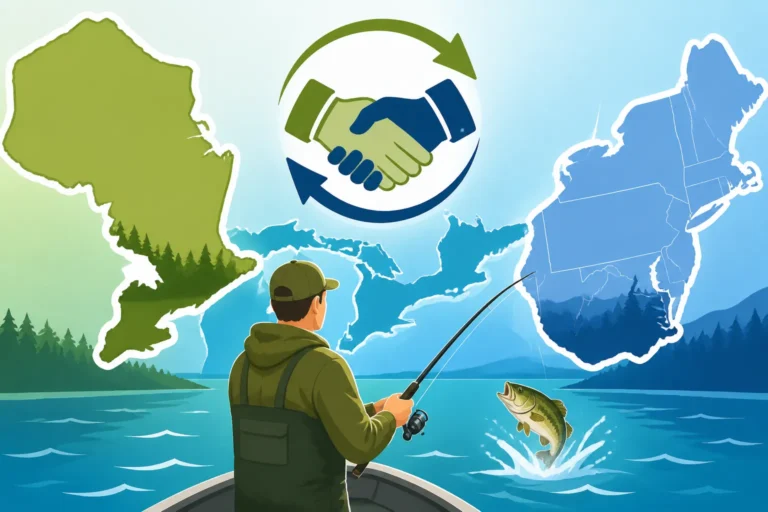
The invisible line that separates Ontario and Quebec can be a real headache for anglers, particularly when it comes to understanding fishing license requirements on shared waterways. Many of us have felt that familiar knot of anxiety, wondering if our Ontario license truly covers us when we're casting near the Quebec side, or vice versa. This guide aims to clear up the complexities of fishing license reciprocity on the boundary waters between these two provinces, ensuring you can fish legally and with complete confidence.
The Unique Challenge of Boundary Waters for Anglers
When you're out on the water, soaking in the peace and quiet, the last thing you want to be thinking about is an invisible provincial boundary that dictates the legality of your next cast. Yet, for those of us who love to fish the magnificent waters that straddle the border between Ontario and Quebec, this is a very real and often confusing concern. You might be enjoying a tranquil drift on a vast river, only to realize you've unintentionally crossed into another jurisdiction. It's a frustrating situation because, frankly, the fish don't care about provincial lines, but the regulations absolutely do, and getting it wrong can lead to some pretty significant fines. This isn't just about having a license; it's about making sure you possess the right license for your specific location and activity.
What Exactly Are Boundary Waters?
In the realm of fishing, boundary waters refer to specific lakes, rivers, or even defined sections of larger water bodies that physically form the border between two distinct legal jurisdictions—in our case, Ontario and Quebec. Instead of one province having exclusive ownership, these areas are shared, creating a unique situation for resource management and, consequently, for anglers. A prime example is the iconic Ottawa River, which carves out a significant portion of the border between these two provinces for hundreds of kilometers. Similarly, expansive lakes such as Lake Timiskaming also find their waters divided by this provincial line. The fundamental idea behind reciprocity agreements, where they exist, is to simplify the angling experience. It's designed for those who might inadvertently cross these lines or simply wish to fish both sides of a shared waterway without the burden of acquiring two complete sets of licenses and navigating potentially conflicting regulations. However, as we often discover with administrative matters, "simplification" doesn't always translate into a straightforward process on the ground.
Why Reciprocity Agreements Exist and Their Limitations
The concept of reciprocity is genuinely excellent in theory: if you hold a valid recreational fishing license from one province, it is recognized and accepted in the other for fishing within specific shared waters. This acknowledges the fluid and dynamic nature of fishing, where a boat can easily drift, or a cast can effortlessly span a theoretical jurisdictional line. The primary goal is to alleviate the burden on anglers, sparing them the expense and effort of purchasing separate licenses for what essentially feels like a continuous body of water. Without these agreements, you'd constantly be checking your GPS or worrying about straying just a few meters too far from your licensed zone.
However, it's crucial to understand that these agreements are far from universal free passes. They come with very specific and often strict limitations. Reciprocity typically applies only to designated boundary waters, meaning it doesn't extend to every single lake or river that happens to be geographically close to the border. More importantly, and this is where the real complexity often arises, while your license might be recognized, the actual fishing regulations—covering aspects like season dates, daily bag limits, minimum/maximum size restrictions, and permissible gear—can still vary significantly between the provinces, even on the very same shared water body. This divergence in rules is where anglers often get caught off guard. It's simply not enough to merely possess a valid license; you must also be intimately familiar with which provincial rulebook you need to be following at any given moment.
Navigating Ontario-Quebec Fishing License Reciprocity
The good news for anglers is that a reciprocal agreement does exist between Ontario and Quebec for certain boundary waters. This means that if you possess a valid recreational fishing license from either Ontario or Quebec, you are generally permitted to fish in the designated shared waters. This certainly saves you the hassle and expense of purchasing two separate licenses. However, and this cannot be stressed enough, understanding exactly which waters are covered and, more importantly, whose specific fishing rules you must adhere to, is absolutely paramount to avoid any legal troubles.
Designated Boundary Waters and Their Specifics
The primary water bodies explicitly covered by this reciprocal agreement between Ontario and Quebec are:
- The Ottawa River: This is the most prominent and extensive area where reciprocity applies. Spanning from Lake Timiskaming all the way down to its confluence with the St. Lawrence River, the Ottawa River serves as a significant border. Anglers frequently find themselves traversing between Ontario and Quebec waters along its length.
- Lake Timiskaming: This large, beautiful lake is another key body of water explicitly designated under the reciprocity agreement, with its waters divided by the provincial boundary.
It's vital to grasp that the term "boundary waters" is very specific and does not imply that all waters near the border are included. For example, if you're fishing a small, entirely inland lake within Quebec, even if it's just a stone's throw from the Ontario border, your Ontario fishing license is not valid there. The same principle applies if you're fishing an inland lake located entirely within Ontario – a Quebec license won't cover you. The reciprocity agreement is strictly limited to the specifically designated, shared bodies of water. For the most precise and current list of these areas, always consult the official provincial fishing regulations summaries. Our Ontario Fishing Regulations Explained guide can provide further insights into Ontario's regulatory framework.
Whose Rules Apply? The Real Head-Scratcher
This particular aspect is arguably the most critical and frequently misunderstood component of fishing boundary waters. While your fishing license might be reciprocally recognized, the actual detailed fishing regulations—which include daily catch limits, total possession limits, minimum or maximum size limits, specific open and closed seasons for various species, and even permitted types of gear—are not automatically reciprocal.
Here's the essential rule of thumb you need to remember: You are legally obligated to follow the fishing regulations of the province in which you are physically located and fishing at that precise moment.
Let's break down what this truly means:
- If your boat or your fishing position is on the Ontario side of the Ottawa River, you must strictly adhere to Ontario's fishing regulations. This includes respecting specific Ontario Bag and Possession Limits by Species, observing all season dates, and complying with any special regulations unique to that particular Ontario Fisheries Management Zone (FMZ).
- Should your boat drift or you decide to motor over to the Quebec side of the designated boundary water, you must immediately shift your adherence to Quebec's fishing regulations. Their season dates might differ significantly, their catch limits for popular species like walleye or bass could be either higher or lower than Ontario's, and they might have entirely different slot sizes or gear restrictions.
This situation can become incredibly challenging to manage in a practical fishing scenario. Consider a hypothetical situation where you're actively jigging for walleye on Lake Timiskaming. On the Ontario side, the daily limit might be four walleye. You successfully catch three, and then your boat slowly drifts into Quebec waters where the daily limit for walleye happens to be six. While you might technically be allowed to catch three more fish under Quebec's rules, it becomes exceptionally complicated to manage your overall possession limits across these constantly shifting invisible lines. Many seasoned anglers who frequent these areas choose a conservative approach: they will often elect to follow the most restrictive regulations of either province at all times to completely mitigate any potential for regulatory violations or misunderstandings with enforcement officers.
Understanding your Ontario Fisheries Management Zones, Explained is also critically important, as regulations can vary significantly even within Ontario itself, let alone when crossing an interprovincial border.
Practical Strategies for Stress-Free Border Fishing
Given the inherent complexities of fishing on boundary waters, how can you ensure your fishing trip is both enjoyable and entirely legal? The key lies in thorough preparation and maintaining a vigilant awareness of your exact location on the water. No angler wants their peaceful day to be disrupted by a conservation officer due to a simple, albeit costly, misunderstanding.
Tools and Resources to Stay Compliant
Staying compliant with regulations is directly tied to being well-informed and equipped. Here are some indispensable tools and resources:
- Official Regulations Summaries: Always, always carry a copy of the current year's Ontario Fishing Regulations Summary. If you plan to spend any significant time in Quebec waters, it's equally wise to have their corresponding regulations summary. These are often available online, or you can pick up physical copies from license vendors or ServiceOntario locations. Becoming proficient at navigating and interpreting the Reading the Ontario Fishing Regulations Summary is an essential skill for any angler.
- GPS and Advanced Mapping Apps: A reliable GPS device or a modern fishing app on your smartphone (such as Ontario's Fish ON-Line, or similar tools for Quebec) will be your absolute best friend. These technologies can display the precise provincial boundary line, often with remarkable accuracy. Knowing your exact position helps you unequivocally adhere to the correct set of regulations. A crucial tip: make sure your maps are downloaded for offline use, as cell service can be notoriously spotty in some of the more remote boundary areas.
- Local Knowledge: Before you launch, take the time to chat with local bait shop owners, professional guides, or other experienced anglers who regularly fish these specific boundary waters. They frequently possess invaluable insights into common pitfalls, subtle nuances of the regulations, and practical strategies for fishing these areas legally and effectively. They might even be able to recommend specific fishing spots where the provincial boundary line isn't as ambiguous.
- Purchasing Licenses: While the reciprocity agreement means you generally only need one valid license (from either province) for the designated boundary waters, ensure that your chosen license is current for the season. You can conveniently purchase your Ontario Fishing License Guide for 2026 online through the Fish and Wildlife Licensing Service, at numerous participating ServiceOntario centres, or from authorized license issuers. For our Quebec angling friends, a similar process applies via their provincial system. While you won't find specific Quebec fishing licenses on popular e-commerce sites, you might find other incredibly useful fishing gear on Amazon, such as a durable waterproof case for your paper license or a detailed fishing map of the boundary area.
Hypothetical Scenarios and Best Practices
Let's explore a few common scenarios to illustrate the practical application of these rules:
- Scenario 1: Shore Fishing on the Ottawa River. If you are standing firmly on the Ontario shoreline and casting your line into the Ottawa River, you are legally considered to be fishing in Ontario waters. Therefore, you must possess a valid Ontario fishing license, and you are bound to follow all of Ontario's fishing regulations. The moment your line or lure crosses into what is technically the Quebec side, you would, in principle, be subject to Quebec's rules. This is why shore fishing can sometimes be a bit less ambiguous than fishing from a boat. The same logic would apply if you were on the Quebec shore.
- Scenario 2: Boating on Lake Timiskaming. This is where the intricacies really come into play. If you launch your boat from an Ontario access point and primarily fish within the Ontario side of the lake, you will use your Ontario license and abide by Ontario's regulations. However, if you motor or drift over to the Quebec side, your Ontario license remains valid due to the reciprocity agreement, but you must immediately switch your adherence to Quebec's regulations for season dates, specific catch limits, and any size restrictions. Keeping track of your cumulative catch under two potentially different sets of rules can quickly become a logistical nightmare. A highly recommended best practice is to carry both provincial regulations summaries (digital or paper) and diligently track your catch based on the province you are currently fishing in.
- Scenario 3: The "Accidental" Drift. Imagine you're intently targeting northern pike on the Ottawa River, fully operating under Ontario's regulations. The wind picks up unexpectedly, or a strong current takes hold, and suddenly you realize your boat has drifted across the invisible line into Quebec waters. What should you do? On the license front, if you have your Ontario license, you're fine due to reciprocity. However, your legal possession limit for pike might instantly change according to Quebec's rules. To proactively avoid any potential issues, always be keenly aware of your position. If you inadvertently cross the line, either adjust your fishing practices to comply with Quebec's regulations or, more safely, move back into Ontario waters if you're unsure of Quebec's rules.
For a deeper understanding of license types, an excellent internal resource is Ontario Sport vs Conservation Fishing License, which clearly details how your choice of license impacts your catch limits, even before the added complexity of provincial boundaries.
| Boundary Water | Primary Provinces Shared | License Reciprocity | Regulations to Follow |
|---|---|---|---|
| Ottawa River | Ontario, Quebec | Yes | Regulations of the province where you are physically fishing |
| Lake Timiskaming | Ontario, Quebec | Yes | Regulations of the province where you are physically fishing |
| (Other adjacent waters) | Ontario, Quebec | Generally No | Must have a valid license for, and follow the regulations of, that specific province and water body |
What Happens if You Get It Wrong?
No angler ever wants to face penalties, especially when the goal is simply to enjoy a peaceful and rewarding day on the water. It's a fundamental legal principle that ignorance of the law is not an acceptable excuse, and conservation officers on both sides of the Ontario-Quebec border are highly knowledgeable about these reciprocal agreements and their intricate nuances. Their role is to enforce the regulations, not to provide on-the-spot legal interpretations or dispensations.
Potential Fines and Consequences
If you are found to be fishing in Quebec waters with only an Ontario license on a non-reciprocal water body, or if you exceed bag limits, violate season dates, or fail to adhere to size restrictions for the province you're currently in (even if your license is otherwise valid for the boundary water), you could face significant repercussions.
- Fines: Penalties for fishing without the proper license or for violating specific regulations can be substantial, often ranging from hundreds into thousands of dollars. For example, the Fishing Without a License in Ontario: Penalties can be quite severe, and Quebec maintains similarly strict enforcement measures.
- Seizure of Gear: In more serious or repeat offense scenarios, conservation officers have the authority to seize your fishing gear, your boat, and even your vehicle. While this is an extreme measure, it underscores the serious nature of adhering to all regulations.
- Loss of Future Privileges: Persistent or severe violations could ultimately lead to a suspension of your fishing privileges, potentially in both provinces. This can be a devastating outcome for any passionate angler.
It is always, always better to be overly cautious and conservative in your approach than to risk these kinds of costly and unpleasant headaches. When in doubt, either fish definitively within one province's established boundaries or, even better, consistently adhere to the most conservative set of rules between the two provinces. Sometimes, a small investment, such as acquiring a comprehensive fishing manual or a robust tackle box from Amazon that has extra compartments for printed regulatory guides, can offer immense peace of mind.
Staying Informed and Asking Questions
The most effective way to completely avoid any legal issues is to remain perpetually informed and proactive. Never rely on outdated information or casual hearsay from other anglers, as regulations are dynamic and can change from year to year. Always make it a point to check the most current official summaries.
- Official Websites: Both the Ontario Ministry of Natural Resources and Forestry (MNRF) and Quebec's Ministère des Forêts, de la Faune et des Parcs (MFFP) diligently maintain comprehensive and up-to-date websites where their full regulations are published.
- Contacting Authorities: If you find yourself with specific questions or ambiguities regarding a particular stretch of boundary water, do not hesitate to contact the appropriate provincial authorities directly. It is infinitely better to clarify any doubts beforehand than to potentially face a substantial fine or penalty later.
- The Outdoors Card: Remember that in Ontario, your fishing license is typically printed on your Ontario Outdoors Card, Explained, which serves as your primary identification for licensing purposes. Ensure this card is current and valid. If you happen to be a non-resident of Ontario but a Canadian citizen, you'll still need to understand the nuances of Resident vs Non-Resident Fishing License Costs in Ontario when initially purchasing your base license, even when reciprocity applies to specific boundary waters.
Ultimately, fishing these magnificent boundary waters offers unparalleled angling opportunities and experiences. However, it unequivocally demands a bit more diligent homework and attention to detail from your side. By thoroughly understanding precisely where reciprocity agreements apply and, crucially, consistently knowing whose specific regulations govern your actions at any given moment, you can shift your focus entirely to the joy of the catch and leave the worry of potential fines behind. Tight lines and happy fishing!
Disclaimer
Please note that fishing regulations are subject to frequent change. While every effort has been made to provide accurate and current information within this guide, it remains the individual angler's sole responsibility to consult the most current official Ontario and Quebec fishing regulations summaries before embarking on any fishing trip. This guide is provided for general informational purposes only and should not be considered as, or substituted for, legal advice.