Ontario fishing license reciprocity on the Great Lakes with the United States
It’s an honest and incredibly common question that pops up when you're planning a fishing trip on the magnificent Great Lakes: "Do I need a separate license if I’m just crossing the invisible line into US waters, or vice versa?" The sheer vastness of these lakes, often blurring the lines between Canada and the United States, can lead to a lot of confusion and, let’s be frank, frustration for anglers who just want to enjoy their day on the water. This guide is here to untangle the complexities of fishing license reciprocity on the Great Lakes, ensuring you understand exactly what you need to legally and confidently cast your line, no matter which side of the border you find yourself on.
Understanding the Jurisdictional Complexities of Great Lakes Fishing
When you look out across Lake Huron or Lake Erie, it's easy to see one continuous body of water. But beneath that surface, there's a patchwork of regulations, laws, and jurisdictional boundaries that can feel like a labyrinth. This isn't just a simple line in the water; it's a fundamental difference in how fishing is managed and licensed, and it directly impacts every angler.
The Myth of Universal Reciprocity
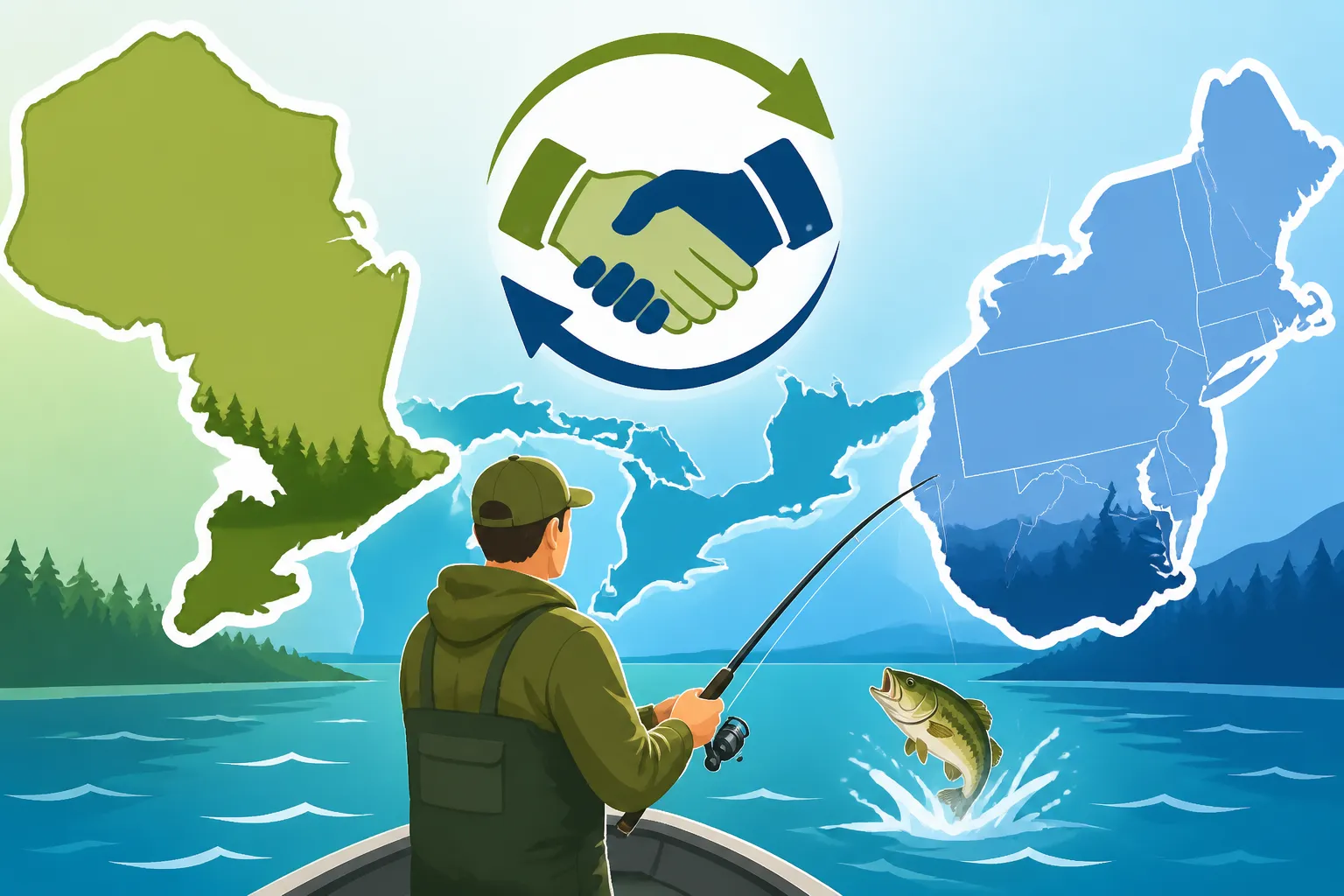
Many people assume that because the Great Lakes are shared, a fishing license from one side (say, Ontario) should be valid on the other (say, Michigan). Unfortunately, this isn't how it works. There is generally no direct reciprocity for fishing licenses between Ontario and the various US states bordering the Great Lakes. Each jurisdiction, whether it's the Province of Ontario or a US state like New York, Ohio, or Michigan, maintains its own independent licensing requirements and fisheries management programs. These programs are designed to manage local fish populations, fund conservation efforts, and enforce specific regulations within their defined boundaries. So, while Canadian and US authorities cooperate on broader conservation initiatives, like through the Great Lakes Fishery Commission, this collaboration doesn't extend to individual fishing licenses. Think of it like driving: your Ontario driver's license lets you drive in the US, but you still follow US road laws; you don't magically get a US license.
Navigating the Invisible Border Lines
The border running through the Great Lakes is a very real, albeit invisible, line that determines which set of rules you're under. For anglers, understanding where this line is at all times is paramount. For instance, on Lake St. Clair, a popular muskie destination, you might find yourself drifting from Canadian waters into Michigan waters with surprising speed, especially with current or wind. The boundary often follows historical markers or a median line, sometimes marked on marine charts with coordinates.
Let’s say you’re out chasing walleye on Lake Erie. You might start your day launching from Port Dover, Ontario, and plan to fish the thriving waters near the provincial park. As you drift, perhaps following a hot bite, you could inadvertently cross into US waters that fall under the jurisdiction of Ohio or Pennsylvania. Without the appropriate US state fishing license, you would be fishing illegally in those waters, even if you still have an active Ontario license in your possession. This is where the complexities really sink in and where you need to be especially vigilant. A good GPS unit, which you can often find great deals on through online retailers like Amazon, pre-loaded with marine charts that clearly display the international border, can be an invaluable tool for any Great Lakes angler.
Specific License Requirements for Ontario Waters of the Great Lakes
If you're planning to fish anywhere within the Ontario side of the Great Lakes, you absolutely need an Ontario fishing license. This applies whether you're an Ontario resident, a Canadian resident from another province, or a non-resident from the United States or any other country. There are no exceptions based on your origin when you are in Ontario's waters.
The Ontario Outdoors Card and Fishing License
The first step for almost every angler in Ontario is obtaining an Ontario Outdoors Card, Explained. This card acts as your identification for purchasing and holding fishing and hunting licenses in the province. It's valid for three years and is required before you can buy an actual fishing license tag. Once you have your Outdoors Card, you'll then need to purchase an Ontario fishing license. You'll typically choose between two types: a Sport Fishing License or a Conservation Fishing License.
The Sport Fishing License allows for higher catch and possession limits and longer seasons for certain species, appealing to anglers who want to take home a bigger haul. The Conservation Fishing License, on the other hand, has reduced catch and possession limits, designed for anglers who are more interested in catch-and-release or only keeping a small number of fish for a meal. Both are valid, but it's crucial to understand the difference. You can dive deeper into these options by reading about the Ontario Sport vs Conservation Fishing License. Regardless of which one you choose, it must be valid for the duration of your fishing trip in Ontario waters.
Resident vs. Non-Resident License Considerations
The cost of your Ontario fishing license will depend on your residency status. Ontario residents generally pay less than non-residents. For example, if you're a US citizen planning a week-long trip to fish for salmon on Lake Ontario near Kingston, you would need to purchase a non-resident fishing license. This would entail getting a non-resident Outdoors Card and then selecting either a Sport or Conservation fishing license. You can find detailed information on How Much Does an Ontario Fishing License Cost and a breakdown of Resident vs Non-Resident Fishing License Costs in Ontario to help you budget and plan accordingly. These licenses can be purchased online, through authorized license issuers, or at participating ServiceOntario centres. To ensure you're covered, it's always wise to learn Where and How to Buy an Ontario Fishing License well in advance of your trip.
Navigating US Waters from Ontario and Vice Versa
This is where the rubber meets the road for cross-border anglers. The simple rule is this: if you're fishing in US waters, you need a US state fishing license for that specific state, even if you launched from Canada. And if you're a US angler fishing in Canadian waters, you need an Ontario license.
For Ontario Anglers Venturing into US Great Lakes Waters
If you're an Ontario angler and you decide to fish the US side of the Great Lakes, you must purchase the appropriate fishing license for the specific US state whose waters you're entering. For instance:
- Lake Erie: If you cross into American waters, you'll need an Ohio or Pennsylvania fishing license.
- Lake Huron: Depending on where you are, you might need a Michigan fishing license.
- Lake Superior: This could require a Michigan, Wisconsin, or Minnesota fishing license.
- Lake Ontario: If you cross into American waters, you'll need a New York State fishing license.
Each state has its own fee structure, residency definitions, and purchasing methods. Some states offer short-term non-resident licenses, which can be convenient for a quick cross-border trip. It's absolutely crucial to research the specific state's regulations and licensing requirements before you leave Ontario waters. Failure to do so can result in significant fines and the confiscation of your gear.
For US Anglers Visiting Ontario Great Lakes Waters
Conversely, if you're a US angler, say from Michigan, and you want to fish the productive waters of the Canadian side of Lake St. Clair or the incredible Lake Superior waters near Thunder Bay, you will need an Ontario fishing license and an Outdoors Card. Your Michigan fishing license is not valid in Ontario waters. The process for US non-residents to obtain an Ontario fishing license is straightforward:
- Obtain an Outdoors Card: This is your base ID for fishing in Ontario.
- Purchase a Non-Resident Fishing License: Choose between a Sport or Conservation license based on your fishing goals.
- Understand Regulations: Familiarize yourself with the Ontario Fishing Regulations Explained, including species-specific rules, open seasons, and bag limits that apply to the Ontario Fisheries Management Zones, Explained you plan to fish in.
Many US anglers travel to Ontario specifically for fishing, and the process is designed to be accessible. Just remember, your home state license doesn't grant you access to Ontario's amazing fisheries without the proper provincial credentials.
Practical Tips for Cross-Border Great Lakes Angling
Navigating international boundaries while fishing can be tricky, but with a little preparation, you can avoid common pitfalls and enjoy a seamless experience.
Double-Check Regulations and Boundaries
Before every trip where you might be near the border, take the time to review the fishing regulations for both Ontario and the adjacent US state. These can change annually, so what was valid last year might not be this year. Use official government resources for both jurisdictions. Ontario's Ministry of Natural Resources and Forestry (MNRF) website is an excellent starting point for Canadian regulations, and each US state’s Department of Natural Resources or equivalent agency will have its own detailed guides. A key resource for Ontario anglers is the Reading the Ontario Fishing Regulations Summary, which compiles all the essential information in one place.
Carry All Required Documentation
Always carry your Outdoors Card and fishing license with you, whether in physical or digital format. Ensure you have proper identification, such as a passport or enhanced driver's license, if you intend to cross the border by land or water. Border patrol officers can and do check boats on the Great Lakes. You can find more information about Printing or Carrying a Digital Fishing License in Ontario to help you decide which format works best for you. Imagine getting checked by border patrol after a fantastic day on the water, only to realize your licenses aren't in order – it's a nightmare scenario you want to avoid!
Use Technology to Your Advantage
Modern technology can be your best friend when fishing near international borders. As mentioned, a reliable GPS unit with detailed marine charts that display the border can prevent accidental crossings. Many popular fishing apps also have overlay features that show jurisdictional lines. Consider getting a waterproof case for your smartphone or tablet – these are widely available, including from online retailers like Amazon, and can protect your devices while providing essential navigation and access to digital licenses.
Know the Consequences of Non-Compliance
Fishing without a valid license in any jurisdiction, or violating specific regulations, carries penalties. These can range from significant fines to the confiscation of your catch, gear, and even your boat. For example, if you're caught fishing without an Ontario license in Ontario waters, the penalties can be substantial, as detailed in Fishing Without a License in Ontario: Penalties. It’s simply not worth the risk. Always prioritize being legal and informed.
Table: Great Lakes Fishing License Requirements Summary
To help clarify, here's a quick reference table for common scenarios on the Great Lakes:
| Angler's Residency | Water Body Fished | Required License | Notes |
|---|---|---|---|
| Ontario Resident | Ontario Great Lakes | Ontario Outdoors Card + Ontario Fishing License (Sport/Conservation) | Always required for Ontario waters. |
| Ontario Resident | US Great Lakes (e.g., Michigan, Ohio, New York) | Specific US State Fishing License (e.g., Michigan non-resident license) | Your Ontario license is NOT valid in US waters. Research the specific state's requirements. |
| US Resident (e.g., Michigan) | Ontario Great Lakes | Ontario Outdoors Card + Ontario Non-Resident Fishing License (Sport/Conservation) | Your US state license is NOT valid in Ontario waters. |
| US Resident (e.g., Ohio) | US Great Lakes (e.g., Ohio, Michigan) | Specific US State Fishing License (e.g., Ohio resident license) | Always required for your home state's waters. |
| Canadian (Non-Ontario Resident) | Ontario Great Lakes | Ontario Outdoors Card + Ontario Non-Resident (Canadian) Fishing License (Sport/Conservation) | Your provincial license from Alberta or Quebec, for example, is NOT valid in Ontario waters. |
This table simplifies things, but remember, the devil is in the details, so always confirm the specific rules for your situation.
Ultimately, while the dream of a single, universal fishing license for the Great Lakes remains just that – a dream – navigating the current system isn't insurmountable. With careful planning, understanding the distinct jurisdictional requirements, and utilizing available resources, you can ensure your cross-border Great Lakes fishing adventures are both bountiful and completely legal. Tight lines, and safe travels!
Disclaimer
The information provided in this guide is for general informational purposes only and does not constitute legal advice. Fishing regulations and licensing requirements can change, and it is the angler's sole responsibility to consult the most current official regulations issued by the Province of Ontario and the relevant US state before engaging in any fishing activity. Always adhere to local laws and safety guidelines.