How to rig a live minnow for walleye
There's nothing quite like the subtle thump-thump of a walleye hitting a live minnow, is there? Many anglers, myself included, have stood on the shore or sat in a boat, scratching our heads, wondering why our carefully selected minnow isn't enticing those elusive walleye. You've got the bait, you've got the spot, but knowing precisely how to rig that lively minnow to maximize its appeal and ensure a solid hookset can feel like a secret code. This guide will demystify the art of rigging live minnows for walleye in Ontario, giving you the confidence and techniques to make every cast count.
Why Live Minnows Are a Walleye Magnet
Walleye are opportunistic predators, but they have a distinct preference for natural, easy meals. And let's be honest, nothing looks, smells, or moves quite like a real minnow. While artificial lures have their place, especially for covering water or triggering reaction strikes, a live minnow presents an undeniable allure that often proves irresistible to even the most finicky walleye.
Think about it: a minnow struggling subtly, darting erratically, or simply wafting its natural scent through the water sends all the right signals to a hungry walleye. It's a distress signal, an easy meal, and a familiar part of their diet. This natural presentation is often the key when other baits fail, or when you're fishing in clear water where walleye can be quite discerning. The challenge, of course, is presenting that minnow in a way that keeps it alive and appealing, without hindering your hookset. That’s where good rigging comes into play. It's not just about hooking the minnow, it's about giving it a second life in the water, albeit a short one, that mimics its natural behavior.
Essential Gear for Rigging Live Minnows
Before you even think about putting a hook near a minnow, you need to have the right tools on hand. The quality and appropriateness of your gear can make all the difference in bait presentation, minnow survival, and ultimately, your success rate. Neglecting any of these components can lead to lost minnows, missed bites, or even worse, fish that swallow the bait too deeply.
Hooks Designed for Live Bait
Choosing the right hook is paramount. You need something sharp, strong, and sized appropriately for both your minnows and the walleye you're targeting. For most walleye fishing with live minnows, Aberdeen hooks, circle hooks, and octopus hooks are popular choices. Aberdeen hooks, with their thin wire and wide gap, are excellent for delicate minnows, allowing them to swim more freely and minimizing harm, while their flexible nature makes them easier to retrieve from snags. Circle hooks are fantastic for reducing gut hooking, as the design encourages the hook to slide into the corner of the fish's mouth as it pulls away, which is great for catch and release. Octopus hooks are another versatile option, often slightly offset and very sharp, making for reliable hooksets.
Generally, a size 6, 4, or 2 hook is a good starting point for typical minnow sizes. If you're using larger chubs or shiners, you might size up to a 1 or even 1/0. You can find a wide variety of these hooks on Amazon, ensuring you have a diverse selection for different situations. Always consider barbless hooks for easier release and less damage to the fish.
Appropriate Line, Sinkers, and Floats
Your fishing line needs to be strong enough to handle walleye, yet subtle enough not to spook them. A good fluorocarbon leader is often a smart choice, tied to a main line of monofilament or braided line. Fluorocarbon is nearly invisible underwater and abrasion-resistant, which is crucial when fishing around rocks or submerged timber.
Sinkers come in various forms – split shot, bullet weights, bell sinkers, or walking sinkers. The choice depends on your presentation. Split shot is simple for suspending minnows under a float or adding a little extra weight to a jig. Bullet weights are great for Texas rigging (though less common with live minnows for walleye) or slipping through weeds. Bell and walking sinkers are often used for bottom fishing rigs like the classic Lindy rig. The key is to use just enough weight to get your minnow to the desired depth and keep it there, without inhibiting its natural movement too much.
Floats (or bobbers) are essential for suspending minnows at a specific depth off the bottom or over structure. Slip bobbers are incredibly popular for walleye fishing because they allow you to fish at any depth, even in very deep water, while still being able to cast easily. They feature a small knot or bobber stop on your line that prevents the float from sliding past your chosen depth. This is particularly effective when walleye are holding just above the weeds or a specific thermocline.
Specialized Live Bait Accessories
Beyond the basics, a few accessories can significantly improve your live minnow fishing experience. A good livewell or a portable minnow bucket with an aerator is crucial for keeping your minnows healthy and lively. Dead or lethargic minnows are far less effective. Having fresh, active bait makes a huge difference. You can find some excellent portable aerators and minnow buckets on Amazon.
A pair of long-nosed pliers or a de-hooking tool is also indispensable, especially when a walleye decides to swallow the bait deeply. This allows for quick, safe hook removal, minimizing stress on the fish, particularly if you're practicing catch and release. Finally, a bait needle can be useful for threading minnows for specific presentations, such as for trolling dead minnows or for certain still-fishing rigs, although it’s less common for active live minnow rigging where you want to keep the minnow as lively as possible.
Popular Live Minnow Rigs for Walleye
Now that you have your gear, let's dive into the most effective ways to rig a live minnow for walleye in Ontario's diverse waters, from the Lake Erie Fishing Guide to the remote lakes of the north. Each rig has its strengths and is suited for different conditions and fishing styles.
The Classic Slip Bobber Rig
The slip bobber rig is a staple for a reason: it's incredibly versatile and highly effective for targeting walleye at various depths. It allows your minnow to swim naturally within a confined zone, right in the walleye's strike window.
- How it works: A small bobber stop is tied onto your main line, followed by a bead (to protect the knot from the float). Then, you thread on your slip bobber. Below the bobber, you'll attach a small weight (a split shot or a small bullet sinker) just above your leader, and finally, your hook. The bobber stop can be moved up or down the line to set your desired fishing depth.
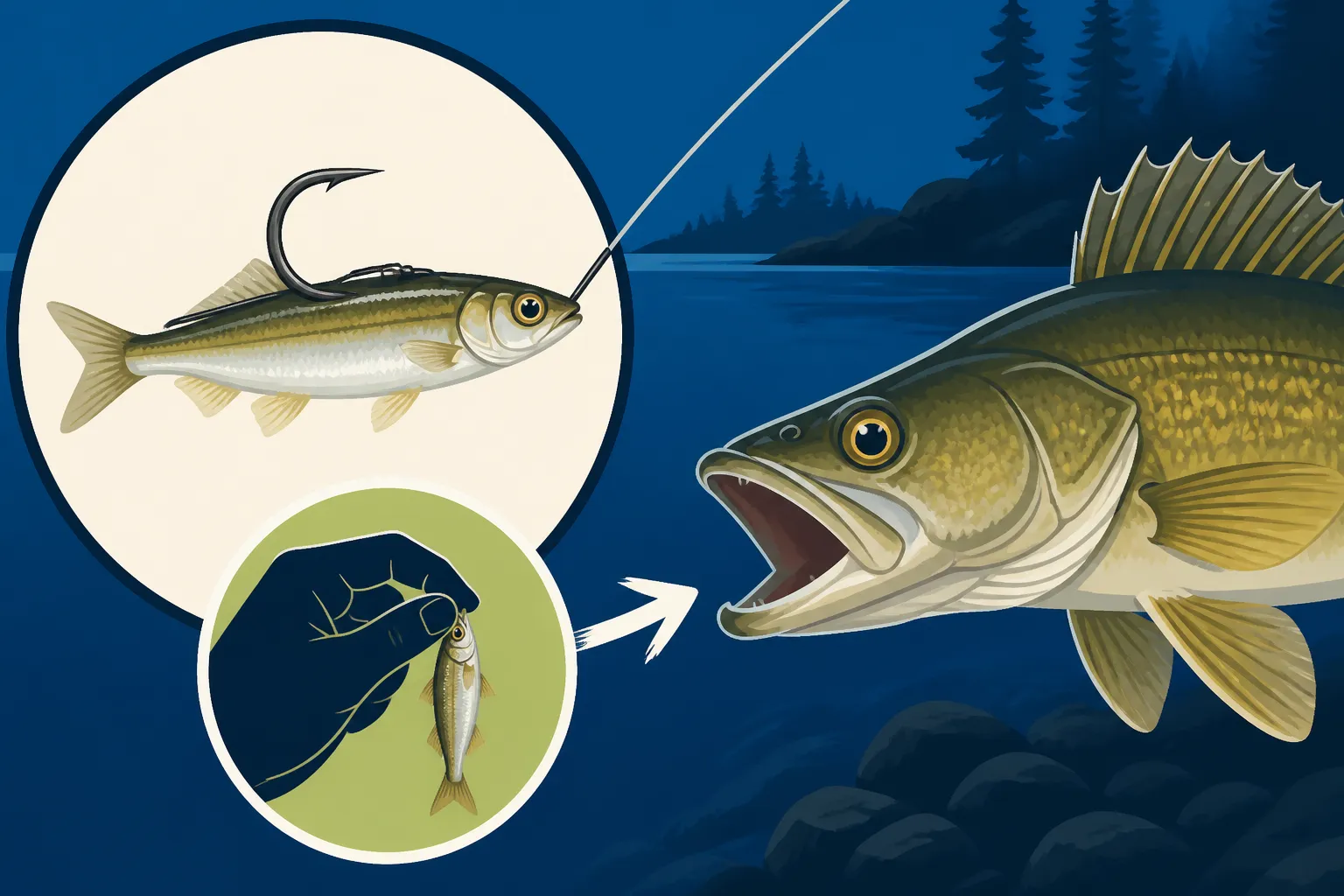
- Rigging the minnow: The most common and effective way to hook a live minnow for a slip bobber rig is through the lips, or just behind the dorsal fin.
- Through the lips: Hooking through the top and bottom lips (from the bottom up, through the nose) allows the minnow to swim forward naturally. This is excellent for still-fishing or very slow drifts. It keeps the minnow horizontal and facing into any current.
- Behind the dorsal fin: Hooking just behind the dorsal fin ensures the minnow stays lively and presents a slightly injured appearance, which can be a strong trigger for walleye. Be careful not to hook too deeply, as this can injure the minnow's spine or vital organs, quickly killing it.
- When to use it: This rig shines when walleye are suspended over structure, along weed lines, or when you need to present bait at a precise depth in relatively calm waters. It’s perfect for pinpointing depth in deeper areas or over rocky humps. You might find this rig particularly useful when you're exploring new waters or when fish are less active.
The Walleye Jig Rig
Jigging with live minnows is arguably one of the most productive ways to catch walleye, especially when they are concentrated on structure or in current. The combination of a jig's action and the live minnow's appeal is hard to beat.
- How it works: This is one of the simplest rigs. You tie a jig head directly to your main line or leader. The weight of the jig takes your minnow to the bottom or keeps it in the strike zone. You then use short lifts and drops, or slow drags, to impart action.
- Rigging the minnow: The most common method is to hook the minnow through the lips, from the bottom jaw up through the top. This allows the minnow to hang horizontally and appear as if it's darting or struggling as you work the jig. For a slightly different presentation, some anglers will hook the minnow through the back, just behind the dorsal fin, with the hook point facing forward. This gives the minnow a dying, nose-down look when jigged. Ensure the jig hook is large enough for a good bite, but not so large it overwhelms the minnow.
- When to use it: Jigging with minnows is lethal in rivers, current breaks, over rocky shoals, or when vertically jigging directly over schooling walleye. It's an active fishing style that allows you to feel subtle bites and quickly cover specific pieces of structure. This technique is often discussed in How to Catch Walleye in Ontario guides for its effectiveness.
| Rig Type | Best Use Case | Minnow Hooking Method(s) | Pros | Cons |
|---|---|---|---|---|
| Slip Bobber Rig | Suspended walleye, precise depth, calm water | Lips, Dorsal Fin | Excellent depth control, natural presentation, visual bite detection | Slower presentation, can be affected by strong currents |
| Walleye Jig Rig | Active walleye, current, structure, vertical fishing | Lips, Dorsal Fin (through back) | Excellent feel for bites, active fishing, covers specific spots quickly | Can kill minnow faster, requires more active angler input |
| Lindy Rig (Bottom Bouncer) | Drifting/trolling over varied bottoms, less snags | Lips, Dorsal Fin (often trailing) | Extremely natural drift, good for covering water, minimal resistance to fish | Can be tricky in heavy weeds, requires boat movement or current to be effective |
The Lindy Rig (Bottom Bouncer)
The Lindy Rig, or similar bottom bouncer rigs, are quintessential walleye setups, especially for covering water while drifting or slow trolling. They are designed to keep your live minnow just off the bottom, mimicking a natural forage fish without getting constantly snagged.
- How it works: A "walking sinker" or "bottom bouncer" weight is threaded onto your main line, followed by a swivel. To the swivel, you tie a fluorocarbon leader (often 4-6 feet long) with your hook at the end. The walking sinker is shaped to "walk" over rocks and other bottom debris with minimal snagging, while the long leader allows your minnow to swim freely and naturally behind it.
- Rigging the minnow: For this presentation, hooking the minnow through the lips (from the bottom up) is usually best. This allows the minnow to trail naturally behind the weight and leader as you move. Some anglers prefer to hook the minnow through the tail section, right behind the anal fin, particularly if they want the minnow to "swim" erratically as it's pulled. This can be very effective, but be mindful of regulations regarding tail-hooking in certain areas, as it can be confused with snagging. The goal is to keep the minnow alive and active for as long as possible.
- When to use it: This rig is outstanding for drifting or slow trolling flats, along breaks, or over humps in lakes like Lake Nipissing where walleye are often spread out. It's particularly effective when walleye are sluggish or spread out across the bottom, as it covers a lot of ground with a very natural presentation. Remember to check Ontario Fishing Regulations Explained for specific rules on bottom bouncing and live bait use in certain zones.
Tips for Success and Ethical Considerations
Beyond just knowing how to rig, there are several nuances that can greatly improve your success with live minnows and ensure you're fishing responsibly.
Keeping Your Minnows Alive and Lively
A lively minnow is a successful minnow. If your bait is dying in the bucket, it's not going to attract anything but maybe a bottom-dwelling scavenger. Investing in a good aerated minnow bucket is non-negotiable. Keeping the water cool and oxygenated is critical. In warmer weather, you might even add a frozen water bottle to the bucket to keep the temperature down, but be careful not to shock them with extreme temperature changes.
Don't overcrowd your minnows. Too many in a small space will deplete oxygen quickly. Change the water regularly with fresh lake or river water, especially if you notice it getting cloudy or if minnows start swimming near the surface gulping air. Some anglers even use commercially available minnow treatments to reduce stress and prolong life, which you can often find at local bait shops or through retailers like Amazon.
Presentation is Everything
Once your minnow is on the hook, how you present it matters immensely.
- Match the hatch: If you know what the walleye in your area are feeding on, try to use minnows of a similar size and species. A local bait shop will usually sell common baitfish for the region.
- Depth and structure: Use your fish finder or knowledge of the lake to target walleye at the right depth and near key structure. Are they holding on a deep break? Are they suspended over a weed bed? Your rig choice will depend on this.
- Slow and steady: Live minnow fishing isn't usually about fast retrieves. It's about subtle movements. Let the minnow do the work. If you're drifting, let the current or your boat's motion provide the action. If jigging, use gentle lifts and drops. When they hit, it's often a subtle "thump" or a feeling of weight, not a violent strike.
Understanding and Respecting Ontario's Regulations
This is paramount. Fishing with live bait comes with specific rules and ethical responsibilities in Ontario.
- Baitfish restrictions: Always know what kind of baitfish are legal to use in your specific Ontario Fisheries Management Zones, Explained. Some areas have restrictions on certain species, or require baitfish to be purchased from a licensed dealer and accompanied by a receipt. You cannot just net minnows from one lake and use them in another without understanding the rules, as this can spread invasive species.
- Species-specific limits: Be aware of the Ontario Bag and Possession Limits by Species for walleye in the zone you are fishing. These limits can vary significantly.
- Catch and release: If you're planning to release walleye, especially larger breeding fish, consider using circle hooks to minimize gut-hooking. Handle fish gently, keep them in the water as much as possible, and use a landing net that doesn't strip their protective slime. Releasing deeply hooked fish carefully is part of responsible angling. Many anglers use a specialized long-nosed pliers that you can find on Amazon to extract hooks safely.
The Art of the Hookset
When a walleye takes a live minnow, it's rarely an instant "wham!" like with a crankbait. They often mouth the bait, swim off with it, or hold it gently. Resist the urge for an immediate, aggressive hookset. Instead, when you feel that tell-tale tap or increased weight, drop your rod tip slightly, count to 2-3 (or even 5-7 for larger minnows or wary fish), then slowly reel up the slack until you feel the fish's weight, and then set the hook with a firm, sweeping motion. This gives the walleye time to fully ingest the minnow and ensures a better hookup in the corner of the mouth.
Mastering the rig of a live minnow for walleye in Ontario is a rewarding endeavor. It's a method that connects you directly to the natural instincts of the fish and often yields impressive results when other techniques fall short. With the right gear, understanding of the rigs, and respect for the regulations, you'll be well on your way to more memorable walleye encounters.
Disclaimer
This article is for general informational purposes only and does not constitute professional advice. Laws, prices and regulations vary by location and change over time. Consult a qualified professional for guidance on your specific situation.