Best line for muskie fishing in rocky water
There’s nothing quite like the heart-stopping strike of a muskie, especially when you’re fishing those gnarly, rock-strewn haunts that these magnificent predators love so much in Ontario. But let's be honest, that thrill can quickly turn into pure frustration when your line snaps against a sharp rock or a hidden stump, sending your expensive lure sinking and leaving you with nothing but a slack line and a story about "the one that got away." This guide is here to help you navigate the tricky world of fishing line selection, ensuring you're rigged for battle in even the nastiest, rockiest muskie waters our province has to offer.
Understanding the Challenge of Muskie in Rocky Waters
Muskie fishing in Ontario’s rocky environments presents a unique set of challenges that can test even the most seasoned angler's patience and tackle. It's not just about the fish itself; it's about the entire battleground. From the moment that toothy beast decides to inhale your offering to the final net scoop, everything is working against your line.
The Sheer Power and Acrobatics of a Muskie
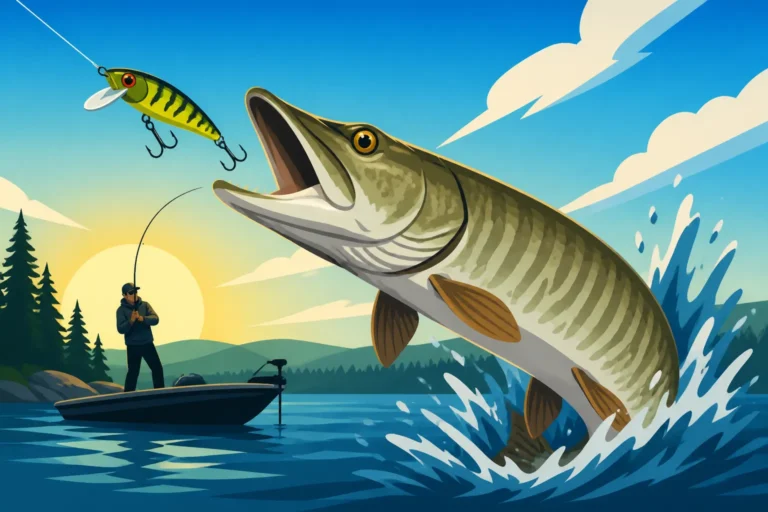
Muskies are not known as the "fish of 10,000 casts" for nothing. They're apex predators, built for explosive power and surprising agility. When hooked, especially in the cold, clear waters of northern Ontario, a muskie can launch into a series of head shakes, powerful runs, and even aerial acrobatics that put immense stress on your fishing line. Imagine one of these giants, easily in the 40-pound range, hooked near a jagged rock face. Their instinct is often to dive back into cover, using every available obstacle to their advantage. This isn't a gentle tug-of-war; it's a brutal fight where the fish is actively trying to saw your line off. Muskellunge Fishing in Ontario offers more insights into these incredible fish.
The Gauntlet of Rocks and Abrasions
Ontario is blessed with countless lakes and rivers carved by glaciers, leaving behind a stunning, but often treacherous, underwater landscape. We're talking about granite outcroppings, submerged boulders, jagged shale beds, and plenty of sunken timber from old logging operations. These aren't just scenic features; they are potential line-shredders waiting to happen. Every time your line brushes against one of these abrasive surfaces during a cast, retrieval, or a fish fight, microscopic nicks and frays occur. Over time, or under the extreme pressure of a muskie, these weak points can catastrophic failure. It’s like running sandpaper over a string – eventually, it’s going to break.
The Cost of a Lost Lure and Fish
Beyond the sheer disappointment of losing a muskie, there's the very real financial sting of a lost lure. Muskie baits are not cheap. High-quality bucktails, glide baits, or crankbaits can easily set you back a pretty penny, and losing one to a line break in the rocks can be genuinely painful. Moreover, there's the conservation aspect. We all practice catch and release for muskie, and a broken line means a lure left in the fish's mouth, which can impact its health. Choosing the right line isn't just about landing your fish; it's about giving that fish the best chance of survival after release.
Top Line Choices for Abrasion Resistance
When it comes to muskie fishing in rocky water, your choice of line is paramount. You need something that can stand up to the brute force of the fish and the unforgiving nature of its habitat. It's a balance between strength, sensitivity, and, most importantly, abrasion resistance.
Braided Line: The Workhorse for Mainline Strength
For muskie fishing, especially in demanding environments, braided line is almost universally recommended as your main line. It offers incredible strength-to-diameter ratio, meaning you can use a relatively thin line that still boasts impressive breaking strength. Think about it: a 80-100 lb test braid is still quite thin, allowing for good casting distance and less water resistance.
Here's why braid shines as a muskie mainline:
- Zero Stretch: Braid has virtually no stretch. This is a huge advantage as it provides incredible sensitivity, allowing you to feel every bump, tic, and subtle take, even in deep water or strong current. More importantly, it gives you direct power when setting the hook and fighting a fish, ensuring maximum pressure on that big muskie to turn its head away from danger.
- High Breaking Strength: You're dealing with big, powerful fish that require robust tackle. High pound-test braid provides the confidence that your line won't snap under the strain of a heavy muskie or when trying to free a snagged lure (though sometimes a snag is just a snag).
- Thin Diameter: Despite its strength, braid is thin. This helps with casting larger, heavy muskie baits and cuts through the water better, reducing drag.
However, braided line itself isn't perfectly abrasion-resistant. While it's tough, individual fibers can fray when repeatedly scraped against sharp rocks. This is where your leader comes into play. You can find excellent quality braided lines on Amazon from brands like PowerPro or Sufix that are specifically designed for heavy-duty fishing.
Fluorocarbon Leaders: The Invisible Shield You Can't Skip
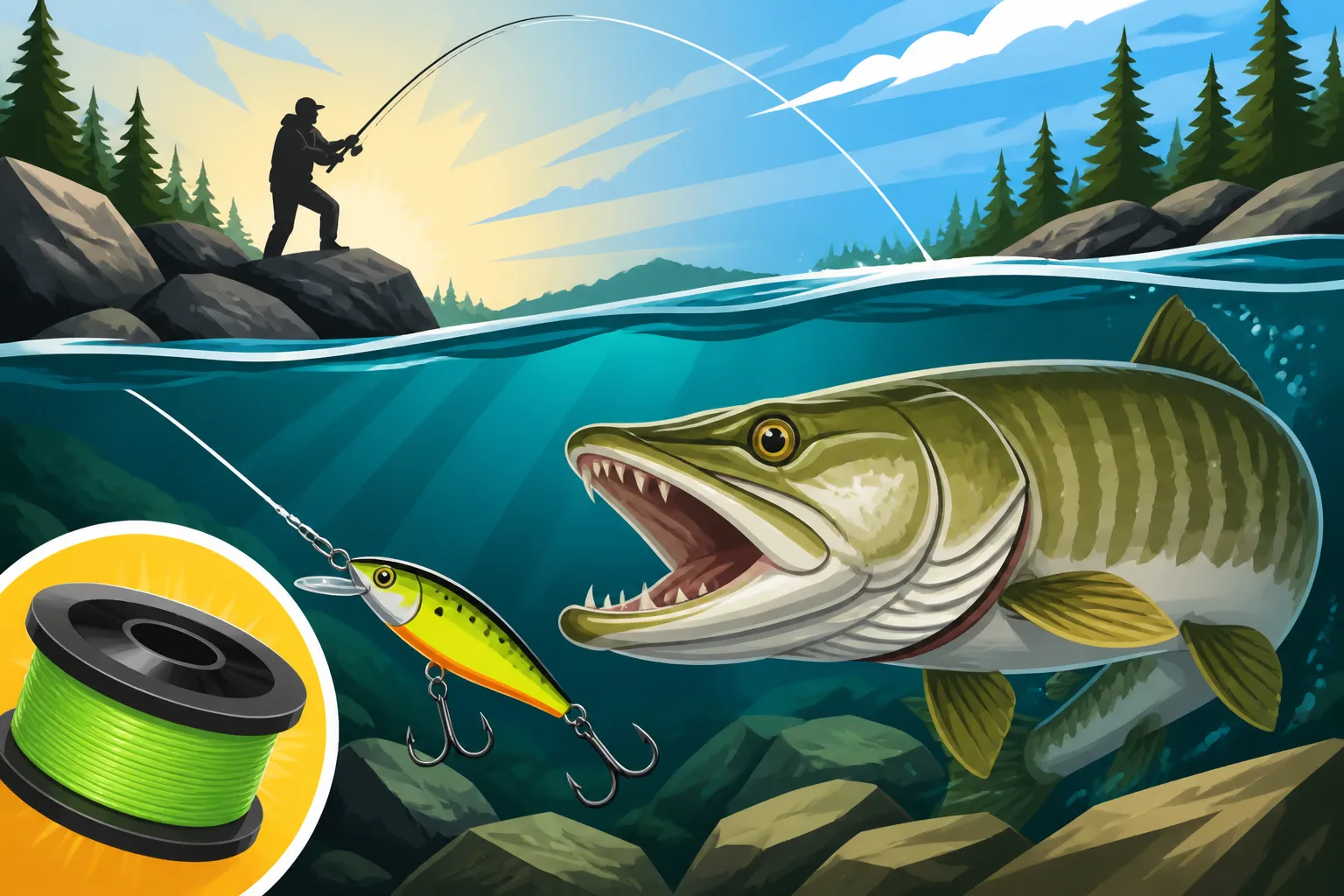
This is where the true abrasion resistance for muskie fishing in rocky water comes into its own. Attaching a high-quality fluorocarbon leader to your braided mainline is non-negotiable. Fluorocarbon has several key properties that make it superior for this application:
- Extreme Abrasion Resistance: Unlike braid, fluorocarbon is incredibly tough against nicks and scrapes. Its dense composition and harder surface can withstand repeated contact with rocks, logs, and even muskie teeth much better than monofilament or braid alone. This is your first line of defense against those sharp underwater hazards.
- Low Visibility: Fluorocarbon is nearly invisible underwater due to its refractive index being very close to that of water. In the clear waters often found in rocky Ontario lakes, this can be a huge advantage, as muskie are notoriously wary and can be spooked by highly visible lines.
- Sink Rate: Fluorocarbon sinks, which can be beneficial for getting your lure down quickly, especially when fishing deep rock structures.
- Stiffness: While some might see this as a drawback, the stiffness of heavier fluorocarbon leaders helps prevent your lure from fouling or tangling with your main line, which is crucial for big, erratic muskie baits.
When choosing a fluorocarbon leader, don't skimp on pound test. For muskie in rocky water, most anglers opt for 100-150 lb test. The length of your leader will vary, but a good starting point is 24-36 inches. This gives you enough protective material between your lure and your braid, especially if a muskie rolls in the line. High-quality fluorocarbon leader material can be a bit pricier, but it’s a critical investment. You can find excellent options on Amazon to suit your needs.
Monofilament: A Niche Player (or Not at All)
While monofilament has its place in fishing, it's generally not recommended as a primary line for muskie in rocky water. Here's why:
- Lower Abrasion Resistance: Compared to fluorocarbon, monofilament is significantly less abrasion-resistant. A few scrapes against a sharp rock and it can be compromised.
- Stretch: Mono has a lot of stretch. While this can be good for absorbing shock in some situations, it dramatically reduces sensitivity and makes it harder to set hooks effectively or steer a muskie away from snags in heavy cover.
- Visibility: Monofilament is more visible underwater than fluorocarbon.
However, some anglers might use a very heavy monofilament (e.g., 50-80 lb test) as a short "shock leader" or for certain topwater presentations where its buoyancy and stretch are desired, but even then, it's often backed by braid and then a separate, even heavier fluorocarbon or wire bite leader. For pure abrasion resistance in rocky situations, it simply doesn't compare to fluorocarbon.
Spooling Up and Rigging for Success
Having the right line components is only half the battle. How you spool, connect, and maintain your line system makes all the difference when targeting muskie in their rocky strongholds. It's about building a robust, reliable chain from your reel to your lure.
Choosing the Right Pound Test for Mainline and Leader
Selecting the correct pound test is crucial for balancing performance and protection.
- Braided Mainline: For general muskie fishing in Ontario, especially in rocky environments, a good rule of thumb is 80 lb test braid as a minimum. Many anglers prefer 100 lb test for added peace of mind, especially when throwing larger baits or fishing truly nasty cover. The slightly thicker diameter isn't usually a major detriment for casting these heavy lures, and the extra insurance is well worth it. Keep in mind that heavy braided lines also make it easier to retrieve expensive lures that might get snagged (within reason, of course – sometimes a snag is just too stubborn!). Best Line Weight for Muskie Fishing offers more detail on this topic.
- Fluorocarbon Leader: For the leader, you want to go even heavier. A 100 lb test fluorocarbon leader is a good starting point, but 120-150 lb test is often preferred by serious muskie anglers in rocky areas. This heavy leader is primarily for abrasion resistance and bite-through protection. Muskie teeth are sharp, and while fluoro is not entirely immune, a heavy leader drastically reduces the chance of a bite-off near the lure.
Knot Sense for Muskie Anglers
A chain is only as strong as its weakest link, and for anglers, that link is often the knot. When connecting your braided mainline to your fluorocarbon leader, you need a strong, reliable knot that can withstand immense pressure and abrasion. Forget your simple clinch knot; muskie demand more.
Popular and strong knots for this connection include:
- FG Knot: Considered one of the strongest leader-to-mainline knots, the FG knot is sleek, slides through guides easily, and maintains nearly 100% of the line's breaking strength. It can be a bit tricky to learn, but it's worth the practice.
- Improved Albright Knot: A more traditional and easier-to-tie option that is still very strong and relatively streamlined.
- Blood Knot: Another classic that, when tied correctly with lines of similar diameter, offers excellent strength. However, the varying diameters of braid and heavy fluoro can make it less ideal than the FG or Albright.
Beyond the mainline-to-leader connection, ensure all your knots are tied meticulously. For connecting your leader to your lure, a strong crimp connection or a properly tied heavy-duty knot like a Palomar knot (for lighter leaders) or a snug uni knot should be used with a high-quality snap or split ring for your lure. Best Leader for Pike and Muskie Fishing has more on this crucial connection.
Regular Inspection and Maintenance
This tip is often overlooked but is absolutely vital, especially when fishing rocky terrain. Your line, particularly the leader, takes a beating.
- Inspect Frequently: After every fish, or even after a few aggressive casts that might have contacted structure, run your fingers along the first few feet of your fluorocarbon leader and mainline. Feel for any nicks, frays, or rough spots.
- Retie and Replace: If you feel any damage, no matter how small, cut off that section and retie your leader. It's far better to sacrifice a few feet of line than to lose a trophy muskie and an expensive lure. Consider replacing your leader entirely after a few solid fish or a particularly tough day in heavy cover.
- Line Conditioners: While not a magic bullet, a good line conditioner applied to your braided line can help it resist abrasion slightly better, keep it smoother, and prolong its life. You can often find these useful accessories on Amazon alongside your fishing line.
Real-World Scenarios and Pro Tips for Rocky Muskie Fishing
Fishing for muskie in rocky Ontario waters isn't just about the gear; it's about strategy, awareness, and how you react in the heat of the moment. These real-world scenarios and pro tips will help you maximize your success and minimize heartbreak.
Fishing Heavy Cover: Precision and Awareness
When you're casting into a boulder field, along a jagged rip-rap bank, or over submerged rock piles, every cast counts.
- Accuracy is Key: Practice your casting to land your lure precisely where you want it. This reduces the chances of immediately snagging on an unseen rock or dragging your line across abrasive surfaces unnecessarily.
- Read the Water: Pay attention to how the water flows over and around structure. Often, muskie will position themselves in current breaks or ambush points adjacent to rocks. Look for irregularities, current seams, and deeper pockets near structure. The Ontario Fish ON-Line Interactive Zone Map, Explained can help you scout these areas from home.
- Vary Your Retrieval: Don't just cast and reel. Experiment with different speeds and pauses. Often, a brief stop right near a prominent rock might trigger a strike from a muskie that's been following your lure. But be ready; if they hit, you need to react fast.
Battling a Muskie in the Rocks: Steer, Don't Pull
Once you've hooked into a muskie in rocky territory, the fight truly begins. It's a delicate dance of power and finesse.
- Initial Hookset: A strong, confident hookset with your no-stretch braided mainline is critical. You want that hook to penetrate deep into their bony mouth.
- Steer, Don't Just Reel: Your primary goal after the hookset is to immediately turn the fish's head away from the nearest structure. Use your rod and reel to steer the fish into open water as quickly as possible. Don't simply crank on the reel. Apply side pressure with your rod to guide the fish. This is where the sheer pulling power of heavy braided line really helps.
- Maintain Pressure: Keep consistent, heavy pressure on the fish. Slack line is your enemy, as it gives the muskie a chance to shake the hook or gain leverage against a rock.
- Be Patient at the Boat: Once the fish is boat-side, don't rush it. A fresh muskie can make a powerful last-minute run for cover. Let it tire itself out, and be ready with a proper net. Best Techniques for Fall Muskie Fishing details more about fighting these incredible fish.
The Importance of a Good Net: Landing Safely
For muskie, especially in areas with tricky footing or boat access, a good landing net isn't just a convenience; it's a critical piece of safety equipment for both you and the fish.
- Large, Rubberized Net: Invest in a muskie-specific landing net. These nets are large enough to fully encompass a trophy-sized muskie, and they feature rubberized, knotless mesh. This type of mesh is far gentler on the fish's delicate slime coat, fins, and eyes, and it also prevents treble hooks from getting hopelessly tangled (a huge time-saver when trying to release a fish quickly).
- Ready Access: Keep your net easily accessible and ready to deploy the moment a muskie is near the boat. Fumbling for your net while a 50-inch muskie is doing a death roll beside the boat is a recipe for disaster.
- Proper Landing Technique: Guide the muskie head-first into the net. Once it's in, quickly submerge the net to calm the fish. Handle the fish minimally and always release it quickly and carefully. Best Landing Net for Muskie emphasizes the importance of proper netting for muskie. You can find excellent quality muskie nets on Amazon to ensure safe handling.
Remember, every muskie caught is a special experience. By preparing with the right line and rigging, you'll not only increase your chances of landing these magnificent fish but also ensure they swim away healthy to fight another day.
Comparing Muskie Fishing Line Options
To give you a quick overview, here's a table comparing the main line types discussed for muskie fishing in rocky environments:
| Line Type | Primary Use | Abrasion Resistance (vs. Rocks) | Stretch | Visibility (Underwater) | Sensitivity | Pros | Cons |
|---|---|---|---|---|---|---|---|
| Braided Line | Mainline | Moderate (frays easily) | Very Low | High | Very High | High strength, thin diameter, no stretch, great hooksets | Requires leader, visible, can dig into spool, not abrasion-resistant on its own |
| Fluorocarbon Leader | Leader | Very High | Low | Very Low | High | Excellent abrasion resistance, low visibility, sinks, stiff | Can be stiff and difficult to knot in heavy tests, more expensive, some stretch in long lengths |
| Monofilament | Not Recommended (Main) | Low | High | Medium | Low | Good knot strength, shock absorption, inexpensive (for general use) | Poor abrasion resistance, high stretch, more visible, poor sensitivity |
This table highlights why a combination of braided mainline and a heavy fluorocarbon leader is the undisputed champion for muskie fishing in Ontario's rocky waters. It gives you the best of both worlds: the power and sensitivity of braid, paired with the rock-and-tooth-resistant shield of fluorocarbon.
Disclaimer
This article is for general informational purposes only and does not constitute professional advice. Laws, prices and regulations vary by location and change over time. Consult a qualified professional for guidance on your specific situation.