Round Goby: Ontario’s Invasive Great Lakes Fish
If you've spent any time fishing in Ontario's Great Lakes or connected waterways recently, chances are you've encountered one of the most frustrating and ubiquitous invaders: the round goby. These small, aggressive fish have completely altered our aquatic ecosystems, making them a constant nuisance for anglers and a serious concern for conservationists. This guide aims to pull back the curtain on this tenacious species, explaining what round gobies are, why they're such a problem, how they spread, and most importantly, what you, as a responsible angler, can do when you inevitably hook one.
Understanding the Invader: What Exactly is a Round Goby?
Imagine a fish that’s not supposed to be here, but has made itself right at home, pushing out our native species and changing the very fabric of our beloved fishing grounds. That's the round goby for you. They're a hardy, bottom-dwelling fish that have unfortunately thrived in Ontario's waters, causing ripples of concern throughout the angling community.
Origins and Unwanted Journey to Our Waters
The story of the round goby in the Great Lakes is a classic, albeit tragic, tale of invasive species. These fish aren't native to North America; their ancestral home lies across the ocean in the Black and Caspian Seas, and in the fresh and brackish waters around the Ponto-Caspian region of Eastern Europe and Western Asia. They were first detected in the St. Clair River, between Lake Huron and Lake Erie, way back in the early 1990s. How did they make such a massive journey? The most accepted theory points to ballast water from transoceanic ships. Picture this: huge cargo vessels filling their ballast tanks with water in European ports, inadvertently sucking in tiny goby larvae or eggs, then sailing across the Atlantic and releasing that water (and its biological cargo) into our Great Lakes. It's a stark reminder of how interconnected our world truly is, and how human activities, even unintentional ones, can have profound ecological consequences. The round goby's arrival was entirely accidental, but their impact has been anything but minor.
Identifying the Unmistakable Features of a Round Goby
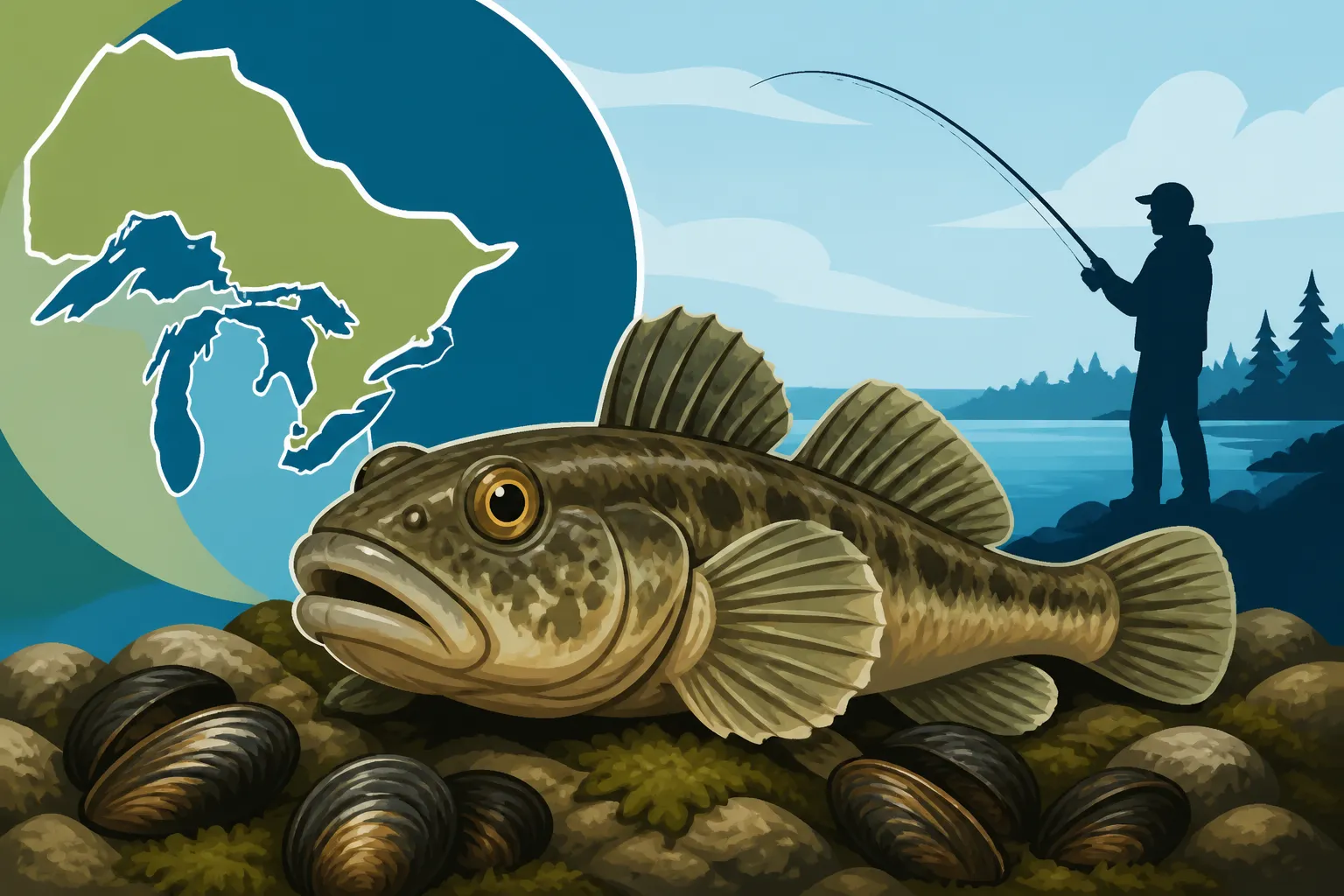
Once you've seen a round goby, they're pretty hard to forget. They have a distinct look that, with a little practice, sets them apart from our native bottom-dwellers like sculpins. Typically, they're relatively small, usually growing to about 10-25 cm (4-10 inches), though some larger specimens have been caught. Their bodies are mottled brown and grey, providing excellent camouflage against rocky or silty bottoms.
Here's what to look for:
- Large Head and Prominent Eyes: They have a relatively large head for their body size, with eyes that seem to protrude slightly.
- Single Fused Pelvic Fin: This is perhaps the most defining characteristic. Unlike most native fish that have two separate pelvic fins, the round goby's pelvic fins are fused into a single, suction-cup-like disc on their underside. This unique feature helps them cling to rocks and other substrates, even in strong currents, giving them an advantage in diverse habitats. You can easily see this if you gently flip them over.
- Distinct Black Spot on Dorsal Fin: Look closely at the anterior dorsal fin (the one closer to the head). You'll typically find a prominent black spot at its rear base. This is a key identifier.
- Thick Lips and Bumpy Texture: Their lips can appear quite thick, and their bodies often have a somewhat bumpy, textured feel.
Sometimes anglers confuse them with native mottled sculpins, but the fused pelvic fin and the dorsal fin spot are dead giveaways for the goby. Knowing these visual cues is crucial, as misidentifying an invasive species can have negative consequences for our native fish populations.
| Feature | Round Goby | Native Mottled Sculpin |
|---|---|---|
| Pelvic Fin | Fused into a single, suction-cup-like disc | Two separate pelvic fins |
| Dorsal Fin | Prominent black spot on posterior of first dorsal fin | No distinct black spot on dorsal fin |
| Eyes | Large, often slightly protruding | Smaller, set higher on the head |
| Scales | Small scales, rough feel | Mostly scaleless, smooth feel |
| Body Shape | Stout, thick-bodied, tapered tail | Broader, flattened head, tapering body |
| General Coloration | Mottled brown/grey | Mottled brown/grey, often with darker bands |
The Troubling Impact: Why Round Gobies are a Problem
It’s easy to dismiss a small fish as insignificant, but the round goby has proven to be anything but. Their invasive nature has caused widespread disruption, creating a domino effect that impacts everything from tiny invertebrates to trophy game fish. For those of us who cherish Ontario’s angling opportunities, their presence is a constant, unwelcome reminder of the fragility of our ecosystems.
Disrupting the Delicate Food Web and Competition with Native Species
One of the most insidious ways round gobies wreak havoc is by fundamentally altering the food web. They are incredibly aggressive and voracious eaters, capable of consuming a wide range of prey. This means they directly compete with our native fish species for essential food sources like insects, crustaceans, and the eggs and fry of other fish. Imagine trying to find enough food when a new, highly efficient competitor moves into your neighbourhood, eating everything in sight. That's what our native species are facing.
For instance, species like Yellow Perch Fishing in Ontario, smallmouth bass, and even juvenile walleye, which typically feed on bottom-dwelling invertebrates, now find their larders depleted. Round gobies are particularly adept at consuming zebra and quagga mussels, another invasive species. While this might sound like a good thing, it means they bioaccumulate toxins from these mussels, which can then be passed up the food chain to larger predators, potentially impacting their health and reproductive success. Anglers have noted a shift in the diets of native fish, sometimes forcing them to adapt to different prey or simply go hungry. This competition can lead to slower growth rates, reduced population sizes, and ultimately, a less healthy fishery overall.
Predation and the Threat to Spawning Grounds
Beyond just outcompeting for food, round gobies are also direct predators, particularly on the eggs and fry of our most prized sport fish. Picture a smallmouth bass diligently guarding its nest in the spring, only to have a relentless wave of gobies swarming in, snatching up precious eggs and newly hatched fry. This scenario plays out repeatedly in many of Ontario's lakes and rivers, creating a severe bottleneck for the reproduction of native species.
Smallmouth bass, for example, are incredibly vulnerable during their spawning period. Gobies exploit this, often invading nests and consuming the unprotected eggs. The same goes for walleye and various trout species in certain areas. They're like aquatic opportunists, always ready to capitalize on a chance for an easy meal. Furthermore, gobies often take over prime spawning habitats, pushing native fish out of historically successful breeding grounds. Their aggressive territorial behaviour means they can establish themselves in rocky crevices and other protected areas, making it difficult for native fish to find suitable places to reproduce. This double whammy of predation and habitat displacement has a profound impact on the long-term health and sustainability of our fisheries, especially in waters heavily affected like the Lake Erie Fishing Guide and Lake Simcoe Fishing Guide areas.
Spreading the Word, Not the Fish: How They Propagate
The round goby's ability to spread so effectively is a testament to its resilience and adaptability, but also a stark reminder of how easily we can inadvertently help invasive species colonize new areas. Understanding their propagation methods is the first step in becoming part of the solution rather than unknowingly contributing to the problem.
Natural Dispersal and Boat-Assisted Travel
Round gobies are pretty good at spreading on their own, mind you. They're hardy fish, able to tolerate a wide range of water conditions, and they're prolific spawners, laying eggs multiple times a year. This means they can naturally expand their range through connected waterways like rivers and canals, slowly but surely moving into new lakes and sections of the Great Lakes. Their suction-cup-like pelvic fin, which we discussed earlier, allows them to cling to rocks and navigate strong currents that might deter other fish, giving them an advantage in traversing challenging environments.
However, the speed and extent of their spread wouldn't be nearly as alarming without human assistance. Boats, trailers, and recreational equipment are often the unwitting vectors for this invasion. Imagine pulling your boat out of Lake Erie, a known goby hotspot, and heading to an inland lake in a different Ontario Fisheries Management Zones, Explained. If you don't properly clean, drain, and dry your vessel, residual water in the bilge or livewell, or even small gobies clinging to the hull or trapped in weeds on your trailer, can easily be transported. One small goby, or even just some eggs, introduced into a new, unaffected lake can rapidly establish a new population, starting the cycle of disruption all over again.
The Importance of Clean, Drain, Dry for Anglers
This brings us to one of the most critical responsibilities for every angler and boater in Ontario: the "Clean, Drain, Dry" protocol. This isn't just a suggestion; it's a vital practice that helps protect our precious waterways from invasive species like the round goby.
Here's what that means in practice:
- Clean: Before leaving any water body, thoroughly inspect your boat, trailer, and all fishing gear. Remove any visible mud, plants, or animals. This includes checking your anchor, lines, fishing nets, and even wading boots. A stiff brush, or even a pressure washer if available, can make a huge difference. You might want to carry a brush and scraper from a retailer like Amazon to ensure you can get into all the nooks and crannies.
- Drain: Pull the drain plug in your boat (if applicable) and empty all livewells, bait buckets, and any other water-holding compartments. Make sure to do this on land, away from the water's edge, so that any foreign organisms or water don't get back into the lake or river.
- Dry: Allow your boat, trailer, and all equipment to completely dry for at least 5 days, if possible, before entering another water body. If drying isn't an option, or if you're moving between bodies of water more quickly, consider a thorough rinse with hot, high-pressure water (ideally 50°C/122°F or higher) to kill any hidden invaders. Even a quick sun-dry can help, but a full drying period is best.
Adhering to Clean, Drain, Dry principles isn't just about gobies; it prevents the spread of other aquatic invasive species too, like zebra mussels, quagga mussels, and various aquatic plants that can choke out native vegetation. It’s a collective effort, and every angler plays a crucial role in safeguarding Ontario’s fishing future.
Angler's Role: What to Do When You Catch a Round Goby
So, you're out on the water, having a great day, and suddenly you feel that familiar tug. You reel it in, and there it is: a round goby. Your immediate reaction might be annoyance, but what you do next is critical. As an angler, you're on the front lines of this battle, and your actions can make a real difference.
Catching and Ethical Disposal: A Non-Native Responsibility
Here's the golden rule, and it's non-negotiable for round gobies in Ontario: If you catch a round goby, do NOT release it back into the water. This isn't just a recommendation; it's often a legal requirement in many jurisdictions across North America to prevent the further spread of invasive species. Releasing it, even accidentally, can contribute to its population growth and spread to new areas.
So, what should you do?
- Identify with Certainty: First, be absolutely sure it's a round goby (refer back to the identification table if needed). We don't want to accidentally harm a native species.
- Humanely Dispatch: Once identified, humanely dispatch the fish. The quickest and most ethical way is to strike its head firmly, or place it in a bucket of ice water where it will quickly go dormant and expire.
- Proper Disposal: Dispose of the deceased goby properly.
- On Land: The best practice is to put it in your trash, either at home or in a designated waste bin at a boat launch or marina. Do not leave it on the shore where it could attract scavengers or potentially get back into the water during high tide or rain.
- Bait Use (with extreme caution): In some very specific scenarios, if it's explicitly legal in your area and you caught the goby from the same water body you intend to use it as bait in, you might consider using it as bait. However, you absolutely cannot transport a live or dead goby from one water body to another for bait. The risk of spreading them is too high. My strong recommendation is to avoid using them as bait unless you are absolutely certain of the regulations and the lack of risk.
- Freezing: If you’re not immediately at a disposal point, you can bag and freeze the goby. This is a good interim step before proper disposal. You can find durable freezer bags on Amazon for this purpose.
The goal is to remove them from the ecosystem permanently. While you might not single-handedly eradicate the species, every goby removed is one less fish consuming native eggs, competing for food, and reproducing.
Reporting Sightings: Helping Track the Invasion
Beyond simply removing them, your observations as an angler are incredibly valuable to conservation efforts. Knowing where gobies are and if they're expanding into new areas helps scientists and resource managers understand the invasion dynamics and target control efforts more effectively.
If you catch a round goby, especially in a water body where you haven't seen them before, or if you notice a particularly high concentration, consider reporting it.
- Invading Species Awareness Program: Ontario has a dedicated resource for reporting invasive species. The Invading Species Awareness Program (ISAP), a partnership between the Ontario Federation of Anglers and Hunters (OFAH) and the Ministry of Natural Resources and Forestry (MNRF), offers an online reporting tool and a toll-free hotline. Providing details like the date, location (GPS coordinates are best!), and even a photo, can be incredibly helpful.
- Ontario's Fish ON-Line Map: While not a reporting tool itself, familiarize yourself with the How to use the Fish ON-Line interactive zone map to see which areas are already known to have goby populations and to understand the specific regulations for the zone you're fishing in, especially regarding species limits and what constitutes "special regulation waters." Knowing what's normal for a particular area can help you identify when something unusual, like a goby in a new lake, occurs.
Every piece of information helps paint a clearer picture of the spread and impact of these invaders. Your involvement as a citizen scientist is a powerful tool in the fight against invasive species.
Looking Ahead: Management Efforts and Hope for the Future
Facing an entrenched invasive species like the round goby can feel overwhelming, almost like trying to empty a lake with a teacup. However, it's not a hopeless situation. Dedicated efforts by scientists, government agencies, and engaged citizens are continuously underway to manage their populations and mitigate their impact. While complete eradication is highly unlikely given their widespread establishment in the Great Lakes, control and containment are achievable goals.
Monitoring and Research: Understanding the Enemy
One of the most crucial aspects of managing any invasive species is to understand it intimately. Scientists are constantly monitoring round goby populations to track their densities, distribution, and overall health. This involves fieldwork, surveys, and detailed analysis of catch data. Knowing where they are abundant and where they are just beginning to establish themselves helps prioritize conservation efforts.
Researchers are also delving deep into the goby's biology. They’re studying their reproductive cycles, dietary habits, preferred habitats, and even their genetic makeup. For instance, understanding their spawning frequency can inform strategies for reducing their reproductive success. Studies on their diet help us comprehend their impact on native species and the food web. There’s ongoing work to identify potential biological controls or vulnerabilities that could be exploited without harming native fish. It’s a complex puzzle, and every piece of research helps us build a more effective management strategy. The goal isn't just to react to their presence, but to proactively develop long-term solutions that protect our native fish populations, including critical species like Walleye Fishing in Ontario and Smallmouth Bass Fishing in Ontario.
Public Education and Collaborative Action
Ultimately, the most powerful tool we have in managing invasive species is education and collective action. No amount of scientific research or government regulation will be truly effective without the informed participation of the public, especially anglers and boaters who are most often interacting with these waters.
Conservation groups, government bodies, and angling organizations are continuously working to raise awareness about the round goby and other invasive species through campaigns, workshops, and readily available information. Programs like the Invading Species Awareness Program are central to this. They provide resources, host events, and offer clear guidelines on prevention and reporting.
Furthermore, collaborative actions, where different stakeholders work together, are essential. This could involve:
- Volunteers: Anglers volunteering their time to help with clean-up initiatives or monitoring programs.
- Industry Partnerships: Working with marine businesses and tackle shops to ensure "Clean, Drain, Dry" messages are prominent and that equipment (like livewells and bait buckets) is designed to minimize invasive species transport.
- Angler Practices: The individual choices we make, like properly disposing of gobies and thoroughly cleaning our gear after every outing, accumulate to create a significant impact.
While round gobies present a persistent challenge, the ongoing commitment to understanding them, coupled with robust public education and collaborative efforts, offers the best path forward. Our beautiful lakes and rivers are worth fighting for, and by working together, we can ensure future generations of anglers can enjoy the rich and diverse fisheries that make Ontario truly special.
Disclaimer
This article is for general informational purposes only and does not constitute professional advice. Laws, prices and regulations vary by location and change over time. Consult a qualified professional for guidance on your specific situation.