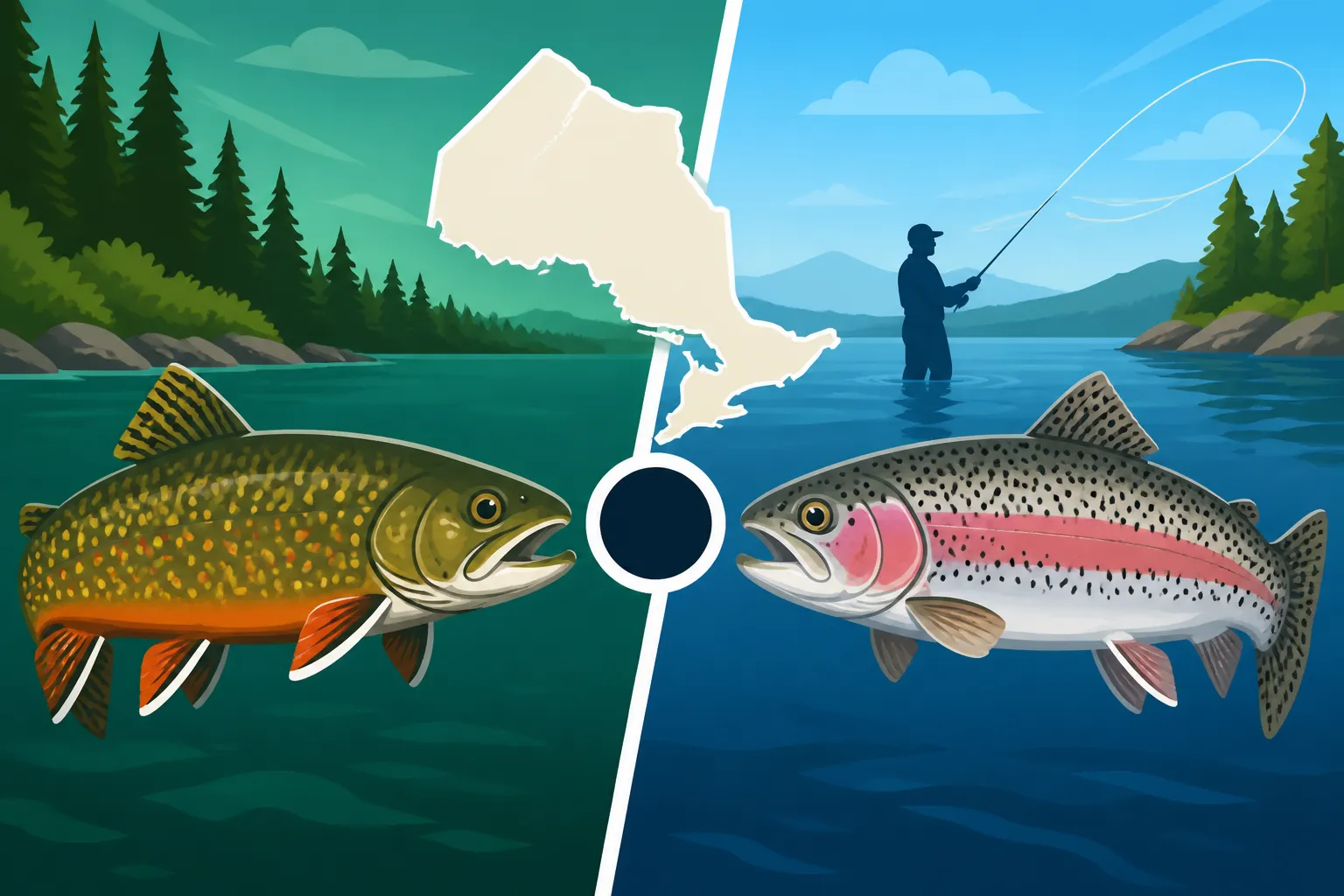
How to tell a brook trout from a rainbow trout
It's happened to every angler, myself included: you reel in a beautiful trout from an Ontario stream or lake, and for a moment, you're absolutely stumped. Is it a brook trout, or is it a rainbow? The subtle differences can be incredibly frustrating to discern, especially when you're just starting out or fishing in unfamiliar waters. This comprehensive guide is here to help you confidently distinguish between these two magnificent species, ensuring you understand exactly what you've caught and why it matters for your fishing adventures.
The Challenge of Trout Identification in Ontario
Ontario is blessed with incredible freshwater fishing opportunities, including a variety of trout species that thrive in our diverse aquatic environments. However, the sheer beauty and often similar appearance of these fish can lead to a common dilemma for anglers: how do you tell them apart? The challenge is real, and it's not just about satisfying your curiosity; accurate identification is crucial for responsible angling and adherence to provincial regulations.
Why Anglers Get Confused
The primary reason anglers often find themselves scratching their heads when comparing a brook trout and a rainbow trout is their shared habitat and sometimes overlapping colouration. Both can be found in similar cold, clear water environments, making it difficult to rely solely on where you caught them. Moreover, the appearance of any fish can vary significantly depending on factors like its age, sex, diet, and the specific water body it inhabits. A brook trout from a dark, tannin-stained northern lake might look quite different from one caught in a crystal-clear spring creek in southern Ontario. The same goes for rainbows – a wild, stream-resident rainbow can look far more vibrant and different than a recently stocked fish. Sometimes, fish are also stocked together, particularly in put-and-take fisheries, further blurring the lines in a particular spot. This variability adds layers of complexity that can make a quick glance insufficient for a definitive ID.
The Importance of Correct Identification
Beyond just knowing what you've landed, there are very practical and important reasons to correctly identify your trout. First and foremost, regulations often differ between species. What you can keep, how many, and during what season can change dramatically from one species to another, and even between different Fisheries Management Zones (FMZs) within Ontario. Mistaking a brook trout for a rainbow, or vice versa, could inadvertently lead to you violating bag limits or slot sizes. For instance, some waters might have strict catch-and-release rules for native brook trout to protect their populations, while rainbow trout might have a more liberal harvest limit.
Secondly, understanding which species you're encountering helps immensely with conservation efforts. Brook trout are native to Ontario and are often a key indicator of pristine, healthy cold-water ecosystems. Rainbow trout, while widely popular, are an introduced species in many parts of Ontario, though they have established wild populations in numerous rivers and lakes, particularly in the Great Lakes tributaries. Knowing the difference helps anglers appreciate the unique ecological role each plays and supports responsible angling practices that prioritize the health of our fisheries. For a deeper dive into all the rules, check out Ontario Fishing Regulations Explained.
Key Distinguishing Features of Brook Trout (Salvelinus fontinalis)
The brook trout, often affectionately called "brookie," "speckled trout," or "squaretail," is a true jewel of Ontario's cold, clear waters. It's actually a char, not a true trout, but it's universally referred to as a trout by anglers. Identifying a brook trout involves looking at a combination of body shape, fin characteristics, and its unmistakable colouration.
Body Shape and Fin Characteristics
When you hold a brook trout, you'll often notice a somewhat more elongated, torpedo-like body compared to some other trout species, though this can vary. The key fin characteristic that immediately screams "brook trout" is the leading edge of its lower fins—pectoral, pelvic, and anal fins. These fins almost always have a distinct white leading edge, followed by a black stripe, and then the reddish or orange fin colour itself. This three-tone effect is a hallmark of the brook trout.
Another important visual cue is the tail fin. Brook trout tend to have a less forked or even somewhat square tail (hence the "squaretail" nickname), especially in younger or smaller fish. As they get larger, the tail might become slightly more forked, but it generally remains less deeply V-shaped than a rainbow trout's tail. The overall body is quite streamlined, perfectly adapted for darting through cold, rocky streams and hidden pools.
Colouration and Spotting Patterns
This is where brook trout really shine and often create confusion due to their stunning, variable hues. However, there are consistent patterns to look for:
- Dark Green to Brown Back: The back of a brook trout is typically a mosaic of dark green, olive, or even brownish colours, often with worm-like or labyrinthine patterns (known as vermiculation) that are darker than the background colour. These intricate markings are a strong identifier.
- Pale Spots, Red Spots with Blue Halos: The flanks of a brook trout are adorned with numerous pale, almost cream-coloured spots. Interspersed among these pale spots, especially towards the lateral line, you'll find those iconic red or orange spots, each surrounded by a distinct blue halo. This "blue halo" around the red spots is a critical distinguishing feature and one of the most reliable indicators of a brook trout.
- Vibrant Underside: The belly of a brook trout can range from white to cream, but during spawning season, particularly for males, it can turn a brilliant orange or reddish-orange, sometimes extending up the flanks. This vibrant belly, coupled with the dark-edged white fins, makes for a truly spectacular fish.
Habitat Preferences and Behaviour
Brook trout are quintessential cold-water specialists. They absolutely thrive in pristine, cold, well-oxygenated streams, rivers, and clear, spring-fed lakes. Their native range in Ontario is vast, particularly across the Canadian Shield. They are highly sensitive to water temperature and pollution, often indicating a healthy ecosystem. You'll find them holding in deep pools, undercuts, around fallen timber, or in areas with strong current providing oxygen and food. They are often less tolerant of warmer water than rainbow trout.
These are the trout you often seek out in remote, undisturbed wilderness settings, making them a prized catch for many anglers. When you're heading out to fish for these native beauties, remember that Brook Trout Native Range in Ontario covers where you're most likely to encounter them in their purest form.
Key Distinguishing Features of Rainbow Trout (Oncorhynchus mykiss)
The rainbow trout, a powerhouse of the angling world, is celebrated for its fighting spirit and adaptability. While not native to all of Ontario, it has been widely introduced and has established thriving populations, particularly in the Great Lakes and their tributaries, as well as many inland lakes and rivers. Its identification also relies on a distinct set of physical characteristics that set it apart from the brook trout.
Body Shape and Fin Characteristics
Rainbow trout generally possess a more streamlined, torpedo-shaped body than brook trout, built for speed and power, especially in larger rivers or open lake environments. Their overall profile is often described as sleeker and more symmetrical. The fins of a rainbow trout lack the prominent white and black leading edges seen on a brook trout's lower fins. Instead, their fins are typically clearer or more uniformly coloured, often with dark spots that match the body spotting.
The tail fin of a rainbow trout is typically more deeply forked than a brook trout's, especially in mature fish. It will often have numerous small, dark spots radiating out onto the tail itself. This heavily spotted tail is a very strong indicator of a rainbow trout. When you're trying to figure out if you've landed one of these, pay close attention to the tail.
Colouration and Spotting Patterns
While rainbow trout can vary in colour, their distinguishing marks are quite consistent:
- Pinkish-Red Lateral Stripe: The most famous and often easiest-to-spot feature is the prominent pink or reddish stripe running horizontally along the lateral line of the fish, from gill plate to tail. This stripe can range from a faint blush to a vibrant, iridescent band, especially in spawning fish. This is where they get their "rainbow" name!
- Numerous Dark Spots: Unlike the brook trout's pale spots and worm-like markings, rainbow trout are characterized by numerous small, dark spots (often black or dark brown) scattered across their entire body – including their back, flanks, dorsal fin, and that heavily spotted tail. These spots are typically more uniform in size than a brook trout's varied spotting.
- Silver to Greenish Back: The back of a rainbow trout usually ranges from an olive-green to a steely blue or silvery sheen, fading to lighter sides and a white belly. The overall impression is often brighter and more silvery than a brook trout.
Habitat Preferences and Behaviour
Rainbow trout are incredibly adaptable and can be found in a wider range of habitats than brook trout. While they also appreciate cold, clear water, they are generally more tolerant of slightly warmer water temperatures and can thrive in larger rivers, vast lakes, and even some warmer streams that brook trout might avoid. They are also known for their anadromous forms, often called "steelhead," which migrate from large lakes (like the Great Lakes) into rivers to spawn.
In Ontario, rainbow trout are extensively stocked to support recreational fisheries, making them a common catch in many lakes and rivers. If you're interested in where these spirited fish are introduced, you can read more about Rainbow Trout Stocking in Ontario. They are aggressive feeders, often found in runs, riffles, and deeper pools, and are famous for their acrobatic jumps when hooked.
Side-by-Side Comparison: Brook Trout vs. Rainbow Trout
Putting these two beautiful species head-to-head really highlights their unique characteristics. It’s not about finding one single difference, but rather observing a combination of traits. Think of it like a checklist – the more boxes you tick for one species, the more confident your identification becomes.
Visual Cues at a Glance
Here’s a quick rundown of the primary visual differences that should help you make a confident identification right there on the water:
- Spots vs. Worms: Brook trout have pale spots and worm-like (vermiculation) patterns on their backs, with red spots surrounded by blue halos on their sides. Rainbow trout have numerous dark spots all over, including their tail, and lack the blue halos or worm-like markings.
- Fin Edges: Brook trout have distinct white leading edges followed by black on their lower fins. Rainbow trout lack this characteristic fin striping; their fins are generally clear or spotted.
- Lateral Stripe: Rainbow trout almost always have a noticeable pink or reddish stripe along their side. Brook trout do not have this stripe.
- Tail Shape: Brook trout tend to have a squarer or only slightly forked tail. Rainbow trout generally have a more deeply forked tail, which is often spotted.
Practical Tips for Anglers on the Water
Identifying trout accurately in the heat of the moment can be tough, especially if the fish is thrashing, or you're trying to release it quickly. Here are some tips to make it easier:
- Observe Immediately: Before handling the fish too much, try to get a good look at its overall colour and spotting. If you can, take a quick photo while the fish is still in the water or just barely out, ensuring you capture the fins and side profile. This helps for later review or asking an expert.
- Focus on Key Features: Don't get overwhelmed by the whole fish. Zero in on the lower fins (white edges?), the sides (blue halos? pink stripe?), and the tail (forked? spotted?). These are often the clearest indicators.
- Handle with Care: Always prioritize the fish's health, especially if you intend to release it. Wet your hands before touching, and keep handling to a minimum. A proper landing net with rubberized mesh can keep the fish calm and make observation easier without harming its slime coat.
- Consult a Guide: If you're really unsure, a good, waterproof fish identification card or a small field guide specifically for Ontario fish can be invaluable. You can often find these types of resources online, or even on a platform like Amazon, where many anglers find their essential gear. It’s a smart addition to your tackle box, right next to your best lures for Fly Fishing for Trout in Ontario.
- Learn Your Local Waters: Over time, you'll get familiar with what species are prevalent in your favorite spots. If a stream is known for native Brook Trout in Ontario's Crown Land Lakes, you'll likely assume anything you catch from there is a brook trout, unless it clearly shows rainbow traits. Conversely, many stocked ponds or Great Lakes tributaries are primarily rainbow trout fisheries.
Here's a comparison table to help you keep these distinctions straight:
| Feature | Brook Trout (Salvelinus fontinalis) | Rainbow Trout (Oncorhynchus mykiss) |
|---|---|---|
| Species Type | Char (Native to Ontario) | True Trout (Introduced in many areas of Ontario) |
| Back Colour | Dark green/brown with worm-like (vermiculation) patterns | Olive green to silvery/blue, typically with spots |
| Side Spotting | Pale spots, red/orange spots with blue halos | Numerous dark spots (black/brown), no blue halos |
| Lateral Stripe | Absent | Distinct pink/red stripe (often iridescent) |
| Lower Fins | Distinct white leading edge, then black, then colour | Lacking white/black edges; often clear or spotted |
| Tail Fin | Square to slightly forked, often unspotted | More deeply forked, typically with many dark spots |
| Mouth | Relatively large, extends past eye | Extends to or slightly past eye |
| Habitat | Cold, clear, oxygenated streams, spring-fed lakes | More adaptable, larger rivers, Great Lakes, stocked lakes |
Why Identification Matters for Your Fishing Experience
Beyond just the thrill of identifying your catch, knowing the difference between a brook trout and a rainbow trout carries significant implications for your angling success, adherence to regulations, and your contribution to conservation. It's not just an academic exercise; it directly impacts how you fish and interact with Ontario's precious aquatic resources.
Adhering to Regulations and Limits
This is arguably the most critical reason for accurate identification. Ontario's fishing regulations are designed to manage fish populations sustainably, and these rules often vary by species, location (Fisheries Management Zone), and even the type of license you hold (Sport vs. Conservation). For example, a particular lake might have a slot limit for brook trout, meaning fish within a certain size range must be immediately released, while rainbow trout in the same lake might have a different daily catch limit. If you can't tell them apart, you risk inadvertently breaking the law.
Imagine fishing a small stream known for native brook trout. The regulations might state a low bag limit for brook trout and a zero possession limit for certain size ranges to protect spawning stock. If you misidentify a larger rainbow trout, which might have different, more lenient regulations, you could be in violation. On the flip side, if you assume a brook trout is a rainbow, you might release a fish you could legally keep, or keep one you should have released. This directly affects your angling experience and could lead to fines or penalties if you are checked by a conservation officer. Always consult the most current Ontario Fishing Regulations Summary for the specific FMZ you are fishing in.
Conservation and Responsible Angling
Understanding the species you're catching also plays a vital role in being a responsible and conservation-minded angler. Brook trout, being native, often represent the health of an ecosystem. Their presence can indicate high water quality and an undisturbed environment. By accurately identifying them, you gain a deeper appreciation for their natural history and the importance of protecting their habitats. Catch-and-release practices, especially for larger, wild brook trout, become even more meaningful when you know you're helping to sustain a native population.
Rainbow trout, while not native to all parts of Ontario, are an incredibly valuable sport fish. They are widely stocked to provide angling opportunities, and in many Great Lakes tributaries, they have established self-sustaining wild populations. Recognizing these wild-spawning rainbows allows you to appreciate their resilience and the unique life cycles of anadromous fish.
Being able to differentiate between Native trout species found in Ontario and Non-native trout species stocked in Ontario empowers you to make informed decisions about your catch. It helps you understand the bigger picture of fisheries management and how your actions contribute to the overall health of Ontario's waters. This deeper understanding enhances the entire fishing experience, turning a simple outing into an educational and fulfilling connection with nature. For example, if you catch a holdover trout—a stocked fish that has survived previous seasons and adapted to its wild environment—it's a testament to the fishery's health, and knowing its species makes that observation even more meaningful. What a holdover trout is is a fascinating concept that builds on species identification.
By learning these distinctions, you're not just becoming a better angler; you're becoming a better steward of Ontario's incredible natural resources.
Disclaimer
This article is for general informational purposes only and does not constitute professional advice. Laws, prices and regulations vary by location and change over time. Consult a qualified professional for guidance on your specific situation.