Do Ontario Lakes Have Sturgeon?
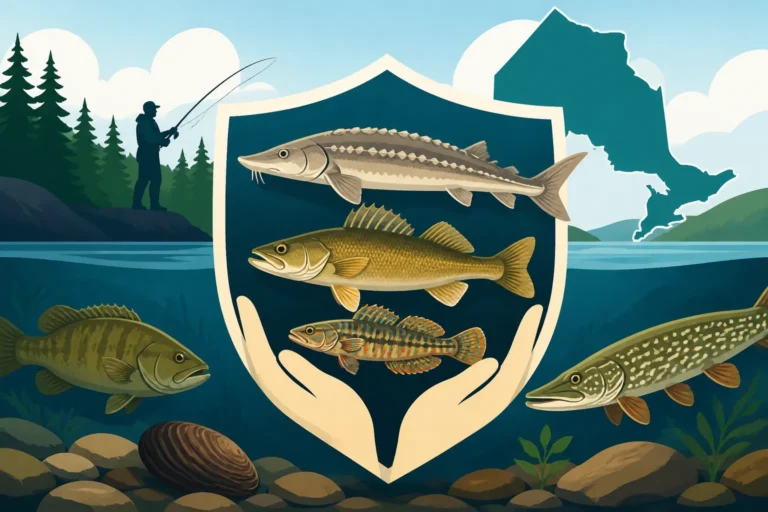
It's a question many Ontario anglers ponder, often with a mix of wonder and disbelief: "Do Ontario lakes have sturgeon?" For folks accustomed to reeling in walleye, bass, or pike, the idea of a prehistoric leviathan lurking beneath the surface can seem almost mythical. But let me tell you, as someone who’s spent countless hours on these waters, the answer is a resounding yes! Ontario's waters are indeed home to these incredible, ancient fish, and understanding their presence, their struggles, and their vital role in our ecosystems is part of being a truly informed angler. This guide will dive deep into the world of Lake Sturgeon in Ontario, from their hidden haunts to the critical conservation efforts that protect them.
The Majestic Lake Sturgeon: A True Ontario Survivor
When you think of the sheer variety of fish in Ontario, the Lake Sturgeon often feels like an anomaly. They don't look like your typical game fish, and their life history is a testament to resilience spanning millions of years. These gentle giants are living fossils, and their very existence in our waters is a marvel. For many, seeing one is a bucket-list experience, a true connection to an ancient past.
Historical Presence and Modern Challenges
Imagine a time when the rivers and lakes of Ontario teemed with these magnificent creatures. Historically, Lake Sturgeon were abundant across the Great Lakes and their major tributary rivers. Indigenous communities revered them, and early European settlers found them to be a valuable resource, both for their flesh and their roe. They were an integral part of the ecosystem and the culture of the region for millennia.
However, the 19th and 20th centuries brought significant changes that severely impacted sturgeon populations. Overfishing, especially for caviar, took a massive toll. But perhaps even more devastating was habitat alteration. The construction of dams blocked critical spawning routes, fragmenting populations and preventing them from reaching ancestral breeding grounds. Pollution from industrialization further degraded water quality, making many areas uninhabitable for these sensitive fish. Their slow growth rate and late maturity meant they couldn't recover quickly from these pressures. Today, while their populations are significantly reduced from historical levels, they persist, a testament to their incredible will to survive and ongoing conservation efforts.
Where Lake Sturgeon Call Home in Ontario Today
While their range is diminished, Lake Sturgeon can still be found in many significant water bodies across Ontario. They generally prefer large rivers and lakes with suitable rocky or gravel bottoms for spawning, and deep, cool waters for foraging. The Great Lakes themselves, particularly Lake Huron, Lake Erie, and Lake Superior, still support populations, often in the deeper basins and connecting rivers.
Some of the most well-known strongholds include the larger tributaries of the Great Lakes. The majestic French River, for instance, is famous for its healthy sturgeon population, offering anglers a genuine chance to encounter these incredible fish. If you're looking for an unforgettable fishing adventure, exploring the waters detailed in our French River Fishing Guide could lead to a truly special moment. Similarly, the Ottawa River also hosts a notable presence of Lake Sturgeon, providing unique opportunities in a different part of the province. You can learn more about its angling potential in our Ottawa River Fishing Spots guide. Other significant rivers where you might encounter them include sections of the St. Lawrence River, the Rainy River, and various rivers flowing into Lake Superior. They are truly found across various Ontario Fisheries Management Zones, Explained, though their density varies greatly.
Understanding Lake Sturgeon and Their Habitat
To truly appreciate the Lake Sturgeon, you need to understand what makes them tick – or rather, what makes them glide through the ancient waters of Ontario. They are not just big fish; they are biological marvels with unique characteristics perfectly adapted to their environment.
What Makes a Lake Sturgeon Unique?
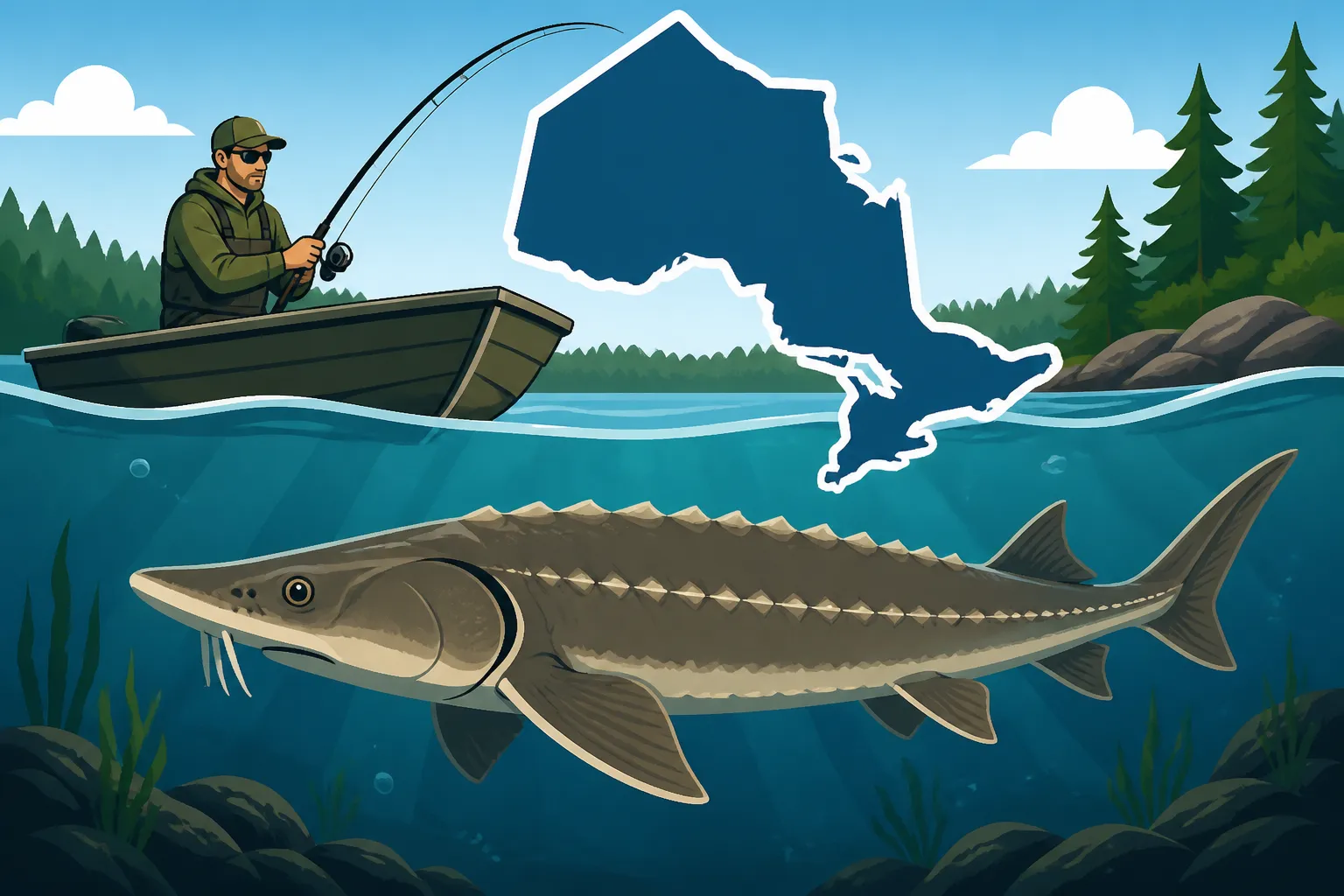
When you first see a Lake Sturgeon, you'll immediately notice they don't look like any other fish in Ontario. They are often described as "prehistoric" because their appearance has changed little over millions of years. Instead of scales, their bodies are covered in five rows of bony plates called scutes, which provide excellent protection. They have a distinctive shovel-like snout with four sensitive barbels underneath, which they use to root around on the bottom for food. Their mouths are protrusible, like a vacuum cleaner, allowing them to suck up invertebrates and small fish from the substrate.
What truly sets them apart, however, is their incredible size and longevity. Lake Sturgeon are among The biggest fish species in Ontario lakes, capable of growing to immense lengths and weights. While specific sizes vary, they can easily reach over 6 feet long and weigh hundreds of pounds. But perhaps even more astonishing is their lifespan; these fish can live for over 100 years, with some individuals reportedly reaching 150 years or more! This makes them one of the longest-living freshwater fish in North America, witnessing generations of human history unfold from beneath the waves.
Preferred Habitats and Ecological Role
Lake Sturgeon are particular about where they live, a testament to their specialized adaptations. They thrive in large, deep freshwater lakes and rivers, preferring areas with strong currents, ample oxygen, and stable bottom substrates like gravel, rubble, and rock. These areas are crucial for their spawning rituals and provide abundant invertebrate life, which makes up a significant portion of their diet.
Their feeding habits are fascinating. As bottom-feeders, they play a vital ecological role by stirring up the sediment and consuming detritus, insect larvae, mollusks, and crustaceans. This helps to cycle nutrients within the ecosystem. They are essentially the "cleanup crew" of the deep. Healthy sturgeon populations are often an indicator of a healthy aquatic environment, as their specific habitat requirements mean they are very sensitive to changes in water quality and physical habitat. Their presence signals a vibrant and balanced ecosystem, which is why their conservation is so incredibly important for the overall health of Ontario's waters.
Regulations and Conservation for Ontario Sturgeon
The sheer history and vulnerability of the Lake Sturgeon mean they are afforded special protections in Ontario. Unlike many other species, you can't simply target them for harvest. Conservation is paramount, and understanding the rules is crucial for any angler who might encounter one.
Catch-and-Release Only: Protecting a Vulnerable Species
Due to their imperiled status and incredibly slow reproductive cycle, Lake Sturgeon in Ontario are strictly a catch-and-release species. There is no open season for retention, and any sturgeon caught must be immediately and carefully released back into the water. This is perhaps the single most important regulation surrounding these magnificent fish. They grow incredibly slowly, don't reach sexual maturity until they are 15-20 years old for males and 20-25 years for females, and spawn only every few years. This means that even a small amount of harvest can have a devastating impact on an already struggling population.
The regulations are in place to give these ancient fish every chance to recover and thrive. It's a privilege to even encounter a sturgeon, let alone land one, and part of that privilege comes with the responsibility of ensuring its survival. Familiarizing yourself with all pertinent details in the Ontario Sturgeon Catch and Release Rules is absolutely essential before heading out, as ignoring these regulations can lead to significant penalties. This strict rule is a cornerstone of the province's efforts to rebuild populations and ensure these living fossils continue to grace our waters for generations to come.
The Importance of Reporting and Responsible Angling
Encountering a Lake Sturgeon, especially if it's an accidental catch while targeting other species, is an exciting event. However, it's vital to prioritize the fish's well-being above all else. When you find yourself with a sturgeon on the line, the immediate goal is a quick, safe, and stress-free release. This often means keeping the fish in the water as much as possible, especially if it's a large one, to support its body weight and protect its internal organs.
Using appropriate gear can also help. Sturdy rods and reels designed for larger species, along with strong line, allow you to bring the fish in more quickly, reducing fight time and exhaustion. You might even consider investing in a large, rubberized landing net, often available on Amazon or at local tackle shops, which can cradle the fish without damaging its protective slime coat or fins. Snapping a quick photo while the fish is still partially submerged is always preferred over hoisting it out of the water. Furthermore, the Ministry of Natural Resources and Forestry (MNRF) encourages anglers to report any sturgeon sightings or catches, especially if they appear to be tagged. This data is incredibly valuable for monitoring populations and understanding their movements. Responsible angling practices, as detailed in the comprehensive Ontario Fishing Regulations Explained, are key to the ongoing success of sturgeon conservation.
Identifying and Encountering Lake Sturgeon
For those new to the idea of sturgeon in Ontario, distinguishing them from other large fish can be a bit of a challenge. While they are unique, there are other sizeable species in our waters. Knowing what to look for, and how to react if you hook one, is part of the sturgeon angler's toolkit.
How to Identify a Lake Sturgeon
Identifying a Lake Sturgeon, once you know what to look for, is relatively straightforward compared to some other fish species. Their most striking features are their five rows of bony scutes – plate-like armour – running down their back and sides. These aren't scales, but more like bone, providing protection from predators. Contrast this with the smooth, scaled bodies of most fish, or the toothy jaws and slender bodies of a pike or muskie.
They also possess a distinct, elongated, shovel-shaped snout, which gives them a very ancient, almost shark-like appearance. Crucially, underneath this snout, you'll find four prominent barbels. These whisker-like appendages are sensory organs, used to detect food items along the lake or river bottom. Their mouth is located on the underside of their head, capable of extending to vacuum up food. Finally, their tail fin is heterocercal, meaning the upper lobe is longer than the lower lobe, much like a shark's tail. This is a very clear distinguishing characteristic from the evenly forked or rounded tails of most other Ontario fish. If you're keen on learning more about fish identification, our Fish Species Identification Guide for Ontario can provide a broader understanding of what swims in our provincial waters.
Accidental Encounters: What to Do
Hooking a Lake Sturgeon when you're targeting something else can be a surprise, to say the least! They fight hard and can put up a remarkable battle. The key once you realize you have one on the line is to bring it in as quickly and safely as possible to minimize stress. Always have a pair of long-nosed pliers or a de-hooking tool handy, perhaps one you can easily order from Amazon, as it allows for quick hook removal.
When you bring the sturgeon close, the priority is to keep it in the water. If it's a smaller fish, you might be able to lift it very carefully by supporting its entire body horizontally. For larger fish, a large landing net (like those heavy-duty models designed for muskie or salmon, also found on Amazon) can be invaluable, or even a specialized sturgeon cradle. If you don't have a net, try to guide the fish into very shallow water near the boat or shore, where you can safely reach it. Avoid grabbing it by the gills or eyes. Instead, firmly grasp the base of the tail or use a gloved hand to support its belly. Remove the hook gently, and if it's deeply swallowed, cut the line as close to the hook as possible. Once the hook is out, hold the fish upright in the water, facing into any current, until it regains its strength and swims away on its own. It's a moment of awe, seeing such an ancient creature up close, and ensuring its safe return is the best way to honour that experience.
Disclaimer
This article is for general informational purposes only and does not constitute professional advice. Laws, prices and regulations vary by location and change over time. Consult a qualified professional for guidance on your specific situation.