When largemouth bass spawn in Ontario
For many of us who love chasing largemouth bass in Ontario, there’s often a big question mark around exactly when these feisty fish decide it's time to reproduce. You might be planning a spring trip, watching the ice melt, and wondering if you'll hit the pre-spawn feeding frenzy or find them locked onto their beds. This guide is here to clear up the mystery, detailing the factors that trigger the largemouth bass spawn in Ontario, how their behavior changes, and what that means for your fishing strategy.
The Warming Waters: Trigger for the Largemouth Bass Spawn
The single most crucial factor for when largemouth bass spawn in Ontario is water temperature. It's the ultimate signal from Mother Nature telling them it's time to begin their reproductive cycle. Unlike some species with very fixed calendar dates, largemouth bass are highly adaptable to environmental cues, and temperature is king.
When the cool grasp of winter starts to loosen its hold and spring sunshine warms the shallow bays and flats, largemouth bass begin to stir. Typically, you'll see them making their moves towards spawning grounds once the water consistently reaches certain temperature thresholds. This often means the spawn happens later in the spring or even early summer in Ontario, compared to more southerly regions. The exact timing can vary by weeks, even within the same fishing zone, depending on whether it's a cold, drawn-out spring or a rapid warm-up.
Pre-Spawn Movement and Feeding Frenzy
Before the actual spawning begins, there's a critical period known as the pre-spawn. This is when the water temperature is typically in the 45-55°F (7-13°C) range, though it can creep higher. During this time, largemouth bass, especially the larger females, migrate from their deeper wintering areas towards shallower, warmer waters. They're not looking to spawn yet, but they're staging and, importantly, feeding heavily. Think of it as bulking up for the marathon ahead. Their metabolism is increasing with the rising water temperatures, and they need a lot of energy for egg production and nest guarding. This is often when anglers experience some of the most aggressive bites of the year, as bass are actively hunting down baitfish and crawfish.
The Peak Spawning Window
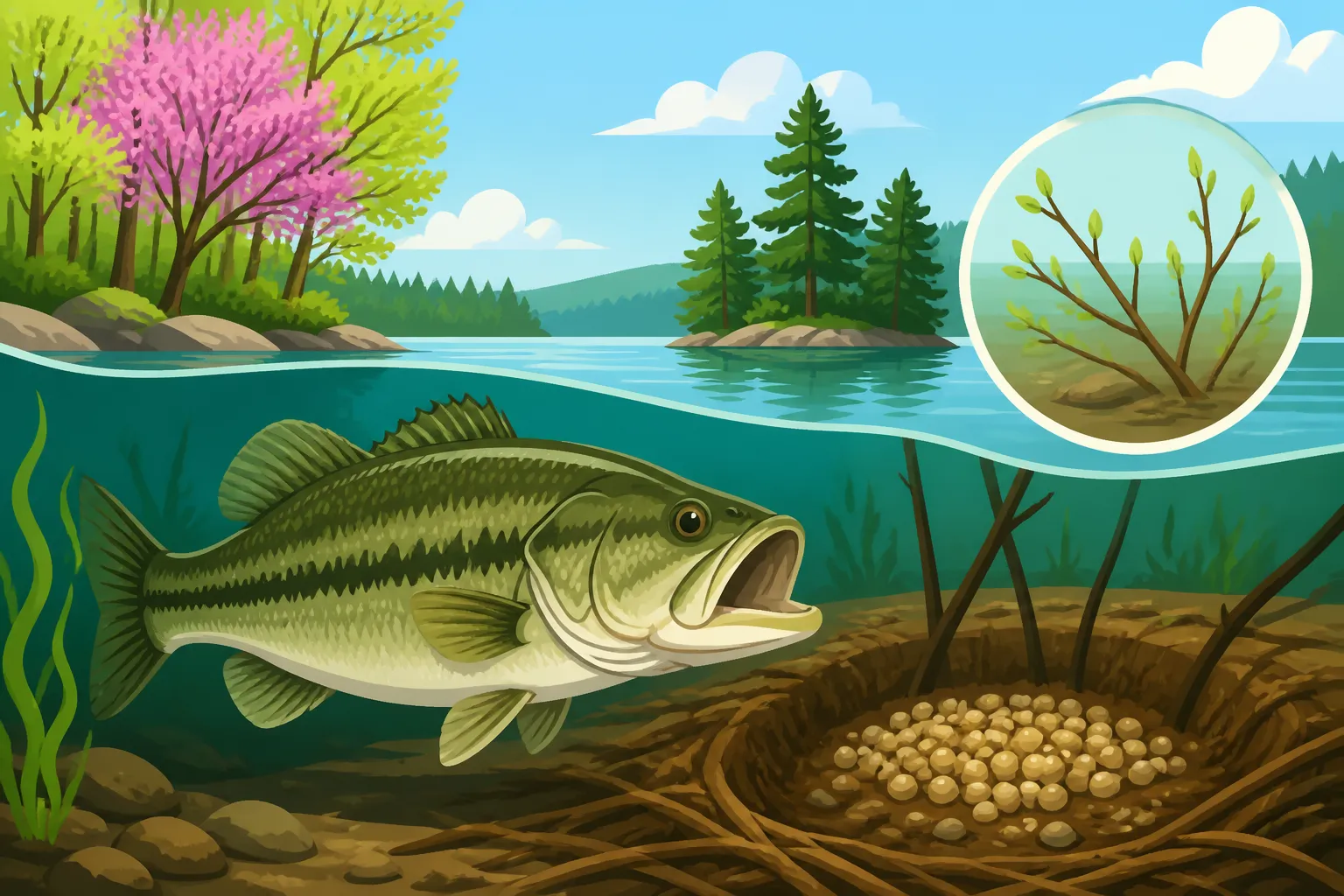
The actual spawning activity for largemouth bass in Ontario generally kicks off when water temperatures consistently reach the 60-68°F (15-20°C) range. This is the sweet spot they're looking for. Once these temperatures are maintained, males move into very shallow, protected areas like coves, back bays, and weed flats to prepare nests. They'll fan out circular depressions on the bottom, usually near some form of cover like submerged logs, rocks, or lily pad stems.
The females will then join them, deposit their eggs, and the males fertilize them. After this, the females typically leave the nest, often retreating to slightly deeper water to recover from the strenuous process. The male, however, becomes the sole guardian of the nest, fanning the eggs to keep them oxygenated and free of silt, and aggressively defending them from predators. This period is highly dependent on local weather patterns. A sudden cold front can delay the spawn, pushing bass back to deeper water, only for them to return when temperatures stabilize. If you're planning a trip, checking long-range forecasts for stable warm weather is key. You can learn more about general timing in Ontario Fishing Season Dates by Zone.
Post-Spawn Recovery and Summer Patterns
Once the eggs have hatched and the fry have dispersed from the nest, the male bass's parental duties are done. Both male and female largemouth bass enter the post-spawn phase, which is another crucial period to understand for successful fishing. This phase usually sees water temperatures climbing past 70°F (21°C).
Initially, both sexes can be quite lethargic as they recover from the energy expenditure of spawning and guarding. They might not be actively feeding for a few days, preferring to rest in nearby cover. However, as their energy returns, they will begin to feed again, though often in different areas than during the pre-spawn. This can be a challenging time for anglers, as bass might be scattered and less predictable.
Female Recovery and Deepening
The larger female bass often take longer to recover from the spawn. They've put a tremendous amount of energy into egg production, and after depositing their eggs, they're typically exhausted. You'll often find them retreating to slightly deeper water adjacent to the spawning flats, seeking out cool, shaded areas like the edges of weed lines, submerged timber, or even deep docks. Their bites can be subtle, and they're not usually in full-on feeding mode. It takes time for them to regain their strength and start actively hunting again. This is why some anglers find late spring and early summer fishing for big bass to be a bit tougher.
Male Activity and Protecting Fry
Male bass, on the other hand, might stay shallower for a bit longer, sometimes guarding the fry for a short period after hatching. Once their guard duty is truly over, they too will start to recover and feed. Often, they'll remain in shallower, food-rich areas, transitioning into their summer patterns relatively quickly. You might find them cruising weed edges, underneath docks, or around fallen trees, ready to ambush unsuspecting baitfish or crawfish. Understanding these post-spawn habits is key to continuing your success once the actual spawning period concludes. If you're looking for more general information on fishing strategies, check out How to Catch Largemouth Bass in Ontario.
Locating Spawning Bass and Their Nests
Finding largemouth bass during their spawning period requires an understanding of their preferred habitats and a keen eye. They aren't going to be in the middle of a deep lake; they're looking for specific conditions that offer warmth, protection, and a solid substrate for their nests.
Ideal Spawning Grounds
Largemouth bass prefer shallow, protected waters, usually less than 5 feet deep, that warm up quickly with direct sunlight. These areas include:
- Shallow coves and back bays: These are typically sheltered from wind and waves, allowing the water to warm faster and stay calm.
- Weed flats and lily pad fields: The vegetation provides cover from predators and wind, and the dark bottom absorbs sunlight, contributing to warmer water.
- Around docks, fallen trees, and brush piles: These structures offer protection and ambush points for the guarding male.
- Sandy or gravelly bottoms: Bass need a firm bottom to fan out their nests. Muddy bottoms are generally avoided.
When you're out on the water, pay close attention to these types of areas. Often, if you spot one nest, there will be others nearby, as bass tend to congregate in suitable spawning grounds. A good pair of polarized sunglasses, like those you can find on Amazon, are absolutely invaluable for spotting nests and bass in shallow, clear water. They cut through the surface glare, giving you a clearer view into the underwater world. For specific areas, Kawartha Lakes Fishing Guide or Lake Muskoka Fishing Guide might offer insights into common largemouth habitats.
Identifying Bass Beds
Identifying a bass bed is simpler than you might think once you know what to look for. They appear as circular, light-coloured depressions on the lake bottom, typically 1 to 3 feet in diameter. The male bass fans away silt and debris to expose the cleaner, often sandier or gravelly, substrate underneath. If you're able to see a bed, there's a very good chance a male bass is either on it, or very close by, actively guarding. Sometimes, you might even see the male hovering directly over the nest, its fins slowly fanning.
Approaching these areas quietly is crucial. Trolling motors on low speed, or even paddling a kayak, can help you observe without spooking the fish. If you see a bass on a bed, remember that it's highly protective and often quite aggressive, making it a target for anglers. However, ethical considerations are paramount during this vulnerable time, which we'll discuss next.
Ethical Angling During the Spawning Period
Fishing during the largemouth bass spawn in Ontario is a hot topic, and for good reason. While it can be an exciting time to target some truly big fish, it's also a period when bass are at their most vulnerable. As responsible anglers, we need to consider the impact our actions have on the fishery.
Understanding the Vulnerability of Spawning Bass
When a male largemouth bass is guarding a nest, its primary instinct is to protect its future offspring. This makes it incredibly aggressive towards anything that approaches the nest, including a well-presented lure. While this can lead to easy catches, removing a male bass from its nest, even for a short time, leaves the eggs or fry vulnerable to predators like sunfish, perch, and crawfish. A nest can be completely wiped out in a matter of minutes if the male is absent. This is why many anglers choose to avoid targeting bedding bass altogether, or practice extremely quick catch and release if they do.
Best Practices for Catch and Release on Beds
If you do decide to fish for bass during the spawn, and local regulations allow it (always check the Ontario Fishing Regulations Explained before heading out!), adopting stringent catch and release practices is vital. The goal should be to minimize stress on the fish and get it back to its nest as quickly as possible.
Here are some tips:
- Use appropriate tackle: Don't underpower your setup. Use a rod and reel combo that can quickly subdue the fish, minimizing the fight time.
- Barbless hooks: Consider using barbless hooks, or pinching down the barbs on your hooks. This makes hook removal much faster and causes less damage to the fish. You can find barbless hooks or tools to crimp barbs on Amazon.
- Minimize handling: Avoid taking the fish out of the water for photos, especially for an extended period. If you must take a picture, do it quickly and hold the fish horizontally, supporting its weight.
- Quick release: Get the fish back to its nest as soon as possible. Gently hold it in the water, facing into any slight current, until it regains its strength and swims away on its own.
- Consider "sight fishing" alternatives: Instead of casting directly to a bed, some anglers practice "sight fishing" for pre-spawn bass that are cruising the shallows but not yet locked onto a nest. This can still offer exciting visual fishing without disrupting the spawning process.
| Water Temperature Range (F/C) | Largemouth Bass Activity | Angling Implications |
|---|---|---|
| 40-50°F (4-10°C) | Early Pre-Spawn: Bass move to transition areas, deeper pockets near future spawning grounds. Still somewhat sluggish. | Deep-diving crankbaits, slow-rolled spinnerbaits, jigs. Targeting structure adjacent to deep water. |
| 50-58°F (10-14°C) | Mid Pre-Spawn: Aggressive feeding, staging near shallow flats. Metabolism increasing. "Hungry" bass. | Crankbaits, jerkbaits, spinnerbaits, lipless cranks. Excellent time for power fishing. Bass are actively hunting. |
| 58-62°F (14-17°C) | Late Pre-Spawn / Early Spawn: Males scout, start fanning beds. Females still feeding heavily. Bedding may begin in warmest areas. | Jigs, Texas-rigged plastics, chatterbaits. Fish are becoming more territorial. Look for early beds. |
| 62-68°F (17-20°C) | Peak Spawn: Males on beds, guarding eggs. Females deposit eggs, then often retreat. Highly territorial. | Sight fishing with soft plastics (tubes, creature baits) on beds. Males will strike intruders aggressively. |
| 68-75°F (20-24°C) | Post-Spawn: Males finish guarding fry, both sexes recover. Initial lethargy, then resume feeding. | Topwater baits, swim jigs, flukes, Carolina rigs. Fish might be scattered, focusing on recovering energy. Target outside edges of spawning areas. |
| 75°F+ (24°C+) | Summer Patterns: Fully recovered, active feeding in deeper cover, weed lines, structure. | Wide array of techniques: frogs, punching jigs, deep crankbaits, shaky heads. Bass seek cooler water and dense cover. |
Factors Affecting Spawn Timing and Duration
While water temperature is the primary driver, several other factors can influence the exact timing and duration of the largemouth bass spawn in Ontario. Understanding these can help you fine-tune your predictions.
Geographical Location and Water Body Type
Ontario is a big province, and spring doesn't arrive uniformly across its vast landscape. Lakes in Southern Ontario, closer to Lake Erie or Lake Ontario, will typically warm up and see bass spawn earlier than lakes in Northern Ontario, such as those near Thunder Bay or Kenora. The type of water body also plays a role. Shallow, dark-bottomed lakes or bays will warm faster than large, deep, clear-water lakes. A small, protected pond might see bass spawning weeks before a massive, windswept main lake basin. For instance, Lake Simcoe Fishing Guide bass might spawn slightly later than those in warmer, shallower lakes further south.
Weather Patterns: Cold Fronts and Rapid Warm-ups
Consistent warm weather leads to a steady, predictable spawn. However, spring in Ontario is notorious for its volatility. A sudden cold front can drop water temperatures, causing bass that were on their beds to abandon them temporarily and retreat to deeper water. They'll return when conditions stabilize and warm up again. Conversely, a rapid heatwave can accelerate the spawn, making it intense but shorter. These fluctuations make fishing during the spawn a dynamic challenge, where staying updated on local weather and water temperatures is crucial. Anglers often discuss How barometric pressure affects Ontario walleye fishing but it also has a similar, though perhaps less pronounced, effect on bass behavior during the spawn.
Fishing Pressure and Habitat Disturbance
While not directly impacting the timing of the spawn, fishing pressure and human disturbance can affect the success of the spawn. Heavily fished areas, especially those with high boat traffic or shoreline activity, might lead bass to seek out more secluded or deeper spawning sites. Noise and activity can stress bedding bass, potentially causing them to abandon their nests or making them more difficult to catch and release successfully. Protecting sensitive spawning habitats is a shared responsibility among all outdoor enthusiasts. Remember, a thriving bass population benefits everyone who enjoys Largemouth Bass Fishing in Ontario.
Other Important Considerations for Anglers
Beyond the spawn itself, there are always other practical aspects for anglers to keep in mind, especially when targeting such a popular species in Ontario.
Understanding Bass Habits Year-Round
While this guide focuses on the spawn, remember that largemouth bass are active throughout the open water season in Ontario. Their behavior, preferred depths, and feeding patterns will shift dramatically from early spring right through to late fall. For instance, during the summer, they'll often relate to dense weed cover, lily pads, or submerged wood, seeking shade and ambush points. They become more aggressive with topwater presentations in low light conditions. In the fall, they often move to deeper points and humps, feeding heavily before winter sets in. Learning about Smallmouth Bass Habits on Lake Erie can also give you some comparative insight into how different bass species adapt to their environments.
Gear and Tackle for Spawning Bass
When targeting bass in the shallows during the spawn, your gear choice can make a difference. Medium-heavy spinning or baitcasting rods, paired with sensitive lines (like braided main line with a fluorocarbon leader), are popular. Lures that excel during this period often include:
- Soft Plastics: Tubes, creature baits, Texas-rigged worms, and Senko-style baits are excellent for presenting slowly and deliberately on or near beds. Their subtle action can entice protective strikes. You'll find a wide variety of these on Amazon.
- Jigs: Flipping and pitching jigs into cover near beds can also be very effective.
- Spinnerbaits: While not typically used on beds, spinnerbaits can be great for locating active pre-spawn bass cruising shallow flats adjacent to spawning areas.
- Topwater: In the post-spawn phase, as bass recover and look for easy meals, topwater frogs or poppers worked over lily pads can be incredibly exciting.
Choosing the right gear not only helps you catch fish but also ensures a quicker, less stressful fight for the fish, aiding in successful release. For more on gear, consider reviewing Best Tackle for Panfish to understand how different fishing scenarios require specific approaches.
Local Regulations and Conservation Efforts
Ontario has specific regulations for different fish species and zones, including seasons and catch limits. Always, always check the current Ontario Fishing Regulations Summary before you head out. These regulations are designed to protect fish populations, especially during vulnerable times like the spawn. Some areas might have specific closures or catch-and-release only rules during certain periods. Remember, conservation efforts are vital for ensuring healthy fisheries for generations to come. This includes careful handling of fish, proper waste disposal, and adherence to all licensing requirements. Don't forget to understand Ontario Outdoors Card, Explained and Ontario Sport vs Conservation Fishing License to ensure you're fishing legally.
Disclaimer
This article is for general informational purposes only and does not constitute professional advice. Laws, prices and regulations vary by location and change over time. Consult a qualified professional for guidance on your specific situation.