Best Fishing Boats for Georgian Bay
The vast and often unpredictable waters of Georgian Bay present a unique challenge for anglers looking to invest in a fishing boat. Many people struggle to balance the need for rough-water capability with the desire for shallow-water access and a comfortable fishing platform. This comprehensive guide will walk you through the essential considerations and boat types best suited for tackling Georgian Bay, helping you make an informed decision that will lead to countless successful and safe fishing adventures.
Understanding Georgian Bay's Unique Demands
Georgian Bay is a truly magnificent body of water, but it's not your average inland lake. Its sheer size, diverse geography, and unpredictable weather patterns mean that choosing the right boat isn't just about catching fish; it's about safety, comfort, and reliability. You can't just throw any old tin can in the water here and expect to have a good time, or even be safe.
The Bay's Diverse Conditions
Imagine a bright, calm morning launching your boat, the water like glass, and you're thinking, "This is perfect!" An hour later, a squall rolls in, seemingly out of nowhere, and those calm waters turn into a churning tempest with three-foot waves. This isn't an exaggeration; it's a common scenario on Georgian Bay. The bay, part of Lake Huron, is essentially an inland sea, capable of producing conditions that rival the Great Lakes themselves. You'll encounter everything from protected, calm inlets perfect for kayak fishing to wide-open expanses where waves can build quickly, making even larger vessels feel small.
This variability means your boat needs to be versatile. It needs to handle the chop and swell of open water when you're crossing a large section, but also be nimble enough to navigate the tight channels and shallower areas around the 30,000 Islands. The transition from calm to rough can happen in minutes, so your boat's hull design and overall stability are paramount. It's not just about getting to your fishing spot; it's about getting back safely, regardless of what the weather decides to throw at you.
Shallow Shoals and Rocky Bottoms
Beyond the open water, Georgian Bay is famous (or infamous, depending on your perspective) for its intricate network of islands, hidden shoals, and granite rock formations. These underwater hazards are beautiful, yes, but they're also notorious for chewing up lower units and propellers if you're not careful. Navigating these waters requires constant vigilance, accurate charts, and a boat that can either clear these obstacles or withstand an accidental bump.
Boats with shallower drafts or those built with more robust materials can offer a degree of peace of mind. However, even with the best boat, local knowledge and careful navigation are indispensable. Many anglers find themselves wanting to access those tucked-away bays or fish around the edges of rocky points where the big walleye and muskie lurk, and this often means venturing into areas with unpredictable depths. A boat that allows you to trim your motor up easily or has a tougher hull can literally save your fishing trip – and your wallet.
Remote Areas and Self-Sufficiency
Another critical aspect of Georgian Bay is its sheer remoteness in many areas. While there are vibrant communities and marinas, there are also vast stretches of wilderness where help isn't just around the corner. If you break down or run into trouble, you might be hours, or even a full day, from assistance. This underscores the need for a reliable boat, a well-maintained engine, and a strong emphasis on self-sufficiency.
You'll need enough fuel capacity to cover significant distances and return, plus a reserve. Your boat should have adequate storage for safety gear, emergency supplies, and perhaps even camping equipment if you plan multi-day excursions. A robust marine battery system, redundant communication devices (like a marine radio and a satellite messenger), and a well-stocked toolkit are not luxuries here; they are necessities. When you're miles from the nearest dock, knowing your boat can get you home is invaluable. This is not a place for cutting corners on maintenance or skimping on essential safety equipment.
Key Boat Features for Georgian Bay Fishing
When you're outfitting yourself for Georgian Bay, you're looking for more than just a vessel; you're looking for a partner that can withstand the elements and put you on the fish safely. Certain features become non-negotiable when dealing with the bay's diverse and sometimes challenging environment.
Hull Design and Stability
The hull is arguably the most critical component of any boat destined for Georgian Bay. You're constantly balancing between two extremes: the need to cut through large waves on open crossings and the desire to sneak into shallow, sheltered coves.
Deep-V hulls, characterized by a sharp angle at the bow that gradually flattens towards the stern, are excellent at slicing through chop. They provide a smoother, dryer ride in rough conditions, which is essential when those Georgian Bay swells kick up. Without a good deep-V, you'll be pounding through waves, making for an uncomfortable and potentially unsafe ride. However, a deep-V hull can sometimes mean a deeper draft, limiting access to very shallow areas, and can be less stable at rest while fishing. Conversely, boats with a flatter hull might be more stable for casting and offer better shallow water access, but they will give you a much rougher ride in anything but calm conditions. Many manufacturers, especially those specializing in multi-species fishing boats, try to strike a balance, offering modified-V designs that provide a compromise between the two. When evaluating a boat, consider the deadrise at the transom – a higher number (e.g., 18-24 degrees) indicates better rough-water performance.
Power and Fuel Range
Georgian Bay is vast, and covering ground quickly and efficiently is often crucial, whether you're chasing a hot bite or racing a storm. This means you need adequate horsepower. Underpowering your boat is a common mistake that leads to frustration, inefficiency, and can even be dangerous in rough water when you need to maintain momentum.
While specific horsepower needs vary by boat size and weight, don't shy away from maxing out the recommended horsepower rating for your chosen vessel. A larger engine will not only get you to your spots faster but will also allow you to plane more easily with a full load of gear and passengers, and give you the torque needed to power through heavy waves. Crucially, fuel range is also a major factor. You can't just assume a gas station is around the corner. Look for boats with generous fuel tanks. If you plan extended trips to more remote areas, consider carrying extra fuel in approved containers. Running out of gas miles from the nearest marina is a situation you definitely want to avoid. Always factor in longer travel times and fuel consumption when planning your trips, especially if fighting headwinds or current.
Durable Construction and Protection
Georgian Bay's granite shores and rocky bottom are beautiful but unforgiving. Your boat needs to be built tough. Aluminium boats, particularly those with thicker gauge hulls and double-plated bottoms, are renowned for their durability and ability to absorb impacts better than fiberglass. They can often shrug off minor bumps against rocks that might cause significant damage to a fiberglass hull.
For fiberglass boats, look for robust construction, reinforced keels, and sturdy rub rails. These details can make a big difference in the long-term wear and tear your boat experiences. Additionally, a quality bow protector or keel guard can add an extra layer of defense against accidental contact with rocks during launching or fishing in shallow areas. Remember, a small investment in durability upfront can save you significant repair costs and lost fishing time down the road. You can find many of these protective accessories at places like Bass Pro Shops or even general marine supply sections on Amazon.
Top Boat Types for Georgian Bay Anglers
Choosing the right type of boat for Georgian Bay really boils down to balancing ruggedness, open-water capability, and your specific fishing style. No single boat is perfect for every situation, but some designs are certainly better suited for the bay's unique challenges than others.
Aluminum Deep-V Boats
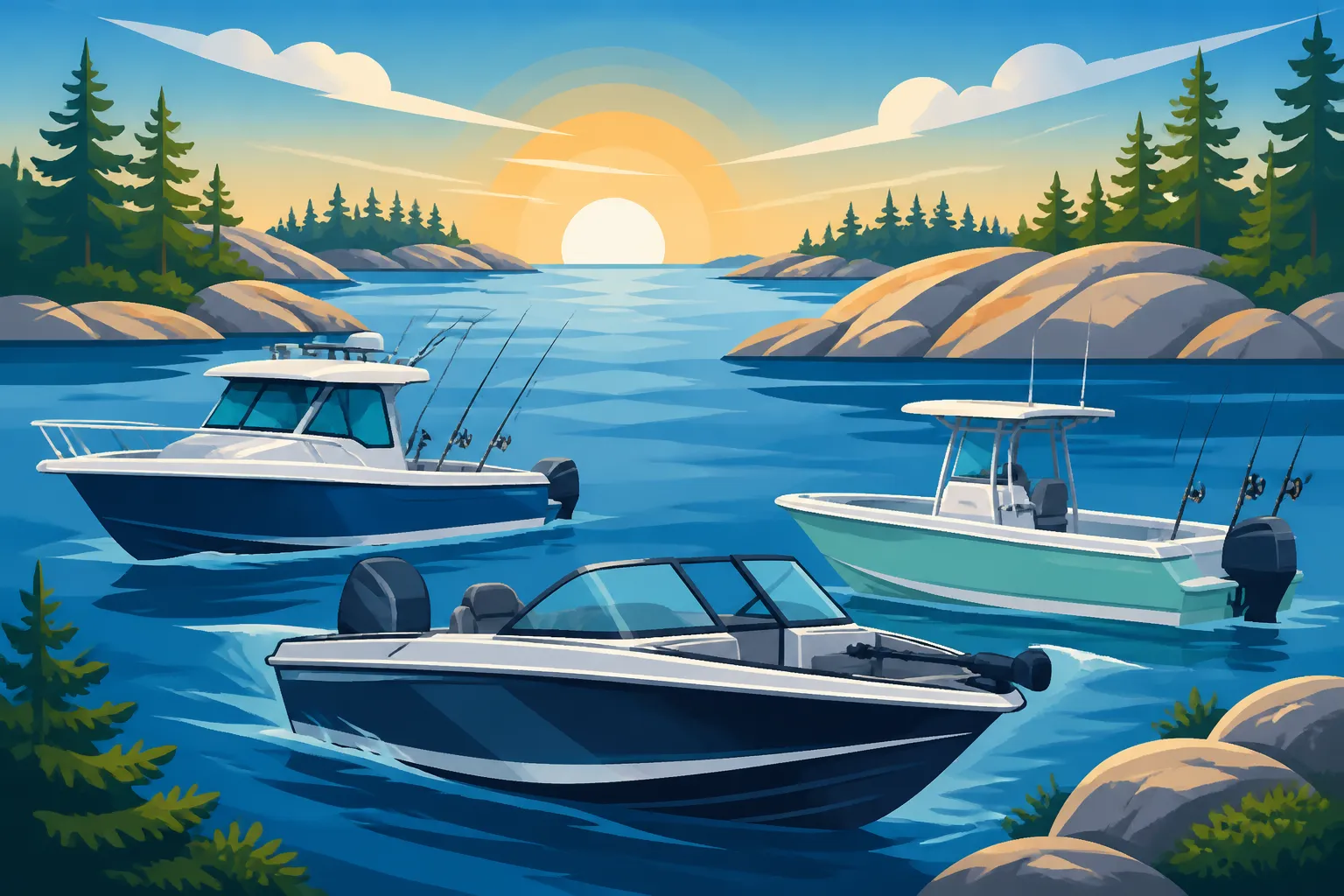
When you think of fishing in rough, rocky Canadian waters, chances are an aluminum deep-V boat comes to mind. These boats are the workhorses of Ontario fishing, and for good reason. Their riveted or welded aluminum construction makes them incredibly durable and resistant to the bumps and scrapes that are almost inevitable when fishing Georgian Bay's rocky shorelines and shallow shoals. They tend to be lighter than fiberglass boats of comparable size, making them easier to trailer and launch, which is a huge bonus if you're frequently moving between different access points.
The deep-V hull design on many of these aluminum models is excellent for cutting through the chop and rollers that can build up on Georgian Bay. You'll find a smoother, drier ride than a flatter-bottomed boat, which is essential for comfort and safety during longer runs. Brands like Lund, Crestliner, and Alumacraft are popular choices that offer a range of sizes and configurations, from tiller models that provide maximum cockpit space for casting to full windshield boats that offer better protection from the elements. While they might not offer the plush amenities or perfectly smooth finish of some fiberglass boats, their practicality, durability, and open-water performance make them a top contender for any serious Georgian Bay angler.
Fiberglass Walleye/Multi-Species Boats
For anglers who prioritize a smoother ride in rough water, a drier experience, and often a more refined finish, fiberglass walleye or multi-species boats are an excellent option. While aluminum boats have come a long way in ride quality, fiberglass still typically offers a superior dampening effect against waves, leading to a quieter and softer ride, especially when those swells get substantial. This can be a significant comfort factor on long runs across choppy sections of the bay.
These boats are often designed with dedicated fishing features: large livewells, ample rod storage, integrated electronics mounts, and comfortable casting decks. Brands like Ranger, Skeeter, and Warrior offer models specifically engineered for big water, with high freeboard (the height of the boat's side above the water) for added safety and dryness. The heavier weight of fiberglass boats also contributes to their stability in rough conditions, though it does mean they can be harder to trailer and require a more capable tow vehicle. While generally more expensive and potentially more susceptible to impact damage from rocks (requiring more careful navigation), the ride quality, stability, and fishing-specific layouts can be a compelling draw for dedicated anglers spending long days on the water.
Centre Console Boats
Centre console boats are gaining popularity on Georgian Bay, particularly among anglers who value a completely open deck layout and unhindered 360-degree fishability. With the console located in the center of the boat, you can move freely around the perimeter, making it ideal for multiple anglers casting simultaneously or fighting fish from any angle. This design is fantastic for various fishing techniques, from casting to structure for bass and muskie to trolling for walleye or lake trout.
Many centre consoles feature aggressive deep-V hulls, offering outstanding rough-water performance. Their often higher freeboard also provides a sense of security in bigger waves, keeping spray out of the boat. The trade-off, however, is less protection from the elements for the occupants compared to a full windshield boat. You'll be more exposed to wind and rain, so good rain gear is essential. While not as common for northern multi-species fishing as aluminum or traditional fiberglass bass/walleye boats, their versatility, open layout, and big-water capability make them a strong contender for Georgian Bay, especially if you prioritize maximum fishability and are prepared for the exposure.
Cuddy Cabins/Walkarounds for Extended Trips
While primarily fishing machines, some anglers venturing further into Georgian Bay for multi-day trips or those seeking more creature comforts might consider a cuddy cabin or walkaround style boat. These boats offer a small enclosed cabin forward, providing shelter from the elements, a place to store gear securely, and sometimes even a basic berth for overnight stays. The walkaround design maintains good access to the bow for fishing or anchoring.
These are generally larger, heavier vessels, offering excellent rough-water capability and a very dry ride. They trade some of the pure open-deck fishing space of a centre console or deep-V for the added comfort and utility of a cabin. While not the first choice for everyone, especially those focused solely on day-trip fishing, they offer a compelling package for adventurers who want to explore Georgian Bay's most remote reaches or extend their trips beyond a single day, especially when you consider the sometimes unpredictable nature of the weather.
Essential Onboard Equipment and Safety Considerations
Equipping your Georgian Bay fishing boat correctly isn't just about maximizing your catch; it's fundamentally about ensuring your safety and the safety of everyone onboard. The bay demands respect, and being properly prepared can make all the difference when conditions turn.
Navigation and Electronics
Georgian Bay is a complex labyrinth of islands, shoals, and open water. Relying solely on visual cues or outdated paper maps is a recipe for disaster. A reliable GPS chartplotter with up-to-date Navionics or C-MAP charts is absolutely non-negotiable. This isn't just for finding your secret fishing spots; it's for safe navigation, marking hazards, and getting back to port in fog or darkness. Many modern units combine GPS with a fish finder, offering a comprehensive view of what's below and around you. Look for units with high-definition side-imaging and down-imaging capabilities to identify structure and fish holding spots.
Beyond your primary navigation unit, a marine VHF radio is critical for communication. Cell service can be spotty or non-existent in many parts of the bay, making a VHF your lifeline to other boaters, marinas, and search and rescue services. Consider a unit with DSC (Digital Selective Calling) for emergency situations, which can transmit your exact location. Portable VHF radios are also a good backup. Having a good quality fish finder will significantly enhance your fishing success by helping you locate drop-offs, underwater humps, and baitfish schools where game fish like walleye and lake trout often congregate. You can find a wide range of these marine electronics on Amazon, from basic fish finders to advanced multi-function displays.
Safety Gear Requirements
Ontario has specific boating laws and requirements for safety equipment, and you must adhere to them. For Georgian Bay, it's wise to go beyond the minimums. Every person on board must have a properly fitted, Canadian-approved life jacket or PFD. Don't just stash them in a locker; encourage everyone to wear them, especially in rough water or when moving around the boat.
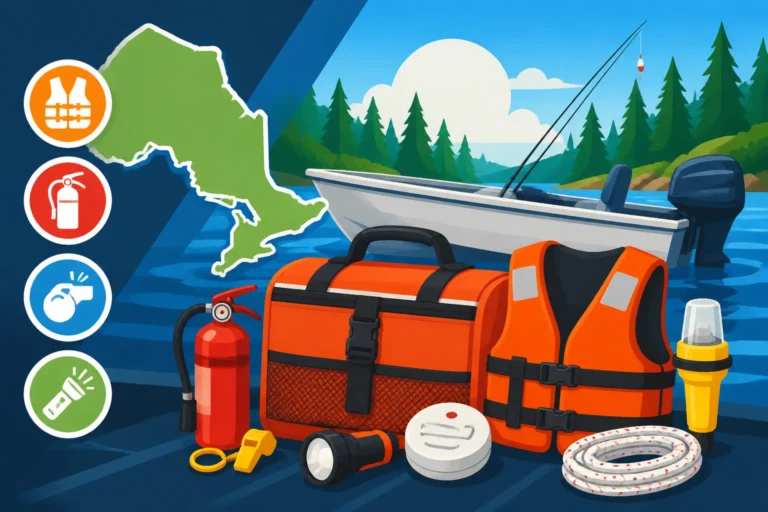
Beyond life jackets, your boat needs a sound-signaling device (whistle or horn), a reboarding device (ladder or strap) if your boat has a freeboard over 0.5 meters, a bailer or pump, a watertight flashlight, and a buoyant heaving line. Visual distress signals, such as flares (check expiration dates!) or an electronic flare, are also mandatory. A well-stocked first-aid kit is essential for any minor scrapes or more serious incidents. An anchor with sufficient chain and rope for the depths you'll be fishing in, appropriate for your boat's size and weight, is also a critical safety item – not just for holding position, but for deploying in an emergency. Remember to regularly check all your safety equipment to ensure it's in good working order. For more details, you can consult Life Jacket Requirements for Ontario Boaters and Ontario Boating Laws for Anglers.
Storage and Livewells
For a full day of fishing on Georgian Bay, you'll accumulate a surprising amount of gear. Ample, well-designed storage is crucial for keeping your boat organized, safe, and uncluttered. Look for boats with dedicated rod storage (lockable is a bonus), dry storage compartments for personal items and electronics, and accessible tackle storage. Clutter on the deck is a tripping hazard, especially in rough water.
If you plan on keeping your catch, a properly sized and aerated livewell is vital. Georgian Bay offers fantastic fishing for species like walleye, bass, and pike, and a good livewell will ensure your fish stay healthy if you're participating in a tournament or plan to release them after a photo. Ensure the livewell has a good pump and overflow system. Some larger boats even offer multiple livewells or integrated cooler space to keep drinks and snacks cool, which is a nice touch for those long days on the water.
Maintenance and Trailering for Georgian Bay Adventures
Owning a boat for Georgian Bay is an investment, and like any investment, it requires diligent care. Proper maintenance and smart trailering practices will ensure your vessel remains reliable, safe, and ready for adventure year after year.
Post-Trip Care
The waters of Georgian Bay, while generally considered freshwater, can be surprisingly tough on your boat. Especially if you've been in areas with higher mineral content or brackish inlets, a quick rinse down after each trip is a good habit. More importantly, flushing your engine is crucial, particularly if it's been running for extended periods or in murky water. This helps prevent corrosion and build-up in the cooling system, extending the life of your outboard. Many modern outboards have a flush port that makes this process quick and easy.
Beyond the engine, inspect your hull for any new scrapes or dings, especially if you've been navigating rocky areas. Minor scuffs can often be polished out, but deeper gouges in fiberglass might need professional attention to prevent water intrusion. For aluminum boats, check for any new dents or loose rivets. Regularly clean your deck and interior to prevent mold and mildew, especially after a rainy trip. Keeping your boat clean not only preserves its appearance but also makes it easier to spot potential issues before they become major problems.
Trailering and Launching
Getting your boat to and from Georgian Bay often involves trailering, and this comes with its own set of considerations. Ensure your tow vehicle is appropriately rated for the weight of your boat, motor, and trailer, plus all your gear. Overloading your tow vehicle is dangerous and illegal. The trailer itself needs regular maintenance: check tire pressure, wheel bearings (especially if frequently submerged), lights, and brakes.
Launching on Georgian Bay can range from well-maintained municipal ramps to more rustic, gravel access points. Always scout the ramp beforehand if you're unfamiliar with it. Pay attention to water depth, potential drop-offs, and submerged obstacles. When launching, take your time, and don't be afraid to ask for assistance or observe how local anglers handle the ramp. Practicing your backing skills in an empty parking lot can save you a lot of stress (and potentially embarrassment) at a busy ramp. When retrieving, make sure the boat is properly centered on the bunks and secured with a bow strap and safety chains before pulling it out of the water.
Winterization and Storage
Ontario winters are no joke, and proper winterization is paramount for any boat exposed to freezing temperatures. Failing to winterize correctly can lead to costly damage from freezing water in the engine block, pumps, and other systems. This process typically involves stabilizing the fuel, changing the oil and filter, fogging the engine cylinders, draining all water from the cooling system, and adding antifreeze to plumbing lines.
If you're not comfortable doing this yourself, it's highly recommended to have a certified marine technician handle your winterization. They will ensure everything is done correctly and your warranty remains intact. When it comes to storage, whether indoors or outdoors, ensure your boat is covered to protect it from snow, ice, and UV damage. Indoor storage is ideal, but a good quality, properly fitted boat cover can suffice for outdoor storage, often preventing much bigger headaches come spring. For more information on season-specific fishing, check out Ontario Fishing Seasons by Zone and Month.
Budgeting for Your Georgian Bay Fishing Boat
Investing in a boat for Georgian Bay is a significant financial decision. It's not just about the sticker price; it's about understanding the full cost of ownership, from initial purchase to ongoing expenses and future upgrades. Being realistic about your budget from the outset will prevent headaches down the road.
Initial Purchase Costs
The price of a fishing boat for Georgian Bay can vary wildly depending on its size, type (aluminum vs. fiberglass), engine horsepower, and brand. A brand-new, fully rigged 18-foot aluminum deep-V can be a substantial investment, while a larger fiberglass multi-species or centre console boat will typically be even more. Beyond the base boat and motor, remember to factor in the cost of the trailer, freight charges, and dealer prep fees, which can add a significant amount to the final price.
Many anglers find excellent value in the used boat market. A well-maintained used boat, perhaps a few years old, can offer significant savings compared to new. When considering a used boat, a professional marine survey and a mechanical inspection of the engine are highly recommended. This small investment upfront can save you from purchasing a "lemon" with hidden issues. While tempting, don't just look at the lowest price; consider the boat's condition, hours on the motor, and included features. Sometimes paying a bit more for a boat in better shape will save you on repairs later.
Ongoing Expenses
The costs don't stop after you've bought the boat. Ongoing expenses are a significant part of boat ownership. Fuel is a major one, especially with larger engines and long runs on Georgian Bay. Insurance is also mandatory and varies based on boat value, size, where you store it, and your boating experience. Winterization costs, whether DIY or professional, are an annual necessity.
Maintenance, both routine (oil changes, spark plugs, lower unit fluid) and unexpected (repairs from hitting a submerged object), needs to be factored in. Dockage or storage fees at a marina, if you don't trailer your boat home, can also be substantial. Don't forget licensing and registration fees for your boat and trailer. Creating a realistic annual budget for these ongoing costs is crucial to enjoying your boat without financial stress.
Accessories and Upgrades
Finally, think about the accessories and upgrades you'll want or need. While many boats come with basic features, you'll likely want to customize it for your specific fishing style and comfort. This could include upgrading your fish finder to a more advanced model, adding a high-quality trolling motor with GPS capabilities, installing downriggers for lake trout, or adding extra rod holders. Don't forget smaller items like safety equipment, an extra anchor, a quality cooler, and perhaps a comfortable boat seat upgrade.
It's often wise to prioritize essential safety and navigation electronics first, then gradually add fishing-specific upgrades over time. You don't have to buy everything at once. Many of these items can be found at local marine shops or online retailers like Bass Pro Shops or Amazon, allowing you to spread out your purchases. The key is to budget for these items and understand that a boat is rarely "complete" as there's always something new to add or improve!
| Boat Type | Hull Type & Rough Water Performance | Shallow Water Access | Stability at Rest | Durability & Maintenance | Typical Cost Range | Best Use Cases |
|---|---|---|---|---|---|---|
| Aluminum Deep-V | Deep-V, Good to Excellent | Moderate to Good | Good | Excellent, Moderate | Mid-range | All-around fishing, frequent trailering, exploring rocky areas |
| Fiberglass Multi-Species | Modified Deep-V, Excellent | Moderate | Excellent | Good, Moderate to High | Mid to High-range | Serious anglers, smoother ride, dedicated fishing features |
| Centre Console | Deep-V, Excellent | Moderate | Good to Excellent | Good, Moderate to High | Mid to High-range | 360-degree fishing, open water, various techniques |
| Cuddy Cabin/Walkaround | Deep-V, Excellent | Moderate | Good | Good, High | High-range | Extended trips, overnighting, maximum weather protection |
Disclaimer
This article is for general informational purposes only and does not constitute professional advice. Laws, prices and regulations vary by location and change over time. Consult a qualified professional for guidance on your specific situation.