Best baitcaster for pitching jigs to laydowns
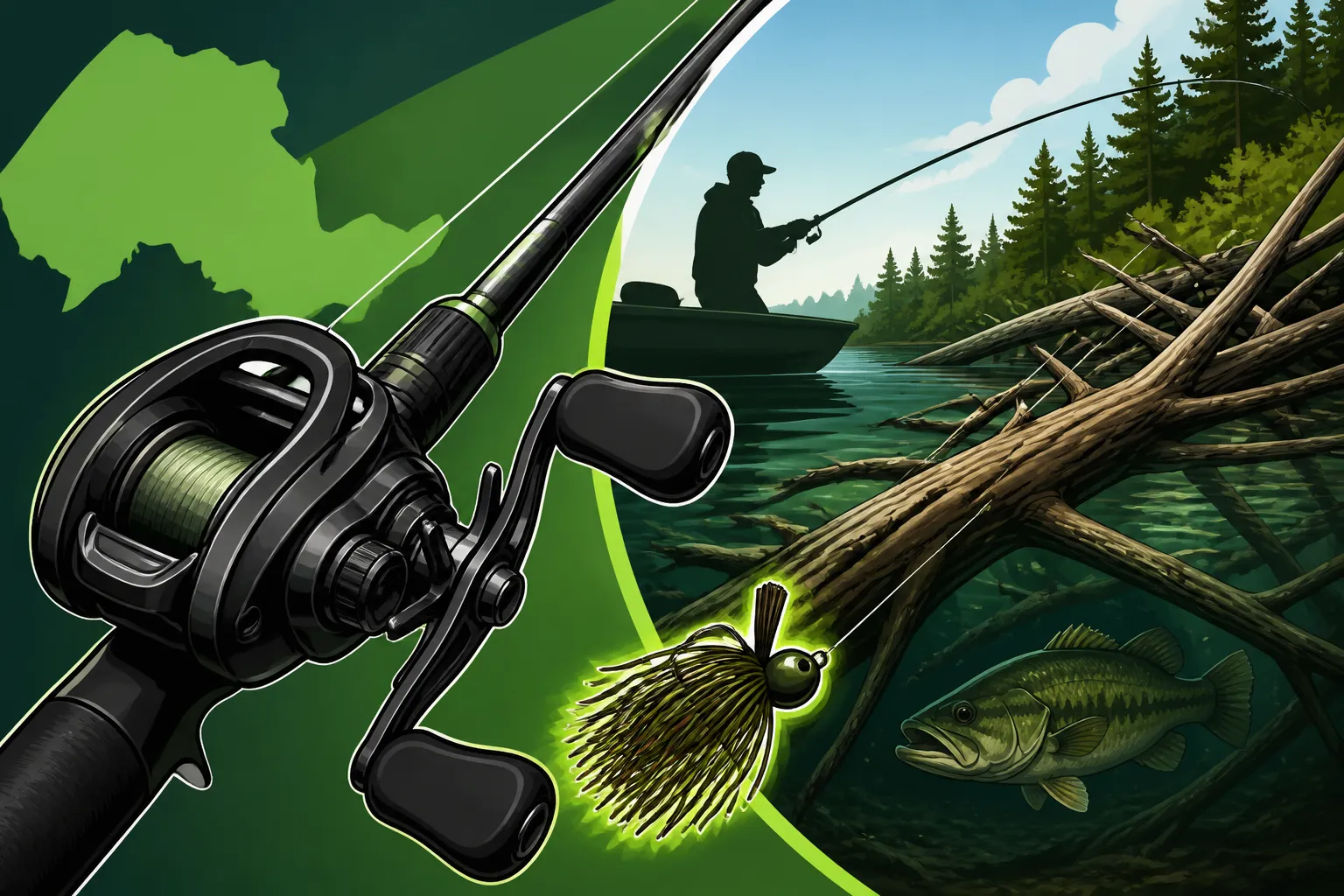
For any angler who's spent time on an Ontario lake or river, you know the frustration: bass love to hide in gnarly, tangled laydowns, making them tough to reach with a conventional cast. Trying to bomb a jig in there with a spinning reel can often lead to a messy splashdown or a snag. This guide is all about equipping you with the knowledge to pick the perfect baitcaster for pitching jigs into these bass-holding structures, transforming those missed opportunities into successful hooksets.
Understanding the Art of Pitching to Laydowns
Fishing laydowns in Ontario for bass isn't just about throwing a lure; it's an art form that demands precision, stealth, and the right gear. These submerged or partially submerged trees, logs, and brush piles are prime real estate for both largemouth and smallmouth bass, but they also present a significant challenge to anglers. Knowing why bass flock to them and the specific demands of the pitching technique is your first step to mastering this productive approach.
Why Laydowns Are Bass Havens
Think about it from a bass's perspective. A fallen tree or a dense brush pile offers everything a predator needs: cover from larger fish, ambush points to surprise unsuspecting prey, and shade from the harsh sun. In many of Ontario's clear, shallow lakes or slower-moving rivers, these laydowns are often the only significant structure available, concentrating bass in easily identifiable spots. Whether it's a sprawling oak that tumbled into Lake Simcoe or a tangled cedar bush along the French River, these spots provide security and a buffet line. The branches create pockets of calm water where baitfish feel safe, and the bass, ever the opportunists, lie in wait just beyond the chaos, ready to dart out and grab a meal. It's a natural fortress, and cracking its code is what makes pitching so rewarding.
The complexity of these structures means that a jig needs to land softly, without spooking the fish. A heavy splash can send a wary bass bolting for deeper cover, ruining your chances. Moreover, the dense branches and submerged roots act like a maze, and a poorly placed cast will instantly result in a snag, lost lure, and a frustrating re-tie. This is why a baitcaster, specifically configured for pitching, becomes your indispensable tool, allowing for that controlled, quiet presentation that is absolutely critical when targeting these fish. It’s a delicate dance between power and finesse, and the right reel helps you lead.
The Precision and Control Required for Pitching
Pitching isn't a long-distance cast; it's a short, underhand flick of the wrist that sends your jig sailing in a low trajectory, allowing it to land gently and accurately in tight spots. Imagine trying to thread a needle with your eyes closed – that's the level of control you need. The goal is a soft entry, mimicking a natural food item falling into the water, rather than a crashing cannonball. This technique minimizes disturbance and increases the likelihood of a strike, especially from larger, more cautious bass. To achieve this, you need a baitcasting reel that offers exceptional spool control and a highly adjustable braking system.
Traditional overhead casting often results in a louder splash and less accuracy when aiming for small, specific openings within a laydown. With pitching, you use the momentum of the lure and the flex of your rod to guide the jig precisely where you want it. This means you’re often feathering the spool with your thumb, dictating the distance and speed of the lure's flight. When a bass hits, often immediately after the jig touches down, you need to reel quickly to pull the fish out of the cover before it can wrap your line around a branch and break off. This combination of delicate presentation and brute force extraction is what makes the right baitcaster so vital; it’s a tool that allows for both surgical accuracy and rapid retrieval. Many anglers find the selection of gear at places like Bass Pro Shops helpful for comparing these fine points in person.
Key Baitcaster Features for Pitching Jigs
Choosing the best baitcaster for pitching jigs to laydowns comes down to a few critical features that collectively enhance your precision, control, and ability to extract fish from heavy cover. It's not just any baitcaster; it's one specifically tuned for this demanding technique.
Gear Ratio for Pitching Efficiency
When pitching jigs into laydowns, a high gear ratio is your best friend. We're generally talking about ratios in the range of 7.1:1 up to 8.1:1, or even higher. What does this mean? It means the reel's spool retrieves a significant amount of line with each turn of the handle. Why is this so important for pitching?
First, speed. When a jig hits the water near a laydown, a bass can strike immediately. You need to quickly take up slack, set the hook, and most crucially, get that fish moving away from the snags as fast as possible. A high gear ratio allows you to winch the fish out of the cover before it has a chance to bury itself deeper, wrapping your line around a branch or log. Second, efficiency. Pitching is a repetitive technique. You cast, retrieve a few feet, and if no bite, you quickly reel in and make another pitch to a different part of the laydown or a new piece of cover. A high gear ratio reduces the amount of time spent retrieving, letting you make more presentations in a shorter period. This maximizes your fishing time and increases your chances of finding an active bass. For example, a reel with an 8.1:1 ratio might bring in over 30 inches of line per crank, which is a huge advantage when you need to be quick.
Braking Systems and Spool Design for Accuracy
The braking system on a baitcaster is paramount for pitching, as it controls the speed of the spool during the cast, preventing dreaded backlashes while still allowing for a smooth, controlled delivery. There are primarily two types: centrifugal and magnetic.
Centrifugal brakes use pins that extend outwards as the spool spins, applying friction to the inside of the side plate. They offer excellent control during the initial acceleration of the cast, making them fantastic for delicate pitches where you need to prevent overrun early on. Magnetic brakes, on the other hand, use magnets that act on the spool, providing consistent braking force throughout the cast. Many reels now offer external adjustability for their magnetic systems, allowing for quick fine-tuning as wind conditions change or you switch lure weights. Some high-end reels even combine both systems, giving you the ultimate control. A lightweight, shallow spool is also a massive benefit. The less mass the spool has, the easier it is to get it spinning and, more importantly, to stop it quickly with your thumb. This lighter weight significantly reduces the inertia that causes backlashes, particularly when making those short, delicate pitches where the lure isn't carrying a lot of momentum. Look for models that boast advanced braking systems, which are often highlighted in product descriptions on platforms like Amazon.
Ergonomics and Comfort for All-Day Fishing
Pitching jigs is a hands-on, repetitive technique. You're constantly flicking, thumbing the spool, retrieving, and repeating. If your reel isn't comfortable to hold and manipulate, you'll feel it by the end of the day. Ergonomics play a huge role in minimizing fatigue and maximizing your focus.
Look for a low-profile baitcaster that fits comfortably in the palm of your hand. A compact design reduces strain on your wrist and fingers, allowing you to maintain that precise control for hours on end. The weight of the reel also matters; lighter reels are generally preferred for pitching setups, as they contribute to a more balanced rod-and-reel combo, making the entire system feel like an extension of your arm. Consider the handle and knobs as well. Larger, more comfortable knobs can provide better grip and leverage when retrieving a heavy jig or fighting a stubborn bass. Some reels feature extended handles, which offer more cranking power and better ergonomics for quick retrieves. When you're making hundreds of pitches over a day in search of those Largemouth Bass Fishing in Ontario or Smallmouth Bass Fishing in Ontario, these seemingly small details make a profound difference in your overall experience and effectiveness.
Pairing Your Baitcaster with the Right Rod and Line
A baitcaster, no matter how good, is only one part of the equation. To truly excel at pitching jigs to laydowns, you need to pair it with a rod and line that complement its strengths and the specific demands of the technique. Think of it as a finely tuned instrument where each component works in harmony.
Rod Specifications for Pitching Jigs
Choosing the right rod is just as critical as selecting the baitcaster itself. For pitching jigs into heavy cover, you're generally looking for a rod that offers a balance of sensitivity, power, and precise casting ability.
- Length: A rod length between 6'10" and 7'6" is often ideal. Shorter rods (on the lower end of this range) offer more maneuverability in tight quarters, such as fishing from a cramped boat or around dense shoreline brush. Longer rods (towards the upper end) provide more leverage for longer pitches, better line control, and increased power for fighting fish out of heavy cover. The exact length will come down to personal preference and the specific water you're fishing.
- Power: A medium-heavy to heavy power rod is typically recommended. This provides the backbone needed to drive a hook through a bass's jaw, especially when using a thicker jig hook, and the brute strength to quickly pull a fish away from snags and submerged timber. A rod that's too light will make it nearly impossible to extract a decent-sized bass from the heart of a laydown without risking a break-off.
- Action: A fast to extra-fast action is crucial. This means the rod bends primarily in the tip section, offering excellent sensitivity to detect subtle bites and a quick, powerful recovery for accurate pitching and solid hooksets. The fast tip allows you to feel the jig ticking off branches and differentiate between cover and a light bite, while the powerful mid-section provides the necessary force to get those fish out of the wood. This combination gives you the best of both worlds for jig fishing. When looking for Best Fishing Rods for Ontario Lakes, these specifications are key.
Line Choices for Heavy Cover and Sensitivity
The line you spool onto your baitcaster is your direct connection to the fish and the cover. For pitching jigs to laydowns, you need a line that offers strength, abrasion resistance, and excellent sensitivity.
- Braided Line: For your main line, braided line is almost universally preferred for pitching jigs in heavy cover. A pound test range of 30 to 50 pounds is common. Its incredible strength allows you to really lean into a fish and pull it out of dense cover without worrying about the line snapping. More importantly, braid has virtually no stretch, which translates to superior sensitivity. You'll feel every subtle tap, every brush against a branch, and every soft bite. This lack of stretch also means more direct power transmission for a solid hookset, even on longer pitches.
- Fluorocarbon Leader: While braid is fantastic for strength and sensitivity, its visibility in clear water can be a drawback, and it doesn't have the best abrasion resistance against sharp wood. This is where a fluorocarbon leader comes in. Tying a 15-20 pound test fluorocarbon leader (2-4 feet long) to your braided main line offers a few key advantages. Fluorocarbon is nearly invisible underwater, making your presentation more natural to wary bass. It also offers much better abrasion resistance than braid, providing a crucial buffer against rubbing on logs and branches. The small amount of stretch in fluorocarbon can also act as a slight shock absorber, preventing hooks from tearing out if a bass makes a sudden head shake. Just make sure you tie a strong, reliable knot like an FG knot or an Alberto knot to connect your braid to your fluorocarbon. Understanding these line properties is also vital for discussions like Best Line Weight for Muskie Fishing, although the specific weights would differ.
| Feature | Recommended for Pitching Jigs | Why it Matters |
|---|---|---|
| Baitcaster Gear Ratio | 7.1:1 to 8.1:1+ | Fast line retrieval for quick hooksets and pulling fish from cover; more presentations per hour. |
| Braking System | Highly adjustable centrifugal or magnetic (or hybrid) | Precise spool control for soft, accurate landings; minimizes backlashes on short pitches; adaptable to changing conditions. |
| Spool Design | Lightweight, shallow spool | Less inertia for easier starting and stopping, crucial for accuracy and backlash prevention with lighter jigs. |
| Rod Length | 6'10" to 7'6" | Balance of maneuverability for tight spots (shorter) and leverage/line control for longer pitches/fighting fish (longer). |
| Rod Power | Medium-Heavy to Heavy | Necessary backbone for strong hooksets and extracting fish from dense laydowns without breaking off. |
| Rod Action | Fast to Extra-Fast | Excellent sensitivity for bite detection; quick tip recovery for accurate pitches; strong mid-section for power. |
| Main Line | 30-50 lb Braided Line | Zero stretch for maximum sensitivity and powerful hooksets; incredible strength for battling fish in heavy cover. |
| Leader | 15-20 lb Fluorocarbon (2-4 ft) | Low visibility for wary fish; superior abrasion resistance against wood; slight shock absorption. |
Maintenance and Longevity for Your Pitching Setup
Investing in a quality baitcaster for pitching jigs means you want it to perform flawlessly for many seasons. Proper maintenance isn't just a suggestion; it's a necessity, especially when your reel is subjected to the rigorous demands of heavy cover fishing in Ontario's varied environments. Taking care of your gear ensures smooth operation, extends its lifespan, and protects your investment, allowing you to focus on the fishing rather than equipment failures.
Regular Cleaning and Lubrication
Your baitcaster is a collection of moving parts, and like any precision instrument, it needs regular attention. After every few trips, especially if you've been fishing in dusty, sandy, or silty conditions, a quick wipe down is in order. Dirt, grit, and even dried fish slime can work their way into the gearing and bearings, leading to rough retrieves and premature wear. Use a soft cloth to clean the exterior of the reel.
Beyond the surface, periodic internal cleaning and lubrication are essential. This doesn't necessarily mean a full tear-down after every outing, but at least once a season (or more frequently if you're a hardcore angler), it's a good idea to remove the side plate, clean out any accumulated grime from the gears and other moving parts with a cotton swab and a specialized reel cleaner. Then, apply a small amount of high-quality reel grease to the main gears and a tiny drop of reel oil to the bearings and worm gear. Over-lubricating can be just as detrimental as under-lubricating, attracting more dirt, so a little goes a long way. Keeping these components clean and smoothly moving is what ensures that precise pitching action and the powerful retrieve when you hook into a monster bass from the depths of a Best Walleye Lakes in Ontario or other productive waters. This attention to detail will keep your reel feeling brand new for years.
Protecting Your Investment
Beyond the internal workings, how you handle and store your baitcaster setup also plays a significant role in its longevity. Drops, knocks, and improper storage are common culprits for damage. Always try to keep your rod and reel combo secure when not in use, whether it's in a rod locker on your boat, strapped down in your vehicle, or stored upright in a rod rack at home.
When transporting your gear, consider using rod sleeves or cases to protect the guides and the reel itself from accidental impacts. A small reel cover can shield your baitcaster from dust and scratches. After fishing, always loosen the drag completely. Leaving the drag tightened puts unnecessary tension on the drag washers, which can lead to compression and reduced performance over time. Also, don't leave your rod and reel baking in the sun for extended periods; UV exposure can degrade lines, plastics, and lubricants. By taking these simple preventative measures, you're not just maintaining your reel; you're ensuring that your specialized pitching setup is always ready for action, helping you land those elusive bass from the thickest Ontario laydowns. For advice on complementary gear, check out Best Tackle Box Setup for Ontario Anglers.
Disclaimer
This article is for general informational purposes only and does not constitute professional advice. Laws, prices and regulations vary by location and change over time. Consult a qualified professional for guidance on your specific situation.