Best popper for topwater smallmouth
There’s nothing quite like the explosive chaos of a smallmouth bass blowing up on a topwater lure. That heart-stopping moment when the water erupts and your line goes tight is pure adrenaline, and for many, it’s the pinnacle of bass fishing. But if you’ve ever felt overwhelmed by the sheer number of poppers on the market, wondering which one will actually tempt those bronzebacks, you're not alone. This guide is all about helping you cut through the noise and discover the best popper to reliably entice aggressive smallmouth bass in Ontario's diverse waters.
Why Topwater Poppers are a Game Changer for Smallmouth Bass
Smallmouth bass are incredible predators, known for their aggressive nature and their willingness to strike at the surface. Unlike their largemouth cousins, which often hide in thick cover, smallmouth frequently patrol open water, rocky shoals, and current seams, making them prime targets for topwater presentations. A popper, with its unique ability to mimic injured baitfish or frantic insects, taps directly into their predatory instincts, often resulting in some of the most memorable strikes in fishing.
The Thrill of the Surface Strike
Let's be honest, there's a primal satisfaction that comes from seeing a fish commit to a lure right on the surface. It's not just about the catch; it's the visual spectacle. You cast your popper near a promising rock pile or along a weed line, give it a subtle twitch, and then BAM! A smallmouth explodes, sending spray everywhere. This isn't just a gentle sip; it's a full-on attack that can often be felt right through your rod. For many anglers, myself included, this thrill is why we keep coming back to topwater fishing for smallmouth. It's an active, engaging style of fishing that requires your full attention and rewards you with undeniable excitement.
Understanding Smallmouth Behavior on Topwater
Smallmouth bass are highly tuned into their environment, especially when it comes to surface activity. They're often found around structure like rocky shorelines, reefs, points, and current breaks, always on the lookout for an easy meal. When water temperatures are warm, typically from late spring through early fall, smallmouth are more likely to feed aggressively near the surface. They’ll key in on anything that looks like a struggling minnow, a frog, or even a large insect that has fallen into the water. Poppers excel because they perfectly imitate these vulnerable prey items. The erratic spitting and gurgling sound a popper makes, combined with its splashy disturbance, sends out vibrations and visual cues that scream "easy meal" to a curious smallmouth. Knowing how to present your popper can really make a difference. For some great insights into their habits, you might want to read up on Smallmouth Bass Habits on Lake Erie.
Key Features of an Effective Smallmouth Popper
Not all poppers are created equal, and understanding the nuances of their design can significantly impact your success. When you're standing in an aisle at a tackle shop like Bass Pro Shops or browsing online at Amazon, it’s easy to feel overwhelmed. But if you know what to look for, you can pick out a few reliable options that will serve you well on Ontario's smallmouth waters.
Size and Profile Considerations
The size and profile of your popper should generally mimic the baitfish or prey prevalent in the water you're fishing. For smallmouth, you typically want something in the 2-inch to 3.5-inch range. If you're targeting smaller, feisty fish in a river, a compact 2-inch popper might be perfect. But if you're chasing larger, more aggressive smallmouth on a big lake like Georgian Bay, a 3-inch or 3.5-inch model will create a bigger disturbance and often draw bigger strikes.
The profile itself also matters. Some poppers are sleek and cigar-shaped, designed to "walk the dog" with subtle chugs, while others have a more bulbous, stubby body meant to displace a lot of water with each pop. A general rule of thumb is that in calm, clear water, a more subtle, streamlined popper can be very effective. However, in choppy water or when you need to call fish up from deeper cover, a larger, more aggressive popper with a wider face can really shine.
Colour Choices and Water Conditions
Colour is another critical factor, though often overthought. For smallmouth poppers, sticking to natural baitfish patterns is usually your best bet. Think shades of silver, white, chrome, and clear with a hint of blue or green. These colours mimic common forage like shiners, smelt, and perch.
Here's a quick guide:
- Clear Water, Bright Sun: Natural patterns like clear, bone, or chrome. Translucent colours can also be deadly.
- Clear Water, Overcast: Slightly brighter naturals, or even a chartreuse belly for added visibility.
- Stained or Murky Water: High-contrast colours work well. Think black, black and chartreuse, or even firetiger. These colours create a stronger silhouette against the lighter sky, making them easier for bass to spot.
- Low Light (Dawn/Dusk): Black or dark silhouettes are often most effective, as they stand out against the fading light.
Don't be afraid to experiment, but having a few options in these basic categories will cover most scenarios.
Sound and Action: The Popper's Performance
The "pop" is everything with these lures. It's the sound and splash that mimics struggling prey and calls fish in. The design of the popper's face, or cup, dictates the type of sound and splash it produces.
- Deep, Wide Cup: These poppers displace a lot of water, creating a loud "chug" and a significant splash. They're excellent for choppy conditions, windy days, or when you need to draw fish from a distance or deeper water. They really create a commotion that aggressive smallmouth can't ignore.
- Shallow, Narrow Cup: These generate a more subtle "blip" or "spit" with less splash. They are ideal for calm, clear water, especially when smallmouth are finicky or heavily pressured. Sometimes a more refined disturbance is all it takes to trigger a strike without spooking them.
- Internal Rattles: Many poppers include internal rattles. These add an extra auditory dimension, mimicking the frantic sounds of struggling baitfish. In murky water or low light, the rattle can be the deciding factor in whether a smallmouth finds your lure. Some anglers prefer silent poppers in very clear, calm conditions, believing the rattles can sometimes be too much. It's a preference, but having options with and without rattles gives you versatility.
| Popper Feature | Best For | Typical Action/Sound | Notes |
|---|---|---|---|
| Deep Cupped Face | Choppy water, windy days, calling fish from deep or far, aggressive presentations | Loud "chug", large splash | Highly visible, great for covering water |
| Shallow Cupped Face | Calm, clear water, finicky fish, subtle presentations | Soft "blip," less splash | More finesse-oriented, less intrusive |
| Cigar-Shaped Body | Walking the dog, subtle chugs, erratic glides | Side-to-side glide with subtle pops | Versatile, mimics dying baitfish |
| Internal Rattles | Murky water, low light, provoking reaction strikes | Added noise/vibration | Can be key in low visibility, or overkill in ultra-clear |
| Feathered Treble | Added attraction, mimicking a tail or insect | Subtle pulse and visual appeal | Often on the rear hook, adds realism |
Top Popper Styles and Their Applications
While the market is flooded with options, most poppers fall into a few key categories, each with its own strengths. Understanding these styles will help you choose the right tool for the job, whether you're fishing a quiet bay or a vast lake.
Classic Cupped-Face Poppers
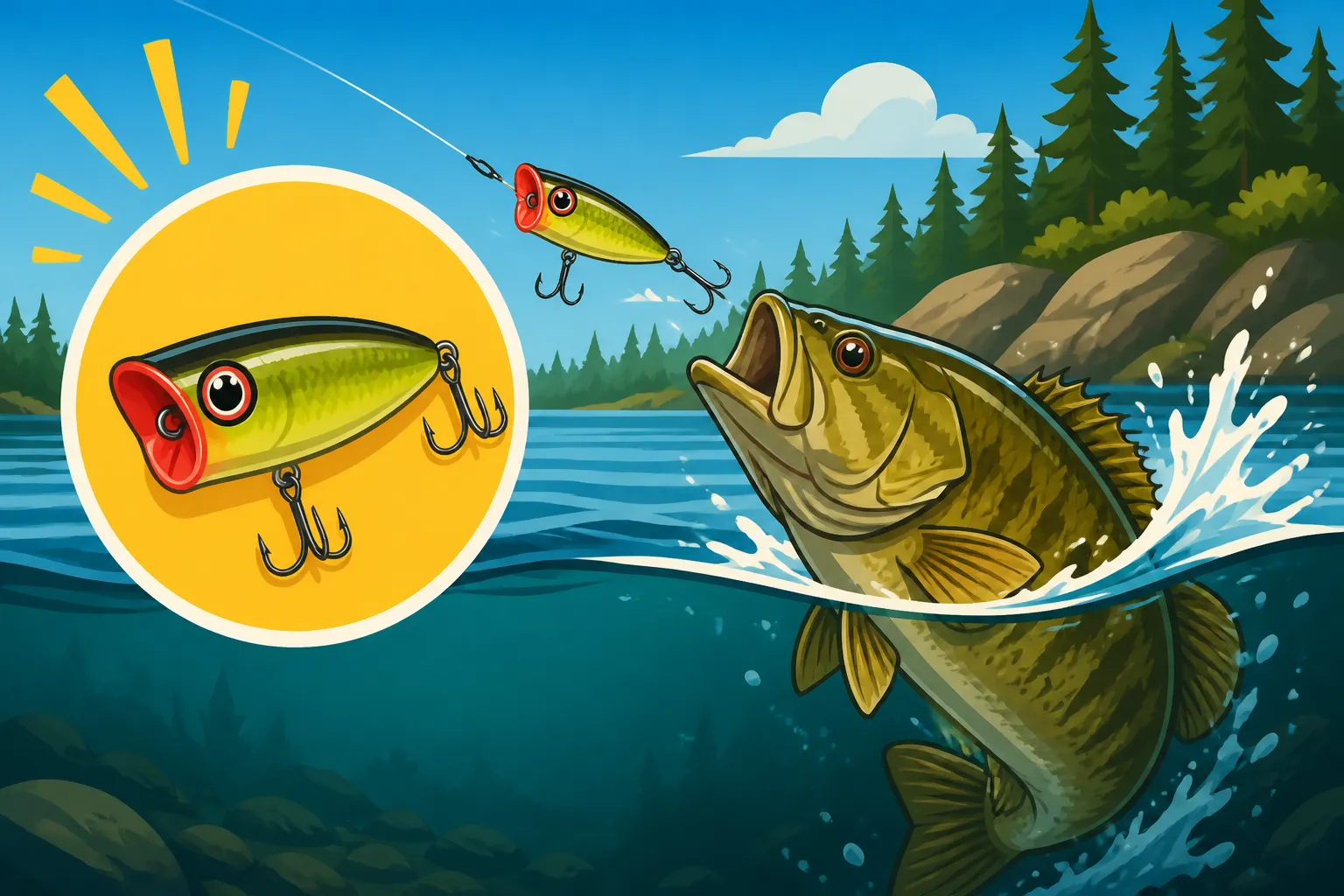
This is probably what most people picture when they think of a popper. They feature that distinctive concave face that allows them to push water, creating a "pop" or "chug" sound. Lures like the Heddon Zara Popper or the Rapala Skitter Pop are excellent examples of this classic design. They are fantastic for imitating baitfish splashing on the surface or a frog that’s made an ill-fated jump.
These poppers are incredibly versatile. You can retrieve them with long pauses, giving them a sharp pop that creates a big splash, then let the ripples dissipate before twitching them again. Or, you can work them with a series of quick, short pops, creating a more frantic, fleeing baitfish action. They excel in situations where you need to make a statement – calling smallmouth up from deeper rock piles, across vast flats, or through moderate chop. When smallmouth are actively feeding and not shy, a classic cupped-face popper is hard to beat for drawing those explosive strikes. You can find a huge variety of these at stores like Bass Pro Shops.
Chuggers and Walk-the-Dog Hybrids
These poppers blend the best of both worlds, often featuring a slightly more elongated body than a traditional popper, sometimes with a less aggressive cup. This design allows for not only the classic "chug" but also a side-to-side "walk-the-dog" retrieve, similar to a Zara Spook. Lures like the Rebel Pop-R (a true classic for a reason!) or some of the more modern topwater lures combine these actions seamlessly.
The advantage here is versatility. You can start with a traditional pop-and-pause retrieve, and if that's not triggering strikes, you can switch to a more subtle walking action. The walk-the-dog retrieve is particularly effective for smallmouth, as it mimics a confused or injured baitfish darting erratically on the surface. This can be deadly in clearer water where bass might be a bit more hesitant to commit to a purely splashy presentation. It's about giving them options and adapting to their mood. Knowing How to Catch Smallmouth Bass in Ontario involves mastering these nuanced retrieves.
Soft-Bodied Poppers for Finesse
While less common than their hard-bodied counterparts, soft-bodied poppers or those with soft, skirted legs can be incredibly effective, especially in more challenging conditions. These often resemble frogs or large insects, and their softer construction can lead to a more natural landing and feel when a bass strikes. Brands like Livetarget make realistic frog poppers that are fantastic.
The key benefit here is presentation. A soft-bodied popper often makes a much softer landing on the water, which can be crucial in calm, clear conditions where a heavy hard plastic splash might spook wary fish. The soft body also feels more natural to a smallmouth when it takes the bait, encouraging them to hold on longer, giving you a better chance to set the hook. These are often great around lily pads or emergent vegetation, where smallmouth might be ambushing prey from below. They’re a more finesse-oriented approach to topwater fishing for smallmouth and can really shine when the bite is tough. You might find these specialized lures available for purchase on Amazon, offering a convenient way to expand your topwater arsenal.
Rigging and Presentation Tips for Popper Success
Having the right popper is only half the battle; knowing how to fish it effectively is where the real magic happens. Smallmouth are incredibly responsive to presentation, and a few tweaks can turn a slow day into an unforgettable topwater frenzy.
Rod, Reel, and Line Setup
For throwing poppers, you want a setup that offers both casting accuracy and enough backbone to handle aggressive strikes and spirited fights.
- Rod: A 6'6" to 7' medium-light to medium power spinning rod with a fast action is usually perfect. The length helps with casting distance and accuracy, while the fast action tip allows for precise lure manipulation and quick hook sets. If you prefer baitcasting, a similar length and power rod would work, perhaps a medium power. A good quality rod makes a difference. For general gear advice, check out Best Fishing Rods for Ontario Lakes.
- Reel: A 2500-3000 series spinning reel or a baitcasting reel with a medium gear ratio (around 6.4:1 to 7.1:1) is ideal. You want something smooth with a reliable drag.
- Line: This is crucial. I prefer a braided line (15-20 lb test) as my main line because it has no stretch, which provides excellent sensitivity for feeling subtle takes and ensures strong hook sets even at a distance. The lack of stretch also helps impart the popping action more directly. However, braid is highly visible, so I always tie on a fluorocarbon leader (10-12 lb test, 18-24 inches long) to the end of my braid. This offers a nearly invisible connection to your lure, which can be critical in clear water situations. Using a small, strong swivel or an FG knot for the braid-to-fluoro connection works well. Some anglers use monofilament main line (10-12 lb test) because it floats and has some stretch, which can be more forgiving on aggressive strikes, but you lose some directness in the popping action. It's largely a matter of personal preference, but the braid-to-fluoro setup offers a great blend of sensitivity and stealth.
Mastering the Retrieve
This is where the artistry comes in. There's no single "best" retrieve for a popper; it's all about experimenting and letting the fish tell you what they want.
- Pop and Pause: This is the most common retrieve. Cast your popper to a likely spot, let the ripples dissipate, then give it a sharp downward twitch of the rod tip, creating a distinct "pop." Let it sit again, sometimes for 5-10 seconds, then repeat. Most strikes occur during the pause, as the bass thinks the "stunned" baitfish is an easy target. Vary the length of your pauses.
- Walk the Dog: With hybrids or more cigar-shaped poppers, you can incorporate a walk-the-dog action. Point your rod tip down towards the water, and with a series of subtle, rhythmic twitches, make the lure glide side-to-side across the surface. This creates a very natural, fleeing baitfish look.
- Rapid Fire: Sometimes, especially with very aggressive smallmouth or in stained water, a rapid series of pops with minimal pauses can trigger furious reaction strikes. This creates a lot of commotion and can be effective when bass are actively chasing bait.
- Subtle Twitch: In calm, clear water, or when fish are finicky, very subtle twitches that just make the popper "spit" a little water, rather than a full "pop," can be more effective. This mimics a struggling insect or a very weak baitfish.
Remember, the goal is to make your popper look like an easy meal. Play with these retrieves and combine them. A couple of hard pops, then a long pause, then a walk-the-dog section – variety is key. For more in-depth techniques, especially around topwater, check out Topwater Fishing for Smallmouth Bass in Ontario.
Prime Locations and Timing for Poppers
Smallmouth bass love structure and they love current. Look for these key areas to maximize your popper success:
- Rocky Shorelines and Points: Smallmouth patrol these areas for baitfish. Cast your popper right up against the rocks and work it parallel to the shore or off the tip of a point.
- Reefs and Shoals: Underwater rock piles and shallow reefs in larger lakes are classic smallmouth haunts. Cast over the top and around the edges.
- Current Seams: In rivers, anywhere current changes speed or direction – eddies behind boulders, current breaks along log jams, or where a tributary enters – are prime ambush points. Smallmouth will sit in the slower water, waiting for food to drift by.
- Weed Edges: While not as common for smallmouth as largemouth, smallmouth will often use the deep edges of weed beds as cover. Work your popper along these edges.
- Shallow Flats: In the early morning or late evening, smallmouth will often move onto shallow flats to feed.
- Docks and Boat Lifts: These structures provide shade and cover, attracting both baitfish and bass.
As for timing, topwater fishing for smallmouth is usually best during:
- Low Light Conditions: Dawn and dusk are prime times when bass are most actively feeding near the surface. The reduced light gives them an advantage over their prey.
- Overcast Days: A cloudy day can extend the topwater bite throughout the day, as the diffuse light makes bass less wary.
- Warm Water Periods: Late spring, summer, and early fall when water temperatures are consistently warm will see the most consistent topwater action.
- Before a Cold Front: Just before a cold front moves in, fish often go on a feeding frenzy, and topwater can be incredibly productive. After the front passes, they can become much more finicky.
Always pay attention to the conditions and how the fish are reacting. Sometimes, the smallmouth are tight to cover, and you need to get your popper right into the strike zone. Other times, they’ll cruise open water looking for a meal. Being adaptable and having a few different popper styles and colours will make you a much more successful angler. When you're fishing in larger bodies of water, remember that Best Bass Fishing Techniques for Georgian Bay will emphasize targeting those rocky points and shoals that smallmouth love.
Disclaimer
This article is for general informational purposes only and does not constitute professional advice. Laws, prices and regulations vary by location and change over time. Consult a qualified professional for guidance on your specific situation.