Best boat lights for night fishing
There’s nothing quite like the tranquility and mystery of night fishing on an Ontario lake or river. The air is cooler, the stars are brilliant, and the big fish often come out to play. But let's be honest, the romance can quickly fade if you're ill-prepared for the darkness. Fumbling for tackle, struggling to unhook a fish, or worse, navigating without proper visibility, can turn a peaceful evening into a frustrating, even dangerous, ordeal. This comprehensive guide will illuminate the crucial role of boat lights for your night fishing adventures, ensuring you stay safe, compliant, and successful on Ontario's beautiful waters.
Why Boat Lights are Non-Negotiable for Night Fishing in Ontario
When the sun dips below the horizon, Ontario's vast waterways transform. What was once a familiar shoreline becomes a wall of blackness, and other boats become invisible hazards. It’s a completely different environment, and relying on the moon or a small headlamp just isn't enough. Beyond personal safety and the ability to effectively fish, there are strict regulations that govern boat lighting after dark, and ignoring them can lead to hefty fines and, more importantly, put lives at risk.
Navigational Safety and Visibility
Imagine you're out on Lake Simcoe or the Bay of Quinte after sunset, focused on that elusive walleye bite. You're drifting quietly, completely absorbed. Suddenly, a larger fishing boat, moving at speed, appears out of the gloom. Without proper navigation lights on both vessels, neither of you would see the other until it was far too late. This isn't just a hypothetical nightmare; it’s a very real danger. Navigation lights are designed to make your boat visible to others and to indicate your direction of travel, preventing collisions in low-light conditions.
Think about it this way: when you're driving your car at night, you wouldn't dream of turning off your headlights, right? The same principle applies, perhaps even more so, on the water where there are no painted lines or streetlights. The expanse of water means sound travels differently, and depth perception is severely hampered. Having bright, functional lights ensures that other anglers, pleasure craft, and even large commercial vessels on busier routes know where you are. This isn't just about avoiding a collision; it's also about being seen if you run into trouble. A well-lit boat is much easier for search and rescue teams to spot in an emergency.
Understanding Ontario's Boating Regulations for Lights
Navigating the rules can sometimes feel like trying to untangle a knotted fishing line, but when it comes to boat lights, the regulations are clear and non-negotiable. Transport Canada sets out specific requirements for lighting on all vessels from sunset to sunrise, and during periods of restricted visibility (like fog or heavy rain). These aren't just suggestions; they are laws designed to ensure everyone's safety on the water.
Generally, powered boats need a masthead light (a white light visible 360 degrees), sidelights (a red light on the port side, green on the starboard, visible from ahead and to the sides), and a stern light (a white light visible 135 degrees astern). For smaller boats or specific types of vessels, there might be slightly different configurations, but the core principle is that you need to be visible from all directions. Paddled craft like canoes and kayaks have different, but still essential, requirements, often needing a white light readily available to show in time to prevent a collision. It’s really worth taking the time to review the Ontario Boating Laws for Anglers so you know exactly what your specific vessel needs. Don't fall into the trap of thinking "it's just a small boat, nobody will care." When it comes to safety on the water, everyone cares, and the penalties for non-compliance can be significant.
Types of Boat Lights for Night Fishing
When you're equipping your boat for night fishing, you'll discover there's more to it than just the mandatory navigation lights. Different types of lights serve distinct purposes, from ensuring regulatory compliance to enhancing your fishing experience and overall safety. It's about creating a well-lit, functional space that lets you focus on the fish, not on fumbling in the dark.
Essential Navigation Lights
These are your primary line of defense against collisions and your ticket to staying on the right side of Transport Canada regulations. Every powered vessel operating between sunset and sunrise, or in restricted visibility, must display navigation lights.
- Sidelights (Red and Green): These are perhaps the most recognizable. The red light is on the port (left) side of your boat, and the green light is on the starboard (right) side. They shine from the bow (front) back to just behind your boat's midpoint. Their purpose is to indicate your vessel's right-of-way and direction of travel to other boats. Seeing both red and green means a vessel is coming straight at you, which is when you need to take evasive action. If you only see green, they're crossing from your right; only red, from your left. Understanding these simple visual cues is fundamental to safe navigation.
- Stern Light (White): This white light is mounted at the stern (rear) of your boat and shines backward. It's designed to be visible from the rear and helps other vessels behind you see your presence and maintain a safe distance. Combined with the sidelights, it provides a full circle of visibility.
- Masthead Light (White): For many powerboats, particularly larger ones, a masthead light is required. This is a white light positioned above the sidelights and stern light, shining forward and to the sides, essentially a 225-degree arc. It helps define your vessel's length and position, especially important for larger boats. On smaller boats, often a single all-around white light (visible 360 degrees) can serve as both the masthead and stern light, depending on the boat's size and speed capability. It's important to check your specific vessel's requirements.
When shopping for these, look for marine-grade LED lights. They are incredibly energy-efficient, meaning they won't drain your battery quickly, and they're durable enough to withstand the harsh marine environment. Places like Bass Pro Shops or even online retailers such as Amazon carry a wide array of complete navigation light kits that can be a great starting point, often designed for easy installation on various boat types.
Deck, Spreader, and Interior Lights
Once your navigation lights are sorted, it’s time to think about illuminating your workspace. The last thing you want is to be fumbling around in the dark trying to tie a knot, rig a bait, or, worse, unhook a feisty pike in the pitch black.
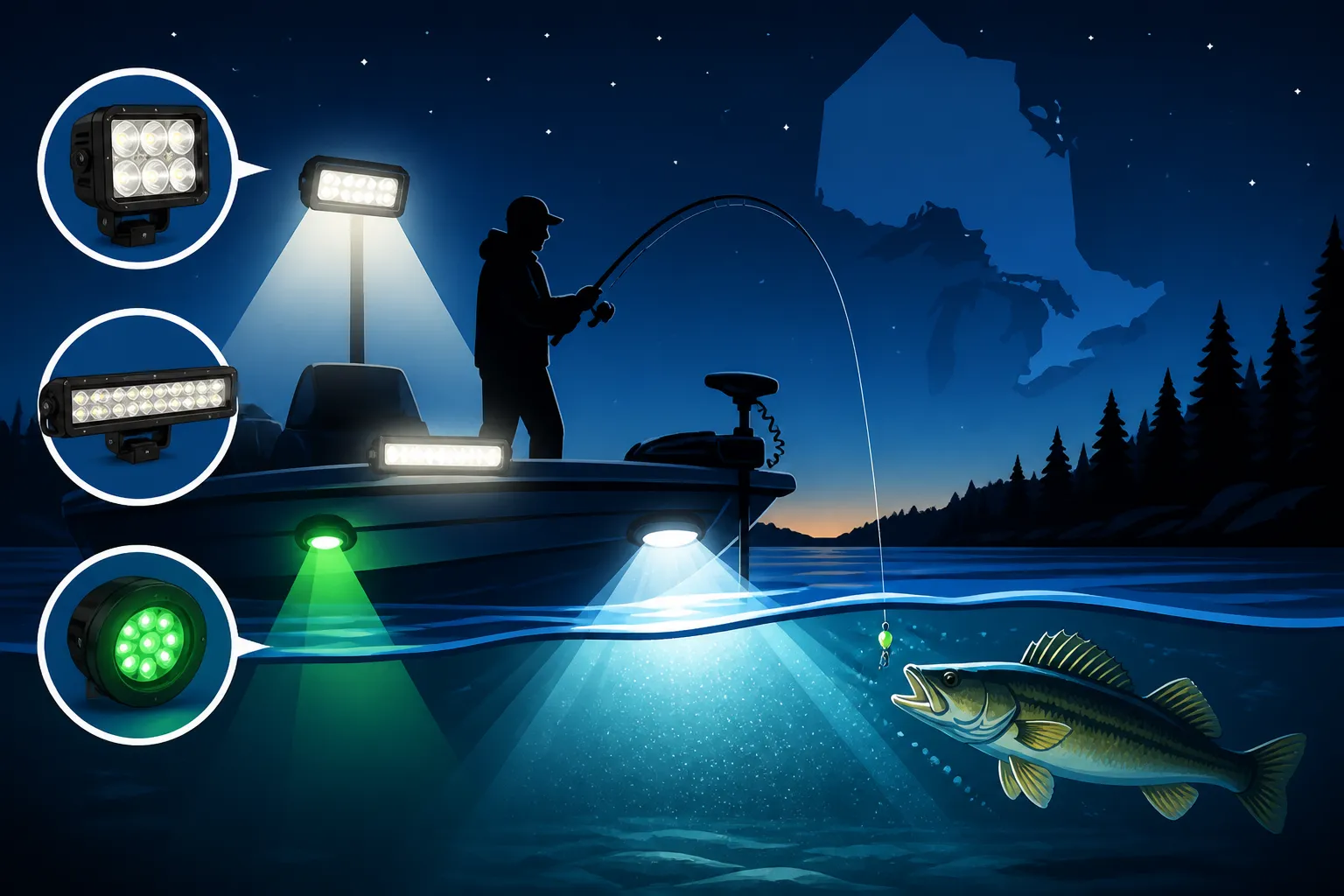
- Deck Lights/Spreader Lights: These are practical workhorses. Deck lights are typically mounted on a T-top, roll bar, or a high point on your boat and project light downwards onto your deck area. Spreader lights are similar but are often mounted to spread light wider, illuminating a larger portion of the deck or even extending slightly out over the water near the boat. They are invaluable for rigging rods, baiting hooks, handling fish, or even just moving around safely without tripping. Many anglers opt for white LED deck lights for maximum brightness, but some prefer a softer red or green light for tasks, as these colors are less disruptive to night vision and don't attract as many insects.
- Interior Lights: If your boat has a cabin, console, or storage compartments, small interior lights can make a huge difference. These are usually low-wattage LEDs, often recessed or strip lights, that provide just enough illumination to find what you need without blinding you. They're excellent for tackle storage areas or livewells, where you might be reaching for specific items.
- Portable and Task-Specific Lights: Don't underestimate the power of a good headlamp! Even with fixed deck lights, a headlamp frees up your hands for precise tasks like tying on a new leader or sorting through a tackle box. Waterproof models with red light options are a huge bonus for preserving night vision. Similarly, small, battery-operated LED lanterns or magnetic utility lights can be placed exactly where you need a temporary spot of light, perhaps to see your rod tip or a specific piece of gear. These flexible options are readily available on platforms like Amazon and can be incredibly versatile backups or additions to your fixed lighting setup.
Underwater Lights and Their Benefits
Underwater lights are a relatively newer trend in boat lighting, and while not strictly necessary for safety or regulations, they can certainly enhance the night fishing experience, and even sometimes improve your catch rates.
- Attracting Baitfish: One of the primary reasons anglers install underwater lights is to attract baitfish. The light emitted into the water column can draw in plankton, which then attracts small baitfish like minnows or smelt. Where the baitfish go, the predators often follow. So, if you're targeting walleye or pike, having a congregation of bait around your boat can be a natural attractant.
- Visual Appeal and Ambience: Let's face it, they look cool. Underwater lights can create a stunning glow around your boat, turning your fishing spot into a mesmerizing aquatic display. They add a unique ambiance, especially when fishing with friends or family. Many modern underwater lights offer various color options, allowing you to customize the mood.
- Visibility for Landing Fish: When you hook into a big one, especially if it's running deep or under the boat, underwater lights can provide crucial visibility to see the fish, assess its size, and guide it into the net more effectively. This can be a game-changer when fighting a trophy muskie or a heavy lake trout after dark. Remember, safely landing and releasing fish is important, so having that extra visual aid can prevent a lot of stress for both you and the fish. Muskellunge Catch and Release Survival Tips is a great resource if you're after those giants.
| Light Type | Primary Purpose | Power Source | Key Considerations | Regulatory (Transport Canada) |
|---|---|---|---|---|
| Sidelights | Indicate direction & presence to other boats | 12V DC (Boat Battery) | Visibility, proper color (red/green) & arc | Mandatory |
| Stern Light | Indicate presence to boats from the rear | 12V DC (Boat Battery) | Visibility, proper color (white) & arc | Mandatory |
| Masthead/All-Around | Indicate presence to boats from all directions | 12V DC (Boat Battery) | Height, 360-degree visibility (for all-around) | Mandatory (config varies) |
| Deck/Spreader | Illuminate work area on deck | 12V DC (Boat Battery) | Brightness, beam angle, light color (white/red) | Not Mandatory |
| Interior/Compartment | Light up cabin, storage, livewells | 12V DC (Boat Battery) | Low wattage, minimal glare, often strip lighting | Not Mandatory |
| Underwater | Attract bait, ambiance, aid fish landing | 12V DC (Boat Battery) | Brightness, color options, mounting location | Not Mandatory |
| Portable/Headlamp | Hands-free task lighting, backup | Battery (AA/AAA/USB) | Waterproof, red light option, battery life | Not Mandatory (but recommended) |
Choosing the Right Boat Lights for Your Ontario Adventures
Selecting the perfect lighting setup for your night fishing expeditions in Ontario isn't a one-size-fits-all scenario. Your choice will depend on the type of boat you have, the kind of fishing you do, and the specific waterways you frequent. It’s about striking a balance between regulatory compliance, practical utility, and personal preference, always keeping safety at the forefront.
Factors to Consider When Selecting Lights
Before you start adding items to your online cart at Bass Pro Shops or browsing the endless options on Amazon, take a moment to consider these crucial factors. Making informed decisions now will save you headaches and potential safety issues down the line.
- Boat Size and Type: A small aluminum fishing boat on a sheltered inland lake will have different lighting needs than a large deep-V on Lake Huron or Lake Ontario. Smaller boats might get away with a simple portable LED navigation light kit, while larger vessels will require permanently mounted, hard-wired systems that meet more stringent visibility standards. Consider the electrical system your boat already has – can it handle the extra draw of new lights? If you're running a small craft, remember that even a canoe or kayak needs a light to show in time to prevent collision, which could be a simple, readily accessible white flashlight.
- Power Source and Battery Life: Most boat lights run on your boat's 12-volt battery system. If you're adding multiple lights, especially powerful deck or underwater lights, you need to ensure your battery can handle the increased load for the duration of your trip. Consider upgrading to a deep-cycle marine battery or even adding a dedicated auxiliary battery for your electronics and lighting if you plan on extended night sessions. For portable lights, rechargeable options are often more economical and environmentally friendly than disposable batteries. Nothing cuts a night fishing trip short like a dead battery, so plan your power consumption carefully.
- Installation Method: Will you be hard-wiring your lights into your boat’s electrical system, or do you prefer portable, battery-operated solutions? Hard-wired lights are generally more reliable and brighter but require more installation effort, often involving drilling holes and routing wires. If you're not comfortable with electrical work, it might be best to consult a professional or stick to simpler plug-and-play options. Portable lights offer flexibility and ease of use but often have lower light output and finite battery life. Think about where you'll mount them – are there suitable flat surfaces, or will you need brackets and clamps?
- Water Type and Environment: Are you fishing on small, calm ponds, winding rivers, or the vast, sometimes choppy, waters of the Great Lakes? Lights need to be waterproof, durable, and resistant to corrosion, especially in saltwater or brackish environments (though most of Ontario is freshwater, it’s good practice for marine-grade products). The intensity of light needed might also vary. On a wide-open lake, you'll want brighter navigation lights to be seen from a greater distance. In a tight river, you might need more focused deck lights to illuminate obstacles close to the boat.
Popular Brands and Where to Find Them
When it comes to purchasing boat lights, you've got a wealth of options. Focusing on reputable brands that specialize in marine products will generally lead to better quality and longevity.
- Marine-Specific Brands: Companies like Attwood, Perko, Aqua Signal, and Lumitec are well-known for their marine lighting solutions. They offer everything from standard navigation lights to high-end LED deck lights and underwater systems. These brands are often stocked by dedicated marine supply stores and larger outdoor retailers.
- General Outdoor Retailers: For a broad selection of marine electronics and accessories, including a wide array of boat lights, you can't go wrong with big-box outdoor stores. Bass Pro Shops, for example, is a fantastic resource. They usually have knowledgeable staff who can guide you through the options, and you can often see the lights in person before you buy. They stock both basic and advanced lighting systems, catering to different boat types and budgets.
- Online Marketplaces: For sheer variety and competitive pricing, online marketplaces like Amazon are hard to beat. You'll find everything from budget-friendly portable options to more specialized LED arrays. Just be sure to read reviews carefully, check the waterproofing ratings, and verify that the products meet marine standards, especially for navigation lights. It's an excellent place to find those niche items, like specific colored task lights or unique mounting solutions.
Regardless of where you purchase your lights, always double-check that they are certified for marine use and comply with Transport Canada regulations for navigation lights. Your safety, and the safety of others, depends on it.
Installation Tips and Maintenance for Longevity
You've picked out the perfect boat lights for your Ontario night fishing adventures – congratulations! Now comes the critical step: installation and ensuring they last. Proper installation isn't just about functionality; it's about electrical safety, maintaining your boat's integrity, and ensuring your lights perform reliably when you need them most. And once they’re in, a little routine care goes a long way in extending their lifespan.
DIY vs. Professional Installation
Deciding whether to tackle the installation yourself or hire a professional depends largely on your comfort level with electrical wiring and boat modifications.
- DIY Installation: If you're installing simple battery-operated or plug-and-play lights, or if you have a basic understanding of 12-volt systems, DIY is definitely an option. For navigation lights, ensure you understand the wiring diagram that comes with the lights, use marine-grade crimp connectors (never just twist wires together!), and apply heat shrink tubing or liquid electrical tape for waterproof seals. When drilling holes for mounting, always use marine sealant around the fasteners to prevent water intrusion, which can lead to rot or corrosion. A common frustration many anglers face is finding a clear, unobstructed path for wiring, especially in smaller boats. Take your time, plan your wire runs, and secure everything properly to prevent chafing and wear. Remember to have the Ontario required boat safety equipment checklist handy, as proper wiring is part of overall boat safety.
- Professional Installation: For complex systems, such as multiple hard-wired deck lights, underwater lights, or if you're uncomfortable with boat electrical systems, hiring a professional marine electrician or boat mechanic is often the best choice. They have the expertise, specialized tools, and knowledge to ensure the installation is safe, compliant, and won't cause future electrical issues. While it's an added cost, the peace of mind knowing your lights are correctly installed and won't leave you stranded in the dark is invaluable. This is especially true if you fish frequently in challenging conditions or on larger, busier bodies of water.
Common Issues and Troubleshooting
Even with the best installation, boat lights can occasionally act up. Knowing how to troubleshoot common problems can save your night fishing trip.
- No Power: First, check your fuses or circuit breakers. A blown fuse is often the culprit for a light that suddenly goes out. Ensure the battery terminals are clean and tight, and that your main battery switch is on. If only one light is out, check its specific wiring connection.
- Flickering or Dim Lights: This often points to a poor electrical connection or low voltage. Check for corroded wires, loose terminals, or a weak battery. If multiple lights are dim, your battery might be running low, or your wiring might not be sufficient for the load.
- Water Intrusion: If you notice condensation inside a light fixture or if a light stops working after getting wet, you likely have a seal issue. Inspect the housing for cracks or compromised gaskets. Sometimes, simply replacing a worn gasket can solve the problem.
- LEDs Out: While LEDs are known for their longevity, individual diodes can fail. If a section of an LED strip light is out, the entire unit may need to be replaced, as individual diode replacement is usually not practical for marine units.
When tackling any electrical troubleshooting, always disconnect your battery first to prevent accidental shorts or shocks.
Maximizing the Lifespan of Your Lighting System
A little preventative maintenance can significantly extend the life of your boat lights and keep them performing optimally.
- Regular Cleaning: Salt, dirt, grime, and even bug residue can build up on light housings, reducing their brightness and potentially causing corrosion. Clean your lights regularly with fresh water and a mild soap, especially after trips to prevent buildup.
- Inspect Wiring and Connections: Periodically check all visible wiring for fraying, cracks, or corrosion. Ensure all connections are tight and sealed. A small amount of dielectric grease on exposed terminals can help prevent corrosion.
- Winterization (for colder climates): If you store your boat for the winter, ensure your lights are protected. Disconnect batteries, and if any lights are exposed, consider covering them. For boats stored outdoors, ensuring proper drainage around light housings can prevent ice buildup and damage.
- Consider Covers: For valuable or delicate light fixtures, consider investing in protective covers when your boat is not in use or during trailering. This protects them from UV damage, impacts, and weather exposure.
By following these tips, your boat lights will not only keep you safe and legal on Ontario’s waters but also reliably illuminate your path to many successful night fishing trips. Just imagine those peaceful evenings targeting Night Fishing for Walleye in Ontario, made even better by a perfectly functioning lighting setup.
Disclaimer
This article is for general informational purposes only and does not constitute professional advice. Laws, prices and regulations vary by location and change over time. Consult a qualified professional for guidance on your specific situation.