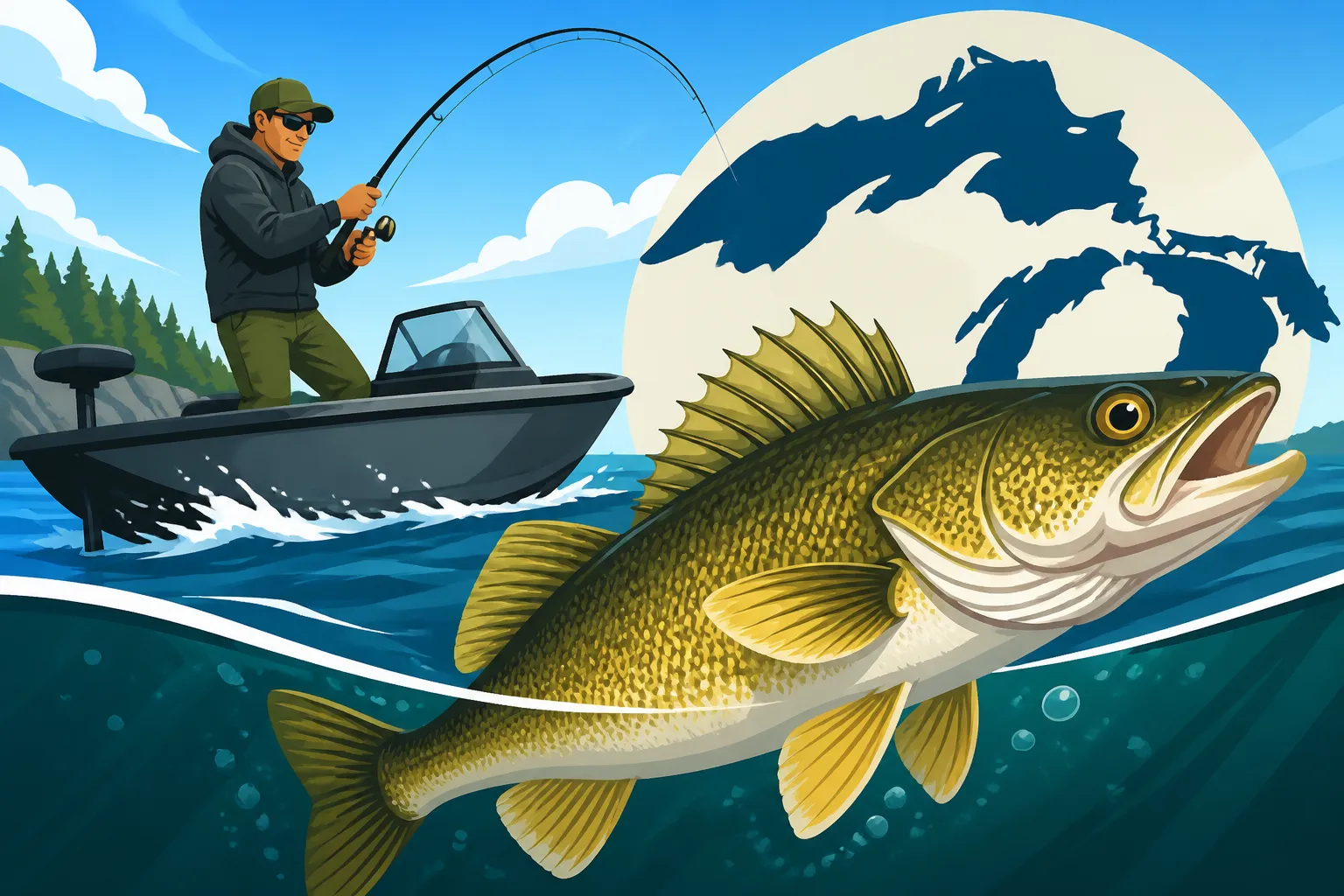
Lake Erie Walleye Fishing
One of the biggest frustrations for anglers new to Lake Erie is simply the sheer scale of the water and the almost overwhelming number of options for catching walleye. This immense body of water can feel intimidating, but with the right knowledge and a bit of planning, you can unlock some of the best walleye fishing experiences Canada has to offer. This guide is here to demystify Lake Erie walleye fishing, breaking down everything from prime seasons and spots to effective techniques and essential gear, so you can confidently tackle this fantastic fishery.
Understanding Lake Erie's Walleye Fishery
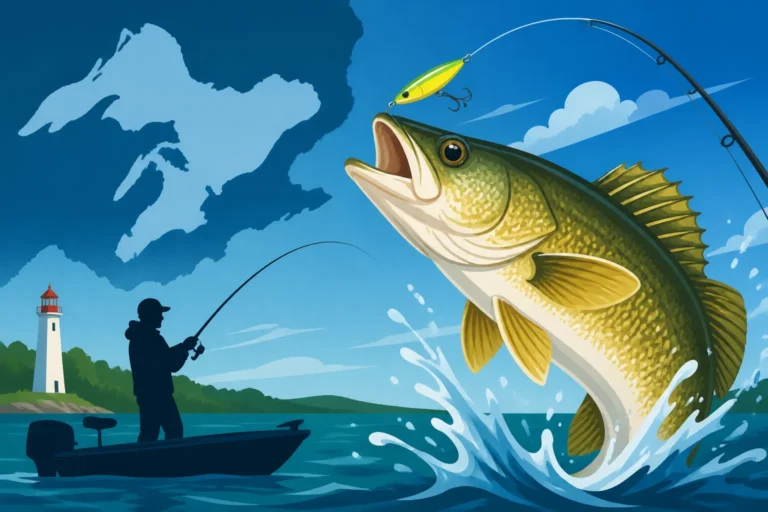
Lake Erie isn't just a lake; it's an incredible walleye factory, producing more of these highly sought-after fish than all the other Great Lakes combined. Its unique characteristics make it an ideal habitat, leading to a thriving population that draws anglers from all over North America. If you've ever heard tales of coolers full of "eaters" or giant "trophy" walleye, chances are, those stories originated right here on Lake Erie.
The Incredible Abundance of Lake Erie Walleye
What makes Lake Erie such a walleye haven? It boils down to a few key factors. First, the lake is relatively shallow compared to its Great Lakes siblings, especially the western and central basins. This allows for warmer water temperatures, which boost the metabolism and growth rates of walleye and their prey. Second, the lake is incredibly fertile. The abundant nutrients support massive populations of baitfish, like emerald shiners and gizzard shad, which are the primary food source for walleye. This rich food supply means walleye grow quickly and reach impressive sizes. It’s not uncommon for anglers to talk about catching dozens of fish in a day, a testament to the lake's incredible productivity. This abundance is a major reason why Lake Erie is often considered one of the Best Walleye Lakes in Ontario.
The health of the walleye fishery on Lake Erie is a success story in conservation. Decades ago, pollution and overfishing severely impacted the lake. However, significant efforts in environmental protection and fisheries management have led to a spectacular rebound. Today, the walleye population is robust and carefully managed by both Canadian and American authorities, ensuring sustainable fishing for generations to come. When you're out on the water, you'll see why so many consider Lake Erie the undisputed king of walleye fishing.
Key Characteristics of Lake Erie Walleye
Lake Erie walleye are distinct in a few ways. They are primarily open-water fish for much of the year, following baitfish schools rather than staying tied to structure in the same way walleye in smaller, shallower lakes might. This pelagic nature means techniques like trolling and drifting are often incredibly effective, as you're covering vast expanses of water to locate these schools. Their diet of abundant, fatty baitfish also contributes to their excellent table fare – Lake Erie walleye are renowned for their flaky, white meat and delicate flavour.
The size of walleye in Lake Erie can vary significantly depending on the basin and time of year. The Western Basin, particularly around the Detroit River and Pelee Island, is famous for its massive numbers of "eaters" – walleye typically ranging from 15 to 22 inches. These are perfect for a fish fry! As you move into the Central and Eastern Basins, while numbers might be slightly lower in some areas, the average size often increases, with trophy-class fish over 28 inches being a real possibility. Understanding these nuances is crucial for planning your trip and setting your expectations for the kind of walleye you hope to catch.
Best Times and Seasons for Walleye Fishing on Lake Erie
Lake Erie offers fantastic walleye fishing opportunities almost year-round, but each season presents its own unique challenges and rewards. Knowing when and where to target these fish can dramatically increase your success. The when is just as important as the how when it comes to Lake Erie walleye.
Spring Walleye Fishing: The Nearshore Frenzy
Spring on Lake Erie kicks off with a bang. As the ice recedes and water temperatures begin to climb, walleye move into shallower, warmer waters to spawn. This is a time of incredible activity, particularly in the Western Basin, where the Detroit River and Maumee River are major spawning grounds. The Canadian side of the Western Basin, around Pelee Island and the adjacent shallow reefs, also sees significant numbers of pre-spawn and post-spawn fish.
During the pre-spawn period, walleye are hungry and aggressive, feeding heavily to build energy reserves. Post-spawn, they are often ravenous as they recover from the rigors of spawning. This is prime time for casting jigs and stickbaits in shallower areas or trolling nearshore contours. The bite can be phenomenal, often leading to high-volume catches. It's a truly exhilarating time to be on the water, and many anglers specifically plan their trips around the Spring Walleye Fishing Techniques for Ontario.
Summer Walleye Fishing: Offshore Trolling and Drifting
Once spring spawning is complete and water temperatures continue to rise, Lake Erie walleye spread out across the lake, following their preferred baitfish schools into deeper, cooler waters of the open basins. Summer fishing on Lake Erie is typically an offshore game, dominated by trolling and drifting techniques. Anglers often target areas with distinct thermoclines or subtle underwater structure that holds bait.
This is when you'll find boats spread out over vast areas, often miles offshore, meticulously working their presentations at specific depths. Downriggers, planer boards, and weighted lines are all common tools to get lures into the strike zone. Summer can offer incredible catches of both numbers and size, especially in the Central and Eastern Basins where the deep-water fishery thrives. It requires patience and persistence, but the rewards are often worth the effort.
Fall Walleye Fishing: Migrations and Feeding Sprees
As autumn approaches and water temperatures cool, Lake Erie walleye undertake significant migrations, often moving back towards shallower waters or concentrating in specific areas as they prepare for winter. They enter a period of intense feeding, bulking up on baitfish before the cold sets in. This can lead to some of the best trophy walleye fishing of the year.
Fall fishing often involves a mix of spring and summer techniques. Nearshore casting and jigging can become effective again, especially in the mornings and evenings, while offshore trolling remains a strong option for locating concentrated schools. The fish are typically very aggressive, and the cooler weather can make for a more comfortable fishing experience than the summer heat. This is a fantastic time to target those personal best walleye.
Winter Walleye Fishing: Challenging but Rewarding
While not as widely accessible or popular as the warmer months, winter can offer unique walleye fishing opportunities on Lake Erie, particularly through the ice in certain protected bays or shallower sections of the Western Basin. However, due to the sheer size and often unpredictable nature of the lake, ice fishing on Lake Erie requires extreme caution and local knowledge.
Anglers who brave the elements often find success jigging spoons and small crankbaits through the ice. The fish can be concentrated and hungry, especially during stable weather patterns. Remember, safety is paramount, and it's crucial to check ice conditions meticulously or fish with experienced local guides. While less common, the dedicated winter angler can find solitude and some surprising catches.
Top Lake Erie Walleye Fishing Spots
Lake Erie is enormous, stretching across four states and one Canadian province. Knowing where to focus your efforts within its vast expanse is key. Each basin offers different characteristics and prime locations for walleye. The lake is divided into three distinct basins: the shallow Western Basin, the deeper Central Basin, and the deepest Eastern Basin. Understanding these differences, which are also reflected in the Ontario Fisheries Management Zones, Explained, will help you decide where to launch your adventure.
Western Basin Hotspots
The Western Basin is arguably the most famous walleye factory on Lake Erie, especially for its incredible numbers of "eaters." It's characterized by its shallowness and numerous reefs, islands, and river mouths. On the Canadian side, the waters around Pelee Island are legendary. The island creates natural bottlenecks and current breaks that walleye love, especially during their spring migrations. Targeting reefs and rocky shoals around Pelee can be incredibly productive for both casting and trolling.
Further west, near the mouth of the Detroit River, anglers often find huge concentrations of walleye, particularly in spring. This area is known for its excellent jigging opportunities. Key areas like Colchester and Wheatley offer numerous boat launches and are popular starting points for Canadian anglers looking to explore the Western Basin. Don't forget to check out the myriad of shallow reefs and rock piles scattered across this basin; they hold fish consistently, especially during low light conditions or when baitfish are schooling nearby.
Central Basin Productive Waters
As you move east from the Western Basin, Lake Erie gradually deepens into the Central Basin. This area is known for its vast open-water expanses and is a prime location for summer trolling. While it might not have the dramatic structure of the Western Basin, subtle contour changes, deep humps, and the thermocline become critical holding areas for walleye.
Important ports on the Ontario side like Port Stanley, Port Dover, and Port Colborne offer access to the Central Basin. Anglers here often spend their days miles offshore, following reports of baitfish schools and walleye concentrations. The deep troughs and flats often hold massive schools of walleye in summer. Using marine electronics to locate schools of emerald shiners or gizzard shad is crucial. Many experienced anglers utilize charter services from these ports, often found through platforms like FishingBooker, to navigate these expansive waters and learn the local nuances.
Eastern Basin Deep Water Opportunities
The Eastern Basin of Lake Erie is the deepest and coldest part of the lake, characterized by significant depths and a more pronounced drop-off compared to the other basins. While it holds fewer walleye than the Western Basin, it often produces some of the largest individual fish, especially true trophy-sized specimens. The fish here are often less pressured and have more room to grow.
Access points on the Canadian side in the Eastern Basin might include areas around Fort Erie and Port Maitland, though much of this basin's productive waters are on the U.S. side. Fishing here usually involves targeting much deeper water, often over 50-80 feet, with specialized trolling gear. Downriggers are almost a necessity, and anglers will focus on breaks, drop-offs, and areas where baitfish are holding in the cooler, deeper water column. While the numbers might not rival the Western Basin, the chance at a truly colossal walleye makes the Eastern Basin an exciting challenge for dedicated anglers.
Effective Techniques and Lures for Lake Erie Walleye
Catching walleye on Lake Erie demands a diverse set of skills and an understanding of the conditions. What works in spring might not work in summer, and different basins often require different approaches. But generally, the vastness of the lake often points to covering water, making trolling and drifting the most popular and effective methods. For more general guidance on how to tackle these fish, you can also check out our comprehensive guide on How to Catch Walleye in Ontario.
Trolling with Crankbaits and Harnesses
Trolling is perhaps the quintessential Lake Erie walleye technique. It allows anglers to cover vast distances, searching for schools of active fish, and present multiple lures at varying depths.
Crankbaits: These are incredibly effective, especially diving crankbaits that can reach specific depths without additional weight. Popular brands like Rapala, Reef Runner, and Berkley Flicker Shad are mainstays in many Lake Erie tackle boxes. Colour choice can be critical; natural baitfish patterns often excel in clear water, while brighter colours like chartreuse, orange, or firetiger can be deadly in stained or turbid conditions. The speed of your troll is also crucial; often, a slower troll (1.0-1.5 mph) is effective in cooler water, while a faster pace (1.8-2.5 mph) can trigger strikes from active fish in warmer conditions. Varying your speed and making subtle turns can often induce a bite from following fish. For specific lure recommendations, refer to our article on the Best Baits for Walleye on Lake Erie.
Crawler Harnesses: These are another legendary walleye producer, especially when tipped with a live nightcrawler. A crawler harness typically consists of a clevis with spinner blades (Colorado, Indiana, or willowleaf), beads, and two snelled hooks. They are often fished behind bottom bouncers or in-line weights to present them just off the bottom or at a specific depth. The flash and vibration of the blades, combined with the scent and action of a live worm, are irresistible to walleye. Experiment with different blade colours and sizes; metallic finishes like silver and gold are always popular, but bright colours can also be very effective, especially on overcast days or in stained water. Trolling Techniques for Ontario Lake Trout can also offer valuable insights, as some principles translate well to walleye.
| Lure Type | Best Conditions | Retrieve/Troll Speed | Common Depths | Notes |
|---|---|---|---|---|
| Diving Crankbaits | Clear to Stained Water, All Depths | Moderate to Fast (1.5-2.5 mph) | 10-40+ feet (depending on dive) | Mimic baitfish, effective with planer boards. |
| Crawler Harnesses | All Water Conditions, Near Bottom | Slow to Moderate (0.8-1.5 mph) | 10-60+ feet (with bottom bouncers) | Live bait (nightcrawler) is key, excellent scent and action. |
| Jigging Spoons | Deep Water, Ice Fishing | Vertical Jigging | 20-80+ feet | Imitates dying baitfish, good for suspended schools. |
| Blade Baits | Cooler Water, Vertical Jigging | Vertical Jigging, Casting | 10-40 feet | High vibration, effective for reactive fish. |
Drifting and Jigging Strategies
While trolling is king, drifting and jigging can be incredibly effective, especially in the Western Basin's shallower, reef-filled waters or when targeting specific concentrations of fish.
Drifting with Jigs: This technique is often used in shallower water or over reefs where walleye might be more structure-oriented. Anglers use electric trolling motors or drift socks to control their drift speed, presenting jigs tipped with soft plastics (like Berkley Gulp! Minnows or Z-Man Scented PaddlerZ) or live minnows. A light-to-medium action spinning rod provides the sensitivity needed to detect subtle bites. The key is to keep your jig near the bottom, bouncing it occasionally, mimicking a wounded baitfish. This method is particularly deadly in spring when fish are concentrated.
Vertical Jigging: When walleye are suspended in deeper water or tightly schooled, vertical jigging can be incredibly productive. This involves positioning your boat directly over the fish, as indicated by your fish finder, and dropping a jigging spoon, blade bait, or heavy jig straight down. The action is usually a lift-and-drop, allowing the lure to flutter and then fall enticingly. Strikes often occur on the drop, so paying close attention to your line is essential. This method shines in colder water conditions or when fish are less willing to chase a trolled bait.
Vertical Jigging in Deep Water
For those targeting walleye in the Central and Eastern Basins, especially during the colder months or when fish are suspended over deep water, vertical jigging becomes a precise art. This isn't just dropping a jig; it's about interpreting your sonar, understanding the fish's behaviour, and presenting your lure with finesse.
When you locate a school of walleye or baitfish on your fish finder in 40-70 feet of water, positioning your boat directly above them is crucial. Use your bow-mounted electric trolling motor with GPS Spot-Lock feature to hold steady. Then, deploy a heavy jigging spoon (like a Sebile Vibrato or a Swedish Pimple) or a weighted blade bait. The retrieve is a sharp lift of 1-3 feet, followed by a controlled fall on a semi-slack line. Many bites are incredibly subtle, feeling like a slight weight on the line or a tiny tick. Having sensitive graphite rods and braided line with a fluorocarbon leader enhances your feel. This technique can be highly selective, often picking off the largest, most aggressive fish from a school.
Essential Gear for Lake Erie Walleye Anglers
Lake Erie is big water, and fishing it successfully requires reliable, durable gear. From your rod and reel to your boat's electronics and safety equipment, being prepared is paramount for both success and safety.
Rods, Reels, and Line Selection
Choosing the right tackle can make a huge difference. For trolling, a medium-heavy power rod with a moderate action, around 7 to 9 feet in length, is ideal. This length helps spread lines and absorb the shock of a striking walleye while still providing enough backbone to fight larger fish. Matched with a reliable baitcasting reel with a line counter (like a Daiwa Sealine or a Penn Warfare) allows for precise lure placement, which is crucial when trying to replicate a successful depth. Spool these reels with 10-15 lb test monofilament for its stretch, or 20-30 lb braided line with a 10-15 lb fluorocarbon leader for increased sensitivity and abrasion resistance.
For jigging and casting, a medium to medium-light power spinning rod, 6'6" to 7'6" in length, with a fast action tip provides the sensitivity to detect subtle bites and the backbone to set the hook. Pair this with a 2500 or 3000 series spinning reel spooled with 8-10 lb braided line and a 6-10 lb fluorocarbon leader. The braid offers superior sensitivity and casting distance, while the fluorocarbon leader provides invisibility and abrasion resistance. Remember, sharp hooks are non-negotiable for walleye, so ensure your lures are equipped with quality, sharp trebles or singles.
Electronics and Navigation
On a body of water the size of Lake Erie, marine electronics are not just a luxury; they are a necessity. A high-quality fish finder with GPS and mapping capabilities is paramount. Units from brands like Humminbird (Helix or Solix series) and Lowrance (HDS Live or Elite FS series) offer excellent sonar clarity, allowing you to identify baitfish schools, individual walleye, and crucial bottom structure. The GPS functionality allows you to mark productive waypoints, follow contour lines, and safely navigate back to port, especially in changing weather conditions.
Radar can also be a valuable tool, particularly for navigating in fog or low light conditions, and preventing collisions with other vessels. An accurate marine-band VHF radio is also non-negotiable for communication with other boats and for emergency situations. Having digital charts (like Navionics or C-MAP) on your unit provides detailed bathymetry and navigation aids, making it easier to pinpoint prime fishing locations and safely traverse the vast lake. These tools are critical for efficient fishing and ensuring safety on big water.
Safety Equipment for Big Water
Fishing on Lake Erie means being prepared for rapidly changing weather and significant wave action. Safety is always the top priority. Your boat must be equipped with all the required safety gear as per Canadian Coast Guard regulations, which align closely with Ontario Boating Laws for Anglers. This includes properly sized and accessible life jackets for everyone on board – consider inflatable PFDs for comfort, but ensure they are regularly inspected.
Beyond the basics, carry a throwable floatation device, a sound-signalling device (horn or whistle), navigation lights, and a fire extinguisher. A well-stocked first-aid kit, extra water, non-perishable food, and warm, waterproof clothing are also crucial. Consider carrying a satellite communication device or an Emergency Position Indicating Radio Beacon (EPIRB) for offshore trips where cell service might be unreliable. Never underestimate Lake Erie; it can turn from calm to chaotic in a matter of minutes. Always check the marine weather forecast before heading out and be prepared to cut your trip short if conditions deteriorate.
Navigating Regulations and Conservation
Fishing on Lake Erie, especially along the Canadian shore, means adhering to specific provincial regulations. These rules are in place to protect the valuable walleye fishery and ensure its sustainability for future generations. It's not just about avoiding penalties; it's about being a responsible angler. To truly be prepared, take the time to read the Ontario Fishing Regulations Explained, as well as the Ontario Fishing Regulations Summary, before you hit the water.
Understanding Ontario's Specific Rules
Ontario's Ministry of Natural Resources and Forestry (MNRF) sets specific regulations for Lake Erie (which falls within Ontario Fisheries Management Zone 20). These regulations dictate everything from fishing season dates to daily catch and possession limits. For example, the Ontario Fishing Season Dates by Zone will specify when walleye season is open. Additionally, pay close attention to the Ontario Bag and Possession Limits by Species for walleye on Lake Erie, as these can vary.
You'll also need a valid Ontario fishing license, which will either be a Sport Fishing License or a Conservation Fishing License. The Conservation License has lower catch limits but is a more budget-friendly option for those primarily interested in catch-and-release or taking home a modest meal. Always carry your Outdoors Card and license while fishing. Ignorance of the rules is not an excuse, and penalties for violations can be significant, including fines and potential loss of fishing privileges.
Practicing Responsible Catch and Release
While Lake Erie's walleye population is thriving, practicing responsible catch and release is essential, especially for larger, older fish that are vital for spawning. If you plan to release fish, handle them with care. Use appropriate landing nets with rubberized mesh to minimize scale and slime removal. Minimize air exposure; get the fish back in the water as quickly as possible.
When unhooking, use long-nosed pliers or a dehooking tool. If a fish is deeply hooked, it's often best to cut the line as close to the hook as possible rather than trying to rip the hook out, which can cause internal damage. For larger walleye, support their body horizontally when lifting for a quick photo, never vertically by the jaw alone, as this can damage their spine and internal organs. Finally, if a fish appears stressed, hold it gently in the water, facing into the current, until it regains its strength and can swim away on its own. These small actions contribute greatly to the health and future of Lake Erie's incredible walleye fishery.
Disclaimer
The information provided in this guide is for general informational purposes only and is subject to change. Fishing regulations, season dates, and limits are set by the Ontario Ministry of Natural Resources and Forestry (MNRF) and can change annually. Always consult the most current Ontario Fishing Regulations Summary before heading out to fish. Additionally, boating safety and weather conditions on Lake Erie can be unpredictable; always prioritize safety, check marine forecasts, and ensure your vessel is properly equipped.