How to euro nymph a freestone stream
The struggle is real when you’re out on a fast-flowing Ontario freestone stream, watching your indicator bob and drag, completely missing those subtle takes deep in the current. Traditional nymphing can be a real headache in these conditions, often leading to frustration and fewer fish in the net. This comprehensive guide is here to untangle those lines and show you how to master the art of Euro nymphing, a highly effective technique specifically designed to conquer challenging stream environments and put more trout on your hook.
Understanding the Basics of Euro Nymphing for Freestone Streams
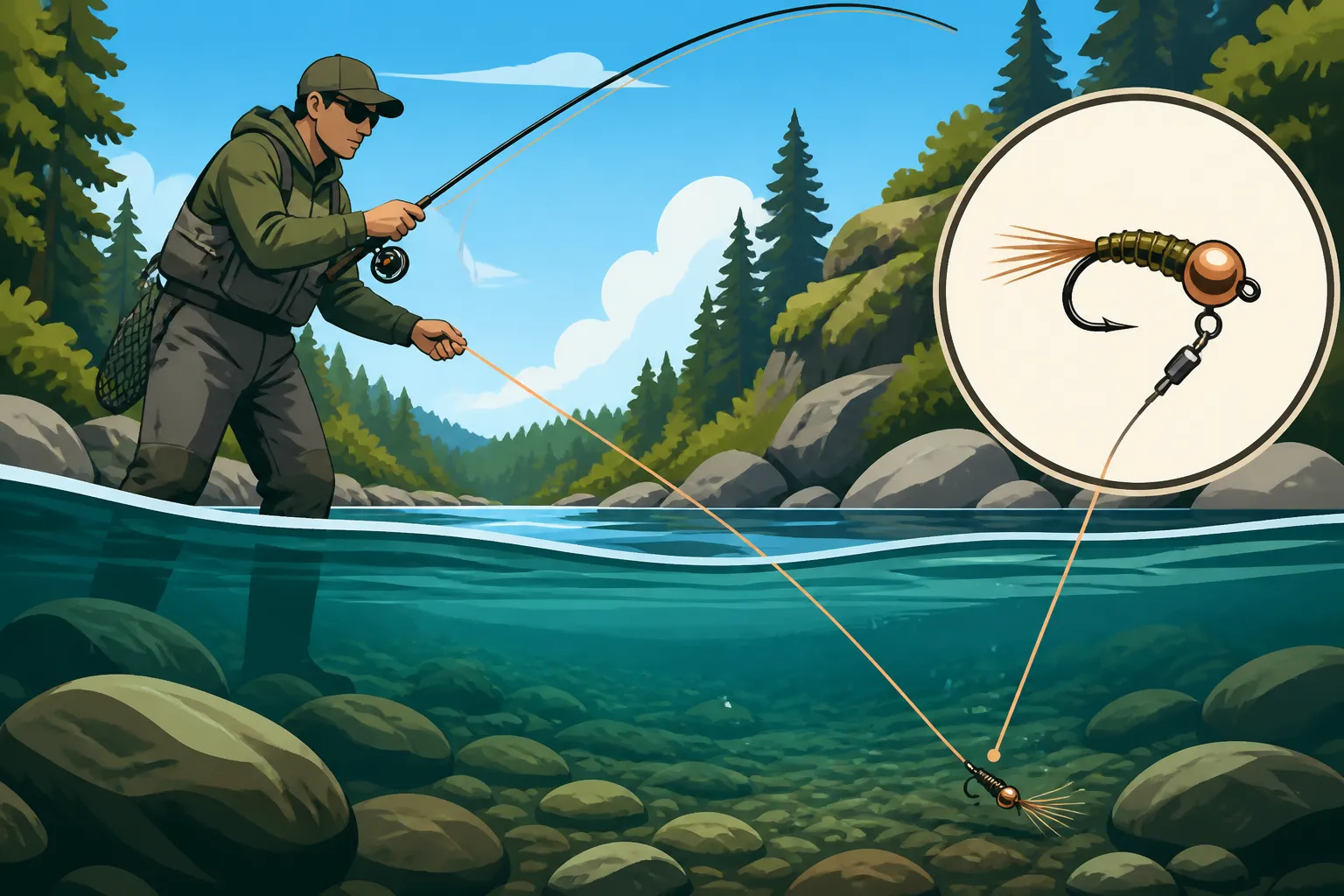
Euro nymphing, often referred to as Contact Nymphing, Czech Nymphing, or Polish Nymphing, is a specialized fly fishing technique that’s a game-changer for anglers targeting trout in swift, broken water. Unlike traditional indicator nymphing, where you rely on a bobber to detect strikes, Euro nymphing is all about maintaining direct contact with your flies through a sensitive leader system, allowing you to feel even the most delicate bites.
Why Euro Nymphing Excels in Freestone Streams
Freestone streams, by their very nature, are characterized by varied current speeds, rocky bottoms, riffles, runs, and deep pockets. This diverse topography often creates complex currents that make it nearly impossible to get a drag-free drift with a traditional indicator rig. Your indicator gets pulled in different directions, your flies swing unnaturally, and the fish, being the smart creatures they are, quickly spot the deception.
Euro nymphing directly addresses these challenges. By eliminating the buoyant indicator, you can precisely control the depth and speed of your flies. The heavy, typically lead-free nymphs (thanks to environmental concerns, though tungsten is the real hero here!) sink quickly, getting into the strike zone almost immediately. The long, thin leader reduces water resistance, allowing your flies to tumble naturally with the current, while the bright sighter material at the end of your fly line acts as your visual cue for subtle movements that indicate a take. It's a method built for precision, giving you an unparalleled feel for what your flies are doing beneath the surface, even in the most turbulent sections of an Ontario stream. This isn't just a different way to nymph; it's a completely different philosophy of presenting flies, one that drastically increases your chances in high-gradient, complex waters.
Key Principles of the Technique
At its core, Euro nymphing is built on a few fundamental principles:
- Direct Contact: This is paramount. You want a straight line from your rod tip to your flies, minimizing slack. This allows you to feel the subtle bumps, stops, and accelerations that indicate a fish has taken your fly.
- Weight to Depth: Your flies are weighted to get down quickly. There's usually no split shot; all the weight comes from the flies themselves, often tied with heavy tungsten beads. This ensures they reach the bottom where trout often feed, and it helps maintain the "contact" by keeping the line tight.
- Drag-Free Drift: While direct contact is key, the goal is still to present your flies in a natural, drag-free manner, mimicking natural insect nymphs drifting downstream. Your rod tip leads the flies, matching the current speed and direction to prevent unnatural pulling or swinging.
- Short Leader to Fly Line: Unlike traditional nymphing with long leaders, Euro nymphing uses a much shorter, specialized leader attached directly to your fly line, which then connects to a highly visible sighter section before your tippet and flies. This compact system aids in sensitivity and control.
These principles combine to create a highly effective system for presenting flies to trout that are often ignored by other methods. It’s a bit like playing an instrument by ear – you’re feeling the nuances rather than just watching a visual cue.
Essential Gear for Ontario Euro Nymphing
Stepping into Euro nymphing often means rethinking some of your existing fly fishing gear. While you might get by with some adaptations, having the right specialized equipment can truly make or break your experience, especially on demanding Ontario freestone streams.
Specialized Rods and Reels
The heart of a Euro nymphing setup is undeniably the rod. You’ll want something very different from your typical dry fly or general-purpose trout rod.
- Rod Length and Action: Euro nymphing rods are typically longer, ranging from 10 to 11.5 feet, with some going even longer. This extra length is crucial for keeping your line off the water, extending your reach, and providing superior drift control, especially when fishing complicated currents or targeting trout on the far bank. The longer rod also acts as a shock absorber for light tippets, protecting them during a fight. As for action, look for a rod with a soft, sensitive tip that transitions quickly into a powerful butt section. The soft tip allows you to detect the slightest take and protects fine tippets, while the stiffer butt provides the backbone needed to fight larger fish and cast weighted nymphs. You don't want a "noodle" rod; you want sensitivity up front and power in the back.
- Rod Weight: Most Euro nymphing rods fall into the 2- to 4-weight range. This lighter weight helps enhance sensitivity and makes the longer rod feel less cumbersome for all-day casting and holding.
- Reel: The reel for Euro nymphing is primarily a line storage device. Since you're typically not casting long distances with the fly line itself, a high-performing drag system isn't as critical as it would be for streamer fishing. A lightweight reel that balances well with the long rod is the main consideration. Many anglers opt for a reel that's a size or two heavier than what they'd typically pair with that rod weight to help with balance.
It's tempting to try and make your existing 9-foot 5-weight work, but you'll quickly discover its limitations. The specialized rod really is foundational to the technique's success.
Line, Leader, and Tippet Configuration
This is where Euro nymphing truly diverges from traditional fly fishing. The entire leader system is designed for sensitivity and minimal drag.
- Fly Line: Surprisingly, many Euro nymphing setups use a very thin, level monofilament fly line, or even just a specialized Euro nymphing line that is incredibly thin and lightweight. The idea is to have as little fly line on the water as possible, or ideally, none at all. This minimizes drag and allows the entire leader system to remain suspended, providing that all-important direct contact. Some brands offer specific "Euro Nymphing Lines" that are essentially just very thin, level PVC lines, almost like running line.
- Sighter/Indicator Leader: This is the visible, brightly colored section of your leader that connects your fly line to your tippet. It's usually made of two or three different fluorescent colors (e.g., pink, chartreuse, white) to provide contrast against various backgrounds and light conditions. The sighter acts as your visual strike indicator, flexing or moving subtly when a fish takes your fly. It’s typically constructed from a series of short sections of mono or fluorocarbon knotted together, sometimes using a "two-tone sighter" material that's designed to be easily seen. You can often find pre-made sighters, or you can build your own. This is where you really learn to trust your eyes, looking for any pause, twitch, or acceleration.
- Tippet: This is the thinnest, clearest section of your leader that connects your flies. You’ll be using very fine tippets, often down to 5x, 6x, or even 7x fluorocarbon. Fluorocarbon is preferred for its low visibility and its fast sink rate, which helps get your flies down quickly. The length of your tippet can vary depending on water depth and current, but typically, you want enough length to allow your flies to drift naturally while still maintaining good contact through the sighter. For trout fishing in Ontario, a good quality fluorocarbon from a brand like Seaguar or Rio (available on Amazon, among other retailers) will serve you well. Remember, while going lighter on tippet increases stealth, it also increases the risk of break-offs, so it’s a constant balancing act.
Weighted Nymphs and Fly Selection
The flies used in Euro nymphing are specifically designed to get down quickly and effectively.
- Tungsten vs. Lead: While traditionally, some weighted nymphs used lead, the trend now is overwhelmingly towards tungsten beads or tungsten-weighted bodies. Tungsten is significantly denser than lead, allowing for smaller, heavier flies that sink like a stone without adding bulk. This makes them less visible to fish and more efficient at reaching the bottom.
- Fly Patterns: Euro nymphs are generally slim-profiled, sparsely tied patterns that imitate common aquatic insects like caddis larvae, mayfly nymphs, and stonefly nymphs. Popular patterns include the Perdigon, Squirmy Wormy, Walt's Worm, Pheasant Tail Nymph, and various jig-style nymphs. The key is that they are tied on jig hooks (which ride hook-point up, reducing snags) and heavily weighted. You'll often fish a multi-fly rig, typically two or three flies depending on regulations. A common setup might be a heavier "point fly" at the bottom to get the rig down, and a lighter "dropper fly" or two above it to cover different water columns or imitate emerging insects.
- Color and Size: Just like with any nymphing, match the hatch or at least the general color and size of the prevalent insects in the stream. However, don't be afraid to experiment with "attractor" patterns, especially those with hot spots (bright colored collars or beads), as they can trigger an aggressive response. Having a diverse selection of flies in various weights, colors, and sizes is crucial for adapting to different stream conditions and fish preferences. A good fly box full of varied tungsten nymphs is essential.
Mastering the Techniques on Freestone Streams
Euro nymphing is much more active than traditional indicator fishing. It requires constant attention, precise rod control, and a good understanding of how water moves. Once you get the hang of it, you’ll unlock a whole new level of stream fishing.
Casting and Presentation
Forget the traditional overhead cast with a fly line. Euro nymphing employs different casting mechanics.
- The Lob Cast/Water Load Cast: Since you're not using the weight of the fly line to load the rod, you'll be relying on the weight of your nymphs. The most common cast is a simple lob, or "water load" cast. With a short amount of leader hanging from your rod tip, gently swing the nymphs upstream, allowing the water's resistance on the flies to load the rod. Then, with a controlled, upward and forward motion, lift and propel your nymphs to the desired spot. It's more of a pendulum motion than a forceful cast. This minimizes false casting and keeps your flies wet and in the water longer.
- Short to Medium Ranges: Euro nymphing is most effective in short to medium ranges, typically within a rod's length or a bit further. The goal is to keep your sighter and a minimal amount of leader off the water as much as possible to eliminate drag. If you find yourself needing to cast further, you might consider wading closer or adjusting your approach.
- Entering the Water: Aim to drop your flies upstream of your target zone, giving them time to sink to the desired depth before they reach the fish. The entry should be gentle to avoid spooking fish. As your flies enter the water, immediately lift your rod tip high to get your sighter off the surface and into position for the drift.
This style of casting is less about distance and more about pinpoint accuracy and controlled entry, a skill that takes a bit of practice but becomes second nature.
Drift Control and Strike Detection
This is where the magic of Euro nymphing truly happens. It's a dance between rod, line, and current.
- Leading the Flies: Once your flies are in the water, you need to "lead" them downstream with your rod tip. This means moving your rod at the same speed and angle as the current where your flies are drifting. The goal is to create a perfectly drag-free drift, allowing your nymphs to tumble naturally, just like real insects. Your sighter should remain slightly bowed or curved downstream, indicating that your flies are pulling it naturally. If your sighter goes perfectly straight or upstream, you're either pulling the flies too fast or there's too much slack.
- Rod Tip Position: Keep your rod tip high, often above your head, especially when fishing directly downstream. This maximizes the amount of leader kept off the water, greatly reducing surface drag and enhancing sensitivity. As the flies drift further away, you'll gradually lower your rod tip, always striving to keep that direct line to your flies.
- Reading the Sighter: Your sighter is your primary visual indicator of a strike. Any hesitation, twitch, stop, or sudden acceleration of the sighter warrants a hookset. Often, a strike is incredibly subtle – just a slight pause in the drift, or the sighter might simply straighten out momentarily. Sometimes, you'll feel the take before you see it, a subtle "tick" through the rod. It takes practice to distinguish between a fish taking your fly and your fly bouncing off the bottom. When in doubt, set the hook! It's better to set on a rock than miss a fish.
- The Feel: Beyond the visual, developing a "feel" for your flies is crucial. You'll learn to distinguish the soft tap of a fly bouncing off gravel from the subtle grab of a fish. This tactile connection is why specialized rods are so important.
The combination of visual cues from the sighter and the feel through the rod makes Euro nymphing incredibly engaging and highly effective.
Wading and Positioning Strategies
Your position in the stream is critical for successful Euro nymphing.
- Upstream and Up-and-Across: Euro nymphing is most effectively done by wading upstream or up-and-across the current. This allows you to present your flies to undisturbed fish, as you're approaching them from behind. It also lets you lead your flies downstream with your rod, maintaining that crucial contact. If you try to cast downstream, the current will quickly create slack, making strike detection nearly impossible.
- Reading the Water for Prime Lies: Freestone streams are full of prime trout lies. Look for current seams, where fast water meets slow water; eddies behind large rocks; deep pockets, especially those formed by boulders; riffles that transition into deeper runs; and undercut banks. Trout will often hold in these spots, expending minimal energy while waiting for food to drift by. Your ability to How to fish a run and pool trout stream is paramount here.
- Stealth is Key: Since you’re often wading quite close to where fish are holding, stealth is incredibly important. Move slowly and deliberately. Avoid splashing or creating vibrations that can spook fish. Use the topography of the stream – rocks, vegetation, changes in depth – to your advantage to conceal your approach. Good Wading Techniques for Ontario Trout Streams will help you here.
Reading the Water and Troubleshooting Common Issues
Even with the right gear and techniques, Ontario freestone streams can present unique challenges. Learning to read the water effectively and troubleshoot common problems will significantly improve your success.
Identifying Productive Water in Freestone Streams
Freestone streams are dynamic environments, and trout will position themselves in specific areas to conserve energy and ambush food. Knowing where to focus your efforts is key.
- Current Seams: These are goldmines. Look for areas where faster currents meet slower currents. Trout often hold in the slower water, just out of the main flow, darting into the faster lane to grab drifting nymphs. The visible line where these currents merge is a perfect target.
- Pocket Water: This refers to the broken, turbulent water found around large rocks and boulders. While it looks chaotic, underneath those bubbles are often calm pockets where trout can sit comfortably. These areas are tailor-made for Euro nymphing, as your weighted flies can penetrate the turbulence quickly and get into the strike zone.
- Tailouts of Pools: As a deeper pool transitions into a shallower riffle, the "tailout" area can be very productive. Trout will often stack up here, feeding actively as nymphs are swept out of the pool.
- Undercut Banks and Logjams: These provide excellent cover and current breaks. Fish often hold under banks, especially where tree roots dangle, or deep within submerged logjams. Presenting flies to these tight spots with precision is where Euro nymphing shines. You might need to use a single fly to avoid snagging, but the reward can be big fish. Knowing Ontario fishing regulations for provincial park lakes and other specific areas will also guide where you can and cannot target certain fish, or how many flies you can use.
A good understanding of these common trout lies, combined with a keen eye for subtle changes in current and depth, will allow you to quickly assess a stretch of stream and determine your attack plan.
Dealing with Snags and Break-offs
It's inevitable when fishing heavy nymphs on the bottom of a rocky stream – you're going to get snagged. It's part of the game.
- Minimizing Snags: Using jig hooks, which ride hook-point up, helps somewhat. Also, try to maintain a slight upstream angle on your drift. If your flies are directly below you, they're more likely to wedge into rocks. By staying slightly upstream, you can often "walk" your flies over obstacles. If you feel a tick and it's not a fish, immediately lift your rod tip to try and clear the snag.
- The "Pop-Off" Technique: If you get solidly snagged, don't just pull straight back. Point your rod directly at the snag, grab the fly line (or sighter) and give it a quick, sharp pop release, like snapping your fingers. The sudden slack and then tension can often dislodge the fly. If that doesn't work, slowly walk upstream or downstream to change the angle of pull. Sometimes a simple change in angle is all it takes.
- Tippet Size and Break-offs: While fine tippets are crucial for stealth, they are also prone to breaking. If you're constantly breaking off, consider upsizing your tippet slightly, perhaps from 7x to 6x, especially if you're targeting larger fish or fishing heavier currents. It's a balance between presentation and durability. Remember, a lost fly is frustrating, but it's often a sign you're getting your flies into the right spots! You can often find a good selection of Best tippet size for stocked trout or wild fish, available online, and stocking up is never a bad idea.
Adapting to Different Flow Rates and Water Levels
Freestone streams are highly susceptible to changes in flow rates and water levels due to rainfall or snowmelt. Your approach needs to adapt.
- High Water/Turbulent Conditions: In high, fast, or turbid water, fish will often move to slower, more protected lies closer to the banks or behind large boulders. They also tend to hug the bottom. This is where heavier tungsten nymphs really shine. You'll need to use heavier flies and potentially a shorter tippet section to ensure your flies get down quickly through the fast current. Don't be afraid to add another heavy fly to your rig if permitted. The trout's strike zone might be smaller, so precise presentations are even more important. Focus on those distinct current seams and soft spots.
- Low Water/Clear Conditions: In low, clear water, trout become much warier and more easily spooked. Stealth becomes paramount. You'll want to use lighter tippets (6x or 7x fluorocarbon) and smaller, more natural-looking flies. Your casts need to be even more delicate, and your approach should be slower and more cautious. Fish might be spread out more, and they might also be holding in deeper, more shaded pockets to escape the sun and predators. The length and color of your sighter might also need to be adjusted for maximum stealth – a longer, thinner sighter might be better than a chunky, multi-colored one. This is when your ability to effectively cast and present subtle flies without spooking fish, perhaps using techniques like How to euro nymph a freestone stream, becomes absolutely crucial.
By understanding how water conditions influence trout behavior and adapting your Euro nymphing strategy accordingly, you’ll be much more successful on Ontario's diverse freestone streams.
Advanced Tips for the Dedicated Euro Nympher
Once you've got the basics down, there are always ways to refine your Euro nymphing game and tackle even more challenging situations.
Managing Multiple Fly Rigs
Fishing multiple flies is common in Euro nymphing, allowing you to cover different depths and present various patterns simultaneously. However, it can also lead to tangles if not managed properly.
| Fly Position | Weight/Size | Purpose | Common Patterns |
|---|---|---|---|
| Point Fly | Heaviest | Gets the rig down; primary depth control | Perdigon, Walt's Worm, Heavy Stonefly Nymph |
| Dropper 1 | Medium | Covers mid-column, secondary attractant | Pheasant Tail, Caddis Larva, Squirmy Wormy |
| Dropper 2 | Lightest | Covers upper column, emerger imitation | Small Mayfly Nymph, Soft Hackle, Light Perdigon |
- Tippet Tag System: When tying on multiple flies, many anglers use a "tag" system. Instead of cutting your tippet to tie on the next fly, you'll tie a surgeon's knot (or similar) in your tippet, leaving one of the tag ends longer. You then tie your dropper fly to this tag, while the main tippet continues down to your next fly or the point fly. This minimizes knots and allows for cleaner presentation.
- Spacing Your Flies: The distance between your flies depends on the depth of the water you're fishing. In deeper water, you might space them further apart (18-24 inches), while in shallower water, you might bring them closer (10-14 inches). Be mindful of your local regulations, as some areas restrict the number of flies you can use.
- Avoiding Tangles: The lob cast helps prevent tangles. Also, be conscious of wind, which can wreak havoc on a multi-fly rig. If tangles become a constant issue, consider temporarily reducing your rig to two flies or even one, and focus on clean casts and drifts. Sometimes, simplifying your setup is the best way to improve your overall fishing experience.
Experimentation is key here; different streams and different days will call for different multi-fly strategies.
Fine-Tuning Your Leader System
Your leader system is highly customizable, and small adjustments can make a big difference.
- Tippet Ring Use: Many Euro nymphers incorporate a small tippet ring at the junction of their sighter and their tippet. This tiny metal ring allows you to easily change tippet sections without shortening your sighter and creates a strong, clean connection point. You can find these rings on Amazon or at most fly shops.
- Sighter Length and Material: The length of your sighter can be adjusted based on the depth of the water and light conditions. A longer sighter provides more visibility and sensitivity in deeper water, while a shorter one might be less prone to tangles in shallow, tight spots. Experiment with different colors and materials – some sighter materials are stiffer, offering more feedback, while others are softer.
- Butt Section Taper: While many Euro nymphing setups use a level leader for the sighter, some anglers prefer a slight taper in the butt section of their leader (above the sighter) to help transfer energy for slightly longer casts. This is more of a refinement than a necessity, but it can be a useful tweak.
Learning about the nuances of your leader, and being willing to adjust it, is part of becoming a truly adept Euro nympher.
Incorporating Dry-Dropper and Other Hybrid Techniques
Euro nymphing isn't just about heavy flies under the surface. It can be blended with other techniques for ultimate versatility.
- Euro Dry-Dropper: This hybrid technique involves attaching a single small, unweighted nymph (or a very lightly weighted one) to the bend of a buoyant dry fly, which acts as your indicator and a potential target for rising fish. You then fish this rig with your Euro nymphing rod and sighter, maintaining contact with the dry fly. It’s excellent for situations where fish are rising sporadically but also feeding sub-surface, or when you’re fishing shallower runs where a heavy nymph isn't necessary. The specialized Euro nymphing rod still gives you excellent control over the drift.
- Switching Between Techniques: The beauty of a Euro nymphing rod is its versatility. While primarily designed for contact nymphing, its length and sensitivity can also make it surprisingly effective for small stream dry fly fishing in close quarters, or even swinging small streamers. Many anglers carry a secondary reel spooled with a traditional floating line if they anticipate needing to switch to conventional dry fly fishing or longer casts. Think of your Euro nymphing setup as a tool that opens up many possibilities on the river, allowing you to adapt to whatever the trout are doing, whether it's Fly Fishing for Trout in Ontario or other species.
Mastering these techniques and understanding when to deploy them will make you a far more effective and adaptable angler on any Ontario stream.
Disclaimer
This article is for general informational purposes only and does not constitute professional advice. Laws, prices and regulations vary by location and change over time. Consult a qualified professional for guidance on your specific situation.