Best landing net size for trout
Choosing the right landing net for trout fishing in Ontario isn't just about grabbing the first one you see; it's a nuanced decision that can significantly impact your success, the health of the fish you catch, and your overall experience on the water. Many anglers struggle with the sheer variety available, wondering if that small, elegant wooden net is enough for a strong Lake Superior brook trout, or if a massive boat net is overkill for a tiny creek. This guide will walk you through everything you need to know to select the perfect landing net size for your specific Ontario trout adventures.
Why Net Size Matters More Than You Think for Trout
It’s easy to think a net is just a net, but for trout fishing, particularly in Ontario’s diverse waters, the size and style of your landing net play a crucial role. This isn't just about convenience; it's about ethics, efficiency, and ensuring you're prepared for whatever finned surprise tugs on your line. A poorly chosen net can lead to lost fish, injured fish, or simply make a challenging situation even more frustrating.
Protecting the Fish and Your Tackle
When you're out on an Ontario stream or lake, the health of the fish you catch should always be a top priority, especially if you're practicing catch and release. This is where your net truly shines. A net that's too small for the fish you're targeting can become a chaotic tangle. Imagine finally hooking into a beautiful 20-inch brown trout on a northern river. If your net hoop is only 10 inches wide, you'll be thrashing, the fish will be stressed, and there’s a high risk of damaging its delicate fins, scales, and protective slime layer, or even injuring it if it flops out onto rocks.
Furthermore, a net that's too small often means more time spent trying to coerce the fish into it, prolonging the fight and increasing stress levels for the fish. This is particularly true for larger species like robust brook trout found in Brook Trout in Ontario's Crown Land Lakes or the hard-fighting rainbows in many of our rivers. Beyond the fish, a small, inadequate net can lead to hooks becoming deeply embedded in the mesh, causing frustrating delays in releasing the fish and potentially tearing your expensive lures or flies. Modern rubber or rubberized mesh nets are a game-changer for fish safety and hook entanglement, but even with those, a net of appropriate size is essential for a swift and smooth landing.
Practicality and Portability on the Water
Think about your typical trout fishing day in Ontario. Are you wading through dense brush along a secluded creek, paddling a kayak on a vast lake, or standing in a drift boat on a big river? Your net needs to be an asset, not a hindrance. A massive boat net might be perfect for lake trout on Lake Superior, but it would be an absolute nightmare if you're trying to navigate thick alders while stalking brookies on a tiny tributary of the Grand River. Conversely, a small, waist-clipped stream net will feel woefully inadequate when you're battling a surging steelhead from the comfort of your raft.
Portability is key. For wade fishing, many anglers prefer a net that can be clipped to a vest, pack, or wading belt, easily accessible but out of the way. Short-handled, compact nets are ideal here. For those covering more ground or fishing from a small craft like a canoe or kayak, a slightly longer handle might be beneficial, offering that extra reach without becoming cumbersome. The weight of the net also factors in; if you're hiking into a remote area, every ounce counts. Consider how the net will be carried, deployed, and stored throughout your fishing adventure.
Understanding Different Trout Net Types for Ontario Anglers
Ontario's trout fishing opportunities are incredibly diverse, from tiny creeks to massive Great Lakes tributaries, and each calls for a slightly different approach – and often, a different net. Anglers often face the dilemma of choosing between traditional and modern designs, each with its own advantages depending on the target species and fishing environment. Knowing the characteristics of each type will help you make an informed decision for your next outing.
The Classic Wood/Rubber Net for Streamers
When many of us picture a trout net, a classic wooden frame with a rubber or rubberized mesh bag often comes to mind. These nets are popular for good reason, especially among fly anglers targeting trout in streams and smaller rivers. The wooden frame provides a beautiful aesthetic, but more importantly, these nets are often designed with fish health in mind. The soft, knotless rubber or rubberized mesh is far gentler on a fish's delicate scales and slime coat compared to traditional nylon or cotton mesh, which can abrade the fish and remove its protective layer, making it more susceptible to disease. Hooks are also less likely to get tangled in rubber mesh, saving you precious time when every second counts for a quick release.
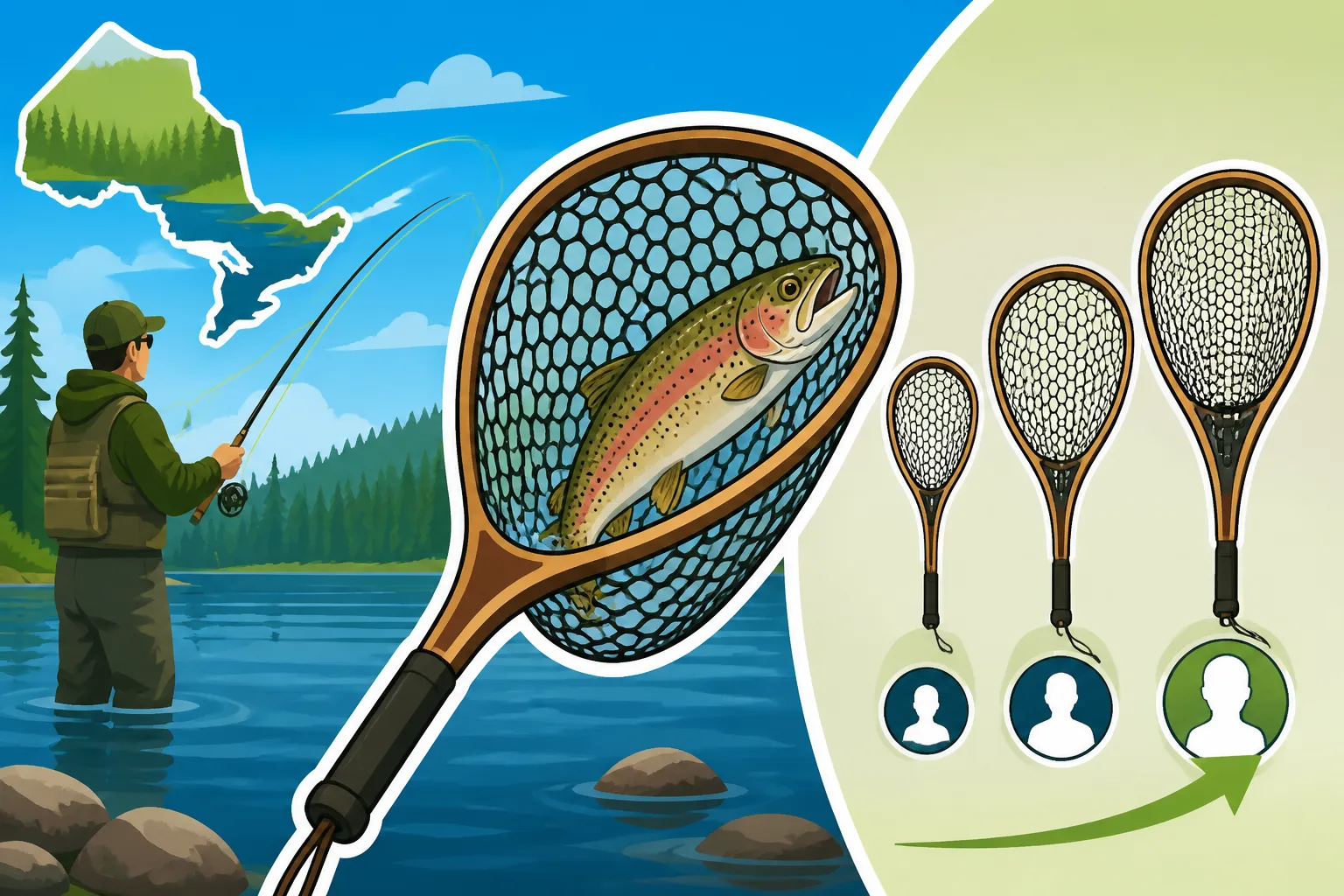
These nets typically feature a moderately sized hoop (ranging from 10 to 18 inches wide) and a relatively short handle (from 8 to 12 inches), making them ideal for wading anglers. They can be easily tucked into a wading belt, clipped to a D-ring on a fishing vest, or carried on a magnetic release on your back. Brands like Bass Pro Shops often carry a wide selection of these traditional-style nets, offering different wood finishes and hoop shapes. While excellent for average-sized brook, brown, and rainbow trout in smaller to medium waters, their shorter handles might pose a challenge when trying to net a larger, stronger fish from a higher bank or in fast-moving water. They're a fantastic choice for those who appreciate tradition and prioritize fish welfare in accessible environments.
Landing Nets for Larger River Trout and Steelhead
When you're targeting the heavyweights – think powerful steelhead in the many tributaries of the Great Lakes, robust brown trout in deeper rivers, or even larger rainbows in bigger waters – you need a net with more heft and reach. These "big water" nets are characterized by larger hoops, deeper bags, and significantly longer handles. Steelhead, for instance, are notoriously strong and acrobatic, often making powerful runs right at the net. A larger hoop (18-24 inches wide, sometimes even more) provides a wider target and more forgiveness if the fish makes a last-second surge.
The deeper bag is equally critical, ensuring that once the fish is in the net, it stays there. A shallow bag can lead to a lively fish flopping out before you have a chance to secure it. The longer handle (ranging from 24 inches to several feet, often telescoping) is indispensable when you're fishing from a higher bank, a boat, or when trying to reach across a wider section of river. These nets allow you to control the fish better and bring it to hand without having to dangerously scramble down a slippery bank or stretch precariously. While less portable for extensive wading, for boat-based fishing or shore fishing on larger rivers, these nets are absolutely essential for safely and efficiently landing bigger trout. Check out Best Landing Net for Muskie for an idea of how much larger a net can get for truly massive fish, though trout nets typically won't be quite that extreme.
Compact Nets for Backpacking and Ultralight Fishing
Sometimes, your Ontario trout adventure takes you deep into the backcountry, where every piece of gear needs to earn its keep. For these scenarios, or for ultralight fishing where minimalism is the goal, compact and even collapsible nets are the answer. These nets prioritize light weight and packability above all else, often featuring smaller hoops and ingenious folding or telescoping designs that allow them to shrink down to a manageable size for transport.
Imagine hiking several kilometers into Algonquin Park to fish a remote lake for brook trout; a bulky, fixed-frame net simply won't do. Compact nets might have a smaller hoop (8-12 inches) and a short handle, or a telescoping handle that extends when needed. The mesh might be a lighter rubberized material or even a fine nylon, chosen for its minimal weight and ability to dry quickly. While they won't handle a trophy steelhead, they are perfectly adequate for the smaller to medium-sized trout often found in these more secluded waters. These nets are about practicality and convenience in challenging access situations, allowing you to bring a net without sacrificing precious pack space or adding unnecessary bulk to your fishing setup. Many suitable options can be found by searching online retailers like Amazon, often featuring carabiner clips or belt loops for easy attachment.
Matching Net Dimensions to Your Ontario Trout Adventures
Choosing the right net isn't just about picking a type; it's about understanding the specific dimensions – the hoop size, the handle length, and the net material – and how they align with your fishing style and the waters you intend to explore in Ontario. Getting these details right ensures maximum efficiency and fish safety.
Hoop Size vs. Handle Length
The "hoop size" refers to the diameter or width of the net's opening, while "handle length" is pretty self-explanatory. These two dimensions work together to define a net's utility. For small stream brook trout, often found in tight, brushy environments or shallow riffles, a compact hoop of 8-12 inches is generally sufficient. A larger hoop would simply get caught on branches or drag in the stream. Coupled with a short handle (6-10 inches), this allows for easy one-handed operation and keeps the net from being cumbersome when wading through dense vegetation or scrambling over rocks. Think about pursuing a lively brook trout in a small, wild creek – you need agility and unobtrusive gear. Ontario Brook Trout Daily Limit might suggest you'll be catching several, making efficient netting important.
However, when you move to larger rivers for robust brown or rainbow trout, or even to the open waters of a lake for active splake or smaller lake trout, a larger hoop of 14-20 inches becomes far more appropriate. These fish have more mass and fighting power, requiring a wider target area to net them quickly and safely. The handle length here becomes a crucial consideration. If you're wading in a wide river, a slightly longer handle (12-24 inches) can provide the necessary reach to net a fish without overstretching or losing your footing. For boat fishing, especially for larger species like those found while How to Catch Lake Trout in Ontario, you might want an even longer handle, perhaps 3-4 feet, to easily reach over the boat's side and into the water. Balancing these two dimensions for your specific scenario is key.
Net Material: Rubber vs. Nylon Mesh
The material of your net's bag is arguably the most critical factor for fish welfare, particularly for trout, which are known for their delicate nature. The two primary types you'll encounter are rubber (or rubberized) mesh and traditional nylon mesh.
Rubber/Rubberized Mesh: This is widely considered the gold standard for catch-and-release fishing.
- Pros:
- Fish Safety: The soft, pliable rubber is incredibly gentle on a fish's scales, fins, and slime coat, significantly reducing injury and stress during handling.
- Hook Friendly: Hooks, whether from a fly or a lure, rarely get tangled in rubber mesh. They either bounce off or are easily dislodged, meaning quicker releases and less time with the fish out of water.
- Weight: Rubber nets tend to absorb less water, making them lighter to lift out of the water.
- Odor & Cleanliness: They don't absorb fish odors or mucus, making them easier to clean and less likely to harbor bacteria.
- Cons:
- Weight: While they shed water well, the material itself can be heavier than fine nylon, impacting overall net weight.
- Cost: Rubber nets are generally more expensive than their nylon counterparts.
Nylon Mesh: Traditional nylon mesh nets are often more affordable and come in a wider variety of sizes and shapes.
- Pros:
- Affordability: Typically much cheaper to purchase.
- Lightweight: Can be very light, especially fine mesh versions.
- Cons:
- Fish Damage: Traditional knotted or coarser nylon mesh can strip a fish's protective slime coat and damage fins and scales, increasing post-release mortality.
- Hook Entanglement: Hooks get stuck very easily in nylon mesh, leading to frustrating delays and potential damage to your tackle.
- Odor & Cleanliness: Can absorb odors and mucus, making them harder to keep clean.
For any angler serious about protecting Ontario's trout resources, investing in a net with a rubber or rubberized mesh bag is highly recommended. It’s a small investment that makes a big difference in ensuring the fish you release swim away healthy.
Real-World Scenarios and Recommendations
Let's get down to brass tacks. It's one thing to talk about net types and materials, but how does all this translate to your actual fishing trips in Ontario? Different environments and target species demand specific net configurations. Here, we'll break down common trout fishing scenarios in Ontario and offer practical recommendations.
Wading a Small Brook Trout Stream
Picture yourself quietly wading through a winding, brush-lined stream in the Haliburton Highlands, casting small dries or spinners to eager brook trout. The fish here are often 8-12 inches, occasionally larger. The key challenges are tight quarters, slippery rocks, and potentially thick vegetation.
For this scenario, you need a net that is utterly unobtrusive until the moment you need it. A small, fixed-frame wooden or composite net with a rubber bag is perfect. Look for a hoop size of around 10-12 inches wide and a short, fixed handle, perhaps 6-8 inches long. This size is maneuverable in tight spots and won't snag on branches. The rubber mesh is crucial for quickly and safely releasing those vibrant brookies, ensuring their slime coat remains intact. Many anglers prefer a net with a magnetic release or a simple elastic lanyard that clips to their wading belt or the back of their vest. This keeps the net out of the way while casting or hiking, but instantly accessible when a fish takes your offering. Something you can find on Amazon by searching "small trout net with magnetic release" would be ideal.
Drift Fishing a Larger River for Brown or Rainbow Trout
Now, imagine floating down a wider river like the Grand or Credit, targeting larger brown trout or even migratory rainbow trout (steelhead) from a drift boat or while wading expansive flats. These fish are typically stronger and can range from 14 to over 20 inches, demanding a more substantial net.
In this situation, you'll want a net with a larger hoop, roughly 16-20 inches wide, to accommodate a bigger fish and reduce the chance of missing a quick netting opportunity. A moderately long handle, perhaps 18-36 inches, is beneficial. If you're wading, the longer handle gives you the reach needed to land a strong fish in current without having to chase it downstream or over-extend yourself. If you're in a drift boat, a longer handle allows the person netting to comfortably reach over the side of the boat. Again, a rubber or rubberized mesh bag is non-negotiable for fish safety, especially with the powerful runs and rolls these larger trout are known for. Consider a net with a slightly deeper bag too, to better cradle a thrashing fish. This kind of net strikes a balance between portability for wading and the necessary size for larger, more powerful fish. For serious river anglers, having a durable net that can withstand consistent use is key.
Boat Fishing for Lake Trout
When you're out on the vast expanse of Lake Huron or Lake Superior, or even a larger inland lake like Nipigon, specifically targeting lake trout, the game changes entirely. Lake trout are powerful, deep-dwelling fish that can grow to impressive sizes in Ontario's cold waters. The environment is open, and you're likely working from a boat.
For lake trout, especially if you're trolling or jigging deep, a large, deep-bagged net with a long, often telescoping, handle is absolutely essential. The hoop size should be 20 inches or larger, and the bag depth needs to be substantial to fully envelop a long, strong lake trout that might measure 25-35 inches or more. Handles that extend 4-6 feet or even longer are ideal, allowing you to reach far from the boat to net a fish that might still be making a powerful run boatside. The sheer size and strength of these fish make anything less than a robust net a risky proposition, both for the fish and for successfully landing your catch. Look for sturdy construction and a heavy-duty rubber or coated nylon mesh. Some of the nets designed for salmon or muskie can be adapted for larger lake trout, providing the necessary strength and reach. Best Landing Net for Muskie would be an example of a net offering similar heavy-duty features, though a dedicated lake trout net can be slightly smaller.
Here's a quick comparison of net sizes for common Ontario trout scenarios:
| Scenario | Typical Trout Size (Inches) | Recommended Hoop Size (Inches) | Recommended Handle Length (Inches) | Mesh Type Recommendation | Key Feature for Scenario |
|---|---|---|---|---|---|
| Small Stream Brook Trout | 8-14 | 10-12 | 6-10 (fixed) | Rubber | Compact, lightweight, easy clip-on, unobtrusive |
| Medium River Brown/Rainbow Trout | 14-22 | 14-18 | 12-24 (fixed/short telescoping) | Rubber | Good reach, ample hoop for larger fish, balanced |
| Large River Steelhead (Wading) | 20-30+ | 18-22 | 24-48 (telescoping) | Rubber | Long reach for strong fighters, deep bag |
| Boat Fishing Lake Trout | 25-40+ | 20-30 | 36-72 (telescoping) | Rubber/Coated Nylon | Max reach, large, deep bag, heavy-duty construction |
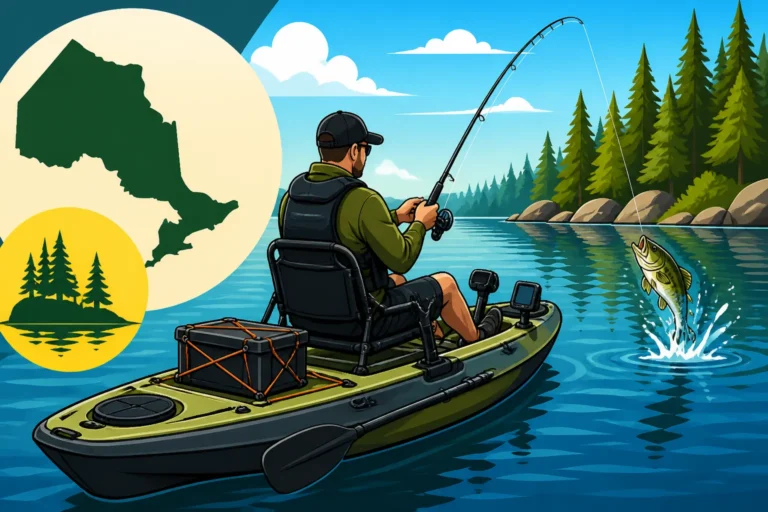
| Kayak Fishing (Mixed Trout) | 10-25 | 12-18 | 12-24 (fixed/short telescoping) | Rubber | Compact, buoyant, easy to manage from seated position |
| Backcountry Hiking (Small Trout) | 6-12 | 8-10 | 6-10 (collapsible/fixed) | Rubber/Fine Nylon | Ultra-light, packable, small footprint |
No matter your chosen adventure, remember that selecting the right landing net is an investment in both your fishing success and the conservation of Ontario's incredible trout populations. Happy fishing!
Disclaimer
This article is for general informational purposes only and does not constitute professional advice. Laws, prices and regulations vary by location and change over time. Consult a qualified professional for guidance on your specific situation.