Best sturgeon fishing spots on the French River
There's nothing quite like the dream of battling a true freshwater leviathan, and for many Ontario anglers, that means a lake sturgeon. But let's be real, finding these ancient, bottom-dwelling giants in a massive system like the French River can feel like looking for a needle in a haystack. The sheer size and intricate network of channels can be utterly overwhelming, leaving you wondering where to drop your line for the best chance at success. This guide is here to cut through that confusion, walking you through the most promising sturgeon fishing spots on the French River, so you can confidently plan your next unforgettable adventure.
The French River: A Haven for Lake Sturgeon
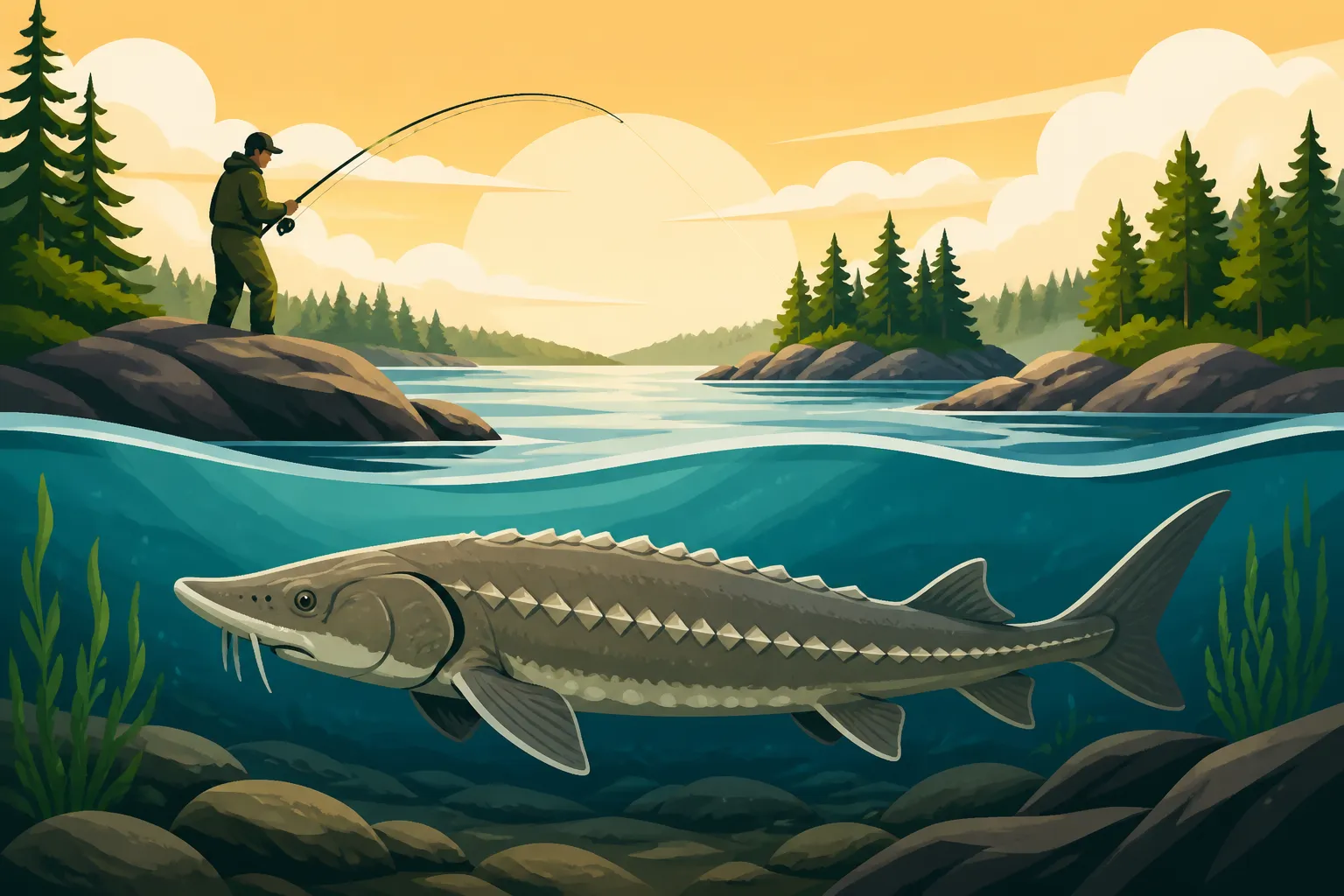
The French River, with its rich history and diverse ecosystem, isn't just another waterway; it's a living relic, especially when it comes to supporting a healthy population of lake sturgeon. This majestic river, flowing from Lake Nipissing to Georgian Bay, offers a unique blend of deep channels, rocky structures, and nutrient-rich waters that sturgeon absolutely thrive in. For generations, this river has been recognized as a prime habitat for these impressive fish, which can grow to immense sizes and live for over a century. If you've ever found yourself asking, "Do Ontario Lakes Have Sturgeon?" or "Where to find lake sturgeon in Ontario?", the French River is almost always at the top of the list for a reason.
The river's complex network of bays, rapids, and slower-moving pools provides the perfect environment for sturgeon to feed and seek refuge. These incredible fish are true bottom-dwellers, constantly sifting through the substrate for their next meal of invertebrates, insect larvae, and small fish. The French River's varying depths and diverse bottom composition — from silty flats to rocky ledges — creates an ideal foraging ground. It's truly a special place, and understanding this unique environment is the first step to successfully targeting these magnificent creatures.
Prime Sturgeon Haunts on the French River
While the entire French River system holds sturgeon, some areas are undeniably more productive than others. These hotspots tend to be where food sources are concentrated, where deep water meets current, or where specific structural elements provide cover and feeding opportunities.
Eastern Section: Around French River Provincial Park and Pickerel River Junction
As you move into the eastern reaches of the French River, particularly around the areas encompassed by French River Provincial Park, you'll start to find excellent sturgeon habitat. The confluence of the Pickerel River with the main French River channel creates a dynamic environment with increased current and sediment deposition, which are key attractants for sturgeon.
Think about anchoring your boat near the deeper bends and scour holes formed by these converging currents. Sturgeon will often congregate in these areas, especially where the current slows just enough to allow them to hold bottom comfortably while still having food delivered to them. Look for areas where the river widens slightly after a constriction or where a significant tributary enters, bringing in new food sources. These deeper, calmer pockets adjacent to moving water are like prime real estate for sturgeon.
Access to this area can be found through various public launches and lodges, some of which are located within or adjacent to the provincial park boundaries. If you're planning a trip, consider looking into a French River Fishing Guide who intimately knows these specific areas. For those venturing out on their own, a good quality sonar unit is invaluable for identifying these subtle depth changes and hidden structures.
Mid-River Expanses: Near Hartley Bay and the Main Channel
Moving further west into the heart of the French River, the expansive waters around Hartley Bay and the main channel offer different, but equally productive, opportunities. This section is characterized by a wider riverbed, numerous islands, submerged shoals, and intricate rocky structures. The sheer size can be intimidating, but it also means more varied habitat for sturgeon.
Here, the key is to focus on areas where the main river channel narrows or deepens considerably, often marked by abrupt depth changes on your charts. Sturgeon will use these deeper troughs as travel corridors and feeding lanes. Hartley Bay itself, with its numerous inlets and deeper sections, can be a fantastic spot, particularly where it connects to the primary flow of the French River. Don't overlook the deep sections adjacent to large, rocky islands or submerged points, as these can create current breaks and eddies where sturgeon often lie in wait.
Navigating this part of the river requires vigilance due to the many unmarked rocks and shoals, so make sure your Ontario Boating Laws for Anglers knowledge is up to par. Many experienced anglers utilize detailed electronic charts and GPS to mark safe navigation routes and productive fishing spots. If you're new to the area or prefer to maximize your chances, booking a charter through services like FishingBooker can connect you with local guides who specialize in sturgeon fishing in these complex mid-river sections. They know the subtle nuances of these waters, including where the biggest fish tend to congregate.
Western End: Towards Georgian Bay Delta
As the French River finally spills out into Georgian Bay, it forms a vast deltaic region that is a magnet for all kinds of fish, including sturgeon. This westernmost section is a transition zone where the river's fresh waters mix with the cooler, deeper waters of Georgian Bay. The abundance of baitfish and the sheer volume of water make it a significant feeding ground.
Here, sturgeon fishing can be quite different. You'll be looking for deeper channels, subtle contours on the bottom, and areas where the river current meets the bay's currents, creating "washout" zones where food items are deposited. The delta's expansive nature means sturgeon can be more spread out, but when you find a concentration, the fishing can be exceptional. These fish often move between the river and the bay, following food sources and temperature fluctuations.
Focus your efforts on the mouths of the main channels as they enter Georgian Bay. The deeper holes and trenches carved out by centuries of current flow are prime holding spots. Some anglers even venture slightly out into the bay itself, targeting the immediate deep-water flats and drop-offs near the river mouth. This area demands a good understanding of navigation and marine weather, as Georgian Bay can become rough very quickly. Utilizing a local guide found on platforms like FishingBooker can greatly enhance your safety and success in this expansive and often challenging section.
Techniques and Timing for French River Sturgeon
Catching a lake sturgeon is a test of patience and preparation. These fish aren't typically aggressive biters, and they demand specific techniques and proper timing.
Best Seasons and Conditions
While sturgeon can be caught year-round, certain seasons offer better odds and are more comfortable for anglers. Spring, from late April through June, after the ice-out, and fall, from September through October, are generally considered prime times. During these cooler months, sturgeon are often more active feeders in shallower to moderate depths before retreating to the deepest holes in summer.
It's crucial to be aware of When lake sturgeon spawn in Ontario rivers. During their spawning period, typically late spring or early summer depending on water temperatures, sturgeon are more vulnerable, and targeting them is often discouraged or even restricted by regulations to protect their populations. Always consult the current Ontario Fishing Regulations Explained before heading out. Overcast days or periods of stable weather often produce better results than bright, sunny days or rapidly changing conditions. Water flow can also be a significant factor; stable or slightly rising water levels due to moderate rain can sometimes stimulate feeding.
Essential Gear and Rigging
You're going to need heavy-duty gear to stand a chance against a powerful sturgeon. Forget your panfish setup; we're talking about fish that can easily top 50 pounds, with some exceeding 100!
- Rods and Reels: A heavy or extra-heavy action rod, around 7 to 9 feet in length, paired with a stout baitcasting reel capable of holding a large amount of heavy line is essential. Brands like Ugly Stik or Penn offer durable options that can handle the abuse.
- Line: Spool up with 65 to 100-pound test braided line. This offers incredible strength and sensitivity. Attach a 3 to 6-foot leader of 80 to 120-pound monofilament or fluorocarbon to your braid, using a heavy-duty swivel. This leader provides abrasion resistance against rocky bottoms and the sturgeon's rough skin.
- Hooks: Use strong, wide-gap circle hooks ranging from 5/0 to 9/0. Circle hooks are mandatory in many catch-and-release fisheries, as they are designed to hook fish in the corner of the mouth, minimizing deep hooking and making for easier, safer releases. This is especially critical given Ontario Sturgeon Catch and Release Rules.
- Weights: You'll need heavy lead weights to hold your bait on the bottom in the French River's currents. Pyramidal or flat, no-roll sinkers weighing from 3 to 10 ounces (or even more in strong currents) are typical.
- Bait: The classic and arguably most effective bait for French River sturgeon is a big gob of nightcrawlers (dew worms). Use several, threaded onto the hook to create a substantial presentation. Other effective baits include chunks of cured minnows, suckers, or even shrimp. The key is to have a robust, scent-rich bait that stays on the hook.
Table: Recommended Sturgeon Fishing Gear
| Item | Recommendation | Why It's Important |
|---|---|---|
| Rod | Heavy to Extra-Heavy action, 7-9 ft | Power to fight large fish, handle heavy weights. |
| Reel | Large capacity baitcasting or heavy spinning | Holds lots of heavy line, robust drag system. |
| Main Line | 65-100 lb braided line | Extreme strength, excellent sensitivity for subtle bites. |
| Leader | 80-120 lb monofilament or fluorocarbon, 3-6 ft | Abrasion resistance, invisible to fish, protects main line. |
| Hooks | 5/0 – 9/0 strong, wide-gap circle hooks | Ensures mouth-corner hookups, safer for catch-and-release. |
| Weights | 3-10+ oz pyramid or no-roll sinkers | Holds bait firmly on the bottom in strong currents. |
| Bait | Large gob of nightcrawlers, cut bait (sucker/minnow) | Strong scent, appealing to bottom feeders, stays on hook. |
| Landing Net | Large, rubberized mesh, cradle style | Safely land and handle large, delicate fish. |
| Pliers | Long-nose, heavy-duty | Aid in hook removal, especially with circle hooks. |
Anchoring and Positioning
Once you've identified a promising spot, proper boat positioning is paramount. You need to anchor securely, preferably with two anchors (one off the bow, one off the stern), to prevent your boat from swinging in the current. This allows your bait to settle and stay in one predictable location. Drop your bait directly downstream from your boat, allowing the current to carry the scent but keeping your line relatively vertical.
Sturgeon bites can be incredibly subtle – sometimes just a gentle thud or a slight increase in pressure. Don't immediately set the hook aggressively; instead, allow the fish to take the bait and turn, letting the circle hook do its job. Wait for the rod tip to load up, then simply reel down firmly to engage the fish. Patience is key. You might wait hours for a bite, but the reward of a prehistoric sturgeon makes every minute worthwhile.
Navigating Regulations and Practicing Responsible Sturgeon Fishing
Fishing for lake sturgeon on the French River isn't just about finding the right spot and using the right gear; it's also about respecting a truly ancient and vulnerable species. Ontario has specific regulations in place to protect these long-lived fish, and adhering to them is non-negotiable.
Understanding Ontario's Sturgeon Rules
Lake sturgeon are designated as a protected species in Ontario, meaning they are managed with extreme care. For anglers, this primarily translates into a strict catch-and-release only policy across most of their range, including the French River. There are no open seasons for retention of lake sturgeon in this zone, so every fish caught must be carefully released.
Before you even think about heading out, you absolutely need an Ontario Fishing License Guide for 2026 and an Ontario Outdoors Card, Explained. These are your tickets to legally fish in the province. Make sure you understand the difference between an Ontario Sport vs Conservation Fishing License, though for sturgeon, the catch-and-release mandate overrides possession limits anyway. Always carry a physical or Printing or Carrying a Digital Fishing License in Ontario with you. Ignorance of the law is no excuse, and penalties for violating sturgeon regulations can be severe. This includes having proper documentation, which can easily be obtained through services like FishingBooker if you're looking for a guided trip, as reputable guides ensure all their clients are properly licensed.
Familiarize yourself with the specific Ontario Sturgeon Catch and Release Rules. These often include guidelines on how to handle the fish, what kind of hooks to use (circle hooks are strongly recommended or sometimes mandatory), and minimizing their time out of the water.
Safe Handling and Release
Because sturgeon are a protected, long-lived species, their survival after release is paramount. Here are critical steps for safe handling:
- Minimize Fight Time: While exhilarating, prolonged fights can exhaust a sturgeon. Use appropriate heavy tackle to bring the fish in as quickly and efficiently as possible without horsing it in.
- Keep them Wet: Do everything you can to keep the fish in the water, especially if it’s a large specimen. If you must bring it aboard for a quick photo, ensure it’s only for a matter of seconds, and support its full body weight. Never hang a large sturgeon vertically by its mouth or gills.
- Use a Large Net or Cradle: A large, rubberized landing net or a sturgeon cradle is ideal for subduing and securing the fish in the water without damaging its protective slime coat or fins.
- Remove Hook Quickly: With circle hooks, they usually lodge in the corner of the mouth, making removal easier. Use long-nose pliers or a de-hooking tool. If the hook is stubborn, cut the line as close to the hook as possible rather than tearing at the fish.
- Revive Properly: Hold the fish gently in the water, supporting its belly, and allow water to flow over its gills. Move it back and forth slightly if needed to ensure proper oxygenation until it can swim away under its own power. Do not release a fish that is disoriented or struggles to stay upright.
Boating Considerations on the French River
The French River, while beautiful, can be challenging to navigate. It's filled with unmarked shoals, strong currents, and numerous islands. Ensuring your boat is up to spec and you understand the local boating laws is crucial.
- Navigation: Carry detailed charts, a GPS, and preferably a marine-grade sonar unit. Stay in marked channels where possible.
- Safety Equipment: Always have all required Life Jacket Requirements for Ontario Boaters on board for every passenger, along with other essential safety gear like a first-aid kit, whistle, bailing device, and spare propulsion.
- Boat Registration: Ensure your boat is properly registered and licensed according to Ontario Boat Registration and Licensing Rules. This is part of responsible boating and fishing.
By respecting the regulations, practicing responsible angling, and knowing your way around, you can contribute to the conservation of this incredible species and enjoy many more years of sturgeon fishing on the French River.
Disclaimer
The information provided in this guide is for general knowledge and informational purposes only, and does not constitute legal or professional advice. Fishing regulations in Ontario can change frequently. It is the responsibility of every angler to consult the most current Ontario Fishing Regulations Summary before engaging in any fishing activities. Always prioritize safety and conservation.