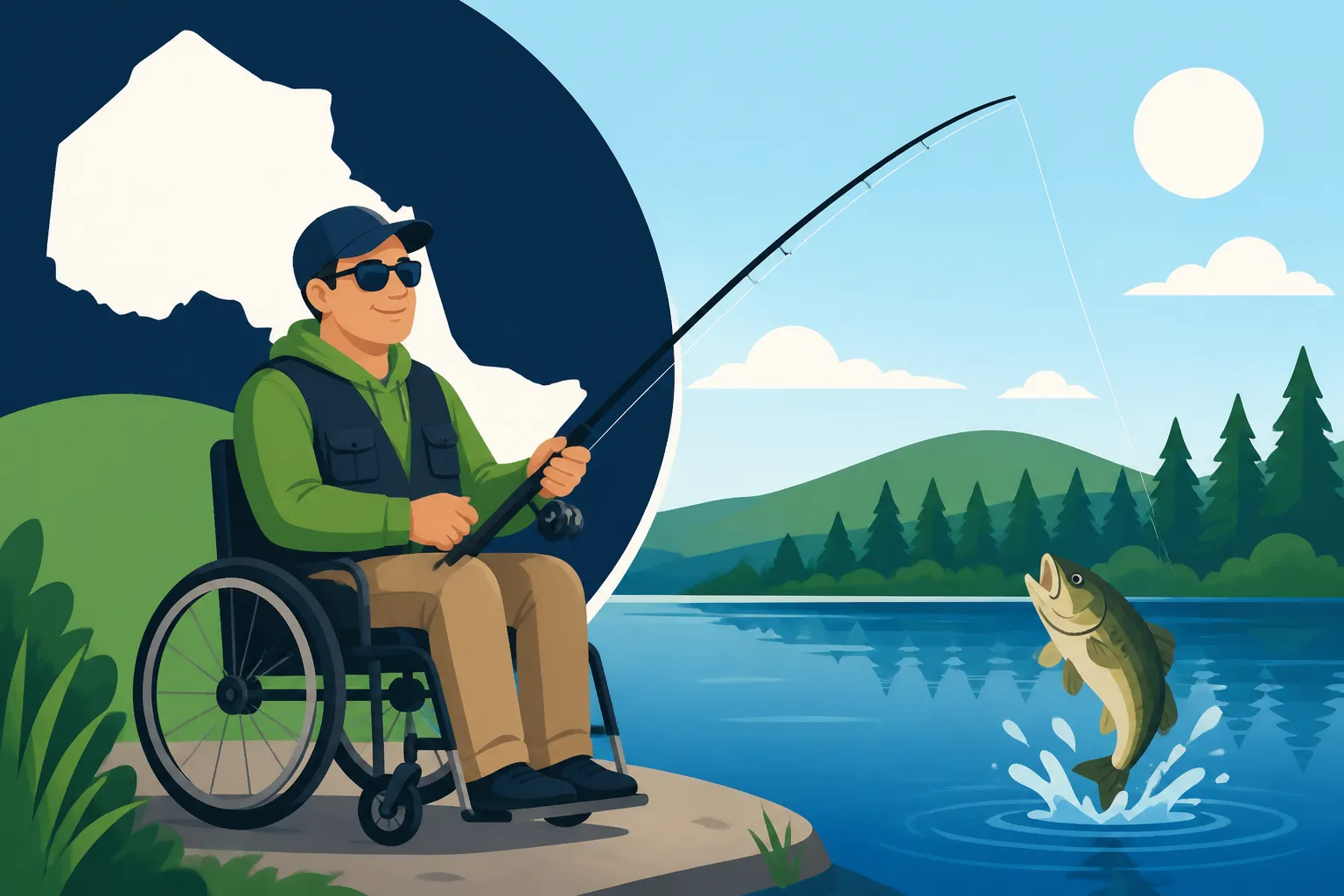
Ontario fishing license for blind or disabled anglers
There's nothing quite like the feeling of being out on an Ontario lake or river, rod in hand, waiting for that tell-tale tug. But for many anglers with disabilities or blindness, navigating the world of fishing licenses and regulations can feel like an unnecessarily complicated hurdle, adding stress instead of excitement. It’s a real shame when passion for the outdoors is met with confusion. This comprehensive guide is here to cut through that complexity, clearly outlining the specific fishing license exemptions available for blind and disabled anglers in Ontario, so you can focus on what truly matters: enjoying the water.
Understanding Specific License Exemptions in Ontario
Ontario's fishing regulations aim to be as inclusive as possible, but it’s important to understand the nuances of the exemptions. The rules aren't always a one-size-fits-all situation for every type of disability, which can definitely be frustrating. However, specific provisions are in place to ensure that everyone, including those with visual impairments and certain age-related conditions that may accompany other disabilities, can participate without unnecessary barriers.
The Exemption for Blind Anglers
Let's start with the clearest exemption: if you are blind, Ontario provides a specific and straightforward pathway to fish without needing to purchase a conventional fishing license. This isn't just a courtesy; it's a recognized provision designed to remove a bureaucratic obstacle for a specific group of anglers. It’s a thoughtful inclusion, acknowledging the challenges that may arise with standard licensing procedures when vision is impaired.
To qualify for this exemption, you must be able to present your Certificate of Registration from the Canadian National Institute for the Blind (CNIB). This certificate acts as your official documentation, proving your eligibility for the license exemption. It's crucial to understand that while you won't need to buy a license, you are still absolutely required to adhere to all other provincial fishing regulations. This means respecting catch limits, knowing the Ontario Fishing Season Dates by Zone, understanding possession rules, and abiding by any special regulations for the specific waters you're fishing. It's not a free pass on the rules, just a pass on the license fee itself. Always have your CNIB certificate handy when you're out on the water, just as any other angler would carry their license.
Exemptions for Seniors and Youth Which May Apply to Disabled Anglers
While Ontario doesn't have a single, universal "disabled" fishing license exemption that covers all forms of disability, there are other significant exemptions based on age that can certainly apply to many disabled anglers. This is an important distinction, and it's where some of the confusion often lies. It’s not always about how you fish, but rather who you are.
For instance, Canadian residents who are 65 years of age or older are exempt from needing a fishing license. Similarly, Canadian residents who are under the age of 18 also don't require a fishing license. If you are a disabled angler who falls into either of these age categories, you automatically benefit from these existing exemptions. This means a disabled Canadian resident senior or a disabled Canadian resident youth can fish without purchasing a license. However, even if you’re exempt due to age, Canadian residents are still required to obtain a free Ontario Outdoors Card, Explained. This card isn't a license, but it's an identification document that allows the Ministry of Natural Resources and Forestry (MNRF) to track participation and ensure compliance with other regulations, especially regarding catch and possession limits for specific species. It’s essentially your angler ID for the province.
It's also worth noting that specific provisions exist for Canadian resident veterans who have certain service-related disabilities or conditions. These are not broad disability exemptions but are tied to military service and specific medical criteria. If you are a veteran, it’s highly recommended to look into any specific programs or exemptions that might be available to you through veteran affairs or provincial parks systems, as these can sometimes include fishing license benefits. The main takeaway here is that while there isn't a general disability exemption, many disabled anglers will find themselves covered by either the blind angler provision or the age-based exemptions for Canadian residents.
Proving Eligibility and Navigating the System
Once you understand which exemption might apply to you, the next step is ensuring you have the correct documentation and know how to interact with the system. This can sometimes feel like a maze, especially if you’re relying on others for assistance, but with the right information, it’s much more manageable.
Documentation for Blind Anglers
For blind anglers, the key document is your Certificate of Registration from the Canadian National Institute for the Blind (CNIB). This certificate is your proof of blindness and, by extension, your proof of exemption from needing a purchased fishing license. It's not something you apply for specifically for fishing; rather, it’s a document issued by CNIB for various purposes related to vision impairment.
When you're out fishing, it is absolutely essential to carry this certificate with you. Think of it as your "license" in this context. If a Conservation Officer asks to see your fishing license, presenting your CNIB certificate will fulfill the requirement. Not having it on your person could lead to complications, even if you are genuinely blind, because without documented proof, the officer has no way of verifying your exemption. It’s always better to be prepared. Keep it in a waterproof holder or a secure pocket, just as you would a regular fishing license.
The Ontario Outdoors Card for Eligible Anglers
Even when you’re exempt from purchasing a fishing license, if you are a Canadian resident aged under 18 or 65 and older, you'll still need an Ontario Outdoors Card cost and validity period. This card is not a fishing license itself, but it’s a prerequisite for holding one, or for fishing under one of the Canadian resident age-based exemptions. It’s a way for the province to register you as an angler in their system.
Obtaining an Outdoors Card is relatively straightforward. You can apply for one online through the official Ontario fishing license portal, in person at a ServiceOntario location, or through an authorized license issuer. The process typically involves providing some personal identification details. The Outdoors Card is valid for three calendar years. Once you have it, your license exemptions (due to age) are linked to this card, and it should also be carried with you whenever you're fishing. It helps ensure that while you're not paying for a license, you're still part of the regulated angling community, contributing to data collection that helps manage Ontario's fisheries. This is also how the province tracks individual catch and possession limits if you're keeping fish. For example, if you're a senior and are allowed to keep five walleye, your Outdoors Card implicitly verifies this right.
Where to Find Official Information and Assistance
The world of regulations can be a bit overwhelming, and sometimes, a quick search online doesn't give you all the nuanced answers you need. For the most accurate and up-to-date information, always turn to official sources. The Ministry of Natural Resources and Forestry (MNRF) is the governing body for fishing regulations in Ontario, and their website is a treasure trove of information, including the detailed Reading the Ontario Fishing Regulations Summary. This summary is updated annually and is your definitive guide to all the rules.
If you have very specific questions about your unique situation, especially regarding a disability that might fall into a grey area, don't hesitate to reach out directly. ServiceOntario centres are excellent resources for general inquiries about government services, including fishing licenses. You can visit one in person, or often call their main provincial line. They can guide you through the process, help you with your Outdoors Card, or direct you to the right department within the MNRF for more specialized advice. It’s much better to get clarification upfront than to risk a misunderstanding on the water.
Enhancing the Fishing Experience for All Abilities
Beyond the paperwork, there’s the actual act of fishing itself. Accessibility isn't just about exemptions; it's about making the entire experience enjoyable and manageable. There are many ways to adapt and find support to make your time on the water truly rewarding.
Adaptive Fishing Equipment and Accessibility Features
Modern advancements have brought a fantastic array of adaptive fishing equipment to the market, designed to make angling more accessible for individuals with various physical challenges. This isn't just niche gear; it's genuinely innovative equipment that can make a huge difference in an angler's independence and enjoyment. For example, hands-free rod holders can be mounted to wheelchairs or chairs, allowing anglers to manage their line and reel even if they have limited upper body mobility. There are specialized casting aids that assist with launching a lure or bait, and reels with oversized handles or specialized grips that are easier to manipulate.
You can find a wide range of these adaptive tools through various retailers. Online platforms like Amazon offer a vast selection, from simple rod holders that clamp onto a boat or dock to more sophisticated electronic reeling systems. Sporting goods stores specializing in fishing, such as Bass Pro Shops or Cabela's, often carry some adaptive options or can order them for you. Sometimes, even local tackle shops are excellent resources, as their staff often have personal experience or know local solutions and products. Many Best Fishing Rods for Ontario Lakes can also be adapted with simpler grips or lighter reels to make them more manageable.
Furthermore, many public fishing areas and some Ontario Provincial Park Fishing Guide locations are actively working to improve accessibility. Look for designated accessible fishing piers with wider, smoother surfaces, handrails, and comfortable seating. Some even have ramps for easier boat or kayak access. Before heading out, a quick check of the park or municipal website can often provide details on their accessibility features.
The Role of a Companion Angler
Fishing is often a shared experience, and for many disabled or blind anglers, a companion can be invaluable. This might be a friend, family member, or a dedicated volunteer. The rules around a companion's license are often misunderstood, leading to unnecessary stress. In Ontario, if your companion is actively fishing—meaning they are casting, reeling, or setting hooks for themselves—they must hold a valid Ontario fishing license, even if they are primarily there to assist you. Your exemption does not extend to them if they are also fishing.
However, if your companion is solely assisting you—helping you bait a hook, untangle a line, net your fish, or providing guidance without fishing themselves—then they typically do not need their own license. The key is whether they are engaging in the act of fishing as an independent participant. It's a subtle but important distinction. Many find that having a companion significantly enhances their fishing experience, not just for practical assistance but for shared enjoyment and camaraderie. Organizations focused on accessible outdoor recreation, like those promoting Ontario Family Fishing Weekend Dates, sometimes offer volunteer programs where companions can be matched with anglers who need assistance, fostering a supportive community.
Common Questions and Overcoming Challenges
It's natural to have questions, and navigating any regulatory system can bring up a few specific concerns. Let's tackle some common ones that often arise for disabled and blind anglers in Ontario.
Navigating Online and In-Person Purchases
Even with exemptions, some aspects of the fishing license system can present challenges. If you're a Canadian resident who qualifies for an age-based exemption (under 18 or 65+) and therefore needs a free Outdoors Card, the process can be done online. However, if using a computer or navigating websites is difficult due to your disability or blindness, this can be a hurdle. The good news is that there are alternatives.
You can always visit a Ontario Ministry of Natural Resources license agent list in person. These are often tackle shops, sporting goods stores, or hardware stores that are authorized to issue Outdoors Cards and fishing licenses. Staff there can assist you with the application process, ensuring all your details are correctly entered. Alternatively, a trusted family member or friend can assist you with the online application from their computer, or accompany you to a ServiceOntario centre. The goal is to make sure you get that Outdoors Card without unnecessary stress, allowing you to access your fishing exemption. Remember, the online portal is a convenience, but it's not the only way to get things done.
Understanding Different License Types and Exemptions
Ontario offers two main types of fishing licenses: Sport and Conservation. While the blind angler exemption means you don't buy either of these, the spirit of the regulations still applies. Generally, when fishing under an exemption (like the CNIB certificate or the age-based Canadian resident exemption), you are expected to follow the conservation fishing limits. Conservation limits are typically lower than Sport limits and are designed to promote sustainable fishing practices. For example, if the Sport limit for Walleye in a particular zone is six, the Conservation limit might be two. You would adhere to the two-fish limit.
It's absolutely vital to confirm the specific conservation limits for the species you are targeting and the zone you are fishing in. The Ontario Fishing Regulations Explained document will detail this comprehensively. Don't assume that because you're exempt from the license fee, you're exempt from these important conservation measures. They are in place to protect our fisheries for everyone, now and in the future. Always refer to the most current regulations summary, which can be found on the MNRF website or picked up at most tackle shops.
| Exemption Type | Eligibility Criteria | Required Documentation | Additional Notes |
|---|---|---|---|
| Blind Anglers | Legally blind | Canadian National Institute for the Blind (CNIB) Certificate of Registration | Must still follow all fishing regulations (zones, limits, seasons). |
| Canadian Residents Under 18 | Under 18 years of age and a Canadian Resident | Ontario Outdoors Card (free, required) | Must still follow all fishing regulations. |
| Canadian Residents 65+ | 65 years of age or older and a Canadian Resident | Ontario Outdoors Card (free, required) | Must still follow all fishing regulations. |
| Disabled Anglers (General) | No specific blanket exemption based solely on disability (beyond blindness or age) | N/A | May qualify under age-based exemptions or specific veteran programs. Check with MNRF for unique circumstances. |
Getting out on the water shouldn't be a privilege reserved only for those who can easily navigate complex regulations. Ontario strives to make fishing accessible, and by understanding these specific exemptions and provisions, you can ensure your angling adventures are filled with enjoyment, not frustration. Tight lines!
Disclaimer
The information provided in this guide is for general informational purposes only and does not constitute legal advice. Fishing regulations can change frequently. Always consult the official Ontario Fishing Regulations Summary and the Ministry of Natural Resources and Forestry (MNRF) website or a ServiceOntario centre for the most current and specific information before you head out to fish.