How barometric pressure affects Ontario walleye fishing
Ever wonder why one day you're hauling in walleye left, right, and center, and the very next, in seemingly identical conditions, you can't buy a bite? It's a mystery that plagues even the most seasoned Ontario anglers, leaving us scratching our heads and sometimes feeling like we've lost our touch. The truth is, it's rarely about losing your mojo, but often about an invisible force at play: barometric pressure. Understanding how this atmospheric variable influences walleye behavior can be the secret weapon you need to turn those frustrating blank days into memorable catches. This guide will help demystify the science and give you practical ways to adjust your strategy for better walleye fishing in Ontario.
Understanding Barometric Pressure: The Basics for Anglers
Let's start with the basics, because sometimes the scientific jargon can feel a bit intimidating, and who needs that when all you want to do is catch some fish? Barometric pressure is essentially the weight of the air pressing down on the earth's surface, including our beautiful Ontario lakes and rivers. It's constantly changing, ebbing and flowing with weather systems, and these changes, even subtle ones, have a profound impact on everything underwater.
What Even Is Barometric Pressure?
Think of the air above you as a giant, invisible column. The weight of that column of air is what we measure as barometric pressure. When a high-pressure system moves in, that column of air becomes heavier, pushing down harder on the water. Conversely, when a low-pressure system arrives, the air column is lighter, and there's less downward force. This isn't just a fancy weather statistic; for fish, especially walleye, it's a fundamental shift in their environment. It influences everything from their comfort level to their feeding patterns and even how their swim bladders feel.
For us anglers, knowing these shifts means we can anticipate how walleye might react. Are they going to be active and aggressive, or will they be sluggish and tucked away? Having a simple weather app on your phone that tracks barometric pressure, or even a basic portable weather station, can make a huge difference in how you plan your day on the water. Many of these helpful tools are readily available, and you can find a good selection on platforms like Amazon.
Why It Matters to Fish (Especially Walleye)
Walleye, like many fish, have a sensitive organ called a swim bladder. This bladder helps them regulate their buoyancy in the water column. When barometric pressure changes, the pressure on the water changes, which in turn affects the gas inside their swim bladders. Imagine flying in an airplane and feeling your ears pop – that's a similar sensation, but for fish, it's constant and dictates their comfort.
A stable or slowly changing pressure system usually means fish are in a more predictable state. But a rapid drop or rise can throw them off significantly. Walleye, being opportunistic predators, are particularly tuned into these changes. They might move to different depths where they can equalize the pressure in their bladders more comfortably, or they might become more (or less) inclined to feed based on how these changes affect their metabolism and overall well-being. It's not just about "good" or "bad" pressure, but understanding the transition and its effect on their behavior.
How Different Pressure Systems Affect Walleye Behavior
Now that we know what barometric pressure is, let's dive into how specific pressure trends impact our favorite toothy friends in Ontario. This is where you can really start to connect the dots between the weather forecast and your fishing success.
High Pressure: The Clear Sky Challenge
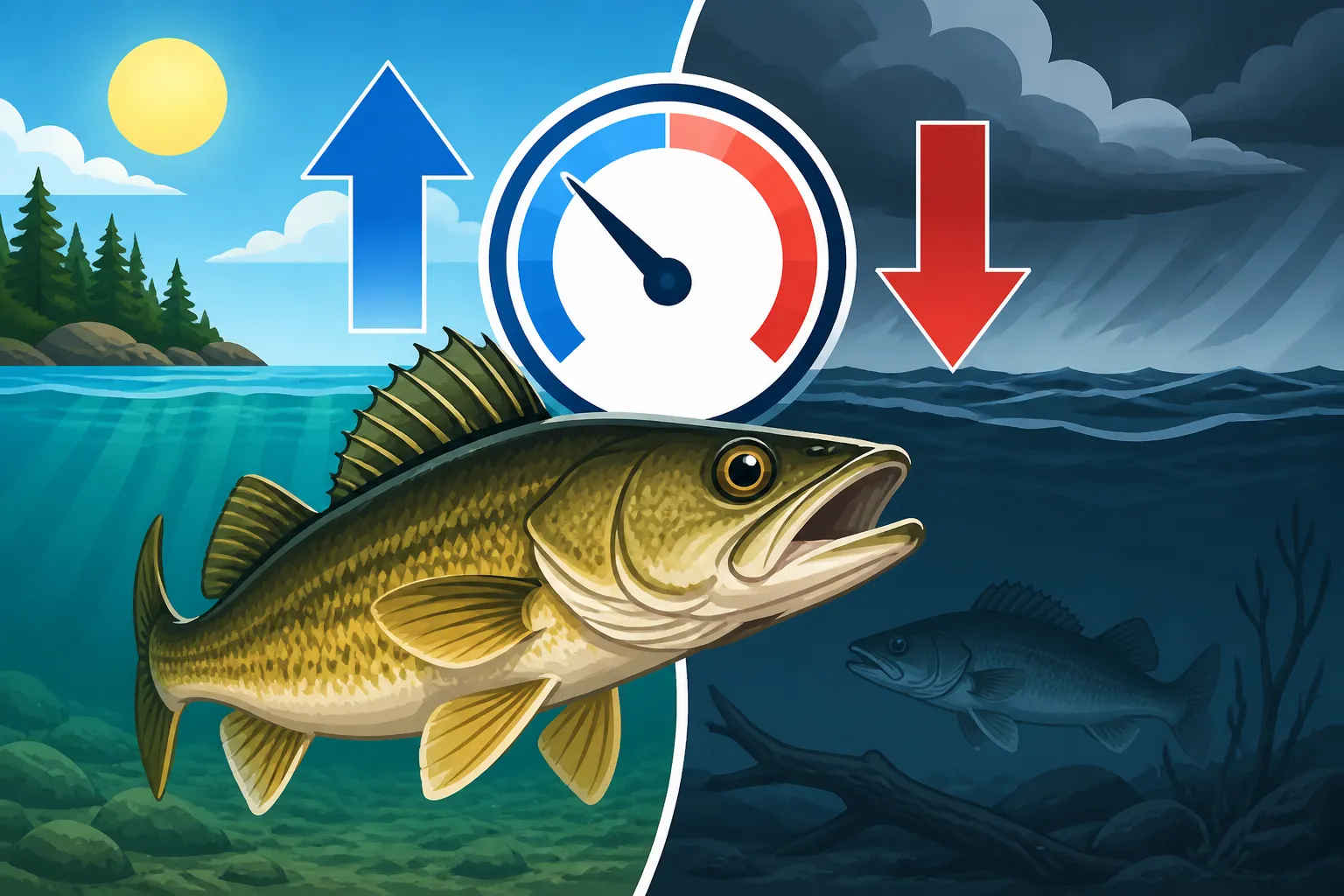
When a high-pressure system settles in, it often brings with it those beautiful, clear, sunny skies and calm winds we all love for a comfortable day on the lake. However, for walleye fishing, these conditions can be notoriously tough. The increased atmospheric pressure pushes down on the water, making fish feel "heavy" or uncomfortable. This often drives walleye deeper, or into heavy cover, where they can find relief from both the pressure and the bright sunlight that penetrates deeper into the water on clear days.
Think of it this way: the walleye might have a slight headache, and they're looking for a quiet, dark room to hide in. Their metabolism often slows down, making them less active and less willing to chase after a bait. You might find yourself fishing deeper weed lines, rock piles, or steep breaks where they can tuck away. Bites can be incredibly subtle during these times, almost like they're just "inhaling" the bait rather than aggressively striking. Patience and finesse become your best friends under high pressure.
Falling Pressure: The Feeding Frenzy
This is often the holy grail for walleye anglers! A falling barometric pressure usually precedes a change in weather, like an approaching storm or front. As the pressure drops, the "weight" on the water lessens, often making fish feel more comfortable and active. It's like a sudden relief for their swim bladders, and they respond by becoming more aggressive and moving into shallower feeding areas. This is when you can experience some truly epic fishing.
Walleye tend to move out of their deep haunts and cruise flats, points, and other structures where they can actively hunt. They know that a storm is coming, and instinct tells them to feed up before conditions get rough. This is often the best time to throw bigger, more aggressive baits, or to cover water quickly. If you see the pressure starting to fall and a bit of a chop on the water, get out there! This is the perfect time to employ aggressive tactics, as highlighted in guides like "How to Catch Walleye in Ontario".
Low Pressure: The Tough Bite
Once the low-pressure system has fully moved in, often bringing with it nasty weather like heavy rain, strong winds, and even lightning, the fishing can get tough again, sometimes even tougher than high pressure. While the initial drop in pressure stimulates feeding, sustained low pressure can make walleye sluggish and uncomfortable once more. They might seek refuge in dense cover or suspend in open water, feeling disoriented or simply hunkering down to ride out the unstable conditions.
During these times, the fish might still be present, but they're often unwilling to bite. You'll need to slow down your presentation considerably, often opting for subtle, natural baits or very slow-moving lures. Think light jigs with live bait, or a slowly trolled crawler harness. The key is to put the bait right on their nose and entice a reaction strike rather than expecting them to chase. Sometimes, the best strategy during a sustained low-pressure system is simply to wait for the next pressure change. For more ideas on effective baits, consider checking out "Best Baits for Walleye on Lake Erie."
Reading the Weather and Applying Pressure Knowledge to Your Fishing
Knowing the theory is one thing, but actually putting it into practice on the water is where the magic happens. Integrating weather monitoring into your fishing routine can significantly boost your success.
Tools for Tracking Pressure Changes
You don't need a fancy scientific laboratory to track barometric pressure. Many readily available tools can give you the information you need:
- Smartphone Weather Apps: Most modern weather apps include barometric pressure readings and trends. Look for apps that show you hourly forecasts and pressure graphs so you can see if it's rising, falling, or stable. Some even offer fishing-specific forecasts that integrate pressure data.
- Portable Barometers: You can purchase small, handheld barometers or even wrist-worn fishing watches that track pressure. These are great for real-time readings on the boat, allowing you to confirm the trend precisely where you're fishing. Many anglers find good, reliable options on Amazon for this purpose.
- Boat Electronics: Many modern fish finders and chartplotters have built-in barometers and can display pressure trends right on your screen. This is incredibly convenient as you're already looking at the unit for depth and structure.
Getting into the habit of checking the barometric pressure before you even leave the house, and then periodically throughout your fishing day, can give you a significant edge. It allows you to tailor your approach from the start, rather than waiting for the fish to tell you what's happening.
Connecting Pressure Trends to Walleye Depth and Location
The most crucial step is translating pressure data into actionable fishing strategies. Here’s a general guideline, but always remember that local conditions and fish patterns can vary:
- Stable High Pressure: Look for walleye in deeper water, tight to structure (like deep rock piles, humps, or distinct drop-offs), or nestled into dense cover like thick weed beds. They'll be less active, so focus on vertical jigging, slow trolling, or presenting live bait directly in front of them. Think finesse, slow movements, and smaller presentations. Consider reading up on "How to Fish Deep Structure for Summer Walleye" for these conditions.
- Falling Pressure: This is your cue to get aggressive! Walleye will often move shallower, onto points, flats, and the edges of structure where baitfish are congregating. They'll be actively feeding, so faster presentations like casting crankbaits, ripping lipless crankbaits, or even aggressive jigging can be very effective. This is prime time for covering water and looking for active schools.
- Stable Low Pressure: Similar to high pressure, expect a tougher bite. Walleye might be suspended in open water, or once again, tight to heavy cover, but often at varying depths. Their activity levels will be low. Super slow presentations, dead sticking live bait, or subtle movements with soft plastics are often necessary. Sometimes, fishing the edges of the roughest water where baitfish might be disoriented can pay off, but it's usually a grind.
| Barometric Pressure Trend | Likely Walleye Behavior | Recommended Tactics |
|---|---|---|
| Stable High | Deeper, tight to cover, less active, subtle bites | Vertical jigging, slow trolling, live bait, finesse presentations, small lures |
| Falling | Shallower, active feeding, aggressive | Fast presentations, crankbaits, spinnerbaits, ripping jigs, covering water, bigger baits |
| Stable Low | Deeper or suspended, very sluggish, finicky bites | Ultra-slow presentations, dead sticking, small live baits, finesse jigs, targeting refuge areas |
| Rising | Moving deeper, becoming more active than low pressure, but not yet feeding aggressively | A transition phase; start with slow presentations and gradually increase speed if fish respond; try deeper edges |
Remember that these are general guidelines. Always combine pressure readings with other factors like water temperature, time of day, and baitfish presence.
Practical Tips for Fishing Walleye in Varying Barometric Conditions
Now for the rubber-meets-the-road advice. How can you really tweak your approach when the pressure is doing its thing? It's all about making smart adjustments.
Gear Adjustments for Pressure Changes
Your tackle box isn't just a collection of pretty lures; it's a toolkit for adapting to conditions. Barometric pressure changes might require you to dig a little deeper for certain items.
- Rod Sensitivity: In high or low-pressure conditions where bites are notoriously light, a highly sensitive rod can be a game-changer. A fast-action graphite spinning rod, for instance, allows you to feel those subtle "ticks" or the slightest added weight that signals a walleye has picked up your bait. You can find excellent options for sensitive rods designed for walleye on Amazon, often with specifications that highlight their sensitivity. Conversely, during a feeding frenzy under falling pressure, a slightly heavier or more moderate action rod might be fine, especially if you're throwing larger baits or fighting aggressive fish.
- Line Choice: Sometimes, switching from a more visible monofilament to a low-visibility fluorocarbon leader can make a difference when walleye are finicky due to pressure. Fluorocarbon is nearly invisible underwater and has less stretch, which can aid in detecting those subtle bites. For the main line, braided line offers incredible sensitivity, which pairs well with a sensitive rod for feeling light bites.
- Weight & Presentation: Adjust your jig head weights. Lighter weights allow for a slower, more natural fall, which can be irresistible to inactive fish. Heavier weights help you get down quickly to deeper fish or maintain contact in strong winds, which often accompany fluctuating pressure. Think about how your lure presents itself. If fish are deep and lethargic, a jig-and-minnow or a dead sticked worm might be better than a rapidly retrieved crankbait.
Lure and Presentation Tweaks
This is where you get creative and truly dial in your approach. Even the best lures won't work if presented incorrectly for the pressure.
- Speed of Retrieve: This is perhaps the most critical adjustment. In high or stable low pressure, slow everything down. A slow, methodical retrieve for a jig, a barely-moving troll for a crawler harness, or a dead-sticked minnow are often the tickets to success. Let the bait sit longer, giving hesitant fish more time to commit. When pressure is falling and fish are active, speed up! Fast retrieves, aggressive snaps, and quickly covering water with crankbaits or spinnerbaits can trigger reaction strikes from eager walleye.
- Color and Size: While not solely dictated by pressure, these factors play a role. When walleye are lethargic, a smaller, more natural-colored bait might be less intimidating. Think subtle browns, greens, or pearl whites. As they become more aggressive, brighter colors and larger profiles might draw more attention. However, don't be afraid to experiment. Sometimes a "shocking" color can provoke a reaction strike even from inactive fish.
- Depth Control: As discussed, walleye will often move deeper under high or sustained low pressure. You need to adjust your presentation to reach them. This might mean adding more weight, using a deeper-diving crankbait, or extending your lead for a bottom bouncer. Conversely, during falling pressure, they'll often move shallower, so focus your efforts on shallower flats and points where they'll be actively hunting. This knowledge is crucial when planning your approach for different times of the year, such as knowing the "Ontario Walleye Opener Dates by Zone" for shallow, post-spawn fish versus deep, mid-summer patterns.
Planning Your Ontario Walleye Trip Around the Forecast
Sometimes, the best advice is simply to choose your days wisely. If you have the luxury of flexibility, keep a keen eye on the long-range forecast.
- Target Transition Periods: The absolute best fishing often occurs during a transitional period, especially when pressure is steadily falling before a front. If you can schedule your trip to coincide with these shifts, you'll dramatically increase your odds. These windows of opportunity, especially around the "Best Time of Day to Catch Walleye," can make all the difference.
- Avoid Extreme Lows/Highs (if possible): While you can still catch fish during stable high or low pressure, it will be a tougher grind. If you only have one day to fish, try to avoid the middle of a prolonged high-pressure system with bluebird skies or a day stuck in the middle of a heavy, sustained low-pressure front.
- Have a Backup Plan: If the weather forecast unexpectedly shifts to a tough pressure system, don't despair. Instead, adjust your expectations and your tactics. Focus on finesse, slow presentations, and targeting those specific deep or covered areas where walleye seek refuge. It might not be a banner day, but understanding the pressure will help you still put some fish in the boat rather than getting completely skunked. Don't forget to check out articles like "Reading the Ontario Fishing Regulations Summary" before you head out, no matter the forecast!
By paying attention to the invisible force of barometric pressure, you're arming yourself with a powerful piece of the fishing puzzle. It's one more way to understand the complex underwater world and to become a more effective, and certainly less frustrated, walleye angler in Ontario. Happy fishing!
Disclaimer
This article is for general informational purposes only and does not constitute professional advice. Laws, prices and regulations vary by location and change over time. Consult a qualified professional for guidance on your specific situation.