Sea Lamprey Control in the Great Lakes
It’s a sight that can deflate even the most seasoned angler: reeling in a beautiful trout or salmon from the expansive waters of the Great Lakes, only to find it scarred, disfigured, or even weakened by the tell-tale marks of a parasitic attacker. This frustrating reality is often the work of the sea lamprey, an invasive species that has wreaked havoc on our precious fisheries for decades. But there's a massive, coordinated effort underway to manage this formidable foe, and understanding how it works can help us appreciate the incredible dedication behind keeping our Great Lakes healthy. This guide will dive deep into the fascinating, albeit challenging, world of sea lamprey control.
Understanding the Enemy: The Invasive Sea Lamprey
Before we can appreciate the monumental task of controlling sea lamprey, it's essential to understand what they are and why they pose such a threat to the native and stocked fish populations we cherish in the Great Lakes. They aren't just another fish in the water; they are a destructive force that drastically altered the ecosystem.
A Brief History of Invasion
The story of the sea lamprey in the Great Lakes is a classic tale of unintended consequences. Originally native to the Atlantic Ocean, they found their way into Lake Ontario in the 1800s, likely via shipping canals that bypassed Niagara Falls. For a while, the falls acted as a natural barrier, protecting the upper Great Lakes. However, the construction of the Welland Canal and later, the St. Lawrence Seaway, opened up a superhighway for these invaders to bypass natural obstacles and gain access to Lakes Erie, Huron, Michigan, and Superior. It was like unlocking the front door to a pantry full of food.
Once they entered these new waters, they found an abundance of large, cold-water fish like lake trout, whitefish, and salmon, along with no natural predators to keep their numbers in check. The population exploded, and the impact was swift and devastating. Anglers and commercial fishermen alike watched in dismay as catches dwindled and fish showed increasingly horrific wounds. It truly was a dark time for Great Lakes fisheries, highlighting just how quickly an invasive species can upset a delicate ecological balance.
The Life Cycle of a Predator
To combat a foe effectively, you need to know its weaknesses, and for sea lamprey, that means understanding their complex life cycle. It starts in freshwater rivers and streams, where adult lamprey migrate from the Great Lakes to spawn. They build nests, called redds, and after spawning, the adults die. This is an important detail, as it means their entire parasitic life is spent in the Great Lakes, but their reproduction is confined to specific freshwater tributaries.
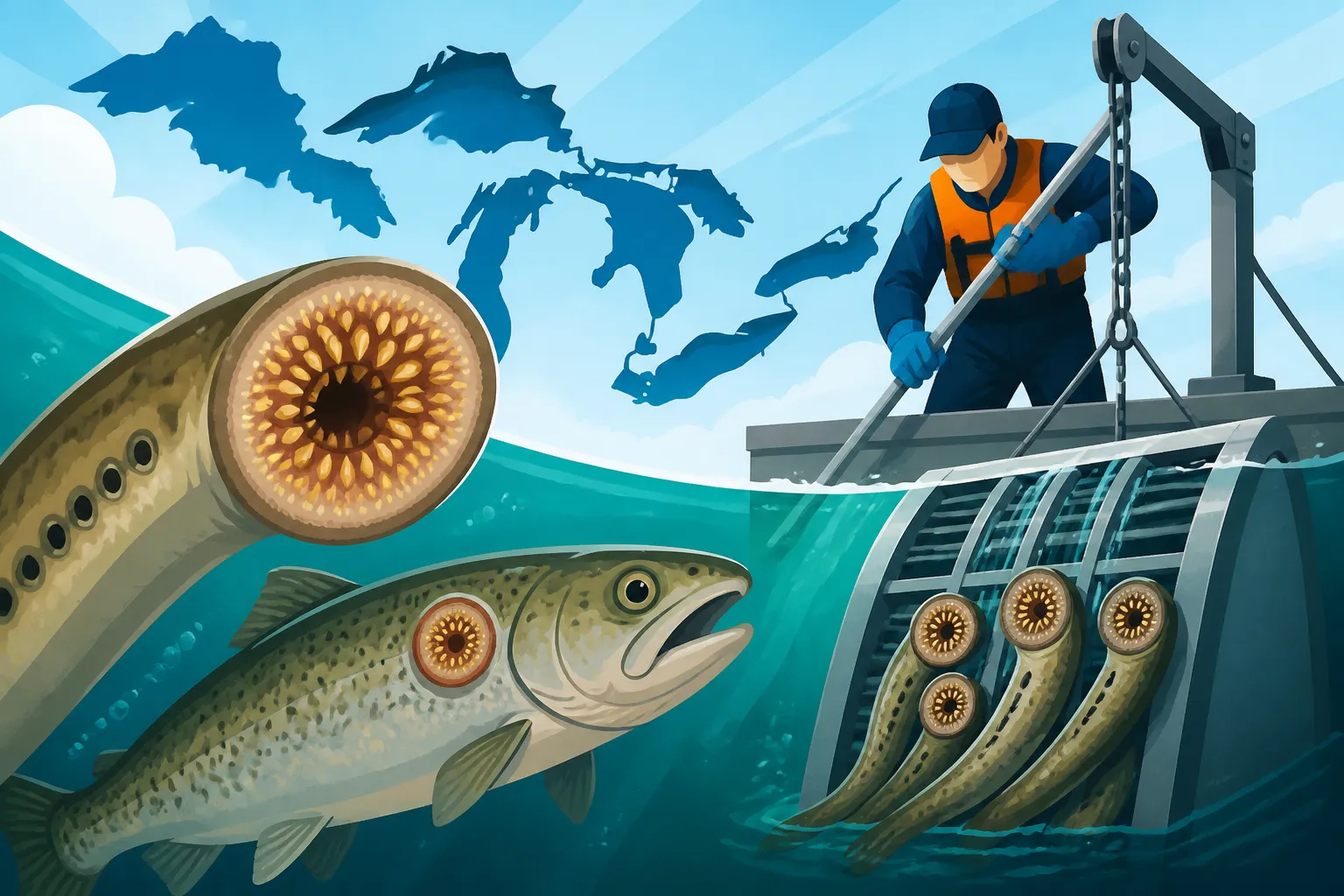
The eggs hatch into tiny, worm-like larvae, known as ammocoetes, which burrow into the soft sediment of the streambed. They can live there for several years, filter-feeding on algae and detritus, completely harmless to other fish. This larval stage is critical because it's when they are most vulnerable and targeted by control efforts. After several years, these ammocoetes undergo a metamorphosis, transforming into their parasitic, adult form. They develop their infamous sucker mouth lined with sharp teeth and a rasping tongue. Once transformed, they migrate downstream into the Great Lakes, where they attach themselves to fish, feeding on their blood and bodily fluids. A single lamprey can kill up to 40 pounds of fish in its lifetime, and these fish often die from blood loss or secondary infections. It's a truly gruesome process.
The Devastating Impact on Great Lakes Fisheries
The impact of unchecked sea lamprey populations on the Great Lakes has been nothing short of catastrophic. In the mid-20th century, lake trout populations, once the kings of the Great Lakes, crashed dramatically, virtually disappearing from some areas. This wasn't just an ecological disaster; it was an economic one, too, severely impacting the commercial fishing industry and the burgeoning sport fishery. Imagine charter boat captains with empty nets or anglers returning with scarred, dying fish instead of healthy trophies. It was heartbreaking for everyone involved.
Beyond lake trout, species like walleye, salmon, whitefish, and even large suckers became targets. The economic losses mounted, and the very fabric of the Great Lakes fishery, from local tackle shops to lakeside communities, felt the strain. The ecological balance was completely disrupted, with top predators decimated, allowing other species to proliferate or decline in unforeseen ways. The realization dawned that if nothing was done, the Great Lakes would lose much of their incredible biodiversity and fishing heritage. It’s this profound impact that galvanized the international effort to control them, understanding that the health of these massive freshwater seas depended on it. You can explore more about specific species like Lake Trout Fishing in Ontario and Lake Ontario Salmon Fishing to see just how vital these fish are to our ecosystem and economy.
The Coordinated Fight: Agencies and Strategies
Dealing with an invasive species on a scale as vast as the Great Lakes is not something one agency, or even one country, can tackle alone. It requires an extraordinary level of cooperation, scientific expertise, and sustained funding. The battle against the sea lamprey is a testament to what can be achieved when nations work together for a common environmental goal.
The Great Lakes Fishery Commission (GLFC)
At the heart of the sea lamprey control effort is the Great Lakes Fishery Commission (GLFC). Established in 1955 by Canada and the United States, the GLFC was specifically formed to address the then-raging sea lamprey crisis and coordinate fisheries research and management in the Great Lakes. It's a truly unique international organization, demonstrating that some environmental challenges transcend borders and require a unified approach. Their mandate is clear: to control sea lamprey populations and to coordinate research and management of fish stocks across all five Great Lakes.
The GLFC doesn't just fund projects; it acts as the scientific and strategic hub for lamprey control. They determine where and when control efforts are needed, based on extensive research and monitoring. They collaborate with provincial, state, and federal agencies, ensuring that efforts are synchronized and resources are used efficiently across the massive basin. Without the GLFC, the fragmented efforts of individual jurisdictions would likely have little impact on such a widespread problem. Their consistent leadership and scientific guidance are indispensable.
Integrated Pest Management (IPM) Approach
One of the key philosophies guiding sea lamprey control is Integrated Pest Management, or IPM. This isn't about using a single silver bullet, but rather a holistic strategy that combines multiple control methods to achieve the most effective and sustainable results. Think of it like a carefully orchestrated symphony, where each instrument plays its part to create a harmonious outcome. This approach recognizes that no one method will ever completely eradicate sea lamprey, but by hitting them at different stages of their life cycle and in different locations, their populations can be suppressed to levels that allow native fish to thrive.
The beauty of IPM is its adaptability. Scientists are constantly evaluating the effectiveness of each method, looking for synergies, and developing new tools. This means that if one method becomes less effective or raises new environmental concerns, others can be adjusted or new ones introduced. It’s a dynamic, science-driven process that aims for long-term population suppression rather than a futile attempt at complete eradication. This strategy has been incredibly successful in bringing sea lamprey populations down by as much as 90% in most areas since the peak of their devastation. For more on the regulatory context, you might find Ontario Fishing Regulations Explained useful.
Funding and Resources
The sheer scale of the Great Lakes means that sea lamprey control is an incredibly expensive undertaking, costing tens of millions of dollars annually. This funding comes primarily from the governments of Canada and the United States, through various channels. These funds cover everything from scientific research and monitoring to the purchase and application of lampricides, the construction and maintenance of barriers, and the operation of trapping programs. It's a significant financial commitment, but one that both countries have consistently maintained, recognizing the immense value of the Great Lakes fishery to their economies, cultures, and environments.
Without this consistent financial support, the control program simply couldn't operate. Think about the logistics involved: highly specialized crews conducting surveys in remote rivers, sophisticated equipment for applying lampricides, and complex infrastructure for barriers and traps. All of this requires significant investment. The ongoing commitment highlights the understanding that protecting these world-class fisheries is not a one-time project, but a continuous responsibility. It’s a testament to the belief that the health of the Great Lakes is worth every penny.
Primary Control Methods: What's Being Done
The fight against sea lamprey employs a combination of highly specialized and scientifically vetted techniques, each targeting a specific vulnerability in the lamprey's life cycle. These methods have been refined over decades of research and implementation, and they form the backbone of the GLFC's successful control program.
Lampricides: Targeting the Larvae
One of the most effective and widely used methods involves the application of highly specific pesticides known as lampricides. These chemicals, primarily TFM (3-trifluoromethyl-4-nitrophenol) and Bayluscide, are carefully applied to tributaries where sea lamprey ammocoetes (larvae) are known to live. The genius of these lampricides is their selectivity: they are toxic to sea lamprey larvae at concentrations that have minimal impact on most other fish species, invertebrates, and wildlife. This careful balance is critical to protecting the wider ecosystem.
Crews conduct extensive surveys to identify streams with lamprey larvae populations, often mapping their distribution with incredible precision. The lampricide is then applied, typically by drip feeding it into the stream, and its concentration is meticulously monitored throughout the treatment area. The goal is to deliver a lethal dose to the burrowed ammocoetes without harming non-target species. This method is incredibly efficient because it targets the lamprey before they ever become parasitic adults, preventing millions of future predators from entering the Great Lakes. However, it requires careful planning, skilled application, and constant environmental monitoring to ensure success and safety. The GLFC is careful to follow strict protocols to minimize environmental impact.
Barriers and Traps: Blocking Migration and Removing Adults
Another crucial component of the control strategy involves physical barriers and trapping mechanisms. Barriers, often in the form of low-head dams or specially designed weirs, are constructed on tributaries to block adult sea lamprey from migrating upstream to their spawning grounds. If lamprey can't reach suitable spawning habitats, they can't reproduce, effectively breaking their life cycle. Some barriers are permanent, while others are temporary and can be installed and removed as needed. The placement of these barriers is strategic, focusing on tributaries that are major lamprey producers.
Complementing barriers are various types of traps. These traps are usually positioned at barriers or in specific river sections to capture adult lamprey as they attempt to migrate upstream. Once captured, the lamprey are removed from the system, preventing them from spawning. Trapping also serves a vital monitoring function, providing valuable data on lamprey population sizes and migration patterns, which helps refine other control efforts. A more recent, innovative approach also involves the release of sterile male sea lamprey. These males compete with fertile males for spawning opportunities, leading to unfertilized eggs and a reduction in reproductive success. This form of biological control offers a promising additional tool in the IPM arsenal, further stressing the lamprey population from multiple angles. For more specific information on how different zones are managed, check out Ontario Fisheries Management Zones, Explained.
Monitoring, Research, and Future Challenges
The battle against the sea lamprey is far from over. It's an ongoing commitment that relies heavily on continuous scientific investigation, adaptive management, and the constant development of new tools and techniques. The Great Lakes are dynamic systems, and the lamprey, like any invasive species, can adapt, so the control program must also remain agile and responsive.
Constant Vigilance: Surveying and Assessment
Imagine trying to track an elusive predator across a body of water larger than some countries. That's essentially the task faced by researchers and field crews constantly surveying the Great Lakes and their vast network of tributaries. They employ a range of techniques to assess sea lamprey populations, from electrofishing to uncover hidden ammocoetes in stream beds to deploying traps to count migrating adults. These surveys are absolutely critical; they are the eyes and ears of the control program, identifying where lamprey are reproducing, how many there are, and which areas need immediate attention.
This rigorous assessment process also involves monitoring the health of fish populations, looking for signs of lamprey attack, and correlating these observations with control efforts. It's a feedback loop: control measures are implemented, their impact is assessed, and then strategies are adjusted based on the latest data. This isn't a "set it and forget it" kind of operation; it's a relentless, data-driven pursuit to maintain the delicate balance of the ecosystem. Without this constant vigilance, sea lamprey populations could quickly rebound, undoing decades of hard-won progress.
The Role of Research and Innovation
The success of sea lamprey control isn't just about applying existing methods; it's also about pushing the boundaries of scientific understanding and developing new, more efficient, and environmentally friendly solutions. Research is a cornerstone of the GLFC's mission, with scientists continually exploring novel ways to combat the lamprey. This includes investigating new lampricide compounds, improving the design of barriers and traps, and developing biological controls like pheromones that can lure lamprey into traps or disrupt their spawning.
For example, researchers are looking into using lamprey pheromones – chemical cues they use to communicate – to manipulate their behaviour. Imagine being able to "switch off" their spawning drive or guide them into a trap with a natural scent! This kind of innovation is exciting because it promises control methods that are even more specific and less impactful on non-target species. The Great Lakes Fishery Commission consistently funds projects aimed at this kind of forward-thinking science. It’s a testament to their dedication to finding the best possible solutions for the long haul, leveraging the latest scientific advancements.
The Ongoing Battle: Why Control is Continuous
It's important to understand that complete eradication of sea lamprey from the Great Lakes is, unfortunately, an unrealistic goal. Given the vastness of the system, the sheer number of tributaries, and the lamprey's reproductive capacity, permanently eliminating them is simply not feasible. Instead, the objective is continuous control and suppression to maintain their populations at levels that allow native and stocked fish species to thrive. This means the battle is truly ongoing, a perpetual commitment to monitoring, treating, and managing.
The program has achieved remarkable success, reducing lamprey populations by a staggering margin and allowing many fish species, like lake trout and salmon, to recover significantly. However, if control efforts were to cease or diminish, sea lamprey populations would inevitably rebound, and the Great Lakes would once again face the ecological devastation of the past. The cost of inaction far outweighs the cost of the sustained control program, making it an investment in the ecological and economic health of the entire region. This isn't just about fish; it's about preserving a vital natural resource for future generations of anglers and nature lovers. You can see how this affects species like Chinook Salmon in Lake Ontario and Coho Salmon in the Great Lakes.
| Control Method | Target Life Stage | Primary Mechanism | Pros | Cons |
|---|---|---|---|---|
| Lampricides (TFM/Bayluscide) | Ammocoetes (larvae) | Selective chemical poison | Highly effective, targets pre-parasitic stage, minimal impact on most other species | Requires careful application, environmental monitoring, recurring costs |
| Barriers | Adult Spawners | Physical blockage of migration | Prevents reproduction in entire stream sections, often passive | Can impede passage of desirable fish species, require maintenance, can alter stream flow |
| Traps | Adult Spawners | Capture and removal | Removes adults from population, provides monitoring data, can be used with barriers | Labor-intensive, specific placement required, only targets migrating adults |
| Sterile Male Release | Adult Spawners | Biological control | Environmentally friendly, targets reproduction, self-sustaining potential | Complex to implement, high initial research/development cost, slow impact |
What Anglers Can Do: Becoming Part of the Solution
While the bulk of sea lamprey control is handled by dedicated agencies and scientists, anglers play a surprisingly important role in supporting these efforts. Our passion for fishing means we spend a lot of time on the water, making us valuable eyes and ears for the conservation community. We're all in this together, and every little bit helps protect the fisheries we love.
Reporting Sightings
One of the simplest yet most impactful things an angler can do is report any sightings of sea lamprey or fish with fresh lamprey wounds. While scarred fish are a common sight, seeing a live lamprey attached to a fish, or even spotting a lamprey in a tributary stream, can provide valuable real-time data to control agencies. These reports help scientists track lamprey movements, identify new spawning grounds, or confirm areas where control efforts might need to be ramped up. Think of yourself as a citizen scientist; your observations contribute directly to the overall health of the Great Lakes.
Knowing how to differentiate between a sea lamprey wound and other injuries is also helpful. Lamprey wounds are typically circular, often with a raw or pale center where the lamprey's mouthparts were attached. If you catch a fish with a suspicious wound, or even better, if you encounter a live lamprey, try to get a photo and note the location, date, and time. Then, contact your local provincial or state fisheries office, or the Great Lakes Fishery Commission directly. Every piece of information helps them piece together the larger puzzle.
Educating Yourself and Others
Knowledge truly is power, especially when it comes to invasive species. Understanding the biology of the sea lamprey, the methods used for control, and the ongoing challenges helps build a more informed and supportive angling community. This isn't just about knowing what the problem is, but why the control efforts are so important and why they need continuous funding and support. You might even find some fascinating books on Amazon that delve deeper into the biology of invasive species or the history of Great Lakes conservation. Sharing this knowledge with fellow anglers, friends, and family can foster a greater appreciation for the work being done and the vulnerability of our freshwater resources.
By becoming an informed advocate, you can help counter misconceptions and ensure that the vital work of sea lamprey control continues to receive the necessary backing. For instance, sometimes people mistake native lamprey species for sea lamprey, which is a common but important distinction to make. Educating yourself about the unique characteristics of each helps prevent unnecessary alarm and ensures accurate reporting. Equipping yourself with a good fish identification guide, perhaps one easily found on Amazon, can also help you recognize different species, including any signs of lamprey scarring.
Supporting Conservation Efforts
Beyond direct reporting and education, anglers can support conservation efforts in broader ways. A significant portion of the funding for fisheries management and invasive species control, including sea lamprey, often comes from fishing license sales. So, simply by purchasing your Ontario Fishing License Guide for 2026 or your Ontario Outdoors Card, Explained, you're directly contributing to the health of the resource you enjoy. Many conservation organizations also work in conjunction with government agencies, advocating for funding and providing volunteer support.
Consider joining a local fishing club or a conservation group. These organizations often play a crucial role in promoting responsible angling practices, advocating for healthy aquatic ecosystems, and sometimes even participating in habitat restoration projects. Teaching the next generation about invasive species is also crucial, and there are many children's books and educational kits available on platforms like Amazon that make learning about ecology fun. Your voice, your license fees, and your active participation collectively make a significant difference in the long-term health and vitality of the Great Lakes fisheries.
Disclaimer
This article is for general informational purposes only and does not constitute professional advice. Laws, prices and regulations vary by location and change over time. Consult a qualified professional for guidance on your specific situation.