How deep lake trout go in summer
Many anglers in Ontario get frustrated once the spring frenzy for lake trout dies down. It's like these magnificent fish simply vanish from their usual haunts, leaving folks scratching their heads and wondering where they went. The truth is, they haven't disappeared; they've just moved to their preferred summer residences. This comprehensive guide will peel back the layers of Ontario's deep, cold lakes to reveal exactly how deep lake trout go in summer, helping you pinpoint their locations and increase your chances of a successful catch.
The Summer Retreat: Why Lake Trout Go Deep
As the long, warm days of an Ontario summer stretch out, the surface waters of our beautiful lakes begin to heat up considerably. While many fish species thrive in this warmth, lake trout are not among them. They are creatures of the cold, true relics of glacial times, and their bodies are simply not built for the sun-baked shallows. This physiological need drives them into the depths, making summer fishing a different ball game entirely.
Thermal Stratification and Preferred Temperatures
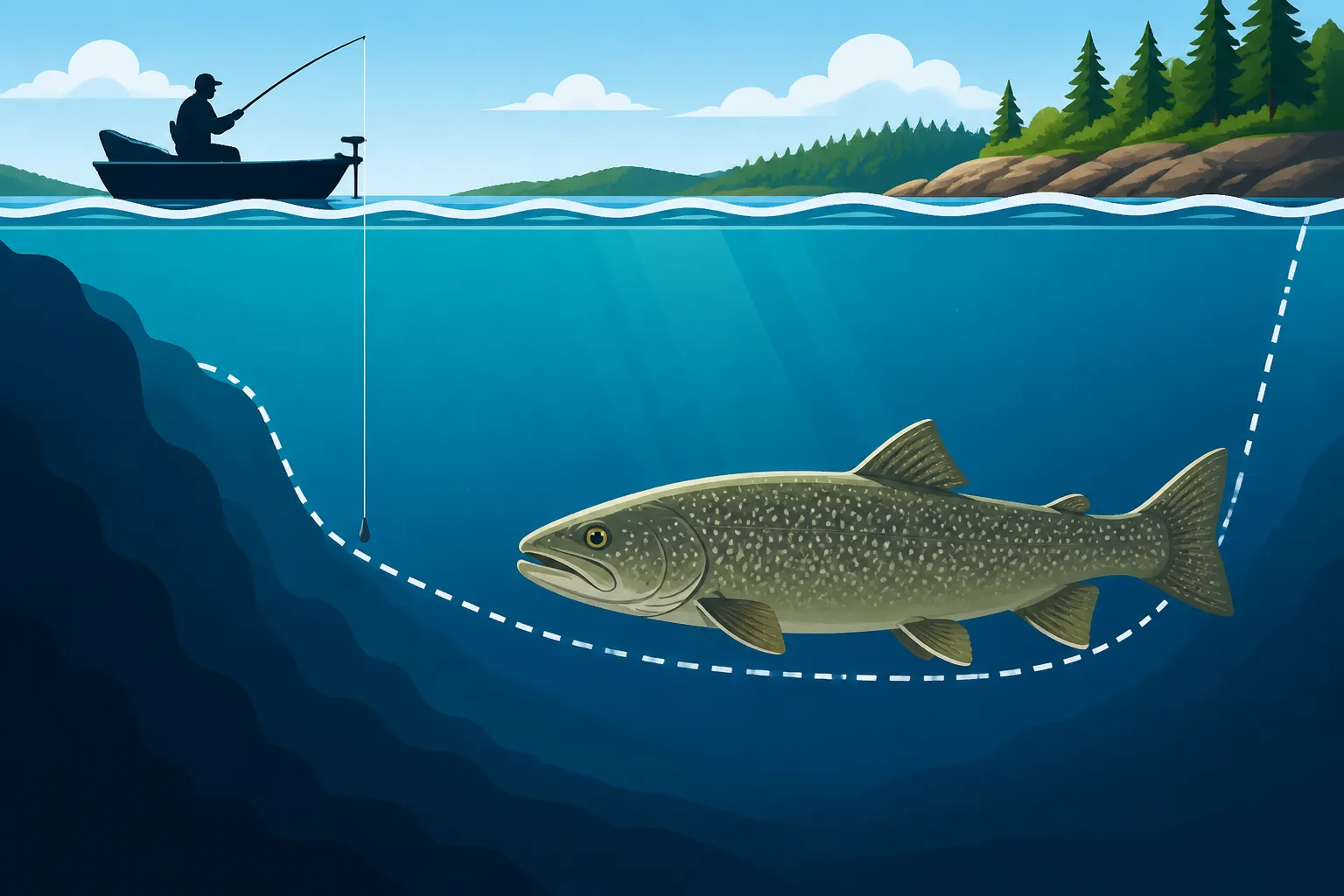
The primary reason lake trout seek the depths during summer is the phenomenon of thermal stratification. As the sun warms the upper layers of a lake, the water separates into distinct temperature zones. The warmest water, the epilimnion, sits on top. Below this is the thermocline, a crucial layer where the temperature drops rapidly. And beneath the thermocline lies the hypolimnion, a deep, cold layer that remains stable throughout the summer. Lake trout absolutely thrive in cold water, ideally between 7 to 13 degrees Celsius (45 to 55 degrees Fahrenheit). Any warmer than that, and their metabolism gets stressed, they become lethargic, and their hunting instincts diminish. So, when the surface waters climb into the high teens or even twenties (Celsius), they have no choice but to push down, often seeking that perfect temperature band within or just below the thermocline. In vast, deep lakes like Superior or Nipigon, this thermal refuge can be found at vastly different depths than in a smaller, shallower inland lake. Understanding this fundamental need is the first step to finding them.
Oxygen Levels and Habitat Sweet Spots
While cold water is king for lake trout, it's not the only factor driving their deep-water migration. Dissolved oxygen levels play an equally critical role. Healthy fish need plenty of oxygen in the water to breathe, just like we need air. Cold water holds more dissolved oxygen than warm water, which is another reason the hypolimnion is so appealing to lake trout. However, there's a fine line. In some very deep lakes, especially those with limited circulation or significant organic decomposition on the bottom, the very deepest parts of the hypolimnion can become oxygen-depleted later in the summer. This creates a "sweet spot" for lake trout – a zone that is both cold and rich in oxygen. It's a bit like finding a perfectly air-conditioned room that also has a well-stocked pantry. Anglers who focus solely on depth without considering oxygen content might find themselves in lifeless zones, passing over fish that are holding slightly shallower but in far more hospitable conditions. This delicate balance of temperature and oxygen dictates where they'll comfortably reside and actively feed.
Key Factors Influencing Summer Lake Trout Depth
Locating lake trout in the summer isn't just about dropping your line as deep as possible. It’s a nuanced hunt, influenced by a blend of environmental conditions and the fish's natural behaviours. Understanding these factors can give you a significant advantage, helping you narrow down your search and spend more time fishing where the trout actually are.
The Role of Baitfish and Food Sources
Lake trout, like all predators, are fundamentally tied to their food source. While they have a strong preference for cold, oxygenated water, they won't stay in a desolate, foodless abyss. In many Ontario lakes, their primary summer forage includes species like cisco (also known as lake herring), smelt, and various shiners. These baitfish also have their own preferred temperature and oxygen ranges, and they often school up around specific underwater structures like humps, reefs, or suspended over deep basins. If the baitfish are holding at 60 feet, the lake trout won't be far behind, even if 80 feet might offer slightly cooler water. You might find pods of cisco cruising along a deep contour, and the lake trout will be right there, often positioned just below or to the side of the school, waiting for an opportunity to strike. Effective summer lake trout fishing often becomes a hunt for baitfish first, knowing that the predators will be shadowing them. Many anglers will spend considerable time looking for signs of these schools on their sonar before even dropping a line, as this direct connection to food is paramount. You can learn more about targeting these fish in Best Techniques for Deep Water Summer Lake Trout.
Light Penetration and Predator Avoidance
Beyond temperature and oxygen, light plays a significant role in where lake trout decide to hang out. These fish are generally light-sensitive, preferring dimmer conditions. Deep water naturally offers refuge from the harsh glare of the summer sun. During bright, sunny days, lake trout will often push down further, or hug tight to dark bottom contours and deep-water structure, using the shadows and reduced light penetration as cover. This preference isn't just about comfort; it's also a survival instinct. While lake trout are apex predators in many Ontario lakes, they can still be vulnerable to larger threats (though fewer in number) or simply find it easier to ambush prey from darker areas. You might notice that on overcast days, or during the low-light periods of dawn and dusk, lake trout might move slightly shallower, venturing into the upper reaches of the thermocline to feed more aggressively. This daily ebb and flow in response to light conditions is an important pattern to observe, as it can offer windows of opportunity for anglers.
Lake Characteristics and Thermocline Depth
Not all Ontario lakes are created equal, and their unique characteristics significantly impact where the thermocline forms and, consequently, where lake trout will reside. Deep, clear lakes with minimal nutrient input, like many of those found on the Canadian Shield in Northern Ontario, tend to have a deeper, more pronounced thermocline. The light penetrates further, and the sheer volume of cold water creates extensive deep-water habitat. In these lakes, lake trout might consistently be found at depths of 70, 80, or even 100 feet or more. Conversely, shallower lakes or those with stained, turbid water (perhaps from agricultural runoff or tannic bog water) will often have a much shallower thermocline. The water absorbs heat more quickly, and light penetration is limited. In such cases, lake trout might be concentrated in the 30-60 foot range, as anything deeper might lack sufficient oxygen or simply not exist. Understanding the specific lake you're fishing – its average depth, clarity, and overall productivity – is key to making educated guesses about where to start your search for Lake Trout Fishing in Ontario.
| Lake Type | Typical Summer Lake Trout Depth Range (approx.) | Key Influencing Factor |
|---|---|---|
| Deep, Clear Lakes | 50 – 150+ feet | Deep thermocline, abundant cold water |
| Moderate Depth, Clear Lakes | 40 – 100 feet | Defined thermocline, sufficient cold water |
| Moderate Depth, Stained Lakes | 30 – 70 feet | Shallower thermocline, limited light penetration |
| Shallow Lakes | 20 – 50 feet (if present) | Limited cold water habitat, oxygen concerns |
Note: These are general guidelines. Always consult local regulations and use your electronics to confirm conditions on specific bodies of water.
Locating Summer Lake Trout: Tools and Techniques
Finding lake trout in the vastness of an Ontario lake during summer can feel like searching for a needle in a haystack. However, with the right tools and techniques, that haystack gets a whole lot smaller. Modern technology combined with tried-and-true fishing methods dramatically improves your odds.
Utilizing Sonar and Fish Finders
If you're serious about summer lake trout, a quality fish finder is not just a luxury; it's a necessity. These devices are your eyes into the underwater world. A good unit will allow you to see the thermocline (often appearing as a distinct band on your screen), identify baitfish schools, and, most importantly, mark those tell-tale arches that signify individual lake trout. Look for units that offer high-resolution screens and different sonar frequencies to penetrate varying depths. Side imaging and down imaging can also be incredibly useful for spotting structure where fish might be holding, or even finding suspended trout off to the sides of your boat. Before you even drop a line, spend time cruising likely areas – deep points, main lake basins, and underwater humps – watching your screen for activity. Pay close attention to temperature readings if your unit provides them, as this will help you zero in on that preferred thermal band. You can find a wide array of reliable fish finders, along with plenty of accessory mounts, on platforms like Amazon, often with detailed user reviews to help you choose. For a deeper dive, check out Best Fish Finders for Ontario Lakes.
Effective Deep-Water Fishing Techniques
Once you've identified the depth where lake trout are holding, you need a way to present your lure effectively in their strike zone. There are several proven techniques for this deep-water game.
- Downrigging: This is arguably the most precise method. Downriggers use a heavy weight (called a cannonball) to carry your lure down to a specific depth, which you can monitor with a counter. When a fish strikes, the line pops free from a release clip, allowing you to fight the fish directly without the weight. This is fantastic for targeting fish suspended at a precise depth.
- Lead Core and Copper Line: These specialized lines are weighted to sink naturally as you troll. Different colours on lead core line indicate specific lengths, allowing you to estimate depth based on how many colours you have out and your trolling speed. Copper line is even heavier and achieves greater depths with less line out. They offer a simpler, though less precise, alternative to downriggers.
- Three-Way Rigs: For vertical jigging or drifting, a three-way swivel setup can be effective. One eye goes to your main line, another to a heavy lead weight that keeps your bait near the bottom, and the third to a leader with your lure or bait. This allows you to fish vertically in deep water with good control.
- Heavy Jigging: If lake trout are concentrated on specific humps or structure, heavy jigs (like tube jigs, bucktails, or jigging spoons) can be dropped directly down to them. This is an active form of fishing that can be very rewarding.
Remember, consistency in depth and presentation is key. Lake trout can be surprisingly picky, so once you find a depth that works, stick with it. Trolling Techniques for Ontario Lake Trout offers even more detail on specific strategies.
Structure and Contour Mapping
While sonar shows you what's under your boat, good contour maps show you what will be under your boat. Modern GPS units with detailed lake mapping are invaluable. They highlight underwater points, saddles, humps, deep basins, and sharp drop-offs – all areas where lake trout love to congregate. These fish are often drawn to transitions: where a flat shelf drops into a deep abyss, where a submerged island rises from the depths, or where a river channel snakes through a lake.
By studying your map, you can predict where the thermocline might intersect with promising structure, creating prime ambush points. For example, a long underwater point that extends into the main basin could hold fish all along its sides, especially where the depth corresponds to their preferred temperature. Plan your troll or drift lines along these contours, maintaining a consistent depth relative to the bottom. Many anglers also find that traditional paper contour maps, often available at local bait shops or even through online retailers like Amazon, provide an excellent overview for planning a day on the water, complementing the real-time data from their fish finder. The more you know about the underwater topography, the better you can anticipate where these deep-dwelling predators will be lurking.
Common Depth Ranges and What to Expect
Let's get down to the brass tacks of typical depths. While every lake is a unique ecosystem, there are general ranges you can expect when searching for lake trout in Ontario during the summer months.
General Summer Depth Guidelines
As we've discussed, lake trout are temperature-driven, and in the summer, that means a significant descent. Generally speaking, you'll be looking for lake trout in Ontario at depths ranging from 40 to 120 feet (roughly 12 to 36 meters). However, this is a broad spectrum, and it can vary wildly:
- Early Summer (June): As surface waters just start to warm, you might still find lake trout somewhat shallower, perhaps starting around 30-60 feet (9-18 meters), especially in the cooler mornings or on overcast days. They're still transitioning from their spring haunts.
- Mid-Summer (July-August): This is when they hit their deepest patterns. Expect to find them consistently in the 50-100 foot (15-30 meter) range. In very deep, clear lakes, they could easily be much deeper, sometimes marked at 120, 150, or even 200 feet (36-60 meters) if the oxygen and baitfish are present.
- Late Summer (September): As water temperatures slowly begin to cool, and days shorten, there might be a very slight upward movement, or they might remain deep until the entire water column starts to mix again during the fall turnover. They may be found at 40-80 feet (12-24 meters) depending on the lake.
It’s crucial to use your sonar to identify the thermocline and any baitfish. If your fish finder shows a distinct temperature break at 60 feet and schools of baitfish suspended just below it, that's your starting point, regardless of what "general guidelines" might suggest. You should always let the fish tell you where they are holding, rather than relying solely on assumptions. For specific depth limits and conservation efforts, understanding Ontario Lake Trout Limit and Possession Rules is essential.
Daily and Seasonal Fluctuations
Even within the summer months, lake trout depth isn't static. There are subtle daily and seasonal fluctuations to consider. On a bright, sunny afternoon with no cloud cover, those trout might hug the very bottom of a deep trench at 90 feet. However, come early morning, as the sun barely crests the horizon, or during a heavy overcast day, they might be willing to rise 10-20 feet higher in the water column to chase baitfish, making them more accessible.
Significant weather changes can also play a role. A strong cold front that brings cooler air and potentially some mixing of the surface water might temporarily push trout slightly shallower, or at least make them more active at their existing depth. Conversely, a prolonged heatwave will only drive them deeper. These fish are constantly reacting to their environment, and being observant of the conditions on the water, along with reviewing your sonar for changes, will make you a more adaptable and successful angler. This dynamic behavior highlights why understanding Best Time of Year to Fish in Ontario is important for any species, even deep-dwelling lake trout.
Targeting Larger vs. Smaller Lake Trout
It's a commonly held belief among seasoned anglers that the biggest fish often hold the deepest, or at least in the most prime, isolated pieces of structure. While not a hard and fast rule, it certainly holds true sometimes for lake trout. Smaller, more numerous lake trout might be found schooling together, sometimes a bit higher in the water column or spread out over broader areas. However, that truly massive, solitary laker often claims the best ambush points: the tip of a deep underwater point, a solitary boulder on a vast flat, or a submerged pinnacle rising from the deepest part of the lake.
When targeting trophy lake trout, you might need to focus your efforts on these prime, often deeper, pieces of structure, even if it means marking fewer fish. This means meticulously studying your contour maps, making precise passes with your boat, and patiently working your presentations through these high-potential areas. It's often a game of quality over quantity. Keep this in mind as you explore the diverse waters of Ontario's Best Fishing Lakes in Ontario.
Disclaimer
This article is for general informational purposes only and does not constitute professional advice. Laws, prices and regulations vary by location and change over time. Consult a qualified professional for guidance on your specific situation.