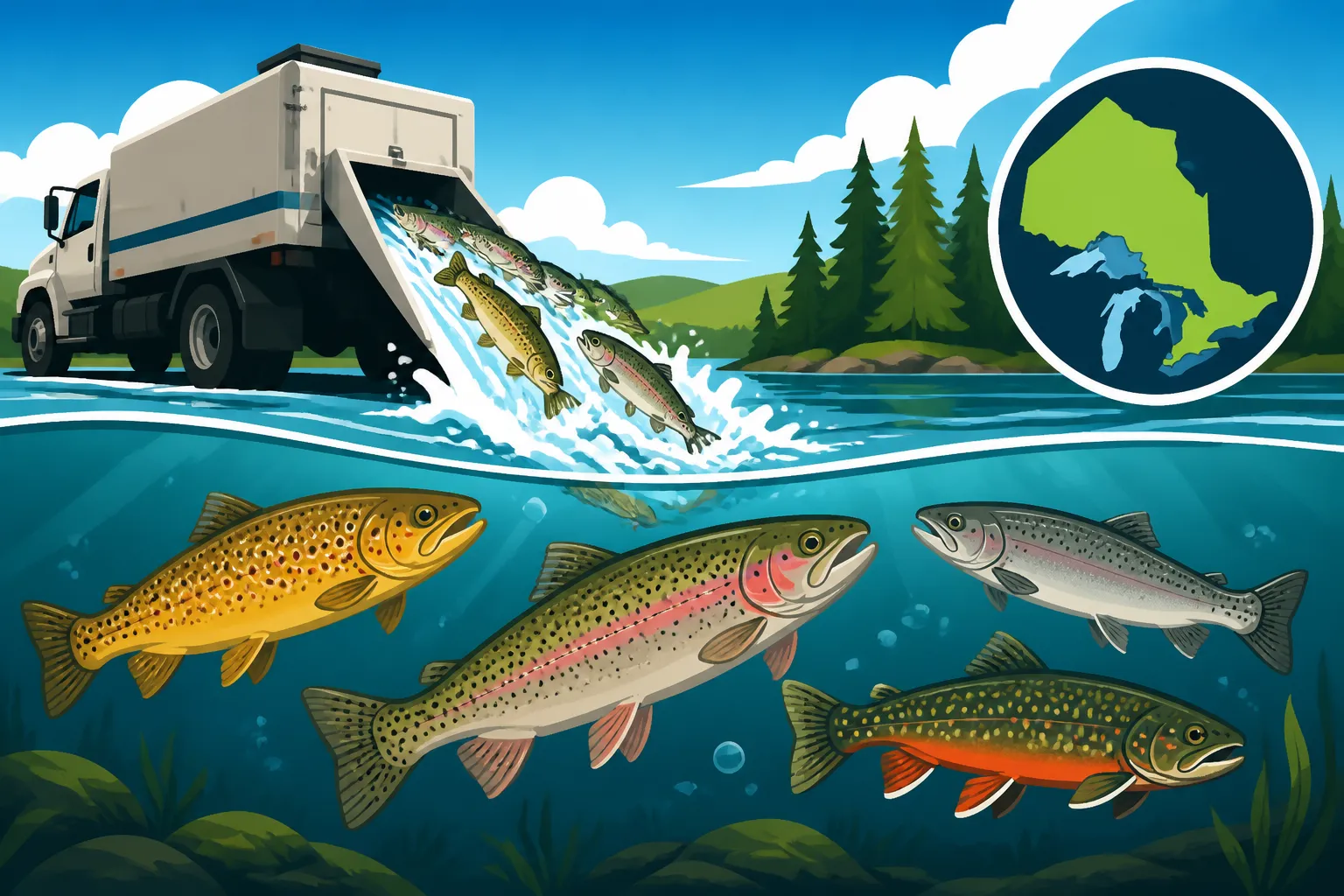
Non-native trout species stocked in Ontario
It can be a little confusing when you're out on an Ontario lake or river, trying to figure out exactly what kind of trout you've just hooked. With all the talk of native species and conservation efforts, it's easy to forget that many of the vibrant, feisty trout we target aren't actually "from here" at all. This guide is going to clear up that confusion, diving deep into the fascinating world of non-native trout species that are regularly stocked across Ontario, helping you understand their origins, how to identify them, and where you're most likely to encounter them.
Understanding Ontario's Trout Landscape Beyond the Natives
When we talk about trout in Ontario, most anglers immediately think of our beloved Brook Trout, a true native to these pristine waters. But the reality of Ontario's diverse fisheries is that many of our fantastic trout opportunities come from species introduced decades ago. These non-native trout have carved out a significant niche, offering thrilling angling experiences in a variety of environments, from small urban ponds to vast Great Lakes tributaries.
Why Introduce Non-Native Trout?
The decision to introduce non-native trout species wasn't made on a whim. Historically, as Ontario's population grew and angling pressure increased, there was a clear need to diversify fishing opportunities and, in some cases, to introduce species that could thrive in habitats altered by human activity or simply provide a different kind of angling challenge. Our native Brook Trout, while incredible, often require very specific, cold, clean water conditions, which aren't always available or accessible in every area.
Think about it: some of the waters we love to fish, especially closer to urban centres or in areas with agricultural runoff, might not be pristine enough to sustain a robust population of sensitive native species. Non-native trout, like rainbows and browns, can sometimes tolerate a wider range of conditions, making them ideal candidates for "put-and-take" fisheries where the goal is simply to provide enjoyable angling experiences. They help to absorb some of the fishing pressure, allowing native populations in more delicate ecosystems to remain healthy. It’s all about balance and ensuring there’s something for everyone to enjoy, whether you're fly fishing a remote northern stream for brookies or casting spoons in a provincial park lake for rainbows.
The Difference Between Native and Non-Native Trout
When we talk about native trout in Ontario, the Brook Trout Native Range in Ontario immediately comes to mind. These vibrant fish, with their worm-like markings on their backs and speckled sides, are a true symbol of wilderness. Non-native trout, however, originate from different parts of the world and were introduced to Ontario, primarily for angling purposes. The key difference isn't just their geographical origin, but also how they interact with the ecosystem and the role they play in our fisheries management.
Native species are intrinsically linked to the delicate ecological balance of their original habitats. They've evolved over millennia with other local flora and fauna. Non-native species, while offering great fishing, can sometimes compete with native fish for resources or habitat. That's why stocking programs are carefully managed to ensure they don't negatively impact our precious native populations. It's a continuous balancing act, ensuring we get to enjoy a variety of fishing, while also protecting our natural heritage. The goal is to provide diverse fishing experiences without compromising the integrity of our wild ecosystems, ensuring a healthy future for all fish species in Ontario.
The Main Players: Rainbow and Brown Trout
When discussing non-native trout in Ontario, two species stand out as the most common and popular: Rainbow Trout and Brown Trout. Both offer distinct angling experiences and thrive in different, yet often overlapping, habitats. They've become integral to many of Ontario's fishing opportunities, providing fantastic action for anglers across the province.
Rainbow Trout: The Ontario Angler's Favourite Challenger
Rainbow Trout, originally from the Pacific drainage of North America, are easily recognized by the iridescent, often pink or red stripe running horizontally along their sides, especially prominent during spawning. Their backs are typically greenish-blue, fading to silver on their bellies, and they are covered in small black spots that extend onto their fins. They are known for their incredible fighting spirit – those acrobatic leaps and powerful runs are why so many anglers adore them. If you've ever hooked a rainbow, you know the thrill!
In Ontario, Rainbow Trout are widely stocked in a variety of waters. You'll find them in numerous inland lakes, where they provide a popular "put-and-take" fishery, meaning they're often stocked to be caught. Many provincial park lakes receive regular rainbow stockings, making them excellent spots for family fishing outings. The Great Lakes tributaries are another prime location, especially during the spring and fall runs, where they are often referred to as "steelhead" when they migrate from the big lakes into rivers to spawn. These river fish can be substantial and offer an incredible challenge on light tackle. When gearing up for these beauties, a versatile medium-light spinning rod paired with a sensitive line is often a good start, and you can find a huge selection of appropriate tackle on Amazon. Understanding Rainbow Trout Stocking in Ontario can certainly help you pinpoint where to find these vibrant fish, whether you're looking for a peaceful lake experience or the adrenaline rush of a river run.
Brown Trout: Elusive and Resilient in Ontario Waters
Brown Trout, originally native to Europe and western Asia, have a different charm. They are generally much more elusive and warier than rainbows, earning them a reputation as a true challenge for experienced anglers. Their appearance is distinct: typically brownish-gold on their sides, fading to a lighter belly, with dark spots surrounded by lighter halos. Often, they'll have some red or orange spots mixed in, particularly on their flanks. They don't have that prominent rainbow stripe, making them easy to distinguish once you know what to look for.
What sets Brown Trout apart ecologically is their greater tolerance for slightly warmer water temperatures compared to Brook Trout, and sometimes even Rainbow Trout. This resilience allows them to thrive in larger rivers and some deeper lakes that might not be ideal for other trout species. You'll find them in many of the same Great Lakes tributaries as rainbows, but they often inhabit deeper, slower pools and are notorious for being nocturnal feeders, especially for larger prey. Pursuing brown trout can be incredibly rewarding because of their wary nature; it often requires a more stealthy approach and presentation. Many anglers targeting these clever fish rely on specific fly patterns or subtle lure presentations, often experimenting with different options available from online retailers like Amazon to match the local forage. If you're keen to learn more about their preferred habitats, checking out resources on Brown Trout Habits in Ontario Streams would be a great next step.
Where and How These Non-Native Trout Thrive
Ontario's extensive waterways provide a fantastic home for both stocked native and non-native trout. The success of species like rainbow and brown trout largely hinges on well-managed stocking programs and their ability to adapt to diverse environments.
Stocking Programs and Their Impact
Ontario's stocking programs are truly impressive, designed with multiple goals in mind. For non-native trout, a primary purpose is to create robust "put-and-take" fisheries. This means fish are stocked specifically to be caught, providing immediate angling opportunities, especially in waters that might not naturally support significant trout populations or where natural reproduction is limited. These programs are vital for destinations like provincial parks and community ponds, where access is easy and angler participation is high. Imagine taking your family to a local pond, knowing there are freshly stocked trout just waiting to be caught – it creates incredible memories and introduces new generations to the joy of fishing.
Beyond just immediate catches, stocking also serves to diversify our fisheries. For instance, in many larger rivers and Great Lakes tributaries, rainbow and brown trout are stocked to supplement populations, especially in areas where natural spawning habitat is limited or where fishing pressure is intense. These fish provide phenomenal spring and fall runs, attracting anglers from far and wide. The impact is significant: these stocked fish take pressure off wild, naturally reproducing populations, which are often more vulnerable. Additionally, some stocked fish manage to survive multiple seasons, becoming "holdover" trout that grow to impressive sizes, offering even greater challenges. This careful management ensures sustainable angling for everyone, from the casual weekend warrior to the dedicated trophy hunter.
Identifying Stocked Trout vs. Wild Fish
Distinguishing between a stocked trout and a wild one can sometimes be tricky, but there are usually tell-tale signs once you know what to look for. This isn't just about curiosity; knowing if you've caught a wild or stocked fish can sometimes inform your handling and release practices, especially with conservation in mind.
One of the most common indicators of a stocked fish is the condition of its fins. Trout raised in hatcheries often live in crowded conditions, and their fins can become worn, frayed, or even partially missing due to rubbing against tank walls or other fish. This is particularly noticeable on the dorsal and pectoral fins. Wild fish, on the other hand, typically have perfectly formed, sharp-edged fins. Hatchery fish might also have a slightly duller colouration or be more uniformly shaped, whereas wild trout, especially those from clear, cold streams, often exhibit more vibrant, distinct patterns.
Behaviourally, stocked trout can sometimes be less wary when first introduced to a new water body. They might be more willing to strike at readily presented baits or lures. Wild fish, having survived natural predators and angling pressure, tend to be much more cautious and spook easily. Of course, a stocked fish that has "held over" for a season or two in the wild will quickly adopt more wild behaviours, making identification harder over time. For a comprehensive guide to trout identification, checking out Trout Species Identification Guide for Ontario can provide even more detail and visual cues.
Here's a quick comparison to help you tell the difference:
| Feature | Stocked Trout (Often) | Wild Trout (Often) |
|---|---|---|
| Fins | Worn, frayed, stubby, or missing pieces | Perfectly formed, sharp-edged, intact |
| Colouration | Can be duller, more uniform, sometimes paler | Vibrant, rich, distinct patterns |
| Body Shape | More uniform, sometimes slightly heavier-set | More streamlined, lean, adapted to wild conditions |
| Markings | Spots might be less defined | Spots and patterns are crisp and distinct |
| Behaviour | Less wary initially, may strike readily | Highly cautious, quick to spook, harder to catch |
| Diet Evidence | Stomach contents might show hatchery pellets initially | Stomach contents will show natural forage |
Angling Considerations for Non-Native Trout
Fishing for non-native trout in Ontario offers a rich and varied experience, whether you're after the acrobatic leaps of a rainbow or the subtle tug of a wary brown. Knowing the right approach, gear, and ethical practices can greatly enhance your success and enjoyment.
Best Techniques and Tackle for Rainbows and Browns
When it comes to rainbow trout, versatility is your friend. They're often aggressive and will hit a wide array of offerings. For spin anglers, small spoons, inline spinners, and even tiny crankbaits are incredibly effective. A lightweight spinning rod and reel combo, spooled with 4-6 lb test fluorocarbon or monofilament, is a fantastic all-around choice. PowerBait, corn, or worms fished under a float or on the bottom are also go-to options, especially in heavily stocked lakes. Many of these basic tackle items are readily available and can be quickly ordered from online stores like Amazon for convenience.
For fly anglers, rainbows will rise to dry flies during a hatch, but nymphs and streamers are often more consistently productive, particularly in rivers or deeper lake environments. Think about matching the hatch with nymph patterns or throwing small streamers that imitate baitfish. If you're diving into fly fishing, a 4 or 5-weight fly rod is a great starting point for most Ontario trout. For a deeper dive into methods, check out Fly Fishing for Trout in Ontario to refine your technique.
Brown trout, on the other hand, demand a bit more finesse and patience. Their wary nature means subtle presentations are key. Spin anglers often find success with small, natural-looking stickbaits, soft plastics, or very subtle spinner presentations. Fishing during low light conditions – dawn, dusk, or even at night – can significantly increase your chances, as larger browns become more active then. Fly anglers targeting browns often lean on larger streamers, especially articulated patterns that mimic minnows or sculpins, fished near structure or in deeper pools. Nymphing with natural-coloured patterns can also be effective. Regardless of the species, investing in quality Best Gear for Ontario Trout Fishing can make a noticeable difference in your angling success.
Conservation and Ethical Angling for All Trout
While these trout species might be non-native, they still deserve our respect and responsible handling. Every fish we catch, regardless of its origin, contributes to the overall health and enjoyment of our fisheries. Practicing ethical angling ensures that these resources remain vibrant for future generations.
If you plan to release a fish, which is always encouraged, especially for larger specimens, handle it as little as possible. Keep the fish in the water, use a knotless, rubberized landing net, and quickly remove the hook with pliers or forceps. Avoid touching the gills or squeezing the fish, as this can cause internal damage. If you're fishing with bait, consider using circle hooks, which are designed to hook fish in the corner of the mouth, reducing the chance of deep hooking and increasing survival rates.
Always be aware of the Ontario Bag and Possession Limits by Species for the waters you are fishing. These regulations are in place to manage fish populations sustainably, ensuring there are enough fish for everyone. Even with stocked fish, overharvesting can deplete opportunities. Being a responsible angler means not only enjoying the sport but also actively participating in its preservation. Every effort, no matter how small, helps to keep Ontario's fishing legacy strong.
Disclaimer
This article is for general informational purposes only and does not constitute professional advice. Laws, prices and regulations vary by location and change over time. Consult a qualified professional for guidance on your specific situation.