How many trout species live in Ontario
It’s a common question that swirls around fishing camps and bait shops across our beautiful province: just how many different kinds of trout can you actually catch here in Ontario? Many anglers get a little confused between true trout and their close cousins, the char, and it can sometimes feel like a real puzzle figuring out what's what, especially when regulations vary from one fish to the next. This guide is here to clear up that confusion, diving deep into the wonderful world of Ontario's salmonids so you'll know exactly which species call our waters home, whether they're native or introduced, and what makes each one special.
The Core Trout and Char Species of Ontario
When we talk about "trout" in Ontario, it’s actually a pretty broad term that often encompasses both true trout and a group of fish called char. Biologically, they belong to the same family (Salmonidae), but they're different genera, and understanding this distinction can really deepen your appreciation for what you're reeling in. It's not just semantics; these differences often mean unique behaviours, preferred habitats, and even different challenges for anglers.
True Trout vs. Char: Understanding the Distinction
Alright, let's get a little scientific for a moment, but I promise it'll be simple and useful! "True trout" generally belong to the genus Salmo (like the brown trout) or Oncorhynchus (like the rainbow trout). Char, on the other hand, belong to the genus Salvelinus. The most noticeable physical difference, if you look closely, is usually on their bodies. True trout tend to have dark spots on a lighter body, while char often have lighter spots on a darker body. Think of it like a reverse polka dot pattern.
Beyond the spots, their preferences often differ. Char, particularly the Lake Trout and Brook Trout, are typically more cold-water adapted, often preferring the pristine, oxygen-rich waters of deeper lakes and colder streams. True trout, while still needing cool water, can sometimes tolerate a slightly wider range of conditions or utilize different parts of a water system, especially the migratory forms like steelhead. This distinction is important not just for biologists, but for us anglers, as it helps us understand where to target certain species and what conditions they thrive in.
Native Trout Species in Ontario
Ontario is truly blessed with a couple of incredible native char species that are the pride of our cold-water fisheries. These are the fish that have called these lands home for millennia, adapting perfectly to our unique environment and providing thrilling challenges for anglers. Knowing they are native adds a certain reverence to each catch.
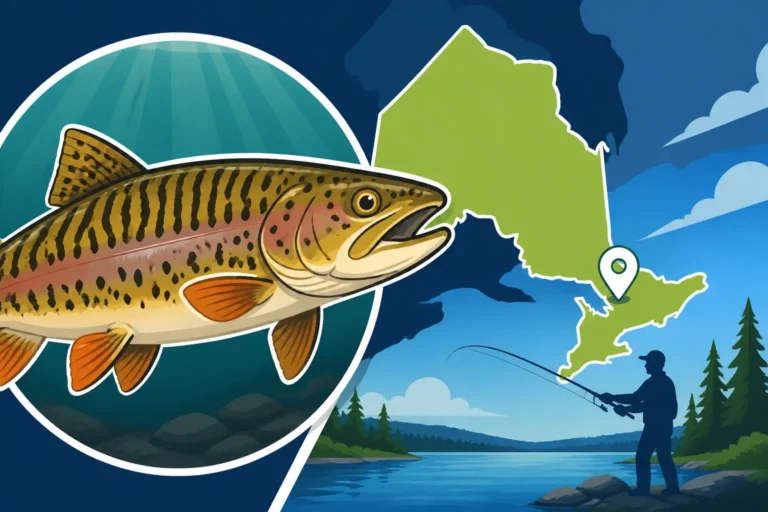
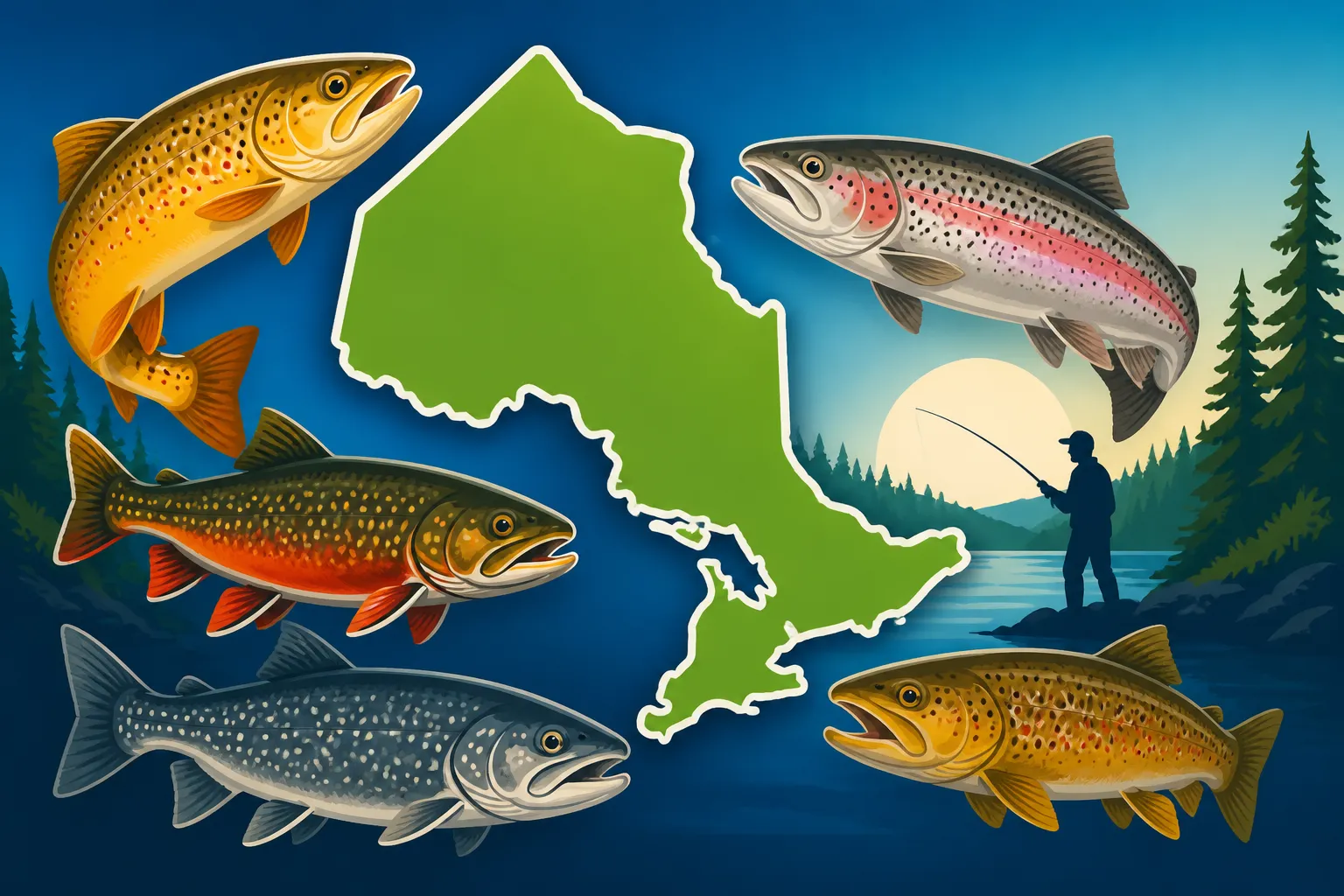
First up, we have the majestic Brook Trout (Salvelinus fontinalis). Often simply called "brookies," these fish are an absolute jewel of Ontario's wilderness. They are characterized by their worm-like markings (vermiculations) on their backs, red spots (some with blue halos) along their sides, and most distinctly, brilliant white leading edges on their fins, especially the pectoral, pelvic, and anal fins. These vibrant colours often intensify during spawning season, making them truly stunning. Brook trout thrive in cold, clear, highly oxygenated water – think pristine headwater streams, remote spring-fed ponds, and the quiet bays of northern lakes. Finding a wild brook trout in its natural habitat is an experience every angler cherishes. You can learn more about where these beauties naturally roam in Brook Trout Native Range in Ontario.
Then there's the powerful Lake Trout (Salvelinus namaycush), another magnificent native char. These fish are built for deep, cold water, and they are Ontario's largest char species. Lake trout generally have light spots on a darker body, ranging from grey to dark green, and a deeply forked tail, which is a key identifying feature. They are found in many of Ontario's large, deep, oligotrophic (nutrient-poor) lakes, particularly in the Canadian Shield region. Anglers pursue them through the ice in winter and by trolling in deep water during the open water season. They are truly apex predators of the deep. For those dreaming of a trophy laker, our guide on Lake Trout Fishing in Ontario offers a wealth of tips.
Introduced Trout Species in Ontario
While our native char are incredible, Ontario's fishing scene is also enriched by several introduced true trout species that have adapted wonderfully to our waters, offering diverse fishing opportunities right across the province. These species were often brought in to fill niches, provide more recreational fishing, or utilize waters that might not be ideal for native species.
Perhaps the most recognizable and widely distributed introduced species is the Rainbow Trout (Oncorhynchus mykiss). Originally from the Pacific coast of North America, these fish are famous for the iridescent, rainbow-like band along their lateral line, especially noticeable when they’re fresh from the water. They typically have small, dark spots scattered over their back, sides, and tail. Rainbow trout are incredibly popular for stocking programs due to their vigorous fighting ability and willingness to bite. You'll find them in many stocked ponds, rivers, and the Great Lakes, where they become the celebrated "steelhead" – large, migratory lake-run rainbows that offer some of the most exciting river fishing in the spring and fall. For more on where these spirited fish are introduced, check out Rainbow Trout Stocking in Ontario.
Then there's the venerable Brown Trout (Salmo trutta), a European native that has a strong following among dedicated anglers. Brown trout are known for their beautiful golden-brown bodies, adorned with prominent dark spots, often ringed with a lighter halo, and sometimes a few red spots on their sides. Unlike rainbows, their tails are usually unspotted. Brown trout are famously wary and intelligent, making them a challenging quarry. They prefer cool, well-oxygenated rivers with plenty of cover, but can also be found in certain larger lakes. Their cunning nature and often substantial size make them a truly rewarding catch for those who put in the effort. If you're keen to understand the habits of these elusive fish, our resource Brown Trout Habits in Ontario Streams provides excellent insight.
Hybrids and Unique Variations You Might Encounter
Beyond the main native and introduced species, Ontario's waters also hold some fascinating hybrids and unique genetic variations that add another layer of excitement and intrigue to our fishing experience. These aren't just curiosities; they represent remarkable adaptations or deliberate conservation efforts that create truly distinct fishing opportunities.
Splake: A Hybrid Success Story
One of the most interesting and successful stories in Ontario fisheries is the Splake. What exactly is a splake? It's a hybrid fish, a cross between a male Brook Trout and a female Lake Trout. This isn't a natural phenomenon you'd typically find happening widely in the wild; splake are almost exclusively produced in hatcheries for stocking purposes. They combine some of the best characteristics of both parents: they grow faster and larger than brook trout, reach maturity earlier than lake trout, and are more tolerant of a wider range of water conditions than either parent.
Splake have light spots on a darker body, similar to a lake trout, but often retain some of the brighter colouring and the faint worm-like patterns of a brook trout, though usually less pronounced. Their tail is typically not as deeply forked as a pure lake trout's. The primary reason for their creation was to provide a robust, catchable sport fish for lakes that might not be suitable for sustaining either pure brook trout or pure lake trout populations. You'll often find them in mid-sized lakes where they provide excellent ice fishing opportunities and strong open-water action. If you're interested in where these unique fish are stocked, our guide on Splake Stocking in Ontario Lakes is a must-read.
Aurora Trout: Ontario's Rare Gem
The Aurora Trout (Salvelinus fontinalis timagamiensis) is a truly special fish, a unique subspecies of brook trout that is found only in a very small number of lakes in northeastern Ontario. It's a genetic variant that adapted to extremely acidic conditions in specific headwater lakes, particularly in the Temagami region. Unfortunately, these populations were severely impacted by acid rain in the mid-20th century, and the species faced near extinction.
Thanks to dedicated conservation efforts, including strict rotational lake closures and careful management, the Aurora Trout has made a slow but steady comeback. These fish are renowned for their stunning silver-blue colouration, often lacking the vibrant spots of a typical brook trout, with a reddish belly during spawning. Catching an Aurora Trout is a rare privilege, and it comes with very specific regulations designed to protect this critically important population. Anglers must be absolutely sure of their identification and adhere strictly to the rules. To understand the story behind this precious fish and its conservation, explore Aurora Trout: Ontario's Rare Rotational Species.
Other Less Common or Naturally Occurring Hybrids
While splake are a widely recognized and deliberately produced hybrid, there are other, far less common hybrids you might theoretically encounter, though they are usually rare exceptions. One such fish is the Tiger Trout, which is a sterile hybrid between a male Brook Trout and a female Brown Trout. This hybrid is typically created in hatcheries and stocked in some jurisdictions, often for novelty or to provide a put-and-take fishery where natural reproduction isn't desired. They get their name from their striking vermiculated pattern, which resembles tiger stripes across their flanks. While not a common stocked fish in Ontario compared to splake, the possibility, however remote, exists for such a hybrid to occur if conditions were right and both parent species were present. Understanding hybrids helps us appreciate the genetic diversity of our fish. You can delve deeper into these fascinating crosses with What a tiger trout is and whether they are in Ontario.
It's important for anglers to remember that identifying these rare hybrids or even distinguishing between closely related species can sometimes be tricky. Always refer to the most current Ontario Fishing Regulations Summary for detailed identification criteria, especially for species with special limits or protected status. When in doubt, it’s always best to practice catch and release and consult with local experts or Ministry staff.
Where to Find Ontario's Trout and Char Species
Knowing which trout and char species call Ontario home is one thing, but knowing where to find them is the key to a successful fishing trip! Each species has its preferred habitat, dictated by factors like water temperature, oxygen levels, available food sources, and spawning requirements. Understanding these preferences will significantly increase your chances of hooking into your target fish.
Great Lakes Tributaries and Their Migratory Runs
For many anglers, the Great Lakes tributaries are synonymous with exhilarating trout and salmon fishing. Here, you'll primarily find Rainbow Trout (in their magnificent steelhead form) and Brown Trout, along with various salmon species (which, while not technically trout, are often pursued by the same anglers using similar gear and techniques during their spawning runs).
In the spring and fall, these rivers, flowing into Lake Ontario, Lake Huron, Lake Erie, and Georgian Bay, become highways for migratory fish. Steelhead charge upstream to spawn, offering incredible battles on light tackle. Brown trout often follow suit, or lurk in the deeper pools and undercut banks of these larger rivers. This kind of fishing can be fast-paced and requires a good understanding of river dynamics, water levels, and fish behaviour. It's often where anglers find themselves looking for specific fly patterns or the right lure, perhaps even browsing on Amazon for that perfect river-specific gear. For those drawn to the incredible salmon runs, Lake Ontario Salmon Fishing offers a fantastic starting point, as these waters also hold our migratory trout.
Remote Northern Lakes and Rivers
If you're after the true wilderness experience, head north. Northern Ontario is the heartland of our native char species: the Brook Trout and Lake Trout. Here, you'll find countless pristine lakes and rivers that have remained relatively untouched, offering a glimpse into what fishing was like centuries ago.
Remote, spring-fed ponds and small, cold streams often hold vibrant populations of wild Brook Trout. These waters are typically accessed by canoe, portage, or even float plane, requiring a sense of adventure. The fish themselves are often smaller but boast incredible colours and aggressive takes. For Lake Trout, focus on the larger, deeper, oligotrophic lakes of the Canadian Shield. These lakes are cold, clear, and offer vast expanses for lakers to roam. Many of these remote fishing opportunities are found on Crown land, providing incredible solitude. To discover more about these untouched fisheries, explore Brook Trout in Ontario's Crown Land Lakes. Whether you're planning a canoe trip or looking for specialized ultralight rods for brookies, a quick search on Amazon can get you geared up for these adventures.
Stocked Ponds and Urban Fisheries
For those new to fishing, or looking for an accessible, family-friendly option, Ontario also has numerous stocked ponds and urban fisheries. These are primarily populated with Rainbow Trout, sometimes Brook Trout, and occasionally Splake. The goal of these programs is to provide readily available fishing opportunities closer to populated areas.
These spots are fantastic for introducing kids to fishing, practicing new techniques, or simply enjoying a relaxing day on the water without having to travel far into the wilderness. The fish here are often "put-and-take" species, meaning they are stocked to be caught. While they might not offer the challenge of a wary wild brown trout, they provide consistent action and are a great way to enjoy the sport. Always check local regulations for specific stocking schedules and limits for these community fisheries.
Identifying Your Catch: A Quick Guide
Knowing how many trout species live in Ontario is one thing, but correctly identifying the fish once it's on your line is absolutely crucial. Misidentification can lead to inadvertently violating regulations, which are often species-specific regarding bag limits, possession limits, or even slot sizes. Plus, there’s immense satisfaction in knowing exactly what beautiful fish you've just admired!
Key Distinguishing Features for Common Trout and Char
Let's break down some of the most common trout and char species you'll encounter and their primary identifying characteristics. This table should give you a quick reference when you're out on the water.
| Feature | Brook Trout (Char) | Lake Trout (Char) | Rainbow Trout (True Trout) | Brown Trout (True Trout) | Splake (Hybrid Char) |
|---|---|---|---|---|---|
| Body Colour | Dark green/brown back, mottled sides, reddish belly | Grey to dark green back, lighter belly | Silvery, iridescent, distinct pink/red lateral band | Golden brown, sometimes bronze hue | Variable, often darker than brook trout, lighter than lake trout |
| Spots | Light spots (red with blue halos) on darker body, worm-like markings on back | Light spots on darker body (no halos, no red) | Small, dark spots on back, sides, tail, and dorsal fin | Dark spots (some with light halos), few red spots; usually no spots on tail | Light spots on darker body, sometimes faint vermiculations on back |
| Fin Edges | Prominent white leading edges on lower fins (pectoral, pelvic, anal) | No white leading edges, fins dark | No white leading edges, fins dark (sometimes faint) | No white leading edges, fins dark | Usually faint or partial white leading edges on lower fins |
| Tail Shape | Square or slightly emarginate (shallow fork) | Deeply forked | Slightly forked to square | Square to slightly emarginate (no deep fork) | Moderately forked (intermediate between parents) |
| Mouth | Moderate size, extends slightly past eye | Large, extends well past eye | Moderate size, extends to back of eye | Large, extends well past eye | Moderate to large |
This table is a great starting point, but fish can vary in appearance depending on their age, sex, diet, and specific habitat. Sometimes, an experienced eye can tell the difference more quickly. Using a good field guide or even a quick image search on your phone (if you have service!) can be helpful.
Why Accurate Identification Matters
Accurate identification isn't just about showing off your knowledge; it's fundamental to responsible and legal angling in Ontario. Our fishing regulations are meticulously designed to manage specific fish populations, and these rules often vary from one species to another, and even from one water body or fisheries management zone to another.
For instance, the possession limit for Lake Trout might be different from that of a Brook Trout in the same area. There might be slot limits (a size range within which you must release the fish) for certain species like Smallmouth Bass or Walleye that don't apply to others. If you mistakenly identify a protected or rare species, like an Aurora Trout, as a common one, you could be facing serious penalties and, more importantly, harming critical conservation efforts. Always consult the official Ontario Fishing Regulations Explained before heading out, and if you're ever unsure about what you've caught, the safest bet is to gently release it. You can also refer to a comprehensive Trout Species Identification Guide for Ontario for even more detailed information to ensure you're always fishing responsibly and legally.
Disclaimer
This article is for general informational purposes only and does not constitute professional advice. Laws, prices and regulations vary by location and change over time. Consult a qualified professional for guidance on your specific situation.