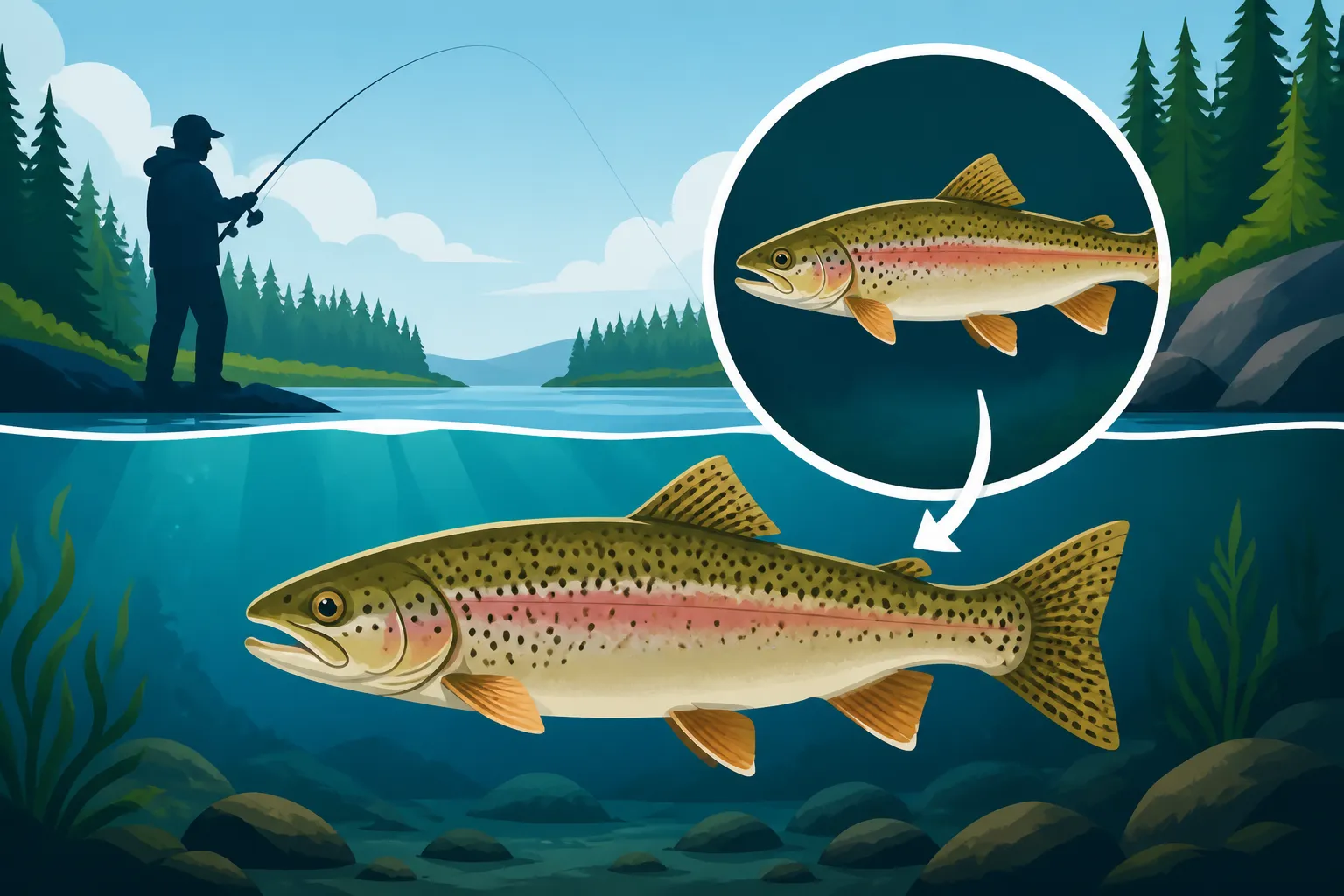
What a holdover trout is
It's a familiar scenario: you head out to a favourite trout stream or lake, hoping to connect with some fish, and while you might catch a few, you also hear whispers of "holdover trout." But what exactly is a holdover trout, and how do they differ from the freshly stocked fish or even native wild trout you might encounter in Ontario? This guide will demystify the concept of holdover trout, help you identify them, and give you the insider knowledge to successfully target these often-wary, hard-fighting fish.
Understanding the "Holdover" Trout Phenomenon
Let's be honest, for many anglers, especially those new to trout fishing, the distinction between different types of trout can be a bit blurry. You know fish are stocked, and you know some rivers have wild populations, but "holdover" often sounds like just another fancy term. However, understanding what makes a holdover trout unique is key to appreciating their resilience and boosting your chances of catching them.
Defining a Holdover: More Than Just a Stocked Fish
At its core, a "holdover trout" is a fish that was stocked by a hatchery but has managed to survive at least one season (typically overwinter) in the wild. Think of it this way: the Ministry of Natural Resources and Forestry (MNRF) or local conservation authorities stock millions of trout across Ontario every year, often to enhance recreational fishing opportunities in lakes and rivers that might not support natural reproduction or to supplement existing populations. Many of these fish are caught shortly after stocking, providing that immediate gratification for anglers. But some, whether by luck, cunning, or simply finding the right conditions, manage to evade capture, adapt to their new environment, and continue to live and grow. These survivors, returning for a second (or even third or fourth!) season, are what we call holdovers. They're no longer the naive, pellet-fed fish released from the truck; they've spent time dodging predators, finding natural food, and experiencing the ebb and flow of a natural waterway.
When you're out on the water, seeing a fish with noticeably worn fins, a more vibrant, natural colouration, and a strong, muscular build, it's a good bet you've encountered a holdover. These fish have truly earned their stripes, graduating from hatchery life to bona fide wild survivors. They're often in much better condition than recently stocked fish, having learned to forage effectively and adapt to natural food sources rather than relying on an easy meal. This survival instinct also makes them much more challenging – and rewarding – to catch.
The Journey from Hatchery to Sustained Survival
The life of a stocked trout begins in a hatchery, a controlled environment where they are fed, protected, and grown to a catchable size. For example, many of the Rainbow Trout Stocking in Ontario efforts involve fish that are a few months to a year old. When these fish are released into an Ontario lake or river, it's a huge adjustment. Suddenly, they're exposed to predators like osprey, kingfishers, larger fish, and even otters. They need to find natural food, like insects, minnows, and crustaceans, instead of the pellets they're accustomed to. They have to contend with changing water temperatures, currents, and natural cover.
The vast majority of stocked trout don't "hold over." They're caught, fall prey to predators, or simply fail to adapt to the wild. But a small percentage, the hardiest and most adaptable, figure it out. They find deep pools, sections with consistent cold water, or areas with abundant cover and food. They learn to be wary of shadows from above (like an eagle or your fly cast!) and vibrations from the bank. These are the fish that successfully navigate their first season, survive the colder months, and emerge stronger and smarter when spring rolls around again. Their ability to adapt and thrive against the odds is truly remarkable and contributes significantly to the quality of fishing in many of Ontario's stocked waters.
How to Spot an Ontario Holdover Trout
Distinguishing a holdover trout from a fresh stocker or a truly wild fish can be incredibly satisfying and tells you a lot about the health of the waterway. It's not always a perfect science, but there are definite indicators you can look for that tell a story of survival and adaptation.
Physical Attributes: Distinguishing Features
When you reel in a trout, take a moment to observe its physical characteristics. Freshly stocked trout, having spent their lives in concrete raceways, often exhibit tell-tale signs. Their fins, especially the dorsal and pectoral fins, might be noticeably frayed, rounded, or even clipped (a common practice in some hatcheries for identification). Their colouration can be somewhat dull or uniform, lacking the vibrant, iridescent hues seen in wild fish. They might also appear a bit "soft" or torpedo-shaped, not yet having developed the lean musculature of a fish that has battled currents and hunted actively.
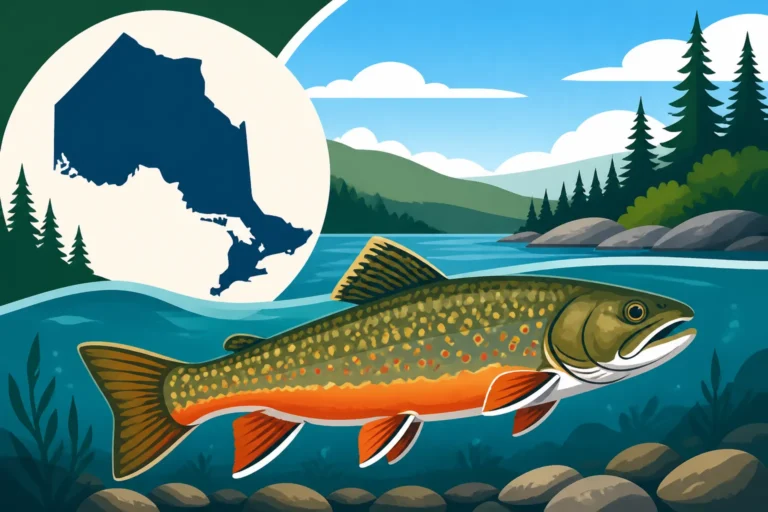
Holdover trout, on the other hand, begin to shed these hatchery characteristics. Their fins, while perhaps still showing signs of their hatchery start, will often be more developed and less frayed, having healed and strengthened in the wild. Their bodies will typically be firmer, more streamlined, and powerfully muscled, a testament to their active hunting and swimming. Most notably, their colouration will be much more vibrant and natural. A rainbow trout, for instance, will display deeper red bands and more pronounced spotting. A Brook Trout in Ontario's Crown Land Lakes holdover will have incredibly striking vermiculation patterns and bright red or orange bellies. These changes are a direct result of their diet of natural forage, exposure to sunlight, and the stresses of living in a wild environment. They’ve gone from factory farm chicken to free-range, and it shows!
Consider this table for a quick comparison:
| Characteristic | Freshly Stocked Trout | Holdover Trout | Wild Trout |
|---|---|---|---|
| Fins | Often worn, frayed, rounded, or clipped | Recovering, more defined, less frayed | Intact, sharp, well-formed |
| Colouration | Dull, uniform, often paler | Brighter, more vibrant, natural patterns | Intense, distinct, species-specific hues |
| Body Shape | Softer, sometimes "doughy" | Leaner, firmer, muscular, streamlined | Sleek, powerful, highly athletic |
| Spots/Markings | Less pronounced | More distinct, often richer pigmentation | Highly defined and contrasting |
| Gills | Sometimes pale | Healthy, bright red | Healthy, bright red |
| Jaw/Mouth | Often rounded | More pointed, sometimes shows wear from feeding | Sharp, predatory |
Behavioural Patterns and Preferred Habitats
Beyond physical appearance, the behaviour of a holdover trout is a huge clue. Freshly stocked fish are often disoriented and less wary. They might school tightly, respond aggressively to almost any bait or lure, and be relatively easy to approach. They haven't yet learned to associate shadows with danger or the subtle vibrations of a fisherman walking the bank.
Holdover trout, conversely, are much more cautious. They've learned from experience. They'll hold in prime lies offering cover and easy access to food, such as deep pools, undercut banks, logjams, or beneath overhanging vegetation. They are less likely to chase a lure across open water and more likely to strike only when the presentation is perfect and natural. You'll often find them tucked into structure, waiting for an unsuspecting insect drift by or a small minnow to swim too close. They won't expose themselves unnecessarily and require a more stealthy and patient approach from the angler. These fish are survival artists, and their wariness is a testament to their success. They've seen it all, or at least enough to be suspicious, making them a true trophy for those who understand their habits.
Best Waters and Conditions for Ontario Holdover Trout
If you're specifically hoping to catch a holdover trout in Ontario, you need to understand where they're most likely to thrive. It's not just about where the fish are stocked, but about the quality of the environment they're introduced into.
Critical Factors for Trout Survival Beyond Stocking
For a stocked trout to become a holdover, the waterbody needs to provide specific conditions that mimic a natural trout habitat. The absolute most critical factor is water temperature. Trout, especially species like rainbow, brook, and Brown Trout Habits in Ontario Streams, require cold, oxygen-rich water to survive, particularly through the warmer summer months. Lakes with deep, cold thermoclines or rivers with spring-fed tributaries and consistent cool flows are prime candidates. Without these thermal refuges, stocked fish simply won't survive the summer heat, no matter how tough they are.
Beyond temperature, food availability is crucial. Holdovers transition from hatchery pellets to a diet of insects, crustaceans, and small baitfish. Waters with a healthy invertebrate population (mayflies, caddisflies, stoneflies), sculpins, or minnows offer the sustained nutrition needed for growth and survival. Plenty of cover, such as fallen trees, submerged boulders, undercut banks, and overhanging bushes, provides protection from predators and strong currents. Finally, water quality, including adequate oxygen levels and minimal pollution, is non-negotiable. Waters that are too silty, acidic, or nutrient-poor won't support robust populations of holdovers. Understanding Ontario Fisheries Management Zones, Explained can also give you insight into which areas are managed for coldwater species and thus more likely to produce holdovers.
Identifying Prime Ontario Lakes and Rivers
Ontario boasts numerous waters that, due to their natural characteristics or dedicated management, offer excellent potential for holdover trout. Many of the rivers known for Best Fly Fishing Rivers in Ontario, particularly those in Southern Ontario like the Grand or Credit, have sections that are routinely stocked but also possess sufficient coldwater inputs and habitat to allow some fish to overwinter. These rivers often have a mix of fresh stockers, holdovers, and even some wild-reproducing fish in their upper reaches.
In terms of lakes, look for deep, oligotrophic (nutrient-poor, oxygen-rich) lakes, especially those with colder tributary inflows or springs. Many lakes within provincial parks or those in the Canadian Shield region of Central and Northern Ontario fit this description. These lakes might be stocked with Lake Trout Fishing in Ontario or brook trout, and some of the smaller, less pressured ones can yield impressive holdovers. When scouting new spots or researching an area, always look for reports of natural springs, deep water, and a diverse insect population. Websites like the Ministry of Natural Resources and Forestry (MNRF) or local conservation authority sites often have stocking reports and information on waterbody characteristics, which can be invaluable resources in your quest for holdovers. Always remember to check Ontario Fishing Regulations Explained for any specific rules concerning the waterbody you plan to fish.
Targeting Holdover Trout: Techniques and Tackle
Successfully catching a holdover trout requires a shift in mindset and tactics from simply reeling in a freshly stocked fish. These fish are smarter, warier, and demand a more refined approach.
Elevated Caution: Why Holdovers Are Smarter
Imagine being released into an unfamiliar, wild environment where everything wants to eat you, and you're surrounded by strange, unpalatable food. That's the life of a freshly stocked trout. The ones that survive do so because they quickly learn what's dangerous and what's edible. They become incredibly attuned to their surroundings. Loud noises, heavy footsteps on the bank, a boat motor roaring overhead, or even the flash of your fishing line can send them darting for cover. They’ve likely seen many baits and lures drift by, developing a keen sense of what looks "off."
This elevated caution means your approach needs to be stealthy. Think like a hunter, not just a fisherman. Wear subdued clothing. Approach the water slowly and quietly. Stay low and use natural cover like bushes or trees to break up your silhouette. Make longer casts to avoid spooking fish in shallower water. Minimize splashes and sudden movements. In short, treat every cast as if you're trying to fool a genuinely wild, intelligent creature – because with a holdover, you essentially are. They're not just looking for a meal; they're constantly assessing risk, and any deviation from naturalness will put them on high alert.
Essential Gear and Strategies for Success
When it comes to tackle for holdovers, finesse is often the name of the game. Light spinning gear with a sensitive rod and a smooth reel spooled with light fluorocarbon or monofilament line (4-6 lb test is usually plenty) is ideal. Fluorocarbon, in particular, is a great choice because it's virtually invisible underwater, which can be a huge advantage when dealing with wary fish. You can find excellent fluorocarbon lines and a wide range of sensitive rods and reels on Amazon that are perfect for this type of fishing.
For fly anglers, a 3-5 weight fly rod setup with a good quality floating line and a long leader (9-12 feet) tapered down to a fine tippet (4x-6x) will allow for delicate presentations. If you're serious about Fly Fishing for Trout in Ontario, having a selection of tippet sizes is crucial. You might also want to check out resources like Best Gear for Ontario Trout Fishing for more detailed recommendations.
Baits and Lures:
- Natural Baits: While some anglers prefer artificials, natural baits can be incredibly effective for holdovers, as they perfectly mimic what the fish are already eating. Worms (red wigglers, nightcrawlers), small minnows (where legal), or even a grasshopper in season, presented naturally with minimal weight, can be irresistible.
- Small Spinners and Spoons: Inline spinners (e.g., Mepps, Rooster Tail) in natural colours (silver, gold, black) or small spoons (e.g., Little Cleo, Krocodile) can be highly effective. The key is to keep them small (1/16 oz to 1/8 oz) and retrieve them slowly, allowing them to flutter enticingly. Again, you can browse a wide array of options on Amazon.
- Jigs: Small marabou jigs or plastic grub tails on light jig heads (1/32 oz to 1/8 oz) can imitate nymphs or small baitfish. Drifting them along the bottom or jigging them subtly in deeper pools can trigger strikes.
- Flies: For fly fishing, having a diverse fly box is essential. Focus on realistic imitations of local insects:
- Nymphs: Pheasant Tail Nymphs, Hare's Ear Nymphs, Prince Nymphs are year-round producers.
- Dries: During hatches, match the prevalent insect (caddis, mayflies). Small Parachute Adams, Elk Hair Caddis, or attractor patterns can work.
- Streamers: Woolly Buggers or small sculpin patterns can imitate baitfish, especially in deeper water or after a rain.
Tactical Considerations:
- Presentation is Paramount: Whether using bait or lures, a natural, subtle presentation is key. Avoid heavy weights that make your bait plunge unnaturally. Cast upstream and allow your offering to drift naturally with the current, mimicking an unattached food source.
- Focus on Structure: Holdovers will be in areas with cover and food. Cast to logjams, undercut banks, deep pockets behind boulders, and current seams. If you spot a fish, don't cast directly on top of it; try to present your bait or lure a few feet upstream and let it drift into the fish's strike zone.
- Patience and Persistence: You might not get as many bites as with fresh stockers, but the ones you do get are likely to be from stronger, healthier fish. Be patient, make numerous casts to likely spots, and be prepared to move around until you find them.
- Consider the Conditions: On bright, sunny days, holdovers will often be deeper or in shaded areas. On overcast days or during low light (dawn/dusk), they might be more willing to move into shallower feeding lanes.
- Gear Check: Before heading out, make sure your Best Waders for Ontario Trout Streams are in good shape and your Best Fly Rods for Ontario Trout Streams is properly rigged. The details matter when you're after these wary fish. For quick and convenient access to fishing line, leader material, or even a new pair of polarized sunglasses, Amazon is often a reliable place to start your search.
Catching an Ontario holdover trout is a rewarding experience that signifies you've truly outsmarted a fish that has beaten the odds. It’s a testament to the fish’s resilience and your skill as an angler!
Disclaimer
This article is for general informational purposes only and does not constitute professional advice. Laws, prices and regulations vary by location and change over time. Consult a qualified professional for guidance on your specific situation.