Where American eel travel in Ontario rivers
The American eel is one of Ontario's most enigmatic and fascinating fish species, undertaking a truly incredible journey that few other creatures can match. For many of us who love spending time on Ontario's waters, the idea of these serpentine swimmers making such an epic migration can feel almost mythical, especially when their numbers have faced significant challenges. This guide will take you deep into the migratory paths of the American eel through Ontario's rivers, exploring where they go, why their journey is so unique, and the hurdles they face along the way.
The Epic Journey of the American Eel
Imagine a fish that travels thousands of kilometers, crossing vast oceans and intricate freshwater systems, all to complete its life cycle. That's the American eel, a species with a migratory pattern that truly sets it apart. Their journey through Ontario's rivers is just one leg of an astonishing, multi-year odyssey that spans the North Atlantic.
From Sargasso Sea to Ontario's Freshwater
The story of the American eel begins not in Ontario, but far out in the Atlantic Ocean, within a vast, warm region known as the Sargasso Sea. This is their sole known spawning ground. Here, adult eels — called silver eels — gather to reproduce, and after spawning, they sadly die. Their tiny, leaf-shaped larvae, known as leptocephali, then begin an epic drift across the Atlantic, carried by ocean currents towards the North American coastline. This oceanic journey can take months, sometimes even over a year, before they transform into tiny, transparent "glass eels" as they approach freshwater estuaries.
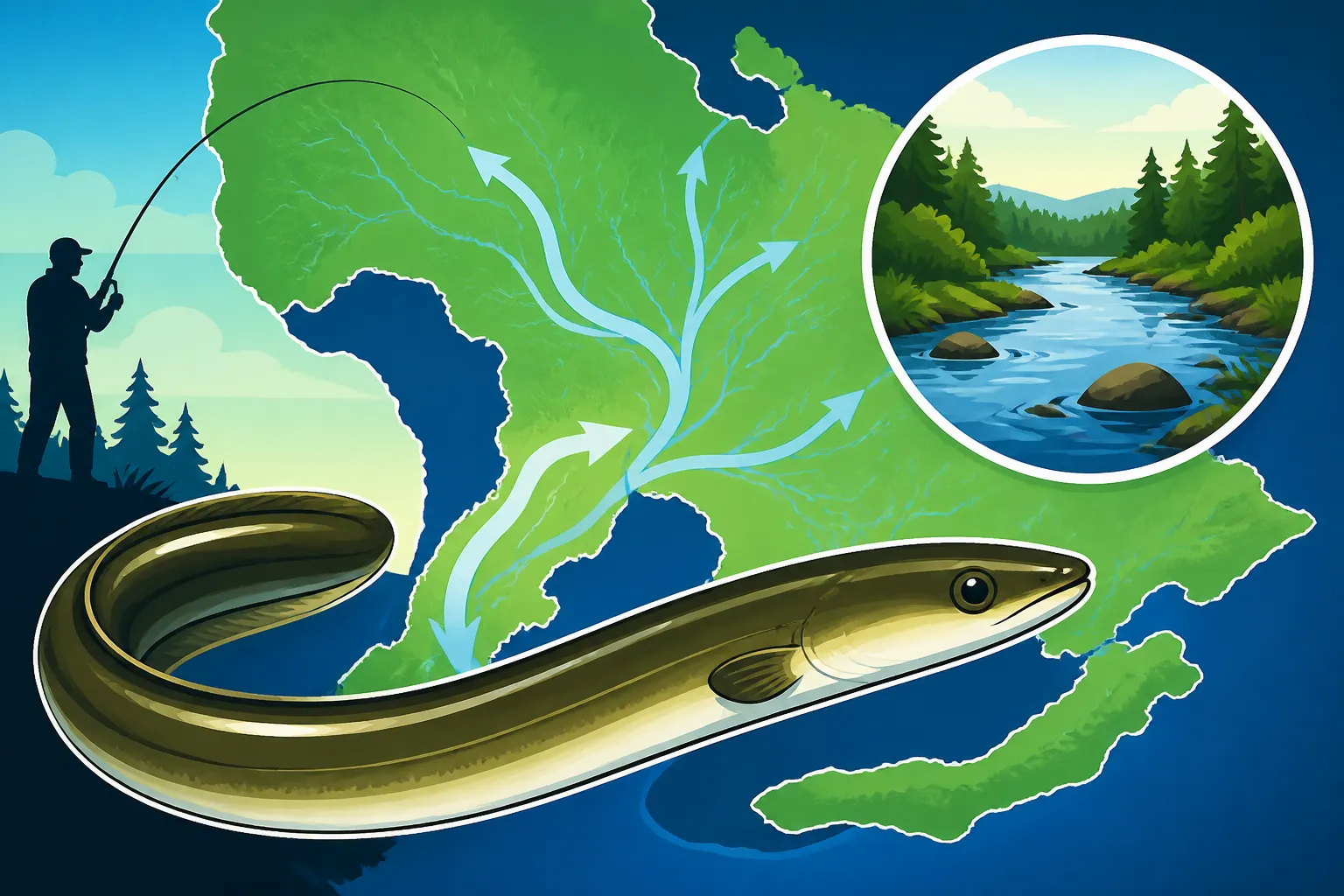
Once they hit the coastal waters, these glass eels further develop into "elvers," which are essentially juvenile eels, still small but beginning to resemble the adult form. It's at this stage that their drive to find freshwater habitats truly kicks in. They push upstream, navigating incredible distances up rivers and tributaries. For the American eels destined for Ontario, this means entering the mighty St. Lawrence River system from the Atlantic Ocean. Their initial entry is just the start; they have a long, arduous swim ahead of them, pushing against currents, climbing over obstacles, and finding their way into the vast network of lakes and rivers that make up inland Ontario. It’s a remarkable feat of endurance and instinct, driven by an innate need to find suitable feeding and growth grounds.
Life as a Yellow Eel in Ontario Rivers
Once these determined elvers successfully reach a freshwater environment, they settle in and transform into what are known as "yellow eels." This is the primary growth phase, and it's where they spend the majority of their lives in Ontario's rivers, lakes, and even some smaller ponds. A yellow eel's skin takes on a yellowish-brown hue, and they grow considerably, sometimes reaching impressive lengths and girth. During this stage, they are opportunistic predators, feeding on a wide variety of aquatic insects, crustaceans, small fish, and even carrion. They are nocturnal hunters, often hiding during the day in mud, under rocks, or in dense vegetation, emerging at night to forage.
The yellow eel stage can last for many years – sometimes over a decade, or even two or three decades in colder, northern waters. This extended residence in Ontario's waters allows them to mature and build up the energy reserves needed for their eventual return migration. They become an integral part of the freshwater ecosystem, acting as both predator and prey, contributing to the balance of their environment. During these years, they might move around quite a bit within a localized river system, exploring new feeding grounds or finding deeper, cooler waters as seasons change. It's during this phase that many anglers might encounter them, though they are often a surprising catch for those targeting other species.
The Return Migration: Silver Eels Head Home
After many years of growing and maturing in Ontario's rivers, a profound transformation occurs. The yellow eels develop into "silver eels," preparing for their epic journey back to the Sargasso Sea. This isn't just a color change; it's a complete physiological shift. Their eyes enlarge to adapt to deep-sea conditions, their digestive system atrophies (they stop eating), and their skin thickens and darkens to a silvery-black, providing better camouflage for their oceanic voyage. Their internal organs also change, preparing them for the rigors of spawning.
This migration from Ontario's rivers typically occurs in late summer and fall, often under the cover of darkness and during periods of high water flow, which helps carry them downstream. They reverse their upstream journey, navigating back through the same river systems, down the St. Lawrence River, and out into the Atlantic Ocean. It's a one-way trip, fueled entirely by the energy reserves they built up as yellow eels. Their instinct to return to their ancestral spawning grounds is incredibly powerful, compelling them to overcome any remaining barriers on their downstream path. This downstream migration is just as perilous, if not more so, than their upstream journey, as they must evade predators and navigate human-made obstacles to reach the ocean and complete their incredible life cycle. It's a testament to nature's enduring cycles, even as modern challenges make each leg of the journey increasingly difficult.
Key Ontario Waterways and Their Role
When we talk about where American eels travel in Ontario, we're really talking about a specific, interconnected network of waterways. Their journey is dictated by the massive St. Lawrence River system, which provides the critical highway for their migration into the heart of the province.
The Mighty St. Lawrence and Great Lakes Connection
For American eels to reach Ontario, their primary entry point is through the St. Lawrence River. This immense river acts as the main artery, connecting the Great Lakes to the Atlantic Ocean. Glass eels and elvers, having arrived from the Sargasso Sea, first enter the St. Lawrence estuary and then begin their determined upstream migration. This means they pass through areas like Quebec before entering Ontario's portion of the river. The St. Lawrence is not just a transit route; it's also a significant habitat in itself, offering rich feeding grounds and refuge for yellow eels.
From the St. Lawrence, eels historically dispersed widely into Lake Ontario and beyond, utilizing its vast waters and tributaries. While the main St. Lawrence River is crucial, the eels don't stop there. Their migratory instinct pushes them further inland. From Lake Ontario, they would historically spread into its many feeder rivers and streams. This means rivers like the Cataraqui River near Kingston, the Trent River, and even smaller creeks connected to the Great Lake system once saw vibrant eel populations. They are incredibly adaptable and can be found in diverse aquatic environments, from the deep, vast expanse of Lake Ontario to the shallower, warmer waters of its various bays and connecting river systems. The sheer scale of this connected system allowed for a wide distribution across Southern and Eastern Ontario. If you're looking to learn more about the intricate regulations of fishing in these diverse areas, you might find information in Ontario Fisheries Management Zones, Explained.
Navigating Ontario's Tributaries and Smaller Rivers
Once within the Great Lakes basin, American eels would then access an even broader range of habitats by pushing into the countless tributaries and smaller rivers that feed into the larger lakes. Imagine the effort involved: an eel might swim up the St. Lawrence, enter Lake Ontario, then find its way into the mouth of a smaller river like the Rideau River, and then continue upstream for many more kilometers, potentially reaching various lakes and ponds within that watershed. They are known for their ability to bypass small obstacles, sometimes even wiggling overland short distances through wet grass to reach isolated bodies of water. This incredible ability allowed them to colonize nearly every accessible freshwater system in Eastern and Southern Ontario that connects to the St. Lawrence/Great Lakes.
Historically, rivers like the Ottawa River and the French River were important pathways for eels, connecting them to expansive inland areas. Their presence helped to shape the local ecosystems, as they were often apex predators in their freshwater habitats. While their ability to navigate these systems is impressive, it also means they are vulnerable to disruptions at many points along their journey. Understanding the specific habits of eel species, including what they look like and where they historically resided, can be crucial for appreciating their current conservation status. For a deeper dive into their appearance and general habitat, check out What American eel look like and where they live.
Here's a quick look at some key Ontario rivers eels historically traveled:
| River System | Primary Connection | Historical Significance | Current Status & Eel Presence |
|---|---|---|---|
| St. Lawrence River | Atlantic Ocean | Main migratory highway for all eels entering the Great Lakes basin. Provides vital habitat. | Still the main entry point, but upstream passage is severely impacted by dams. |
| Ottawa River | St. Lawrence River | Historically, a significant tributary allowing eels to access vast areas of Eastern Ontario. | Eel numbers significantly reduced, primarily due to damming on the St. Lawrence and within the Ottawa system itself. |
| Trent River | Lake Ontario | Part of the Trent-Severn Waterway, once offering extensive upstream access into central Ontario. | Passage is fragmented by numerous locks and dams. |
| Moira River | Bay of Quinte/Lake Ontario | Provided access to inland lakes and streams in the Belleville area. | Eel numbers drastically lower due to habitat changes and migration barriers. |
| Rideau River | Ottawa River | Enabled eels to spread into the Rideau Lakes system. | Affected by the same barriers as the Ottawa River and St. Lawrence. |
| French River | Georgian Bay/Lake Huron | Allowed eels to reach the upper Great Lakes system from Lake Ontario (via Lake Huron). | Still present, but in much reduced numbers, with significant challenges for upstream migration due to dams on the St. Lawrence. |
This table provides a glimpse into the once-extensive reach of American eels across Ontario's diverse river landscapes.
Obstacles and Conservation Efforts
The incredible journey of the American eel is fraught with peril, and their historical abundance in Ontario has seen a dramatic decline over the past few decades. Understanding the challenges they face is the first step towards appreciating the importance of conservation.
Dams and Other Migration Barriers
One of the most significant and devastating obstacles for American eels, particularly in Ontario and the St. Lawrence system, is the proliferation of dams. Think about it: an elver, sometimes only a few inches long, instinctively trying to swim upstream, only to encounter a massive concrete wall blocking its path. Hydroelectric dams, navigation locks, and even smaller barriers built for various purposes have fragmented their migratory routes, effectively cutting off large portions of their historical habitat.
The Moses-Saunders Dam, for instance, located on the St. Lawrence River between Massena, New York, and Cornwall, Ontario, has been a particularly notorious bottleneck. While efforts have been made to install eel ladders or passages, these are often not 100% effective, especially for the sheer volume of eels that once migrated. Upstream passage becomes incredibly difficult, if not impossible, for many, preventing them from reaching the nutrient-rich freshwater habitats they need to grow and mature. On the downstream journey, silver eels attempting to return to the Sargasso Sea face an even grimmer challenge: passing through hydroelectric turbines, which can cause significant mortality. This "two-way" barrier effect of dams is a major reason for the dramatic decline in eel populations in the Great Lakes basin. These are critical issues discussed in more detail within resources like Endangered and Protected Fish Species in Ontario.
Understanding Their Declining Numbers
The impact of these barriers, coupled with other factors, has led to a significant and concerning decline in American eel numbers throughout Ontario and the entire St. Lawrence River system. It's not just dams; habitat loss due to development, pollution from various sources affecting water quality, and even changes in ocean currents and conditions can play a role. Historically, American eels were a culturally significant food source for Indigenous peoples and were also commercially fished. While commercial fishing has been largely curtailed due to declining stocks, the cumulative effects of decades of environmental changes have taken a severe toll.
The mystery surrounding their life cycle, particularly their oceanic spawning, makes understanding and managing their populations incredibly complex. Scientists monitor their numbers, often counting elvers at various points along their journey, but the overall trend has been a stark decrease. This decline is a stark reminder of how interconnected our ecosystems are, and how human activities in one area can have far-reaching impacts on species that undertake such vast migrations. Losing the American eel would mean losing a unique and vital part of Ontario's aquatic biodiversity.
What's Being Done to Help
Despite the challenges, there are ongoing efforts to help the American eel in Ontario. Conservation initiatives primarily focus on improving passage at dams and monitoring populations. "Trap and transfer" programs, for example, involve capturing eels below dams and physically transporting them upstream to suitable habitats. While labor-intensive, these programs offer a direct way to bypass major barriers. Additionally, research into more effective eel passage technologies, like improved eel ladders and fish-friendly turbines, continues.
There's also a strong emphasis on international cooperation, as the American eel's migratory path crosses multiple jurisdictions in Canada and the United States. Organizations and government agencies work together to coordinate monitoring efforts and conservation strategies across the entire St. Lawrence and Great Lakes basin. Anglers also play a role; awareness of their protected status and respecting fishing regulations is crucial. If you're curious about specific rules, you can find more information in Ontario Fishing Regulations Explained. Learning about these efforts, perhaps through books or documentaries found on platforms like Amazon, can help foster a greater appreciation for these incredible creatures.
How Anglers Can Help (Even if Not Targeting Eels)
Even if you’ve never specifically fished for an American eel, and frankly, they’re not a primary target species for most recreational anglers in Ontario these days, we all have a role to play in their conservation. Every time you cast a line, launch a boat, or even just enjoy the beauty of an Ontario river, you're part of that ecosystem.
Respecting Habitat and Regulations
The most direct way anglers can help is by understanding and respecting the habitats where eels might still exist. While their numbers are greatly reduced, they are still present in many of Ontario’s rivers and lakes. This means being mindful of water quality, properly disposing of garbage, and avoiding the introduction of invasive species, which can compete with eels for food and habitat. Anglers should also be familiar with current fishing regulations. While eels aren't typically a targeted species in Ontario, there are specific rules about their capture and possession due to their vulnerable status. Always consult the most recent Ontario fishing regulations summary to ensure you're in compliance.
Accidentally catching an eel can happen, especially when bait fishing for other bottom-dwelling species. If you do, handle it with care. Eels are notoriously slippery and can be difficult to unhook. Use a wet towel or gloves to minimize harm to their protective slime coat, and release them as quickly and gently as possible. A good pair of long-nosed pliers, which you can easily find on Amazon, can be invaluable for quickly and safely removing hooks from any fish you intend to release, including an accidental eel. Every little bit of respectful interaction helps these resilient creatures.
Learning More About Ontario's Aquatic Ecosystem
Beyond direct actions, a crucial step for any angler or outdoor enthusiast is to deepen their understanding of Ontario's rich aquatic ecosystems. The American eel's story is just one of many fascinating narratives unfolding beneath the surface of our rivers and lakes. Learning about other migratory fish, like Lake Sturgeon in Ontario Rivers, or understanding the dynamics of specific fisheries, such as the St Lawrence River walleye fishing access, helps to build a holistic appreciation for the challenges and interconnectedness of aquatic life.
There are many excellent resources available for those who want to learn more. Local conservation authorities often have educational programs or online information. Books on Ontario's fish species, aquatic biology, or the history of its waterways can be a fantastic way to expand your knowledge. You can find a wide selection of such field guides and natural history books through online retailers like Amazon. The more we know, the more informed and passionate advocates we become for the health of our waters and the incredible creatures that call them home. Understanding the journey of the American eel truly highlights the importance of keeping our rivers healthy and accessible for all aquatic life.
Disclaimer
This article is for general informational purposes only and does not constitute professional advice. Laws, prices and regulations vary by location and change over time. Consult a qualified professional for guidance on your specific situation.