What to do if you catch an invasive fish species in Ontario
It’s a scenario no angler wants to encounter: you feel a strong tug, reel in your catch with anticipation, and then realize the fish on your line looks… different. Not in a good way, but in a way that signals something is off, something potentially harmful to our beloved Ontario waters. This guide is here to walk you through exactly what to do if you find yourself face-to-face with an invasive fish species, ensuring you’re prepared to protect our native ecosystems.
Understanding Invasive Fish Species in Ontario
When we talk about fishing in Ontario, we're usually celebrating the incredible diversity of native species that make our lakes and rivers so vibrant. But lurking beneath the surface, and sometimes right on the end of your line, are species that don't belong here. These "invasive" fish are more than just an anomaly; they pose a serious threat to the delicate balance of our aquatic environments.
Defining "Invasive" vs. "Non-Native"
First, let's clarify some terms. A "non-native" species is simply one that isn't originally from a particular ecosystem. Think of it like a new neighbour moving into the community – they're from somewhere else, but they might integrate just fine. For fish, a brown trout in an Ontario stream is non-native, but it generally coexists without causing widespread ecological collapse.
An "invasive" species, however, is a non-native species that causes harm to the environment, economy, or human health. These are the problem neighbours who throw loud parties every night, trash the lawn, and generally make life miserable for everyone else. In the aquatic world, invasive fish outcompete native species for food and habitat, introduce diseases, disrupt food webs, and can even alter the physical environment. They often reproduce rapidly and lack natural predators in their new home, allowing their populations to explode unchecked. It's a critical distinction to understand, because how we respond to catching one depends entirely on whether it's merely non-native or truly invasive.
Why Invasive Fish Are a Problem for Ontario's Ecosystems
The impact of invasive fish species on Ontario's precious freshwater ecosystems cannot be overstated. When an invasive species establishes itself, it’s like throwing a wrench into a finely tuned machine. Our native fish, accustomed to certain food sources, predators, and habitats, suddenly face intense competition from a species that evolved in a different system and often has an unfair advantage.
For instance, species like the Round Goby are voracious eaters, consuming the eggs and young of native fish, including valuable sportfish like walleye and smallmouth bass. They also compete directly with sculpins and darters, small native fish that are crucial components of the food web. This competition can lead to declining native fish populations, which in turn impacts the entire food chain, from the smallest invertebrates to larger predatory birds and mammals. Beyond direct competition, some invasive species can introduce new parasites and diseases that native fish have no natural immunity to. They can even alter water quality and habitat structure, further degrading the environment for indigenous species. It's a domino effect that can lead to significant biodiversity loss and fundamentally change the character of our beloved fishing spots. The ongoing efforts for Sea Lamprey Control in the Great Lakes highlight just how much effort and resources are required to manage these destructive invaders.
How to Identify a Potentially Invasive Fish
Identifying an invasive fish can sometimes be tricky, especially if you’re not familiar with the species or if it closely resembles a native counterpart. However, being able to recognize these unwelcome guests is the first crucial step in protecting our waters. It's not about being an ichthyologist, but about having a keen eye and knowing where to look for key characteristics.
Common Invasive Fish in Ontario to Watch For
Ontario is home to several well-established invasive fish species, and new ones are always a concern. Knowing the "usual suspects" is a great starting point for any angler. Here are a few of the most prevalent ones you might encounter:
- Round Goby: Perhaps the most notorious invasive fish in the Great Lakes system and many inland waters. They are small, typically under 25 cm, with a large head, prominent eyes, and a distinctive single, fused pelvic fin that resembles a suction cup on their underside. They are typically mottled brown and grey. They are incredibly aggressive and displace native bottom-dwellers. For more detailed information, see Round Goby: Ontario's Invasive Great Lakes Fish.
- Zebra and Quagga Mussels: While not fish, these invasive mussels are often found attached to fishing gear and can significantly impact fish habitats by altering water clarity and nutrient cycling. They are small, striped, and sharp.
- Asian Carps (Bighead, Silver, Grass, Black Carp): These are perhaps the biggest concern for future invasions. While not widely established in Ontario's open waters yet, they are on the doorstep and pose an enormous threat due to their size and voracious appetites. They are large, deep-bodied fish. Silver Carp are known for leaping out of the water when startled. Grass Carp have distinct, almost segmented scales.
- Tench: A European species that has established itself in some southern Ontario waters. They have very small scales, tiny red eyes, and often two small barbels at the corners of their mouths. They are typically olive-green to dark brown.
- Rudd: Another European cyprinid, often confused with golden shiners. They have reddish fins, especially the pelvic and anal fins, and a pronounced keel on their belly between the pelvic and anal fins. They are often found in stagnant or slow-moving waters.
This is by no means an exhaustive list, but these are some of the most critical ones for anglers to be aware of.
Key Identification Features and Resources
When you land a fish that looks unfamiliar, take a moment to observe it closely before handling it. Look for distinct physical characteristics that set it apart from common native species.
Key Features to Examine:
- Fin Structure: Are the fins fused? Are there unusual spines? What colour are they?
- Mouth and Barbels: Does it have whiskers (barbels) around its mouth? What shape is its mouth?
- Scale Pattern: Are the scales large or small? What's the overall colouration and pattern?
- Body Shape: Is it deep-bodied, elongated, or flattened?
- Eye Position: Are the eyes large and prominent, or small?
Don't be afraid to take a clear photograph from multiple angles. This can be invaluable for identification later.
Reliable Resources:
- Ontario's Fishing Regulations Summary: This document, which you should always have access to (either digitally or physically), often has sections dedicated to identifying invasive species and the rules surrounding them. Reading the Ontario Fishing Regulations Summary is essential.
- Online Identification Guides: The Ontario government, conservation authorities, and reputable fishing organizations often publish comprehensive guides online.
- "Fish ON-Line" App/Website: The Ministry of Natural Resources and Forestry (MNRF) has resources that can help.
- Field Guides: Carrying a compact freshwater fish identification guide can be a huge asset. You can find excellent options on platforms like Amazon that are specific to North American freshwater species.
Remember, if you're unsure, it's always better to err on the side of caution. An uncertain identification is still a reason to proceed with the "Catch, Kill, Report" protocol until confirmed otherwise.
Step-by-Step: What to Do When You Catch an Invasive Species
So, you’ve reeled in something that looks like it definitely doesn't belong. Now what? The worst thing you can do is simply toss it back, hoping for the best. That’s how invasive populations continue to spread. There’s a very specific protocol to follow, and adhering to it is crucial for protecting Ontario’s native fish and aquatic habitats.
The "Catch, Kill, Report, Don't Release" Mandate
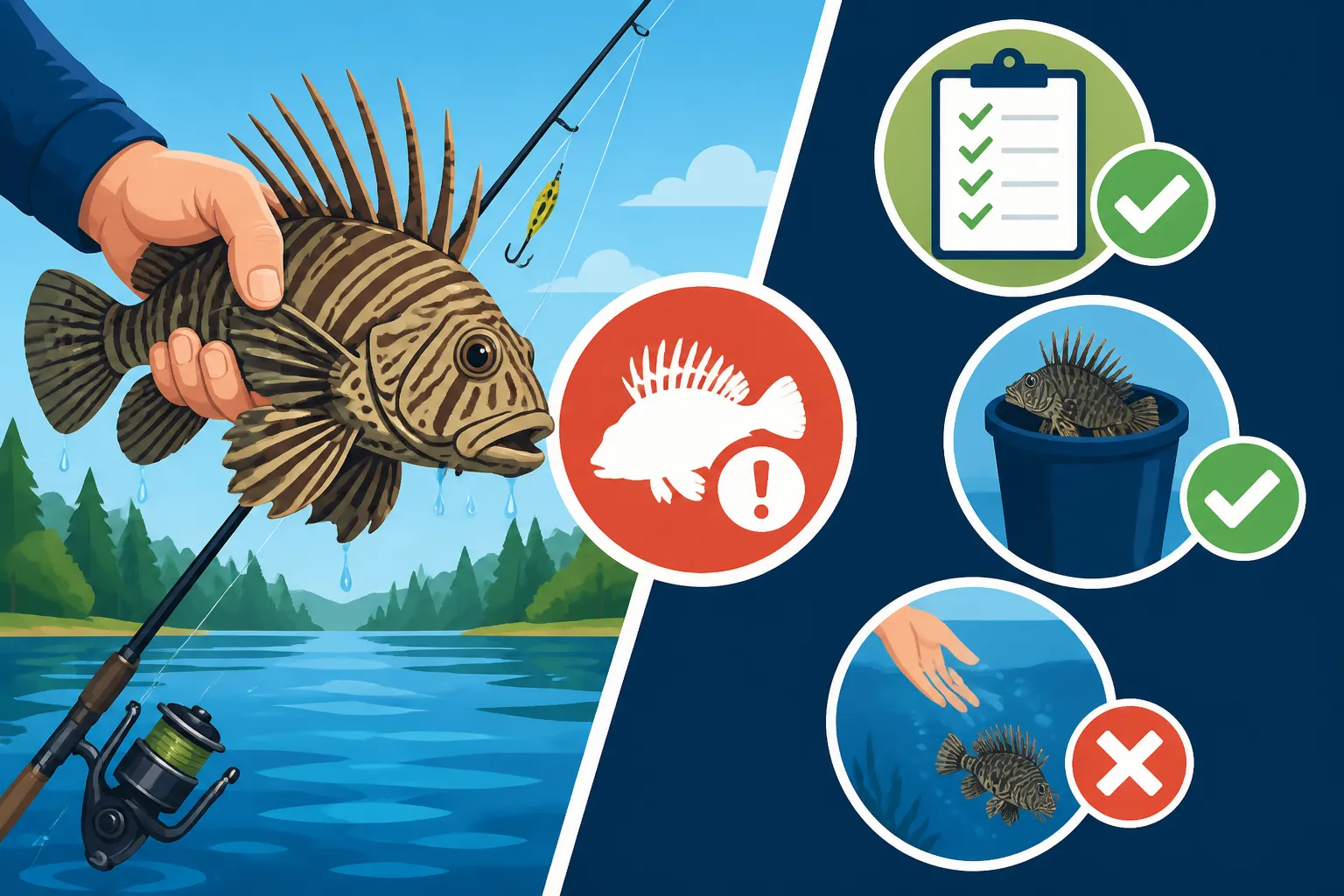
This is the golden rule when it comes to invasive fish species in Ontario: Catch, Kill, Report, Don't Release. It's a simple, memorable mantra that outlines your responsibilities as a responsible angler.
- Catch: Obviously, you've already done this step! Bring the fish to shore or into your boat. Do not let it slip back into the water, even accidentally.
- Kill: This is often the hardest part for many anglers, especially those committed to catch-and-release fishing. However, for known invasive species, it is your duty to humanely kill the fish. This prevents it from reproducing further and continuing its destructive impact. A sharp blow to the head with a blunt object, or quickly severing the spine behind the head, are common humane methods. This differs drastically from rules around native species, where conservation often dictates careful release, especially in Ontario Catch and Release Only Waters.
- Report: Once the fish is dispatched, the next critical step is to report your catch. This provides vital data to authorities who are tracking the spread of invasive species. It helps them understand where these invaders are establishing themselves and can inform management strategies. We'll dive into how to report in the next section.
- Don't Release: This cannot be stressed enough. Never, under any circumstances, release an invasive fish species (or any non-native species for that matter, unless it's a legal sportfish like a rainbow trout that you intend to keep and consume). Releasing it, even if you think it's "just one fish," contributes directly to the problem. It's a key part of Ontario Fishing Regulations Explained concerning invasive species.
This mandate applies to all known invasive species. If you’re unsure, lean on the side of caution and follow these steps. It’s better to kill and report a potentially invasive fish than to release a confirmed one.
Safe Handling and Disposal
Handling an unfamiliar fish always warrants a degree of caution, and this is especially true for invasives. Once you've made the decision to humanely kill the fish, proper disposal is essential to prevent further spread.
Safe Handling:
- Protection: Some invasive species, like the Round Goby, have sharp spines. Always handle them carefully, ideally with gloves or a rag to protect your hands. A good pair of fishing pliers, readily available on Amazon, can also help unhook the fish safely without direct hand contact.
- Containment: Once killed, place the fish in a sealed plastic bag or a dedicated container. This prevents any potential eggs or larvae from escaping back into the water body or being spread to other locations. You might even consider having a designated "invasive species bag" in your tackle box, just in case.
Disposal:
- At Home: The best place to dispose of an invasive fish is at home, in the garbage. Double-bagging it and placing it in your municipal waste bin ensures it won't contaminate other water sources.
- Avoid Waterways: Never, ever, dispose of an invasive fish back into any body of water, including ditches, ponds, or other lakes and rivers. This defeats the entire purpose of killing it and could inadvertently introduce the species to a new location.
- Burying: If you are in a remote area, far from waste disposal, burying the fish well away from any water source and deep enough to prevent scavengers from digging it up can be an alternative.
- Eating? Generally, it is not recommended to eat invasive species due to potential contamination issues or simply because they may not be palatable. Always check the specific regulations for any species. For instance, while some carp are eaten in other cultures, the consumption of Asian Carps is usually discouraged in Ontario due to their unknown dietary habits in our waters and potential for bioaccumulation.
Reporting Your Catch and Why It Matters
Reporting your catch is a critical step that often gets overlooked, but it's where you truly become a citizen scientist protecting our waters. This data is gold for researchers and management teams.
How to Report:
- Invading Species Awareness Program: This is the primary channel for reporting invasive species in Ontario.
- Online: Visit the EDDMapS Ontario website. This user-friendly platform allows you to upload photos and location details directly.
- Phone: Call the Invading Species Hotline. They can guide you through the reporting process and answer any immediate questions you might have. The contact details are usually found in the Ontario Fishing Regulations Explained summary or on the government's invasive species websites.
- Ministry of Natural Resources and Forestry (MNRF): For very serious or confirmed sightings of new or highly dangerous invasive species, you might also contact your local MNRF office. Their contact information can often be found through a quick search or listed with license agents, as seen in the Ontario Ministry of Natural Resources license agent list.
- Information to Provide: When reporting, be prepared to share:
- Date and Time of Catch: As accurate as possible.
- Precise Location: GPS coordinates are ideal, but a clear description (e.g., "north end of Lake Simcoe, near the public boat launch on XYZ Road") is also helpful.
- Species Identification: Your best guess, or a clear photo for confirmation.
- Number of Individuals: If you caught more than one.
- Your Contact Information: In case they need more details.
Why It Matters:
Every report, even if it's for a species already known to be in an area, helps authorities track population trends, identify new areas of concern, and evaluate the effectiveness of management efforts. Your single report might be the first indication that a new invasive species has entered a waterway, allowing for rapid response and potentially preventing widespread establishment. It's a direct way for recreational anglers to contribute to conservation beyond just following the Ontario Fishing Regulations Explained.
Preventing the Spread: Beyond Your Catch
Dealing with an invasive fish on your line is one thing, but preventing their spread is a continuous responsibility that extends to every fishing trip. Anglers are often unwitting vectors for invasive species, unknowingly carrying them from one water body to another. By adopting a few simple habits, you can become a crucial line of defence.
Clean, Drain, Dry Your Gear
This three-word mantra is arguably the most powerful tool we have against the spread of aquatic invasive species. It applies to everything that touches the water – your boat, trailer, fishing rods, tackle, waders, and even your boots.
- Clean: Before leaving any water body, thoroughly inspect and remove all visible aquatic plants, animals, and mud from your boat, trailer, fishing gear, and waders. Think about the tiny fragments of vegetation or a single, small invasive mussel that could be clinging to your anchor or prop. A stiff brush is a great asset here. Some anglers even keep a dedicated brush and spray bottle solution in their vehicle, perhaps a small portable cleaning kit easily purchased on Amazon, to tackle this task right at the boat launch.
- Drain: Ensure all water is drained from your boat (livewells, bilge, transom, motor), bait buckets, and any other water-holding devices before leaving the launch. Invasive species, their eggs, or larvae can survive in even small amounts of residual water. This is particularly important when moving between different Ontario Fisheries Management Zones, Explained, as rules can sometimes differ and you want to prevent cross-contamination.
- Dry: This is perhaps the most effective step for many invasive species, as they cannot survive prolonged periods out of water. Allow all equipment to thoroughly dry for at least 5 days (or as long as practically possible) before using it in another water body. If drying isn't an option due to frequent trips, consider high-pressure washing with hot water. The sun and air are natural disinfectants, but time is key. For items like waders, hanging them inside out and ensuring boots are completely dry, even in crevices, is vital. This attention to detail extends to things like your Best Tackle Box Setup for Ontario Anglers – make sure any lures or tools that touched the water are also dried.
Adopting the Clean, Drain, Dry protocol as a routine part of every fishing trip is a simple but incredibly impactful way to protect our lakes and rivers.
Responsible Bait Use and Disposal
Bait can be another significant pathway for invasive species, and careless practices can quickly lead to new introductions.
- Know Your Bait: Be aware of what you're using. Never use live bait that could potentially be an invasive species or introduce disease. For instance, some minnow species that are invasive elsewhere could be accidentally mixed in with legal bait from other regions. Always purchase bait from reputable local sources that adhere to provincial regulations.
- Dispose of Bait Properly: Never release unused bait (live or dead) into any water body. This includes minnows, worms, or even baitfish parts.
- Live Bait: If you have live bait left over, either keep it in a closed system (like an aerated bait bucket with treated water) to use on the same water body, or dispose of it in the trash. Never transport live bait from one water body to another, as this is how many invasive minnow species are spread. This is often covered in detail within the Ontario Boating Laws for Anglers.
- Dead Bait: Similarly, dispose of dead bait and any bait packaging in the trash. The contents of your bait bucket should never be emptied into a lake or river, as it could contain eggs, larvae, or small organisms that become the next invasive problem.
- Artificial Lures: While less of a direct vector, ensure your artificial lures are free of debris between uses, especially if you’re fishing in waters known to have specific invasive weeds. Keeping a small towel or rag handy to wipe down lures and lines is a good habit.
By being diligent with your gear and thoughtful about your bait, you contribute immensely to the health and biodiversity of Ontario's fishing heritage. Every angler plays a role in keeping our waters pristine.
Disclaimer
This article is for general informational purposes only and does not constitute professional advice. Laws, prices and regulations vary by location and change over time. Consult a qualified professional for guidance on your specific situation.