Best Tackle for Ontario Walleye
It can be incredibly frustrating to stand on the dock or sit in your boat, watching other anglers pull in walleye after walleye, while your own line remains stubbornly still. It often feels like a secret club, where everyone else knows the handshake. The truth is, walleye fishing in Ontario, while rewarding, definitely benefits from having the right tackle for the job. This guide is here to demystify what tackle truly works for Ontario walleye, from the finesse presentations on calm lakes to the heavy-duty gear needed for big waters.
Understanding Walleye Habits and How They Influence Tackle Choices
Before we even get into specific gear, it’s crucial to understand a bit about what makes walleye tick. These fish aren't like aggressive bass that'll smash anything that moves; they're often more subtle, light-sensitive, and stick to structure. Knowing their general behaviour patterns across Ontario's diverse waters is the first step to choosing tackle that will actually entice them, rather than just spook them. Everything from your lure colour to the type of line you use can be influenced by how these fascinating fish behave.
Walleye Vision and Lure Color/Action
Walleye have fantastic low-light vision, which is why they're often most active during dawn, dusk, or on cloudy days, and why night fishing for them can be so productive. Their eyes are specially adapted to gather light, and in deeper or stained water, this gives them a distinct advantage over their prey. This means that while bright colours might be appealing to us in the tackle shop, they're not always the best choice for a wary walleye. Sometimes a more natural, subtle presentation is key, especially in clear water or during bright daylight hours.
However, in darker, stained, or turbid water, brighter or fluorescent colours can become more visible to them, acting as a beacon in the murk. The action of your lure is just as important. Walleye are ambush predators, often preferring a bait that either mimics an injured forage fish or one that's easy to track and consume without expending too much energy. Slow, methodical retrieves are often more effective than erratic, fast ones, especially when the water is cold or the fish are lethargic. You're trying to appeal to their predatory instinct without overwhelming their cautious nature.
Structure and Cover Preference
Walleye are absolute devotees of structure and cover. Think rock piles, submerged humps, weed lines, drop-offs, points, and even old submerged timber. These features provide them with ambush points to hide from predators and to surprise prey, as well as offering shelter from bright sunlight. Understanding this preference fundamentally changes how you approach fishing for them. It means your tackle needs to be able to get down to these depths, navigate potential snags, and present your bait effectively within these complex environments.
If you're fishing a deep-water hump in Lake Erie, for instance, you'll need heavier jigs or trolling rigs to stay in the strike zone. If you're working a weed edge in a smaller inland lake, weedless presentations might be your best friend. The type of line you use, the strength of your rod, and the specific lures you select are all directly impacted by the underwater topography you're targeting. This is where a good fish finder and detailed lake maps become invaluable, helping you pinpoint those walleye magnets.
Seasonal Movements and Forage
Walleye movements are highly seasonal and driven largely by water temperature and the availability of their preferred forage. In spring, after ice-out, they'll congregate in shallower spawning areas, often in rivers or rocky shoals. This means lighter jigs and soft plastics, or small crankbaits, might be effective. As summer progresses, they'll typically move to deeper, cooler waters, often suspending over open water or relating to deeper structures where baitfish like smelt or shiners are abundant. This is prime time for trolling with crankbaits or deep-water jigging.
In the fall, as water temperatures drop again, walleye often become more aggressive, feeding heavily in preparation for winter. They'll move back shallower to chase baitfish, making a variety of presentations, from jigging to casting large crankbaits, highly effective. Knowing what the walleye are likely feeding on in a given season, and where that forage is located, allows you to "match the hatch" with your lure choices in terms of size, shape, and colour. Different stages of the season demand different tactics, and thus, different tackle.
Essential Rod and Reel Setups for Ontario Walleye
Having the right rod and reel combo can make all the difference between feeling that subtle walleye bite and just thinking you're snagged on the bottom. Walleye bites can be incredibly light, sometimes just a slight "tick" or added weight on your line. You need a setup that's sensitive enough to detect these nuances, yet strong enough to handle a decent fight, especially when a big greenback decides to test your gear. The diverse techniques employed for walleye fishing—jigging, trolling, casting, slip-bobbering—each have their preferred rod and reel characteristics.
Spinning Combos for Finesse and Jigging
For many walleye anglers in Ontario, a medium-light to medium power spinning rod, typically 6'6" to 7' in length, paired with a sensitive spinning reel, is the go-to setup. This combination excels at vertical jigging, casting light jigs with soft plastics, or using slip bobbers. The rod's sensitivity comes from its fast or extra-fast action tip, which allows you to feel those delicate bites while still having enough backbone to set the hook firmly. The longer length helps with casting distance and line control, especially when you need to keep your bait away from the boat in clear water.
When it comes to the reel, a size 2000 or 2500 spinning reel is generally perfect. You want one with a smooth drag system, which is crucial for fighting walleye, particularly when they make those powerful runs at the boat. The retrieve ratio should allow for a steady, controlled retrieve, which is often preferred for jigging presentations. A good quality spinning combo will not only enhance your fishing experience but also significantly improve your hook-up ratio by transmitting even the faintest of bites right to your fingertips. Many anglers find great options at a local tackle shop or through online retailers like Amazon.
Baitcasting Setups for Trolling and Heavier Baits
While spinning gear handles finesse, baitcasting setups are the workhorses for other walleye techniques, particularly trolling with heavier crankbaits or using bottom bouncers and crawler harnesses. A medium to medium-heavy power baitcasting rod, often 7' to 8'6" in length, is ideal for these applications. The extra length helps spread out multiple lines when trolling and absorbs the shock of heavy lures or fish strikes. The backbone of a baitcaster provides the leverage needed to pull large diving crankbaits through the water and handle the force of a walleye hitting a trolled bait.
For the reel, a sturdy baitcaster with a smooth, powerful drag and a good line capacity is essential. A lower gear ratio (around 5:1 or 6:1) can be beneficial for trolling, providing the torque needed to reel in deep-diving lures without excessive effort. Higher gear ratios might be preferred for casting larger crankbaits or spinnerbaits where faster retrieves are occasionally needed. Line counters on baitcasting reels are incredibly popular for trolling, allowing you to precisely replicate presentations by knowing exactly how much line you have out. This consistency is key when you find a productive depth.
Rod Action, Power, and Length Considerations
Choosing the right rod involves understanding action, power, and length. "Action" refers to where the rod bends. A fast action rod bends mostly in the tip, offering excellent sensitivity and quick hook sets, ideal for jigging. A moderate action rod bends more towards the middle, providing a softer landing for casting, better for absorbing strikes when trolling, and preventing hooks from tearing out of a walleye's mouth. "Power" refers to the rod's strength or backbone, describing how much weight it can handle. A medium-light rod is great for smaller jigs and lighter lines, while a medium or medium-heavy is better for larger lures, heavier line, or battling bigger fish.
Rod length impacts casting distance, leverage, and presentation control. Longer rods (7'6" to 9') are fantastic for trolling, allowing you to spread lines and absorb boat movement, as well as for long casts from shore or for slip-bobber fishing. Shorter rods (6' to 6'6") offer more precision and sensitivity, making them popular for vertical jigging directly below the boat. The optimal choice often comes down to the specific technique you plan to use most often. For a versatile all-around setup, a 6'6" or 7' medium-power, fast-action spinning rod is a fantastic starting point for many Ontario walleye adventures.
The Walleye Angler's Line & Leader Arsenal
Your line and leader are the direct connection between you and the fish, and a weak link here can mean the difference between a trophy walleye in the net and a heartbreaking tale of "the one that got away." Walleye are known for their sharp gill plates and sometimes abrasive mouths, so choosing the right line for strength, sensitivity, and abrasion resistance is paramount. Ontario's varied fishing conditions, from clear inland lakes to current-laden rivers, further emphasize the need for a versatile line arsenal.
Braided Line for Sensitivity and Strength
Braided line has revolutionized walleye fishing, especially for jigging and bottom contact presentations. Its primary advantage is its incredibly low stretch, which provides superior sensitivity. You'll feel every subtle bump, tick, and even the lightest of walleye bites, transmitting that information directly to your rod tip. This sensitivity is a game-changer when walleye are finicky or holding in deep water. Braided line also boasts exceptional strength-to-diameter ratio, meaning you can use a thinner, stronger line, which helps with casting distance and cutting through current.
However, braided line is highly visible, which can be an issue in clear water or with wary walleye. It also lacks abrasion resistance compared to fluorocarbon. For these reasons, it's almost always paired with a fluorocarbon leader. When spooling up with braid, a pound test range of 8-15 lbs is common for walleye. Lighter braids (8-10 lb) offer more finesse, while heavier (15 lb) are great for deeper water, heavier jigs, or areas with more snags. Brands like Power Pro or Sufix are popular choices among Ontario anglers, and you can often find a great selection at Bass Pro Shops.
Fluorocarbon Leaders for Stealth and Abrasion Resistance
Given the high visibility of braided line and the wary nature of walleye, a fluorocarbon leader is practically non-negotiable for most techniques. Fluorocarbon's key advantage is its near-invisibility underwater due to its similar refractive index to water. This makes your presentation much stealthier, crucial for enticing cautious walleye, particularly in clear water or during bright conditions. Beyond stealth, fluorocarbon offers excellent abrasion resistance, which is vital when fishing around rocks, submerged timber, or in areas with zebra mussels that can quickly fray other lines.
The length and strength of your fluorocarbon leader will vary depending on the conditions and technique. For jigging, a leader of 3-6 feet is common, connected to your braided main line with a strong knot like a double uni or FG knot. For trolling, longer leaders (10-20 feet) might be used to keep the main line away from the lure. Leader pound test typically ranges from 6-12 lbs. Match it to your main line and the size of the walleye you're targeting. A slightly heavier leader can offer added insurance against break-offs, especially in snaggy areas.
Monofilament for Give and Trolling
While braid and fluorocarbon have gained popularity, monofilament still has its place in the walleye angler's toolkit, particularly for certain applications. Monofilament's inherent stretch is its defining characteristic. This "give" can be advantageous when trolling with crankbaits, as it acts as a shock absorber, helping to prevent hooks from tearing out of a walleye's mouth during a hard strike or head shake. The stretch also makes it more forgiving for beginner anglers who might be prone to overly aggressive hook sets.
Monofilament is also generally more affordable than braid or fluorocarbon and is easy to tie. However, its stretch reduces sensitivity, making it less ideal for feeling light bites when jigging. It's also more visible than fluorocarbon and has less abrasion resistance than either braid (for cutting power) or fluorocarbon (for scuffing). For trolling, especially with planer boards, a good quality monofilament in 10-14 lb test can be very effective, offering a cost-effective and manageable option for presenting lures over large areas.
Top Walleye Lures for Ontario: Jigs, Rigs, and Baits
When it comes to lures for Ontario walleye, the options can seem endless. Every angler has their favourites, and tackle shops are packed with lures promising to be the next big thing. However, a few classic categories consistently produce walleye across the province, year after year. Understanding when and how to deploy these different types of lures is key to consistent success. From subtle jigs to aggressive crankbaits, each has its time and place, often dictated by season, depth, and the mood of the fish.
Jigs: Vertical, Jigging Raps, and Hair Jigs
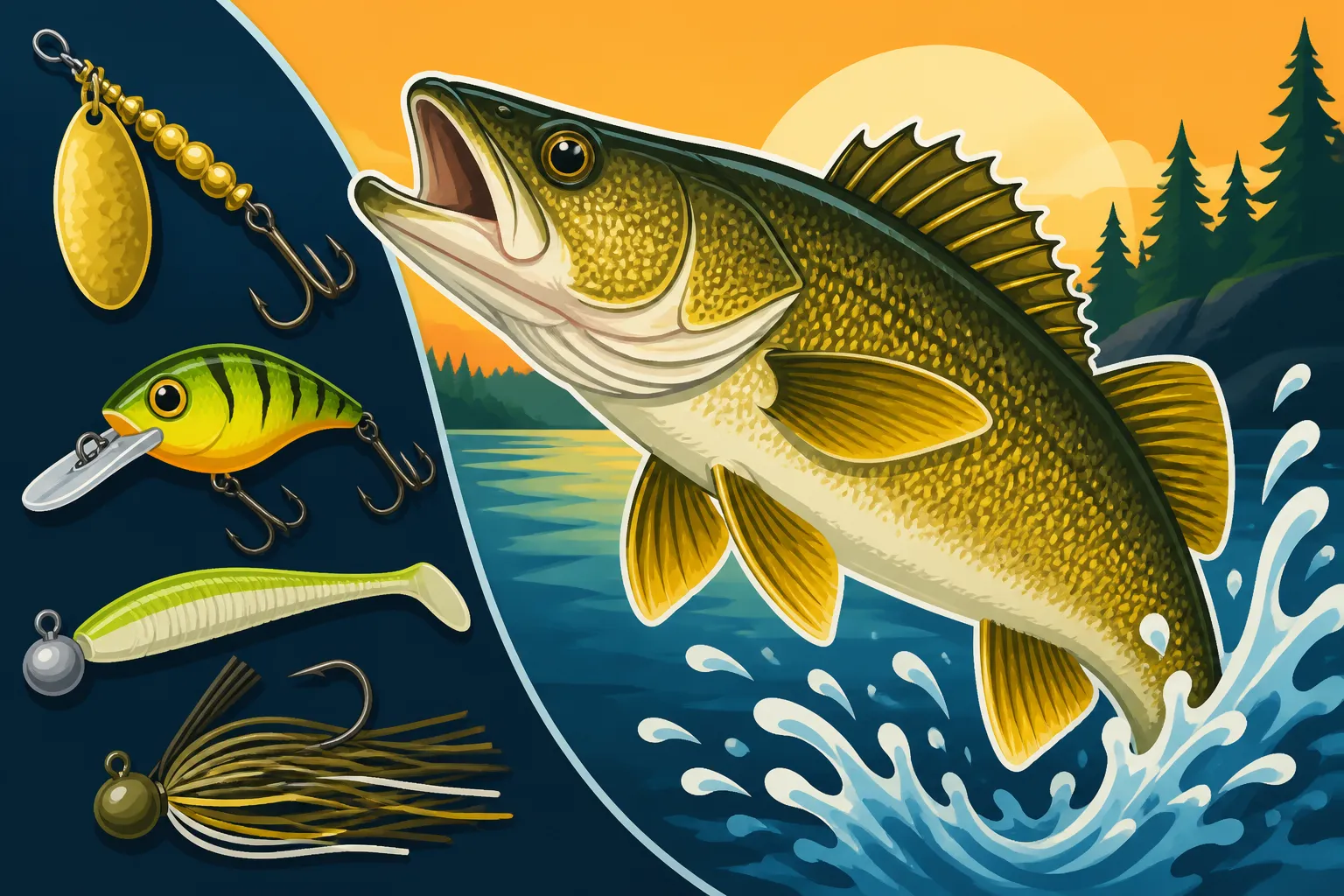
Jigs are arguably the most versatile and effective lures for walleye. The classic lead-head jig, tipped with a minnow, leech, or soft plastic, is a staple. Vertical jigging directly below the boat is incredibly effective, especially when walleye are concentrated on structure or suspended in specific depths. Jig weights typically range from 1/8 oz in shallow, calm water, up to 1 oz or more in deep water or strong current. Colour choices can be critical, with chartreuse, orange, white, and natural baitfish patterns being popular. The key is a sharp hook and a rhythmic jigging motion that mimics an injured baitfish.
Beyond the classic jig, "Jigging Raps" (or horizontal jigging lures from various brands) have become indispensable. These lipless crankbait-like jigs are fished vertically and have an erratic, circling action on the fall, often triggering reaction strikes. They excel through the ice and in open water, especially when fish are aggressive. Hair jigs, often overlooked, are fantastic for cold water or finicky walleye. Their subtle breathing action of marabou or bucktail can be incredibly enticing, particularly when tipped with a small minnow. Varying your retrieve speed and pauses is critical with all jigging presentations to find what the walleye prefer on any given day.
Crawler Harnesses and Bottom Bouncers
When walleye are scattered over flats or along the edges of structure, especially in summer, a crawler harness paired with a bottom bouncer is a deadly combination. The bottom bouncer, a lead weight designed to 'bounce' along the bottom without snagging, keeps your worm harness in the strike zone. The harness itself consists of a leader, typically fluorocarbon, with one or more hooks and often a spinner blade or two. The spinner blade provides flash and vibration, attracting walleye from a distance, while the live nightcrawler provides an irresistible scent and natural movement.
Trolling or drifting with crawler harnesses allows you to cover a lot of water efficiently, searching for active fish. Adjusting the speed and the size of your bottom bouncer (from 1/2 oz to 3 oz or more) is key to maintaining bottom contact. Popular blade colours include chartreuse, orange, silver, and gold. The beauty of the crawler harness is its simplicity and effectiveness, especially on lakes like Lake Erie or Lake Simcoe where walleye often feed on the bottom. It's a method that consistently puts fish in the boat for many Ontario anglers.
Crankbaits: Diving, Shallow, and Trolling Options
Crankbaits are another powerhouse lure for Ontario walleye, particularly when fish are aggressive, suspended, or spread out, requiring you to cover water quickly. They come in a vast array of shapes, sizes, and diving depths. Shallow-diving crankbaits are excellent for casting near weed lines, rocky points, or over shallow flats, particularly in spring or fall when walleye move up. Medium and deep-diving crankbaits are the bread and butter for trolling, reaching specific depths where walleye are holding.
When trolling, precise depth control is paramount. Using line counter reels, lead core line, or even downriggers helps get your crankbait to the desired depth. Colour patterns mimicking natural forage (perch, shiner, smelt) are always a good bet, as are brighter colours like firetiger or hot pink, especially in stained water or low light. Varying your trolling speed, from slow crawls to faster power-trolls, can often trigger strikes. Brands like Rapala, Reef Runner, and Berkley offer a wide range of effective walleye crankbaits, available at most reputable tackle suppliers.
Spinnerbaits and Blade Baits
While not as universally popular as jigs or crankbaits for walleye, spinnerbaits and blade baits definitely have their moments, particularly when fish are aggressive or when fishing around heavy cover. Spinnerbaits, with their flashing blades and pulsating skirts, create a lot of vibration and visual appeal. They're often fished in shallower water, around weed edges or submerged wood, where their weedless design helps them glide through snags. A slow-rolled retrieve can be deadly, mimicking a baitfish swimming through cover.
Blade baits, on the other hand, are compact, vibratory lures that excel at vertical jigging, especially in current or deeper water. Their intense vibration on the lift and flutter on the fall can trigger powerful reaction strikes. They're fantastic for schooling walleye and can be fished aggressively with sharp snaps of the rod. Silver, gold, and chrome are common colours, but painted blade baits also have their place. Both spinnerbaits and blade baits offer a different profile and action from more common walleye lures, sometimes providing the edge needed on tough days.
| Lure Type | Ideal Conditions | Retrieve Style | Key Advantage |
|---|---|---|---|
| Lead-Head Jig | Deep water, structure, finicky fish | Vertical jigging, slow retrieve | Versatility, finesse, direct bottom contact |
| Jigging Rap | Active fish, ice fishing, reaction strikes | Aggressive snaps, fluttering | Erratic action, triggers reaction bites |
| Hair Jig | Cold water, clear water, subtle presentation | Slow, gentle twitching | Natural appearance, subtle movement, finesse |
| Crawler Harness | Scattered fish, covering large flats | Slow troll/drift (with bouncer) | Scent and natural appeal of live bait, covers water |
| Crankbait | Trolling, suspended fish, aggressive fish | Steady retrieve, varied speed | Depth control, vibration, covers open water |
| Spinnerbait | Weeds, shallow cover, aggressive fish | Slow roll, stop-and-go | Weedless, vibration, flash, reaction strikes |
| Blade Bait | Current, deep water, schooling fish | Vertical snaps, hard lifts | Intense vibration, reaction bites, compact size |
Live Bait: The Undisputed Walleye Magnet
Even with the incredible advancements in artificial lures, there's no denying the power of live bait for walleye in Ontario. Sometimes, nothing can quite replicate the natural scent, texture, and movement of a real, living minnow, leech, or nightcrawler. Live bait presentations often trigger bites when artificials fail, especially when walleye are lethargic, pressured, or facing challenging conditions like cold fronts. Having a good supply of fresh live bait and knowing how to rig it properly is a secret weapon for many successful walleye anglers.
Minnows: Shiners, Dace, and Suckers
Minnows are a classic walleye bait for a reason: they work! Common types used in Ontario include emerald shiners, fathead minnows, dace, and even small suckers. They can be fished in a multitude of ways: hooked through the lips on a plain hook under a slip bobber, slow-trolled on a spinner rig, or, perhaps most effectively, vertical jigged on a plain lead-head jig. The natural frantic swimming action of a lively minnow is often irresistible to a hungry walleye.
When jigging with minnows, a subtle lift-and-drop motion is often all that's needed, allowing the minnow to do most of the work. For stationary fishing, a minnow under a slip bobber in front of a weed line or over a rock pile can be incredibly effective, especially during low light periods. Keeping your minnows healthy and lively in a good aerated minnow bucket is crucial, as a dead or sluggish minnow is far less appealing. The size of the minnow should generally match the size of the walleye you're targeting, with larger minnows for bigger fish.
Leeches: Rigging and Presentation
Leeches are another fantastic live bait, particularly effective during the warmer months. They're incredibly hardy, stay lively on the hook for a long time, and offer a unique, undulating movement that walleye find very attractive. Most anglers use ribbon leeches, hooking them once through the sucker end or just below the sucker. This allows them to swim naturally and enticingly.
Leeches are incredibly versatile. They can be fished under a slip bobber, drifted behind a bottom bouncer, or simply cast out and retrieved slowly. They're especially popular for late spring and summer walleye in many Ontario lakes. When fished with a jig, a simple retrieve with occasional pauses lets the leech do its dance. Keep your leeches cool and hydrated in a leech tamer or a wet cloth, out of direct sunlight, to ensure they remain active throughout your fishing trip. Their slimy texture might take some getting used to, but their effectiveness is undeniable.
Nightcrawlers: Harnesses and Lindy Rigs
Nightcrawlers are the third pillar of walleye live bait, especially when paired with a crawler harness (as discussed earlier) or a "Lindy Rig" style snell. While the crawler harness covers water with its flash and vibration, the Lindy Rig is a more subtle, finesse approach. It involves a walking sinker on your main line, followed by a swivel, and then a long fluorocarbon leader (often 4-8 feet) ending with a snelled hook through a nightcrawler. This setup allows the nightcrawler to drift freely and naturally behind the weight, presenting it in the most appealing way to wary walleye.
Lindy Rigging is best done by slowly drifting or backtrolling along contours, drop-offs, or across flats, keeping just enough tension to feel the bottom. When you feel a bite, it's crucial to "feed" the fish line, allowing it to take the entire nightcrawler before setting the hook with a gentle sweep. Nightcrawlers are particularly effective in slightly warmer water and can be enhanced with various scent additives. Keeping them cool and fresh in a specialized worm container or cooler will ensure they are at their most enticing when it's time to fish.
Terminal Tackle and Accessories: Don't Overlook the Small Stuff
It’s easy to get caught up in the big decisions like rods, reels, and major lure types, but the often-overlooked small components of your terminal tackle are just as critical for success. The humble hook, the right weight, and reliable swivels can make or break your day on the water. Paying attention to these details ensures that your carefully chosen lure or live bait is presented perfectly and that when a walleye bites, you have the best chance of landing it.
Hook Selection for Live Bait and Lures
Choosing the correct hook is paramount. For live bait, you want a hook that is sharp, strong, and sized appropriately for the bait and the fish. Aberdeen hooks, with their long shanks, are excellent for minnows and leeches, as they are thin enough not to harm the bait excessively and make baiting easier. Octopus style hooks (circle hooks or Kahle hooks) are also popular, especially for nightcrawlers on harnesses or Lindy Rigs, as their design often results in fish being hooked in the corner of the mouth, reducing gut hooking and promoting healthy releases. Sizes typically range from #6 to #2, depending on the bait size.
For artificial lures like jigs, the hook is built-in, but its quality still matters. Ensure your jig hooks are razor sharp straight out of the package. For crankbaits and spinnerbaits, quality treble hooks are essential. If your lure comes with flimsy hooks, it's a good idea to upgrade them to stronger, sharper trebles to prevent bent hooks or missed fish. Many anglers opt for brands known for strong, sharp hooks, ensuring they don't lose a trophy walleye due to cheap terminal gear.
Weights and Sinkers for Various Depths
Weights and sinkers are essential for getting your bait or lure to the desired depth and keeping it there, especially in current or wind. For vertical jigging, the weight of your jig head is your sinker. For other applications, a variety of weights are used. Split shots are simple clip-on weights for light presentations, often used with slip bobbers. Bullet weights are commonly used with soft plastics in a Texas rig setup, offering a weedless option.
For trolling or bottom-bouncing, walking sinkers and bottom bouncers are key. Pyramid or bell sinkers are useful for anchoring stationary live bait rigs in current. The general rule is to use the lightest weight possible that still allows you to maintain bottom contact or reach your target depth. Too heavy, and your presentation loses its natural appeal; too light, and you'll be constantly snagged or off-bottom. Having an assortment of weights in your tackle box is a must.
Swivels, Snaps, and Leader Materials
Swivels and snaps serve multiple crucial functions. Swivels prevent line twist, which can be a real headache when using spinner rigs or trolling. Barrel swivels are basic, while ball bearing swivels offer superior anti-twist properties and are often preferred for heavy-duty trolling. Snaps allow for quick changes of lures and rigs, saving valuable fishing time. A snap swivel combines both functions. Using good quality, strong swivels and snaps is important, as a cheap, weak one can fail under pressure.
Beyond these, having a supply of spare leader material, typically fluorocarbon, is vital. We've discussed its importance for stealth and abrasion resistance. Being able to quickly tie a new leader after a break-off or a fish with sharp teeth has frayed your line ensures you're back in the game fast. Carrying a small spool of 8-12 lb fluorocarbon leader and knowing how to tie a good connection knot to your main line (like an FG knot or a double uni) is a skill every walleye angler should master. Don't forget, these small items, while inexpensive, are critical and readily available at stores like Bass Pro Shops or through online platforms.
Outfitting Your Boat (or Shore Kit) for Ontario Walleye Success
Having the right tackle in your hands is only half the battle; supporting that tackle with the right gear in your boat or within your shore-fishing kit significantly increases your efficiency and success. Modern technology and thoughtful organization can make a huge difference in finding fish, getting your bait to them, and landing them safely. Investing in these complementary accessories is just as important as the rods and reels themselves.
Fish Finders and Mapping for Walleye Structure
For boat anglers, a quality fish finder with GPS and mapping capabilities is almost non-negotiable for serious walleye fishing in Ontario. Walleye are structure-oriented, and a good fish finder helps you locate those hidden humps, rock piles, drop-offs, and weed lines that hold fish. Down-imaging and side-imaging technologies provide incredibly detailed views of the underwater world, allowing you to not only see fish but also identify the type of structure they're relating to.
GPS capabilities allow you to mark productive spots, return to them with precision, and follow contour lines. Detailed mapping, often pre-loaded or available as separate chip upgrades, shows you the underwater topography before you even get there, helping you plan your attack. Companies like Lowrance, Humminbird, and Garmin offer excellent units tailored for various budgets. Even for shore anglers, a portable, castable fish finder can provide valuable insights into water depth and structure right off the bank. How to use the Fish ON-Line interactive zone map is another great resource to prepare before you even hit the water.
Landing Nets and Livewells
Once you've hooked that trophy walleye, the battle isn't over until it's in the boat. A proper landing net is essential. For walleye, look for a net with a reasonably wide hoop and a deep basket. Rubberized or knotless mesh is highly recommended as it's gentler on the fish, helping to protect their slime coat and fins, especially if you plan to practice catch and release. It also prevents hooks from getting hopelessly tangled in the net, which is a common frustration with knotted nylon nets. A long handle is beneficial for reaching fish boatside, especially when fishing solo.
If you intend to keep your catch (within legal limits) or participate in a tournament, a well-functioning livewell is crucial for keeping fish alive and healthy. A good livewell should have an aerator to oxygenate the water and a pump to circulate fresh water. Ensuring your livewell is clean and properly maintained will keep your walleye in top condition until you get back to shore or the weigh-in. Always be mindful of Ontario Bag and Possession Limits by Species and local regulations regarding fish retention.
Tackle Storage and Organization
A messy tackle box or boat deck can lead to wasted time, lost lures, and frustration. Efficient tackle storage and organization are key to maximizing your time on the water. Invest in sturdy tackle boxes or bags with adjustable compartments that can be tailored to your specific lure and terminal tackle needs. Clear plastic utility boxes are excellent for separating jigs, crankbaits, hooks, and weights, allowing you to quickly find what you need.
Many anglers prefer tackle bags with multiple utility boxes, making it easy to grab a specific box for a particular technique or species. For boaters, dedicated storage compartments, rod holders, and tool organizers (like pliers, line cutters, and hook removers) keep everything within reach but out of the way. Even for shore fishing, a compact sling pack or backpack that keeps your essential gear organized and accessible can make a world of difference. Proper organization isn't just about neatness; it's about efficiency and readiness for when the bite turns on.
Adapting Your Tackle to Different Ontario Walleye Waters
Ontario is a vast province with an incredible diversity of fishing environments, from the expansive Great Lakes to countless inland lakes and winding rivers. What works wonderfully for walleye in one type of water might be completely ineffective in another. A truly successful walleye angler understands these differences and knows how to adapt their tackle and techniques accordingly. There's no one-size-fits-all solution, but rather a strategic adjustment based on the unique characteristics of each fishing spot.
Great Lakes vs. Inland Lakes
Fishing for walleye on the Great Lakes, such as Lake Erie or Lake Huron, presents different challenges and opportunities than fishing smaller inland lakes. The sheer size and depth of the Great Lakes often necessitate heavier tackle. For instance, trolling with planer boards and large, deep-diving crankbaits or heavy bottom bouncers with crawler harnesses is a dominant technique on Lake Erie, requiring robust rods, reels with significant line capacity, and reliable trolling motors. The walleye here can grow to impressive sizes, demanding strong leaders and durable hooks. Lake Erie Walleye Fishing is a prime example of where specialized tackle thrives.
In contrast, smaller inland lakes might call for a more finesse approach. Vertical jigging with lighter jigs and soft plastics, or slip-bobbering with minnows or leeches, can be incredibly effective when targeting walleye around shallow weed lines or subtle rock piles. Here, a sensitive medium-light spinning rod and lighter line might be more appropriate. While both environments hold walleye, the scale of the water dictates the power and presentation required, meaning you'll likely need distinct tackle setups for each.
Rivers and Current Walleye Fishing
Walleye in rivers, like the Niagara River or parts of the French River, behave differently than their lake-dwelling counterparts. Current is a major factor, influencing their holding positions and feeding patterns. Your tackle needs to be adapted to keep your bait in the strike zone without being swept away. Heavier jigs (often 1/2 oz to 1 oz+) are common for vertical jigging in strong currents, allowing you to maintain bottom contact. Finesse presentations might involve a three-way swivel rig, letting a minnow or worm harness drift naturally behind a heavier lead weight.
Understanding how to read current seams, eddies, and submerged structure is crucial. Bottom bouncing and drift fishing with live bait or current-specific crankbaits can also be highly productive. Your rod should have enough backbone to handle heavier weights and fight fish in strong current, while your line choice needs to balance sensitivity with abrasion resistance against rocks and debris. Drift Fishing for Walleye in Ontario Rivers is a specific technique that highlights the need for specialized gear and an understanding of river dynamics.
Ice Fishing Specific Tackle
When winter descends and Ontario's lakes freeze over, a whole new world of walleye fishing opens up, requiring a specialized set of tackle. Ice fishing rods are much shorter, typically 24-36 inches, offering sensitivity and control in a cramped ice hut or on an open bucket. Paired with small spinning reels (size 500-1000) spooled with low-stretch monofilament or fluorocarbon (4-8 lb), these setups are designed for vertical presentations.
Ice jigs, small spoons, and lipless crankbaits (like Jigging Raps) are prime lures, often tipped with a minnow head or a piece of plastic. A good quality ice auger (power or hand auger), an ice scoop, and a reliable portable fish finder (flasher or LCD unit) are indispensable. An insulated ice hut or shelter, along with warm clothing, ensures comfort during long hours on the ice. Ice Fishing in Ontario is a unique experience that demands specific gear to brave the cold and effectively target walleye under the ice.
Disclaimer
This article is for general informational purposes only and does not constitute professional advice. Laws, prices and regulations vary by location and change over time. Consult a qualified professional for guidance on your specific situation.