Best reel gear ratio for muskie
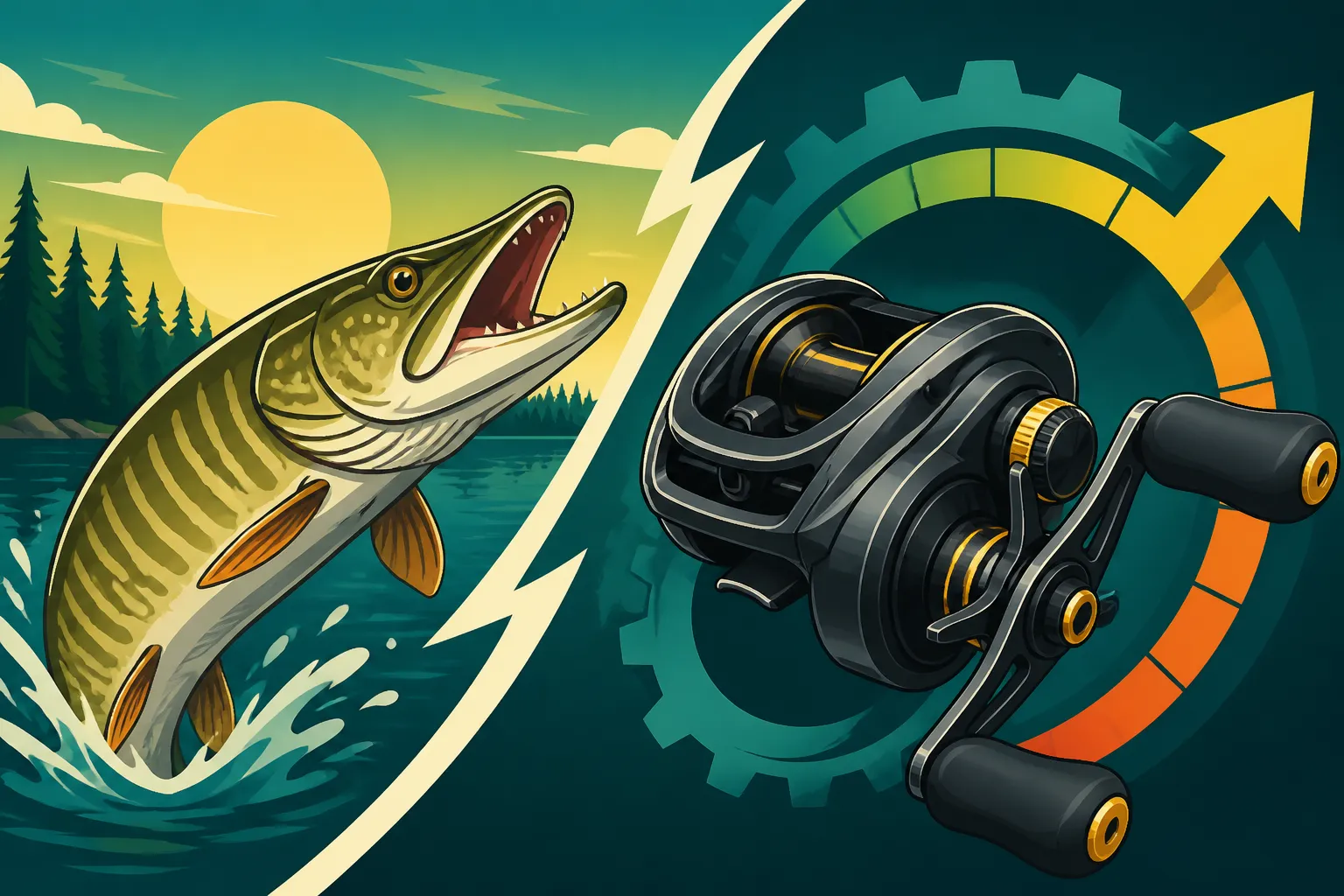
Oh, the age-old debate among muskie anglers – what's the magic number when it comes to reel gear ratios? It’s a common frustration, feeling like you need a degree in engineering just to pick out a reel that can handle these toothy giants and the massive baits we throw. This guide is here to untangle the mystery of reel gear ratios specifically for muskie fishing, helping you choose the perfect match for your tactics and bring more of those elusive fish to the boat.
Decoding Muskie Reel Gear Ratios
Before we dive into the nitty-gritty, let's make sure we're all on the same page about what a gear ratio actually is. In simple terms, it tells you how many times the spool rotates with one full turn of the reel handle. So, if a reel has a 5.3:1 gear ratio, it means the spool completes 5.3 rotations for every single turn of the handle. A higher first number means more line picked up per crank, and a lower number means less. Seems simple enough, right? But the implications for muskie fishing are huge, influencing everything from how a bait performs to how quickly you can react to a strike or pick up slack line.
What the Numbers Mean for Your Retrieve
The gear ratio dictates the speed and power of your retrieve. Imagine trying to crank in a massive bucktail with a super-fast reel; it can feel like trying to pedal a bicycle uphill in its highest gear – a lot of effort for not much power. Conversely, trying to burn a small jerkbait back to the boat with a low-gear ratio reel might feel like you're going nowhere fast. Muskie fishing demands a lot from our gear, and understanding this fundamental concept is the first step to truly optimizing your setup for those big Ontario beasts. It’s not just about how fast the lure moves, but about the torque you can apply and the control you maintain over the bait and the fish.
Why It Matters for Muskie Anglers
Muskie fishing isn't just about big lures and big fish; it's about endurance, power, and precise presentations. You're often throwing heavy baits, battling wind, and, if you're lucky, fighting a fish that will test every component of your tackle. The wrong gear ratio can lead to arm fatigue, lost fish due to inadequate hook sets, or simply an inability to impart the right action to your expensive lures. You'll find a wide array of reels available at places like Bass Pro Shops, each boasting different ratios, and knowing which one suits your style can make all the difference. Picking the right tool for the job can dramatically improve your overall experience and success rate when you're out chasing these apex predators on lakes like Georgian Bay or Lake St. Clair. Muskellunge Fishing in Ontario is a tough game, and every advantage helps.
The Power Play: Low Gear Ratios for Muskie
When we talk about low gear ratios in muskie reels, we're generally looking at anything in the 4.X:1 to low 5.X:1 range, like a 4.6:1 or 5.1:1. These reels are the workhorses of the muskie world, built for torque and raw pulling power. They might not win any speed races, but they'll pull a train if you ask them to.
Handling Heavy Baits and Deep Divers
Think about those monstrous double Cowgirl bucktails, huge crankbaits that dive 20 feet, or weighty glide baits. Trying to reel these in for hours on end with a fast reel is a recipe for shoulder pain and exhaustion. Low gear ratio reels excel here because they provide the necessary leverage to move these heavy offerings through the water with less effort. The lower gear provides a mechanical advantage, allowing you to steadily retrieve even the most resistant lures without feeling like your arm is going to fall off. This is crucial for maintaining consistent retrieves, which can be absolutely vital for triggering strikes, especially when you're trying to replicate a slow, injured baitfish presentation.
Consider a scenario on a large body of water like Lake Nipissing, where you're casting large deep-diving crankbaits along expansive rocky shoals. These lures generate a lot of resistance, and a low gear ratio reel allows you to maintain a steady retrieve, keeping the bait in the strike zone longer without undue strain. It’s about being able to confidently cast and retrieve these heavy lures all day long, knowing your reel has the guts to do the job.
Superior Hooksets and Fish Fighting Leverage
Muskie fishing is known for violent strikes. When a muskie hits, you need to drive a big, stout hook deep into its bony mouth. A lower gear ratio provides more torque for those critical hooksets. You feel that solid thud, lay into the fish with a powerful sweep, and the reel's gears engage to help bury those trebles effectively. There’s nothing worse than a soft hookset on a muskie; it almost always leads to a lost fish.
Once hooked, the fight begins, and muskie are notoriously strong, making blistering runs and head shakes. A low gear ratio reel gives you incredible leverage to winch a big fish away from cover or keep its head turned during a long fight. It's like having power steering for your reel. When a massive muskie decides to make a run under the boat, that extra power can be the difference between turning its head and having it break you off on the keel or trolling motor. For anyone serious about How to Catch Muskie in Ontario, the ability to control a powerful fish is paramount, and a low-geared reel offers that control. Many anglers searching for Best Baitcasting Reels for Muskie Fishing specifically seek out these powerful options.
The Speed Demon: High Gear Ratios for Muskie
On the other end of the spectrum, high gear ratio reels typically run in the 6.X:1 to 7.X:1 range or even higher. These reels are designed for speed, rapidly picking up line and allowing for lightning-fast retrieves. While they might lack the brute power of their slower counterparts, their quickness is invaluable for certain muskie tactics.
Burning Baits and Covering Water Quickly
Imagine you're fishing a vast expanse of shallow weed flats, and you need to cover a lot of water with small bucktails, spinnerbaits, or topwater lures. A high gear ratio reel is your best friend here. It allows you to "burn" these baits back to the boat at exhilarating speeds, often triggering reaction strikes from aggressive muskie that might not commit to a slower presentation. This rapid retrieve is also fantastic for fan-casting, allowing you to quickly work a large area and locate active fish.
For instance, when targeting muskie on the extensive bays of Lake St. Clair, where shallow water and aggressive fish are common, a fast retrieve can be incredibly effective. You can rip a bucktail across the surface, creating a huge wake, or make a topwater lure dance frantically, mimicking fleeing baitfish. The ability to retrieve quickly also means less time with your lure out of the water between casts, maximizing your fishing time.
Picking Up Slack and Reacting to Follow-Ups
Muskie are notorious for "follow-ups" – when a fish trails your lure right to the boat, often just inches away, without committing. This is where the figure-eight maneuver comes into play, a critical tactic for coaxing a strike out of a hesitant muskie. A high gear ratio reel helps immensely in this scenario. You need to pick up slack line almost instantly to keep tension on the lure and seamlessly transition into that figure-eight, maintaining a fluid motion that often seals the deal.
Furthermore, if you're fishing jerkbaits or glide baits that require slack line to achieve their action, a fast reel allows you to quickly reel in that slack after imparting the lure's movement. This ensures you're always in contact with the bait and ready to set the hook the moment a muskie decides to strike. Being able to react quickly, whether to a subtle bite or a boat-side follow, is a huge advantage, and a high gear ratio reel on Amazon or at Bass Pro Shops gives you that edge. Best Lures for Muskie Fishing in Ontario often perform best with a controlled, responsive retrieve.
Finding the Balance: Medium Gear Ratios
For many anglers, a reel with a medium gear ratio (something in the mid-5.X:1 to low 6.X:1 range, like a 5.7:1 or 6.2:1) offers the best of both worlds. It provides a decent balance of power and speed, making it a versatile option for a variety of muskie techniques.
The All-Around Workhorse
If you're looking for a single reel that can handle most muskie fishing situations, a medium gear ratio is often the way to go. It has enough power to comfortably retrieve moderately heavy bucktails and crankbaits without excessive strain, and enough speed to work jerkbaits or pick up slack relatively quickly. This versatility makes it an excellent choice for anglers who might not specialize in one particular muskie technique but want a reliable performer across the board.
Think about a typical day on the French River, where you might encounter diverse structure from current seams to weed beds. You might start the day casting medium-sized bucktails, switch to a glide bait, and then move to a topwater lure later in the afternoon. A medium gear ratio reel can adapt to all these scenarios without feeling truly out of place, offering a comfortable and efficient retrieve for each.
Good for Mixed Tactics
Many muskie anglers employ a mixed bag of tactics throughout their fishing day or even during a single retrieve. You might start with a fast retrieve to cover water, then slow down when you hit a promising piece of structure, or quickly snap a jerkbait before reeling in the slack. A medium gear ratio handles these transitions smoothly. It's forgiving enough that you don't feel completely over-geared for power-intensive tasks, nor completely under-geared for speed-focused presentations.
This balanced approach is particularly useful for newer muskie anglers who are still experimenting with different lures and techniques. It allows them to learn the nuances of various presentations without having to constantly swap reels or feel like their gear is fighting against them. While dedicated setups for specific techniques can be more efficient, a medium-geared reel offers a fantastic starting point and a reliable general-purpose option for any angler. When considering Best Muskie Gear for Ontario Waters, a versatile reel like this is often a top recommendation.
Beyond the Numbers: Other Reel Considerations
While gear ratio is undoubtedly a critical factor, it’s far from the only thing that defines a great muskie reel. Several other features and characteristics play a significant role in a reel’s overall performance, durability, and suitability for the rigors of muskie fishing. Ignoring these aspects can lead to frustration, even if you’ve nailed the perfect gear ratio.
Spool Capacity and Line Management
Muskie fishing requires robust line, typically heavy monofilament, fluorocarbon, or braided line, often in the 65-100 lb test range. Therefore, a muskie reel must have ample spool capacity to hold a sufficient amount of this heavy line. You need enough line to handle long casts, especially when fishing vast open water, and enough reserve for a powerful muskie's blistering runs. A deeper spool can also help prevent line dig-in under extreme pressure.
Beyond capacity, consider the reel's line management system. A good level-wind mechanism ensures even line lay, which is essential for smooth casting and preventing tangles. Some reels feature advanced systems that reduce friction and improve casting distance. Having a reliable level-wind is particularly important when you're quickly reeling in a big fish or making repeated casts with heavy lures. Look for reels that are built to handle the larger diameters and stiffness often associated with muskie lines. Best Line Weight for Muskie Fishing directly relates to your reel's capacity needs.
Durability and Build Quality
Muskie fishing is tough on gear. From the heavy baits to the brutal fights, everything takes a beating. A muskie reel needs to be incredibly durable, built with high-quality components that can withstand constant stress. Look for reels with strong metal frames (aluminum or hardened alloy are common), robust gear trains, and high-quality bearings. Cheap plastic parts or flimsy construction simply won't cut it against a 50-inch muskie.
The drag system is another crucial element. It needs to be smooth, consistent, and powerful enough to put the brakes on a hard-charging fish without jerking or sticking. Carbon fiber drag washers are often preferred for their heat dissipation and smooth performance. A reel that can’t maintain consistent drag pressure can easily lead to a broken line or a lost fish. Investing in a high-quality, purpose-built muskie reel from a reputable manufacturer, available at outfitters or online via Amazon, will save you headaches in the long run.
Ergonomics and Comfort
You’ll be making hundreds, if not thousands, of casts over a long day of muskie fishing, often with heavy rods and lures. Therefore, the ergonomics of your reel are incredibly important for comfort and preventing fatigue. Consider the size and weight of the reel – a lighter reel can make a big difference over eight hours of casting. The handle shape and size also matter; many muskie anglers prefer larger, more comfortable handles with oversized knobs for better grip and cranking power.
A reel that feels good in your hand, balances well with your rod, and allows for comfortable cranking will enable you to fish longer and more effectively. This might seem like a minor point, but when you're on day three of a multi-day muskie trip, every ounce of comfort counts. Pay attention to how a reel feels when you hold it, even if you're just dry-casting in a store. This personal comfort can truly impact your endurance and focus on the water.
| Gear Ratio Type | Range (Approx.) | Primary Use Cases | Advantages | Disadvantages |
|---|---|---|---|---|
| Low | 4.X:1 – 5.X:1 | Heavy bucktails, deep crankbaits, large glide baits, big rubber baits | High torque, powerful retrieve, strong hooksets, excellent fish fighting leverage | Slower line pickup, less ideal for burning baits or quick slack recovery |
| Medium | 5.X:1 – 6.X:1 | All-around muskie fishing, varied presentations, general purpose | Good balance of power and speed, versatile for mixed tactics | Not specialized for extreme speed or extreme power applications |
| High | 6.X:1 – 7.X:1+ | Small/medium bucktails, spinnerbaits, topwater, jerkbaits, quick follow-ups | Fast line pickup, quick reaction to strikes, rapid slack recovery, covering water efficiently | Less torque, more effort for heavy baits, can feel "grindy" under heavy load |
Ultimately, selecting the best reel gear ratio for muskie is about matching your gear to your preferred fishing style and the specific lures you intend to use. There's no single "best" ratio that fits every angler or every situation. By understanding the advantages and disadvantages of each, you can make an informed decision that enhances your muskie fishing experience on Ontario's incredible waters. And remember, sometimes having a couple of different setups, each with a specialized reel, is the real secret to success. After all, the mighty muskie demands nothing less than perfection!
Disclaimer
This article is for general informational purposes only and does not constitute professional advice. Laws, prices and regulations vary by location and change over time. Consult a qualified professional for guidance on your specific situation.