Best wading boots with felt vs rubber soles
One of the most common dilemmas facing any angler who loves to wade Ontario's diverse waters – from slippery, boulder-strewn rivers to muddy, soft-bottomed creeks – is what kind of sole to have on their wading boots. It’s a choice that can genuinely impact your safety, comfort, and even your overall fishing experience. This guide will dive deep into the age-old debate of felt versus rubber soles, breaking down the pros and cons to help you make the best decision for your specific Ontario fishing adventures.
Understanding the Grip: Felt Soles Explained
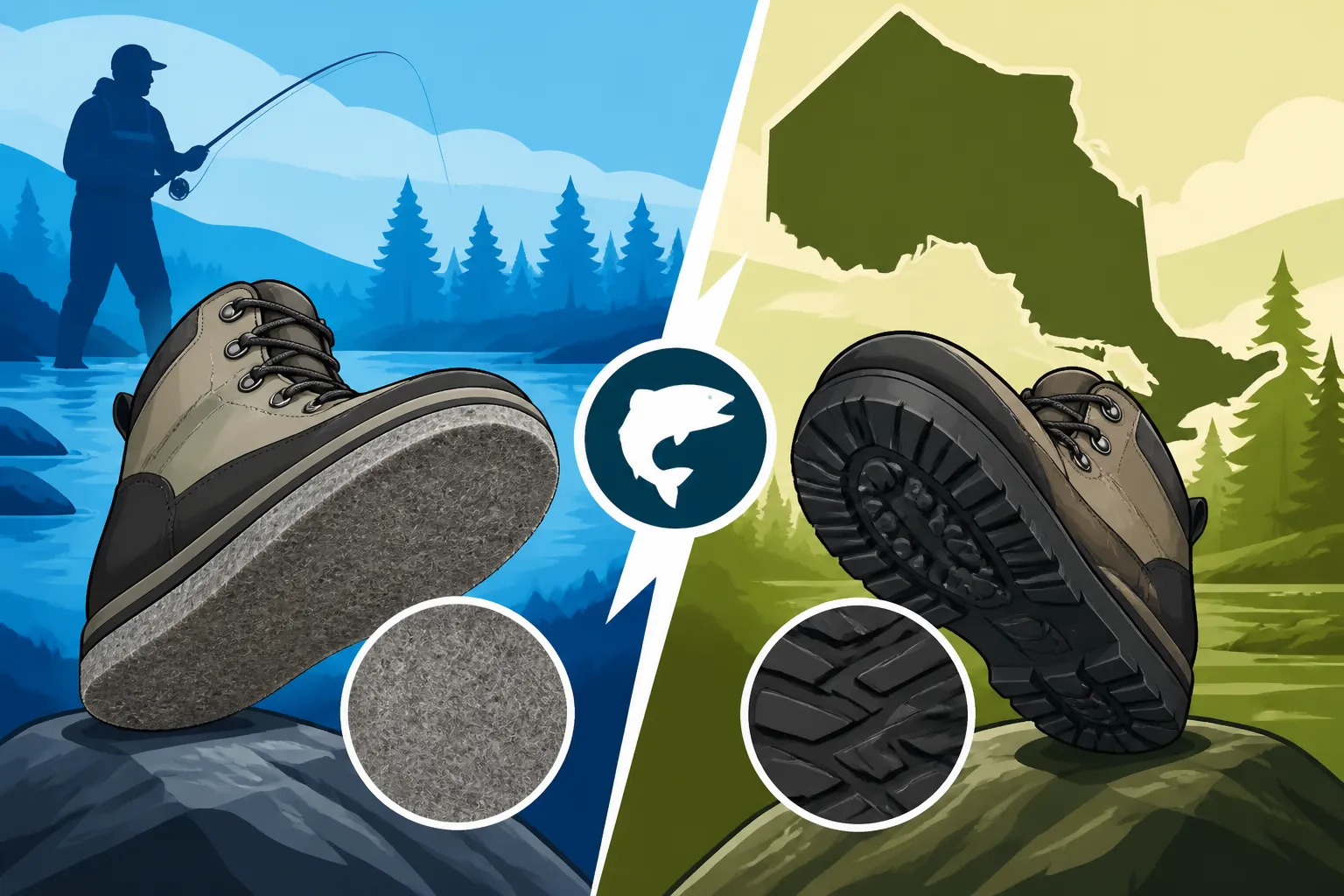
For decades, felt soles were the undisputed champion of wading boots, and for good reason. They offered a level of grip on slick, algae-covered rocks that seemed almost magical. If you’ve ever found yourself trying to maintain footing on a mossy bedrock shelf in a fast-flowing river, you know the value of that kind of adhesion. The material itself is usually a compressed, synthetic fibre that, when wet, creates an incredible amount of friction.
The Historical Advantage of Felt
Back in the day, when you talked about wading boots, you were almost certainly talking about felt. Anglers swore by them because they simply gripped better than anything else available, especially in the challenging, slippery conditions common in many prime trout and salmon rivers. Imagine navigating the rugged, often treacherous sections of the Grand River or the Credit River during a steelhead run; felt offered a confidence-inspiring footing that allowed you to focus on the fish, not on keeping your balance.
The felt material, once saturated, would conform slightly to the contours of the rocks, maximizing contact points and providing a suction-like effect. This was particularly crucial for fly anglers who needed stable footing for casting and wading quietly through prime lies. Many veteran anglers still have a sentimental attachment to felt, having trusted it for countless hours in the water. For a deeper dive into the gear for this type of fishing, check out Best Gear for Ontario Trout Fishing.
When Felt Shines the Brightest
Felt soles truly excel in certain very specific environments. Their unparalleled grip on wet, slimy, algae-covered rocks and submerged bedrock is where they are king. If you frequently find yourself wading streams and rivers with smooth, mossy stones or polished riverbeds, felt will likely give you the most secure footing. This is often the case in pristine, colder water trout streams where aquatic vegetation and slick rock formations are prevalent.
Think about standing mid-stream in a Northern Ontario brook trout haven, surrounded by ancient, rounded granite boulders. Felt soles would be your best friend there, allowing you to move with greater confidence and less risk of a slip. They are also excellent in situations where you need to stand stationary for extended periods on slippery substrates, allowing you to maintain your position without constantly shifting or losing balance. Learning proper Wading Techniques for Ontario Trout Streams often emphasizes the importance of good foot traction.
The Downsides and Drawbacks of Felt Soles
Despite their legendary grip, felt soles come with some significant drawbacks, which have led to a decline in their universal popularity. The primary concern, and one that has even led to bans in some jurisdictions (though not currently widespread in Ontario, it's worth noting the discussion), is their propensity to transport invasive species. The porous nature of felt can easily trap microscopic organisms, algae, and even small eggs, which can then be transferred from one waterbody to another. This is a serious ecological issue that anglers need to be mindful of.
Another major downside is durability. Felt tends to wear down much faster than rubber, especially if you do a lot of hiking on dry land between wading spots. Walking on pavement, gravel, or even rough trails can quickly shred the felt, shortening the lifespan of your boots. Once the felt starts to delaminate or wear thin, its grip diminishes significantly. Plus, felt can become heavy and waterlogged, taking a long time to dry out completely, which can lead to unpleasant smells and accelerated wear.
The Modern Contender: Rubber Soles Explored
In recent years, rubber soles have emerged as a formidable alternative, evolving significantly to address the grip challenges that once made felt the go-to choice. Modern rubber wading boots aren't just your typical hiking boot sole; they feature advanced compounds and aggressive tread patterns designed specifically for aquatic environments.
The Rise of Rubber and Advanced Tread Patterns
The innovation in rubber sole technology has been a game-changer. Manufacturers have invested heavily in developing sticky rubber compounds, often infused with microscopic particles or designed with specialized tread patterns that mimic the suction of felt while offering superior durability. Brands like Simms and Orvis, for example, have pioneered various proprietary rubber sole technologies that aim to rival felt's grip on wet rocks while completely eliminating the invasive species transfer risk.
These new designs incorporate deeper lugs, multi-directional patterns, and sometimes even specific rubber hardness zones to optimize traction across different surfaces. This means you might find boots with a softer, stickier rubber in the main contact points for grip, and a harder, more durable rubber in high-wear areas. This evolution has made rubber soles a truly viable and often preferred option for many Ontario anglers, especially those conscious of environmental impact. If you're looking for new gear, checking out offerings from retailers like Bass Pro Shops or Amazon can provide a good overview of the latest rubber sole technologies.
Ideal Scenarios for Rubber Soles
Rubber soles truly excel in situations where versatility, durability, and a clean conscience are priorities. They offer excellent traction on a wide range of surfaces, including muddy banks, loose gravel, dry trails, and even snow or ice (especially when studded). If your fishing adventures involve a mix of wading and hiking to access different spots, rubber soles will hold up much better to the abuse of dry land. You won't be constantly worrying about shredding your soles on the walk from the parking lot to the riverbank.
Furthermore, rubber is the undisputed choice if you fish multiple waterbodies and are concerned about invasive species. Since rubber is non-porous, it's much easier to clean and dry, drastically reducing the risk of transferring unwanted hitchhikers. This makes them ideal for anglers who frequently move between different lakes, rivers, and even provincial park waters. For those exploring diverse fishing grounds, such as Best Fishing Lakes in Ontario or Best Fishing Rivers in Ontario, the versatility of rubber is a huge asset.
Limitations and Considerations for Rubber
While modern rubber soles have come a long way, they still have their limitations, particularly when directly compared to felt on the slickest, algae-covered rocks. On those specific, highly polished and slimy surfaces, a plain rubber sole might not provide the same "sticky" feel and unwavering grip that felt offers. This is where studded rubber soles come into play, offering an important enhancement.
Many rubber wading boots are designed to accept screw-in studs, often made of carbide. These studs dramatically improve grip on ice, snow, and extremely slick rocks, effectively bridging the gap where plain rubber might falter. However, studs can be noisy on rocks, potentially spooking fish, and they can also damage boat floors or other surfaces if you're not careful. So, while rubber is incredibly versatile, achieving felt-like grip on all surfaces often requires the addition of studs, which adds another layer of consideration and cost.
Felt vs. Rubber: A Direct Comparison for Ontario Anglers
The choice between felt and rubber isn't just a matter of preference; it's a practical decision that should be guided by where and how you typically fish in Ontario. There are distinct differences in their performance, durability, and even environmental implications that every responsible angler should consider.
| Feature | Felt Soles | Rubber Soles |
|---|---|---|
| Traction on Wet, Slimy Rocks | Superior adhesion, almost "sticky" | Good, but can be slippery without studs; excellent with studs |
| Traction on Mud/Gravel | Poor, tends to clog and lose grip | Excellent, good lug patterns shed mud |
| Traction on Dry Land/Trails | Very poor, wears quickly, no grip on dry rock | Excellent, durable, good grip on varied terrain |
| Durability | Lower, wears quickly on dry surfaces | Higher, very durable, long-lasting |
| Invasive Species Risk | High, porous material can trap organisms | Low, non-porous, easy to clean |
| Drying Time | Long, can retain water and odour | Fast, dries quickly, less odour |
| Noise | Quiet | Can be noisy with studs on rocks |
| Versatility | Limited to wet rock/river environments | High, suitable for varied terrain and waterbodies |
| Cost | Typically similar to rubber, but may need more frequent replacement | Often similar upfront, but longer lasting |
Traction in Different Ontario Environments
When you're wading the pristine, cold waters of a trout stream like the upper Saugeen River, where the riverbed is a mix of smooth, mossy stones and gravel, felt soles provide that crucial, reassuring grip. You can feel the difference immediately – that sticky adherence that prevents slips on critical crossings. However, step out onto the bank to hike to the next pool, and felt quickly becomes a liability. It clogs with mud, offers no grip on dry ground, and wears down rapidly.
Rubber soles, on the other hand, offer a more balanced performance. On those same slippery rocks, modern rubber (especially with a good tread pattern) will provide decent grip, perhaps not the ultimate "stick" of felt, but certainly manageable. Where rubber truly shines is on the transitions. Climbing out onto a muddy bank, traversing a gravel bar, or hiking a forest trail to reach an isolated bend in the French River fishing guide – rubber handles it all with ease, offering confident footing and superior durability. If you often fish remote areas that require significant hiking, rubber is the clear winner.
Durability and Maintenance Over Time
This is where rubber truly outclasses felt. A good pair of rubber-soled wading boots will withstand countless miles of hiking and wading. The synthetic compounds are built to last, resisting abrasion and general wear much better than felt. While the initial cost of a quality pair from, say, Bass Pro Shops or Amazon might seem comparable, the longevity of rubber often means a better investment in the long run.
Felt, conversely, is a wear item. If you spend any time walking on pavement, concrete, or abrasive gravel, the felt will break down quickly. Once the edges start to fray or the felt compresses and delaminates, its effectiveness drops. Replacing felt soles is an option for some boots, but it's an added expense and inconvenience. Furthermore, felt takes a long time to dry completely, making it prone to mildew and unpleasant smells if not meticulously cared for. Rubber, being non-porous, dries much faster and is easier to keep clean and odour-free.
Environmental Impact and Regulation
This is perhaps the most critical distinction in the modern fishing world. The potential for felt soles to transport invasive species has led to significant discussions and, in some places outside Ontario, outright bans. While Ontario has not implemented a blanket ban, responsible angling dictates that we all do our part to prevent the spread of invaders like zebra mussels, round gobies, and viral hemorrhagic septicemia (VHS).
Felt's porous nature makes it a perfect host for these microscopic organisms and larvae. Even with diligent cleaning, it's incredibly difficult to ensure felt is completely decontaminated and dry. Rubber, being non-porous, is far easier to clean, disinfect, and dry. This drastically reduces the risk of transferring species from, say, Lake Erie to a remote Northern Ontario lake. For anglers committed to protecting Ontario's precious aquatic ecosystems, rubber soles are the more environmentally responsible choice. Understanding Ontario Fishing Regulations Explained includes being aware of how our actions impact the environment.
Making Your Choice: Factors to Consider
Ultimately, the best wading boot sole for you depends on your individual fishing style, the specific waters you frequent, and your personal priorities. There’s no single "right" answer, but by considering a few key factors, you can make an informed decision that enhances your time on the water.
Your Primary Fishing Environment
Think about the majority of your fishing trips. Are you almost exclusively targeting trout and steelhead in rocky, slippery rivers like the Credit or the Ganaraska? If so, and you prioritize absolute grip on those slick surfaces above all else, then traditional felt might still appeal, perhaps used with extreme diligence regarding cleaning. However, many modern rubber soles with aggressive tread or added studs can now provide comparable, if not superior, performance without the invasive species risk. For chasing specific species like lake trout, where you might be fishing larger lakes, the need for deep river wading might be less, making rubber a no-brainer.
If your fishing involves a mix of wading and hiking, whether it’s exploring various sections of the Ottawa River Fishing Spots or navigating trails to remote lakes, rubber soles are the far more practical and durable choice. They offer versatility that felt simply cannot match, giving you confident footing on a wider array of surfaces, from muddy banks to dry forest paths.
Frequency of Use and Budget
How often do you go wading, and how much mileage do you put on your gear? If you’re an occasional angler who only wades a few times a year in relatively easy terrain, either option might suffice, but rubber will likely last longer. For dedicated anglers who are out on the water every week, investing in a high-quality rubber boot with the option for studs will likely provide the best long-term value, durability, and versatility. While the upfront cost might be a consideration, remember that rubber generally outlasts felt, potentially saving you money on replacements or repairs in the long run. Retailers like Bass Pro Shops often have sales, making it easier to invest in quality gear.
Also, consider maintenance. Are you meticulous about cleaning and drying your gear? If not, felt can quickly become a mildewy, smelly mess. Rubber is much more forgiving in this regard, requiring less effort to keep clean and ready for your next adventure. Taking care of your gear, including your waders and boots, is crucial, especially when exploring different waters. Check out Best Waders for Ontario Trout Streams for more on proper wader care.
Personal Preference and Comfort
Finally, don’t underestimate personal preference and comfort. Some anglers simply prefer the feel of felt on slick rocks, feeling a connection to the traditional way of fishing. Others appreciate the lightweight feel and quick drying time of modern rubber. Try on different boots, if possible. Consider how they feel with your waders and how they integrate with your overall setup. The best boot is the one that gives you confidence, allows you to move safely and comfortably, and doesn't distract you from the pure joy of fishing.
Ultimately, safety is paramount. Whatever sole you choose, ensure it provides the stability you need for the specific conditions you'll face. And always remember to properly clean and dry your boots between fishing trips, regardless of the sole type, to help protect Ontario's precious waters. For general safety, especially when dealing with currents, consider a Best Wading Staff for Fast Current regardless of your boot choice.
Disclaimer
This article is for general informational purposes only and does not constitute professional advice. Laws, prices and regulations vary by location and change over time. Consult a qualified professional for guidance on your specific situation.