Best wire leader for muskie fishing
It’s a feeling every serious angler dreads: you hook into what feels like the muskie of a lifetime, the fight is epic, your heart is pounding, and then, without warning, the line goes slack. You reel in, and there it is – a perfectly cut line, a tell-tale sign that those razor-sharp teeth found their mark. Losing a trophy fish, and often an expensive lure, to a bite-off is a gut-wrenchwrenching experience. This guide will help you understand why a wire leader is absolutely essential for muskie fishing in Ontario and how to choose the best one to protect your line, your lure, and most importantly, help you successfully land and release that toothy critter.
Why Wire Leaders are Non-Negotiable for Muskie Fishing
When you're out chasing muskellunge in Ontario, whether on the expansive waters of Georgian Bay or the labyrinthine channels of the French River, you're targeting a true apex predator. These fish are built for ambushing and devouring prey, and their mouths are equipped with an impressive array of teeth that can sever even heavy monofilament or fluorocarbon line with ease. Thinking you can get away with just heavy mono is a common mistake that often ends in disappointment and lost fish.
The Muskie's Lethal Weapon: Their Teeth
Muskies possess numerous sharp, conical teeth lining their jaws, designed to grip and hold onto their prey. Beyond the visible rows, they also have smaller, needle-like teeth on their palate and tongue. When a muskie engulfs a lure, especially during a violent head shake or a classic "figure eight" boatside, these teeth can come into contact with your line in multiple places. Standard fishing lines, even those with high pound-test ratings, are simply no match for this dental arsenal. It’s not a matter of if the line will be cut, but when. Imagine fighting a fish for several minutes, getting it boatside, and just as you reach for the net, a final thrash cuts the line. Heartbreak. A quality wire leader creates an impenetrable barrier, ensuring your main line remains intact against these formidable choppers. This protection is paramount when you're targeting a fish known for its powerful runs and aggressive nature. To truly appreciate what you're up against, it helps to understand more about Muskellunge Fishing in Ontario itself.
Protecting Your Investment and Your Catch
Let’s be honest, muskie fishing isn't a cheap hobby. Those big, flashy bucktails, glide baits, and crankbaits can cost a pretty penny, and losing one to a bite-off feels like throwing money into the lake. A good wire leader acts as inexpensive insurance for your expensive lures. Beyond the gear, there's the fish itself. Many muskie anglers practice catch and release, recognizing the importance of conserving these incredible fish for future generations. A bite-off means the muskie swims away with your lure still attached, which can impede its ability to feed, injure it, or lead to its eventual demise. Using a leader dramatically increases your chances of a clean release. It allows you to control the fish better, guide it into the net, and ensure a quick, safe unhooking process. This commitment to proper handling and release is crucial for their survival and for maintaining healthy muskie populations in our waters. Understanding the Muskellunge Growth Rate to Trophy Size helps underscore why protecting each individual fish is so important.
Deciphering Wire Leader Materials and Construction
Not all wire leaders are created equal. Just like choosing the right rod or reel, selecting the appropriate wire leader involves understanding the different materials and constructions available. Each type offers distinct advantages and disadvantages depending on your fishing style and the conditions you face on the water.
Single-Strand vs. Multi-Strand Wire
The fundamental difference in wire leader construction comes down to single-strand versus multi-strand.
- Single-Strand Wire: This is exactly what it sounds like – a single, solid wire, typically made of stainless steel. It's incredibly thin for its strength and offers excellent abrasion resistance. The main downside is its propensity to kink and take on memory. Once kinked, single-strand wire is severely weakened and must be replaced immediately. It can also be quite stiff, which might impact the natural action of certain smaller lures. However, for large, fast-moving baits or situations where maximum sensitivity and durability are required, single-strand can be a solid choice. It's less common for muskie these days due to the advancements in multi-strand options, but some old-school anglers still swear by it for specific applications.
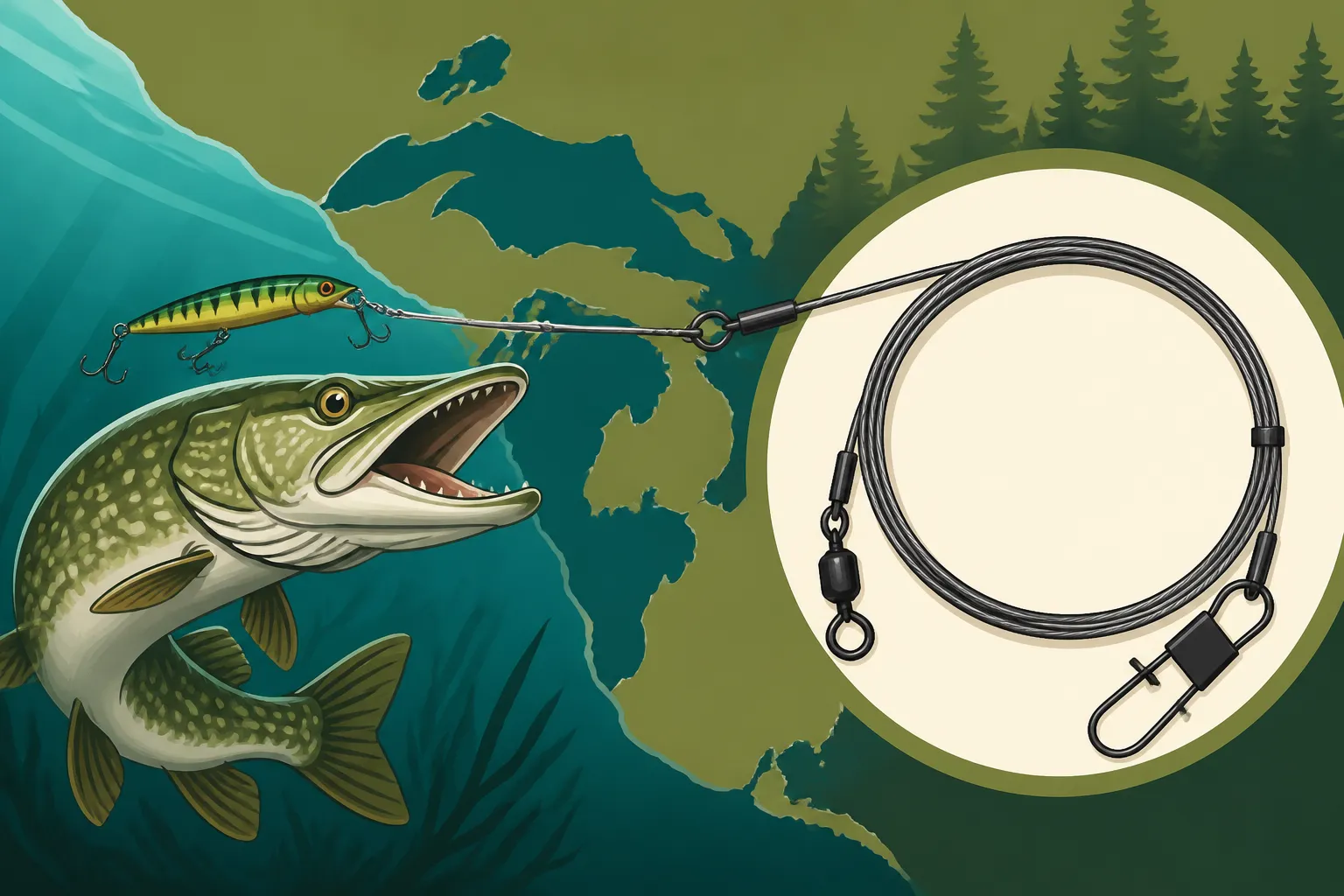
- Multi-Strand Wire (Stranded Wire): This type consists of multiple fine strands of wire braided or twisted together, often then coated with nylon or another polymer. This construction makes the leader much more flexible and resistant to kinking than single-strand wire. It's also far more forgiving, as a minor bend won't necessarily compromise its integrity like a kink in single-strand would. Multi-strand wire leaders are the most popular choice for muskie fishing due to their versatility and durability. They come in various numbers of strands, with 7-strand, 19-strand, and even 49-strand options available, offering increasing flexibility as the strand count goes up. The added flexibility helps maintain the natural action of your lures, which is critical for enticing a strike from a wary muskie. You can find a wide selection of these at reputable retailers like Bass Pro Shops or online at Amazon.
Titanium vs. Steel
The material composition of your wire leader is another critical factor. The two primary materials used are stainless steel and titanium, each with its unique properties.
- Stainless Steel Leaders: These are the traditional workhorses of wire leaders. Stainless steel is strong, relatively inexpensive, and highly resistant to corrosion in freshwater. Most multi-strand leaders are made from stainless steel. They are effective and get the job done, but they do have a "memory" effect, meaning they can develop a permanent bend or kink if stressed too much. Once a stainless steel leader gets a severe kink, it's pretty much done for and needs to be replaced. They can also be a bit heavier than their titanium counterparts, which might be a consideration for extremely lightweight lures, though this is rarely an issue with typical muskie baits. For anglers on a budget or those who don't mind replacing leaders more frequently, high-quality stainless steel options are a perfectly viable choice.
- Titanium Leaders: Titanium leaders are the premium option and have gained immense popularity among serious muskie anglers. The key advantage of titanium is its incredible elasticity and "memory-free" properties. Unlike steel, titanium can be bent and twisted repeatedly without kinking or weakening. It snaps back to its original straight form, making it exceptionally durable and long-lasting. This memory-free characteristic is a game-changer, as it means fewer leader changes and more time fishing. Titanium leaders are also typically lighter for their given strength compared to steel, which can contribute to better lure action. The trade-off is the cost; titanium leaders are significantly more expensive than stainless steel. However, many anglers find the extended lifespan and peace of mind worth the investment. They are a fantastic choice, especially when you consider the cost of losing a prized lure or, even worse, a trophy muskie.
Braided Wire and Coated Options
While less common for dedicated muskie leaders, some variations exist:
- Braided Wire Leaders (e.g., Kevlar, Dyneema blends): Sometimes referred to as "superbraid" leaders, these are not truly wire in the metallic sense but are exceptionally strong, cut-resistant fibers. They are incredibly flexible and have no memory. While excellent for toothy critters like barracuda in saltwater, pure braided leaders often lack the sheer bite-through resistance of metallic wire for muskie's crushing jaws, and they can sometimes "fray" under extreme stress, allowing teeth to eventually saw through. For muskie, a true wire core is generally preferred.
- Coated Leaders: Many multi-strand steel or titanium leaders come with a nylon or polymer coating. This coating serves several purposes: it smooths the leader, reduces friction through rod guides, adds an extra layer of abrasion resistance, and can dampen vibration. It also helps prevent the individual strands from separating or fraying. The coating can come in various colours, but clear or dull finishes are generally preferred for stealth. When shopping for Best Muskie Gear for Ontario Waters, pay attention to whether leaders are coated, as it can be a significant benefit.
The Critical Details: Length, Test, and Terminal Tackle
Once you’ve settled on the material and construction, there are still crucial decisions to make regarding the leader's specifications and the components that connect it to your lure and main line. These details can dramatically impact your casting, lure presentation, and overall success on the water.
Choosing the Right Length
Leader length is often a point of debate among muskie anglers, but there are some general guidelines to consider. Most muskie leaders range from 9 inches to 18 inches, with some anglers opting for even longer ones.
- Standard Length (12-18 inches): This is the most common range. A leader in this length provides ample protection from the muskie's teeth, even during aggressive head shakes or when the fish rolls. It also typically ensures that if the fish inhales the lure deeply, the entire mouth area is covered by the wire. For most casting and trolling applications with common muskie baits like bucktails, jerkbaits, and medium crankbaits, a 12 to 18-inch leader is a great starting point. Too short, and you risk a bite-off above the leader; too long, and it can become cumbersome to cast and potentially interfere with lure action.
- Shorter Length (9-12 inches): Some anglers prefer shorter leaders, especially when fishing smaller, more subtle lures or if they feel a longer leader negatively impacts lure action. While these can work, the margin for error is smaller. If a muskie really engulfs the bait or thrashes violently, a shorter leader might expose your main line to danger. It's a trade-off between discretion and protection.
- Longer Length (18+ inches): For truly massive baits or when you suspect a muskie might fully "eat" a lure deep in its throat, longer leaders can provide extra security. They are also sometimes preferred for trolling setups where lure action is less about a subtle twitch and more about consistent presentation. The downside is reduced castability and potential tangles, particularly for inexperienced anglers. For instance, when targeting muskie on Lake St. Clair or Georgian Bay, where some truly massive fish reside, a longer leader can offer that extra peace of mind.
Ultimately, the best length depends on the size of your lures, your casting style, and personal preference. The goal is to have enough wire to prevent the muskie's teeth from ever reaching your main line.
Matching Strength to the Fight
Muskie leaders need to be strong, but not necessarily heavy. The strength of a leader is measured in pound-test, similar to fishing line.
- Recommended Pound Test: For muskie, a leader in the 80 to 150-pound test range is generally recommended. Most anglers opt for 100-130 lb test. This strength provides more than enough resistance against the fish's teeth and power, while still being manageable. Going much lower than 80 lb test increases your risk, while going significantly higher than 150 lb test might be overkill, adding unnecessary bulk and potentially impacting lure action without providing much additional benefit. Remember, the leader is there to prevent bite-offs, not necessarily to bear the entire strain of the fight, as your main line and rod do that.
- Consider Lure Weight and Main Line: Your leader's strength should be somewhat proportionate to your main line and the lures you're throwing. If you're using 80 lb braided main line and throwing heavy 8 oz lures, a 100-130 lb test leader is a good match. Using a leader that's too light for your main line or lures can lead to snapped leaders during aggressive casts or intense fights. A common setup you might find at Bass Pro Shops for Best Tackle for Ontario Walleye or similar species uses lighter leaders, but for muskie, you really need to step it up.
| Leader Material/Construction | Key Characteristics | Pros | Cons | Ideal Use |
|---|---|---|---|---|
| Single-Strand Steel | Stiff, strong, simple | Inexpensive, high abrasion resistance | Kinks easily, takes memory, can affect lure action | Specific large, heavy lures; less common now |
| Multi-Strand Steel | Flexible, multiple wires twisted/braided | Flexible, good kink resistance, affordable | Can still take some memory, not as durable as Ti | All-around muskie fishing, good value |
| Multi-Strand Titanium | Highly flexible, memory-free | Extremely durable, no memory, lightweight for strength | More expensive | High-volume fishing, premium performance, longevity |
| Coated Leaders | Outer polymer coating on wire | Added abrasion resistance, smooth, reduces tangles | Coating can wear, slightly thicker | Any muskie fishing, enhances durability |
Snaps, Swivels, and Connections
The connections on your leader are just as important as the wire itself. A weak link here can mean a lost fish.
- Heavy-Duty Snaps: You'll need a strong snap to connect your leader to your lure. Interlock snaps or heavy-duty snap swivels are popular choices. Look for snaps rated for at least 150-200 lbs. Avoid cheap, flimsy snaps that can bend open under the stress of a fighting muskie. The convenience of quickly changing lures is a huge plus for muskie fishing, but don't sacrifice strength. Brands like Stay-Lok or Coastlock snaps are generally trusted.
- Ball Bearing Swivels: A high-quality ball bearing swivel is crucial to prevent line twist, especially when using bucktails or other lures that spin. Line twist can weaken your main line and cause casting issues. Again, ensure the swivel is heavy-duty, rated for the same pound test as your leader or higher. Barrel swivels are okay for some applications, but ball bearing swivels offer superior performance in preventing twist.
- Crimping Sleeves vs. Knots: Most wire leaders are connected to snaps and swivels using crimping sleeves. This creates a neat, strong, and low-profile connection. Use appropriate size crimps for your leader material and invest in a good crimping tool for secure connections. Some flexible multi-strand leaders can be tied with specific knots (like a uni-knot or triple surgeon's knot), but crimps are generally preferred for maximum strength and reliability in muskie fishing. Never compromise on the connection point; it's often the weakest link if not done correctly.
When learning How to Catch Muskie in Ontario, understanding these terminal tackle details is paramount to success.
Maintenance and Best Practices for Your Leaders
Even the toughest wire leader needs a little love and attention to ensure it performs optimally and lasts as long as possible. Proper maintenance and smart fishing practices will extend the life of your leaders and increase your chances of landing more muskies.
Inspection and Replacement
Your wire leaders are constantly under stress from casting, retrieving, and fighting powerful fish. Regular inspection is non-negotiable for muskie fishing.
- Visual Check After Every Fish: After every muskie you catch, or even after a significant snag or particularly aggressive retrieve, visually inspect your leader. Look for any signs of kinking, fraying, nicks, or weak spots. Pay close attention to the connections around the snap and swivel. If you see any damage to a stainless steel leader, especially a kink, replace it immediately. While titanium is more forgiving, even it can suffer damage from repeated abuse against sharp rocks or boat props.
- Regular Replacement Schedule: Even without visible damage, leaders can weaken over time due to metal fatigue or micro-abrasions. It's a good practice to replace your leaders periodically, especially if you fish frequently. For steel leaders, this might be after a few intense fishing trips. For titanium, it might be less frequent, but don't push your luck. Consider the investment in a new leader minimal compared to the cost of a lost lure or a missed trophy fish. Many anglers will change their primary leader at the beginning of each muskie season, and carry spares for quick changes on the water.
Storage and Care
How you store and care for your leaders off the water can also impact their performance.
- Prevent Kinking: Store leaders straight or gently coiled. Avoid throwing them in a tangled mess in your tackle box. Dedicated leader wallets or small cylindrical containers are excellent for keeping pre-made leaders organized and kink-free. If you're buying bulk wire and making your own, keep the wire spools organized and handle the wire carefully.
- Rinse After Use: If you're fishing in brackish water or if your boat has been exposed to a lot of spray, a quick rinse with fresh water can help prolong the life of your leaders and terminal tackle by removing salt and grime. Ensure they are completely dry before storing to prevent corrosion, especially with stainless steel components.
- Check Hardware: Don't forget to check the snaps and swivels for rust or stickiness. If a swivel isn't rotating freely, it needs to be replaced. A corroded snap can fail when you least expect it. This extends to all your terminal tackle, even the Best Lures for Muskie Fishing in Ontario can be compromised by poor hardware.
Ethical Angling and Leader Use
Finally, using the correct wire leader isn't just about protecting your gear and ensuring a successful catch for yourself; it's also a critical component of ethical angling, particularly when targeting large, sensitive species like muskie.
- Promoting Fish Survival: By using a leader that prevents bite-offs, you greatly increase the chances of a healthy release. A muskie swimming away with a lure still attached can be severely hampered. This aligns with responsible angling practices and helps preserve the fishery. Remember, you can find a comprehensive guide on Muskie Catch and Release Survival Tips to ensure the fish you land has the best chance of survival.
- Respecting Regulations: While not directly tied to leader choice, always be aware of the specific Ontario Muskellunge Season Dates and Limits for the zone you are fishing. Using the right gear is part of a larger commitment to respecting the regulations designed to protect our natural resources.
- Be Prepared: Always carry spare leaders, crimps, and a crimping tool on the water. A broken leader can happen unexpectedly, and being prepared means you can quickly get back to fishing rather than losing precious time on the water. Thinking ahead and having these essential items, which can easily be picked up from a place like Amazon or Bass Pro Shops, means you're always ready for anything.
By understanding the different types of wire leaders, selecting the appropriate length and strength, and diligently maintaining your gear, you’ll be well-equipped to tackle Ontario’s muskellunge with confidence. This small but mighty piece of gear is truly your best friend in the pursuit of these legendary fish.
Disclaimer
This article is for general informational purposes only and does not constitute professional advice. Laws, prices and regulations vary by location and change over time. Consult a qualified professional for guidance on your specific situation.